Tripropyltin Chloride: Unpacking Its Role, Risks, and Future in Chemistry
Historical Development
Back in the mid-20th century, organotin compounds drew a lot of attention for their diverse uses and remarkable chemical flexibility. Among these, tripropyltin chloride found a place in the growing family of organotin chemicals. As the chemical industry expanded after World War II, researchers started exploring different alkyl and aryl tin derivatives for applications in everything from plastic stabilization to biocidal activity. Tripropyltin chloride emerged from this spirit of experimentation, feeding both academic curiosity and industrial demand. For decades, scientists documented its synthesis routes, properties, and effects, shaping a mixed reputation that juggled practical benefits and growing environmental unease.
Product Overview
Not as instantly recognizable as its notorious cousin tributyltin, tripropyltin chloride enjoyed a quieter entry into labs and factories. Chemists appreciated its ability to act as a reactive intermediate—offering a way to modify and transfer organic groups in a controlled fashion. Industries looking for new additives, catalysts, or stabilizers sometimes reached for tripropyltin chloride because of its versatility. Its applications stretched across paint formulations, polymer chemistry, and even experimental medicine, showing just how far a simple rearrangement of hydrocarbons could go. Its story reflected a period when chemical innovation often outpaced long-term safety reviews.
Physical & Chemical Properties
Tripropyltin chloride stands out for qualities you might expect from many of its organotin relatives—a heavy, colorless to pale yellow oily liquid, sometimes described as having a sharp, unpleasant odor. The molecular setup looks straightforward: a tin atom connected to three propyl groups and one chlorine atom. This combination packs both hydrophobic and hydrophilic traits, allowing it to behave unpredictably in some reactions. Its decent solubility in organic solvents (such as chloroform, ether, and benzene) gives it real-world utility in several lab-scale and industrial setups. Tin’s relatively high atomic weight and the compound’s tendency to decompose at elevated temperatures make handling and storage a priority for any chemist with a bottle of tripropyltin chloride on their shelf.
Technical Specifications & Labeling
Anyone working with tripropyltin chloride quickly understands the need for accurate labeling and sufficient information on technical sheets. Even before modern regulatory frameworks tightened up, mishandling or mislabeling organotin compounds led to numerous lab accidents and long-term exposures that we’d now consider unacceptable. Today, updated hazard labeling and strict handling guidelines reflect lessons learned the hard way. These days, quantities are tightly controlled, purity is usually confirmed with a combination of NMR, IR spectroscopy and elemental analysis, and storage conditions get special attention. A simple lapse in labeling, such as omitting the "chloride" from its name, can invite confusion with other tripropyltin species, making attention to detail more than just busywork.
Preparation Method
Crafting tripropyltin chloride typically involves reacting tripropyltin compounds with chlorinating agents, such as thionyl chloride or hydrogen chloride, under controlled lab conditions. The process must keep side reactions in check. Tin chemistry always demands vigilance, especially where highly reactive intermediates could turn dangerous. Reactions vent off unpleasant byproducts and need well-designed ventilation. In some industrial setups, the push for higher yields used to override concerns around labor safety and environmental impacts, but things have shifted in recent years. Procedures now often include closed systems, with solvent recycling and residual waste neutralization steps factored in to limit emissions and protect workers.
Chemical Reactions & Modifications
Tripropyltin chloride’s chemical reactivity makes it a handy tool in organic synthesis and material design. Its tin-chloride bond can undergo nucleophilic substitution, allowing transfer of the tripropyltin group onto new molecules—a process leveraged to modify everything from small drug precursors to large polymer backbones. Organic chemists find value in how the propyl groups tune solubility and steric hindrance, sometimes providing a sweet spot between reactivity and selectivity. In catalysis, the compound has served both as an active component and as a structural modifier, yielding products with unique electronic and structural features. Other times, researchers have used the chloride as a springboard for further functionalization, swapping it out for more complex ligands or groups.
Synonyms & Product Names
As is so often the case in chemistry, confusion in nomenclature can lead to wasted time or worse. Tripropyltin chloride sometimes travels under synonyms like TPTCl or tripropylchlorostannane, among others. The common international practice is to refer to its main constituents—tripropyl (three propyl groups) and tin chloride—to keep communication clear. Over time, manufacturers and distributors have tried to stick to these conventions, but legacy naming still crops up in old papers and chemical catalogs. Being able to translate between these names is a skill any laboratory manager or process chemist learns early—especially where multilingual teams are involved.
Safety & Operational Standards
Safety concerns surrounding organotin compounds, including tripropyltin chloride, can’t be overstated. Chronic exposure to even small amounts of such chemicals once went unmonitored, leaving behind a messy legacy of health issues for workers and communities. Now, anyone handling tripropyltin chloride wears gloves, goggles, and often a full chemical-resistant apron. Proper fume hoods prevent inhalation risks. Disposal practices reflect modern environmental awareness: used containers and residual solvents head to specialized incinerators or chemical treatment facilities, avoiding landfills or regular waste streams. In the workplace, periodic training refreshes understanding of up-to-date handling rules and new toxicological findings. Regulatory controls now restrict the manner and scale of use, keeping industry and research labs accountable through regular inspections and mandatory reporting.
Application Area
Tripropyltin chloride’s primary uses lie in its chemical reactivity. In the past, some companies explored its potential as a stabilizer in plastics, improving resistance to heat and light, though popularity waned as concerns about toxicity grew. Paints and antifouling coatings once benefited from its potent biocidal action, but mounting evidence of environmental damage forced manufacturers to rethink their formulations. Research trails highlighted its role in cross-coupling reactions, organic synthesis, and the fabrication of novel materials. Every application brought its own blend of innovation and risk, as regulators, scientists, and industry veterans grappled with persistent concerns about environmental residues and aquatic toxicity.
Research & Development
Development around tripropyltin chloride shifted gears over the last couple of decades. Labs no longer chase new consumer applications; instead, emphasis shifted to understanding the compound’s behavior in the environment and its breakdown pathways. Analytical chemists built more sensitive assays to track it in water, soil, and biological tissues. Green chemistry experts have started searching for alternatives with lower toxicity or for ways to neutralize or recycle tin compounds after industrial use. The growing field of sustainable materials science sometimes borrows knowledge from the history of tripropyltin chloride and similar chemicals, using past mistakes as a guide for what to avoid. At academic conferences, I’ve seen presentations comparing the performance of organotin-based reagents to new, metal-free alternatives—an encouraging sign that the field recognizes both what tripropyltin chloride accomplished and what it cost.
Toxicity Research
Toxicologists have spent years unpacking the risks tied to tripropyltin chloride. Organotins in general share several paths of toxicity: harming aquatic life, disrupting human hormone systems, damaging immune response, and sometimes building up in the food chain. Animal studies traced behavioral and developmental changes after exposure, while real-world monitoring proved that tiny releases could build up to worrying concentrations over time. Participating in environmental sampling projects, I’ve seen river sediment and estuarine oysters show measurable levels long after any apparent direct runoff had stopped. This persistence gives regulators headaches and puts pressure on manufacturers to clean up decades of carelessness. Risk assessment now drives decisions around where and how such compounds can be used, stored, or disposed of, and research increasingly measures not just immediate impact, but generational health effects.
Future Prospects
Few expect tripropyltin chloride to make a comeback in mainstream products, but the compound still stirs debate about the legacy of organotin chemistry. Innovative chemists look for ways to break down or repurpose waste streams containing tin compounds, sometimes extracting rare or valuable tin for use in electronics or green energy technology. Instead of new applications, the technical community focuses on replacing these substances where possible, reforming supply chains and cleaning up leftover residues. Policy makers and industry leaders wrestle with cost, technical feasibility, and community pressure as they weigh investments in remediation against the ongoing temptation to use tried-and-true chemical shortcuts. Looking ahead, the conversation has shifted. Safety, sustainability, and long-term stewardship now guide how future generations encounter not just tripropyltin chloride, but every new molecule chemistry puts on the shelf.
What is Tripropyltin Chloride used for?
Digging Into Tripropyltin Chloride’s Role
Tripropyltin chloride stands out in the world of organotin compounds for its punchy mix of utility and controversy. In my time working around industrial materials and their impact on people and the environment, I’ve seen how chemicals carved out for useful reasons can spark heated discussions. This is the case with tripropyltin chloride.
Main Uses: Fungicides and Biocides
You’ll often find tripropyltin chloride in factories, shipyards, and even farms. Its most popular job: stopping fungus and unwanted organisms dead in their tracks. Boat owners and marine businesses lean on it to keep hulls clean, because barnacles and algae slow everything down and eat away at paint. Farmers and wood processors sometimes reach for products with tripropyltin chloride to fend off mold and pests that threaten crops or stored grain.
The chemical’s strong biocidal action—meaning it disrupts biological systems—appeals to anyone needing to protect property or stock from costly damage. Without tools like this, maintenance and food supply chains would take some tough hits. Wooden structures exposed to humidity, for example, become a feast for fungus and insects unless you treat them with something persistent and strong.
Safety Questions Take Center Stage
Yet, having watched debates over chemical regulations for years, I know that the same toughness that makes tripropyltin chloride valuable is what riles up scientists and regulators. If it’s powerful enough to stop marine slime, it’s bound to strain delicate environmental balances. Studies show organotin compounds can harm fish, shellfish, and other life in waterways. For example, the infamous cousin of tripropyltin chloride, tributyltin, almost knocked out populations of some snail species near busy shipping lanes.
Workers who handle the chemical also deserve some spotlight. Breathing it in or getting it on skin could irritate or even cause longer-term harm with enough exposure. More than once, I’ve visited facilities where folks relied on training, gloves, and masks to limit risks, but accidents or sloppiness can still open the door to trouble.
The Regulatory Response
Different countries have drawn tough lines around the use of organotins. The European Union, for instance, bans many applications for similar compounds, including ship coatings and agricultural products. The United States and a lot of Asia have varying rules, sometimes allowing controlled industrial uses, sometimes pushing for safer alternatives. These rules shift as fresh science sheds more light.
Finding Alternatives and Safer Practices
I’ve met a handful of innovators in the coatings industry looking to nature for less toxic antifouling options—think of special paints that repel growth using plant-based substances or physical textures. Farmers have begun switching to integrated pest management, which blends safer chemicals with crop rotation and natural predators.
On the factory floor, tight controls can cut health risks, such as local ventilation and chemical storage that keeps moisture out. Regular checks, thorough training, and quick spill cleanup go a long way in protecting workers. Sharing these daily lessons helps build trust with communities near chemical facilities.
The Bottom Line
Tripropyltin chloride grabs attention for doing a hard job, but its environmental and health footprint constantly gets questioned. Progress in the chemical industry demands not just new formulas, but also transparency and openness to change. Listening to those on the ground, in the water, and at the table keeps everyone safer and moves industry forward. Our ability to adapt, learn, and sometimes move on from familiar tools could shape cleaner, more secure futures—both for the tools we use and the people working alongside them.
What are the safety precautions when handling Tripropyltin Chloride?
Why Treat Tripropyltin Chloride with Respect?
Experience in labs and on factory floors teaches a simple truth: ignoring safety around chemicals like Tripropyltin Chloride comes at a high cost. It’s more than just a toxic compound used in plastics and pesticides—tripropyltin chloride gets into the body through the skin, lungs, or mouth, causing damage to the nervous system and organs. Its fumes can burn your eyes, irritate your skin, and bring on headaches or even confusion. After years dealing with dangerous materials, you learn to trust your instincts if something smells off or makes your skin itch. Street smarts start with knowing how to protect yourself before trouble starts.
The Right Gear Makes a Difference
Let’s set aside any ideas about ‘winging it’ in the lab or plant. Gloves rated for chemical exposure make a clear boundary between you and this toxic liquid. Lab coats and long sleeves stop splash accidents from ruining your day or your health. Safety goggles or face shields prevent burns to eyes—a single mistake can leave lifelong regrets. Fit-tested respirators stop fumes dead in their tracks, especially when ventilation can’t keep up. I learned once, after a rush fix left skin exposed, that minutes matter even if you think it’s only a tiny splash.
Smart Handling Steps Build Good Habits
Rule number one: no food or drinks anywhere near open containers. Tripropyltin Chloride can stick to hands or surfaces. Even tiny amounts can transfer from skin to sandwich. Using strict labeling and double-checking every bottle avoids dangerous mix-ups, especially when tiredness sets in at the end of a long shift. Keeping spill kits handy is not a “maybe” — it’s the kind of backup that stops minor incidents from turning into hospital trips. I’ve seen coordinated teams deal with leaks quickly just because someone demanded good emergency prep at every safety meeting.
Keep Air Fresh and Risks Down
Opening a bottle of tripropyltin chloride in a closed room is asking for trouble. Local exhaust hoods or fume cupboards move harmful vapors away from lungs and eyes. It makes a real difference to work where airflow has been tested and isn’t just a promise on a checklist. If you smell anything strong or metallic, trust your nose—it usually means the fan is overdue for cleaning or adjustment. I remember more than one lesson in humility where I took for granted a quiet hood and nearly paid for it.
Clean-Up with a Serious Mindset
Leaving a mess isn’t just lazy—it’s reckless. Any spill, even drops or smears, needs immediate attention with absorbent pads and neutralizing agents. Double-bagging waste and moving it quickly to the correct disposal container prevents accidental exposure later. Forget about pouring leftovers down the drain; this kind of shortcut poisons water and lands you in legal trouble. Years of handling hazardous waste taught me that one slip-up with disposal invites heavy fines and long investigations.
Training and Honesty—No Substitute
Anyone working with tripropyltin chloride needs training beyond “read the label.” Real safety means open conversations about risks, practice drills, and a culture where people speak up. Walking a new colleague through an actual cleanup or a fire drill gives them muscle memory they’ll need if pressure ever hits. There’s pride in knowing everyone goes home healthy because the group holds each other accountable. Old-timers in chemical plants never laugh off basic rules—the best respect comes from keeping each other safe.
How should Tripropyltin Chloride be stored?
Hazards Lurking in Plain Sight
Tripropyltin chloride isn’t a household name, but anyone dealing with pesticides, industrial sealants, or some specialty chemicals knows its potency. This stuff packs a punch—tin compounds like this can cause health troubles that don’t show up right away. Eyes sting, skin itches, sometimes the whole respiratory system fights back. It’s toxic, no sugar-coating it. Some folks see a locked cabinet and think all is well. That cabinet won’t help much if humidity or temperature run wild or if it’s too close to a busy walkway. Even a moment’s slip can mean costly spills or, worse, someone ending up in the ER.
Don’t Give It a Chance to Escape
Experience with chemical storage tells me people often underestimate how fast a fume or errant splash can happen. Even a few grams can cause trouble. Air, sunlight, and water: that’s all it takes to break down molecules, or worse, spread toxic fumes or cause unwanted reactions. Tin-based chemicals don’t forgive carelessness.
A simple shelf in the corner might cut it for table salt, but not here. It pays to use a secure, tightly sealed container made of materials impervious to corrosion or reaction. Polyethylene or glass work well. Store away from acids and oxidizing agents; these trigger unpleasant, sometimes violent, reactions. A spill on wood or uncoated metal can leave damage for weeks. Keep it away from direct heat, and keep humidity low. Moisture plus tripropyltin chloride equals headaches for everyone.
The Human Factor
A label isn’t just a formality. A clear, visible label that spells out the hazards in language anyone can understand bridges the gap for that coworker who might be new or that cleaner who sweeps through on Friday evenings. No one plans on accidents—preparedness always trumps a long apology after the fact.
Training matters more than any lock. Watch people handling this chemical once, and gaps show up: gloves off too soon, lids not screwed down, containers set perilously close to the edge. A short, blunt safety briefing works wonders. Emergency showers and eye stations shouldn’t become furniture you ignore—they’re only useful if you can reach them in under a minute.
Building Resilience
I’ve seen workplaces pay dearly for storing chemicals in dim, forgotten buildings. Leaks go unnoticed and leaks rarely stay small. Inspections catch problems you’d never spot glancing past on your way to lunch. Getting everyone in the habit of checking seals and logging usage after every shift makes a real difference.
Regulations aren’t fences to trip over—they come from hard-learned lessons. OSHA and local environmental rules spell out conditions for safe storage, from correct signage to the kind of venting that keeps vapors from pooling. Skipping steps amounts to rolling the dice with people’s health.
Safer Storage, Healthier Lives
Tripropyltin chloride doesn’t care if you’re in a state-of-the-art lab or a no-frills supply closet. Keep stress low—protect air quality by storing it in a well-ventilated, temperature-controlled spot. Choose your containers with care. Invest in training and check that labels can’t rub off with a single spill. Every step toward safer storage means fewer nasty surprises. After all, looking out for each other beats cleaning up after a disaster.
What is the chemical structure of Tripropyltin Chloride?
Understanding the Compound on a Practical Level
Tripropyltin chloride isn’t something that shows up in everyday conversations, but its chemical structure has real-world impact. The molecule brings together an organotin core—tin, bonded directly to three propyl groups and one chloride atom. Specifically, its formula is C9H21ClSn. Now, every arm of this structure influences how it reacts, how it breaks down, and what it can do in the environment or lab. In plain terms, there’s a central tin atom, with three separate propyl chains sticking out, plus a single chloride providing that fourth bond. This configuration makes the compound both hydrophobic, thanks to those organic arms, and reactive due to the chloride.
Insight on Organotin Compounds
Organotins, including tripropyltin chloride, have a reputation in both chemistry and environmental science. Their structure has made them popular as biocides, stabilizers for plastics, and catalysts. I remember that as a young chemist, I learned how one swap—changing just a part of a molecule—could swing a substance from useful to hazardous. Tripropyltin chloride is a case in point. Those propyl groups do more than just fill space. They shift both how the molecule behaves and how it interacts with living systems. They help the compound penetrate cell membranes, which is why it acts as both a strong antifouling agent and a concern for toxicity.
Safety Concerns and Environmental Impact
This isn’t something to brush aside. Tripropyltin chloride, because of its lipophilic structure, can move through the food chain, building up in organisms. There’s nothing theoretical about problems tied to organotins. Coastal communities have seen how improper use of these compounds can lead to deformities in sea snails and other marine life. Experiencing this kind of impact—watching populations drop or food webs tumble—drives home how the bonds in a chemical formula translate to real consequences.
What Responsibility Looks Like
Good lab practice calls for respect when handling tripropyltin chloride. Gloves, goggles, proper storage—these aren’t just boxes to check. I learned the hard way that direct contact with organotins brings health risks: skin irritation, respiratory issues, potential organ damage over time. On a bigger scale, industry regulation needs to cut down on mismanagement and leaks into waterways, starting at the design level. If a compound’s structure lends itself to persistence and bioaccumulation, keeping it contained becomes the only ethical way forward.
Supporting Safer Chemistry
Looking ahead, focus should shift to alternatives. Chemists have been working on creating compounds that break down faster, with structures that make them easier on both people and wildlife. Education plays a role, too—demystifying chemical structures so that communities understand what’s on their doorstep or in their supply chain. Tripropyltin chloride may serve a purpose, but its legacy depends on discipline, smart regulation, and honest communication.
Bringing the Science Home
Tripropyltin chloride’s structure—a tin atom surrounded by three propyl chains and a chloride—echoes through its every use and risk, connecting the bench top to the bay. With this understanding in hand, chemists, policymakers, and the rest of us can push for a world where chemical know-how translates into safer living and better stewardship of natural resources.
Is Tripropyltin Chloride hazardous to the environment?
Understanding Tripropyltin Chloride
Tripropyltin chloride sounds like the kind of chemical you only worry about if you spend your days working in a lab coat. It shouldn’t. This organotin compound, mostly used to prevent things like barnacles from clinging onto ship hulls and as a pesticide, has a way of reaching into our water and soil without an invitation. Once out there, tripropyltin rarely just disappears.
Environmental Impact
Experience says: chemicals that don’t easily break down in nature become someone else’s problem down the line. Tripropyltin chloride fits that pattern. Research points out that organotin compounds, including tripropyltin, can be toxic to aquatic life even at low concentrations. Shrimp, oysters, and fish don’t just bounce back from exposure. Instead, their growth slows, their reproductive cycles get thrown off, and whole patches of local wildlife start to thin out.
When tripropyltin finds its way into soil, vegetables and crops may end up flagged for contamination. It doesn’t just end with plants. Birds and other animals can eat contaminated prey, and the chemical can climb right up the food chain. The story doesn’t stop at environmental damage; it spills into drinking water and food.
Human Health Risks
Once chemicals like tripropyltin chloride land in the environment, people can end up exposed. Farmers, fishers, and workers at shipping docks are right at the frontline. Animal tests point to immune system problems, hormone disruption, and changes to the nervous system. These results don’t always make the evening news, but friends working in pest control or on boats know to stay careful around organotin products.
Regulation and Enforcement
Governments haven’t ignored organotins. The story behind tripropyltin’s regulation tracks a familiar path—first, lots of use and little oversight, then studies catch up, and laws tighten. The European Union restricted several organotins, and shipyards around the world started looking for alternatives in antifouling products. In the United States, regulations mostly target products like tributyltin, but other organotins get scrutiny, too.
I’ve talked with local regulators who admit it’s hard to track every hazardous chemical. Many slip through cracks in reporting or monitoring. Some companies still use older stocks of organotins long after rules shift. Disposal poses another question: one landfill’s oversight easily becomes a community’s contamination scare.
Seeking Solutions
Solving problems like tripropyltin contamination doesn’t fall on a single group. Shipbuilders can shift to safer paints, and farmers have safer pesticides available now. People designing safer chemistries deserve the same respect as those ringing the alarm about toxic ones. Testing water and soil more often makes a difference. If a river or field shows signs of organotin buildup, cleanup should start quickly.
Industry doesn’t always wait for new regulations before making changes. Some companies moved to non-toxic antifouling coatings because the markets demanded it. For me, a meaningful solution always grows out of real-world collaboration. Communities, regulators, and workers need to speak up about contamination risk. When knowledge, experience, and science work together, dangerous chemicals like tripropyltin chloride become far less likely to end up in the wrong place.
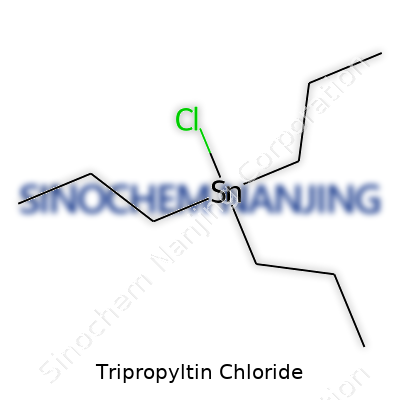
| Names | |
| Preferred IUPAC name | Tripropylstannane chloride |
| Other names |
Chlorotripropyltin Tripropylchlorostannane Tripropylstannyl chloride Tripropyltin(IV) chloride |
| Pronunciation | /traɪˌprɒpɪlˈtɪn ˈklɔːraɪd/ |
| Identifiers | |
| CAS Number | 994-31-4 |
| Beilstein Reference | 1204847 |
| ChEBI | CHEBI:34561 |
| ChEMBL | CHEMBL3305785 |
| ChemSpider | 18647296 |
| DrugBank | DB13773 |
| ECHA InfoCard | ECHA InfoCard: 100.033.366 |
| EC Number | 208-035-9 |
| Gmelin Reference | 8687 |
| KEGG | C19668 |
| MeSH | D014273 |
| PubChem CID | 3033244 |
| RTECS number | WH6650000 |
| UNII | 4614QBM61A |
| UN number | UN2583 |
| Properties | |
| Chemical formula | C9H21ClSn |
| Molar mass | 325.0 g/mol |
| Appearance | Colorless liquid |
| Odor | Odorless |
| Density | 1.04 g/mL at 25 °C |
| Solubility in water | slightly soluble |
| log P | 3.84 |
| Vapor pressure | 0.01 mmHg (20 °C) |
| Acidity (pKa) | 12.5 |
| Basicity (pKb) | 5.73 |
| Magnetic susceptibility (χ) | -64.0e-6 cm³/mol |
| Refractive index (nD) | 1.488 |
| Viscosity | Viscous liquid |
| Dipole moment | 2.42 D |
| Thermochemistry | |
| Std molar entropy (S⦵298) | 367.4 J·mol⁻¹·K⁻¹ |
| Std enthalpy of formation (ΔfH⦵298) | -438.3 kJ·mol⁻¹ |
| Std enthalpy of combustion (ΔcH⦵298) | -7066.7 kJ/mol |
| Pharmacology | |
| ATC code | C10BB17 |
| Hazards | |
| GHS labelling | GHS02, GHS06, GHS08 |
| Pictograms | GHS06,GHS05 |
| Signal word | Danger |
| Hazard statements | H301 + H311 + H331: Toxic if swallowed, in contact with skin or if inhaled. H314: Causes severe skin burns and eye damage. H410: Very toxic to aquatic life with long-lasting effects. |
| Precautionary statements | P210, P260, P262, P280, P301+P310, P302+P352, P304+P340, P305+P351+P338, P308+P313, P331, P405, P501 |
| NFPA 704 (fire diamond) | 3-2-2-W |
| Flash point | 110°C |
| Autoignition temperature | 120°C |
| Lethal dose or concentration | LD50 oral rat 132 mg/kg |
| LD50 (median dose) | LD50 (median dose): 132 mg/kg (rat, oral) |
| NIOSH | TLV68470 |
| PEL (Permissible) | PEL (Permissible Exposure Limit) for Tripropyltin Chloride: "0.1 mg/m3 (as Sn) |
| REL (Recommended) | 1 mg/m³ |
| IDLH (Immediate danger) | Not established |
| Related compounds | |
| Related compounds |
Trimethyltin chloride Triethyltin chloride Tributyltin chloride Triphenyltin chloride Tripropyltin acetate |



