Trimethylaluminum: From Lab Curiosity to Modern Industry Essential
Looking at the Roots and Early Discoveries
Trimethylaluminum comes from a family of molecules that drew the attention of chemists in the late 19th and early 20th centuries. Back then, exploring metal alkyl compounds offered chemists hands-on experience with materials that showed real potential, not just for discovery in the lab but for day-to-day processes. Karl Ziegler's pioneering work in organometallic chemistry in the mid-1950s moved trimethylaluminum from a chemical oddity to a key player in industrial polymerizations. Ziegler’s research paid off with plastics like polyethylene emerging as products that have changed daily life. These breakthroughs didn’t live only in textbooks – they delivered something that reshaped economies, from packaging to automotive to electronics.
Physical and Chemical Nature: A Double-Edged Sword
Trimethylaluminum grabs attention not just for what it helps manufacture, but for its character in the lab. At room temperature, it shows up as a volatile, colorless liquid with a distinct tendency to fume upon exposure to air. Its strong reactivity owes a lot to the aluminum-methyl bonds, making it both useful and hazardous. Handling comes with strict rules, as the substance can ignite and even explode on contact with water or damp surfaces. Getting complacent is not an option; practical chemistry demands respect for these risks. In my own experience, walking into a lab where the faintest whiff hinted at a leak, you knew that every layer of gloves and every extra step in the glove box mattered.
Inside the Label: Understanding Technical Specs
Labs and factories do not pick up a canister of trimethylaluminum on a whim. Every shipment comes labeled with technical details such as purity level, stabilizing solvents, and maximum impurity content. Demand for consistency drives suppliers to push for 'ultra-high purity' grades, crucial in electronics fabrication. In semiconductor processing, even a trace contaminant can mean millions of dollars lost to faulty chips. Specifications posted on barrels and documented in digital logs matter on the plant floor and in boardrooms. Standardization here isn’t about red tape, it’s about keeping billion-dollar supply chains moving.
From Aluminum to Trimethylaluminum: Scaling Up the Synthesis
Making trimethylaluminum isn’t a backyard project. Traditional synthesis involves reacting aluminum metal with methyl chloride in the presence of a catalyst like sodium. This produces dimers that must be separated and purified, all while working under dry, controlled conditions. On the industrial scale, manufacturers refine the process to reduce waste, limit water exposure, and protect workers. Shifting this reaction from the bench to thousands of liters demands rigorous equipment and engineering. Seeing the complexity of a modern chemical reactor, with its maze of pipes and safety monitors, offers proof that high-volume chemistry is less about wild experimentation and more about precision and risk management.
Active Chemistry: Reactions and Tweaks
Chemists enjoy trimethylaluminum for its willingness to participate in a range of transformations. It acts as a vital reagent for alkylation reactions, catalyst activator in the Ziegler-Natta process, and starting material for higher aluminum alkyls. Adjusting its structure has led to derivatives with different reactivities and physical properties, opening new paths for research into polymers and specialty chemicals. Reactions rarely proceed quietly; controlling the exotherm, venting off gaseous byproducts, and scrubbing the output require operators to pay close attention at every step.
Stacks of Synonyms and Trade Names
Trimethylaluminum pops up in literature and trade under several names, including TMA and methylaluminum. In conversation, “TMA” gets tossed around among engineers and process chemists – a shorthand used with a mix of respect and caution. These labels often reflect branding by chemical suppliers or shorthand for documentation, but the substance inside remains the same reactive molecule that demands careful oversight.
Safety on the Front Lines
Taking shortcuts with trimethylaluminum leads to trouble. This liquid can catch fire without warning if it touches the tiniest drop of water or is exposed to humid air for too long. Operators double-check seals and rotate in new transfer hoses frequently. Labs and plants set up elaborate inert gas systems, use remote-handling tools, and keep spill response crews ready at all times. Speaking from experience in facilities where even trace water could spell serious danger, it becomes clear that safe handling isn’t optional – it comes from real-world lessons and a culture of vigilance, reinforced at every shift meeting.
Applications: Beyond the Beginnings
Trimethylaluminum’s claim to fame usually begins with polyolefin production. Without its role in catalytic systems, cheap, strong plastic bags and bottles become much harder to produce. Over the last few decades, its use has expanded into microelectronics, especially in processes like atomic layer deposition (ALD), where thin films of oxide or nitride build up layer by layer on silicon wafers. Devices like smartphones, solar cells, and display panels owe part of their evolution to advances made possible by TMA chemistry. Chemists still hunt for new uses in pharmaceuticals and specialty materials, searching for ways to take this old compound down fresh paths.
Tracking Research: Unanswered Questions and Pushing the Limits
Ongoing studies at universities and industrial labs focus on making TMA safer, more efficient, and less hazardous to the environment and people exposed to it. Teams work to develop improved purification and delivery systems, especially for electronics where even atoms out of place can spell disaster. Recent work looks for ways to recover or recycle spent reagents, cutting costs and reducing waste. Looking back at journal archives, there’s been steady movement from basic research into practical, scalable technologies that companies actually use – a rare win for lab science making a difference in the factory.
Testing Toxicity: Questions of Exposure and Long-Term Risks
Trimethylaluminum’s toxicity has forced regulators and researchers to dig into its effects on humans and ecosystems. Animal studies point to significant risks with acute exposure, including respiratory distress and chemical burns. Facilities handling the compound invest in monitoring air quality, medical screening, and emergency training for all staff. These aren’t just check-the-box measures; I’ve watched workers make safety suggestions that get adopted and codified. At the same time, the question of chronic low-level exposure or environmental release keeps toxicologists alert, driving further research into better detection and containment.
Paths Forward: What Comes Next
Demand for lighter, stronger plastics and faster electronics ensures trimethylaluminum isn’t going anywhere soon. Makers keep pushing for cleaner, more automated processes that limit human contact, aiming to drive down operational risk and environmental impacts. Some researchers hope for breakthroughs in safer analogs with less aggressive reactivity, while others strive for improved recycling and lifecycle management of industrial byproducts. In an industry facing growing calls for safety, sustainability, and transparency, progress with TMA and related chemicals won’t only come from new formulas; it will be won in every improvement to equipment, every tweak in process, and every story shared over the lab bench or at shift handover.
What is Trimethylaluminum used for?
What is Trimethylaluminum?
Trimethylaluminum pops up on safety sheets as a hazardous chemical with a reputation for catching fire on contact with air. Its formula, Al(CH3)3, doesn’t sound all that exciting, but industries across the globe count on this compound every day. I’ve come across it in discussions with engineers and tech specialists, and despite the dangers, it’s nearly irreplaceable in certain high-tech applications.
Vital Role in Electronics
This chemical matters most in making advanced electronics. Companies that build smartphones, computers, and other devices need components crafted at the nanometer scale. Trimethylaluminum comes into play during a process called atomic layer deposition, or ALD. It coats surfaces inside microchips, laying down layers only atoms thick. Without this precision, smartphones would run slower and use far more energy. Several reports show that companies use thousands of tons of trimethylaluminum every year, simply because nothing else matches its performance for those jobs.
Semiconductors and LED Manufacturing
The semiconductor sector couldn’t keep up with demand for smaller, faster chips without trimethylaluminum. In manufacturing, it helps create metal-oxide layers that control the flow of electricity on a chip’s surface. I’ve talked with engineers who say that skipping this step reduces yield and trashes performance. Makers of LEDs, which turn up in TVs, streetlights, and car headlamps, also depend on this compound to produce their light-emitting layers. Whether the goal is a brighter screen on your phone or more efficient street lighting, trimethylaluminum’s fingerprint is there.
Impact Beyond Electronics
Trimethylaluminum finds work in other high-tech corners, too. Researchers use it as a starting point for making certain specialty chemicals, especially in polymers and synthetic materials. Some use it in chemical vapor deposition for solar panels. It’s safe to say that investments, like the billions that go into new chip fabs in the US and Asia, count on smooth, secure supplies of this chemical.
Health and Environmental Risks
Anyone who works with trimethylaluminum knows it means business—liquid contact burns skin, and its vapors can damage lungs. Accidents make headlines because the substance ignites so easily. In my experience, factories prepare with meticulous training and backups, but mistakes still happen, usually because of pressure to keep production going. According to the US National Institute for Occupational Safety and Health, strict monitoring and airtight equipment gives people the best shot at staying safe on the job. Environmental worries pop up, too, since improper handling during transport or storage has sparked blazes and toxic exposures.
Tackling the Challenges
Safety can’t be an afterthought. More automation reduces risk to people on the plant floor, and updating old equipment helps keep hazardous material contained. Emergency response training also makes a difference; crews ready for an accident can prevent small issues from turning into disasters. Some innovators keep looking for less dangerous alternatives, but so far, no other chemical ticks every box for microelectronics. Recycling and better waste management keep trimethylaluminum confined to the process, with little chance for leaks. Sharing safety data and best handling practices worldwide can protect both workers and nearby communities.
Looking Ahead
Trimethylaluminum unlocks much of what current electronics can do. Until a safer replacement performs just as well, companies must balance production with safety and responsible management. Progress in clean energy, medicine, and tech all trace their roots back to invisible layers built up by this powerful compound.
What are the handling and storage precautions for Trimethylaluminum?
What Makes Trimethylaluminum So Tricky?
Trimethylaluminum isn’t just another chemical in a bottle. It reacts violently with air and water, shooting out flames or dangerous fumes almost instantly. The gas it produces, methane, catches fire before you even know it’s there. I’ve watched experienced chemists freeze at the sight of this stuff sparking up, so no one gets casual about it for long.
Protecting Yourself and Your Team
Full safety gear comes first, always. This means flame-resistant lab coats, thick nitrile gloves, goggles with splash guards, and sometimes even a face shield for the unlucky soul opening the container. Respirators stay close by since inhaling trimethylaluminum vapors doesn’t just sting; those fumes tear up your lungs.
Labs that use this compound keep a dedicated chemical fume hood, not some drafty box but a sealed system with double-checked airflow. Fires from even a drop of this stuff spread lightning quick, so pressurized fires extinguisher (Class D for metal fires, not just CO2 or water) stands next to the user. I’ve heard stories of water-triggered explosions, so everyone in my lab knows: no water anywhere near it—only mineral oil or argon to drown a spill.
What Real Storage Looks Like
You can’t just leave bottles of trimethylaluminum on a shelf. In my old lab, we locked it up in a steel cabinet, far from acids and oxidizers, and way outside of traffic areas. We used secure, clearly labeled containers with tight-sealing fittings—no makeshift lids—and checked them often for damage.
Temperature matters here. If things heat up near this compound, pressure can spike and pop a cap, flooding the area with flammable vapors. We kept it below room temperature and away from sunlight, and always used pressure relief valves. Our chemical inventory logs got updated every time someone so much as peeked inside the cabinet. Throwing caution to the wind around this chemical ends up with emergency sirens and a lab full of scared grad students.
Transporting—A Risky Business
When we moved containers of trimethylaluminum, we did it with two people—one carrying, one watching for spills. The smallest leak can turn into a crisis, so secondary containment trays came with us as a rule. I once witnessed a transfer where a drop hit the tray and burst into flames, burning a neat hole straight through the plastic. There’s no room for shortcuts or multitasking here.
What Could Make it Safer?
I’ve met researchers pushing for automated systems that transfer trimethylaluminum without exposing anyone to a drop. These rigs cost money, but the price for an accident is always higher. Some suggest safer bottle designs to reduce splashbacks or leaks in the first place. Stronger training always helps; running emergency drills for spills and fires brings everyone up to speed and saves seconds in a real disaster.
Accidents with trimethylaluminum don’t give you a second chance. Strict protocols and a healthy sense of respect for the risks go hand in hand. Even one small mistake triggers chaos—not worth gambling over.
Is Trimethylaluminum hazardous to health?
Getting to Know Trimethylaluminum
Walk into a modern semiconductor plant and you’ll find trimethylaluminum somewhere in the supply chain. Chemical engineers call it “TMA.” It’s earned its reputation as a high-value chemical for making microchips, LEDs, and solar panels. TMA comes in as a liquid. Most people never see it up close, but plenty of chemists and factory workers handle it daily. The stuff is colorless, gives off fumes, and has a sharp odor — it never fails to make an impression on new lab workers.
Health Hazards Not to Ignore
TMA is nothing to mess with. It reacts fiercely with air and water, setting off fires and releasing vapors that can make you cough or leave your eyes stinging. If even a small amount of it hits your skin, the burns can go deep and leave lasting scars. Inhale its fumes, and you could land in a hospital, with airways swollen and fluid building in your lungs. Studies in toxicology journals and reports from organizations like the CDC and NIOSH spell it out: TMA is highly toxic and extremely flammable.
Those working near TMA keep their gear close. Suits, gloves, full-face shields, and boot covers act as armor. Any slip-up, and emergency showers and eyewash stations become life-savers. Emergency crews train for spills and accidents because even cleanup isn’t simple. The fire risk alone means facilities use strict protocols and limit how people can move containers.
Why This Matters Beyond the Factory Floor
Hazards from chemicals like TMA reach out past the lab. Some might shrug it off as something for experts, but missteps can ripple out. In 2019, a major chip fabrication plant in the U.S. shut down part of its line due to a TMA spill, costing millions and raising alarms about worker safety. The plant invested in specialized exhaust systems and better leak detection after that. Stories like these keep safety regulators on alert.
Many workers worry about long-term health effects. Breathing in fumes or repeated low-level exposure hasn’t been studied as deeply as immediate burns or poisoning. The risks are real, so people who handle TMA advocate for regular health monitoring and transparent incident reporting.
Smarter Ways Forward
Companies can shape a safer future for their workforce. Regular training matters, but backup systems like real-time air quality monitors and pressure sensors build extra layers of defense. I’ve seen factories adapt over time, moving toward automated transfer systems. This keeps humans out of harm’s way.
Worker input should play a bigger role. Front-line staff know where dangerous corners get cut, and they often spot leaks and risks before anyone else. Insights from inside the plant help improve equipment and cut down on accidents that spreadsheets and rulebooks don’t catch.
TMA may never disappear from cutting-edge tech, but the people running the show deserve every possible protection. No new device is worth risking a life or someone’s long-term health. Sharing knowledge about risks makes workplaces better for everyone. As more eyes turn to industrial chemicals, public pressure joins science and engineering in making these jobs safer year after year.
What is the chemical formula and structure of Trimethylaluminum?
What Makes Trimethylaluminum Stand Out
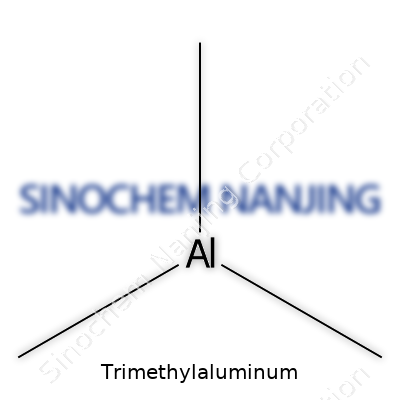
Trimethylaluminum lands on the list of intriguing chemical compounds both for its straightforward formula and its lively personality. In chemical shorthand, you’ll see it as Al2(CH3)6. This means two aluminum atoms join up with six methyl groups (CH3 each). It looks deceptively simple on paper, but there’s a good story underneath. I’ve seen plenty of discussions about organometallics lose their audience with jargon, but trimethylaluminum demands a closer look for anyone who deals with advanced manufacturing or chemistry lab work.
Getting to Know the Molecular Structure
Back in college, my organic chemistry professor pulled out a model set to explain trimethylaluminum. Most expected a basic ball-and-stick model. Turns out, this compound doesn’t even exist as single neat Al(CH3)3 units in its regular state. Instead, the structure forms a dimer, which basically means two identical units join up. Each aluminum atom bonds not only to three methyl groups but also grabs a methyl arm from the neighbor aluminum. This setup creates six methyl bridges between the two aluminum atoms. Think of it as two kids sharing their toys back and forth, instead of neatly dividing them up.
Seeing this structure spelled out showed me why its properties seem unpredictable at first. The dimer arrangement keeps the molecule stable at room temperature and gives it a reputation for reactivity. Chemists call this a 'bridged dimer', a phrase you’ll hear tossed around in conversations about organometallic chemistry. You won’t usually find it as single, separated Al(CH3)3 molecules unless you heat it up or use special solvents to coax the pieces apart.
Why Trimethylaluminum Commands Respect in the Lab
The structure gives the whole compound some muscle when reacting with water, air, or even other chemicals. It jumps at moisture and oxygen, which means anyone moving it around has to work fast and in a sealed environment, usually a glovebox or under an inert gas like argon. Break out one of those glass ampoules in the wrong setting, and you get a small fireball as the methyl groups react vigorously.
This reactivity makes it more than just a laboratory curiosity. The electronics industry counts on trimethylaluminum during the process of chemical vapor deposition. It helps create thin films of aluminum oxide for semiconductor chips, key components in most devices on my desk as I type. Tools and safety procedures have to keep up with its hazards, and experienced chemists respect the stuff. One slip in handling, and you’ll never forget the lesson.
A Safer Path Forward
Experience shapes respect. Every seasoned chemist who’s handled trimethylaluminum has a story. I've followed strict procedures — dry air, double-checking seals, never working alone. Companies have begun sharing detailed training videos online, making safety knowledge easier to access. Universities started pushing for more rigorous safety training, instead of those old dry leaflets that barely scratched the surface. New containers with smart sensors now flag moisture before the compound can do harm. If more people step up to raise awareness and design safer systems, risks can stay in check and the benefits of trimethylaluminum stay within reach.
Wrapping Up the Structure
Trimethylaluminum’s chemical formula, Al2(CH3)6, hides a network of shared methyl groups across two aluminum atoms, giving this compound unique strength and risk in equal measure. Its role in technology and research rests on both its reactivity and the knowledge we bring to handling its challenges. The structure isn’t just a detail for chemists — it’s a reminder of why experience, safety, and constant vigilance matter in scientific progress.
How should Trimethylaluminum be safely disposed of?
Understanding the Challenge
Trimethylaluminum. The name alone tells you it isn’t something you want spilled on your workbench or anywhere outside a secure lab. I've handled enough reactive chemicals in my career to know that a little carelessness with this one gets you instant trouble. This stuff reacts fiercely to air and moisture, sometimes with explosive results. A tiny droplet can ignite just from a humid breath or a leaky glove. So, talking about safe disposal means respecting its power right from the start.
Why the Usual Fixes Don’t Work
Pouring leftover chemicals down the drain or tossing them with regular trash stops being an option as soon as you see what happens when trimethylaluminum gets wet. Forget about improvising or hoping a little water will neutralize it. I've seen trained chemists surprised at how violent that encounter can get. Even small spills produce fires or caustic fumes in seconds. Any safe method involves careful planning, the right gear, and trained folks who know the risks.
The Real-World Protocols
So how do you get rid of it? Most labs rely on quenching, but this process takes practice, steady nerves, and a chemical fume hood. People use mineral oil or toluene to dilute the trimethylaluminum first. Then, using a dropping funnel or syringe, they add it drop by drop into a large excess of this solvent. Only after careful dilution does the team add it, again dropwise, into isopropanol or another alcohol—something that reacts less fiercely than water. The idea: slow the release of heat, keep everything under control, and minimize the risk of fire.
While neutralizing, experienced chemists watch everything closely. One mistake or a too-quick addition could mean an uncontrolled reaction. Every phase is carried out behind a blast shield, under air-free conditions, and everyone nearby wears full protection. I've learned, sometimes the hard way, that patience and focus matter more than fancy equipment.
What the Law Says and Why It Matters
Laws back up this strict process. The Environmental Protection Agency treats trimethylaluminum as hazardous waste, and so do most local authorities. Disposing of it without clear documentation or outside regulated channels brings big fines and legal trouble. More important: Safe protocols keep people healthy and prevent disasters—no one should risk poison gas or fires in neighborhoods and storm drains.
That means most labs partner with professional hazardous waste handlers. These firms have access to specialty equipment, like glove boxes and fire suppression systems, and teams trained for emergencies. Feet on the ground experience really matters—no YouTube video or shortcut replaces the knowledge that comes from chemical safety training and years on the job.
Everyday Choices Make the Difference
Disposal isn’t just about the end of the line. Using less trimethylaluminum, keeping careful inventory, and limiting purchases to the smallest possible amounts all cut down on leftover waste. At my own lab, we talk about ordering habits and storage almost as much as reactions themselves. These choices keep disposal from being a last-minute scramble and make emergencies less likely.
No one expects magic answers for materials as challenging as this. But with respect, proper training, and a genuine commitment to safety, dealing with trimethylaluminum gets a little less scary—and a lot safer for everyone around.
| Names | |
| Preferred IUPAC name | Trimethylalumane |
| Other names |
Trimethylaluminium TMA Trimethyl aluminium Aluminum, trimethyl- Aluminum trimethyl |
| Pronunciation | /traɪˌmɛθɪl.əˈluːmɪnəm/ |
| Identifiers | |
| CAS Number | 75-24-1 |
| Beilstein Reference | 3587266 |
| ChEBI | CHEBI:33121 |
| ChEMBL | CHEMBL1200515 |
| ChemSpider | 531076 |
| DrugBank | DB11629 |
| ECHA InfoCard | 03e6dd325d2e-4f78-8071-d9a4f6ce12e9 |
| EC Number | 200-853-0 |
| Gmelin Reference | Gmelin1549 |
| KEGG | C14212 |
| MeSH | D014260 |
| PubChem CID | 24008 |
| RTECS number | AL2625000 |
| UNII | Z8GEE6F9R2 |
| UN number | UN3394 |
| Properties | |
| Chemical formula | Al2(CH3)6 |
| Molar mass | 72.09 g/mol |
| Appearance | Colorless liquid |
| Odor | sharp, pungent |
| Density | 0.788 g/mL at 25 °C |
| Solubility in water | Reacts |
| log P | -0.34 |
| Vapor pressure | 10 mmHg (20 °C) |
| Acidity (pKa) | pKa ~ 12.7 |
| Basicity (pKb) | pKb ≈ -4.0 |
| Magnetic susceptibility (χ) | -58.0·10⁻⁶ cm³/mol |
| Refractive index (nD) | 1.376 |
| Viscosity | 0.346 mPa·s (20 °C) |
| Dipole moment | 0.63 D |
| Thermochemistry | |
| Std molar entropy (S⦵298) | 205.6 J·mol⁻¹·K⁻¹ |
| Std enthalpy of formation (ΔfH⦵298) | -74.75 kJ/mol |
| Std enthalpy of combustion (ΔcH⦵298) | -2020 kJ/mol |
| Hazards | |
| GHS labelling | GHS02, GHS05, GHS06, GHS08 |
| Pictograms | GHS02,GHS05,GHS06 |
| Signal word | Danger |
| Hazard statements | H260, H314, H318, H335 |
| Precautionary statements | P210, P222, P231+P232, P261, P280, P301+P330+P331, P303+P361+P353, P305+P351+P338, P377, P403+P233, P422 |
| NFPA 704 (fire diamond) | '4-3-2-W' |
| Flash point | -18 °C (-0.4 °F) (closed cup) |
| Autoignition temperature | 380 °C |
| Explosive limits | Explosive limits: 1.5-9.5% (in air) |
| Lethal dose or concentration | LD50 (oral, rat): 38 mg/kg |
| LD50 (median dose) | LD50 (median dose): 38 mg/kg (oral, rat) |
| NIOSH | AY4293000 |
| PEL (Permissible) | PEL: 2 mg/m³ |
| REL (Recommended) | REL (Recommended): 2 mg/m³ (as Al) |
| IDLH (Immediate danger) | 40 mg/m3 |
| Related compounds | |
| Related compounds |
Triethylaluminum Tripropylaluminum Triisobutylaluminum Tri-n-butylaluminum Tris(dimethylamino)aluminum Trimethylgallium Aluminum trichloride |



