Trimethyl Phosphite: From Laboratory Curiosity to Industrial Touchstone
Historical Development
Trimethyl phosphite first attracted scientific interest in the late nineteenth century during the height of organophosphorus chemistry’s golden era. Chemical pioneers hunting for new synthetic routes noticed that simple alkyl phosphites like this one could do what others could not: react gently yet surprisingly effectively in some of the more finicky lab situations. You start to see its mark during the interwar years, as laboratories across Europe and the United States introduced it into research and later picked up its nitrogen-hating and nucleophilic properties for making pesticides, flame retardants, and a few early pharmaceutical intermediates. Once commercial needs for flame retardants and specialty chemicals exploded post-WWII, trimethyl phosphite’s journey moved from the beakers of academics to the reactors of industry. Behind many large plants today, you still find this humble molecule in the backbone of synthesis protocols, a testament to its versatility and reliability through waves of changing chemical fashion.
Product Overview
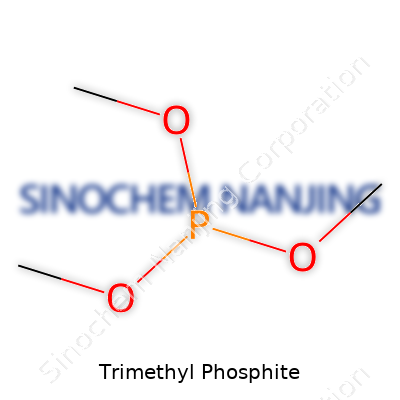
Trimethyl phosphite is an organophosphorus compound, known to chemists as P(OCH3)3. Its fame doesn’t just come from being easy to handle, but from the way it quietly slides into a host of manufacturing processes. Clear, colorless, with a familiar odor that traces back to its phosphorus roots, it delivers predictability to often unpredictable chemical reactions. Beyond the mundane odor, this liquid survives long journeys and storage periods if shielded from water and humid air—growing less common by the year with today’s climate but crucial in keeping its quality unimpaired. Chemical supply catalogues and industrial distributors recognize it as both a potent reagent and a valued intermediate, whether bought by the kilogram or traded by the ton.
Physical & Chemical Properties
In the lab, you get to know trimethyl phosphite by its liquid state at room temperature, with a boiling point around 111°C under atmospheric pressure. It’s not one for extreme environments—temperatures below freezing can see it thicken, and exposure to air brings on slow hydrolysis as water vapor breaks the molecule down into methanol and phosphorous acid. Its density hovers around 1.05 g/cm3, and it carries enough volatility to demand respect but not outright fear. Flammability can’t be ignored: vapors catch fire with a naked flame, though not as fiercely as lower alcohols or ethers. These basic facts guide choices in storage, transport, and every move in the process chain.
Technical Specifications & Labeling
Chemical suppliers learned long ago that buyers expect straightforward data on purity and contaminants. The specification sheet reads like a wish list for process engineers: purity typically sits above 99%. Water content, measured by Karl Fischer titration, must stay below a few tenths of a percent to avoid unwanted side reactions. Acidity levels remain low, and the market version rarely strays from its expected refractive index and specific gravity. Safety labeling in line with international norms flags hazards for flammability and water sensitivity, marked clearly with pictograms and GHS statements that any laboratory or plant worker will recognize at a glance.
Preparation Method
Producers rely on a simple yet effective reaction: treating phosphorus trichloride with excess methanol in the presence of a suitable base, usually at low temperatures to keep side reactions from getting out of hand. The process liberates methyl chloride gas, making well-sealed vessels and proper ventilation mandatory. This route dates back to early work by August Wilhelm von Hofmann, but refinements in pressure control, separation, and waste treatment mean today’s process lines offer high yields and consistent quality batch after batch. With global pushback on environmental impact, production teams now add scrubbing and recycling for those methanol vapors and by-product hydrochloric acid, turning would-be emissions into fresh feedstocks in a steady loop.
Chemical Reactions & Modifications
Once inside a flask, trimethyl phosphite takes on a life of its own. In the hands of a skilled chemist, it acts as a reducing agent, bringing down metal ions like silver or platinum to their elemental form. It serves as a methylating agent, passing on its methyl groups where asked. Perhaps most famously, it plays a starring role in the Arbuzov reaction, where it converts alkyl halides into phosphonates—critical building blocks for everything from herbicides to antiviral drugs. Its versatility doesn’t end there. It reacts with oxygen to yield trimethyl phosphate, and under certain conditions, swaps groups or forms complex ligands for transition-metal catalysts. Every reaction with it brings nuance, from product yields to purification challenges, shaping everything from simple reagents to high-value specialty chemicals.
Synonyms & Product Names
Trimethyl phosphite runs under a variety of aliases. Some call it Phosphorous acid, trimethyl ester, others stick with less technical options like Methyl phosphite or even TMP. In the world of chemical trade, recognizing these synonyms matters. Confusing an order with trimethyl phosphate can end disastrously, as properties and reactivities do not match. Technical documents, shipment labels, and safety data sheets all carry these alternative names, reminding those in the supply chain why precision in naming matters as much as in measurement.
Safety & Operational Standards
Working with trimethyl phosphite brings a responsibility for rigorous controls, shaped by decades of incident reporting. It burns in air with a distinct flame, and upon ignition, it produces dense, irritating smoke loaded with phosphorus oxides. Inhalation of vapors causes headaches or stinging in mucous membranes. Direct skin exposure brings irritation, sometimes delayed. To minimize risk, handlers wear chemical-resistant gloves, protective goggles, and sometimes full face shields. Storage stays limited to tightly sealed containers, placed in cool, ventilated spaces far from incompatible substances like strong oxidizers and acids. Spills get neutralized with non-combustible absorbents; waste heads for secure disposal. Strict adherence to OSHA and EU REACH regulations sets the tone for both workplace habits and environmental stewardship.
Application Area
Industry leans on trimethyl phosphite for several key applications. It lands on the ingredient list for synthesizing agrochemicals, especially glyphosate herbicides, and finds fans in flame retardant manufacturing, where this molecule steps in as both a reactant and modifier. Many pharmaceutical pathways rely on this ester to build nucleotides and antiviral compounds, with hepatitis and HIV drugs indirectly owing some activity to this starting material. Lab research benefits from its function as a ligand in transition-metal catalysis, especially in finely-tuned organic syntheses. As EMTs increasingly use phosphorus-containing reagents, demand continues to climb in both developed and emerging markets.
Research & Development
Current R&D on trimethyl phosphite focuses on making processes greener and more efficient, with a strong drive toward minimizing residual contaminants in both lab and industrial batches. Academic teams explore new catalytic cycles where trimethyl phosphite’s stability enables low-energy reactions in the making of carbon-phosphorus and carbon-carbon bonds. Process intensification in chemical plants pulls it into flow chemistry, reducing waste and increasing year-round uptime. Awareness of global phosphorus scarcity underpins efforts to recycle reaction by-products and develop catalysts that stretch each phosphorus atom further. Startups and established firms alike hunt for new medical applications, hoping derivatives will unlock therapies for drug-resistant infections or novel anticancer agents.
Toxicity Research
Comprehensive studies show trimethyl phosphite presenting moderate toxicity to mammals, with ingestion or inhalation leading to symptoms like respiratory distress and kidney effects in lab animals. Chronic exposure brings concerns about mutagenicity or reproductive impacts, spurring frequent review of workplace limits and environmental emission thresholds. Ecotoxicity studies find that aquatic organisms react to modest concentrations, pressing manufacturers to invest in advanced containment and effluent treatment technology. Scientists in regulatory agencies in the United States, the EU, and East Asia continue to appraise new data, so safety standards evolve as the evidence base grows. Every downstream user from chemist to end-user bears some responsibility for learning the risks and practical steps.
Future Prospects
Trimethyl phosphite remains a staple of modern chemical synthesis, but questions loom about future availability of phosphorus resources and shifting regulatory landscapes. Researchers look for new ways to derive it from renewable feedstocks, while plant engineers design circular systems that extract and reuse every last phosphorus atom. Green chemistry pushes might soon give rise to alternatives with reduced environmental footprints, but for many core reactions, trimethyl phosphite stays unmatched in balance of reactivity and manageability. Continued R&D investments in safer production technologies, along with advances in detecting trace residues, guide its adaptation for the stringent demands of pharmaceutical, agrochemical, and materials industries worldwide.
What is Trimethyl Phosphite used for?
Looking Beyond the Lab: Everyday Uses
Trimethyl phosphite might sound like something only chemists talk about, but it has a footprint that extends well past the laboratory. If you look around, the stuff touches everything from electronics to medicine, and that impact keeps growing as technology and research evolve. My own curiosity about the world of chemicals really took off during a summer job at an industrial supply warehouse, where pallets of complex-sounding liquids like this were moved daily. At the time, I couldn’t appreciate just how much these compounds shape ordinary products people rely on every day.
Key Role in Pesticide Production
Farmers face a constant battle against pests, and they count on compounds derived from trimethyl phosphite to keep crops healthy. It acts as a critical building block for producing phosphonate and phosphinate pesticides. These agents help safeguard yields in fields of wheat, rice, and corn—food staples that feed families worldwide. Some of the most effective pesticides used today draw their origins back to this simple phosphorus-based molecule.
Medicines and Pharmaceuticals
Trimethyl phosphite’s importance doesn’t stop at the farm’s edge. The pharmaceutical industry leans on it as a reagent—a key ingredient used to jumpstart bigger chemical reactions. For instance, when scientists develop antiviral medicines or cancer therapeutics, they often turn to this compound as part of the synthesis process. Its role isn’t about being seen on store shelves; it’s more like the backstage crew at a concert, working quietly to support lifesaving research and drug development.
Makers of New Materials Take Note
Electronics form the backbone of modern life, powering everything from smartphones to solar panels. Trimethyl phosphite helps craft the special coatings and flame retardants used in circuit boards and plastic casings. These coatings keep devices running cooler and safer. After seeing a friend’s apartment fire caused by faulty wiring, the value of flame-resistant plastics became personal. The science built into materials can mean the difference between a near-miss and a disaster.
Environmental and Safety Considerations
Handling trimethyl phosphite requires respect for its reactive nature. The chemical can catch fire if mishandled, and its vapors pose health risks to those working near it. Companies and researchers use strict safety practices to reduce spills, prevent fires, and protect workers with ventilated workspaces and caution labels. Stories of accidents in poorly supervised facilities push home a simple lesson—cutting corners with chemicals like this endangers people and the environment.
Seeking Safer and Greener Alternatives
As societies question how much synthetic chemicals they want in food production or the environment, the push grows for greener processes and better substitutes. Researchers experiment with ways to harness biological and renewable methods to control pests, or develop plastics that require less aggressive flame retardants. Trimethyl phosphite has its place, but its use should match a genuine need, managed carefully and with a continual eye toward safer innovation. Policymakers, scientists, and industries can support this shift by funding research, sharing knowledge openly, and listening to public concerns.
Is Trimethyl Phosphite hazardous or toxic?
What Is Trimethyl Phosphite?
Trimethyl phosphite sits among a family of chemicals that don’t exactly spark household recognition, but their usefulness in labs and manufacturing keeps them in circulation. It’s a colorless liquid, often picked for making other chemicals or working with pharmaceuticals. Without major oversight, its presence can stay under the radar—even among people who spend years in research.
Known Health Risks
Hands-on work with this compound often means dealing with fumes and the chance of skin contact. The biggest worry comes down to inhaling its vapors or letting it touch skin for too long. People report irritation in their noses, throats, and lungs if they work with it in stuffy spaces. Over time, shortness of breath and coughing increase—those are big signals to step back and find better ventilation. Spills on hands can spark redness and discomfort—sometimes a rash sticks around.
Accidental swallowing? That triggers headaches, a sick stomach, even nervous-system effects. No one working in a setting with bottles and beakers wants to add trips to the emergency room onto their day. Long ago, I remember a colleague suffering a splash—they got help right away and avoided lasting trouble. Quick, careful reactions spare bigger problems with chemicals like this.
Fire and Reactivity Risks
Trimethyl phosphite doesn’t wait around for things to go wrong; it lights up with the right spark. That flammability—more than some realize—poses a risk in any lab or warehouse with stray heat sources. In some accidents, fumes catch fire from sources as mild as static or a hot surface. The compounds it forms when burning, such as phosphorous oxides, can make cleanup tougher and health concerns spike.
Not all chemicals behave on their own, either. This one reacts badly with strong oxidizers, acids, and bases—mixing them, even by accident, means unexpected hazards, sometimes explosions. Pattern recognition here isn’t just academic; workers need hands-on training to avoid those risks. I’ve seen labs where a misplaced bottle nearly started a chain reaction—clear labeling and storage kept it safe.
Environmental Impact
Once it escapes controlled areas, trimethyl phosphite can harm waterways. Even small spills kill aquatic life; fish and plants absorb it in ways that humans might not see right away. Regular runoff or a single disposal blunder reaches streams and rivers, disrupting local ecosystems. The environment doesn’t bounce back easily—the compound lingers in soil and water, waiting to cause harm long after a careless day on the job.
Protecting People and Places
Regular training saves more nerves than any warning poster. Workers who know the signs of exposure and understand quick response rarely suffer the worst cases. Wearing gloves, goggles, and using fume hoods creates real barriers against risky contact. Every chemical storage room benefits from fire extinguishers nearby (dry chemical type works well for incidents like this). Labs following strict inventory checks prevent old containers from leaking or being mixed by mistake.
Disposal becomes just as urgent as day-to-day handling. Secure, marked waste bins and strict rules around what can go down drains lock away accidental releases. Partnering with hazardous waste services strips away worry about environmental fallout. Even outside labs and plants, people living near industrial zones want to know their air and water stay clean—regular community updates and transparent safety records build trust if accidents ever do occur.
How should Trimethyl Phosphite be stored?
Understanding the Risks
Trimethyl phosphite brings value to labs and factories, but it comes with risks you can’t ignore. A colorless liquid with a sharp, unpleasant odor, trimethyl phosphite can catch fire quickly and reacts with water and oxidizers. In my work as a lab tech, I’ve seen close calls when bottles sat too close to windows or heat sources. Heat and direct sunlight can turn a safe stockroom into an emergency room. The right storage habits can steer clear of headaches and harm alike.
Keep It Cool and Dry
This chemical belongs far away from any source of moisture. Trimethyl phosphite breaks down in water, creating flammable methanol and corrosive phosphorous acid. After a damp day, a poorly sealed container may leave you cleaning up an ugly mess. A dry storeroom holds the line against leaks and unwanted reactions. Anyone who has cleaned chemical spills would vouch for investing in climate control.
Heat takes the danger up a notch. At room temperature, trimethyl phosphite stands stable, but higher temperatures increase pressure inside storage bottles and set off unwanted reactions. Storing the chemical in a cool place, ideally under 25°C (77°F), keeps the risks at bay and means no nasty surprises from expanded vapors or rogue reactions. Flammable storage cabinets, designed for chemicals like this, block the heat and limit exposure to light—both key to long shelf life and safety.
Keep Oxygen Away
Trimethyl phosphite deserves respect because it doesn’t need much to ignite. In an average lab, air is enough to start a fire with the right spark. Flammable liquids storage rules—airtight containers, tight lids, no worn-out connections—shield the chemical from both accidental leakage and unwanted air. I’ve opened more than a few corroded caps; it serves as a warning about why vendors use special Teflon or HDPE linings in containers. Glass can crack and steel will rust; don’t underestimate shelf-life or factory packaging.
Protect People and Planning
Regular staff training plays just as strong a role as the right shelves and bottles. I remember walking into an unlocked storage closet years ago and spotting flammable labels shared with cleaning supplies and paper towels. That mix can turn disastrous fast. Stencils, hazard posters, and clear logs keep everyone alert and in line. Pair this with proper personal protective gear—chemical gloves, goggles, flame-resistant coats—and even new staff won’t miss the point.
Most facilities see value in double-checking chemical inventories and spill kits every month. Even now, before every delivery, I check registry sheets and suppliers’ fresh safety data sheets (SDS). Outdated SDSs mean outdated safety steps—and that’s where trouble creeps in. Chemical associations recommend a clean, dry, locked room with spill trays for hexagon-labeled chemicals like trimethyl phosphite. Under strong national codes, these steps show up in accident statistics, which fall when companies crack down on corner-cutting.
Better Solutions Ahead
Some firms push for automation, like smart sensors to monitor humidity and temperature inside storage closets. Others install alarms tied to storage cabinet doors, so everyone knows if someone leaves an acid jug open. These changes lower stress and make tough jobs safer. Trimethyl phosphite won’t lose its hazards, but smarter storage habits—rooted in good training, tight labeling, and dry, cool cabinets—offer real control. It’s less about one big step and more about steady vigilance every day.
What is the chemical formula of Trimethyl Phosphite?
Trimethyl Phosphite in the Real World
Trimethyl phosphite, known by chemists as P(OCH3)3, plays a bigger role in daily life than most realize. The formula tells you a lot straight away: one phosphorus atom, three methoxy groups attached. That's three OCH3 branches, making the whole molecule a bit lopsided and highly reactive with certain chemicals. C3H9O3P—this little sequence carries the core of the compound's identity, reflecting its phosphorus backbone and those active methyl connections.
You rarely see trimethyl phosphite outside a lab or a chemical plant, though. Most folks encounter its effects indirectly. Drug companies, pesticide manufacturers, and materials research teams use it to build more complex molecules. In conversations with organic chemists, there’s a sort of respect for any phosphorus reagent that can offer both reactivity and control. Trimethyl phosphite does a good job on both counts.
Real-World Hazards and Lab Challenges
Scientists working with this compound usually wear gloves, goggles, and lab coats because they know trimethyl phosphite isn’t something to play around with. It can irritate the eyes and skin, and inhaling the vapor doesn’t do the lungs any favors. Years back, I watched a coworker spill a small amount—her reaction time told a bigger story about why safety training can’t get skipped. Chemical burns and respiratory issues stick around long after a careless moment.
Most reactions involving trimethyl phosphite need precise handling, often in specialized glassware under a fume hood. Its instability in the presence of acids or high heat can lead to unpredictable results. This ties into a broader problem in industrial chemistry: balancing efficiency with safety.
Importance in Industry and Medicine
Think about medicines, insecticides, flame retardants, and even some plastics—many rely on steps involving phosphorus compounds. Without trimethyl phosphite, manufacturers would lose a tool for transferring the phosphite group. The famous Michaelis–Arbuzov reaction, responsible for building organophosphorus compounds, uses this compound as a key ingredient. Safe, affordable, and efficient manufacturing of these advanced chemicals doesn’t happen without knowledge of what these formulas mean.
It’s not all about big industry, either. Academic labs teach students to handle phosphorus compounds with respect starting in undergraduate years. Tweaking molecules through methyl groups or adjusting reaction temperatures makes all the difference in yield, purity, and ultimate effectiveness of a drug or useful material. I remember late nights tweaking conditions, chasing that elusive clean product in a round-bottom flask, often with compounds like trimethyl phosphite at the center of the puzzle.
Reducing Risks and Moving Forward
Industry groups push for better personal protective equipment and improved training for anyone handling reactive chemicals like trimethyl phosphite. Engineering controls—better ventilation, sealed storage containers, spill response protocols—cut down on avoidable accidents. Many companies run regular drills and encourage open conversations about lab mistakes to turn close calls into learning experiences.
Alternatives exist, but not every substitute can match the efficiency or selectivity of trimethyl phosphite for certain chemical reactions. The focus remains on careful handling and updated safety data. Open sharing of accident reports and technical improvements in glassware design keep the risks manageable.
Knowing the formula C3H9O3P and understanding its behavior isn’t just about passing a test. For chemists and process engineers, this fundamental knowledge shapes a safer workplace and sharpens the tools modern science uses to solve global challenges.
What precautions should be taken when handling Trimethyl Phosphite?
Understanding What You’re Working With
Trimethyl phosphite doesn’t show up in many average households, but it plays a background role in labs and the chemical industry. The liquid has a clear appearance and a sharp, sometimes unpleasant smell. Breathing in vapors or letting the liquid touch your skin triggers problems you don’t want—burns, headaches, dizziness, eye irritation, and in heavy exposure, real danger to your lungs. I’ve worn the itchy coveralls, double gloves, all because of what I’ve watched colleagues go through after “just a splash.”
Personal Protection Never Takes a Break
Goggles fog up. Gloves get sticky. None of that matters once you realize how quickly accidents happen. Whenever I pour, transfer, or weigh trimethyl phosphite, goggles shield my eyes, nitrile gloves protect my hands, and flame-resistant lab coats get zipped. It’s not overkill. Splash-proof face shields go on when I handle drums or larger containers, especially if I’m anywhere near a transfer pump. Vapors don’t always warn you with a smell before irritation sets in—that’s the kind of fact that makes a respirator or fit-tested mask essential in spaces without serious airflow.
Ventilation Means More Than Cracking a Window
Trimethyl phosphite volatilizes fast at room temperature. It’s easy to think a fume hood will catch it all, but experience proves that setups matter. Hoods should pull air reliably, and workspace layouts should avoid dead corners where vapors linger. Sometimes colleagues ignore the “use in well-ventilated area” label, then wonder why headaches start after a few minutes. Open doors or windows never match mechanical ventilation. Care about inhalation and invest in good airflow, not just for people but to stay within legal safety limits.
Fire and Storage: No Shortcuts
Trimethyl phosphite sparks up more easily than many folks expect. Plenty of labs keep fire extinguishers, but the real game-changer is keeping everything away from ignition sources. Avoid hot plates, exposed wires, or even static on a dry day. Store the liquid in tightly sealed, labeled containers. Keep it cool and out of sunlight and moisture—water creates strong acids and other hazards. Mixing up storage rules invites costly mistakes, from violent reactions to contaminated stock. Small leaks become emergencies, and chemical compatibility charts actually earn their keep here.
Spill Response: Confidence Comes From Practice
Too many cleanups get fumbled by folks who’ve never walked through the real steps. In my past labs, we reviewed protocols out loud: contain the spill, ventilate, and neutralize with proper absorbents—no paper towels, ever. Evacuate if you lose control or the spill spreads too far. Have spill kits close and checked monthly. Treat every accident like a teaching moment and keep emergency showers and eye wash stations free of clutter.
Training, Culture, and the Human Factor
I’ve learned that one-off safety briefings fade from memory. Regular drills matter. People look out for each other when safety culture turns into a habit, not just policy. New colleagues need hands-on training, not just videos or pamphlets. I’ve seen teams spot leaks, catch improper storage, and speak up if something feels off—all because safety ranks as a core value, not a box on a checklist.
Thinking Broader: Protecting People and Planet
Improper disposal harms more than the handler—it puts water, soil, and air at risk. Neutralize waste, label everything, and follow disposal regulations. Staying mindful shields your team, and everyone else down the line, from the consequences of a single mistake. Small acts of caution go a long way, and in my years of handling aggressive chemicals, I’ve found that respect—for the substance, the rules, and each other—always pays off.
| Names | |
| Preferred IUPAC name | Trimethyl phosphite |
| Other names |
Trimethyl phosphite Phosphorous acid trimethyl ester Phosphorous acid, trimethyl ester Trimethoxyphosphine |
| Pronunciation | /traɪˈmɛθɪl ˈfɒsfaɪt/ |
| Identifiers | |
| CAS Number | 121-45-9 |
| 3D model (JSmol) | `3D model (JSmol)` string for **Trimethyl Phosphite**: ``` CO[P](OC)OC ``` |
| Beilstein Reference | 633923 |
| ChEBI | CHEBI:134150 |
| ChEMBL | CHEMBL140469 |
| ChemSpider | 5441 |
| DrugBank | DB03758 |
| ECHA InfoCard | 100.004.051 |
| EC Number | 200-867-7 |
| Gmelin Reference | Gm: 1401 |
| KEGG | C01840 |
| MeSH | D014264 |
| PubChem CID | 11550 |
| RTECS number | TF1575000 |
| UNII | 85C0G8K3SZ |
| UN number | UN2323 |
| Properties | |
| Chemical formula | C3H9O3P |
| Molar mass | 140.13 g/mol |
| Appearance | Colorless transparent liquid |
| Odor | Pungent |
| Density | 1.017 g/mL at 25 °C |
| Solubility in water | soluble |
| log P | 0.77 |
| Vapor pressure | 0.78 mmHg (20°C) |
| Acidity (pKa) | 23.5 |
| Basicity (pKb) | 7.77 |
| Magnetic susceptibility (χ) | -66.5e-6 cm³/mol |
| Refractive index (nD) | 1.390 |
| Viscosity | 0.763 cP (20°C) |
| Dipole moment | 3.11 D |
| Thermochemistry | |
| Std molar entropy (S⦵298) | 247.6 J·mol⁻¹·K⁻¹ |
| Std enthalpy of formation (ΔfH⦵298) | -334.7 kJ/mol |
| Std enthalpy of combustion (ΔcH⦵298) | –1794.8 kJ·mol⁻¹ |
| Hazards | |
| GHS labelling | GHS02, GHS07 |
| Pictograms | GHS02,GHS07 |
| Signal word | Warning |
| Hazard statements | H226, H301, H311, H331 |
| Precautionary statements | P210, P280, P305+P351+P338, P310 |
| NFPA 704 (fire diamond) | 1-3-1-W |
| Flash point | 38 °C (100 °F) |
| Autoignition temperature | 535 °C |
| Explosive limits | 4.4–20% |
| Lethal dose or concentration | LDLo oral rat 1600 mg/kg |
| LD50 (median dose) | LD50 (median dose): Oral rat LD50 = 1600 mg/kg |
| NIOSH | PH8580000 |
| PEL (Permissible) | PEL: 10 ppm |
| REL (Recommended) | REL (Recommended Exposure Limit) for Trimethyl Phosphite is: "2 mg/m³ |
| IDLH (Immediate danger) | IDLH: 250 ppm |
| Related compounds | |
| Related compounds |
Trimethyl phosphate Phosphite ester Dimethyl phosphite Triethyl phosphite |



