Trimethyl Orthoformate: Evolution, Properties, Applications, and Outlook
Historical Development
Trimethyl orthoformate tells a story that stretches back through decades of changing chemical industry needs. Chemists discovered its practicality and set it apart in the lab bench era of the twentieth century, as synthetic organic chemistry reached new levels. By figuring out how to reliably make this colorless liquid, researchers built a bridge between old-school condensation techniques and the current desire for speedier, cleaner synthesis in fine chemicals and pharmaceuticals. Industry began paying attention not only to reactivity, but also to the ability to scale production safely without losing product quality. Over time, the chemical became a widely used reagent—especially thanks to European and Japanese academic publications that detailed its value in methylation and protective group strategies. Each turning point in its use reflected tighter standards, shifting regulatory requirements, and expanding ambition for what could be made in a lab.
Product Overview
Trimethyl orthoformate serves as a methylating agent and reagent across many branches of chemical synthesis. Sold as a colorless, highly flammable liquid with a sharp, stinging odor, it offers a simple formula: HC(OCH3)3. Chemists usually reach for this bottle when they want to introduce a methoxy group or protect reactive functionalities, such as aldehydes or ketones, during complex syntheses. What sets trimethyl orthoformate apart is its straightforward behavior under controlled conditions, making it a go-to component for companies manufacturing fine chemicals, active pharmaceutical ingredients, flavors, fragrances, and advanced materials.
Physical & Chemical Properties
Trimethyl orthoformate appears as a clear, low-viscosity liquid at room temperature. Boiling at approximately 103 degrees Celsius, it volatilizes quickly and gives off flammable vapors. Its density clocks in near 0.97 g/cm3. In terms of solubility, the liquid dissolves easily in common organic solvents like ethanol, acetone, and ether, but reacts with water, slowly decomposing into methanol and formic acid. The compound’s vapor is heavier than air and tends to accumulate in low-lying areas if spilled indoors. Storage demands cool, dry, well-ventilated areas because heat or moisture can compromise the product’s stability. One key property that users notice: trimethyl orthoformate reacts with acids to yield methyl formate and methanol, releasing heat in the process.
Technical Specifications & Labeling
Suppliers sell trimethyl orthoformate in drums, pails, or tightly sealed ampoules. Typical material safety data sheets flag a purity above 99%, with moisture content kept below 0.5%. Manufacturers commit to providing traceable batch numbers, clear hazard pictograms, and shelf-life details, responding to regulatory demand for traceability and transparency. Most packaging sports wide-mouthed, leak-proof containers, with clear warnings about flammability and the dangers of inhalation or skin contact. Labels offer hazard statements intended to limit workplace accidents by giving staff consistent information at a glance. These practiced steps help limit confusion during audits and inventory checks.
Preparation Method
Trimethyl orthoformate comes from a simple sequence: excess methanol and hydrogen cyanide react in the presence of a hydrogen chloride catalyst, forming methyl formate, which then re-acts with additional methanol and an acid catalyst to form the final product. Efficient recovery and recycling of excess methanol minimize waste and keep costs under control for industrial plants. The preparation requires monitoring for exothermic reactions, close attention to catalyst dosing, and careful removal of low-boiling impurities through distillation. Companies operating at commercial scale have learned to automate the process, using sensor arrays to ensure consistent quality and rapid intervention if temperature deviations suggest runaway reactions.
Chemical Reactions & Modifications
Synthetic chemists learned to value trimethyl orthoformate for the way it introduces methyl groups and forms protective acetals. When added to aldehydes or ketones in the presence of an acid catalyst, the reagent reliably produces methyl acetals—blocking reactive sites and opening doors for more challenging downstream transformations. The compound also participates in transesterification reactions, helping convert esters into their methyl counterparts. It stands out for preparing methyl ethers under mild conditions and supporting the construction of heterocyclic rings, essential for pharmaceutical intermediates. Under basic conditions, it can be forced to break down for in situ generation of methanol, offering extra utility in select synthetic steps.
Synonyms & Product Names
Chemists and suppliers alike recognize trimethyl orthoformate by several names: Methyl orthoformate, Formic acid trimethyl ester, TMOF, and Orthoformic acid trimethyl ester. Internationally, the identifiers match up with CAS number 149-73-5 and EC number 205-745-7. Bulk purchasers sometimes order under trade names set by local chemical providers, but industry circles still tend to favor the full IUPAC name or the simpler abbreviation, reflecting a global consensus around nomenclature that streamlines sourcing and communication.
Safety & Operational Standards
Working with trimethyl orthoformate means treating it as a flammable and moderately toxic substance. Staff receive mandatory training on proper handling, as the liquid has the potential to irritate skin, eyes, and the upper respiratory tract, and concentrated vapors can trigger headaches, dizziness, or more severe central nervous system effects if exposure exceeds occupational thresholds. Facilities use explosion-proof ventilation, flame-arrested containers, and strict access protocols to limit accident risks. PPE, including gloves, lab coats, goggles, and well-fitted respirators, forms the baseline barrier against inadvertent contact. Spill response kits, eyewash stations, and emergency showers stand within easy reach. Safe disposal uses high-temperature incineration or specialized waste stream protocols, since improper burning or runoff poses environmental hazards.
Application Area
Chemists depend on trimethyl orthoformate in processes that need quick, efficient protection and methylation. Pharmaceutical manufacturers use it to mask carbonyl groups, thereby improving the purity and yield of active compounds. It plays an essential part in agrochemical development, allowing for cleaner starting materials in pesticide synthesis. In flavors and fragrance labs, formulators tap its ability to introduce methoxy groups into natural and synthetic aroma chemicals, helping develop consistent olfactory profiles. The compound also acts as an important building block in specialty polymers, surfactants, and textile auxiliaries. Where chemical resilience and controlled reactivity matter, trimethyl orthoformate holds a privileged place on the shelf.
Research & Development
R&D teams haven’t run out of reasons to revisit trimethyl orthoformate. Recent attention has shifted toward greener synthesis and alternative catalyst systems to cut down on waste. Some projects examine microwave-assisted or flow chemistry approaches that shrink reaction times, aiming for higher efficiency and reproducibility. Researchers working at the interface of organic and medicinal chemistry focus on its ability to help generate complex, highly functionalized frameworks with minimal byproducts, making it easier to meet modern regulatory and environmental standards. Collaborative work between university groups and the chemical industry looks at integrating inline analytics, boosting real-time feedback and tightening process control.
Toxicity Research
Animal studies and workplace exposure monitoring form the core of available toxicity data. Inhalation or skin contact produces irritation and could, at higher exposures, trigger more serious symptoms such as central nervous system depression. Chronic low-level exposure risks remain under close watch, with occupational hygienists recommending strict engineering controls and periodic biomonitoring for at-risk workers. So far, regulatory bodies review the evidence and mandate strict labeling without classifying trimethyl orthoformate as a known carcinogen, but calls for more thorough, long-term epidemiological studies echo among safety professionals. Emergency response teams receive detailed guidance for managing acute exposure, including immediate decontamination and supportive care.
Future Prospects
The direction for trimethyl orthoformate points to greener chemistry, safer workplaces, and smarter process control. Synthetic chemists see growing demand for orthogonal protecting groups in custom organics, with downstream applications in high-efficiency pharmaceuticals and specialty chemicals. Regulatory scrutiny pushes manufacturers toward higher-purity, lower-residual formulations and improved container design to protect workers and the environment. Automation and real-time sensor data promise safer large-scale production that shrinks environmental impact. Startups and established giants both look to integrate bio-based methanol and low-emissions processes to meet ambitious climate targets. So long as the pace of discovery and the push for stricter standards continue, trimethyl orthoformate will find fresh uses, renewed scrutiny, and further refinement on the road ahead.
What is Trimethyl Orthoformate used for?
Why Chemists Care About Trimethyl Orthoformate
Trimethyl Orthoformate is a clear, colorless liquid with a pretty niche appeal outside the labs. In everyday language, you're not hearing folks mention it at a backyard barbecue, but step into a chemistry lab or a pharmaceutical plant and it becomes a staple tool. Its main power comes from how it helps shape molecules by donating methyl groups—the kind of chemical teamwork needed to build or tweak all kinds of products, from medicines to coatings.
Behind Many Medicines
I remember touring a pharma plant some years ago. I watched as small vials of raw chemicals were transformed into the kinds of medicines found on pharmacy shelves. During synthesis, Trimethyl Orthoformate often shows up when chemists need to create methyl ethers or protect delicate molecules from falling apart too early in the process. The importance? Imagine trying to build a house of cards with a whirring fan on—protection matters for both card towers and active drug molecules.
From Lab Bench to Factory Floor
Look past the pharmaceutical world, and Trimethyl Orthoformate pops up in agrochemical production, too. The process of developing more effective crop protection often calls for reliable reagents to build complex molecules. Even flavors and fragrances lean on it to bring certain aromas to life or provide stable shelf lives. I once shadowed a food chemist, who explained that without reagents like this, creating flavors that last more than a few days would be tough, limiting our food choices and the way companies develop new products.
Risks and the Importance of Handling
Let’s be honest, any chemical this useful also comes with risks. Trimethyl Orthoformate can irritate skin, eyes, and lungs. Respirators and goggles protect workers, but these steps alone don't always cover technical slip-ups or human error. Having seen an accidental spill handled up close, the importance of real training—not just memorizing a manual—stood out. Companies keep improving workplace safety, using better ventilation and closed-system transfers where possible. For anyone working with it, there’s no substitute for respect and preparation.
Environmental Impact
Like many industrial chemicals, disposal practices matter just as much as how it gets used. Wastewater treatment and chemical destruction setups keep harmful byproducts out of the water supply. I’ve visited wastewater facilities processing solvents and seen how one mistake leads to environmental headaches. Industry guidelines and government oversight push users to follow responsible disposal, but sometimes what really forces change is local communities raising their voices when standards drop.
Looking Forward
Better substitutes or greener alternatives often start as lab curiosity before getting a shot at broader use. Academic research sometimes chases alternatives that mimic what Trimethyl Orthoformate does, just with a lighter environmental footprint or less hazard. Right now, though, its unique properties guarantee its position in global chemistry circles. Anyone working in labs, on production lines, or developing regulations steps into the world of this chemical, whether they’re aware of it or not.
What is the chemical formula of Trimethyl Orthoformate?
What is Trimethyl Orthoformate?
Trimethyl orthoformate brings a string of memories from time spent in both industrial labs and university workshops, often bottled up with a sharp, sweet scent and handled with care. Its chemical formula, C4H10O3, looks simple. Each of these letters and numbers represents real parts of the chemical’s nature and how professionals use it every day. It’s not just a lab curiosity—this compound plays a role in simplifying complex chemistry, speeding up processes, and reducing waste for chemical manufacturers, pharmaceuticals, and even folks in plant research.
Why Does This Chemical Matter?
Working with syntheses, a chemist might pick up a flask of trimethyl orthoformate for a basic but game-changing reason: it handles transformations quickly and cleanly. Its power isn’t only in its ability to transfer methyl groups or generate ethers. It solves headaches by pushing reactions forward, especially when water’s presence can spoil a synthesis. The efficiency ties into broader trends in green chemistry—less solvent waste, fewer byproducts, safer reactions. Watching a synthesis line move faster and with greater yield due to a compound like this feels almost like cheating.
Everyday Use in Real Manufacturing
This formula, C4H10O3, pops up in more than textbooks. In pharmaceuticals, it steps in during the synthesis of active ingredients: for instance, helping craft certain antibiotics and antihistamines. In flavors and fragrances, it helps in creating building blocks for complex aromas. Trial and error with other compounds often leads back to trimethyl orthoformate simply because it acts fast, and the end product comes out cleaner. From experience, a process chemist tends to trust tools they know, and this one rarely disappoints.
Safety, Trust, and Good Manufacturing Practices
Folks in the plant remember spills, stings, and strong vapors during their early days handling tricky chemicals. Safety data from the International Programme on Chemical Safety points to irritation risks to eyes, lungs, and skin, with inhalation causing headaches and nausea. It’s colorless but volatile, with a flash point just above room temperature, which leads to fires if mishandled. For these reasons, good plant design calls for strong air flow, tight containers with clear hazard labels, and training that sticks.
Innovation Grows from Little Compounds
New processes continue to lower trimethyl orthoformate’s impact on the environment. Plant managers install scrubbers to catch vapors before they leave the roof vent, while researchers experiment with recyclers so that unused trimethyl orthoformate isn't lost. These tweaks matter because they save money, protect health, and answer pressure from regulators demanding safer emissions.
Closing Thoughts
C4H10O3 stands for a lot more than a chemical formula in a manual. Science depends on tools that speed up discovery and quality production, supporting everyone from medics prescribing new drugs to workers at flavor houses. Trimethyl orthoformate’s solid reputation comes from the way it makes life easier and safer for people who depend on reliable chemistry.
How should Trimethyl Orthoformate be stored?
Understanding the Risks Around Trimethyl Orthoformate
Trimethyl Orthoformate often shows up in labs and some industries as a reagent for synthesizing chemicals or pharmaceuticals. Its value comes with real risk. This liquid catches fire with ease, letting off fumes that can irritate the respiratory tract, eyes, and skin. Most people do not think much about workplace solvents until things go wrong—until a drum leaks or something catches fire because it was left too close to a heat source. Years of working with solvents has taught me: all it takes is one lapse for a quiet day to spiral into an emergency.
Proper Shelf Life Comes Down to Storage
Direct sunlight and fluctuating temperatures eat away at the quality of this material over time. Trimethyl Orthoformate sits in sealed metal or glass containers for good reason. I have seen colleagues put similar solvents in plastic, only to return days later to find the container softening or leaking. These kinds of mistakes start small, but a pool of leaking solvent slowly increases the chance of a bigger problem. What happens next? Maybe the air starts to smell sharp, or someone touches a doorknob coated in the liquid.
Flammable liquids like this one call for a cool, dry, and dark space. Air and moisture seep inside ill-sealed bottles and bring on hydrolysis—slowly breaking down the contents and making the chemical less effective. Silica gel packets dropped inside the storage cabinet can make a difference, pulling moisture out of the air. I often use simple, reliable metal shelves in a ventilated room, far from electrical panels or furnace rooms. That extra step in thinking through storage pays off every single day.
Ventilation and Containment—Where Safety Starts
Jumping straight to the solution, dedicated flammable storage cabinets exist for a reason. These cabinets not only cut fire risk down but also provide secondary containment if a bottle cracks. In my early years, I watched a bottle of solvent roll out of an overcrowded cabinet, shatter and pour onto the floor. Cleaning up took hours, and the air in that small room proved hard to breathe. That day, we took an old paint bucket, marked it for chemical waste, and made it a point to keep space clear in the cabinet so nothing could tumble out again.
Stockpiling large amounts never sat right with me, either. Keeping only the quantity you actually plan to use lowers the threat level. For companies, that approach even saves money, since expired solvent brings disposal costs and safety headaches.
Labeling: Small Step, Big Impact
Someone walking into a storage space must know exactly what each bottle contains. Legible labels—with hazard ratings and date received—prevent accidents. Even experienced workers lose track over time, so taking five minutes to double-check labels often prevents the wrong chemical mix or accidental spills.
Personal protective equipment rounds out the basics: gloves and eye protection always, even when just moving the bottles from one shelf to another. This habit means small splashes don’t turn into painful lessons. Spills still happen, but preparation limits lasting harm.
Building Good Habits and Staying Ahead
Clear procedures, steady habits, and staffed oversight keep serious incidents rare. Sharing stories and reviewing near-misses in a team meeting often motivates people. No matter the workplace, safe storage of chemicals like Trimethyl Orthoformate pays off with fewer emergencies, wasted supplies, and injuries. Respecting the risks and staying a step ahead—these habits mean you rarely have to scramble for a fix after the fact.
What are the safety precautions when handling Trimethyl Orthoformate?
What Kind of Chemical Is This?
Trimethyl Orthoformate pops up in a lot of chemical reactions. Folks use it in labs and in industry, especially for making pharmaceuticals and specialty chemicals. The clear liquid and sharp odor might fool you, but it packs a punch if you don’t show it respect.
Real Hazards You Face
A few years back, I watched a coworker suffer from skin irritation after a drop landed on his arm. That stinging pain sticks with you, both as a lesson and as a warning. You don’t want this stuff in your eyes or on your skin. Vapors cause throat and lung irritation fast, so it’s not something to sniff at. If you’re not careful, this chemical can catch fire easily. A small spark or even static electricity turns carelessness into a trip to the emergency room.
What Protection Stands Between You and Harm?
Before you open the bottle, decide what barriers you trust. Splash-proof goggles and a fitted lab coat won’t save you from everything, but without them, expect burns and trouble. Chemical-resistant gloves—nitrile works better than latex here—should always go on before you break the seal. No one feels clever trying to wash fumes out of their nose, so use a fume hood, even if you feel in a rush. I once saw a veteran chemist get cocky, skip the hood, and end up with a week-long cough. That mistake’s not worth it.
Storing and Labeling
Sometimes packing up at the end of the day feels like a chore, but don’t cut corners with storage. Always use airtight containers. Line the shelf with a tray in case of leaks, and keep it far away from strong acids and water. Label the bottle clearly, no matter how sure you are everyone knows what’s inside. Fires often break out when someone stores flammables next to heat sources—think through your storage, and keep fire extinguishers handy.
Spills and Accidents
If you knock some over, reach for absorbent pads and a chemical spill kit, not just a mop. Ventilate the area fast. Letting fumes hang around invites more trouble, and waiting to clean only gives the mess time to spread. If you touch it, rinse your skin with cool water for at least 15 minutes and head to medical for a check. No bravado will save your eyes, so wash for as long as it takes the sting away if you get exposed.
Protecting Yourself and Others
Training counts for a lot. Once, during a lab safety drill, I watched a rookie grab the wrong type of glove. The supervisor caught it before anything bad happened, but that moment underlines how personal attention—rather than a checklist—keeps you and your crew safe. Share your know-how with new hands and speak up when folks cut corners. Clean workspaces cut down on accidents. Wiping up after every session and checking labels reduces surprises and builds habits that actually save lives.
Keeping Respect for the Risks
Working safely with chemicals like Trimethyl Orthoformate comes down to building a culture of awareness. You can’t control every risk, but you can stack the odds in your favor by suiting up, labeling clearly, paying attention, and holding yourself accountable for others around you.
Is Trimethyl Orthoformate soluble in water?
The Science Behind Solubility
Trimethyl orthoformate often pops up in chemistry labs and industrial settings. People handling it want clear answers about its behavior, especially its solubility in water. If you’re mixing chemicals or trying to dispose of leftovers safely, knowing what dissolves and what floats helps avoid expensive mistakes.
So, does it mix? In short: Trimethyl orthoformate barely dissolves in water. Pour some into a beaker of water and you’ll notice separation, much like oil and water. Anyone who’s worked in a lab knows what a headache that can be. The facts line up. Trimethyl orthoformate’s molecular structure is highly organic, filled with non-polar groups. Water, full of polar molecules, just doesn’t invite it in. Chemists put its water solubility at around 8 grams per liter at room temperature, which counts as pretty low. Sure, stir hard enough or warm up the mixture, and a little more dissolves, but not enough for applications where full mixing matters.
Why This Matters in Real Life
I remember a colleague misjudging solubility during a synthesis step. The mixture refused to come together, so the result: wasted time, lost reagents, and an awkward note in the lab book. Mistakes like this can happen to anyone distracted by a busy day, especially in industries where volumes run high and small errors grow into big problems.
Water is the go-to for cleaning and diluting in most labs and manufacturing plants. Many assume chemicals will just dissolve away. Trimethyl orthoformate breaks that rule. If it doesn’t dissolve, it doesn’t wash down the drain safely. Keeping that in mind stops those late-night panic emails to the safety officer.
Health and Environmental Safety
Experience shows that people overlook disposal steps with chemicals seen as “organic” or “basic.” That can be risky. Trimethyl orthoformate, in contact with water, reacts to give methanol, which brings its own toxicity concerns. Methanol isn’t just another harmless liquid – it’s dangerous when touched, inhaled, or swallowed. This byproduct complicates things. Tossing the waste down a standard sink isn’t an option; you just transfer risk from one spot to another. Supporting data lines up with this view: published hazard sheets call for cautious handling and targeted waste streams, not standard aqueous disposal.
Practical Handling Solutions
Careful planning stands out as the solution. For the lab crowd, using the right solvents for rinsing – something like ethanol or acetone instead of water – keeps workspaces safe and avoids wasting extra water. In industrial facilities, closed-loop solvent systems help control and recycle chemicals, cutting both cost and environmental harm. If disposal is on the table, turning to licensed hazardous waste handlers ensures chemicals like methanol get treated, not dumped. That means less soil and water contamination around us, and fewer stories of accidental poisonings.
Reading guidelines and relying on shared experience—both matter. Trimethyl orthoformate isn’t a mystery, but it’s worth paying attention to the details. Following scientific facts and thoughtful handling keeps work safe for coworkers, the lab next door, and the community beyond.
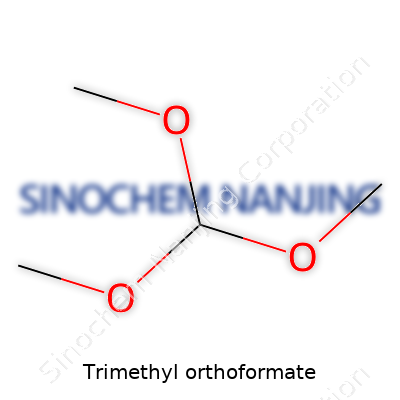
| Names | |
| Preferred IUPAC name | Trimethoxymethane |
| Other names |
TMOF Trimethoxymethane Methyl orthoformate Orthoformic acid trimethyl ester |
| Pronunciation | /traɪˈmɛθɪl ˌɔːrθəˈfɔːrmeɪt/ |
| Identifiers | |
| CAS Number | 149-73-5 |
| 3D model (JSmol) | `3D model (JSmol)` string for **Trimethyl Orthoformate**: ``` COC(OC)OC ``` |
| Beilstein Reference | 1138986 |
| ChEBI | CHEBI:132739 |
| ChEMBL | CHEMBL251114 |
| ChemSpider | 6786 |
| DrugBank | DB04260 |
| ECHA InfoCard | 03bb012265b800000000 |
| EC Number | 203-771-6 |
| Gmelin Reference | Gmelin Reference: 103946 |
| KEGG | C01022 |
| MeSH | D014260 |
| PubChem CID | 12037 |
| RTECS number | MA2450000 |
| UNII | F2E9F822AF |
| UN number | UN2524 |
| Properties | |
| Chemical formula | C4H10O3 |
| Molar mass | 106.15 g/mol |
| Appearance | Colorless transparent liquid |
| Odor | Pungent |
| Density | 0.969 g/mL at 25 °C (lit.) |
| Solubility in water | Miscible |
| log P | -0.07 |
| Vapor pressure | 18 mmHg (20°C) |
| Acidity (pKa) | 15.0 |
| Basicity (pKb) | pKb: 4.06 |
| Magnetic susceptibility (χ) | -54.3×10⁻⁶ cm³/mol |
| Refractive index (nD) | 1.343 |
| Viscosity | 1.380 mPa·s (20°C) |
| Dipole moment | 1.04 D |
| Thermochemistry | |
| Std molar entropy (S⦵298) | 371.6 J·mol⁻¹·K⁻¹ |
| Std enthalpy of formation (ΔfH⦵298) | -569.2 kJ/mol |
| Std enthalpy of combustion (ΔcH⦵298) | -1797 kJ/mol |
| Hazards | |
| GHS labelling | GHS02, GHS07, Danger, H225, H319, H302, P210, P305+P351+P338 |
| Pictograms | GHS02,GHS07 |
| Signal word | Danger |
| Hazard statements | H226, H302, H319, H332 |
| Precautionary statements | P210, P261, P280, P305+P351+P338, P312 |
| NFPA 704 (fire diamond) | NFPA 704: 2-3-1 |
| Flash point | '19°C' |
| Autoignition temperature | 234 °C |
| Explosive limits | LEL: 2.2%, UEL: 19% |
| Lethal dose or concentration | LD50 Oral Rat 3400 mg/kg |
| LD50 (median dose) | LD50 (median dose): Oral rat LD50 = 4,550 mg/kg |
| PEL (Permissible) | PEL: 200 ppm |
| REL (Recommended) | 200-500 ppm |
| IDLH (Immediate danger) | 1000 ppm |
| Related compounds | |
| Related compounds |
Trimethyl orthoacetate Triethyl orthoformate Dimethoxymethane Formic acid Methanol |



