The Many Faces of Triethylborane: A Look at History, Chemistry, and Real-World Impact
An Explosive Start: Historical Development of Triethylborane
Triethylborane didn’t just appear by accident; its story mixes chemistry with engineering dreams and a race for better performance in tough conditions. Back during the scramble for stable rocket propellants, labs hunted for anything that could kickstart engines cleanly and instantly. This search brought triethylborane to the front lines, especially when big names like NASA and military contractors wanted reliable ignition for their engines. Historians trace early records of organoboron compounds back to 19th-century labs, but only mid-20th century rocket programs gave triethylborane a real chance to shine. The Saturn V moon rockets burned it alongside fuels, not for show, but because few options offered such fast, consistent lighting at low temperatures. This boron compound helped push boundaries in aerospace before chemists even finished mapping all its quirks.
Product Overview: What Exactly Is Triethylborane?
Triethylborane often gets lumped in with other specialty chemicals, but it has its fingerprints all over fields from propulsion to organic synthesis. It looks like a clear, colorless liquid but rarely sits in a test tube for long—its reputation for catching fire in air keeps it under tight control. In labs, it serves as a strong Lewis acid and a building block for making more complex boron compounds. In rocket engines, few substances offer such reliable, controlled sparks without bringing along heavy metals or toxic byproducts. Some people run across the name during advanced synthetic chemistry, where triethylborane acts as a trigger, not just a background material.
Physical & Chemical Properties: Handling a Tricky Customer
The first thing people notice about triethylborane is the smell, sharp and fruity but quickly masked by pure fear: this chemical takes to the air and bursts into flames without warning. It boils at just below 100 degrees Celsius, so it needs well-sealed containers and steady temperatures. It sticks to the rules of flammability: low ignition energy, wide explosive limits in air, and a powerful heat of combustion. In practical terms, don’t breathe deeply around it, keep water far away, and pay attention to gas-tight fittings and personal protection. The liquid dissolves well in nonpolar solvents, but anyone using it remembers not the numbers on paper but the near-instant fire hazard and how even a drop can change the outcome of a reaction—or an entire safety drill.
Technical Specifications & Labeling: Straight Talk on What You’re Getting
Triethylborane often shows up on shelves or in catalogs in high-purity grades, usually somewhere between 95 and 99 percent, blended with compatible solvents for better stability. The labels on bottled triethylborane read like a checklist of dangers: pyrophoric, toxic, highly flammable, handle under inert atmosphere. Good labeling isn’t just regulatory box-checking—it makes the difference between routine and disaster in the stockroom. Proper containers rely on materials resistant to corrosion or reaction, and labeling must never wear out before the last bit of chemical disappears.
Preparation Method: How Chemists Build It Up
Building triethylborane starts with the basics: mix ethyl magnesium bromide or ethyl lithium with boron trifluoride in an anhydrous environment. The reaction goes fast, often releasing a lot of heat and needing exact temperature control. These steps aren’t academic; every gram produced carefully balances purity against runaway reactions and the risk of fire. Skilled operators keep water out, oxygen even farther, and use glassware built to vent pressure without breaking. Only with solid technique does triethylborane make its way from the reactor to safe, chilled storage.
Chemical Reactions & Modifications: A Catalyst for Innovation
Triethylborane doesn’t just sit there looking pretty in sealed bottles; it parks itself at the center of clever chemistry because it activates or directs reactions that would sputter without it. Synthetic chemists have pushed it into radical polymerizations, where it controls chains better than lazy peroxides. In pharmaceuticals, triethylborane slips into the role of initiator or catalyst during functionalization steps, imprinting selectivity or activating otherwise stubborn bonds. It often works to introduce boron atoms into complex molecules, setting the stage for new materials or drugs. Even after decades in use, every year throws up new ideas for swapping or stretching the boron-carbon connections inside the molecule, placing triethylborane on a shortlist of “old but gold” reagents in synthetic labs.
Synonyms & Product Names: Avoiding Mix-Ups
People often shorten triethylborane to “TEB” or call it triethylboron in commercial and technical circles. Sometimes it shows up as boron, triethyl- on shipping records. Anyone buying or handling this material learns to cross-check all names—mistakes land as quickly as sparks from an open bottle. In research articles, these synonyms turn up in method sections, review papers, and historical glossaries, keeping everyone on the same page and stopping any potentially dangerous mix-ups.
Safety & Operational Standards: Respect Earned by Experience
Triethylborane tells no lies: treat it with respect or pay the price. I remember my early chemistry days, drumming it into my head that even one breath of this stuff in air can mean a fireball on the bench. Labs keep multiple layers of protection: nitrogen or argon to blanket the workspace, goggles and flame-resistant lab coats, strict policies on who gets to use it. Industry guidelines recommend remote handling, blast shields, and emergency plans ready for the rare but catastrophic “what if.” Well-trained teams drill responses to leaks or unexpected ignition, since cleanup demands both speed and calm nerves. You only get so many close calls before everyone in the room understands this is not a corner-cutting substance.
Application Area: More than Just Rocket Fuel
The image of triethylborane sparking a rocket engine stays with most people, but in truth, the chemical found a second life in fine chemicals and pharma research. Industrial chemists prize it for starting certain radical reactions at room temperature and for making short work of some tough bond formations. In specialized electronics manufacturing, boron-containing compounds get sourced from triethylborane as doping agents. Some organic materials science projects reach for TEB to seed the growth of new polymers or advanced electronic materials. Every field using it faces the same question: is the reactivity worth the risk? Often, nothing else delivers results as cleanly, and the decision comes down to balancing safety protocols with the need for fast, reliable chemistry.
Research & Development: A Moving Target
Despite decades of study, researchers keep finding new ways to bend triethylborane to their will. New synthetic routes pop up, offering cleaner reactions or easier isolation. Most of the exciting projects these days focus on coaxing out new boron-containing organic frameworks, hoping to unlock better drug molecules, stronger polymers, or new types of semiconductors. Regulatory pressures also push for safer handling—new packaging, automatic dispensing systems, even micro-scale catalysts that sidestep the dangers of larger volumes. Fresh patents and publications appear every year, often from teams that blend safety concerns with sharp, creative chemistry.
Toxicity Research: Lessons Learned the Hard Way
Toxicity isn’t always about extreme danger, but triethylborane makes itself known through both acute risk and nagging chronic exposure worries. Inhaling vapor or touching liquid brings on unpleasant symptoms: respiratory distress, skin and eye burns, and strong inflammation. Over the years, animal studies pointed to organ stress at doses much lower than with most solvents, and repeated exposure increases the odds of long-term organ damage. For scientists and workers alike, learning from accidents and carefully reading toxicity studies proves more valuable than charts and tables. Good ventilation, leak detectors, and quick access to proper neutralizers come from direct experience—nobody forgets a painful lesson dealt out by this chemical.
Future Prospects: Where TEB Heads Next
Triethylborane’s future isn’t locked up in history books or old rocket films. Emerging uses in pharmaceuticals and next-generation materials science promise a fresh round of growth for the old pyrophoric, especially as labs refine ways to harness its power without the full-blown risks. Automation, sealed microreactors, and continuous-flow processes all work to contain its dangers while making its unique reactivity more accessible to a wider range of fields. Some researchers look to greener alternatives, hoping to replace or minimize TEB in sensitive processes, but for now, few substitutes truly match its quality as an initiator or catalyst. Looking ahead, the main challenge sits with those who can combine cutting-edge chemistry with tough-minded safety standards—only then will TEB remain a reliable partner in both industry and innovation.
What is Triethylborane used for?
Fuel That Sparks More Than Just Engines
Anyone who’s watched a rocket launch can feel the excitement in the air, but behind that blastoff, chemistry’s doing the grunt work. Triethylborane isn’t flashy, but it pushes boundaries—literally. This clear, stinky liquid lights jet fuel when matches, lighters, or regular spark plugs can’t keep up. During the Vietnam War, the SR-71 Blackbird relied on triethylborane to help start its engines. It didn’t just help a plane take off. It helped it break records for speed and altitude, serving missions that pushed political and scientific limits.
Fueling Reactions in Industry
Triethylborane isn’t just found at airfields. In the chemical industry, it starts chain reactions and transforms simple molecules into materials used for medicine, plastics, or electronics. This compound provides a unique advantage. Traditional flame ignition won’t cut it when you’re inside controlled reactors or dealing with stubborn compounds. Triethylborane bursts into flame on contact with air, making it valuable for fine-tuning production systems where timing matters.
Good Chemistry Demands Respect and Precision
Handling triethylborane needs more than a steady hand. Its ease of ignition makes labs and manufacturing plants double-check protocols—one splash or drop left unattended can lead to nasty fires. Safety costs mount. I remember shadowing a chemical plant engineer who wouldn’t touch a container before putting on a full-face mask, chemical gloves, and flame-retardant gear. The threat wasn’t just a mark on a safety form—there had been close calls, and in one known industrial mishap, triethylborane’s flammability cost millions in damages.
What Could Change?
For aerospace, nothing quite matches triethylborane’s performance right now for certain types of engines. Skunk Works engineers and launch crews know this. But those benefits come with environmental and workplace hazards. As companies search for greener, safer alternatives, the burden falls on both chemists and industry leaders. Better sensors and stricter protocols help, but over-reliance on old methods risks someone getting hurt or the environment taking a hit.
Researchers have started exploring alternative ignition systems. Some use laser sparks or high-powered electric igniters. These aren’t as reliable in extreme conditions, but funding is shifting in that direction. Imagine if better training and digital monitoring could prevent most accidental releases. That would mean fewer ultra-dangerous spills, healthier workers, and less stress on local emergency services.
Triethylborane shows what’s possible when precision and power get combined in a single compound. Its reputation comes from years of success, but that legacy depends on responsible handling and smart investment in safety. Teach each new engineer and chemist about where it shines and where it burns—literally and figuratively—and the next breakthrough might just come from someone deciding to keep what works, but not stop looking for ways to improve.
Is Triethylborane hazardous or flammable?
Looking Danger in the Eye
Triethylborane (TEB) isn’t found in everyday workplaces. There’s a reason for that. The stuff packs an extreme punch when it comes to fire and chemical hazards. It bursts into flames on contact with air, no spark required, no open flame in sight—just exposure.
The chemical world is full of substances that burn or explode, but few ignite this easily. I still remember the face of an old chemistry professor, eyes wide while talking about TEB, warning everyone to never open a bottle outside of a glove box flushed with nitrogen or argon. He’d seen fires start with nothing more than a careless twist of a cap.
Fire that Starts on its Own
People working around fuels know gasoline isn’t the worst thing you can spill. Triethylborane brings a different threat by lighting itself as soon as it hits the air. Think about handling cleaning supplies near a stove. Now, imagine a liquid so impatient it can't bother waiting for a spark. That’s real fire risk.
In aviation, TEB earned its reputation lighting jet engines that couldn’t start otherwise. The old SR-71 Blackbird spy plane used it. That jet thundered across continents, fueled in part by the same chemical you wouldn't want anywhere near a warehouse, a lab, or your garage.
The Health Hazard Nobody Wants
The story doesn’t stop with flames. TEB vapors sting your eyes and lungs. Skin contact can burn. A splash or spill needs immediate action. In the old stories, some workers ended up with rashes or worse because someone dropped PPE standards for convenience. Modern regulations bark loudly about this, but even today, accidents happen.
Chemical safety records show injuries aren’t rare if handling gets sloppy. Breathing fumes over hours can mean headaches, coughing, and lasting lung irritation. Imagine mopping up an invisible, almost odorless liquid, only to find out it's in your lungs, your eyes, and on your hands. Nothing good comes from that.
Why TEB Still Matters—and Safer Ways Forward
Industries use TEB because it works. There’s no substitute for its fire-starting punch in certain engines and chemical processes. It's not just relic technology, either; researchers still reach for the stuff to kickstart tricky reactions where other catalysts fail.
That doesn’t mean companies should treat TEB like an everyday chemical. Key safety practices keep the worst at bay: robust ventilation, careful engineering controls, heavy reliance on automation, and clear emergency planning. Using TEB inside sealed systems and training staff for worst-case scenarios turns something dangerous into a tool, not a threat.
I’ve seen plants swap out old ignition systems built around TEB for newer, less risky designs where possible. Manufacturers can do more, like building containers and pumps that seal and purge themselves, so hands never need to touch a drop. Some labs now demand double-signoff before anyone opens a vessel, which weeds out shortcuts. These small steps keep people safe, and that matters more than wringing every cent of efficiency from an aging chemical.
The Takeaway for Safety
Ignoring the risks tied to TEB has cost people more than a few close calls. It’s a perfect example of why respect for the chemicals in your hands counts for more than blind confidence. I’d rather reach for something a little less fussy and a lot less likely to set off alarms in the middle of the night. Safety comes from honesty about the hazards—and a clear plan to keep them out of your life.
How should Triethylborane be stored and handled?
Understanding What We’re Dealing With
Triethylborane quickly grabs attention in any chemical safety training. With its reputation as a strong firestarter in rocket science and military ignition systems, it isn’t your everyday solvent. It bursts into flames on contact with air, produces toxic fumes when burned, and reacts badly with water. Nobody wants to be caught off guard by something that ignites at room temperature. Years spent around labs and industry storage rooms have taught me that skipping steps doesn’t work here. Even experienced technicians pause and double-check protocols.
Storage Lessons Learned the Hard Way
Steel cabinets with a self-closing, tight seal make sense for triethylborane. A flammable safety cabinet won’t feel like overkill. Glass or loose containers don’t give much protection if anything goes wrong. Manufacturers recommend inert atmospheres—nitrogen usually gets the job done—to replace oxygen where the material waits. Even a small leak turns into a messy and dangerous problem, and that’s not something to risk with an organoborane.
Temperature plays a part too. Triethylborane boils below 100°C. A room that gets hot over summer can lead to pressure building up, and nobody wants those vapors finding their way out. Cooler, dry storage spaces trump convenience every time. Staff training goes hand-in-hand with safety here. Before anyone even thinks about moving or opening a drum, they need to know why dry powder extinguishers and Class D fire gear stay close to hand. Not using water-based fire extinguishers comes up in every safety briefing for good reason.
Handling with Respect: What Matters Most
Every chemist or tech working near triethylborane deserves real, hands-on training. You don’t want someone finding out about air sensitivity from an accident. Double gloves, goggles, flame-retardant lab coats—all of that becomes non-negotiable the moment you pull the container from storage. Grounded metal tools and containers cut down the risk of a static spark. It’s surprising how easy it is to forget a grounding strap when you’re in a hurry. Forgetting once turns into a story nobody wants to tell.
Simple labeling stops confusion. Clear hazard markings and checklists beat fancy warning posters. People in several labs I’ve worked in keep logs for each transaction—who opened it, how much was used, and what condition it was in before and after handling. Not fancy, but effective. Emergencies get a full run-through every few months, down to practice drills with spill kits and closed-system transfer lines.
Looking for Better Ways
Improvements keep coming in. New transfer devices using sealed connections help cut down on spills and vapor release. Investing company money and time in robust detection systems for leaks makes a real difference. Reliable monitoring saves headaches later. It’s easy for companies to put this off—then face bigger bills from accidents, fines, or worse. Peer review helps. Teams sharing lessons learned openly, both the good and the bad, catch problems before they get out of hand.
The Bottom Line
Complacency has no place near triethylborane. Familiar rules—respect chemistry, keep it dry, control the air, train everyone—save lives. Memories of a near-miss stay with you. Following best practices and learning from the mishaps of others keeps safety fresh in everyone’s mind. It’s not about overreacting. It’s about knowing the risks, knowing the safe way, and never taking a shortcut.
What are the safety precautions when working with Triethylborane?
A Substance with a Wild Streak
Triethylborane isn’t just another chemical tucked away on a laboratory shelf; it boasts a reputation that reaches into the stories of jet engines and special effects pyrotechnics. What stands out right away is its behavior—it flashes into flame at the smallest nudge from air. The liquid itself pours out invisible, and the vapors ignite at room temperature. A drop on your skin burns deep, and even a mistake in uncapping a bottle can have drastic results. These aren't accidents from science fiction; they have happened in real labs and workshops. I remember watching a demonstration where even experienced chemists looked jumpy around an open bottle of this fierce stuff.
Risks That Don’t Wait for Mistakes
Breathing the vapors stings your lungs. Splash it on anything organic and you’ll see charring in seconds. Triethylborane doesn’t offer second chances: A single spark, a static discharge, or even the briefest shot of sunlight through glass can set off a fire. There are stories out of chemical manufacturing where a cracked seal led to a fireball, and fire extinguishers did nothing until the air-starved reaction choked itself off. These incidents always leave me with a queasy respect for how little margin for error you get here.
Practical Safety Measures
Nobody goes into a lab working with this stuff without planning every step. Setting up outside a fume hood would be asking for trouble. I always see double protection: splash shields alongside face protection and thick nitrile gloves over fire-resistant sleeves. Storage isn’t handled by leaving a jar in the flammable cabinet. You’ll find these bottles locked up, under nitrogen or argon, with careful labeling. Storing next to oxidizers or acids only multiplies the risk, as even a slight leak could set off a chain reaction.
Handling tools never touch the liquid directly. Grounding the workbench and every piece of gear keeps static from sparking a flash fire. Under my supervisor’s watchful eye, we used non-sparking tools, and any pipetting happened behind blast shields. The emergency bucket of sand sat close, since water will just spread triethylborane out and make a bigger fire. It’s this kind of hands-on, sometimes nerve-wracking preparation that keeps everyone in one piece.
Training and Emergency Response
No one handles triethylborane without specialized training. All staff run through drills: drop-and-cover in case of a flash, and escape routes if a fire breaks out. Every new worker shadows an experienced hand, often for weeks, before even touching a bottle. Protocols demand full logs—what was moved, when, by whom, and where. That way, if something goes wrong, first responders know immediately what they’re dealing with. Inhalation or skin exposure means medical attention right away, ideally from staff who already know this isn’t a run-of-the-mill chemical burn. I’ve seen whole labs go on lockdown for hours after a small spill, just to make sure no one shortcuts the safeties.
The Price of Complacency
Like any tool, triethylborane has a rightful place in the world of chemistry and industry. The key difference is that it always demands every ounce of care and attention. Cutting corners never pays off—history’s full of examples of chemists who thought they could get away with casual handling, only to find out this compound never forgives forgetfulness or shortcuts. Safety gear isn’t a box-ticking exercise here; it’s personal survival. The lesson sticks with me: In the world of wild chemicals, respect and preparation count for everything.
Where can I purchase Triethylborane and what is its purity?
Understanding Triethylborane’s Role and Why It Matters
Triethylborane is not a household name. If you’re working with high-energy chemistry, space propulsion, or specialized manufacturing, you might recognize it right away. This compound catches fire in air and has some powerful uses in both rocket ignition and organic synthesis. But this kind of chemical isn’t something you pick up at the local hardware store. It poses clear hazards and needs serious respect.
Shopping for Triethylborane: Who Sells It?
Buying triethylborane isn't the same as shopping for model airplane glue. Licensed chemical suppliers handle it because of its risks and regulatory demand. Companies like Sigma-Aldrich, Thermo Fisher Scientific, and Gelest have it in their catalogues, but they sell only to approved laboratories or industrial operations. Someone working in a certified lab with clear documentation and permits can make inquiries here. These suppliers run identity checks, want paperwork that shows legal compliance, and often need proof of facility inspection.
Online chemical markets may pop up in a search, but legitimate sellers want to know their product isn’t getting into the wrong hands. Purchasers could face delays or flat denial if requirements aren’t met – strict regulation keeps everyone safer. For anything beyond research, it’s almost always handled by direct distributor relationships, not random click-to-buy websites.
Purity Levels: Why Purity Isn’t Just a Number
Purpose drives the need for purity. In aerospace work, a contaminant in triethylborane can cause engine ignition failures or unpredictable chemical reactions. Typical offerings from scientific suppliers sit at 97% or 99% purity. This information isn’t just a label on a box; every shipment comes with a Certificate of Analysis, tracking everything down to the last trace impurity. Any legitimate purchase should come with that documentation. If the supplier doesn’t provide one, that’s a big red flag.
Dealing with chemistry, precision means everything. Whether synthesizing a delicate molecule or firing a rocket engine, no one wants a surprise. Each batch gets tested, stored in special containers, and monitored until it's used. High purity translates directly to performance and predictability – two things nobody should gamble with in high-stakes science.
Risks and Responsibilities
Triethylborane catches fire if it touches air. Just opening a bottle can trigger a dangerous reaction if the right safety steps aren’t in place. Facilities need a well-trained staff, fire suppression systems, ventilated chemical hoods, and clear safety protocols. Anyone handling this chemical also needs regular training on updated procedures.
Legal issues matter as much as scientific ones. Regulatory agencies like the EPA (in the US) and equivalents worldwide treat sales and storage as high risk. Permits often involve site inspections, background checks, and ongoing compliance testing. Neglecting these requirements isn’t just against the rules—it endangers people and property.
Responsible Access: Solutions and Good Practice
Looking beyond just who sells triethylborane, industry and academia both push for safe, transparent access to hazardous chemicals. Streamlined licensing for reputable labs, clear guidelines for obtaining and storing materials, and regular safety audits all help prevent accidents. Digital catalogues now offer secure portals only visible to registered institutions.
Ultimately, responsible procurement isn’t only about finding a source; it means treating both chemical and regulatory requirements as non-negotiable. Regular dialogue between lab managers, safety officers, and regulators has helped to improve access while boosting safety standards. Delivering powerful chemistry starts with respect for the risks—and that begins long before the first order is placed.
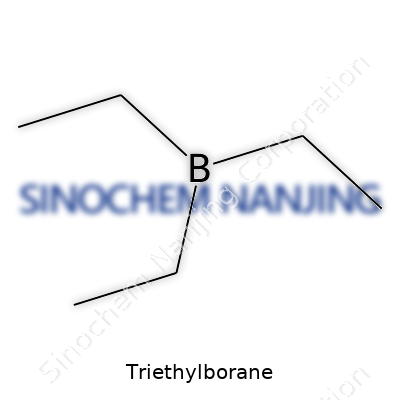
| Names | |
| Preferred IUPAC name | Triethylborane |
| Other names |
Triethylboron TEB Triethylboranyl |
| Pronunciation | /traɪˌɛθ.ɪl.bəˈreɪn/ |
| Identifiers | |
| CAS Number | 97-94-9 |
| Beilstein Reference | 1718736 |
| ChEBI | CHEBI:51867 |
| ChEMBL | CHEMBL502679 |
| ChemSpider | 53523 |
| DrugBank | DB11266 |
| ECHA InfoCard | 03e470eb-32c5-4c2b-ac7d-eba8fd071ce5 |
| EC Number | 203-745-1 |
| Gmelin Reference | 7077 |
| KEGG | C06399 |
| MeSH | D017937 |
| PubChem CID | 12141 |
| RTECS number | EL5425000 |
| UNII | 5RP5P7ND87 |
| UN number | UN1993 |
| Properties | |
| Chemical formula | C6H15B |
| Molar mass | 118.99 g/mol |
| Appearance | Colorless to pyrophoric liquid |
| Odor | disagreeable |
| Density | 0.679 g/mL at 25 °C |
| Solubility in water | Decomposes |
| log P | 0.67 |
| Vapor pressure | 307 mmHg (20 °C) |
| Acidity (pKa) | 24.3 |
| Basicity (pKb) | pKb = 4.43 |
| Magnetic susceptibility (χ) | -31.0·10⁻⁶ |
| Refractive index (nD) | 1.398 |
| Viscosity | 0.53 mPa·s (20 °C) |
| Dipole moment | 0.34 D |
| Thermochemistry | |
| Std molar entropy (S⦵298) | 234.6 J K⁻¹ mol⁻¹ |
| Std enthalpy of formation (ΔfH⦵298) | -52.6 kJ/mol |
| Std enthalpy of combustion (ΔcH⦵298) | -3522 kJ·mol⁻¹ |
| Pharmacology | |
| ATC code | V03AB36 |
| Hazards | |
| GHS labelling | GHS02, GHS04, GHS05, GHS06 |
| Pictograms | GHS02,GHS06 |
| Signal word | Danger |
| Hazard statements | H225, H260, H314 |
| Precautionary statements | P210, P222, P231, P280, P305+P351+P338, P370+P378, P403+P233 |
| NFPA 704 (fire diamond) | 2 4 2 pyrophoric |
| Flash point | -20 °C |
| Autoignition temperature | 230 °C (446 °F; 503 K) |
| Explosive limits | 0.8–80% |
| Lethal dose or concentration | LD50 (oral, rat): 235 mg/kg |
| LD50 (median dose) | LD50 (median dose): 55 mg/kg (intravenous, rabbit) |
| NIOSH | DN5075000 |
| PEL (Permissible) | 1 ppm (skin) |
| REL (Recommended) | 1 ppm (3 mg/m3) |
| IDLH (Immediate danger) | 15 ppm |
| Related compounds | |
| Related compounds |
Trimethylborane Triethylaluminium |



