Triethylamine Hydrochloride: An In-Depth Commentary
Historical Development
Chemistry, much like life, rewards persistence and curiosity. Triethylamine hydrochloride didn’t make headlines overnight. Its story starts in labs where researchers looked for ways to stabilize amines for storage, transport, and handling. Early chemists wanted a safer alternative to volatile, sometimes hazardous free bases. Once folks synthesized triethylamine in the nineteenth century, the hydrochloride salt wasn’t far behind. This salt offered an answer to many practical problems, and as researchers learned to tame and bottle its energetic parent base, industries began to notice. Shifting industrial demands and the steady development of organic synthesis kept triethylamine hydrochloride in active circulation through the twentieth century. In my own university courses, pulling a jar of this white salt from the shelf felt like accessing a piece of chemical history, built as much on years of trial and learning as on formulas in a textbook.
Product Overview
Anyone who has spent time in a research lab has likely bumped into triethylamine hydrochloride. This white, crystalline powder can seem unassuming at first glance, lacking the harsh smell or volatility of its amine ancestor. Its main job: neutralizing acids, serving as a buffer, and popping up wherever a modestly basic, solid amine source could make a difference. Syrupy neat triethylamine can be tricky—flammable, pungent, hard to store. Move to the hydrochloride, and things calm down. Chemists in pharma, fine chemicals, and academic research constantly add this salt to their shelves for those very reasons. Reliability matters a lot; knowing what you’re handling, how much to measure, and getting consistent results lets researchers keep projects on track.
Physical & Chemical Properties
Triethylamine hydrochloride looks like a fine, white crystalline solid. It’s water-soluble, smells like its parent amine but much less aggressively, and melts at a range that fits comfortably in standard lab environments, usually between 261 and 263°C. Unlike free triethylamine, the hydrochloride salt doesn’t evaporate quickly—no sharp vapors or sneaky spills. In the lab, its hygroscopic nature means you’ll often find it lumping together if left uncapped. Unlike some salts, it won’t react violently with water or common solvents, but a dry cabinet goes a long way to preserving quality. Its stability and low volatility mean technicians and researchers don’t spend hours worrying about containment so long as basic care is used.
Technical Specifications & Labeling
Every bottle of triethylamine hydrochloride comes with essential data: purity levels (often topping 98%), batch numbers, hazard warnings, and recommended storage conditions. Industry standards have simplified this labeling over the years, giving buyers clear, bold hazards and precautionary statements. My own preference leans toward suppliers who offer transparent QC data, since analytical consistency affects everything from yield, to purity, to reproducibility. Salts picked for pharmaceutical or high-end synthesis work often pass stricter impurity limits and get packed in moisture-resistant containers. Companies provide certificates of analysis, and most reputable brands use tamper-evident seals. This means no guessing or hand-waving about quality—if you’re running a reaction at scale or for regulatory approval, details make a difference.
Preparation Method
You find triethylamine hydrochloride in the lab by reacting gaseous or liquid triethylamine with hydrochloric acid. Acid dripped carefully into a stirred cold solution of the amine causes the salt to precipitate out. One method goes like this: dissolve triethylamine in an inert organic solvent like diethyl ether, then bubble dry hydrogen chloride gas through the solution. White crystals form quickly, and a few filterings produce pure salt. Industrial producers use larger, safer setups, scaling the same principle. Years of small-scale lab work have shown me this isn’t a process that rewards impatience. Go too fast, you’ll lose material to volatility or side reactions; take shortcuts, and the final product runs the risk of contamination. Patience pays off in handfuls of dry, white powder ready for the next step.
Chemical Reactions & Modifications
Triethylamine hydrochloride acts as a solid base, neutralizing acids or driving certain condensation and alkylation reactions. It’s a favorite for generating free triethylamine in situ by simple basification—just mix with a strong base and the liberated triethylamine is ready to use without risking large-scale handling of the neat liquid. Anyone who has spent hours setting up glassware on a cold bench knows the value in minimizing exposure to vapors. The salt form makes modifications easier and less risky, especially in smaller-scale or teaching labs. Chemical transformations often use the salt as a mask or intermediate, especially when the parent amine’s volatility or flammability complicates handling. The hydrochloride’s solid state lets teams store and move the material with confidence.
Synonyms & Product Names
Over time, triethylamine hydrochloride has collected a handful of names. You might hear it called N,N-Diethylethanamine hydrochloride, TEA.HCl, or simply “triethylammonium chloride.” Labels may use catalog numbers or refer to standardized abbreviations, depending on the supplier. In some catalogs, it sits next to related salts or derivatives, and scientists learn to look for synonyms to avoid ordering the wrong product. Among friends and colleagues, “TEA salt” or “the hydrochloride” comes up just as often, serving as a shorthand across different languages and industry backgrounds.
Safety & Operational Standards
Labs and manufacturing floors both take safety seriously, and triethylamine hydrochloride requires its own precautions. It isn’t highly toxic, but dust masks and gloves keep the powder out of lungs and off skin. Long stretches of handling or bulk transfers need local exhaust fans and proper PPE. Compared to the risks tied to volatile amines, the hydrochloride cuts fire hazards way down. Even so, eyes and respiratory tract deserve protection, especially since finer dust can cause mild irritation for some folks. Safety data sheets lay out clear first-aid steps. I’ve learned the hard way that good housekeeping—tight-fitting lids, regular cleaning, and clear labeling—saves headaches later. Industry standards have shifted toward proactive risk management, focusing on training and providing easy access to clean-up materials, labeling, and spill kits.
Application Area
Triethylamine hydrochloride stands as a workhorse in organic synthesis, especially where reliable, solid amines are handy. In pharmaceuticals, it helps form salts of weak acid drugs and acts as a base in specific stepwise syntheses where minor modifications can change reaction outcomes. Dye manufacturing, agrochemicals, and polymerizations all put it to work, usually as a buffering agent or acid scavenger. Its stability makes it an ideal candidate in processes sensitive to water or oxidation. In research labs, you’ll see the salt on benches everywhere from undergrad training labs to specialized R&D departments. More than once, the bottle’s presence has saved a morning’s work when liquid triethylamine ran dry or proved too hazardous to handle in a small, crowded room.
Research & Development
Chemical R&D pivots on solving new problems, and triethylamine hydrochloride has seen renewed attention in green chemistry and safer synthesis protocols. Universities have looked for derivatives with similar reactivity but lower toxicity or environmental impact. In pharmaceutical Science, its use as a buffering or masking agent grows with high-throughput screening and the development of new salt forms for therapeutic compounds. Academic programs now highlight the use of stable, crystalline intermediates for flow chemistry and continuous processing, where consistency and safety cannot slip. Teams working with biocatalysis or process intensification view the salt form as a drop-in solution, especially for reactions where minimizing volatile organic content matters for scaling regulatory hurdles. Whole generations of synthetic chemists have put their confidence in triethylamine hydrochloride to bridge tough steps where more hazardous or unstable reagents might otherwise derail hard-won progress.
Toxicity Research
Most lab-scale users find triethylamine hydrochloride relatively low-risk, especially compared to more notorious amines or unstable intermediates. Standard acute and chronic studies show limited toxicity at normal handling levels, with mild irritation to eyes, skin, or lungs as the biggest concern. Regulatory agencies in Europe, the US, and Asia set strict occupational exposure limits, forcing manufacturers and users to lock down procedures for bulk use. Animal studies from the last few decades show the salt doesn’t cross into major toxicity at low exposures, but regular monitoring for workplace exposure persists. Responsible research means following safety best practices: regular risk assessments, exposure monitoring, and keeping up on published toxicology data. I’ve seen attitudes shift toward more conservative handling protocols in recent years, for both environmental and personal health reasons.
Future Prospects
Research never stands still, and triethylamine hydrochloride continues to play a background role in new frontiers. As industries hunt for less volatile, more environmentally conscious reagents, the salt shows promise for sustainable manufacturing pipelines. Process chemists look at it as a safer, easily stored base when scaling green reactions or trying new flow setups. Pharmaceutical developers weigh salt forms for drug solubility and shelf life, where triethylamine hydrochloride often makes the shortlist. Emerging research into amine-based ionic liquids, recyclable catalysts, and “benign by design” chemical processes keeps bringing the salt back into focus. Technicians now push for even purer grades, lower manufacturing impacts, and transparent sourcing. The humble white powder on the shelf may not get much glory, but its reliability lets the next generation of innovations take shape with safety and practicality at the forefront.
What is Triethylamine Hydrochloride used for?
A Behind-the-Scenes Helper in the Lab
Triethylamine hydrochloride isn’t a household name. I only first heard about it back in chemistry class during an experiment that needed a stable acid salt. Someone asked what it did, and the instructor simply replied, “It keeps things going in the right direction.” That stuck with me, and years later, I see how often this compound shows up where things have to work right, every time.
The Role in Research and Development
Many researchers count on triethylamine hydrochloride as a reliable acid scavenger or neutralizing agent. It’s used when there's a chance of extra acid ruining a reaction, especially in organic synthesis. In my lab days, I’d see it pop up when handling pharmaceuticals, dyes, and even rubber additives. Scientists lean on it because the salt form helps pace the reaction; no runaway or slowdowns, just smooth progress.
Medicines and Pharmaceuticals
Medicine relies on precision. Triethylamine hydrochloride helps shape active ingredients, ensuring purity and stability. Some antihistamines and painkillers owe their clean background to reactions moderated with this compound. During synthesis, it can mop up extra hydrogen chloride gas that would otherwise throw everything off. I remember a colleague working on pain relief drugs who had batch after batch fail until turning to this salt—they began getting high yields and fewer side products from that point on.
Material Science and Polymers
Making materials stronger or giving them new properties sometimes takes unconventional helpers. Triethylamine hydrochloride acts as a glue in polymer chemistry, stabilizing reactive groups so they bond predictably. It pops up in rubber processing, where control over molecular weight decides whether the final product stays flexible or turns brittle. Years ago, industrial chemists started favoring this compound over harsher alternatives for producing tough, clean plastics. The results brought better quality and fewer recalls.
Laboratory Staple: Safe, Predictable Outcomes
Handling strong acids has risks. Triethylamine hydrochloride, being a salt, offers a manageable option for researchers. No fumes clouding the bench, and spills are easier to clean. More chemists want reagents that don’t compromise safety. This compound lets labs skip extra protective gear and gets science moving without production delays.
Environmental Impact and Sustainability Concerns
With stricter environmental regulations, labs have to keep waste streams manageable. Triethylamine hydrochloride’s stability translates to less chance of accidental releases, and any byproducts break down without leaving long-lasting toxins. Organizations now track the entire lifecycle of their chemicals. Plenty of audits now examine the use of this compound—manufacturers get better marks for sticking to reagents that meet modern standards, which means safer air and water downstream.
Looking for Better Ways
All chemicals raise questions. Even reliable salts need scrutiny. Factories and research centers try to minimize overuse and train staff on careful handling. Some teams look for reuse and recycling strategies for every batch. It’s common to see green chemistry projects testing alternatives that use less energy or leave behind smaller footprints.
Expert Opinion Matters
Choosing triethylamine hydrochloride isn’t just habit. Chemists test it, check studies, and lean on decades of safety research. Suppliers share data so labs know what to expect before opening the bottle. Industry standards from groups like the American Chemical Society or environmental agencies shape how much and how often it takes part in daily tasks.
Keeping a Close Watch on Quality
No one wants surprises in the lab. Monitoring sources, keeping paperwork straight, and looping in safety experts all help keep the process tight. Any miss-step can mean wasted money or unsafe products. Attention paid to quality pays off with solid, repeatable outcomes—and healthier lab environments, too.
What are the safety precautions when handling Triethylamine Hydrochloride?
Respecting Chemistry in Daily Work
Working in a lab or a manufacturing setup with chemicals like Triethylamine Hydrochloride never feels routine. I remember a time in my own early lab days, getting careless for even a moment turned a regular afternoon into a panic. No chemical is just another bottle on the shelf. Triethylamine Hydrochloride, for example, can bite you without much warning if you don’t treat it with care.
Hazards: More Than Just the Obvious
Even if Triethylamine Hydrochloride doesn’t have the notoriety of some compounds, it brings real risks. Exposure may cause eye or skin irritation, cough, or breathing trouble. Dust floating in the air? It can sneak into your lungs. Humidity makes it want to clump, then it ends up stuck to your gloves and you take it home. Labs deserve the same respect for safety as any high-risk job site.
Personal Protection Matters
Polyester-blend lab coats don’t cut it. Chemical-resistant gloves, a buttoned-up cotton lab coat, well-fitted goggles, and a face mask stop dust from ending up where it shouldn’t. I always change gloves if they look the least bit damaged. If you run out of goggles, don’t just squint and hope for luck—borrow a pair from another bench or wait until the stockroom opens. Eyes don’t grow back.
Ventilation: Out of Sight, But Never Out of Mind
Chemical odors smoke out danger before your nose can detect anything. If the lab hood isn’t buzzing or the airflow indicator looks off, stop everything. Take my word for it—the inconvenience of pausing beats spending hours at the campus health clinic for a lung check.
No Shortcuts: Storage and Clean-up
Tightly closed containers make all the difference. Moisture makes the chemical clump, and the last thing you want is to spill a goopy mess. Use the desiccator if possible, or at least a dry, labeled spot. If a spill happens—no paper towels and crossed fingers. Use proper spill control kits, sweep up solids gently, avoid wasting any material into the sink, and double check labels. Waste can’t just be dumped down the drain; collection rules exist for a reason, protecting waterways and future lab workers.
Emergency Plans: More Than Posters on the Wall
Everyplace I’ve worked had a slightly different emergency plan, but the principle stays the same. Know where the nearest eyewash station and shower sit. Practice what you’d do in an accident—shouting out for help, flushing a spill, calling a supervisor. Panic takes over when you’re not prepared. Those monthly drills everyone grumbles about? They save minutes that matter.
Building a Culture of Respect
Accidents with chemicals like Triethylamine Hydrochloride rarely happen because of malice—sloppiness, forgetting to check supplies, or turning a blind eye causes more trouble. Open conversations about mistakes help more than blaming. Reviewing incidents—no matter how minor—shapes habits that last. Even short team briefings spark reminders. With chemistry, the rules don’t change even if experience grows.
Solutions and Commitment
Companies and universities should support anyone handling chemicals from start to finish. Invest in clear training, maintain supplies, and enforce rules about labeling and storage. Encourage questions, regular peer checks, and honest reporting—every safe shift proves the effort works. Give everyone in a building the right tools to protect themselves and the people around them. That’s what it takes to keep science moving without regret.
How should Triethylamine Hydrochloride be stored?
Understanding the Risks
Triethylamine hydrochloride doesn’t grab headlines like some chemicals, but that doesn’t mean it’s without hazards. Years working in chemistry labs have shown me the difference between knowing a substance and actually handling it. This salt is made from triethylamine and hydrochloric acid—a reminder there’s nothing ordinary about it. Anyone who’s ever knocked over a jar by accident will tell you: don’t underestimate routine compounds.
Keeping It Dry
Humidity can turn a good sample bad in no time. Moisture wicks right through carelessly closed bottles, churning out clumps and sometimes even causing decomposition. I once saw someone try to scrape out a lump of triethylamine hydrochloride from a jar—the stuff had almost fused to the glass thanks to high humidity. A dry, tightly sealed container always beats improvisation. Silica gel packs work better than you might expect, soaking up stray moisture and buying more time for chemical purity.
Sensible Temperature Matters
Leaving a bottle of triethylamine hydrochloride near a sunny window or under blazing lab lights cranks up the risk. Heat speeds up unwanted reactions and can push the substance out of its ideal state. At room temperature—far from fires and away from direct sun—the salt keeps its form and function. I’ve seen careless storage spoil many chemicals, especially during power outages in the summer. No chemical likes being forgotten in a warm storeroom corner.
Stay Out of Reach and Away from Incompatibles
You wouldn’t mix bleach and ammonia at home. By that same logic, triethylamine hydrochloride doesn’t belong next to strong oxidizers, acids, or bases. Mixing the wrong bottles delivers chemical headaches—sometimes literally. Storing it in a dedicated chemicals cabinet, with incompatible materials well separated, keeps cleanup to a minimum and surprises less likely. Regulatory agencies like OSHA and the CDC stress safe storage not just for labs, but anywhere chemicals linger.
Proper Labeling and Stock Rotation
A missing or faded label on a chemical bottle is a recipe for disaster. Relying on memory—or guessing by the look of a powder—never ends well. Every time I audit a supply closet, I see old, faded labels or bottles with nothing but a marker scrawl. Clear labels, purchase and opening dates, and periodic checks keep things in order. Rotating stock, using the oldest first, also helps avoid stale or degraded product, especially if your operation sees less frequent chemical use.
Accountability with Training and Documentation
Safe storage means more than buying the right cabinets. People need to know what’s in those cabinets. Training sessions stick with people best when the real-world consequences are clear. A chemical inventory log, updated each time someone takes or returns triethylamine hydrochloride, adds an extra layer of accountability. During audits or emergency drills, up-to-date records close the gap between what’s supposed to be there and what’s really sitting on the shelf.
Tackling Disposal
Even with perfect storage, every batch ages out or becomes surplus. Disposal follows strict local rules for hazardous waste, not just for environmental reasons but also for everyone’s safety. I’ve made the mistake of letting old samples pile up, thinking they might become useful later. Responsible, scheduled disposal keeps a storage area safer and more manageable.
Final Thoughts on Safe Handling
Storage habits reflect underlying attitudes towards safety and care in chemical work. Anyone who’s seen a minor mishap turn serious will tell you the same: shortcuts and wishful thinking don’t mix with chemistry. Reliable practices, simple routines, and a bit of old-fashioned caution keep triethylamine hydrochloride—and the people working around it—safer in the long run.
Is Triethylamine Hydrochloride hazardous or toxic?
A Closer Look at This Lab Staple
Triethylamine hydrochloride doesn’t show up in daily conversation, but it’s a name chemists know well. This salt comes from reacting triethylamine, a liquid with a strong ammonia smell, with hydrochloric acid. The result is a solid used often in laboratories and the chemical industry. Since chemicals have long and complicated reputations, it’s easy for myths and facts to get tangled. People start to wonder: is this actually toxic or hazardous, or does it just sound intimidating?
Potential for Harm
Anyone who has worked in a teaching or research lab has opened a bottle labeled with long chemical names and hazard symbols. Triethylamine hydrochloride is usually classified as irritating to the skin, eyes, and respiratory system. You don’t want to get it in your eyes or breathe in the dust. I’ve seen plenty of undergrads cough or sneeze after mishandling a sample or opening a bottle too quickly. It won’t burn like a strong acid, but it’s no table salt either.
Handling errors or messy working habits account for most accidents. According to the Safety Data Sheet, triethylamine hydrochloride creates health concerns mostly through contact or inhalation. The symptoms: soreness, redness, watery eyes or an irritated throat. Large-scale spills could potentially cause more significant health problems, but lab-scale exposures rarely reach that point. Wearing gloves and goggles, and working in a hood, helps keep trouble at bay. These rules might get old, but they work.
Environmental Concerns
Triethylamine hydrochloride does not rank among the most dangerous environmental chemicals. It dissolves in water but breaking down in nature depends on weather and soil bacteria. There is no evidence this salt persists for years or builds up like mercury or PCBs. Still, no lab should pour leftovers down the sink. Proper disposal ensures nothing sneaks into groundwater. Chemical rules from agencies like the EPA exist for a reason, based on a long trail of studies and real-life accidents.
Comparing to Its Parent Compound
Triethylamine itself can be more hazardous. It is flammable and releases toxic fumes if burned. Turning it into the hydrochloride salt lowers the flammability risk and makes it less likely to escape into the air as a gas. That change upgrades safety, but it doesn’t create a risk-free chemical. Working with any triethylamine compound teaches respect for careful handling. There’s always a reminder that chemistry has two faces: creating something useful while steering clear of unnecessary risks.
Looking Forward—Minimizing Risk
Universities and companies update safety training regularly. This aims to make sure even those new to chemistry treat materials like triethylamine hydrochloride with care. Practical steps go further than rules: measuring out the right amount, storing bottles away from heat or acids, making sure workspaces stay clear of crumbs or spills. In my early days at the bench, a simple tip saved more hassle than any warning label—if you’re unsure, ask that postdoc or senior tech. Two minutes of talking out a procedure beats hours sorting out a spill or lost time in the health office.
Triethylamine hydrochloride shows that not every tricky-sounding chemical spells disaster. Used smartly, it fills a job in research and industry without turning into a headline. The danger doesn’t come from the chemical itself, but from a lazy approach to safety. Rules written in the handbook have a point. Over time, they save skin, lungs, and peace of mind.
What is the chemical formula of Triethylamine Hydrochloride?
Getting to Know Triethylamine Hydrochloride
In labs and production sites, Triethylamine Hydrochloride pops up more often than most realize. Its chemical formula, C6H15N·HCl (often written as C6H16ClN), shows it comes from neutralizing triethylamine with hydrochloric acid. The end result is a white, crystalline compound with distinct properties used across disciplines.
Why Chemical Formulas Matter
I’ve spent hours as a graduate student puzzling over compound names that seemed similar but acted miles apart in reactions. Knowing the exact formula prevents anyone from subbing in the wrong salt during synthesis. Just last year, a friend shared a story about a colleague mistaking the free base triethylamine for its hydrochloride salt while setting up a lab experiment. The outcome? A failed reaction and wasted resources.
Applications and Risks
In everyday chemistry, Triethylamine Hydrochloride steps up during the formation of quaternary ammonium compounds, pharmaceutical salts, and phase-transfer catalysts. Industries rely on it to tweak pH, create intermediates, or lock down volatile bases for easier handling. Having used it in organic synthesis myself, the certainty that comes from accurately dosing by formula makes all the difference in reproducibility.
On the safety front, this compound doesn’t carry the strong fishy odor of triethylamine itself, thanks to hydrochloride crystallization. Still, personal experience reminds me you should treat all amine salts with respect. They can irritate the skin or mucous membranes. I’ve watched new lab techs breathe in a waft from an open jar by accident—they quickly learned to use the fume hood from then on. Incidents like this stress the need for clear chemical labeling and proper use of protective gear.
Supporting Good Laboratory Practice
Following responsible procedures builds trust and reduces accidents. Documenting not just the name, but also the formula and lot, maximizes traceability and accountability. Accurate Material Safety Data Sheets (MSDS) keep everyone on the same page about hazards and reactivity. No one wants guesswork next to caustic agents and flammable solvents.
Looking for Solutions
Trying to avoid mishaps with Triethylamine Hydrochloride starts with solid training. I recommend regular hands-on sessions where personnel identify compounds by both name and formula, since this helps commit these details to memory and reduces costly mix-ups. Automated inventory systems can also flag possible confusions in real time. Digital labeling, combined with required scan-ins before use, backs up safety with technology.
The Bigger Importance
Understanding the makeup of Triethylamine Hydrochloride doesn’t just tick a knowledge box for chemists. It shows an ongoing commitment to safe, efficient, and transparent work practices. Building strong habits now pays dividends later, whether in academic labs or chemical plants. Clear communication and careful documentation turn chemical formulas from abstract lines into tools for success.
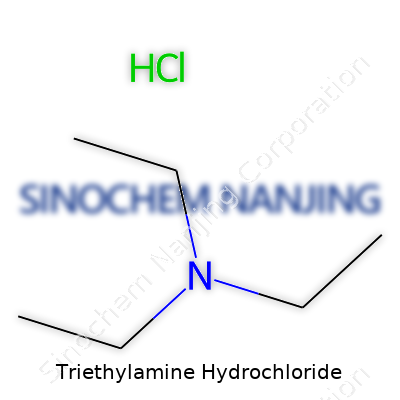
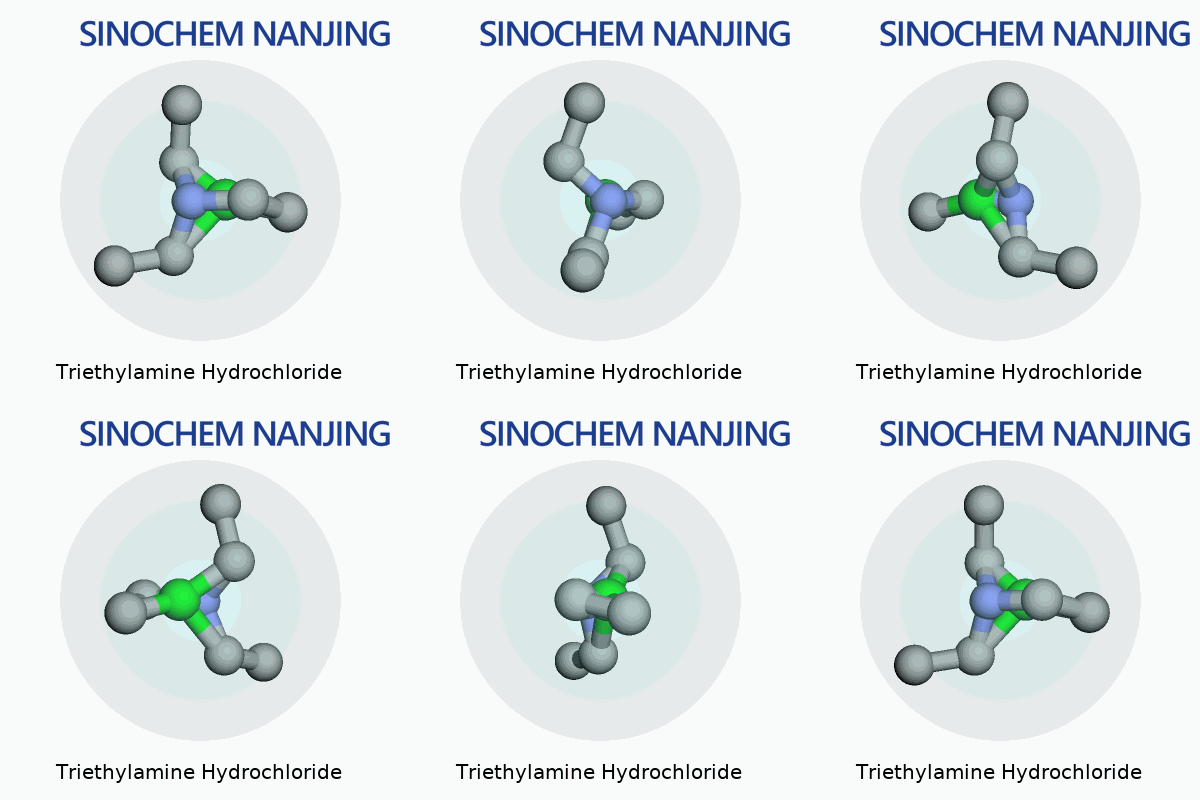
| Names | |
| Preferred IUPAC name | N,N-Diethylethanamine hydrochloride |
| Other names |
TEA HCl Triethylammonium chloride Triethylamine hydrochloride N,N-Diethylethanamine hydrochloride |
| Pronunciation | /traɪˌɛθ.ɪl.əˈmiːn haɪˌdrɒ.kloˈraɪd/ |
| Identifiers | |
| CAS Number | 554-68-7 |
| 3D model (JSmol) | `3Dmol('CCCCN(CC)CC.Cl')` |
| Beilstein Reference | 'Beilstein Reference 1718735' |
| ChEBI | CHEBI:63903 |
| ChEMBL | CHEMBL1230930 |
| ChemSpider | 79815 |
| DrugBank | DB11370 |
| ECHA InfoCard | 29-984-5 |
| EC Number | 200-761-7 |
| Gmelin Reference | 82119 |
| KEGG | C14368 |
| MeSH | D014264 |
| PubChem CID | 80468 |
| RTECS number | SN2100000 |
| UNII | W8KQ14TQ2B |
| UN number | 2837 |
| Properties | |
| Chemical formula | C6H15N·HCl |
| Molar mass | 137.66 g/mol |
| Appearance | White crystalline powder |
| Odor | Ammonia-like |
| Density | 0.84 g/cm3 |
| Solubility in water | Very soluble |
| log P | -2.2 |
| Acidity (pKa) | 9.81 |
| Basicity (pKb) | 3.25 |
| Magnetic susceptibility (χ) | -49×10⁻⁶ cm³/mol |
| Dipole moment | 0.0 D |
| Thermochemistry | |
| Std molar entropy (S⦵298) | 150.5 J·mol⁻¹·K⁻¹ |
| Std enthalpy of formation (ΔfH⦵298) | -274.6 kJ/mol |
| Pharmacology | |
| ATC code | V03AB37 |
| Hazards | |
| GHS labelling | GHS02, GHS07 |
| Pictograms | GHS07 |
| Signal word | Warning |
| Hazard statements | H302, H315, H319, H335 |
| Precautionary statements | Wash thoroughly after handling. Do not eat, drink or smoke when using this product. |
| NFPA 704 (fire diamond) | 2-3-0 |
| Lethal dose or concentration | LD50 oral rat 460 mg/kg |
| LD50 (median dose) | LD50 (median dose): Oral rat LD50: 1200 mg/kg |
| NIOSH | SE6475000 |
| PEL (Permissible) | Not established |
| REL (Recommended) | 0.5 ppm |
| IDLH (Immediate danger) | Not listed |
| Related compounds | |
| Related compounds |
Diethylamine hydrochloride Trimethylamine hydrochloride Ethylamine hydrochloride Triethylamine Triethylammonium chloride |



