Triethyl Phosphite: Tracing Uses, Risks, and Promise
Historical Development
Triethyl phosphite first gained attention in the early 20th century as chemists explored new organophosphorus compounds. Around 1848, chemist Jean Louis Lassaigne prepared it, but widespread use didn’t take off until after World War II. Early on, researchers valued its promise as both a reaction intermediate and a reducing agent, giving way to decades of laboratory and industrial application. This chemical’s relevance grew alongside the push for synthetic agriculture and pharmaceuticals in the postwar era, finding a foothold as safer, more effective chemicals became key economic drivers. The spread of industrial manufacturing cemented triethyl phosphite as a staple, showing just how critical innovation and curiosity are in moving science forward.
Product Overview
Triethyl phosphite carries the formula P(OC2H5)3 and usually shows up as a clear, colorless liquid with a faint, sweet odor. Laboratories and factories order it in both small glass bottles and industrial drums, given how versatile it proves for both scale and niche applications. The chemical helps make flame retardants, pesticides, and also acts as a ligand in metal-catalyzed reactions. Most production facilities rely on rigorous purification and quality checks, since slight variations in purity can skew the results of sensitive syntheses or lead to unwanted byproducts.
Physical & Chemical Properties
This substance boils around 156-158°C and melts below freezing, at -112°C. Its density comes in at about 1.01 g/cm³, and it dissolves well in organic solvents but not water. Triethyl phosphite is flammable, with a flashpoint near 54°C and vapor density heavier than air. Exposure to high temperatures or open flames can lead to toxic decomposition products like phosphine and oxides. From my experience, transporting it in summer always demands strict controls. Because it hydrolyzes slowly when exposed to moisture, even a leaky cap or faulty seal creates purity problems, especially for analytical chemistry labs. These sensitivities matter in real-world situations: mistakes can cost time, money, and sometimes health.
Technical Specifications & Labeling
Every drum or container comes stamped with batch number, concentration, manufacturer’s name, hazard pictograms, and date of manufacture. Most suppliers standardize on 99% minimum purity for research-grade material, while industrial stocks may run slightly lower. Regulations require clear warnings regarding its toxicity and flammability, since regulators have flagged it as a hazardous substance under the Globally Harmonized System (GHS). Transporting this chemical across borders requires strict adherence to the International Air Transport Association (IATA) and European ADR rules — a major compliance burden for global distribution. My colleagues in chemical shipping spend hours checking that each box and bottle move safely and legally.
Preparation Method
Factories produce triethyl phosphite by reacting phosphorus trichloride with ethanol under reflux and basic conditions, usually with excess base to mop up the hydrochloric acid that forms. The reaction needs careful temperature control to keep yields up and impurities down. Growing up around a family business in specialty chemicals, I learned how corners cut in process control almost always show up later in quality problems. Once the main reaction finishes, purification steps strip out leftover chlorides and any diethylphosphite, otherwise it will spoil sensitive applications or confuse analytical read-outs. Vacuum distillation polishes the final product.
Chemical Reactions & Modifications
Triethyl phosphite displays unique reactivity, thanks to its phosphorus atom in the +3 oxidation state. It serves as a reducing agent in both laboratory and industrial settings, regularly taking part in the Michaelis–Arbuzov reaction, which forms phosphonates. Phosphonates rank among the families of compounds most sought after in everything from water treatment to medicine. The trialkyl phosphite structure lets chemists tailor reactivity by swapping out ethyl groups for bulkier or more complex substituents; these variations provide new ways to handle catalytic reactions, especially those involving metals like palladium or nickel. In organic synthesis, this reagent gives pathways to produce complex, biologically active molecules, including certain pesticides and drug precursors. Every chemist I know has a unique story about how triethyl phosphite either fixed — or upended — a difficult synthesis.
Synonyms & Product Names
Triethyl phosphite sometimes goes by names such as phosphorous acid triethyl ester, phosphoric acid, triethyl ester, or simply TEP in shorthand among frequent users. Catalogs also list it as Ethyl phosphite or P(OEt)3. Looking up chemical synonyms is more than clerical: mixing up similar-sounding names can trip not just researchers, but also customs agents, warehouse staff, or new lab assistants. Chemical supply firms brand their own material, meaning two bottles may look different but contain the same core product.
Safety & Operational Standards
Risk follows triethyl phosphite wherever it’s stored, shipped, or handled. Inhalation of vapors, skin contact, or even a small spill means a rapid scramble for ventilation and cleanup gear. Regulatory agencies require lab coats, gloves, goggles, and, during transfers or distillation, fume hoods. Having seen colleagues ignore a minor spill, only for irritation and persistent odor to linger for days, reinforces respect for standard operating procedures. Fire safety rules treat this compound like any seriously flammable liquid, so static control, spark-free tools, and labeled fire extinguishers stand nearby at all times. Emergency planning covers treatment of exposure — plenty of chemical burns and inhalation cases wind up in annual health statistics.
Application Area
The list of end uses covers a broad spectrum: pesticides, flame retardants, plasticizers, stabilizers, and specialty ligands for metal-catalyzed synthesis. Farmers in the 1970s and 1980s leaned on triethyl phosphite as part of new generations of organophosphate pesticides. Chemical engineers use it in making polycarbonates and organophosphorus flame retardants. In pharmaceuticals, triethyl phosphite reacts in key steps for certain antiviral drugs and prodrugs. Some research teams apply it in producing optoelectronic materials, chasing improved organic LEDs and thin-film devices. I remember environmental regulators focusing scrutiny on its use as a precursor to more persistent chemicals, which has nudged the industry to find greener alternatives. Its versatility as both reactant and reducing agent cements its spot in the industrial toolkit — but also means more rules, training, and audits on its handling.
Research & Development
Innovators keep searching for new or improved applications of triethyl phosphite. Teams explore its ability to act as a starting agent for chiral synthesis, hoping to unlock cheaper or more selective pharmaceutical intermediates. Researchers revisit old mechanisms, aiming to lower reaction temperatures or cut energy use, improving yields and reducing hazardous byproducts. The drive toward “green chemistry” has encouraged recycling of triethyl phosphite in catalytic cycles or using biorenewable sources, though few alternatives match the three-ethyl-group structure’s unique balance of activity and stability. Industry consortia and academic groups examine waste minimization and more benign end-of-life treatments. Advances in process engineering — such as more selective distillation columns — aim to purify, recover, and recycle triethyl phosphite on ever-larger scales.
Toxicity Research
Toxicity studies over decades show clear risks from inhalation, ingestion, or skin contact. Acute exposure causes irritation in the eyes and respiratory tract; chronic exposure threatens kidneys and the nervous system. Experiments in rats showed liver and kidney effects at moderate doses, with little ambiguity about the need for robust PPE and chemical hygiene. Even trace residues in pharmaceuticals or consumer products cause regulatory red flags. Poisoning incidents — more frequent in the early industry days, before modern safeguards — shaped today’s strict approach to labeling, worker training, and ventilation. In the broader ecosystem, improper disposal between the 1960s and 1980s led to contamination in some areas, leading to cleanup orders and stricter control. Nobody working with triethyl phosphite forgets the close link between proper handling and health.
Future Prospects
Manufacturers keep pushing for safer, more efficient production routes, both for cost and environmental impact reasons. Interest in new flame-retardant compounds or crop-protection agents promises continued demand. In the emerging field of organocatalysis, triethyl phosphite’s ligand properties open new frontiers, especially as industries look to swap out heavy metals in catalysis for less toxic options. Green chemistry advocates push researchers to develop ways to use and recycle this chemical with less waste. While some applications face regulatory pressure, especially in agriculture, prospects in electronic materials and pharmaceuticals attract new investment each year. The balance between technological promise and health or environmental risk will continue to shape policies, lab protocols, and the direction of innovation in both research and industry.
What are the main uses of Triethyl Phosphite?
Essential Role in Chemical Synthesis
Triethyl phosphite turns up in a wide range of industries and for good reason. Its power as a reducing agent sets the stage for a long list of chemical reactions. Growing up, I watched a neighbor who worked in agriculture handle various chemical mixtures. Later, I realized he relied on ingredients like triethyl phosphite to help manufacture pesticides and insecticides. These chemicals often depend on specific reactions to work as intended, and triethyl phosphite plays a starring role in those processes.
In organic chemistry labs, this compound comes in handy for the Arbuzov reaction, which produces phosphonates – key building blocks in making flame retardants and even certain medicines. Looking at the numbers, millions of kilograms of triethyl phosphite feed into the global supply chain every year, which gives a sense of how deeply it’s woven into products we see every day.
Behind the Scenes in Everyday Products
Take plastics. Polyvinyl chloride (PVC) often calls for stabilizers to prevent breakdown when exposed to heat. Triethyl phosphite enters here as a heat stabilizer and antioxidant, making plastic window frames last longer and pipes keep their shape under tough conditions. Stories from folks working in plastics plants confirm how its addition can stretch product life and avoid costly replacements.
Moving over to agriculture, companies turn to triethyl phosphite when manufacturing herbicides and pesticides. For instance, the production of the herbicide glyphosate involves it at one stage, keeping fields clear and crop yields higher. In the world of farming, keeping up with demand ties closely to such chemicals, so the quality and reliability of components like triethyl phosphite can mean bigger harvests and more food on the table.
Building Blocks for Pharmaceuticals
Pharmaceutical companies need efficiency and purity when creating new drugs. Triethyl phosphite helps streamline several synthetic steps, especially for antivirals, antibiotics, and some cancer treatments. Working in a pharmacy, I saw firsthand how disruptions in the chemical supply chain could delay production. Shortages of such intermediates can put real pressure on both companies and patients, so a steady supply remains critical.
Challenges and Responsible Use
Despite its utility, triethyl phosphite poses safety questions. Exposure without proper precautions leads to irritation and health risks. The chemical has a flammable nature that forces companies to set up serious storage rules. I remember a local incident years ago where improper handling caused a fire in a small factory. This event pushed the business community to run safety drills and educate workers, so mistakes didn't repeat.
Environmental impact comes up, too. Waste management in plants making or using triethyl phosphite needs tight oversight. Pollution controls, staff training, and investment in containment strategies become non-negotiables. Solutions require teamwork: industry has to talk openly with local communities, environmental groups, and regulators to adopt safe practices. Regular audits and transparent reporting build trust and keep the system honest.
Looking Forward
There’s plenty of room for innovation. Researchers continue to search for greener ways to make and recycle compounds based on triethyl phosphite. Methods like using renewable resources or improving catalytic steps get a lot of attention because they can shrink both carbon footprint and cost. It’s a reminder that even chemicals rooted in established industries need to evolve with our changing world.
What is the chemical formula and structure of Triethyl Phosphite?
The Basics: Breaking Down Triethyl Phosphite
Triethyl phosphite comes with the chemical formula P(OCH2CH3)3 or more simply C6H15O3P. This isn’t another boring classroom exercise — anyone working in labs, manufacturing, or even curious students see the value in understanding a molecule’s true make-up. This colorless liquid shows up in chemical synthesis, and being able to visualize its structure can separate those just memorizing details from those who solve real-world problems.
Why the Structure Tells a Story
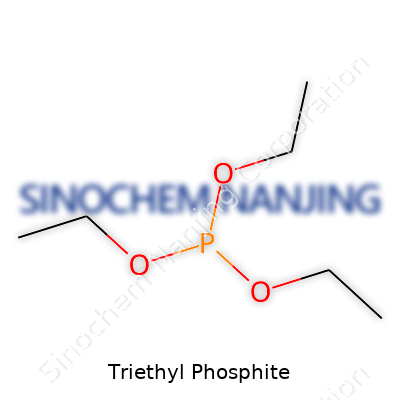
The structure of triethyl phosphite shows a phosphorus atom bonded to three ethoxy groups. Picture a phosphorus center at the heart, with three OCH2CH3 ‘arms’ reaching out. Each arm attaches to the phosphorus by way of an oxygen atom, making the whole thing a smooth and open tetrahedral shape. What stands out is the way these groups arrange themselves, leaving phosphorus open to interact with other molecules. The phosphorus atom in this compound has a lone pair, which comes in handy during organic reactions and synthesis steps. This property lets it serve as a nucleophile or ligand, stepping into all kinds of reaction pathways.
Personal Reflections: Triethyl Phosphite in the Real World
The first time I handled triethyl phosphite, the smell of garlic hit me — an odd sign that a compound means business. Nobody forgets it after a day in the lab. In industrial settings, this compound sneaks into flame retardants, plasticizers, and even as a stabilizer in processing plastics. Knowing what gives triethyl phosphite its unique reaction profile helps keep workers safe and ensures the product does what it promises. Its use requires special care because fumes irritate eyes and skin, and anyone who’s tried to clean up a minor spill knows it lingers in the air.
What Matters: Safety and Skill Go Hand-in-Hand
Treating triethyl phosphite with respect comes from understanding both its formula and how it behaves with other chemicals. Its reactivity can create benefits — like speeding up organic synthesis or acting as a precursor for making other phosphorus compounds — but without solid practices, accidents happen quickly. We see reminders in chemical safety records: protective gear isn’t for show, and working in a well-ventilated space isn’t optional. Pairing technical knowledge with proper safety culture saves money and lives.
Improving Understanding and Training
Chemists learn formulas and structures, but nothing clicks until they manage the substance themselves. Training programs stick better when learners see the shape and feel its properties. Visualization tools and hands-on sessions with triethyl phosphite connect what’s on paper to reality. Interactive 3D models, for example, help students grasp tetrahedral geometry and lone pair electron placement in ways static tables can’t.
Solutions: Safer Handling and Future Applications
Access to resources — from safety data sheets to open-source structural models — empowers teams to use triethyl phosphite more wisely. Incentives for labs to invest in better ventilation and fume hoods cut risks down fast. As new uses appear, particularly in green chemistry and agriculture, the demand for up-to-date training only grows. Armed with a real understanding of formula, structure, and risks, scientists and technicians turn triethyl phosphite’s quirks into strengths that benefit industry and society alike.
How should Triethyl Phosphite be safely handled and stored?
Understanding the Risks
Triethyl phosphite sounds like something out of an old high school chemistry class, but out in the world it brings along real risks. Anyone who’s ever worn a chemical splash on their sleeve instead of inside a test tube remembers the sting of carelessness. This stuff releases fumes with even a small spill, and those fumes irritate eyes and lungs faster than you might expect. Breathing issues and skin burns come fast. People learn quickly which gloves actually work—nitrile or neoprene give better protection than the standard issue latex. Thin gloves may start dissolving after a short splash, so changing them as soon as damage shows keeps the risk lower.
Ventilation and PPE: Non-Negotiable
Working with triethyl phosphite in a closed room never ends well. The vapors don’t just hang around; they creep into your clothes and every bit of exposed skin tingles until everything gets washed off. Fume hoods or, at the very least, open windows with strong cross-ventilation make a huge difference. For those actually in charge of the lab, regular checks of fume hood velocity stop more problems than most realize. Goggles beat safety glasses every time—splashes come from odd angles and the liquid likes to get airborne.
Labeling and Storage—Lessons from the Field
Some chemicals hide in plain sight near eye-level on a shelf, but triethyl phosphite works best at shoulder height or lower. The container gets slippery if it drips, and glass breaks faster than anyone expects. Whenever someone tries to use old plastic bottles or leaves off the original label, confusion happens at the worst moment. Permanent markers fade or smear, so sticking to printed chemical-safe labels saves headaches.
The bottles never belong near acids or oxidizers. Mixing those, even by accident, gives off toxic, flammable gases. Flammable cabinets with built-in spill containment prove their worth. Once, a cracked bottle left a small puddle in a steel-lined cabinet; instead of soaking into wood and sticking around for weeks, the cleanup took minutes. Keeping incompatible materials on their own shelves avoids surprises.
Handling Small Quantities and Training
Trying to pour straight from a large bottle into a beaker leads to spills. Using a graduated cylinder or transfer pipette cuts down mistakes. Those tiny measuring slips usually turn into bigger messes later. In every busy lab, rushing is the enemy. Taking a minute to double-check the procedure prevents both costly accidents and burned hands.
Talking with new team members about triethyl phosphite safety isn’t just a rule to tick on a training form. In practice, walk-throughs with actual bottles in hand result in better understanding. Pointing out what to do if a spill happens creates habits that stick far longer than reading about it.
Fire Control and Spill Response
Fires involving triethyl phosphite take off fast. Regular water makes things worse, so dry chemical powder or CO2 extinguishers—kept in the right spot—control the danger. Everyone working near this chemical should test fire drills every season. Mop-up kits with plenty of absorbent material get used more often than anyone likes to admit. Teaching fast action—removing ignition sources, ventilating, and alerting the right people—always saves time.
Building a culture where every person feels comfortable asking for a second opinion before starting weighs more than any checklist. Safe handling isn’t about being extra careful for a single day, but building small habits that make handling risky chemicals just another careful step in the process.
What are the potential health and safety hazards of Triethyl Phosphite?
What is Triethyl Phosphite?
Triethyl phosphite shows up in labs and industries that make pesticides, flame retardants, and plastic stabilizers. Its presence isn’t a mystery for chemists and workers who spend their days mixing chemicals. The clear, pungent liquid doesn’t grab attention like some brightly colored powder, but it has a reputation among safety-conscious folks for a reason.
Potential Health Risks
Direct contact with skin brings a burning sensation. People working with triethyl phosphite talk about nasty rashes that remind us all of the need for proper gloves. I remember visiting a chemical facility years ago where a coworker felt an itching and burning from just a splash on his wrist. Minutes matter with this stuff. Washing thoroughly, tossing gloves, and reporting incidents to supervisors helped keep things from escalating.
Inhaling vapors presents another problem. Nobody enjoys the strong, irritating smell that can linger in the back of the nose. Shortness of breath, headaches, dizziness, and even vomiting can spring up after a dose of toxic fumes. If the ventilation in a space slacks off or a mask doesn’t fit well, symptoms appear faster than many expect. My own head has ached from a chemical exposure gone wrong, lights overhead spinning until I reached fresh air.
Eyes come under real threat too. A single drop causes severe irritation, redness, and tearing. Some workers describe it as getting sand thrown into their eyes—painful enough to halt a shift. Splashes need an emergency rinse, with plenty of water. Medical follow-up matters if redness and swelling stick around. Safety glasses sit on my shelf, scratched but always close by.
Environmental and Fire Hazards
Triethyl phosphite doesn’t play well with water or open flames. Spills can release combustible vapors that ignite with a stray spark. In a fire, it releases toxic gases, including phosphorus oxides and ethyl alcohol. Workers trained for emergencies stay alert for small drips and leaks. I remember a drill that focused on blocking floor drains and quickly ventilating fumes—essential lessons, especially in crowded labs.
Leaks also threaten local waterways and soil. Improper disposal means this chemical can travel, harming fish and plants. Regulations exist in many countries to stop careless dumping, but oversight slips sometimes, leading to big fines and environmental headaches. I carry a lasting image of a riverbed near an old plant, dead fish scattered after a midnight spill.
Reducing Risks and Staying Safe
Training every worker matters. Everyone should know the right gloves, how to store chemicals away from heat, and never to pipette by mouth. Regular refreshers and open conversations build safer habits—no one wants to see coworkers rushed to the hospital. I kept an extra pair of nitrile gloves in my bag for years, giving them out to anyone caught unprepared.
Ventilation systems deserve real investment—no hissing sounds or flickering warning lights. Emergency eyewash stations and showers, checked regularly, let workers handle accidents quickly. Clear labeling and proper storage, far from oxidizing agents and flammable solvents, shrink the odds of dangerous reactions.
Sometimes steps add a few minutes to a shift. That time pays back many times over by avoiding pain, lost work, or hospital visits. A culture built around speaking up about hazards keeps everyone honest and careful, from the new hire to the most senior supervisor.
Summary
Triethyl phosphite demands respect. It takes the right equipment, good habits, and a willingness to double-check. My years around chemicals teach me that skipping safety out of convenience almost always invites regret.
Is Triethyl Phosphite compatible with other chemicals in reactions?
Everyday Work in the Lab
Stepping into any chemistry lab, you’ll likely spot a bottle of triethyl phosphite. This clear liquid, with its sharp, almost biting odor, quietly finds its way into reaction flasks during organic synthesis, and for good reason: it’s both a reagent and a ligand. Triethyl phosphite’s compatibility with other chemicals really shapes its role. I’ve learned the hard way that even a routine reaction can get bumpy if you don’t know your reagents well.
What Makes Triethyl Phosphite Stand Out
Triethyl phosphite, chemically written as P(OEt)3, has a knack for acting as a reducing agent and a phosphorus source. Its most popular use comes in the Arbuzov reaction, where alkyl halides—like methyl iodide—get converted into phosphonates, compounds needed in making medicines, agricultural products, and flame retardants. In these cases, worth noting, triethyl phosphite needs a good working relationship with alkyl halides. Over dozens of set-ups, I’ve found no issues with straightforward alkyl or aryl halides: if they’re dry and pure, triethyl phosphite does its job cleanly. Toss moisture or acids into the mix, and trouble pops up quickly.
Moisture and Air Hit the Brakes
Moisture acts as a spoiler. Even a quick whiff of water and triethyl phosphite hydrolyzes, giving diethyl phosphite and ethanol. That’s not just a lab annoyance—it wastes expensive reagents and leaves you sorting through a cloudy mess. Lab tradition and safety guidelines both push the need for anhydrous conditions, using dry glassware and proper inert gas setups. It sounds tedious at first, but keeping reactions dry brings a smooth outcome and keeps results reliable.
Reactivity with Strong Oxidizers and Acids
Some chemicals mix about as well as oil and water with triethyl phosphite. Strong oxidizers like perchlorates and permanganates trigger vigorous reactions. No surprise—phosphorus atoms tend to give up electrons eagerly. The story doesn’t change with strong acids. Even a splash of hydrochloric or sulfuric acid means further hydrolysis and potentially more hazardous byproducts. That gets reflected in most Material Safety Data Sheets, which pair triethyl phosphite with a red-highlighted “Keep Away From” list. It may look ordinary, but under the wrong conditions, triethyl phosphite can put everyone on edge.
Getting the Most Out of Its Compatibility
With careful attention, triethyl phosphite works together with plenty of organic molecules. It partners well in Michaelis–Arbuzov reactions and serves as a ligand when building up metal complexes for catalysis. Issues usually come from overlooked minor ingredients or impurities—like halide salts or acids left in your solvents or glass. I’ve watched colleagues pour over failed reactions, only to find a moment of carelessness to blame. Good note-keeping and consistently checking reagents solve plenty of those puzzles.
Moving Toward Safer and Smarter Use
Training stands out as the most effective solution. Not every young chemist picks up on the quirks of triethyl phosphite from textbooks alone. Time spent mentoring in the lab cuts down on surprises. Modern labs also stick to better ventilation and proper fume hoods to handle its sharp vapors. Clear labeling and segregated storage of incompatible reagents protect both research and people.
Summary
From medicinal chemistry to academic teaching labs, triethyl phosphite plays many roles. Its value hinges on a tight handle of its compatibility. With hands-on care, checking for common pitfalls—mainly water and strong oxidizers—most chemists learn to rely on it without too many setbacks. Solid safety habits and routine maintenance keep this reagent useful, not hazardous, and ensure that each reaction moves in the right direction.
| Names | |
| Preferred IUPAC name | Triethyl phosphite |
| Other names |
Phosphorous acid, triethyl ester Phosphorous acid triethyl ester Ethyl phosphite Triethoxyphosphane Triethoxyphosphine Phosphorous acid ethyl ester |
| Pronunciation | /traɪˈɛθ.ɪl ˈfɒs.faɪt/ |
| Identifiers | |
| CAS Number | 122-52-1 |
| Beilstein Reference | 87855 |
| ChEBI | CHEBI:38467 |
| ChEMBL | CHEMBL50840 |
| ChemSpider | 5526 |
| DrugBank | DB14109 |
| ECHA InfoCard | 03d7eaf5-cf5f-414d-8d31-4e205b5ac3e0 |
| EC Number | 208-746-4 |
| Gmelin Reference | Gmelin 777 |
| KEGG | C00745 |
| MeSH | D014244 |
| PubChem CID | 7902 |
| RTECS number | TF2100000 |
| UNII | W97M4QAI3E |
| UN number | UN2323 |
| Properties | |
| Chemical formula | C6H15O3P |
| Molar mass | 198.19 g/mol |
| Appearance | Colorless transparent liquid |
| Odor | fruity |
| Density | 1.006 g/mL at 25 °C (lit.) |
| Solubility in water | miscible |
| log P | 1.31 |
| Vapor pressure | 0.32 mmHg (20°C) |
| Acidity (pKa) | 12.26 |
| Basicity (pKb) | 6.6 |
| Magnetic susceptibility (χ) | -61.5×10⁻⁶ cm³/mol |
| Refractive index (nD) | 1.404 |
| Viscosity | 0.806 cP (20°C) |
| Dipole moment | 2.19 D |
| Thermochemistry | |
| Std molar entropy (S⦵298) | 322.6 J·mol⁻¹·K⁻¹ |
| Std enthalpy of formation (ΔfH⦵298) | -482.7 kJ/mol |
| Std enthalpy of combustion (ΔcH⦵298) | -1766 kJ·mol⁻¹ |
| Pharmacology | |
| ATC code | V03AB38 |
| Hazards | |
| GHS labelling | GHS02, GHS07 |
| Pictograms | GHS02,GHS07 |
| Signal word | Warning |
| Hazard statements | H225, H302, H319 |
| Precautionary statements | P210, P261, P280, P301+P312, P304+P340, P305+P351+P338, P312 |
| NFPA 704 (fire diamond) | 2-2-2-W |
| Flash point | 74 °C |
| Autoignition temperature | 200°C |
| Explosive limits | Explosive limits: 1.5–11.7% |
| Lethal dose or concentration | LD50 oral rat 1,600 mg/kg |
| LD50 (median dose) | LD50 (median dose): Oral rat 1,600 mg/kg |
| NIOSH | TF3150000 |
| PEL (Permissible) | PEL: Not established |
| REL (Recommended) | 2 mg/m³ |
| IDLH (Immediate danger) | NIOSH IDLH: 200 ppm |
| Related compounds | |
| Related compounds |
Trimethyl phosphite Triphenyl phosphite Phosphorous acid Diethyl phosphite Triisopropyl phosphite |



