Tributyltin Linoleate: A Crucial Chapter in Organotin Chemistry
Looking Back: Historical Roots
Some chemical milestones have shaped how industries tackle age-old challenges. Tributyltin linoleate, first developed in the mid-20th century, emerged as part of the broader organotin family’s rise in specialty applications. Chemists saw the value in synthesizing organotin compounds with fatty acid ligands, not just for technical novelty but for their practical value in controlling unwanted biological growth. In the 1970s and 80s, shipbuilders and paint manufacturers jumped on tributyltin linoleate, not because it fit a theoretical mold, but because it proved to keep hulls clear of barnacles and weeds—even better than older toxic brews like mercuric oxide. The early regulatory openness let the industry push these products right into the field, quickly scaling up production, even while the world knew little about long-term risks.
What Sets It Apart
Tributyltin linoleate carries both the properties of its tin core and the linoleic acid backbone. As a molecule, it’s best described as a clear, viscous liquid: oily, faintly yellow, and nearly insoluble in water but perfectly content in organic solvents. This means it mixes well into paints, plastics, and other coatings without complications. Chemically, its signature lies in the way the tributyltin group links with the linoleate through an ester bond—a marriage of organometallic heft and unsaturated fatty acid. These features do more than look good on a label. The tributyltin moiety acts as a potent biocide, attacking the enzymes and membranes of marine organisms. The linoleate part helps the compound disperse effectively across surfaces, creating even protection and binding solidly to base materials.
Understanding the Chemistry and Key Labels
The technical numbers tell part of the story: Tributyltin linoleate usually appears under CAS number 24124-25-2, but it sometimes takes on other labels and synonyms depending on the supplier. You’ll come across product names like TBT Linoleate or TBTO Linoleate. The substance brings together a fair amount of chemical punch, with a molecular formula often cited as C27H54O2Sn. Its boiling point runs high, well above most paint solvents, helping it stay locked inside ship coatings instead of evaporating. Modern labeling requirements grew stricter, especially after concerns over toxicity. Whether moving across borders or into consumer hands, packages must now note the compound’s hazards, shelf stability, and necessary precautions. Any shop stocking tributyltin linoleate faces scrutiny from both shippers and regulators, throwing a spotlight on clear, accurate classification.
How Chemists Build It
Making tributyltin linoleate isn't just standard mixing. It often starts with tributyltin oxide, a staple in the organotin world, reacting with linoleic acid under controlled conditions. The process leans on solvents like toluene and mild heating. Excess acid must be removed, followed by careful purification to weed out any leftover reactants or side-products. Even small changes in temperature, solvent choice, or acid-to-tin ratios can tilt the yields or produce more broadly acting tin byproducts. Teams working in this field always emphasize precision, since small slips in process show up down the supply chain, either as reduced performance or—worse—increased toxic leaching.
Reactions and Tweaks: How It Behaves
Organotin esters including tributyltin linoleate aren’t inert shelf-sitters. In the environment, acids or sunlight push the molecule to break apart, sometimes slowly, sometimes with surprising speed. This breakdown can churn out tributyltin cations, which often persist much longer than industrial designers ever planned for. Lab scientists still chase ways to modify the molecule, seeking either softer decompositions or new hybrids that keep fouling at bay without environmental fallout. Some researchers explore swapping in different fatty acid chains or adding stabilizers to stretch the life of the coating, but real-world results vary depending on water temperature, salinity, and the thickness of layers applied.
Safety: High Stakes in Handling
Decades of use left no doubt that tributyltin linoleate doesn’t belong in casual hands. Contact can irritate skin and eyes, and fumes should never be taken lightly. If a can tips over in a warm shop, the vapor risk jumps, and open cuts or sloppy handling invite trouble. Regulations such as the European REACH framework and US EPA restrictions bar its use in anything approaching household products. The workplace must offer gloves, chemical goggles, and well-designed ventilation. Disposal routines refuse shortcuts—leftover paints, washes, and empty drums meet rules as strict as those for pharmaceutical waste. No one fixing boats or painting piers shrugs off these steps anymore.
Where It Has Made an Impact
Tributyltin linoleate earned its reputation in marine coatings. Ships once spent entire dry-dock seasons scraping off fouling; with the shift to organotin antifoulants, maintenance costs dropped, vessel fuel efficiency rose, and long-haul ocean crossings sped up. It didn’t take long before fish farms, cooling towers, and even timber preservation projects eyed tributyltin linoleate for microbial and algal control. Still, its most famous chapter unfolded at sea, where even a thin paint layer sharply limited barnacle and slime buildup. The story changed with growing awareness of environmental impact, pushing regulators and responsible industry leaders to scale back and hunt for alternatives.
What the Research Shows
Science around tributyltin linoleate is a double-edged sword. Studies clearly document both its antifouling power and its role as an endocrine disruptor in aquatic systems. Water and sediment samples from harbors and marinas around the world repeatedly uncover tributyltin residues at levels triggering harm in non-target species. Shellfish populations, in particular, show deformities and population crashes linked to persistent tin compounds. Ecotoxicologists mapped out bioaccumulation patterns, tracking the movement of tin ions up the food chain. Despite strict bans on new uses in many countries, ongoing monitoring programs still find hotspots of contamination near shipyards and old slipways, a legacy issue not solved by switching products overnight.
Exploring Safer Paths and Forward Thinking
Chemical innovation rarely stands still for long. Tributyltin linoleate’s fate shows what happens when technical solutions outpace safety reviews. Since the late 1990s, shipyards and paint chemists have reshaped research, investing in safer, less persistent antifoulants. Silicon-based foul-release systems, copper-free biocides, and structured surfaces now lead the charge, balancing ship maintenance needs with real stewardship for aquatic life. Some teams tackle the environmental breakdown of legacy tributyltin, developing targeted enzymes and remediation protocols to pull tin from sediments or old paint flakes. Governments fund long-term risk mapping while enforcing tighter control on remaining industrial stockpiles. The race to build coatings that fend off marine life — without setting off a toxic ticking clock — drives both seasoned chemists and startups, pushing organotin chemistry both to accountability and to a higher standard.
What is Tributyltin Linoleate used for?
Tributyltin Linoleate in Industry
Someone working in manufacturing or coatings probably heard about tributyltin linoleate. It’s a chemical compound made by combining tributyltin—a tin-based organometallic—with linoleic acid, one of the major fatty acids you run across in vegetable oils. This pairing brings out chemical properties that make it useful in places where most people don’t look: protecting paint and coatings, especially in harsh conditions where water, mold, or marine organisms try to make a mess of things.
Marine companies, for example, used to favor this compound in anti-fouling paints. If you’ve seen pictures of the bottom of a ship after years in the water, you know how serious barnacle and algae growth can get. Tributyltin linoleate’s chemical structure blocks those marine hangers-on pretty well. It essentially poisons organisms like barnacles on contact, stopping them from making their home on ship hulls or inside pipes. This keeps vessels more efficient and less rusty—a big deal for shipping companies trying to save on fuel and avoid costly repairs.
Use in Paints and Wood Preservatives
The same toxic kick that turns away barnacles lends itself to protecting paints and wood surfaces. Fungal rot will chew through wooden docks, pilings, or outdoor furniture left exposed to the elements, and most regular treatments wear off sooner than anyone wants. Tributyltin linoleate, as part of wood preservatives, blocks mold and decay. This works both in large-scale construction (piers, decks) and backyard upkeep. In some industrial paint formulations, its presence controls mildew in damp basements or humid climates, where paint alone doesn’t stand a chance.
Health and Environmental Considerations
Anyone reading about tributyltin linoleate will notice experts warning about health and environmental risks. Scientific studies show that tributyltin compounds stick around longer than they should in the environment. Shellfish, fish, and birds suffer from disrupted immune systems and reproduction problems where these chemicals accumulate. As a parent who spent time fishing on the coast, I’ve seen cleanups in marinas where authorities found unusually high levels of these compounds and local shellfish populations declined.
Because of these concerns, regulations changed. Most places across Europe and North America banned or severely restricted tributyltin-based products in marine paints. The impact goes beyond ships—it touches all waterways connected to treated hulls. The chemical’s mobility and toxicity drove scientists to research safer substitutes, not just for aquatic life but for those of us eating fish at the end of that food chain.
Where Do We Go From Here?
Focusing on alternatives makes sense. Copper-based antifoulants and newer silicone technologies have improved in recent years. They don’t solve every problem, but avoiding persistent and toxic chemicals like tributyltin linoleate matters, especially for future generations. Manufacturers working in coatings, paints, or marine treatments have to weigh long-term waterway health against short-term business needs.
I keep coming back to the simple fact that each chemical chosen for industry eventually finds its way beyond the factory floor. If we aim to care for our own health and the environment, demanding safer options isn’t just for scientists—it starts with the decisions made by manufacturers and the questions raised by the rest of us.
Is Tributyltin Linoleate safe for humans and the environment?
Understanding Where It Comes From
Tributyltin linoleate comes from a mix of organotin and linoleic acid. Companies use it mainly to stop things like fungus and barnacles from growing on ships or other surfaces that face a lot of water. Over the years, I’ve seen people asking questions about its safety—not just for those who work with it in shipyards, but also for anyone who might come into contact with products treated with this substance.
What We Know About The Risks
Science hasn’t ignored tributyltin compounds. Researchers, especially through the 1980s and 1990s, noticed problems in both wild animals and people. Back then, a major use for tributyltin came in ship paints to stop barnacles and weeds from sticking. The problem? Even tiny amounts caused dramatic harm to sea snails and oysters. Scientists documented “imposex” in female snails—the development of male characteristics—turning local ecosystems upside down. Fish and shellfish, including those caught for people to eat, picked up toxic levels. The story played out all over the globe, including the United States, Europe, and Asia.
For people, organotins hit the immune system hard. The US Environmental Protection Agency and other top bodies warn that these chemicals cause skin and eye irritation, and in higher exposures, they can mess with hormones and even the nervous system. Rats exposed to these chemicals in labs show problems with reproduction and growth, and though we work to keep people’s exposure levels low, the risk has not disappeared entirely. Pregnant women and young children would face the biggest risks from exposure—something regulators watch closely today.
Regulation and What Has Changed
Tough global rules now block most uses of tributyltin in marine paints. Bodies like the International Maritime Organization agreed to ban its use on ships starting in 2008. The reason is clear: Waiting longer risked permanent damage to marine life and local seafood markets. Still, tributyltin linoleate sometimes turns up in niche products, and not every nation enforces bans with equal strength.
I see a pattern here—industry moves faster than regulation, and by the time rules catch up, the damage often gets done. It reminds me why listening to environmental scientists early, and keeping lines of communication open with those on the ground, really matters. People living near shipyards or working in manufacturing catch the brunt of chemical leaks or unsafe handling.
What We Can Do Going Forward
Switching to safer alternatives isn’t just a technical fix—it’s an investment in healthier communities. Using non-toxic coatings, building better boat-cleaning systems, and making sure protective gear and training are actually in place all help lower risk. Public awareness makes a real difference; the more that people—including those who work with these substances—know about the risks, the more leverage communities gain for stronger rules.
Scientists watch for new health problems not just in people, but in the wildlife around us. Routine monitoring pulls problems into the open before they get out of hand. I trust facts from the World Health Organization, the Environmental Protection Agency, and local public health boards because those groups stick to solid evidence and open review.
Tributyltin linoleate should trigger caution. Our health and the state of the environment depend on the choices made at both policy tables and on factory floors. Clearing these chemicals out leads to cleaner water, safer seafood, and healthier workplaces. That’s a goal worth pushing for—no shortcuts, no looking away.
What are the main applications of Tributyltin Linoleate?
Guarding Against Marine Threats
Anyone who has spent time around marinas or worked with boats knows how quickly a ship’s hull can turn into a breeding ground for algae, barnacles, and other marine life. Tributyltin linoleate earned a prominent spot in the marine paints market for just this reason. For decades, paint manufacturers added this compound to anti-fouling coatings to slow down those persistent underwater intruders. The science behind it is simple but impressive: as the paint wore away, tributyltin linoleate leached into the surrounding water at a steady rate, stopping larvae and spore attachment right at the surface. Shipping operators saw real savings because cleaner hulls cut down on drag and let ships use less fuel to travel the same distance.
Pesticide and Wood Preservative Uses
Wooden docks, pilings, and marine timbers have always faced relentless attacks from fungi and boring insects. Before stricter regulations came down, tributyltin linoleate showed up in wood preservatives meant for marine environments. This approach made sense: waterfront communities and commercial ports could extend the life of timber structures by years, avoiding costly and disruptive replacements. Beyond the dock, tributyltin linoleate even made it into some agricultural pesticides, particularly for specialty crops where fungal threats could wipe out an entire harvest in days.
Industrial Cooling and Water Systems
Cooling towers and pipeline engineers also looked to tributyltin linoleate to keep their systems running smoothly. Slime, biofilm formation, and algae in recirculating water are more than just a headache; they can choke flow, corrode metal, and even cause costly shutdowns. I remember hearing from an old plant supervisor about the difference between a treated and untreated water system. Without biocides, pipes can turn into a science experiment gone wrong almost overnight. Tributyltin compounds laid down a barrier against unwanted biological growth, cutting down on maintenance calls and urgent repairs.
Health and Environmental Risks
Of course, nothing ever comes free of consequences. By the late 1990s, evidence from marine biologists and toxicologists painted a stark picture. Even at low concentrations, tributyltin linoleate proved toxic to oysters, snails, and fish. Researchers found shellfish beds collapsing, and some species suffered disrupted development linked to trace levels in the water. These findings led to restrictions and bans on tributyltin-based products in most countries. That decision echoes in ports today — marine paints now rely on safer, non-tin alternatives, accepting a higher haul-out schedule as the price for cleaner water.
New Solutions for Old Problems
As regulations drove companies to innovate, new blends started taking over the markets where tributyltin linoleate dominated. Copper-based coatings, silicone finishes, and emerging biodegradable biocides stepped up in marine paints. For wood, new preservatives with lower environmental footprints started replacing tin-based classics. In the industrial space, operators started mixing physical cleaning cycles with less persistent chemicals, spreading out environmental risk while still protecting pipes and towers.
Fact-Based Perspective
The story of tributyltin linoleate stands out as a reminder: solutions that fix one problem often create another if science, stewardship, and public health don’t keep up. Real-world results, not just lab tests, tell the story. What worked well for the shipping and agricultural sectors needed a second look once communities measured the long-term effects on the environment and health. Keeping that balance between industrial needs and environmental realities is where the conversation belongs — and where future chemistry will keep searching for safer answers.
Are there any regulations regarding the usage of Tributyltin Linoleate?
Regulation Realities in Plain Sight
Tributyltin linoleate raises eyebrows for good reason. As someone who has spent years digging through chemical safety issues, I’ve seen this compound pop up in a lot of industrial settings, mostly as an anti-fouling agent in marine paint. Back in the 1970s and 1980s, no one seemed to care much about what these chemicals did once they left the ship’s hull and made their way into the water. Now, people know better.
Right now, a big chunk of regulation comes from the tragedy that followed decades of unchecked use of tributyltin compounds—not just linoleate, but also its cousins like tributyltin oxide. The catastrophic impact on oysters and marine life near busy ports pushed authorities to clamp down hard. Research from Japanese and European fisheries showed entire populations wiped out or mutated, sometimes within just a couple of years after tributyltin-heavy paints came on the scene. The science piles up: these compounds break down slowly and hang around in the environment for years, disrupting all kinds of reproductive systems in shellfish and low-level plankton. Take the imposex phenomenon, for example. Snails grow male sex organs after just a small dose, and populations collapse.
Global Response: Not Just Fence-Sitting
Some countries moved faster than others to put controls in place. By the early 2000s, the International Maritime Organization (IMO) called for a worldwide ban on tributyltin-based paints for ships. The 2008 International Convention on the Control of Harmful Anti-fouling Systems marked a real turning point. The agreement didn’t stick with suggestions or loose guidelines—it came with an outright ban on both the application and presence of tributyltin compounds. Now, every ship that docks or passes through waters covered by the convention must prove it isn’t sporting paints with tributyltin linoleate. Countries that signed the convention—over 90 in total—make sure ports do surprise spot checks and require a certification called the International Anti-Fouling System Certificate.
The European Union banned the use of tributyltin and its derivatives under REACH rules, classifying these substances as persistent, bioaccumulative, and toxic (PBT). The United States follows the Environmental Protection Agency’s lead. TBTs are classed as hazardous waste, so manufacturers face strict limits on production, use, disposal, and even accidental spillage. Sometimes, confusion crops up around lab uses, niche research, or as chemical intermediates in closed systems. Still, outside of very specialized labs with proper containment, use in paint or agricultural products is almost extinct.
Why This Matters to Everyone
As someone who has seen health scares ripple through both fishing villages and chemical plants, I can’t ignore the stories of real harm. Tributyltin linoleate pushes the worst buttons: long retention in the environment, slow breakdown, and serious impact on creatures that anchor the food chain. The biggest lesson isn’t about one chemical. It’s about getting ahead of disasters, not scrambling after them.
Enforcement has to keep up. Smaller ports and less-developed areas sometimes look the other way, even with regulations on paper. It takes regular testing, tough fines, and a healthy dose of public scrutiny to keep things honest. Educating users and even paint manufacturers about non-toxic alternatives closes the final loop. The tributyltin disaster makes a strong case for listening to the early warnings from field scientists—and pushing for oversight even when it pinches industrial profits.
How should Tributyltin Linoleate be stored and handled?
Why Tributyltin Linoleate Demands Care
Anyone who spends time around chemical industries or shipping knows the name Tributyltin Linoleate comes up in many conversations about marine coatings and antifouling paints. You get a sense early on that this stuff hasn't earned a casual reputation. Standard safety data sheets flag it as toxic to both people and the environment, not just because of its immediate effects but the way a small spill can linger in soil or water. Just a drop or a smear on the wrong surface, and you’ve suddenly got a cleanup on your hands that no one envies.
Storing It Right Isn't Optional
No one in a plant or lab wants surprises. That’s why they often store hazardous chemicals like Tributyltin Linoleate tightly closed in cool, dry, and well-ventilated spaces. Metal drums or high-density polyethylene containers stand up to the job, so you rarely see open bins or makeshift vessels with this. Ask any warehouse worker: they check labels twice, and they don’t let containers sit near sources of heat or direct sunlight. Too much light or fluctuating temperatures speed up chemical break-down, turn containers brittle, and let vapors accumulate. If you’ve ever opened a drum with a cracked seal and caught a whiff, you learn pretty fast not to cut corners.
Space separation becomes a habit, not just a rule. You won’t catch folks stacking this compound next to oxidizers or food products. Shelves carry warning signs, and shelving stays off the ground, away from drainage. All these careful routines lower the risk of leaching or accidental mixing—because nobody wants to be the person whose slip-up sets off an incident report or, worse, lands in the local news.
Handling: Respect Goes a Long Way
More people pay attention to proper handling now than ever before. Even simple actions like decanting from a larger drum to a working flask call for gloves, safety goggles, face protection, and sometimes a full-length apron. Chemical burns and unexpected exposure get talked about in safety meetings, and old-timers still wince at stories where just washing with soap didn’t quite cut it. You won’t often see someone alone with Tributyltin Linoleate either—pairing up improves accountability and makes cleanup faster if something goes wrong.
People who treat every step with importance help build stronger habits across their teams. Single-use spill kits, absorbent pads, and dedicated waste containers aren’t afterthoughts; they’re kept close just in case a bottle tips or a valve jams. Training isn’t just checking boxes for compliance; good training catches mistakes before they become emergencies. That often means reviewing not just what to do during a leak but also how to properly collect and store used rags and gloves, so you don’t track residues beyond the storage space. Wash stations and specialized exhaust systems mean workers breathe a little easier—literally and figuratively.
Building a Safer Culture
Following protocols for Tributyltin Linoleate isn’t about bureaucracy or red tape—it comes down to protecting people and the environment. Using closed systems for transfer, double-checking container locks, and keeping all the paperwork up to date, these actions may slow things down for a moment but prevent bigger issues down the road. Nobody wants faces or lungs exposed to toxic fumes. People deserve to feel confident they’re going home safe each day, and good habits with dangerous chemicals make a real difference. Companies that offer solid training and take concerns seriously win trust and avoid the legal headaches that follow chemical accidents. In this line of work, details aren’t just for the sticklers—they’re how you keep the business open and your team intact.
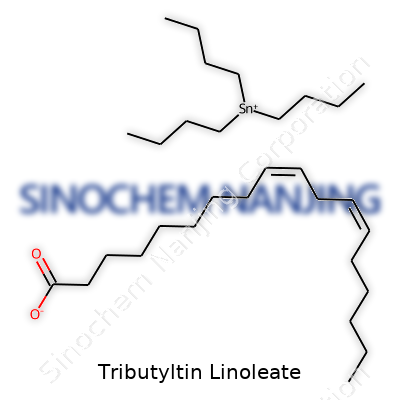
| Names | |
| Preferred IUPAC name | stannanetriyltributane linoleate |
| Other names |
Bis(tributyltin) linoleate Linoleic acid, tributyltin ester Tributylstannyl linoleate |
| Pronunciation | /traɪˈbjuːtɪl.tɪn lɪˈnoʊli.eɪt/ |
| Identifiers | |
| CAS Number | 6786-34-1 |
| 3D model (JSmol) | `$3D:MOLMODEL/Tributyltin%20linoleate;JSmol/3d/ChEMBL:CHEMBL3186069` |
| Beilstein Reference | 1820604 |
| ChEBI | CHEBI:34919 |
| ChEMBL | CHEMBL613877 |
| ChemSpider | 3347982 |
| DrugBank | DB14007 |
| ECHA InfoCard | 17af9f93-3bce-4cfe-91e5-791ce0665bc7 |
| EC Number | 260-217-5 |
| Gmelin Reference | 63674 |
| KEGG | C18563 |
| MeSH | D014260 |
| PubChem CID | 25186775 |
| RTECS number | OI6475000 |
| UNII | 1EN6X5K18D |
| UN number | UN2788 |
| Properties | |
| Chemical formula | C27H52O2Sn |
| Molar mass | 773.58 g/mol |
| Appearance | Yellowish liquid |
| Odor | Odorless |
| Density | 1.07 g/cm3 |
| Solubility in water | insoluble |
| log P | 7.50 |
| Vapor pressure | Negligible |
| Acidity (pKa) | 12.1 |
| Basicity (pKb) | 8.7 |
| Magnetic susceptibility (χ) | -65.0e-6 cm³/mol |
| Refractive index (nD) | 1.4850 |
| Viscosity | Viscosity: 45 mPa·s |
| Dipole moment | 2.6832 D |
| Thermochemistry | |
| Std molar entropy (S⦵298) | 553.6 J·mol⁻¹·K⁻¹ |
| Pharmacology | |
| ATC code | D08AF04 |
| Hazards | |
| GHS labelling | GHS07, GHS08, GHS09 |
| Pictograms | GHS06,GHS09 |
| Signal word | Danger |
| Hazard statements | H226, H301, H311, H331, H373, H410 |
| Precautionary statements | P261, P273, P280, P302+P352, P305+P351+P338, P308+P313 |
| NFPA 704 (fire diamond) | Health: 2, Flammability: 1, Instability: 0, Special: -- |
| Flash point | > 113°C |
| Lethal dose or concentration | Lethal dose or concentration: LD50 oral (rat) 105 mg/kg |
| LD50 (median dose) | LD50 (median dose): Rat oral 107 mg/kg |
| NIOSH | TY5830000 |
| PEL (Permissible) | PEL (Permissible exposure limit) for Tributyltin Linoleate: "0.1 mg/m3 (as tin) |
| REL (Recommended) | 0.1 |
| Related compounds | |
| Related compounds |
Tributyltin oxide Tributyltin chloride Tributyltin fluoride Tributyltin acetate Tributyltin methacrylate |



