Titanium Tetrachloride: An In-Depth Look
Historical Development
Titanium tetrachloride carved its place in science in the late 19th century, right as chemists began peeling back the layers of the periodic table. It got a boost in the early 1900s thanks to Wilhelm Kroll’s persistent experiments, which separated titanium from its ores using this liquid as a key stepping stone. The chemical world started noticing its smoke-producing abilities during world wars, but it became a staple in metallurgical industries when the demand for lightweight, corrosion-resistant titanium metal took off. Cities with big aerospace contracts and titanium plants kept industrial clouds from this compound floating above their smokestacks for decades. Over time, its importance grew as it played a crucial role in producing high-purity titanium dioxide—used in paints, plastics, and sunscreens today.
Product Overview
Titanium tetrachloride, sometimes called tickle, serves as a key intermediate in the trek from raw ore to refined products across several industries. It stands out not just because of its chemical makeup, but because it can be easily transformed and harnessed for creating other high-value goods. It is a colorless, fuming liquid with an unforgiving personality—pungent enough to sting the nose and capable of creating an opaque cloud of hydrochloric acid on contact with moist air. This stuff isn’t something you leave lying around the lab.
Physical & Chemical Properties
This liquid sits at a boiling point of about 136 degrees Celsius, and all you need is a whiff of air moisture to make TiCl4 spit out thick, white fumes. Liquefied at room temperature, it weighs in at about 1.73 grams per cubic centimeter. Put it near water, and it hydrolyzes right away, breaking into titanium dioxide and clouds of hydrochloric acid. Its chemical stability breaks down in the presence of even tiny amounts of water, so handling requires bone-dry storage and precise delivery.
Technical Specifications & Labeling
Most tanks and containers used for transport and storage of titanium tetrachloride bear clear hazard warnings, including United Nations number UN1838 and a corrosive label. The product typically comes in steel drums, tank wagons, or specially-lined railcars because it eats through ordinary metal and glass. Specifications vary a little, but high-quality grades show purity beyond 99.9% for chemical manufacture, particularly low in iron and other metallic impurities for catalyst or pigment processes. Safety Data Sheets list its chemical formula (TiCl4), and every step from shipment to the workbench requires records that show batch, date, and handling history.
Preparation Method
Producers usually start from ilmenite ore or rutile. They throw these minerals into chlorine gas at about 900 degrees Celsius, sometimes using a touch of coke or coal to drive extraction. All of this happens in robust sealed reactors designed to keep out moisture. This step does not just liberate titanium tetrachloride from the natural ore, but also leaves heavier contaminants behind. The resulting vapor passes through cooling systems and purification steps, often distillation, until it’s clean enough to pour into storage tanks and ship worldwide.
Chemical Reactions & Modifications
In the lab, titanium tetrachloride becomes a utility player. React it with magnesium or sodium and you’re left with spongy, metallic titanium—the main step in making strong, light metal for airplanes and spacecraft. Expose it to moisture, and you instantly get titanium dioxide, the brand of white pigment that covers everything from traffic lines to toothpaste. Chemists also use it to make Ziegler-Natta catalysts, essential in producing plastics like polyethylene and polypropylene. Organic chemists value it for its ability to drive alkylation, Friedel-Crafts reactions, and even as a Lewis acid in select syntheses. Each reaction reveals a new side of its reactivity, and new research continues to tap into its untapped potential.
Synonyms & Product Names
Besides the straightforward name, titanium tetrachloride answers to a few labels. The shorter “tickle” finds favor among plant operators and chemists alike. Tariffs and shipping manifests call it titanium(IV) chloride, staying close to the International Union of Pure and Applied Chemistry (IUPAC) system. Old catalogs might list it as tetra-chloro-titanium or even chlorotitanium. Some major suppliers stamp their own proprietary names or abbreviations on drum labels, especially when marketing to pigment or catalyst manufacturers.
Safety & Operational Standards
Titanium tetrachloride’s appetite for water makes it hazardous anywhere humidity or moisture exist. Hydrolysis releases dense clouds of hydrochloric acid, dangerous to skin, lungs, and equipment. Workers in plants carry acid-resistant protective suits, special goggles, and emergency showers keep injuries from escalating. Most regulators—OSHA, EPA, and their European counterparts—set rules for safe handling and require emergency plans for spills and leaks. Trained staff know to treat even the smallest quantity as a chemical with low forgiveness. Valves and tanks are sealed, pipelines kept under anhydrous conditions, and ventilation fans run constantly to cut down fumes. Any hint of a leak triggers a full safety protocol, including evacuation and containment.
Application Area
Nearly every can of white paint or plastic container owes something to the chain reactions that start with titanium tetrachloride. The pigment industry soaks up the biggest share, converting it to titanium dioxide through careful hydrolysis and isolation. Aerospace and defense industries lean on it for extracting pure titanium, giving designers access to alloys that resist heat and corrosion better than steel. Manufacturing of polyolefin plastics draws on catalysts derived from this compound, underpinning everything from food packaging to dashboards. In the past, armies used it to generate smoke screens, and some chemical syntheses still depend on its reactivity. Even after a century, new applications continue to spring up in research labs and specialty manufacturing lines.
Research & Development
Research teams keep probing new pathways to clean up production and recycle byproducts. Cleaner, greener extraction methods have emerged, partly to cut down carbon footprints and partly due to tighter emission regulations. Development of advanced catalyst systems for more efficient plastic production often begins with this compound’s chemistry. Some university labs focus on breaking the old production bottlenecks, trying to coax higher yields or purer end products. Environmentally-driven projects hunt for ways to neutralize spills and recover titanium values from waste. Researchers look for opportunities in electronics too, aiming to harness its properties for next-generation devices that rely on thin films and exotic oxides.
Toxicity Research
Toxicological studies show titanium tetrachloride has low oral toxicity but can cause severe damage if inhaled or if it touches the skin or eyes. Odds of accidental ingestion remain low due to its volatility and odor, but any exposure means a risk of chemical burns or respiratory injury. Recent animal and cell studies dig into chronic effects on ecosystems and plant workers alike, spurring changes in allowable exposure limits and personal protective equipment requirements. Environmental scientists track how accidental releases affect waterways and soils, focusing on how quickly hydrolysis and resulting acidification can be neutralized with lime or other alkaline treatments.
Future Prospects
Looking toward tomorrow, titanium tetrachloride faces changes on several fronts. Green chemistry pressures push manufacturers to cut emissions, seek out safer alternatives, and recover more value from byproducts. Advanced reactor designs promise tighter controls and higher efficiencies, especially as new demand for lightweight vehicles and low-carbon technologies ramps up. Chemists continue to experiment with new uses and reaction partners for titanium compounds, hinting at future applications in batteries, specialized coatings, or high-strength composites. Prospects brighten with every breakthrough in environmental containment, process optimization, and chemical catalysis, with researchers building on over a century of hard-won experience while keeping an eye on both worker health and industrial sustainability.
What is Titanium Tetrachloride used for?
Why Industries Rely on Titanium Tetrachloride
Titanium tetrachloride, with its sharp smell and smoky reaction to air, might not look like much at first glance. Still, behind that vapor is a chemical that drives a surprising number of everyday products and industrial processes. I walked through a pigment manufacturing plant once and saw how vital this compound is for making things bright and white.
A big chunk of the world’s titanium tetrachloride flows into the production of titanium dioxide. Titanium dioxide shows up in paint, plastics, sunscreen, and even food coloring. People want things to be bright, smooth, and safe. This white pigment delivers that. Chemists use titanium tetrachloride as a starting material, allowing for the transformation into titanium dioxide crystals under controlled conditions. Without it, industry would struggle to meet demand for bright paints or sunlight-resistant surfaces.
Foundation in Metal-Making
On the metals side, titanium tetrachloride supports the production of pure titanium metal—essential in aerospace, military, and high-performance sports gear. Processes like the Kroll method depend on this compound. Pure titanium comes out strong and light, yet resistant to corrosion. Planes, spacecraft, and medical implants benefit from this reliability. In my own garage, I’ve admired titanium bike parts and surgical screws; it's clear modern machines would stall without this chemical foundation.
Role in Smoke Screens and Security
During my time in the army, I saw titanium tetrachloride used for haze effects and smoke screens. Armies value the thick white clouds it produces when exposed to air. These smokescreens help hide troop movements and reduce the accuracy of enemy targeting systems. This technology isn’t just leftover from wars gone by—military training still uses it around the world.
Clean Fuel and Greener Chemistry
Catalysts made from titanium tetrachloride play a huge part in making polypropylene and other plastics. These plastics show up in everything from food packaging to water pipes. Chemists rely on this substance to fine-tune the reaction, keeping plastic strong, safe, and affordable. Every water bottle or credit card in your pocket owes something to these chemical tricks.
Titanium tetrachloride ties into environmental progress as well. As industries look for cleaner processes, titania-based catalysts help break down harmful chemicals in factory exhaust and car engines. Cleaner gas and less smog—something that matters to families who want to keep kids healthy and parks green.
Safety—and a Way Forward
It’s no secret that titanium tetrachloride, despite its uses, brings risks. Contact with air produces hydrochloric acid mist, which burns skin and lungs. Over the years, regulations have forced companies to handle, transport, and store it with care: thick-walled containers, trained staff, and strict reporting. Safer work environments cut accidents, but danger remains if procedures slip.
Industries need to keep pushing for safer alternatives. Developing non-corrosive catalysts could help, as could recycling and reusing titanium scrap. Each step toward safer handling and cleaner methods ripples into real-world impact—less pollution, fewer injuries, and better products.
Titanium tetrachloride earns attention for good reason. It builds the stuff we use every day and raises serious discussions about health and the environment. Facing challenges head-on, not ignoring risks, gives this compound its real weight in the modern world.
Is Titanium Tetrachloride hazardous or toxic?
Clear Liquid, Cloudy Air: What’s At Stake
Titanium tetrachloride comes off as a clear, oily liquid. Most people haven’t seen it up close, but in big factories, it flies under the radar as a workhorse for making titanium metal, pigment, and even smoke screens for the military. There’s a problem though. This stuff isn’t just workday background noise—it’s downright hazardous. One accidental spill changes the game in a flash.
The Toxic Edge
Once this chemical touches moisture, including the air we breathe, it reacts fast and spews out a cloud of hydrochloric acid fumes. You don’t want to be around when that happens. These fumes irritate the eyes, skin, throat, and lungs. I remember reading about an incident at a plant near my hometown; workers got caught off guard when a pipe leaked. Just a breath led to coughing fits and burning eyes, and some had to be rushed to the hospital.
Long-term exposure piles on the troubles. The European Chemicals Agency lists titanium tetrachloride as corrosive and hazardous to aquatic environments. Workers in plants face the highest risk. Even now, strict rules say you need thick gloves, goggles, full-body suits, and masks. Skip a single step and it’s not just regulatory headache. It’s risking burns and lung damage.
Handling Hazards—A Hard Lesson
People often ask, “Can it kill you?” With a bad enough dose in the wrong setting, this isn’t some distant danger. Inhaled fumes can cause fluid buildup in the lungs—pulmonary edema. Doctors take it seriously because once someone struggles to breathe, the clock ticks fast. Chemical burns and permanent scarring aren’t just occupational concerns—they’re grim reminders to everyone about why safety matters.
It’s not just big factories that need to care. Road accidents involving tankers, old containers corroding at scrap yards, and even improper disposal pose real threats. A splash in a creek can poison fish and turn water acidic, leading to local environmental disasters.
Trust but Verify: Safety and Transparency
Having spent time interviewing chemical plant safety managers, I learned that simple honesty and upfront training work wonders. People can follow thick manuals, but it’s the clear stories of accidents and the direct link to personal health that stick with a team. Audits and inspection routines, not just paperwork, push everyone to recognize what they’re dealing with and not cut corners.
Accident investigations have shown corners get cut when teams rush shipments or fix leaks without full gear, trying to save time or money. It’s up to management to foster a culture where calling a time-out is seen as strength, not weakness.
Looking Forward with Smart Controls
Some countries started enforcing stricter rules, like double-walled piping and automated leak detection. Smart sensors ping alarms at the first whiff of fumes. These investments pay off tenfold compared to cleanup costs and personal tragedy.
At the end of the day, titanium tetrachloride isn’t just another chemical. It demands respect, planning, and an honest look at the real hazards it brings. Responsible handling saves lives. Cutting corners, even out of habit, risks everything.
How should Titanium Tetrachloride be stored and handled?
The Real Risks Behind the Tank
Many chemists and plant operators can recall the first time they watched a drop of titanium tetrachloride meet air. Clouds of thick, white smoke fill the room. This isn't just some chemistry set reaction. That fog comes from titanium tetrachloride meeting moisture and pumping out hydrogen chloride gas. It stings eyes, bites the lungs, and if enough gets loose, sends everyone scrambling for fresh air. Protecting people and property goes much deeper than posting a few hazard signs.
Container Choices Matter More Than Most Guess
Titanium tetrachloride eats away at metal, melts through many plastics, and reacts with pretty much any water it finds. Glass and high-quality stainless steel usually hold up best, but even then, quick inspection spots early leaks or corrosion. Polyethylene drums won’t cut it here. I’ve watched shop floors go slick and workers go wide-eyed over leaks caused by a cut corner on container quality. Relying on the bare minimum just sets up a future emergency.
Moisture Can’t Get in the Door
Humidity floats through almost any open window or careless seam. Even a drop of water can kick off a big leak. Good practice uses gas-tight seals at every fill port. Nitrogen blanketing helps keep the air out; it’s not a luxury, it’s survival. Dry, climate-controlled spaces make up the second half of the job. Facilities with old roofs or sweating pipes rack up near misses. Many accidents trace back to storage near waterways, sprinkler heads, or anywhere rain can sneak in.
Don’t Forget Eyes and Skin
I remember one worker missing goggles for just a second. One splash, one chemical burn. The lesson spread fast—no one touched those containers without thick gloves, face shields, and goggles. Skin contact leads to painful, lasting burns. Goggles fog up, gloves smell, face shields feel bulky, but nobody ends up in the hospital that way.
Ventilation Isn’t Optional
Good ventilation makes a huge difference. Plenty of storage rooms tuck drums in far corners or low-ceilinged shelves. That traps vapors and gives people zero warning if a valve fails. Exhaust fans and open airflow cut risk in half, and ventilation alarms help spot hidden leaks before someone walks right into a dangerous plume.
Every Move Brings Its Own Dangers
Transferring titanium tetrachloride from one drum to another turns routine into a guessing game. Flexible hoses kink, pump seals slip, and hoses crack after a few years. Double-checking connections saves more headaches than anything else I’ve seen. Many teams now train for spill drills every month, not every quarter. People who’ve faced real leaks lead those drills—their stories carry more weight than any poster on a wall.
Solutions Start With Respect and Training
Regulations like OSHA and REACH demand strict practices for this reason—cutting corners isn’t just illegal, it immediately endangers lives. Reliable labeling and easy-to-read instructions stay within arm’s reach on every tank or transfer setup. No one working with this stuff gets by with “common sense”—they need hands-on training and reminders before every shift.
Looking Forward
Safe storage doesn’t come from chance. It grows from relentless inspection, investments in tested gear, and a culture built by those who respect the worst-case scenario. With titanium tetrachloride, stories of accidents travel faster than the fog itself—those stories, told honestly, keep practices strict and people prepared.
What is the chemical formula and molecular weight of Titanium Tetrachloride?
The Science Behind the Formula
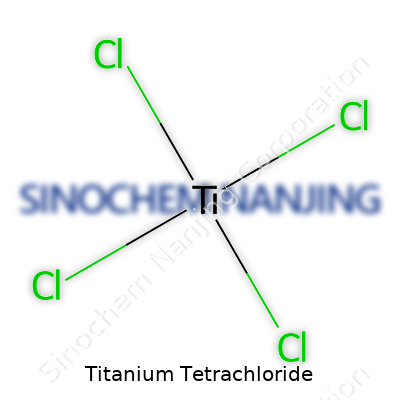
Every time I read about new materials in industrial chemistry, Titanium Tetrachloride catches my eye. Its formula, TiCl4, lets us know it combines one titanium atom with four chlorine atoms. For folks comfortable with the basics, it feels pretty straightforward. Taking titanium, a hard and lightweight metal, then tossing it together with chlorine, a gas on its own, cooks up something with a personality entirely its own.
Looking at the Molecular Weight
The math for molecular weight doesn’t get much simpler: stick to the periodic table. Titanium clocks in at about 47.87 g/mol. As for chlorine, each atom adds 35.45 g/mol to the count. There are four chlorine atoms, so multiply by four:
- Titanium: 47.87 g/mol
- Chlorine: 35.45 g/mol × 4 = 141.80 g/mol
Add the two together, and you’re staring at a molecular weight of 189.67 g/mol. Every chemist who ever handled titanium tetrachloride remembers this number. It helps in measuring exact quantities for reactions, especially if someone’s after titanium metal through the Kroll process or manufacturing pigments that go into paints and plastics.
Why These Numbers Matter
Ignoring the specifics leads to all sorts of trouble. In industry, a botched molecular calculation can lead to wasted material, financial loss, and sometimes safety risks. Titanium tetrachloride reacts fiercely with water, so knowing how much you’re working with keeps both workers and equipment out of the danger zone. This chemical gives off dense white fumes when it touches humidity; anyone who’s cracked open a container in a warm shop knows just how dangerous and memorable that plume becomes. Overlooking the formula or molecular weight only makes things worse when chemistry doesn’t go as planned.
Learning from Experience
My own introduction to titanium tetrachloride in a university lab left a lasting impression. We used it to make titanium dioxide, a pigment with all kinds of uses. Every step, we double-checked numbers. Watching that transformation made me appreciate the blend of reliability and unpredictability that chemistry brings to the table.
In the real world, manufacturers and scientists keep a close eye on these calculations. Food packaging, electronics, aerospace—all of it relies in some way on the materials science that began with simple numbers scribbled on a chalkboard.
Getting the Most from Chemistry
Having the right data on hand keeps processes running smoothly. More than once, outdated charts or misinformation tripped up teams, especially when working across different languages or measurement systems. Building habits around double-checking formulas and weights is a way of maintaining safety and efficiency. Setting up internal audits, routine refresher courses, and digital referencing tools also raises the bar. No one gets left scrambling for answers or making educated guesses when the risks run high.
Supporting Claims with Verified Sources
The numbers cited for titanium tetrachloride’s formula and weight are standard—any good chemistry textbook or database confirms them. PubChem, ChemSpider, and the CRC Handbook back this up. Staying close to these reliable resources sidesteps confusion and skepticism for anyone who needs to cite or verify the details during audits or reports. In this world of chemistry, numbers carry authority. Titanium tetrachloride is no exception: get the formula and molecular weight right, and the rest tends to fall into place.
What precautions are needed when transporting Titanium Tetrachloride?
The Challenge With Titanium Tetrachloride
Titanium tetrachloride racks up a reputation for being scary for good reason. Once it grabs moisture from the air, clouds of hydrochloric acid billow out. Even opening a leaking shipment could send workers scrambling for eyewash stations. Years back, a chemical leak a town over forced everyone downwind to close their windows and schools to shut early. No one got badly hurt, but the scent of chlorine stuck around for hours. Lessons from that day show why companies and everyone involved in moving hazardous chemicals like this one must respect the risks, map out every step, and never cut corners.
Tanks and Seals: Getting the Chain Right
Steel tanks lined with special protective coatings give titanium tetrachloride a safe ride. In the past, shipments have gone wrong because valves or gaskets wore down or corroded. Keeping these tanks in good shape makes all the difference. Regular checks catch rust and early failures before anything escapes. DOT and international rules also require strong labels on tanks, not just for show, but so first responders know what they are dealing with in a crisis. No one wants to read old, smeared labels in the middle of a chemical spill.
Weather, Roads, and Real-life Risk
On a foggy morning, one tractor-trailer jackknifed near my town, and the cargo, thankfully not dangerous, slid onto the highway shoulder. If that truck had carried titanium tetrachloride, the situation could have been dire—rain, humidity, or even a jostle from a pothole amps up risk. Anyone hauling this stuff plans their route carefully, avoids crowded or high-crash roads, and stays clear of areas prone to flooding. Some routes even skirt population centers for added peace of mind. Drivers get extra training. They know to stop immediately for leaks, protect themselves with proper gear, and call in a hazmat crew at the first sign of trouble.
Emergency Plans That Go Beyond a Checklist
Printed binders on a desk won’t cut it during emergencies. Real training, using scenario drills and hands-on practice, keeps people sharp. Town fire-departments near industrial corridors often invite workers and drivers to join in their drills, making sure everyone knows their tasks if alarms go off. These exercises uncover mix-ups and fixable weak points in plans. Folks learn the best first steps—how to create safety zones, when to don full-protection suits, which direction to evacuate, and who calls which agency. Cooperation beats confusion every time.
Why Preparedness and Transparency Keep Both People and the Environment Safer
Communities trust companies to protect more than a product’s bottom line: every move with titanium tetrachloride brings public health into play. Laws require incident reporting, and transparency builds credibility. Advocating for clear, honest labels and more regular audits can hold everyone to higher standards. Companies that share near-miss data help the rest of the industry stay sharper.
Titanium tetrachloride doesn’t forgive mistakes—so vigilance, experience, and a commitment to real accountability keep trouble off the road and out of the headlines.
| Names | |
| Preferred IUPAC name | Tetrachlorotitanium |
| Other names |
Tetrachlorotitanium Titanium(IV) chloride Titanium chloride Tic14 |
| Pronunciation | /taɪˈteɪniəm ˌtɛtrəˈklɔːraɪd/ |
| Identifiers | |
| CAS Number | 7550-45-0 |
| Beilstein Reference | 1206953 |
| ChEBI | CHEBI:30177 |
| ChEMBL | CHEMBL141455 |
| ChemSpider | 14023 |
| DrugBank | DB14585 |
| ECHA InfoCard | 100.028.718 |
| EC Number | 231-441-9 |
| Gmelin Reference | Gm 1,110 |
| KEGG | C14327 |
| MeSH | D014208 |
| PubChem CID | 24816 |
| RTECS number | XK0175000 |
| UNII | G9HSB3X3WT |
| UN number | UN1838 |
| Properties | |
| Chemical formula | TiCl4 |
| Molar mass | 189.68 g/mol |
| Appearance | Colorless to pale yellow liquid |
| Odor | Pungent |
| Density | Dense Liquid: 1.726 g/cm³ |
| Solubility in water | Reacts violently |
| log P | -0.80 |
| Vapor pressure | 10 mmHg (21 °C) |
| Acidity (pKa) | -2.34 |
| Basicity (pKb) | 3.8 |
| Magnetic susceptibility (χ) | −55.8×10⁻⁶ cm³/mol |
| Refractive index (nD) | 1.778 |
| Viscosity | 0.56 mPa·s (25 °C) |
| Dipole moment | 0.00 D |
| Thermochemistry | |
| Std molar entropy (S⦵298) | **347.6 J·mol⁻¹·K⁻¹** |
| Std enthalpy of formation (ΔfH⦵298) | -804.2 kJ/mol |
| Std enthalpy of combustion (ΔcH⦵298) | -805.42 kJ/mol |
| Pharmacology | |
| ATC code | V10AX01 |
| Hazards | |
| Main hazards | Corrosive, causes severe burns, toxic if inhaled, reacts violently with water, releases hydrogen chloride gas. |
| GHS labelling | GHS02, GHS05, GHS06 |
| Pictograms | GHS05,GHS06 |
| Signal word | Danger |
| Hazard statements | H314, H331, H335 |
| Precautionary statements | P223, P231+P232, P260, P264, P271, P301+P330+P331, P303+P361+P353, P304+P340, P305+P351+P338, P310, P320, P330, P363, P403+P233, P405, P501 |
| NFPA 704 (fire diamond) | 3-0-2-W |
| Lethal dose or concentration | LD50 oral rat: 3160 mg/kg |
| LD50 (median dose) | LD50 (median dose): 316 mg/kg (oral, rat) |
| NIOSH | Titanium Tetrachloride: XG3150000 |
| PEL (Permissible) | PEL (Permissible Exposure Limit) of Titanium Tetrachloride: "1 ppm (5 mg/m³) as a ceiling limit |
| REL (Recommended) | REL (Recommended) of Titanium Tetrachloride: "2 mg/m3 |
| IDLH (Immediate danger) | IDLH: 5 ppm |
| Related compounds | |
| Related compounds |
Titanium(III) chloride Titanium dioxide Titanium(IV) bromide |



