Tin Tetrabromide: A Deep Dive into a Powerful Compound
Historical Development
Researchers first encountered tin tetrabromide as chemistry expanded into the world of inorganic halides. The compound’s journey stretches through the core of synthetic chemistry, where chemists explored heavy-metal halides for their reactivity and unique capabilities. The introduction of new preparation methods streamlined its availability in the lab and factory. Many traditional texts on halogenated metals mention its role, and early scientists noted its crystalline build and reactivity. The legacy stems as much from curiosity as from practical demands in new technologies.
Product Overview
Tin tetrabromide, known as SnBr4, grabs your attention as a colorless to pale yellow crystalline solid. It draws from a pool of unique halide compounds, with bromine atoms bound snug to a central tin core. Under the right storage, the solid remains stable. Chemistry texts describe it as moisture-sensitive, and the crystalline structure dissolves cleanly in non-polar solvents like chloroform and carbon tetrachloride. Industry veterans value its high bromine content. Some research labs pick it over the chloride or fluoride analogs for specific reactions due to the reactivity provided by bromine atoms.
Physical & Chemical Properties
SnBr4 forms crystals with a definite pale yellow look. Melting begins around 31°C, boiling near 201°C; so, even standard room temperatures will let it remain solid. It gives off fumes if exposed to moist air, releasing hydrogen bromide. Water breaks down the crystal rapidly, leaving behind tin dioxide and hydrobromic acid. The compound is heavier than expected for many lab workers, with a density close to 3.47 g/cm3. Chemists also know its strong Lewis acid character—ready to act as an electron pair acceptor. Tin’s oxidation state here, +4, makes the molecule vital for certain redox and substitution reactions, especially in halogen-exchange chemistry.
Technical Specifications & Labeling
Packagers mandate clear labeling for SnBr4 due to the toxicity and volatility of its vapors. Common data sheets present its CAS number (7789-67-5), its molecular weight (438.34 g/mol), details about storage away from moisture or extreme temperatures, and strict hazard pictograms. Users spot hazard statements warning of strong corrosion, respiratory damage and environmental harm. Labs and warehouses route the material in sealed glass bottles or ampoules to keep the product dry. Workers depend on these standards to keep exposure minimal and transport safe.
Preparation Method
Industries and dedicated labs rely on a steady bromination of tin metal or tin dioxide for making tin tetrabromide. Workers pass dry bromine gas over heated tin, often in a well-ventilated hood. In some protocols, they substitute tin(IV) oxide and hydrobromic acid, heating mixtures gently to avoid unwanted byproducts. The desired compound forms as a dense sublimate or crystal mass, carefully collected and sealed. Purification runs on techniques like distillation under reduced pressure to separate any leftover bromine or unreacted metal.
Chemical Reactions & Modifications
SnBr4 steps up as a firm Lewis acid through most of its use. Researchers find it effective in halide exchange reactions, where it can swap bromide for other halide ions. It prompts alkylation, especially in the preparation of organotin compounds. The compound reacts sharply with water and alcohols, sometimes erupting in a fizz of hydrogen bromide. Experts draw on its reactivity to form other tin compounds by controlled hydrolysis or reduction, converting it to stannous bromide or tin oxides. SnBr4 also sparks interest for catalysis in organic synthesis, particularly for activating certain double bonds or rearrangement processes. Its behavior with phosphines and sulfur compounds paves the way for materials chemistry, especially in electronics.
Synonyms & Product Names
Chemists and suppliers use several synonyms for tin tetrabromide, including Stannic Bromide and Tin(IV) Bromide. Some catalogs list its systematic name as Tetrabromostannane. Shorthand usage and translation in international markets has introduced names like Bromotetramethylstannane in trade. Documentation might include descriptions based on language or application, but SnBr4 remains the common thread.
Safety & Operational Standards
Facilities relying on tin tetrabromide set out rigid safety protocols. Direct contact with the skin or inhalation of dust or vapor harms mucous membranes and lungs. Workers wear gloves, chemically resistant goggles, and use fume hoods or glove boxes. Any water near the storage spot stays well-contained to avoid accidental hydrolysis. Fire safety relies on dry sand or CO2 extinguishers; water only makes things worse. Specialized waste removal for halogenated metals reduces the risk of soil or water contamination. In certain settings, users are trained on rapid decontamination and emergency first aid procedures. Handling never takes a backseat in daily operation or research.
Application Area
Demand for high-purity tin tetrabromide comes mainly from advanced materials research and electronics manufacturing. SnBr4 provides a reliable tin source for thin-film transistor fabrication in semiconductors. Organic chemists find its role crucial as a reagent in methylation and halide substitution reactions. Specialty glass companies sometimes turn to it for introducing tin and bromine into optical coatings. Paint developers blend organotin derivatives for antimicrobial and antifouling coatings starting with SnBr4. It finds occasional use in infrared devices and specialty catalysts, especially for making halogen-rich polymers. Some research teams explore its action under extreme conditions for high-conductivity materials.
Research & Development
In the research world, teams chase both new applications and better methods for safer, greener production. Interest surges around lowering byproduct formation, refining purification, or exploring solid-state uses. Sustainable chemistry movements push chemists to find less wasteful syntheses, cutting down on excess bromine and tin waste. The electronics industry keeps an eye on SnBr4 for nanomaterials, with experimental devices needing tin-doped materials for enhanced electronics or photoactivity. Analytical chemists unravel reaction mechanisms involving SnBr4 to fine-tune reaction conditions. This practical focus promises a wider set of uses beyond old-school halide chemistry.
Toxicity Research
Laboratory studies pinpoint the acute health risks from SnBr4 exposure. Skin contact may lead to serious burns or blisters, and workers report eye and throat irritation from vapor contact. Animal studies provide evidence that inhaling or ingesting even low doses can affect kidney function and cause lasting respiratory damage. Regulatory agencies in Europe and the US categorize the material as hazardous, and long-term safety guidelines urge chronic exposure reductions. Toxicity drives new research into safe derivatives, improved containment, and effective neutralization methods. Education programs for handlers contribute to fewer accidental exposures or spills in university and industrial labs.
Future Prospects
As industries look for more precise materials and tailored electronic features, interest in advanced coordination compounds or thin films keeps growing. SnBr4 may carve out a bigger role in this push, especially where only precise chemical properties deliver needed performance. Ongoing green chemistry pushes tug at researchers to discover friendlier routes for production and recycling. If research into hybrid organic–inorganic materials succeeds, tin tetrabromide will see wider use in areas like solar cells, sensors, or lightweight electronics. Investment in high-purity variants and specialized derivatives offers the chance for growth, though safe handling and environmental impact will always shape practical limits and methods.
What is Tin Tetrabromide used for?
The Many Faces of Tin Tetrabromide
Tin tetrabromide doesn’t show up in headlines, but its contribution to certain industries tells an interesting story. This white crystal—chemically known as SnBr₄—gets used far beyond chemistry classrooms. Its structure lets it react with a range of other compounds, so it pops up where flexibility matters and a heavy dose of reliability is expected.
You find experts in research labs reaching for tin tetrabromide during experiments where handling tin's properties and bromine's reactivity makes sense. In synthetic chemistry, it works like a reliable assistant, providing a consistent way to introduce tin and bromine into reactions. Chemists value this—it gives them a way to control product purity. Trying to create a new organotin compound for catalysis or material science? Tin tetrabromide helps make sure synthesis stays efficient, and outcomes don’t drift unpredictably.
Building Up More Than Chemicals
Beyond the clear-cut world of research, this compound plays unexpected roles. The electronics industry, for instance, puts tin tetrabromide to work during the vapor deposition of thin films. We’re talking about the circuits that power modern gadgets or the solar cells working to shift energy supplies. Manufacturing processes rely on chemical vapor deposition because it leads to better-controlled layers on microchips. Tin tetrabromide’s reliable vaporization fits right in, allowing inventive engineers to create thin films with fewer defects.
Glassmakers and those developing specialty coatings also turn to SnBr₄ for special finishes. Adding it to a glass melt helps change the optical properties of the final product. A slight tweak here can create glass with more controlled reflection, tint, or specialty uses in science and design. From my own time dabbling in glasswork, I’ve seen how the right chemical blend adds real value, saving batches from costly mistakes and making art possible that’s both beautiful and functional.
Environmental and Safety Considerations
Not every tool in the chemical world comes free of responsibility. Tin tetrabromide is sensitive—it readily absorbs moisture, and contact with water produces corrosive hydrogen bromide fumes. This means handling takes care, with strict procedures for ventilation and protective equipment. There’s an ongoing conversation about how to reduce these hazards in manufacturing and lab settings. Some firms now explore closed-system transfers and better air filtering, not just for the safety of those working but to minimize unintended emissions.
Disposal brings up another concern. Tin-containing waste gets regulated because heavy metals end up polluting soil and water. Facilities committed to recycling or safe disposal help keep environmental risks low. Complying with strict regulations, while not the cheapest route, guards against fines and public health issues down the line. Big companies often share policies on chemical stewardship—rightly so, as industry reputation and long-term business rely on public trust.
The Road Ahead
Creative minds in materials science keep searching for ways to get the benefits of compounds like tin tetrabromide while dodging the drawbacks. For researchers and engineers, small changes in technique or alternative materials can mean fewer hazards and less waste, but transitioning at scale never happens overnight. As sustainable chemistry advances, expect to see new ideas on making these building blocks safer and more efficient.
What is the chemical formula of Tin Tetrabromide?
Breaking Down the Chemistry
Tin tetrabromide’s formula is SnBr₄. Stannic tin (that’s tin with a four-plus charge) teams up with four bromine atoms to create this compound. The numbers might seem simple on paper, but the connections between tin and bromine give this chemical more importance outside a textbook. I’ve seen how one formula changes how people manufacture, store, and handle materials every day in the lab.
What Makes SnBr₄ Useful?
For most people, chemicals like SnBr₄ never cross their minds. I started paying attention to chemicals like this in university, when I worked on basic organotin research for some summer credits. Tin tetrabromide is volatile and reacts eagerly with water, so it doesn’t just sit around idly in a chemistry storeroom. Glassware came out cleaner using this compound, and it etched certain surfaces with surprising efficiency.
Industry likes SnBr₄ because it serves as a precursor for other tin compounds. Semiconductors depend on baked-on layers of metal-bromine compounds for fine-tuning their circuitry. Think about your phone, your computer chip. SnBr₄ might pass through those manufacturing lines before getting washed away, but its presence keeps the gears turning in modern electronics. It’s also handy for making specialty glasses and coatings thanks to that reactive edge.
Handling Hazards Head On
Having worked with bromine compounds, I've seen firsthand just how touchy these chemicals get. Exposing tin tetrabromide to moisture creates fumes of hydrogen bromide—harsh and corrosive. In my own lab spaces, we kept these bottles tightly sealed and stored with extra care. I remember a time a colleague mishandled a stopper and we noticed smoke—luckily, we knew proper ventilation protocols, so disaster got averted.
Workers in industrial plants need thorough training to avoid burns or accidental inhalation. Proper glove material, face protection, and well-ventilated hoods matter, and even veteran chemists can forget rules under pressure. It’s not paranoia—it’s how you make sure nobody needs a trip to the ER.
Keen Eyes on Environmental Impact
Environmental health gets tested anytime volatile compounds like SnBr₄ enter the conversation. Bromine, if it gets loose, stresses ecosystems. Tin, in certain forms, builds up in water and disrupts aquatic life. Factories now track containment and disposal with closer attention than ever, and I’ve noticed the shift from “out of sight, out of mind” to careful record-keeping. Regulations limit emissions, and waste gets broken down to keep waterways clear.
Even lab classes changed over the last ten years—less of these harsh chemicals, more substitutions, more digital demos. It’s about prevention and educating new scientists who carry stories and caution home. That kind of shift shows how science adapts.
Practical Next Steps
Safer handling starts with clear training, solid ventilation, and strict lab protocols. Keeping up with environmental legislation provides motivation for companies to invest in greener alternatives. Research points towards using tin bromides in smaller, more controlled reactions, reducing waste, and capturing any emissions generated. Investment in better disposal technologies and in-depth workplace safety education brings both environmental benefit and peace of mind.
Instead of treating chemical formulas like trivia, students and workers can see SnBr₄ as a lesson: chemistry shapes far more than the insides of a flask—it touches everything from microchips to the way we care for the planet we live on.
Is Tin Tetrabromide hazardous to health?
Tin Tetrabromide in the Real World
People don’t bump into tin tetrabromide very often. This chemical usually stays tucked away in labs and industry, far from kitchens and classrooms. When I remember my days working with materials in the university lab, a new substance always prompted questions. What does it do if it gets on your skin or in your lungs? Tin tetrabromide is a heavy, white solid or sometimes a clear liquid, known to react with water and release hydrogen bromide gas. That name alone can make you pay attention.
The Truth Behind the Smell
Tin tetrabromide doesn’t carry a strong smell, but the problem starts the instant it touches water—even moisture in the air can set it off. This reaction releases hydrogen bromide, which can burn eyes, nose, and lungs. Anyone who handled bromine compounds knows just how rough this gas can treat someone. I’ve felt that sting from a whiff while cleaning up a small spill. Shortness of breath, watering eyes, a sore throat for hours afterward.
Skin and Eye Irritation
If tin tetrabromide lands on bare skin, it doesn’t just wipe off. Burning sensations or redness can follow, and a bigger splash calls for a careful rinse under running water — easier said than done during a rush. Eyes are even more vulnerable. Even dust makes trouble, but tin tetrabromide reacts so fast with tears or sweat that it takes that stinging feeling to another level. The stuff deserves respect.
Breathing in Trouble
Dust or vapor from tin tetrabromide won’t go unnoticed. Breathing particles or the gas can irritate the lungs, trigger coughing fits, or leave someone wheezing for hours. People with asthma or breathing problems get hit harder. A study from the National Institute for Occupational Safety and Health reports cases of bronchitis and asthma attacks tied to similar bromine compounds. Ventilation matters, so does the right mask. When I worked with bromine chemicals even with fume hoods and gloves, I saw slip-ups and learned to treat anything in the ‘tetrabromide’ family with care.
Long-Term Worries and Environmental Impact
Most research on tin tetrabromide doesn’t cover long-term exposure in detail. But chronic breathing of hydrogen bromide can scar lungs over time, and repeated skin contact roughs up the outer layer. No one lines up for those risks. While tin itself isn’t the most toxic metal, the bromine compounds carry their own problems. Waste from industrial sites sometimes ends up in water or soil, harming fish and tiny aquatic animals.
How to Stay Safer
Practical safety steps save trouble. Basic gloves aren’t enough—nitrile or even thicker protection blocks the chemical better. Eye goggles or full-face shields cut the risk of accidental splashes. Good lab ventilation or fume hoods deal with vapors and airborne dust. Many workplaces teach emergency rinses, and for good reason. Clean suits avoid sticky messes on skin or clothes. MSDS sheets, those dense safety guides, offer advice that’s proven useful even for someone used to being careful.
Room for Improvement
Better handling rules, more training, and up-to-date safety equipment help reduce the hazards. Industry watchdogs, from OSHA to the European Chemicals Agency, keep lists of safer practices and demand regular checks. And scientists push for alternatives when possible. Safer chemicals or closed-systems, less likely to spill or react unexpectedly, mean that fewer folks get sent home with red eyes or sore throats.
Tin tetrabromide commands respect, not fear. Know the risk, use the gear, and keep safety first—because the pain from a small mistake sticks around longer than anyone expects.How should Tin Tetrabromide be stored?
A Substance With Strings Attached
Tin tetrabromide looks pretty harmless at first glance. A transparent to faint yellow solid, you’d hardly guess opening that bottle the wrong way can give you a noseful of acidic vapor or a ruined batch of chemical glassware. I remember the first time our college lab ordered some—our professor’s only words of advice? “Don’t let it near water or your skin, unless you want a day in health services and a ruined experiment.” Plenty of folks scoffed, then learned the hard way how unforgiving chemistry can be.
Why Moisture is its Enemy
The biggest problem with tin tetrabromide sits right in the chemical formula: SnBr4. Once moisture shows up, tin tetrabromide transforms. It reacts with water, giving off corrosive hydrogen bromide gas. That fumes creeps out at the oddest times—a nose sting here, a hiss from the flask there. Not only does this make for a nasty workplace hazard, but it also ruins the material for anyone counting on purity for research or industrial work.
What Safe Storage Actually Looks Like
A good container makes all the difference. You don’t reach for fragile plastic or a repurposed water bottle; you want an airtight glass jar with a ground-glass stopper. Plastic can crack or let in tiny drops of air moisture, ruining whole batches quietly. To be blunt: cut corners here and disaster isn’t far.
A desiccator helps even more, especially in humid climates. A simple cabinet lined with a few trays of silica gel or anhydrous calcium chloride soaks up any spare moisture. The desiccator also keeps out sudden changes in temperature and random drafts that could introduce condensation. I’ve watched more than one bottle of chemical ‘sweat’ because someone left it near an open window or on a sunny shelf.
Keep Away From Common Lab Fails
I’ve seen folks store it near water sinks, tossed in with solvents, or even shoved under benches where spills happen daily. Every time, problems come up—whether it’s popping stoppers from gas buildup, cracked containers, or scattered white deposits from slow leaks. Storing near bases or reactive metals only invites more headaches: tin tetrabromide does not play nice with sodium or potassium.
Training and Everyday Vigilance
The unglamorous truth? The basics prevent big trouble: labeling, PPE, and clear protocols. Forget to label the jar, and nobody remembers what’s inside after a month. Skip gloves or goggles, and the day someone spills tin tetrabromide on their skin or in their eyes becomes a day everyone in the lab remembers.
Training needs to go further than “read the SDS.” Folks should walk through the process—open bottle, pour, reseal, wipe down. A slip in that routine once led to a shelf of cross-contaminated reagents in our lab, setting back weeks of work.
Looking Ahead: Digital and Real-Time Monitoring
Labs with sensitive tech have started using low-cost sensors for humidity inside storage cabinets. It’s not future science; it saves you from ever opening a container to find a solid has turned sludgy or started corroding the lid. If old timers had these setups, plenty of accidents could have been avoided.
No Substitute for Common Sense
At the end of the day, storing tin tetrabromide comes down to respecting its reactivity and knowing exactly what you’re dealing with. Labs and handling facilities that focus on airtight storage, dryness, and clear routines see fewer emergencies and protect their teams and research for the long haul. A bit of attention upfront goes a long way—just ask anyone who’s had to mop up the mess after ignoring these basics.
What are the physical properties of Tin Tetrabromide?
The Substance Up Close
Tin tetrabromide, known to chemists as SnBr4, serves as a pretty striking example of how simple chemistry can change the behavior of a substance. From my university days working in the inorganic chemistry lab, I remember how this compound had all of the textbook features, yet it could surprise you if you didn’t handle it right. SnBr4 presents itself as a colorless to pale yellow crystalline solid at room temperature. That visual alone lets you know it won’t blend in if spilled on a dark workbench. Break open the seal on a vial, and the sharp, biting smell hits you right away, warning you to keep it tightly capped.
Melting and Boiling Points that Matter
The melting point sits around 31 °C, which feels like a warm day in spring. I’ve seen it go from solid to liquid straight from the storeroom shelf just because the climate control failed on a humid afternoon. The boiling point, recorded at about 201 °C, requires direct heating to reach. These two numbers together create a substance that, in most lab rooms, stays safely in the solid state. Step into a hot warehouse, though, and leaking or shifting SnBr4 becomes a real possibility—so the right storage environment is crucial. Temperature swings aren’t just an inconvenience, they’re an invitation for unwanted chemical reactions.
Solubility and Appearance: Don’t Overlook What You See
SnBr4 dissolves well in organic solvents such as benzene and toluene. Pour a bit into water, and hydrolysis springs into action before your eyes. It’s not a gentle effect either—standing too close without a fume hood, you’ll sniff out the acrid fumes, and soon spot a white precipitate forming, typically tin dioxide. Most days in the lab, we kept the bottles far from water sources and double-checked all labels. This response makes it tricky to use in wet conditions and demands respect for the chemical’s sensitivity. The prismatic crystals grow if you handle it right, but once moisture sneaks in, the transformation is quick and hard to reverse.
Density and Handling: The Fine Print Matters
With a density just over 3.4 g/cm3, SnBr4 carries some weight in a flask. I’ve knocked over heavier bottles less easily, but this one will crack glassware if you’re rushing. You recognize the importance of the right bottle for the job, especially when handling multiple heavy reagents together.
Potential Risks and Practical Safety
This substance doesn’t vaporize quickly at room temperature, but don’t let that lull you into carelessness. Exposure to moist air triggers fumes that sting the lungs and eyes, which I learned the hard way after rushing through a prep. There’s little margin for error. Rubber gloves, goggles, and fume hoods stay at the ready in any reputable operation. Lab routines often break down after a tough week, and housekeeping goes first—so I always kept SnBr4 on a separate shelf, away from acids and anything water-based.
Room for Solutions
Storage policies are your friend with halides like tin tetrabromide. I’ve seen research groups shorten supply chains just to keep the compound in top shape and avoid rainy climates entirely for bulk storage. Good training and a culture of safety push accidents and contamination down to almost zero. Regular audits, moisture-proof containers, and clear labeling become routine. While it takes extra time to keep all this straight, protecting both people and results rarely comes down to luck—just disciplined, daily habits and awareness.
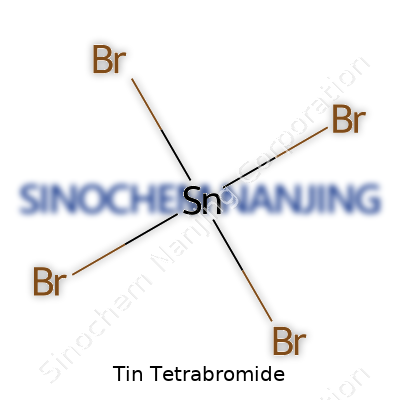
| Names | |
| Preferred IUPAC name | tetrabromostannane |
| Other names |
Stannic bromide Tin(IV) bromide Tin bromide Tetrabromostannane |
| Pronunciation | /ˈtɪn ˌtɛtrəˈbroʊmaɪd/ |
| Identifiers | |
| CAS Number | 7789-67-5 |
| Beilstein Reference | 1206987 |
| ChEBI | CHEBI:30403 |
| ChEMBL | CHEMBL1229623 |
| ChemSpider | 163390 |
| DrugBank | DB13762 |
| ECHA InfoCard | 03dbb5e6-4e5f-4b7d-bb59-e3a579f6707f |
| EC Number | 236-679-4 |
| Gmelin Reference | 57285 |
| KEGG | C18759 |
| MeSH | D014239 |
| PubChem CID | 24760672 |
| RTECS number | XP9625000 |
| UNII | EZQ8UY4D2T |
| UN number | UN3265 |
| CompTox Dashboard (EPA) | DTXSID8020722 |
| Properties | |
| Chemical formula | SnBr4 |
| Molar mass | 474.33 g/mol |
| Appearance | White crystalline solid |
| Odor | Odorless |
| Density | 4.35 g/cm³ |
| Solubility in water | Reacts |
| log P | 2.8 |
| Vapor pressure | 0.1 mmHg (150°C) |
| Acidity (pKa) | -0.7 |
| Magnetic susceptibility (χ) | −73.0×10⁻⁶ cm³/mol |
| Refractive index (nD) | 1.967 |
| Viscosity | 5.29 mPa·s (20 °C) |
| Dipole moment | 0 D |
| Thermochemistry | |
| Std molar entropy (S⦵298) | 380.6 J·mol⁻¹·K⁻¹ |
| Std enthalpy of formation (ΔfH⦵298) | -392 kJ mol⁻¹ |
| Std enthalpy of combustion (ΔcH⦵298) | -436 kJ·mol⁻¹ |
| Hazards | |
| Main hazards | Toxic if swallowed. Causes severe skin burns and eye damage. Causes serious eye damage. |
| GHS labelling | GHS02, GHS07 |
| Pictograms | GHS05,GHS06 |
| Signal word | Danger |
| Hazard statements | H302, H314, H373, H410 |
| Precautionary statements | P210, P261, P264, P271, P280, P301+P312, P303+P361+P353, P304+P340, P305+P351+P338, P312, P370+P378, P403+P233, P405, P501 |
| NFPA 704 (fire diamond) | 2-0-0 |
| Autoignition temperature | 260 °C |
| Lethal dose or concentration | LD50 oral rat 1000 mg/kg |
| LD50 (median dose) | LD50 (median dose): Oral, rat: 1000 mg/kg |
| NIOSH | TT4550000 |
| PEL (Permissible) | PEL (Permissible Exposure Limit) for Tin Tetrabromide: Not established |
| REL (Recommended) | 2 mg/m3 |
| Related compounds | |
| Related compounds |
Tin(II) bromide Tin(IV) chloride Tin(IV) fluoride Tin(IV) iodide |



