Tetrafluoromethane: A Multifaceted Chemical Shaping Modern Industry
Historical Development
History often remembers the big breakthroughs, but a lot of chemistry moves quietly. Tetrafluoromethane, known in labs as CF4, began its journey in the early 20th century. Back then, researchers explored new refrigerants, searching for non-flammable, stable compounds. They stumbled onto tetrafluoromethane during studies on halocarbons, and it soon drew attention for its unusual inertness and stability. By the 1930s, chemists included it in the first generation of fluorocarbons that General Motors and DuPont unveiled to replace toxic refrigerants like ammonia. It took time for its full potential to emerge. Growth in semiconductor and electronics manufacturing during the late twentieth century uncovered a craving for gases that do not react easily and can handle tough jobs like plasma etching. This industry draw gave tetrafluoromethane a new purpose and a more prominent spot in the history of industrial chemicals.
Product Overview
Industry relies on tetrafluoromethane for its unique blend of stability and volatility. Sold as a colorless, odorless gas, companies deliver it in high-pressure cylinders. Prices fluctuate: purity levels affect costs, with electronic grade commanding premium fees. Companies push for low moisture content and minimal trace contaminants, because chips and solar panels don’t forgive sloppy chemistry. Packaging follows tight rules, both for purity and safety. A customer in semiconductor manufacturing expects third-party purity testing, careful labeling, and certificates of analysis with every cylinder shipment. Companies track a cylinder’s fill date, batch number, and source, recognizing how tiny lapses can throw multimillion-dollar production off course.
Physical & Chemical Properties
Tetrafluoromethane holds some remarkable qualities. Under standard conditions, the gas stays colorless, and you’d never know it’s there without the right tools. Its boiling point drops to -128°C and the melting point sits even lower, close to -184°C. This means, at room temperature, you only see gas. Its density hovers near the heavier end for a gas, about 3.72 kg/m3 at 25°C—much heavier than air. Chemically, it shrugs off almost any attack: non-flammable, barely reactive unless under extreme conditions like an electrical discharge or high heat. In everyday lab work, few acids or bases faze it. All those C-F bonds make it tough and persistent, giving it a chemical lifetime in the atmosphere stretching up to 50,000 years. That’s good news inside a chip factory, but a big headache for climate scientists.
Technical Specifications & Labeling
Industry can’t get by on generalities. Specifications for tetrafluoromethane usually define purity by percentage—99.9% and above counts as high grade, but microelectronics need better. Water vapor, hydrocarbons, other halocarbons, and metallic impurities don’t just count as “trace;” they turn into failure points in electronics. Regulatory agencies require cylinders sporting labels with hazard symbols for compressed gases, warnings about asphyxiation, and strict serial number tracking. Transporters, labs, and end users check these details, since one misstep can risk life or ruin an expensive batch.
Preparation Method
Manufacturing CF4 starts with fluorination. Most large-scale setups use carbon (like graphite) and react it with fluorine gas. This process happened first in the 1920s, and it demands sturdy reactors that can stand up to pure fluorine’s aggression. The equation runs simple: C + 2F2 → CF4, but controlling side products—like C2F6—takes careful engineering. Sometimes, halogen exchange processes pop up, using carbon tetrachloride with hydrogen fluoride and a catalyst, but fluorine direct synthesis delivers the cleanest results for electronics. Purification happens using distillation and sorbents to pull out moisture and other volatiles, since electronics who deal in nanometers can’t allow stray ions.
Chemical Reactions & Modifications
CF4 stands out for doing almost nothing with most chemicals. At room temperature, acids, alkalis, and oxidizers barely scratch the surface. Introduce an electric arc or high heat, and CF4 starts to crack, giving up fluorine atoms. That trait makes it a favored tool in plasma etching—engineers expose silicon wafers to ionized CF4, carving tight layouts into circuitry with clean, controlled chemical ablation. Chemists have also tried reacting it with alkali metals to make fluorides, but most operations count on that stubborn stability for both safety and application precision. Scientists continue to study its breakdown products, especially since atmospheric chemistry suggests links to harmful compounds in the upper atmosphere.
Synonyms & Product Names
Tetrafluoromethane goes by several names, each with its own followers in science, industry, and regulation. Chemists call it perfluoromethane, while the older refrigeration trade uses R-14. Some shipping manifests mark it as carbon tetrafluoride. Those working in environmental monitoring might just refer to it as CF4. Regardless of the label, the contents stay the same: one carbon, four fluorines, and a unique blend of chemical durability and environmental risk. MSDS sheets and safety regulators make no distinction, though the purity requirements shift by industry and application.
Safety & Operational Standards
Safety with tetrafluoromethane starts with recognizing the risks of a colorless, odorless, inert gas. Breathing issues lurk where concentration rises, since CF4 displaces oxygen. Technicians who handle the gas wear gas monitors and operate in well-ventilated spaces. Because the gas stores under high pressure, no one skips regular cylinder inspections. Shipping laws strictly control who gets to move large tanks around, and operators check regulators and fittings for leaks every shift. Fire risk stays low—the gas doesn’t burn—but it can worsen the impact of other fires by acting as a propellant for flames that break down the molecule. In facility planning, managers plan for leaks with exhaust vents, environmental monitoring, and proper emergency gear. Most accidents stem from complacency, not surprises.
Application Area
The single biggest consumer of tetrafluoromethane today, by far, is the electronics industry. Engineers select CF4 for plasma etching in microchip fabs, using its unique properties to shape intricate circuitry. Fabricators of flat-panel displays and solar cells turn to it for similar reasons. In metallurgy, workers use it as a shielding gas during smelting of magnesium and aluminum, aiming to block reactive impurities. Medical imaging found a niche for it as a contrast agent in certain ultrasound procedures. In low-temperature physics, researchers exploit the ultra-low boiling point for specialized cooling setups. While refrigeration markets have largely shifted to more climate-friendly gases, CF4 still plays a small role in niche cooling applications. Notably, it has no direct rival for plasma work: nothing else walks the same line between chemical inertness and ready breakdown under voltage.
Research & Development
Chemists, materials scientists, and environmentalists all give tetrafluoromethane close attention, though often for different reasons. Chipmakers lobby gas suppliers for the purest possible product, since defects mean scrap. Environmental researchers have squeezed out more accurate measurements of atmospheric CF4, confirming its role as a potent greenhouse gas. That’s led to closer monitoring, tougher emission protocols, and investments in alternatives with shorter atmospheric lifespans. Plasma specialists keep searching for ways to tune etching selectivity by combining CF4 with other fluorinated gases. Industrial process designers look for new abatement technologies to scrub CF4 from process exhaust. No one expects a complete replacement soon, but most groups see a future where CF4 gets used more sparingly, with improved recycling and capture systems in place.
Toxicity Research
CF4 rarely causes poisoning outright, but the risks come from asphyxiation and long-term climate effects. Toxicologists have measured its low biological reactivity: animal exposure studies show CF4 tends to pass through systems unchanged, since enzymes can’t attack those strong C-F bonds. It’s not classed as a carcinogen or mutagen by global health agencies. Lab animals exposed to high concentrations showed signs of oxygen deprivation but no direct poisoning from the molecule itself. More pressing are the indirect risks: breakdown in plasma yields toxic byproducts like carbonyl fluoride and perfluoroisobutylene, both significantly more hazardous. The environmental persistence and global warming potential—nearly 7,000 times greater than CO2 over a hundred years—push regulatory agencies to track every kilogram produced and released.
Future Prospects
Industry, researchers, and policymakers are waking up to tetrafluoromethane’s double-edged sword. It stays woven deep in the electronics supply chain, but social, environmental, and regulatory pressures continue to mount. Efforts pick up in two directions: first, gas abatement, with chip makers investing heavily in plasma pyrolysis, catalytic decomposition, and cryogenic capture to keep CF4 from leaking into the air; and second, finding substitute gases that can handle etching tasks yet break down faster in the atmosphere. Research teams in Japan, Europe, and the United States are testing new fluorinated blends and process tweaks, hoping to drive down emissions without giving up performance. Recycled CF4 from process exhaust also gets a long look, with pilot plants showing decent recovery yields. Looking ahead, the market sees tighter controls, sharper emission caps, and heavier taxation, all aimed at balancing technological progress with environmental responsibility. Success won’t come from any single breakthrough. It’s going to take constant trial, error, monitoring, and collaboration among manufacturers, scientists, and regulators to manage the legacy and promise of tetrafluoromethane in a changing world.
What is Tetrafluoromethane used for?
Why People Care About Tetrafluoromethane
If you’ve walked around a computer chip factory, you know how strict things can get. Tetrafluoromethane, often called CF4, runs right at the core of this environment. It doesn’t show up in the news, but it matters. In making semiconductors, manufacturers use CF4 during a process called plasma etching. They don’t just pick it for fun—it slices through unwanted material on silicon wafers, helping car computers, phones, and medical scanners keep pace with smaller, faster, and smarter tech.
Inside the Factory: Not Just a Simple Chemical
Over my years working in research labs, I saw how workers relied on CF4. It handled jobs that demanded precision and safety. Its chemical stability means it doesn't react when you don’t want it to, so it carves out cleaner lines on silicon chips than older methods. Nobody wants their phone’s processor shorting out because of a messy etch job. This single chemical sets the stage for a lot of gadgets the world counts on every day.
Beyond Chips: More Ways People Use CF4
CF4 finds its way into more corners than most people expect. Welders use it as a shielding gas, especially with aluminum and magnesium. The goal isn’t just stronger welds. By mixing CF4 with other gases like argon and carbon dioxide, welders cut down on unwanted reactions that can make seams brittle or unsafe. Every time a bridge gets fixed or a new train rolls out, safety stands taller thanks, in part, to careful use of gases like CF4.
In the refrigeration game, CF4 pops up as a trace component or specialty refrigerant. Its unique properties help handle extreme temperatures, so industrial freezers, scientific equipment, and supply chains can move sensitive products around the globe without spoilage and waste. In the past, I watched a cold storage facility manager scramble after a leak. Repairs with the proper gases ensured medicine and food shipments arrived in top shape, reminding me how CF4 solves real-world problems, not just science puzzles.
Facing the Pollution Problem
Pollution hangs over this story. CF4 sticks around in Earth’s atmosphere for tens of thousands of years. It’s a tough greenhouse gas to beat. A ton of it traps as much heat as many thousands of tons of carbon dioxide. These days, factories track every whiff of CF4. Some labs experiment with capturing waste gas, breaking it down with plasma treatments or clever new catalysts. This challenge isn’t unique to chip-making; even welding shops pay closer attention. Researchers hunt for substitutes and push for recycling programs, especially as more countries draw up strict rules.
Solutions: Time for Real Action
Solving the pollution means going back to basics. Companies need strong routine checks for leaks and regular upgrades to older equipment. Process engineers can dial in systems to use just enough CF4—no more, no less. Policy makers could help with incentives for new tech that breaks down old gases before they hit the sky. Close teamwork between scientists, regulators, and industry will keep cleaner air and reliable technology side by side.
Is Tetrafluoromethane hazardous to health?
The Unseen Risks of Tetrafluoromethane
Tetrafluoromethane, which often finds its way into the world through the electronics industry and refrigeration, doesn't always grab headlines. Colleagues in engineering and environmental health often mention it as just another industrial gas. Its colorless and odorless nature gives the impression that it slips discreetly under the radar. That impression isn't entirely harmless. Even if anecdotal stories from workers in semiconductor fabs seem light, the scientific reality highlights some serious risks associated with this compound.
Understanding the Health Impact
Inhaling tetrafluoromethane won’t make someone drop on the spot, but long-term exposure stacks up concerns. The gas is considered relatively inert, but step into a confined space where it’s leaking and breathable air starts disappearing fast. Asphyxiation moves in, not from chemical toxicity, but from simple oxygen displacement. People in enclosed workspaces, especially during maintenance or malfunctions, become the most vulnerable. I have met engineers who, after unintentional releases, complained about dizziness, shortness of breath, or even chest discomfort. These symptoms tie directly back to the lack of oxygen.
Acute dangers aren’t the only issue here. There are chronic doubts too. Some workplaces, particularly older facilities, may not track air quality as closely as possible. Areas with repeated leaks may keep tetrafluoromethane at levels that don’t cause immediate harm, but reduced oxygen can still impair cognition, decision making, and over time, possibly have more subtle health impacts. OSHA sets exposure limits for a reason, but real-world monitoring sometimes falls behind best practices, especially in fast-paced settings.
Beyond Human Health: Environmental Persistence
Tetrafluoromethane presents another challenge in its longevity. In climate science circles, its reputation sours quickly. Released into the air, it persists for about 50,000 years, trapping heat very effectively. For context, it’s roughly 6500 times more powerful at warming the planet than carbon dioxide over a century. Whenever I attend environmental safety meetings, mentioning tetrafluoromethane sparks debate—its emissions don’t just vanish and accumulate beyond human memory. Worrying about lungs and asphyxiation seems necessary, but its bigger story runs through our changing atmosphere.
Reducing Exposure and Risk
Factories and research centers using this gas can’t ignore solid engineering controls. Comprehensive leak detection, continuous air monitoring, and proper ventilation become non-negotiable. Workers need regular training, updated protocols for emergencies, and tools like personal oxygen alarms. I remember walking through a fab with full gear, oxygen monitors chirping. That sound gets attention—it’s a small alarm with a big message: don’t trust the air just because you can’t see or smell what’s wrong.
On a broader level, finding alternative chemicals or methods with a lower global warming footprint gives future generations a better shot. Industry can prioritize high-quality reclamation and recycling systems. Local governments and policymakers play a part by enforcing standards and funding research on less harmful replacements. Everyone involved in production, maintenance, or regulation has a role in pushing these solutions forward.
Keeping the Conversation Grounded
Tetrafluoromethane rarely makes it into public debate, yet its risks to health and climate continue to matter. Listening to those who work directly with the gas, and trusting the data that scientists bring forward, reveals the need for vigilance, good engineering, and ongoing education. That combination does more to protect health and slow environmental harm than letting this invisible gas fade into the background.
What are the physical properties of Tetrafluoromethane?
A Gas That Doesn’t Mess Around
Tetrafluoromethane, often called CF4, sits among the most stubbornly stable compounds you can find. Working around industrial facilities for years, I noticed that gases with this kind of durability always earn respect and a spot on the “handle carefully” list. Unlike the air everyone takes for granted, this gas isn’t going to budge or break down easily. At room temperature, it remains a colorless, odorless, and tasteless gas, making it easy to underestimate in the lab or on a shop floor. Under enough pressure, though, it’ll settle into a clear, almost glassy liquid without throwing much drama your way. This kind of behavior puts it in the same league as some of the more persistent greenhouse gases, but more on that in a bit.
Low Boiling Point, High Impact
CF4 doesn’t stick around as a liquid unless things get chilly. Its boiling point falls just below –128°C, much colder than the coldest day you’ll ever feel on Earth. In fact, you usually find it in gas cylinders, unless someone has a cryogenic lab keeping it contained as a liquid. This property makes it handy for certain manufacturing tasks—semiconductor work comes to mind, where it gets piped in to etch silicon and clean up residues, cutting through stubborn materials without leaving its own fingerprints.
Density and Solubility
Take a cylinder of tetrafluoromethane and you’ll feel the heft. It’s denser than air, so in a closed space, it’ll gather low to the ground. That becomes a safety concern because, in high enough concentrations, it can push aside breathable air and cause suffocation without warning. Anyone doing maintenance or working in confined spaces learns quickly not to trust a clear, odorless gas because of stories like these. From a practical angle, this trait makes environmental monitoring gear a necessity, not a luxury. Water doesn’t dissolve it easily, so once it escapes, you won’t wash it away or count on rain to clear it out.
Staying Power in the World
The molecular forces holding CF4 together stand firm. It doesn’t break down in sunlight or react much with other chemicals under regular conditions. That sort of staying power brings a mixed blessing. On one hand, you want a gas reliable enough to do its job in a plasma etcher or a cooling system. On the other, this very toughness means that once CF4 finds its way into the atmosphere, it’s not going anywhere for thousands of years. That puts it among the top contributors to long-term global warming, pound-for-pound. Its ability to trap heat makes it about 6500 times more potent than carbon dioxide.
Handling the Challenge
Professionals working with CF4 respect the hazards, but more and more, they also ask what happens after it escapes the exhaust. Tracking emissions, recovering unused gas, and investing in alternatives now make up part of a responsible production line. Some processes can use other materials with less environmental baggage, and recovery equipment helps recapture escaped gas before it gets released. For anyone who values clean air and stable climate, these steps matter a lot more than they did a generation ago. Companies and researchers keep searching for replacements and sustainable ways to get the job done, aiming to protect both workers and the planet without compromising on results.
How should Tetrafluoromethane be stored and handled safely?
Why Extra Care Matters With Tetrafluoromethane
Tetrafluoromethane isn’t just another industrial gas. Having spent some time in chemical labs and manufacturing sites, I’ve seen firsthand how people can underestimate the risks around this colorless, odorless compound. Left unchecked, it can displace oxygen and build up quickly in small spaces. Breathing gets tough. That’s more than theory—tight quarters and a leaky cylinder once sent one of my coworkers out for fresh air before anything serious happened.
Safety talks rarely excite anyone. Yet, here, concrete steps can make a big difference. No one wants to see another accident go viral on social media, or worse, cause lasting harm. Knowing the unique properties of tetrafluoromethane—like it being almost five times heavier than air and able to creep along floors—gives real motivation to do things right.
Smart Choices Start With the Storage Area
Every gas container tells a story about planning. Tetrafluoromethane containers need to wind up in spots built for tough chemicals. A small, cluttered storeroom without ventilation only invites trouble. Years of walking through plants taught me that open, outdoor racks—secured from the wind and rain—help keep leaks from concentrating. Indoors, you look for exhaust fans and open windows.
Physical security also counts. People sometimes skip the step of chaining cylinders upright. I saw one tip over after a small quake, and the valve got bent—another close call. Racks, cages, and solid chains keep containers standing tall. Each tank gets labeled with clear signs—no scribbled marker or faded stickers.
Heat becomes an unseen enemy. Any building storing gases like tetrafluoromethane should stay cool, dry, and away from things that catch fire. Warehouses go up in minutes if a gas cylinder bursts open from heat strain. Storing tanks away from machinery, welding stations, or open flames is a rule not taken lightly.
Personal Safety and Training Make a Difference
Shaking off training can get the best of us in trouble. Gloves, goggles, and proper shoes aren’t fashion choices. Tetrafluoromethane’s gas form chills skin quickly—frostbite requires only a second of distraction. Respirators join the list when working in enclosed spaces, especially for long jobs.
Regular drills highlight how quickly a small leak grows into a hazard. Emergency shutoff valves, alarm systems, and portable monitors become real tools, not just checkboxes for inspectors. Teams stay alert by making a habit of checking connections, valves, and hoses for signs of corrosion or fatigue.
New hires learn best by watching and doing, not just from binders. Sharing stories from near-misses, coupled with hard facts about asphyxiation risk, changes minds faster than dry policy sheets.
Solving Issues Before They Start
Retired tanks shouldn’t hang around where they might get reused without checks. Industry standards require inspecting and recertifying cylinders. Containers show age—they collect dents, rust, and stuck valves. Trading out tanks on a schedule beats waiting for disaster.
Lean on digital tracking wherever possible. Barcode systems or inventory software can flag overdue inspections and track cylinder movement across different sites. In big operations, those alerts become lifesavers.
Emergency plans hold the real line. Typed sheets don’t save lives unless every shift member knows their role—where to evacuate, who calls for help, who grabs the shutoff wrench. The best teams drill responses the same way firefighters practice, turning reaction into reflex.
Looking Forward
Tetrafluoromethane doesn’t hand out second chances. Hands-on training, honest communication about dangers, and investments in smart storage gear all lower the odds of something going wrong. Busy shop floors show that common sense—backed by facts and experience—keeps everyone breathing easy.
What are the environmental impacts of Tetrafluoromethane?
A Closer Look at a Persistent Gas
Most people haven’t heard much about tetrafluoromethane, even though it plays a surprising role in daily life. Factories use this chemical, known as CF4, to make semiconductors and microchips for devices everyone relies on—smartphones, computers, and even solar panels. As tech keeps moving forward, so does the demand for materials that help build smaller, faster electronics. CF4 has become a go-to tool in the tech world, but that convenience brings its share of problems.
Why This Gas Lingers for Centuries
I remember a science teacher describing certain greenhouse gases as “forever chemicals.” CF4 stands out here. Instead of breaking down in the atmosphere, it hangs on for a staggering 50,000 years. In terms of heat-trapping ability, one ton of CF4 does as much damage as about 7,300 tons of carbon dioxide over a century. That stat sticks with me—every small leak or vent from a factory is something the planet carries for countless generations. The gas refuses to dissolve in water and doesn’t react with sunlight or other air molecules, which means it keeps its dangerous heat-trapping power as it drifts across the world.
Why Industry Relies on Tetrafluoromethane
High-tech manufacturing runs on precision, especially during chip etching and cleaning. CF4 creates the plasma needed to carve out microscopic pathways on silicon wafers, opening the door to better electronics. Some companies also use it for refrigeration, and in medical imaging, where alternatives sometimes fall short or cost more.
Consequences for the Climate
On a global scale, CF4 accounts for a small fraction of released gases compared to carbon dioxide, yet the consequences look a lot bigger than the numbers show. The 2022 Emissions Gap Report from the UN listed CF4 as one of the potent “F-gases” rising unchecked in the atmosphere. Scientists have detected concentrations slowly creeping upward over decades, fueled by electronics manufacturing in Asia and North America. In climate discussions, no one can ignore a gas that stays in the air longer than any policy, president, or business plan.
Living With—And Challenging—The Status Quo
People in tech rarely talk about the environmental cost of production. My own experience with electronics repair made me realize how hidden parts of the process shape our environment. Workers on factory floors see these gases up close, but the rest of us contribute each time we upgrade a gadget. The challenge lies in connecting these dots—linking consumer demand, industrial choices, and global warming.
Technology and Regulation: A Hard Road Forward
Safer alternatives exist, but switching costs time and money. Some companies experiment with new chemicals or recover and recycle used CF4, but the process rarely reaches perfection. Governments step in, too, setting emission limits as part of bigger climate promises. In the European Union, for example, new rules encourage manufacturers to phase out the worst F-gases by 2030. Tech giants face pressure from both regulators and consumers who prefer greener products. Open conversations among engineers, policymakers, and everyday users can push the industry to find answers no one company can deliver alone.
Everyday Choices, Planet-Sized Stakes
Most of the time, the debate seems to focus on governments and big corporations, but everyone who owns a phone, laptop, or smart device has a stake in reducing demand for CF4-heavy products. Repairing, reusing, or recycling gear cuts back on the need for fresh manufacturing. Policymakers can offer tax breaks for greener factories or invest in research that speeds up the hunt for better alternatives. The story of tetrafluoromethane isn’t finished yet—its impact depends on how quickly the world decides to act.
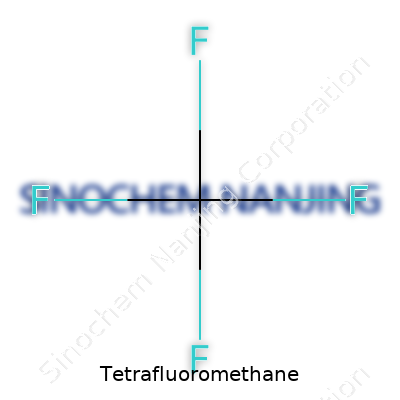
| Names | |
| Preferred IUPAC name | Tetrafluoromethane |
| Other names |
Carbon tetrafluoride R-14 Freon 14 Halocarbon 14 Perfluoromethane UN 1982 |
| Pronunciation | /ˌtɛ.trəˌflʊə.rəˈmiːθ.eɪn/ |
| Identifiers | |
| CAS Number | 75-73-0 |
| Beilstein Reference | 1901233 |
| ChEBI | CHEBI:16113 |
| ChEMBL | CHEMBL1349 |
| ChemSpider | 56488 |
| DrugBank | DB09237 |
| ECHA InfoCard | 03b2c5fa-6fa8-4f24-bd06-45fe29adbba9 |
| EC Number | 200-896-5 |
| Gmelin Reference | 1042 |
| KEGG | C01636 |
| MeSH | D003967 |
| PubChem CID | 6393 |
| RTECS number | TU2975000 |
| UNII | L068JO09J2 |
| UN number | UN1982 |
| Properties | |
| Chemical formula | CF4 |
| Molar mass | 88.0043 g/mol |
| Appearance | Colorless, odorless gas |
| Odor | Odorless |
| Density | 1.52 g/L (at 0 °C, 1 atm) |
| Solubility in water | Slightly soluble |
| log P | -0.7 |
| Vapor pressure | 4.05 × 10⁴ kPa (at 21.1 °C) |
| Acidity (pKa) | 15.8 |
| Basicity (pKb) | 14.2 |
| Magnetic susceptibility (χ) | -34.6 × 10⁻⁶ cm³/mol |
| Refractive index (nD) | 1.000391 |
| Viscosity | Gas (at 25 °C) |
| Dipole moment | 0.0 D |
| Thermochemistry | |
| Std molar entropy (S⦵298) | 251.1 J mol⁻¹ K⁻¹ |
| Std enthalpy of formation (ΔfH⦵298) | −924.7 kJ·mol⁻¹ |
| Std enthalpy of combustion (ΔcH⦵298) | -678.4 kJ·mol⁻¹ |
| Pharmacology | |
| ATC code | V03AN05 |
| Hazards | |
| Main hazards | Extremely cold gas; suffocation hazard; may cause frostbite. |
| GHS labelling | GHS02, GHS04 |
| Pictograms | Flame |
| Signal word | Warning |
| Hazard statements | H280: Contains gas under pressure; may explode if heated. |
| Precautionary statements | P261, P271, P304+P340, P312 |
| Autoignition temperature | > 550°C (1022°F) |
| Explosive limits | 13.5–61% |
| Lethal dose or concentration | Inhalation-rat LC50: 500000 ppm/4H |
| LD50 (median dose) | > 747,000 ppm (rat, 2 hr) |
| NIOSH | NIOSH: FG4725000 |
| PEL (Permissible) | PEL (Permissible Exposure Limit) of Tetrafluoromethane is "1000 ppm (parts per million)". |
| REL (Recommended) | 0.01 ppm |
| IDLH (Immediate danger) | 2500 ppm |
| Related compounds | |
| Related compounds |
Fluoromethane Chlorodifluoromethane Dichlorodifluoromethane Trifluoromethane |



