Tetraethylammonium Hydroxide: A Close Look at an Influential Chemical Reagent
Historical Development
Early 20th-century chemists often chased new compounds in search of reliable electrolytes and agents for organic synthesis. Somewhere in those explorations, Tetraethylammonium Hydroxide (TEAOH) carved out a niche. Researchers worked through its quirks and capabilities not just for curiosity’s sake, but to drive advancements in industrial and academic labs. They noticed TEAOH could act as both a strong base and an agent for phase transfer, giving it a special place in experimental toolkits. Demand for purer materials in electronics fueled more interest in this compound. By the latter half of the last century, as material science turned toward tailored molecular assemblies and microporous materials, TEAOH started proving its worth all over again, especially in zeolite synthesis and advanced separation technologies.
Product Overview
TEAOH appears most often as an aqueous solution—clear, colorless, strong-smelling, and slippery to the touch. Chemists use it for a range of roles: base for reactions, phase transfer catalyst, template for specialty materials, and electrolyte in select batteries. Labs handling this substance often keep it bottled in brown glass or high-density polyethylene to dodge breakdown from light and air exposure. Talk to anyone working with large-scale synthesis, and you’ll hear about how TEAOH streamlines the creation of particular silicon-oxygen frameworks due to the size and shape of its cation. Companies supply it at a range of concentrations, usually 20-40% in water; dropping below that tends to force odd solubility issues.
Physical & Chemical Properties
This compound isn’t shy about its caustic nature. It's highly basic, readily pulling protons from even stubborn molecules. In the lab, this means it can chelate, deprotonate, and drive organic transformations that less aggressive bases can’t touch. The typical aqueous solution boasts a density sitting between 1.0 and 1.1 g/cm³, depending on concentration. TEAOH has a melting point well below room temperature in solution, staying liquid unless someone runs a particularly chilly freezer. It offers complete miscibility in water and ethanol. The vapor pressure stays low, but exposure to air brings the risk of picking up carbon dioxide, turning it into the less effective carbonate. Shelf life takes a hit once contaminants or evaporation set in.
Technical Specifications & Labeling
Regulated as a hazardous material in most countries, TEAOH carries labels that lay out its risks in blunt language: corrosive to skin and eyes, causes respiratory irritation, and reacts with acids to spit out heat. Every drum or bottle comes printed with batch numbers, production date, full chemical name, and supplier details, along with necessary icons for chemical burns and inhalation hazards. Spec sheets outline pH (usually above 13 in solution), content purity (often above 98% for technical grade), and residual organic amine levels. Some suppliers run additional metal contamination screens since even trace amounts can poison sensitive reactions in electronics or medical research. Workers running large quantities or transfers usually wear full personal protective gear, including face shields and chemical-resistant gloves.
Preparation Method
Chemists usually whip up TEAOH through neutralization or metathesis. The standard route involves tetraethylammonium bromide reacting with silver oxide in water. The payoff comes with the filtration—silver bromide drops out, TEAOH remains. Another batch process uses tetraethylammonium chloride and sodium hydroxide, but the bromide pathway gives a cleaner product. Food-grade or semiconductor applications demand extra purification, so companies often follow up initial prep with recrystallization, charcoal filtration, and anion exchange. Water quality and reaction temperature affect yield and byproduct levels more than people expect. Once finished, the solution goes straight into storage with minimal post-processing to sidestep decomposition.
Chemical Reactions & Modifications
TEAOH's specialty lies in how it behaves as a base and how it can shepherd organic and inorganic ions between phases. Its cation helps form stable complexes with silicates, sodalites, and certain transition metals, guiding the growth of precisely shaped zeolite cavities. It breaks down esters, amides, and phosphates with vigor, and it often participates in removing stubborn halides or sulfonates in organic syntheses through nucleophilic substitution. Modifying TEAOH chemically means either exchanging the hydroxide for other anions—creating salts used as phase transfer catalysts—or quaternizing new amine backbones, building designer cations with greater selectivity.
Synonyms & Product Names
The chemical’s main aliases in the industry include tetraethylazanium hydroxide, TEAOH, and quaternary ammonium base. Various vendors slap on proprietary labels and purity designators, like “TEAOH Solution Puriss” for high-purity forms or “Electronic Grade Tetraethylammonium Hydroxide.” Some older literature also refers to it under the broader umbrella of “quaternary ammonium hydroxides,” which can muddle research if someone’s pulling from sources older than, say, 1980.
Safety & Operational Standards
Every lab tech learns hard lessons if safety sheets get ignored with TEAOH. Direct contact chews up skin, and accidental splashes spell disaster for eyes or mucous membranes. Airborne vapors or mists, especially during transfers, leave throats raw and lungs irritated—so hoods and respirators are non-negotiable for bigger jobs. Spilled solutions corrode metal surfaces and degrade many plastics over time. Waste disposal happens in tightly regulated streams, with neutralization steps and never down the sink—local wastewater plants can't handle the stubborn organic amines and trace heavy metals from synthesis. Regular stock checks keep expired or contaminated bottles out of circulation, and staff training hits home on chemical burn protocols.
Application Area
This chemical shows up everywhere from academia to manufacturing. Chemists reach for it to build advanced zeolites for petroleum cracking, wastewater filtration, and selective adsorption. Electronics makers use its purified forms in etching and cleaning of silicon wafers. Biological labs sometimes employ it in experiments requiring strong but non-nucleophilic bases. Polymer researchers appreciate its role in ion exchange membrane preparation. Smaller usages include organic synthesis—especially alkylation or deprotection steps where selective, strong base action matters—and as a model compound for studying phase transfer processes.
Research & Development
TEAOH sits at a crossroads for research. Teams studying porous materials depend on it to explore new molecular sieves and hybrid frameworks, trying to tailor passageways that sort molecules by size or polarity for next-generation purification. In recent years, R&D labs in the battery and supercapacitor space have tested its electrochemical properties as part of ionic liquids and new electrolyte mixes. Pharmaceutical researchers poke at TEAOH’s abilities for progressing alkaloid extraction or automated peptide synthesis. Every round of research leads to tweaks in concentration, purity, or mixing protocols to answer project-specific demands.
Toxicity Research
Animal studies and workplace monitoring underline the dangers of TEAOH. Even at modest exposures, it inflames skin and airway tissues; ingestion causes vomiting and severe gastrointestinal distress. Chronic exposure, either through broken gloves or poor fume control, can sensitize workers to quaternary ammonium compounds, resulting in unpredictable allergic reactions. Testing on aquatic models shows acute toxicity—runoff or spills harm waterway ecosystems and soil microbiomes. Regulatory bodies regularly update safe handling guidelines and publish occupational exposure limits to manage these risks. Modern research looks to replace TEAOH in the harshest roles with milder alternatives or containing processes with engineered controls.
Future Prospects
New pathways in catalysis and advanced materials likely keep interest in TEAOH high. As industries push for greener zeolites and more tunable polymer systems, TEAOH’s tailored properties offer speed and selectivity that alternatives struggle to match. Efforts focus on recycling the reagent, trimming energy usage in preparation, and shifting waste streams toward biodegradable outputs. In materials science, the move toward atomically precise frameworks will spark fresh demand for specialty grades. Health and environmental concerns drive the search for improved process containment, worker safeguards, and smarter alternatives for less demanding roles. For the near future, TEAOH remains a linchpin in the quest for cleaner, more advanced materials—and the challenges it brings shape the landscape as much as its strengths.
What is Tetraethylammonium Hydroxide used for?
A Strange Ingredient in Science Labs
Some chemicals get all the attention, but tetraethylammonium hydroxide keeps a low profile while proving essential in many labs. This compound shows up in chemistry and biology research, revealing its strong influence in several specialized fields. Having spent time in academic environments, I saw this clear liquid labeled with caution stickers, always handled behind a fume hood. Its strong alkaline nature makes it useful for sophisticated processes, but it also raises some real safety concerns.
What Makes This Compound Useful?
Tetraethylammonium hydroxide acts as a powerful base. Chemists value it in reactions that can't run with weaker, more common bases. Scientists especially turn to it to break chemical bonds with precision, a task crucial when working with materials that require selective activation or deprotection. This ability supports the creation of new drugs and specialty polymers, as it helps researchers manipulate molecular structures in ways simple bases like sodium hydroxide just can't.
This compound serves a purpose beyond synthetic chemistry. In the world of electronics, labs rely on it to etch silicon wafers, carving out intricate patterns on the chips powering smartphones and computers. Its chemical action lets technicians shape materials with high accuracy, which directly impacts how fast and efficient modern devices become. Having watched how the electronics industry races to make smaller, better chips, I understand why specialists demand tools that bring so much control.
Biology Labs and Blocking Ion Channels
In physiology research, tetraethylammonium hydroxide takes on a unique job. Certain nerve and muscle studies explore how electrical signals move across cell membranes, with scientists eager to untangle the puzzle of ion channels. Applying this compound blocks potassium channels, which lets researchers see how cells behave with and without those channels open. Gaining this insight matters for neuroscience and heart health, revealing how cells send messages or set heart rhythms.
Challenging Hazards and Waste Management
Despite its valuable uses, tetraethylammonium hydroxide comes with risks that call for respect. It’s caustic, so it can burn skin or damage eyes in seconds. In my experience, cleanup meant special gear and meticulous disposal—this chemical can't go down the drain like everyday lab solutions. Fumes from spills can create bigger risks, so any lab storing it follows strict rules from organizations like OSHA and the EPA.
Lab safety and environmental health both demand that tetraethylammonium hydroxide is kept tightly controlled. Research groups rely on dedicated waste treatment to neutralize spent solutions, avoiding toxic releases. Investment in robust training, well-marked storage, and quick-access emergency showers helps labs stay ready. I’ve seen new researchers take shortcuts, but quick mistakes lead to injuries or damage. A good safety culture—where supervisors explain risks, not just enforce rules—makes a difference every day.
Looking Ahead: Responsible Chemistry
Science keeps seeking replacements for hazardous materials. Safer alternatives or improved containment could lower risks tied to tetraethylammonium hydroxide. Research into greener chemicals is growing, and companies developing new reagents keep environmental impact on the agenda. Until then, workers stay vigilant, giving proper respect to a compound that drives discovery yet demands careful handling. As we grow more conscious about lab practices, practices learned from handling tough substances like this set the standard for tomorrow's safer science.
How should Tetraethylammonium Hydroxide be stored?
Reflections from Years in Research Labs
Tetraethylammonium hydroxide shows up on chemical shelves across research labs, but anyone who has opened a fresh bottle knows this isn’t just another bottle of base. Handling mistakes can cause fires, release harmful gases, or destroy glassware. Early in my own lab days, a technician broke a bottle in a fume hood; the fumes stung our eyes and chewed up the aluminum tray underneath. Ever since, I pay close attention to details on storage, not just the theoretical safety data.
Risks Spike in Ordinary Conditions
This chemical packs a punch. It’s a strong base, eager to grab moisture and carbon dioxide from the air. Over time, this spoils your stock and turns clear solutions murky. Tetraethylammonium hydroxide eats through glass if given a chance, especially at higher concentrations. I’ve seen labs lose expensive volumetric flasks because someone thought “It’s only one day.” No one wants sodium silicate sludge streaming into the spill tray.
The Right Container Makes All the Difference
Always choose high-density polyethylene or polypropylene containers, airtight, with tight seals. Glass bottles tempt chemists because of tradition, yet even seasoned researchers learn that glass becomes powdery when storing this base. Plastic resists both the chemical’s attack and the slow march of moisture into your stock.
Humidity Control: Forget Shortcuts
Once, a professor stashed a Tetraethylammonium hydroxide bottle next to lab ethanol for “convenience.” Within a month, the label dripped unreadably and the solution lost potency. Humid air snuck through a loose cap. Placing the bottles in a dry, cool cabinet away from acids and oxidizers keeps the chemical stable and labels readable. I always recommend silica gel in the cabinet, absorbing extra moisture before it ruins the chemical.
Temperature and Ventilation Matter
Heat speeds up decomposition. Don’t park these bottles near autoclaves or window sills—cool and steady is the mantra. Storage below 30°C stops much of the slow degradation. Fume hoods or proper ventilated cabinets lock away fumes but also prevent surprises. Once, a forgotten open bottle led to a strong fishy odor that cleared an entire floor for an afternoon.
Labels and Dates: No Skimping
After several years in different labs, I respect clear dating and strict inventory logs. Nothing wastes money faster than guessing if a bottle from last year is still good, especially with such reactive chemicals. Labels must survive drips—use chemical-resistant tape or permanent markers, not just paper labels.
Training: Beyond the Rules
Safety officers stress the basics: personal protective equipment, no lone workers, quick access to spills kits and eyewash stations. From personal habit, I inspect every bottle for residue, check for leaks, and keep the storage cabinet organized. An organized cabinet lowers the chance of accidental mix-ups with strong acids or glass erlenmeyers, which can both spark trouble.
Simple Solutions Still Work
Routine checks catch problems, especially if the lab runs regular chemical audits. Immediate cleanup and reporting help stop minor slip-ups from becoming major emergencies. It seems simple, but I have seen more drama caused by forgetting a routine than by one-off disasters.
Take Storage Seriously for Safety and Results
Chemical safety rules exist to back up real-world experience. Tetraethylammonium hydroxide rewards careful attention; it punishes shortcuts. By focusing on strong plastic containers, humidity control, proper ventilation, and accurate labeling, the lab stays safer and stock solutions stay usable longer—everyone benefits, from grad students to principal investigators.
What safety precautions are required when handling Tetraethylammonium Hydroxide?
Tough Stuff Calls for Careful Hands
Tetraethylammonium hydroxide stands out as a potent chemical with real bite, especially in the lab or factory. One whiff of its sharp ammonia-like odor tells you right away—safety can’t take a back seat. Plenty of folks know someone with a tale about a chemical they underestimated, maybe a trip to the eyewash station or worse. With this compound, letting your guard down just means trouble—for your health, your co-workers, and sometimes the environment.
Personal Protection Isn’t Optional
For me, respect starts with gear. Thick nitrile gloves, chemical splash goggles, and a fitted lab coat become non-negotiable—street clothes don’t cut it. Any exposed skin can turn into the perfect target for splashes, and the compound burns right through. A face shield feels bulky, but I put one on anyway, because sight beats style every time. I’ve heard too many stories from folks who tried to “just be careful” and paid the price.
Breathe Easy, but Not Too Easy
Vapors from tetraethylammonium hydroxide hit the nose and lungs fast. Good ventilation should never become an afterthought. I stress the importance of hoods—the kind with enough airflow to pull vapors away before they hit your face. If the ventilation system starts acting up, work stops until it’s fixed. Respiratory irritation can creep up without warning, so skips aren’t worth it. I also check labels and safety data sheets every time—a habit that’s saved professionals and students alike from nasty mishaps.
No Room for Spills
Leaks and spills happen to the best of us. My approach keeps neutralizing agents and spill kits within arm’s reach, not locked away in a closet. Absorbents that handle alkali solutions make cleanups quicker and safer. Rushing spells disaster, so I tackle spills with a clear plan, calling for backup when needed. Fire hazards lurk around, especially with organic solvents nearby. Smoking or eating near chemicals never seemed wise, and that advice holds double here.
Safe Storage Pays Off Down the Line
Storage can give a false sense of security. I choose containers rated for corrosives, make sure tight-fitting lids seal out air, and keep everything labeled down to the concentration. Flipping through old notes, I’ve seen how confusion leads to mixing the wrong stuff—sometimes with smoke, sometimes with screams. Tetraethylammonium hydroxide goes on lower shelves, not overhead, away from acids or oxidizers. Even short-term memory slips can end up in disaster, so redundancy in labeling always makes sense.
Training Creates a Real Safety Culture
Policies and signs won’t save you if people don’t know what to do—or why. Regular hands-on training sticks more than lectures. I tell stories, run through drills, and push for buddy checks. New folks in the lab learn that speaking up isn’t just okay, it’s expected. Accident reports should stay open, so everyone learns, not just the unlucky one. The chain of safety keeps growing with each shared lesson.
Looking Toward Better Solutions
Some risks will never disappear, but smarter engineering controls, better PPE, and good habits cut exposure down. Researchers now look for safer substitutes or more stable preparations. Until then, staying vigilant, respecting the hazards, and watching out for others helps everyone go home healthy. Safety stays personal, but every team benefits from that shared commitment.
What is the concentration and purity of available Tetraethylammonium Hydroxide products?
Background on Tetraethylammonium Hydroxide
Tetraethylammonium hydroxide, often found in chemical research labs and factories, shows up in everything from battery work to organic synthesis. This chemical is more than a staple for reactions; it’s often used as a phase-transfer catalyst or for ion channel studies in neuroscience. The quality of the product—both its concentration and its purity—affects how reliable and safe your experiments or manufacturing processes turn out. People working with it get that the numbers on the label are more than just paperwork; they decide if an experiment fails or the next step in the line gets derailed.
Typical Concentrations on the Market
Most commercial suppliers offer solutions of tetraethylammonium hydroxide in water, although some preparations dissolve it in methanol or ethanol. The concentration can range from as low as 10% up to 40%. A 25% aqueous solution probably gets the most shelf space, since it balances potency with stability. Go past the 40% mark, and the product tends to absorb carbon dioxide from the air and decomposes fast. Lower concentrations (10 to 15%) show up in situations where precision matters, like microelectronic etching or very sensitive biological prep.
Assessing Purity
Purity makes a real difference for most users. Research-grade products frequently claim purity above 98%, which meets the needs of most academic labs. Analytical and semiconductor applications call for higher purity, sometimes nearing 99.9%. Anything less than this and you risk by-products throwing off results or producing toxic surprises. Common contaminants include tetraethylammonium chloride, trace metals, and left-over solvents. Labs using mass spectrometry or NMR have to watch for faint contaminant peaks in their data, which means even tiny impurities loom large for them.
Where Quality Standards Matter
There’s a reason researchers and tech workers demand certificates of analysis from suppliers. Inconsistent batches lead to unpredictable results, whether you’re controlling pH in electrochemical cells or synthesizing fine chemicals. In my work with electrophysiology, an impure batch once gave us erratic current readings, wasting a week of experiments. Every bottle should have clear documentation about what’s in it and what’s not—otherwise, quality takes a hit, and so does anyone counting on the results.
Risk and Responsibility
People using tetraethylammonium hydroxide never forget that low purity or inaccurate concentration can have real consequences. In industry, a slip-up can slow production lines or even trigger safety problems. In an academic setting, it means lost money and time, not to mention frustration. Labs with tight funding often face pressure to reach for cheaper product grades, but the risk almost always proves greater than any upfront savings.
Moving Forward: Solutions and Best Practices
Researchers and procurement officers do best by seeking suppliers with strong reputations. Double-checking product certificates and verifying through batch testing keeps everyone safe. Companies gain trust by including clear concentration numbers, purity assays, and contaminant lists. Avoiding gray market chemicals, building good storage habits and educating staff also help keep standards high. Good science and responsible production rely on transparency and care—everyone in the supply chain plays a part.
How should Tetraethylammonium Hydroxide spills or exposure be managed?
Why This Matters
Tetraethylammonium Hydroxide—or TEAH—can turn a typical workday upside down in a hurry. As someone who’s seen chemical labs both careful and careless, I know TEAH’s risks aren’t just technical; they’re immediate and real. Strong bases like TEAH damage the skin, eyes, and breathing passages. Many don’t realize how easily a splash or a whiff can become tomorrow’s health scare.
So, every time TEAH makes an appearance—especially in bulk storage or during transfer—people in the room should feel a spark of concern. This isn’t just any lab chemical. If it ends up where it shouldn’t, or someone takes a single misstep, the aftermath stretches beyond discomfort. Hospitals see these cases too often, and no fancy safety protocol beats habits built on vigilance.
Immediate Steps Count
Picture a spill hitting the floor. Forget waiting for specialized teams if time slips away; staff nearby should know right away where the eyewash stations and showers stand, because every second with TEAH on skin increases burns and scarring. Eyes exposed need at least a 15-minute flush with water, no shortcuts. If clothing takes the hit, off it comes without delay.
Shortness of breath, coughing, or any symptom after breathing in vapors means heading for fresh air. Nobody should try to “tough it out.” Most experienced responders say a buddy system helps keep people from overestimating their condition—teamwork saves injuries from getting worse.
Containment Isn’t Complicated, But Routine Makes Mistakes Rare
Sawdust, spill pillows, and other absorbent materials lock down the spread. The goal isn’t perfection; it’s speed and control. Scoop together contaminated debris with tools that resist corrosion, and treat every used glove, rag, or apron as potentially dangerous waste.
Ventilation helps drive dangerous vapors out of the workspace. Open windows aren’t enough—labs with TEAH need fume hoods or exhaust systems checked often. Doors to unaffected spaces should stay closed. A well-trained crew doesn’t just stand back; the best teams communicate. If you aren’t sure how to safely sweep up, ask the person who handles hazardous waste every week.
Training—or the Lack of It—Makes All the Difference
Here’s the honest truth: accidents involving TEAH show which companies take training seriously. I’ve watched workers freeze up during drills, just because practice was rushed or forgotten. The best managers invest in hands-on demonstrations, not just policy handouts. Having old-timers share stories from past mishaps teaches lessons that dry manuals never cover.
Faced with an actual spill, the extra few minutes spent practicing routines comes back in fewer injuries and faster recovery. PPE should fit right, not hang off like a costume. Shops with ready access to goggles, gloves, and quick-drench hoses don’t waste precious seconds searching or improvising when the pressure hits.
Beyond Cleanup: Mindset and Honesty
After the chaos dies down, gathering everyone to review what happened can prevent the next incident. Dissect the response, own up to mistakes, and swap out worn-out equipment without delay. No shame comes from admitting the team stumbled—real safety grows from that honesty.
Chemicals like TEAH will always test the lines of preparation and responsibility. Hard lessons stick, and the right approach mixes respect, readiness, and the courage to speak up way before anything spills.
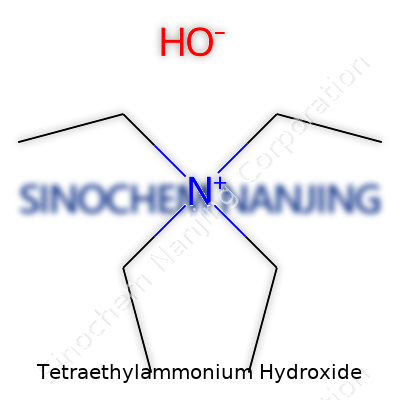
| Names | |
| Preferred IUPAC name | tetraethylazanium hydroxide |
| Other names |
Ethanaminium, N,N,N-triethyl- TEAOH Tetraethylammonium hydroxide solution N,N,N-Triethylethanaminium hydroxide Tetraethylammonium hydrate |
| Pronunciation | /ˌtɛ.trəˌɛθ.aɪl.əˈmoʊ.ni.əm haɪˈdrɒk.saɪd/ |
| Identifiers | |
| CAS Number | 75-59-2 |
| Beilstein Reference | 1720806 |
| ChEBI | CHEBI:64004 |
| ChEMBL | CHEMBL1230354 |
| ChemSpider | 24664 |
| DrugBank | DB11272 |
| ECHA InfoCard | 03b3a04b-5e3f-46f5-a9fa-4f6e3c0b99c1 |
| EC Number | EC 205-486-5 |
| Gmelin Reference | 8017 |
| KEGG | C06427 |
| MeSH | D014156 |
| PubChem CID | 119620 |
| RTECS number | XN8225000 |
| UNII | Q571K8X2F7 |
| UN number | UN2815 |
| CompTox Dashboard (EPA) | DTXSID3024173 |
| Properties | |
| Chemical formula | C8H21NO |
| Molar mass | 165.28 g/mol |
| Appearance | Colorless to light yellow liquid |
| Odor | ammonia-like |
| Density | 0.988 g/mL at 25 °C |
| Solubility in water | Very soluble |
| log P | -3.3 |
| Vapor pressure | 24 mmHg (20°C) |
| Acidity (pKa) | 15.5 |
| Basicity (pKb) | 6.2 |
| Refractive index (nD) | 1.377 |
| Viscosity | Viscous liquid |
| Dipole moment | 3.10 D |
| Thermochemistry | |
| Std molar entropy (S⦵298) | 251.8 J·mol⁻¹·K⁻¹ |
| Hazards | |
| Main hazards | Corrosive; causes severe skin burns and eye damage; harmful if swallowed; toxic if inhaled; may cause respiratory irritation. |
| GHS labelling | GHS02, GHS05, GHS06, GHS08 |
| Pictograms | GHS05,GHS06 |
| Signal word | Danger |
| Hazard statements | H302, H314, H400 |
| Precautionary statements | P260, P264, P270, P271, P273, P280, P301+P330+P331, P303+P361+P353, P304+P340, P305+P351+P338, P310, P312, P321, P363, P391, P403+P233, P405, P501 |
| NFPA 704 (fire diamond) | 3-2-2-W |
| Autoignition temperature | 160 °C (320 °F; 433 K) |
| Lethal dose or concentration | LD50 oral rat 50 mg/kg |
| LD50 (median dose) | LD50 (median dose): 50 mg/kg (oral, rat) |
| NIOSH | NIOSH#: XO5600000 |
| PEL (Permissible) | PEL: 2.5 mg/m³ |
| REL (Recommended) | 0.5 mg/m³ |
| IDLH (Immediate danger) | Unknown. |
| Related compounds | |
| Related compounds |
Tetraethylammonium bromide Tetraethylammonium chloride Tetraethylammonium iodide Tetraethylammonium perchlorate Tetramethylammonium hydroxide |



