Tetraethyl Orthosilicate: A Closer Look Through Science and Innovation
The Journey of Tetraethyl Orthosilicate: History and Background
Chemical breakthroughs don’t come out of nowhere. Tetraethyl orthosilicate, known as TEOS in labs and factories alike, has a backstory tied to both academic drive and industrial need. As early as the dawn of the 20th century, researchers wanted ways to introduce silicon into organic chemistry and materials science. TEOS stood out—its structure allowed it to bridge the gap between inorganic and organic chemistry. This compound started shaping the direction of sol-gel research by the 1930s and 1940s. The quest for better insulation, glass, ceramics, and advanced fibers all brought TEOS up on stage, and it hasn’t left since. Today, you’ll find chemists referencing early patents and papers while chasing new applications, always building on what those first experimenters learned.
What TEOS Is and What That Means for Industries
Anybody who has handled TEOS remembers its unique smell and recognizes its clear, colorless appearance. In practice, it looks like any standard liquid, but it brings much more to the table than just a simple solvent. TEOS is a silicon-based ester. Four ethyl groups are bonded to a silicon atom, setting the stage for a whole world of reactions. This molecular makeup lets it hydrolyze and condense, opening up options for coating, encapsulation, and making xerogels. What’s interesting is how this small change in structure—replacing methyl with ethyl—offers compounds with different reactivity and end uses. TEOS doesn’t just show up in big research labs. It’s a staple in manufacturing processes for optical fibers, electronics, and specialty glass.
Getting to Know the Personality of TEOS: Physical and Chemical Profile
A bottle of TEOS stored in the back of a storeroom might not look like much, but its properties demand attention. The liquid form evaporates easily, so ventilation matters, especially in cramped labs. It has a boiling point higher than water, making distillation a feasible purification method. Density and refractive index differences mean you can spot it quickly in mixtures with water or alcohol. Once TEOS comes into contact with moisture, you’ll see its hydrolysis kick in, generating ethanol and forming silanols. The chemical backbone gives it more stability than a lot of silicon-based compounds, while still letting it react smoothly with acids, bases, and nucleophiles. Anyone who’s ever cleaned up a spill knows the challenges: slick, persistent, and eager to react.
The Specs and the Fine Print
Chemical suppliers label TEOS with a purity percentage—often above 98% for research-grade bottles. Impurities, especially moisture and residual alcohols, can change how reactions unfold. Regulations usually require labeling for flammability, inhalation risks, and storage conditions. Industry norms set thresholds for water content, as TEOS’s reactivity with water means trace amounts can set off premature hydrolysis in storage or transit. Labels also call out the need for rubber gloves and eye protection, not just because of short-term irritation but due to the longer-term buildup of silica in tissue. The paperwork matters just as much as the pipette in this case.
How Science Makes TEOS: Preparation Paths
TEOS doesn’t turn up by accident in nature. Industry makes it primarily by reacting silicon tetrachloride with ethanol, producing TEOS and hydrochloric acid as a byproduct. This reaction seems straightforward, but anyone who’s tried large-scale synthesis knows how much control is needed—impurities, water, and temperature shifts all change yields and product purity. Smaller setups usually involve distillation and drying steps to purify the end product. There’s been a trend toward greener synthesis, looking to drop hazardous byproducts and cut down on energy use. On paper, it looks simple: combine chemicals, get TEOS. In practice, the challenge is keeping what you want and filtering out what you don’t, all without letting water anywhere near the process until the right moment.
Chemical Reactions and Smart Tweaks
Put TEOS in contact with water—especially in the presence of acid or base catalysts—and it wastes no time breaking apart. Ethyl groups cleave off, ethanol escapes, and a three-dimensional silica network begins to form. That’s the basis for sol-gel processing, a backbone technique for modern ceramics and glass. Want to tune the final product? Adjust the water-to-TEOS ratio, catalyst type, or temperature, and you can get porous gels for insulation or dense films for coatings. Chemists also play around with alkoxy group modifications, creating hybrid compounds that can carry organic functionalities. This kind of flexibility lets TEOS anchor dyes, binders, or pharmaceutical agents to a silica framework, making it much more than just a builder for glass.
Aliases in Research and Commerce
TEOS goes by a handful of other names. Tetraethoxysilane and tetraethyl silicate are the most common, but in old literature, you’ll spot alternative spellings and abbreviations. Synonym tracking isn’t just a paperwork exercise; searching patents or regulatory documents involves checking all possible variations. In busy labs, the shortcut “TEOS” gets tossed back and forth, and in supply chain logistics, you’ll see both the IUPAC and trade names show up within the same order sheet.
Beyond Safety Glasses: Operations, Safety, and Standards
Working with TEOS has risks you can’t overlook. It irritates skin and mucous membranes, which makes careful handling essential. Its volatility means good ventilation isn’t just a recommendation; it’s a must. Repeated exposure can lead to chronic health problems, especially respiratory and skin issues. Safety data sheets urge against letting it accumulate, especially near heat sources, since its low flash point allows vapors to ignite. In a properly equipped shop, chemical fume hoods, nitrile gloves, and tight storage containers are standard practice. Waste management involves proper solvent disposal and tracking any ethylene alcohol released during use or cleanup. International regulations assign it a hazard rating that puts it among substances that demand respect, not just routine caution.
TEOS at Work: From Factories to Research Benches
TEOS steps into the spotlight in a surprising number of industries. Optical fiber production depends on it as the silicon source for drawing fine threads that carry all the world’s data. Microelectronics manufacture relies on it to make thin, insulating layers during chip fabrication. Coating technology makes use of its ability to bond to a variety of surfaces, giving both abrasion resistance and hydrophobicity where needed. Silica-based gels and foams, born from TEOS hydrolysis, serve as lightweight structural materials, thermal insulators, and in some creative cases, carriers for slow-release pharmaceuticals. In the art world, people use it to stabilize stone and paintings, proof that chemistry crosses paths with cultural preservation as much as with pure science. In my own experience, even small batches poured for specialty films had to meet exacting purity requirements, showing how little margin there is when dealing with high-end research applications.
On the Research and Development Front
R&D labs continue to push what TEOS can do. Advanced sol-gel techniques allow for nanostructured films with specific porosities, making their way into cutting-edge sensors and battery technologies. Scientists are searching for new ways to graft organic groups onto the silica backbone for drug delivery and bioactive materials. Environmental engineers look to TEOS for new filtration and remediation materials, hoping to use its robust, modifiable framework to tackle pollution or industrial waste. At conferences, you’ll often hear about TEOS-derived coatings that block UV radiation, manage heat flow, or provide anti-fogging features. Students and seasoned chemists both find that the more they tweak the reaction pathways, the broader the list of final products gets. That’s the mark of a chemical with staying power.
Toxicology and Exposure Studies
TEOS doesn’t come with the most dramatic hazard profile compared to some industrial chemicals, but researchers don’t take its risks lightly. It hydrolyzes quickly in the respiratory tract, turning into silica. Chronic inhalation leads to the buildup of particulate silica in the lungs, tied to silicosis in industrial workers who aren’t careful about protective equipment. Skin exposure leaves a sting, and repeated spills raise sensitization hazards over time. Toxicity studies in animals have found that, while acute exposures are manageable with treatment, chronic low-level exposure can cause inflammation or compromise lung function. Long-term toxicology research keeps focusing on the metabolic pathways in mammals, looking for links between accidental exposure and respiratory or skin disorders. Standard safety protocols aren’t just bureaucracy—they’re lessons learned from years of observing what happens when handling slips or cleanup standards get overlooked.
Where TEOS Goes From Here
The future for TEOS looks promising. With electronics and materials engineering fields evolving rapidly, the demand for precise, pure silicon compounds will only grow. Sol-gel processes continue to find tweaks that lower energy use and boost performance, making TEOS even more attractive for high-end manufacturing and research. Green chemistry pushes for synthetic strategies that cut out hazardous byproducts and improve recyclability, promising more sustainable TEOS production lines in the coming years. TEOS-derived nanomaterials are set to play a central role in next-generation sensor technology, catalysis, and flexible electronics. As the world leans harder on data networks, renewable energy, and climate-friendly manufacturing, TEOS is sure to be involved in the materials that make those advances possible.
What is tetraethyl orthosilicate used for?
Shaping Glass, Electronics, and More
If you’ve ever used a smartphone, worn a pair of glasses, or even strolled through a modern city lined with skyscrapers, you’ve encountered the influence of tetraethyl orthosilicate, or TEOS. Despite its tongue-twister name, TEOS fuels some of the most practical things we touch and see daily. It’s a building block for the glass that keeps rain out, the fiber optic cables that zip your messages around, and the polished coatings that help protect precious artwork from decay. TEOS never brands itself front-and-center, but its presence makes those innovations possible.
In the lab, TEOS is like a Swiss Army knife for researchers and engineers. Chemists use it to spin simple molecules into tough, precise silica networks. Mix it with water in just the right way, and it creates silica gels and films that slip into everything from LED screens to solar cells. Those layers can help electronic gadgets last longer and run cleaner. The construction world leans on TEOS for specialty glass, concrete additives, and stone treatments. If you’ve admired a crisp architectural feature or worried less about graffiti sticking to a city statue, there’s a good chance TEOS had a backstage role. Even in aerospace, engineers use it to toughen up ceramics, making engines just a bit more reliable.
Health and Environment: Handle with Care
Not every story about TEOS sparkles with ease and brilliance. Handling TEOS in its raw form calls for respect. Scientists have shown that inhaling its vapors isn’t great for lungs or skin, and it can cause irritation if splashed. Room ventilation, the right gloves, and goggles all matter. People who work directly with TEOS trust safety data and company training—it’s non-negotiable. Governments and science agencies monitor how factories handle TEOS, insisting on practical safeguards.
Once it does its job and transforms into silica, TEOS no longer brings those health worries to everyday consumers. Silica in its finished form, like the glass in your window, is stable and doesn’t leach unwanted chemicals. Problems usually fade after the manufacturing stage. This is an important distinction that public health experts stress: the risk drops off sharply with careful production and solid regulations. The learning here is clear—technology gives us useful tools, but it’s up to people to control hazards before products reach everyday life.
Solving Today’s Challenges with TEOS
Across industries, engineers keep tinkering with TEOS to solve new problems. In clean energy, researchers experiment with TEOS to make better coatings for solar panels. They want to capture more sunlight and keep weather from wearing down efficiency. Others have started using TEOS to repair damaged buildings and bridges, extending service life instead of tearing things down—a strategy that cuts energy demand and construction waste. In medicine, doctors team with materials scientists to develop gentle coatings and implants that survive in the body without causing harm. TEOS plays a behind-the-scenes part in creating tiny silica shells for targeted drug delivery, making some treatments gentler on the body than old-school chemotherapy.
TEOS deserves respect, and smart use. I’ve seen how a material that’s handled carefully, and applied thoughtfully, can unlock solutions for problems ranging from energy to health. TEOS reminds us that chemistry shapes the world behind the scenes, and that responsibility and creativity often walk hand in hand.
What are the safety precautions when handling tetraethyl orthosilicate?
Respect the Chemicals You Work With
Anyone who’s cracked open a bottle of tetraethyl orthosilicate in the lab or on an industrial floor knows safety goes beyond reading a material safety data sheet. This chemical, often called TEOS, carries risks that demand more than just a quick glance at warning labels. Years of handling chemicals in different settings have taught me the skin on your hands, your lungs, or your eyes always pay a price when you ignore the basics. So, for everyone working with TEOS—chem students, research chemists, coatings technicians—let’s talk real safety.
TEOS Is No Water
People see a clear, colorless liquid and forget danger can’t always be seen. TEOS can irritate your skin and eyes, it can burn your lungs—and the vapors don’t have an obvious smell to warn you. After breathing the stuff in even once without protection, your throat will remind you for hours that shortcuts aren’t worth it. NIOSH and OSHA both treat TEOS as a substance that needs careful handling. These agencies don’t waste time with chemicals that don’t matter. The facts are straightforward: chronic exposure will damage your lungs, acute exposure brings on headaches or dizziness, and a spill on your skin can mean weeks healing up from chemical burns.
Personal Protective Equipment: More Than a Suggestion
It’s tempting to think a regular lab coat and skimpy gloves cut it, but TEOS demands more respect. Use butyl rubber gloves or gloves made from materials specifically rated for silicates. Not all gloves keep it out. Polyethylene aprons and splash goggles save you from regrettable spills or splashes. I’ve seen smart people lose their vision for months because they skipped safety glasses for one “quick” transfer.
A good respirator makes a difference. For most bench handling, a half-face respirator with appropriate organic vapor cartridges gives better protection than a box of surgical masks. In larger batches or poorly ventilated shops, local exhaust ventilation or a fume hood becomes just as important as safety goggles. You don’t want to cough through your next meeting because you underestimated vapor exposure.
Protect Your Workspace
Work over absorbent mats or trays that can be easily switched out, not right over desks or shared benches. TEOS reacts with water and humidity—think fumes, not just puddles—so don’t keep it near water sources or anywhere a spill might hit sink drains. A spill kit with activated charcoal, proper neutralizer, and waste drums keeps things under control if you knock a beaker over.
Proper Storage And Housekeeping
I once saw an experienced chemical tech forget that TEOS needs a tightly sealed container, stored somewhere cool and dry, far from acids or bases. The cap must go back on right after use. After a long workday, it’s easy to forget, but those are the moments accidents happen. Mark containers clearly. If someone grabs TEOS thinking it’s acetone or IPA, the cleanup turns ugly fast.
Training and Emergency Response Matter
Just knowing how to read a label won’t help if you splash TEOS in your face. Every team should have a training refresher every couple of months—cover emergency eyewash operation, spill kit use, and proper gloves. If management sets a bad example, people stop caring about safety and that’s when the worst injuries show up in reports. Quick access to the right help—emergency showers, clean water, trained coworkers—can mean the difference between a scary incident and a lifelong injury.
How should tetraethyl orthosilicate be stored?
Getting Real About Tetraethyl Orthosilicate
Tetraethyl orthosilicate, known to many as TEOS, mostly shows up in labs and manufacturing plants, not your average home. Some people mix it into coatings, or use it as a building block for making specialized glass and ceramics. Working with it comes with risks—it's flammable, reacts sharply to moisture, and its vapors can irritate the nose and throat. I’ve learned the hard way that tossing a drum of TEOS in the back of a warehouse without thinking things through is a recipe for trouble. There’s no room for shortcuts here: this chemical demands respect and planning, right from delivery to disposal.
Common-Sense Storage Tips That Actually Work
Any place handling TEOS needs to take one thing seriously: safety. Forget about regular shelving in crowded supply rooms. Secure areas, marked for authorized staff, make a big difference. Locking up chemicals isn't just regulation—it's a real-world tactic to avoid accidental spills or mischief from untrained hands. From my experience in facilities that use solvents, open containers and poor labeling always multiply problems. So, clear tags and proper logs right at the place of storage keep you out of messy guesswork during inventory checks.
Focus on The Basics: Temperature, Moisture, and Air
Temperature swings in storage spaces spell disaster for TEOS. Hot rooms speed up evaporation and pressure inside drums can build. Cold spots, on the other hand, lead to thickening or changes in the chemical itself. Finding a stable, moderate temperature—ideally under 30°C—pays off by extending shelf life and preventing headaches.
Humidity creeps in quietly, often missed until liquid beads form inside a supposedly “sealed” container. TEOS reacts with water, producing ethanol and sometimes sticky gels. Keeping it dry means using tight seals, storing in low-humidity rooms, and never trusting porous caps or worn-out lids. I’ve walked into more than one facility where a faulty seal led to gummed-up valves and tough clean-up jobs. Even a cabinet with desiccant packets can tip the odds in your favor for small batches.
Ventilation isn’t just a check-box on the safety audit form. Vapors build up even when containers seem closed, and without steady airflow, those fumes linger. Respiratory masks help, but nothing protects better than a room with a fume hood or strong exhaust fans. I’ve seen teams ignore this step, thinking opening a window will do—and watched spill response teams mop up after needless accidents.
Storage Materials: Get Picky
TEOS likes glass or metal that won’t corrode, such as stainless steel. Plastics or soft rubber break down too fast. Factory staff I’ve worked with trust specially lined drums, which cut down on leaks and prevent reactions. Bulk storage needs containers rated for flammables—not just for TEOS, but for any chemical that reacts this way. A near-miss with a leaky valve once showed me just how easily an incompatible material can bring production lines to a halt.
Keep It Away From Curious Compounds
Storing TEOS far from acids, alkalis, or sources of water is just good policy. In real life, carting a barrel across a warehouse dotted with other chemicals raises the odds of cross-contamination or surprise reactions. Dedicated shelving and spill-containment trays stop small mistakes from turning big. A bit of upfront design in your storage setup protects people, saves cash, and spares you the pain of explaining to regulators why you skimped on basics.
Solutions Worth Considering
Periodic staff training is not an empty ritual; it's how best practices get into muscle memory. Digital inventory that tracks supply levels and storage conditions frees up time and reduces human error. Finally, listening to feedback from the floor—maintenance techs, lab staff, or safety officers—often reveals clever tweaks that official guidelines overlook.
What are the chemical properties of tetraethyl orthosilicate?
Getting to Know Tetraethyl Orthosilicate
Tetraethyl orthosilicate, often called TEOS, shows up in a lot of manufacturing spaces. It doesn’t often catch headlines, but I’ll tell you from hands-on work in labs and reading accident reports that it pays to understand what you’re dealing with. TEOS holds the formula Si(OC2H5)4. It acts like a colorless liquid with a noticeable odor, almost sweet in its own way, but don’t let that fool you—this stuff isn’t for careless handling.
How TEOS Reacts in Different Settings
TEOS reacts fast with water. Take drops of TEOS, introduce even a bit of moisture, and you’ll see it hydrolyze. What you end up with is a mix of ethanol and silica, usually starting out as a gel before turning more solid. People who work with coatings or sol-gel technology know this classic reaction. If the humidity jumps, you can almost count on the TEOS turning sticky or even hard, so keeping containers sealed makes a real difference.
TEOS also gets along best with certain solvents. It dissolves and mixes well in alcohols and ethers. Toss it in with water, though, and it doesn’t blend right away—instead, that reaction sparks off, so the products use controlled mixing to keep things predictable. You’ll notice, too, that it doesn’t mix well with strong acids or bases without breaking apart. That reactivity can be helpful if you want to build up a silicon dioxide layer, but in my experience, accidents go up if you underestimate just how quickly it breaks down.
Flammability and Health Risks
TEOS won’t stick around if you introduce it to open flame. With a flash point of around 46°C (115°F), it can catch fire from a spark. The safety data sheets always warn about this, and I’ve seen too many people skip the fume hood or ignore grounding for static. Even a splash on your skin stings, dries out the skin, and inhaling the vapor irritates noses and lungs. Exposure on the regular without personal protective equipment pretty much guarantees trouble. Data from the European Chemicals Agency reinforce this; chronic inhalation can cause lasting lung damage. That’s why responsible labs use goggles, gloves, and solid ventilation every time.
Why Chemical Properties Shape Real-World Uses
Working with TEOS pays off in electronics and glasswork because its chemistry builds a perfect scaffold for silicon dioxide. By tweaking water amounts and temperature, people get everything from thin coatings to foams. But running these reactions demands steady hands and good sense. Uncontrolled TEOS hydrolysis—especially in rooms with damp air—can wreck lab setups, clog vents, or leave sticky films everywhere.
Managing TEOS Safely
Proper storage and smart planning keep problems with TEOS in check. Always label containers with spill instructions and keep them away from direct heat. In case of spills, using appropriate absorbent that won’t kick off even more chemical reaction makes a difference. For disposal, talking with local environmental teams ensures nobody dumps something flammable or reactive down a drain. Real safety culture grows in places that pay attention from start to finish—not just during the big reaction, but through cleanup and waste handling as well.
The truth is, TEOS has made some of the sleekest electronics, clearest glass, and toughest ceramics possible. That payoff comes with responsibility. Its properties demand respect—and with the right approach, the possibilities open up.
Is tetraethyl orthosilicate hazardous to health or the environment?
Why Tetraethyl Orthosilicate Draws Concerns
Tetraethyl orthosilicate, often called TEOS, turns up in lots of industries, from making microchips to waterproofing concrete. I’ve seen it used in labs for making silica gels and coatings. It helps make things harder or more weather-resistant. But behind that utility, safety questions keep popping up. TEOS doesn’t come with an innocent record.
Health Risks Aren’t Just Theoretical
Breathing in TEOS fumes can really irritate your eyes, nose, and throat. Spend too long in a space with poor ventilation and your lungs might not thank you. The chemical breaks down in air and moisture, eventually forming ethanol and silica, but that doesn’t mean the danger just disappears. With enough exposure, folks can experience headaches, coughs, and even dizziness. I remember my lab supervisors were always strict about fume hoods and masks whenever TEOS showed up—nobody wanted a visit to the occupational health nurse.
Over time, long-term exposure can pose risks to the central nervous system. The ethanol that TEOS releases isn't harmless either; it has its own batch of health warnings. According to the National Institute for Occupational Safety and Health (NIOSH), chronic inhalation might contribute to more severe respiratory problems. Sadly, not everyone working in construction or manufacturing always gets full training or proper safety gear.
Environmental Hazards Follow the User
I’ve seen wastewater from labs containing TEOS marked for special disposal. Pouring it down a drain just pushes the problem downstream. TEOS doesn’t just vanish; it breaks up into ethanol and silicates once it hits water, and both can stress aquatic life. Fish and small invertebrates show signs of distress if exposed to these byproducts for very long. The US Environmental Protection Agency points out the potential for bioaccumulation and impacts on water quality, especially where regulation or oversight falls short.
Tightly sealed storage and chemical-specific waste streams keep many labs in compliance. But in countries where waste regulations run loose, runoff can seep into rivers or groundwater. Once there, ethanol alters oxygen levels and silicates change the habitat for tiny aquatic creatures.
Reducing Exposure and Managing Waste
Better ventilation always tops the list for safety. No fume hood? Open every window and use personal protective equipment—safety glasses and gloves are a given. Facilities that handle TEOS in bulk need spill kits and proper air monitoring, so accidents stay small and don’t get complicated.
From a public health viewpoint, regular checkups for workers help catch problems early. Safety data sheets and training keep people informed not just about what TEOS does, but about what to do when it escapes containments.
For environmental protection, keeping TEOS out of drains and stormwater systems matters. Wastewater treatment plants can’t filter out every contaminant. Industries ought to recycle or neutralize TEOS waste when possible. Small steps—like labeling containers clearly or double-checking disposal procedures—make a real difference.
Moving Forward With Awareness
TEOS will stick around in industrial use, so relying on education and smart engineering keeps both people and ecosystems safer. Responsible companies recognize the risks and take them seriously. Practicing what safety guidelines preach and investing in proper disposal builds trust in workplaces and communities alike.
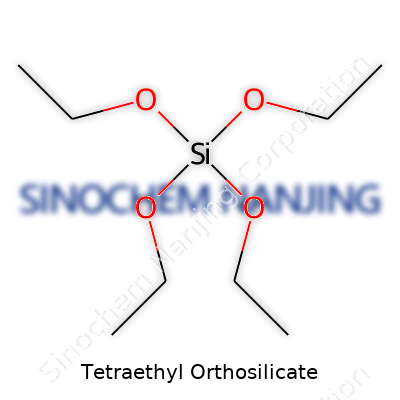
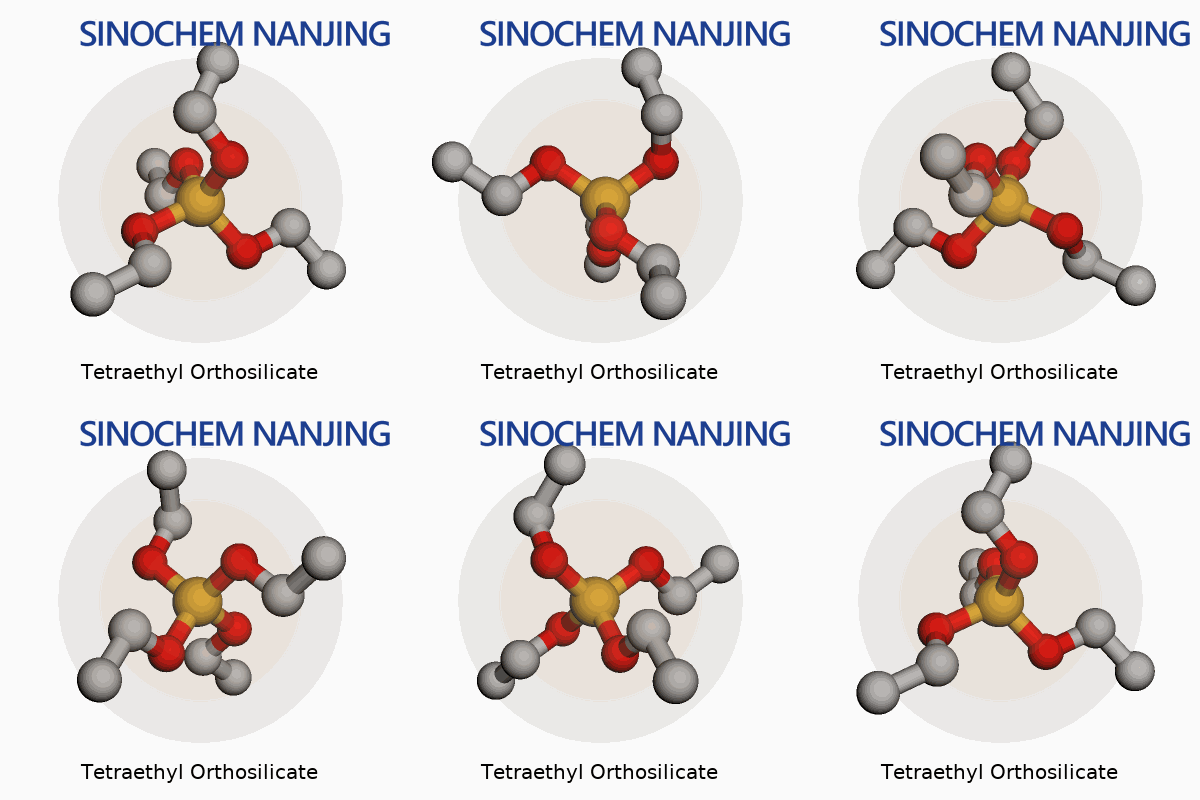
| Names | |
| Preferred IUPAC name | Tetraethoxysilane |
| Other names |
TEOS Tetraethoxysilane Silicic acid, tetraethyl ester Tetraethoxysilicon Ethyl silicate Silicic ester |
| Pronunciation | /ˌtɛtrəˈɛθaɪl ˌɔːθəʊsɪˈlɪkeɪt/ |
| Identifiers | |
| CAS Number | 78-10-4 |
| Beilstein Reference | 1461321 |
| ChEBI | CHEBI:48154 |
| ChEMBL | CHEMBL156748 |
| ChemSpider | 6002 |
| DrugBank | DB11240 |
| ECHA InfoCard | 100.003.268 |
| EC Number | 200-854-6 |
| Gmelin Reference | 82846 |
| KEGG | C06581 |
| MeSH | D013736 |
| PubChem CID | 6649 |
| RTECS number | VV7325000 |
| UNII | N0389B5T1R |
| UN number | 1292 |
| CompTox Dashboard (EPA) | DTXSID8020226 |
| Properties | |
| Chemical formula | C8H20O4Si |
| Molar mass | 208.33 g/mol |
| Appearance | Colorless transparent liquid |
| Odor | Alcohol-like |
| Density | 0.933 g/mL at 25 °C |
| Solubility in water | Slightly soluble |
| log P | 2.0 |
| Vapor pressure | 5 mmHg (at 25 °C) |
| Acidity (pKa) | pKa ≈ -2.6 |
| Magnetic susceptibility (χ) | -64.0e-6 cm³/mol |
| Refractive index (nD) | 1.382 |
| Viscosity | 3.16 mPa·s (25 °C) |
| Dipole moment | 1.05 D |
| Thermochemistry | |
| Std molar entropy (S⦵298) | 332.8 J·mol⁻¹·K⁻¹ |
| Std enthalpy of formation (ΔfH⦵298) | –1730.6 kJ/mol |
| Std enthalpy of combustion (ΔcH⦵298) | -6079.7 kJ·mol⁻¹ |
| Pharmacology | |
| ATC code | V09CX03 |
| Hazards | |
| GHS labelling | GHS02, GHS07, GHS08 |
| Pictograms | GHS02,GHS07 |
| Signal word | Danger |
| Hazard statements | H226, H332, H319 |
| Precautionary statements | H261-H226-H319-H335 |
| NFPA 704 (fire diamond) | 1-3-2-W |
| Flash point | 41 °C |
| Autoignition temperature | 250°C (482°F) |
| Explosive limits | Explosive limits: 1.5–48% |
| Lethal dose or concentration | Oral rat LD50: 6270 mg/kg |
| LD50 (median dose) | LD50 (oral, rat): 6270 mg/kg |
| NIOSH | #0413 |
| PEL (Permissible) | PEL (Permissible Exposure Limit) for Tetraethyl Orthosilicate: 0.5 ppm |
| REL (Recommended) | 5 ppm |
| IDLH (Immediate danger) | 850 ppm |
| Related compounds | |
| Related compounds |
Tetrabutyl orthosilicate Tetramethyl orthosilicate |



