Tetrabutyltin: A Deep Dive into a Critical Organotin Compound
Historical Development
The story of tetrabutyltin traces back to the explosive development of organotin chemistry in the mid-20th century. Researchers looked at metals and realized that some organic combinations could open doors for both synthesis and industry. Tetrabutyltin joined other organotin compounds as scientists tried different alkyl groups, not stopping at methyl or ethyl, pushing forward into higher groups like butyl. International laboratories started to publish papers on its structure and reactivity as early as the 1950s. Over decades, companies began to scale its manufacture, drawn by the potential for making other useful chemicals. Tetrabutyltin now appears in patent filings, trade reports, and industrial supply chains, marking its place as more than a curiosity—it’s become a workhorse in chemical manufacturing.
Product Overview
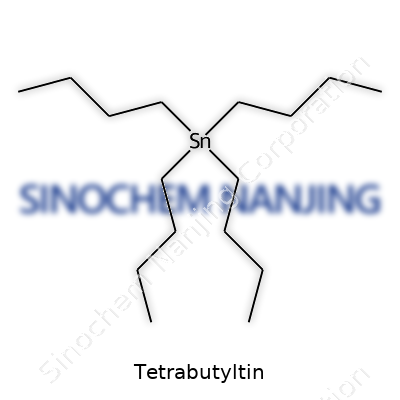
Tetrabutyltin has a clear structure: a central tin atom bound to four butyl groups. This gives the compound oil-like properties, hydrophobic tendencies, and significant molecular weight. It’s usually encountered as a liquid, sometimes with a faint odor. Unlike tributyl or dibutyltin derivatives, tetrabutyltin stands out for its relative stability, making it popular as a precursor in various synthesis routes. Chemical companies often list it as both a raw material and an intermediate, underlining its versatility.
Physical & Chemical Properties
Handling tetrabutyltin, one encounters a viscous or oily liquid, colorless to pale yellow, and denser than water. Boiling happens around 140°C (under reduced pressure) and freezing below −60°C. The material stays stable under standard lab conditions, shows low solubility in water, but dissolves readily in many organic solvents, such as toluene and ether. The tin-carbon bonds resist hydrolysis, which is part of the reason for its persistence in certain applications. Its volatility means inhalation risk in poorly ventilated spaces, so fume hoods become non-negotiable. Chemically, it holds up to moderate heating but reacts with strong oxidizing agents, acids, and halogens.
Technical Specifications & Labeling
Bottles and drums of tetrabutyltin usually carry specifications for purity—commercial material often aims for 95% or higher purity, with precise amounts of butyl groups and total tin content. Labels refer to UN numbers and proper shipping names, flagging both its chemical identity and hazards. Safety data sheets spell out potential dangers—flammability, toxicity, and reactivity—using standardized pictograms and GHS classifications. Quality control labs check for moisture, acid value, and byproduct content, vital for production lines chasing consistent performance and regulatory compliance.
Preparation Method
Most modern production routes for tetrabutyltin begin with tin metal or tin(IV) chloride. The reactors get loaded with dry, purified n-butyl chloride, often with catalysts or under inert atmospheres to avoid water and oxygen. Once mixed, a Grignard reaction or direct alkylation leads to formation of tetrabutyltin alongside some tri- and dibutyltin byproducts, which later get separated by distillation. As the streamlines improved, manufacturers designed plants to recover and recycle reagents. This not only improves efficiency but reduces the environmental burden. In the best-run plants, automation watches temperature, pressure, and flow rates, spotting trouble before it leads to product loss or danger.
Chemical Reactions & Modifications
Tetrabutyltin serves both as a reagent and a feedstock for the production of other tin-based compounds. Reacting it with various halogens or acids, chemists break the tin-carbon bonds, yielding a spectrum of organotin derivatives like tributyltin chloride or dibutyltin dilaurate. These downstream products step into roles as stabilizers, catalysts, and biocides. Oxidizing tetrabutyltin can alter its properties or produce new species for research. Since the compound brings four butyl groups, it sometimes enters organic syntheses as a source of alkyl units or as a modifying agent in polymer chemistry. The list of possible reactions keeps growing, especially with new catalysts and green chemistry techniques emerging from research labs.
Synonyms & Product Names
Chemical catalogs refer to tetrabutyltin by different names: tetra-n-butyltin, TBTT, TBTn, or sometimes just stannane, tetrabutyl-. Depending on the supplier, packaging may show CAS number 1461-25-2. In regulatory paperwork, transport manifests, and import/export declarations, trading names often reflect specific marketing or regional preferences, but the molecular structure stays the same. Synonyms sometimes cause confusion among less experienced workers, underpinning the need for clear communication and standardized purchasing procedures.
Safety & Operational Standards
Experience in the lab teaches respect for tetrabutyltin. Exposure can irritate skin, eyes, or lungs, and prolonged or concentrated contact brings more serious risks. Safety protocols call for gloves, goggles, and full-length clothing. Spills threaten both human health and the environment, given that organotins can act as persistent pollutants. Storage requires sealed containers away from strong oxidizers, under cool, well-ventilated conditions. Material handling procedures in industrial plants often include spill containment, on-site monitoring for leaks, and staff training that goes beyond “read the label.” Regulatory authorities worldwide, including OSHA and the EU’s REACH program, set limits for workplace exposure, labeling, and disposal.
Application Area
Tetrabutyltin steps into a variety of sectors, often as a bridge to even more valuable products. In plastics, it gives rise to heat stabilizers that let PVC keep its shape and clarity under tough processing temperatures. Paint and coatings chemists use downstream organotin compounds as antifouling agents, though environmental rules have trimmed this use due to toxicity concerns. The silicone industry leans on tin catalysts, often derived from tetrabutyltin, to speed up curing in adhesives, sealants, and rubber formulations. Laboratories keep it in stock as a reagent in organic synthesis, where nuanced reactivity opens doors to new molecules. Rare applications pop up in electronics and specialty polymer fields, reflecting the drive for higher performance materials.
Research & Development
Academic journals and patent filings show continued energy around tetrabutyltin. Chemists run experiments on new conversion pathways, reducing byproduct formation, and improving catalyst reuse. Environmental engineers explore more benign routes to work with organotins, spotlighting both workplace safety and waste reduction. There’s ongoing research into alternative stabilizers and catalysts—ones that match tetrabutyltin’s performance but sidestep toxicity and environmental persistence. The public literature records trials in green chemistry, aiming to use renewable starting materials or recycle spent organotin from industrial waste. More recently, researchers connect organotin chemistry to the push for sustainable manufacturing and end-of-life recovery in plastics and electronics.
Toxicity Research
Health scientists have sounded alarms about many organotin compounds, including some derived from tetrabutyltin. The compounds can act as endocrine disruptors, harm aquatic life, and cause chronic problems in exposed workers. Animal studies point to neurotoxic and immunotoxic effects at high doses, setting the stage for limits on workplace and environmental exposure. Regulatory authorities demand rigorous toxicity testing before large-scale deployment. Wastewater treatment systems, soil monitoring, and workplace hygiene audits pop up in compliance schedules. Researchers look for ways to break down organotin residues using advanced oxidation or bioremediation, trying to clean up problems from past decades when environmental consciousness lagged behind chemical innovation.
Future Prospects
The road ahead for tetrabutyltin depends on a balance between utility and risk. Chemical industries need raw materials that deliver performance and reliability, and tetrabutyltin plays a proven role in making stabilizers and catalysts. At the same time, regulatory and public pressure pushes everyone toward safer, greener chemistry. Some companies commit to phasing out persistent organotins where safer alternatives can fill the gap, while others invest in containment, recycling, and advanced process safety measures. Researchers continue to probe the boundaries: can the molecule’s unique properties be harnessed in new fields or redesigned to reduce health impacts? Policymakers, plant managers, and scientists each have a slice of responsibility, since the compound’s future will be shaped not by technical breakthroughs alone, but by coordinated attention to safety, innovation, and stewardship.
What is Tetrabutyltin used for?
How Tetrabutyltin Shapes Industrial Chemistry
Tetrabutyltin pops up often in conversations about industrial chemicals. The world of organotin compounds isn’t exactly top-of-mind for most people, but the impact these substances make can be surprising, and sometimes a little troubling. My first real exposure to tetrabutyltin came during a summer job at a polymer lab; a stern supervisor handed me a thick safety sheet and said, “This stuff will make or break your project—treat it with respect.” That stuck with me, not only because of the chemical’s usefulness but also because of its potential hazards.
Most of the tetrabutyltin on the market ends up as a raw material for further chemical reactions. Its primary gig involves helping create dibutyltin and tributyltin compounds. These derivatives serve as stabilizers for making flexible PVC. Walk through any supermarket and you’ll find food packaging, window frames, and medical tubing that owe part of their resilience to additives processed from tetrabutyltin.
Beyond Flexible Plastics
Beyond the world of PVC stabilizers, tetrabutyltin feeds into the production of pesticides and biocides. Back in the day, I remember reading about how tributyltin compounds once showed up in antifouling paints for ships, preventing barnacle and algae buildup. These paints worked like magic, letting ships sail faster and burn less fuel. Scientists later learned that these chemicals also wreak havoc on marine life—disrupting snail reproduction and polluting food chains. Waters around major ports reveal persistent contamination, years after tighter regulations rolled out.
Tetrabutyltin’s footprint stretches even further, lending itself as a catalyst in organic synthesis, especially for siloxane production. Siloxanes form a backbone for many silicone-based sealants and adhesives. These silicones help keep skyscraper windows sealed tight and electronics protected from moisture. Anyone who’s caulked a tub or installed new weather stripping has brushed up against products built with this chemical know-how.
Safety, Health, and the Environment
Despite the versatility, tetrabutyltin requires extra caution on the plant floor and in research labs. While I never experienced an accident personally, stories circulate about workers who ignored skin protection or left ventilators hanging on a hook. Exposure can cause headaches, nausea, or skin problems, and some breakdown products have triggered concern for causing longer-term health damage. This isn’t just about keeping a tidy lab; strict regulation and robust protective gear matter in every workplace where tetrabutyltin plays a role.
Environmental protection agencies in the United States, Japan, and Europe monitor tetrabutyltin closely due to its role in transforming into toxic byproducts. Wastewater needs real treatment. Regular audits and accident preparedness drills help keep chemical handling under control. Some companies now seek cleaner routes, experimenting with safer alternatives for plastic stabilization or shifting to biobased materials. The move takes investment and patience, but it can pay off—both for worker health and public trust.
Finding a Balance
People working with, or living near, chemical manufacturing have reasons to be concerned about tetrabutyltin. It delivers vital benefits to modern products, but the risks ripple outward unless handled with respect. Sharing honest safety data, using real-world personal experience, and investing in green chemistry can reduce the downsides. This balance between utility and responsibility stays relevant as industry adapts and society demands higher standards for safety and transparency.
Is Tetrabutyltin hazardous to health?
Getting Familiar with Tetrabutyltin
Tetrabutyltin pops up in some industrial settings, mostly as a starting point to make other chemicals. For anyone who ever handled or even heard about organotin compounds, alarms start ringing just from the name. I worked around coatings and plastics for years, and tin-based chemicals were always the ones you handled with real care—full gloves, goggles, and a healthy suspicion. Tetrabutyltin shares a chemical family with tributyltin and dibutyltin, which already have a reputation for trouble in the environment and human health.
Understanding the Health Risks
The real concerns start showing once you check out how tetrabutyltin behaves inside the body or the environment. It’s not just the main substance to worry about. Tetrabutyltin can break down and turn into more reactive organotins. Some of those breakdown products, like tributyltin, have caused problems for marine life and slowed development in some animals. The World Health Organization and the U.S. Environmental Protection Agency have both flagged tributyltin as toxic, even at lower levels. So, even if you’re not swimming in tetrabutyltin, breakdown in the body or in the wild might lead to longer-term hazards.
Coming into direct contact with tetrabutyltin can irritate skin or eyes. Breathing in the fumes leads to headaches or worse, especially after repeated exposures. Laboratory research shows organotin compounds can mess with the immune system and disrupt hormones. Chronic exposure has been linked to nervous system effects and damage to organs like the liver and kidneys. That doesn’t mean anyone using tetrabutyltin will get sick, but long-term risks exist, especially for factory workers and people living or working near industrial sites.
Why This Matters for Regular Folks
Most people don’t handle raw tetrabutyltin day to day. Still, long, winding chains connect industrial chemicals to real lives. Tiny leaks or spills find their way into rivers or groundwater. People relying on those water sources for drinking or crop irrigation could get exposed. Even if the local chemical plant has top safety scores, one bad storm or accidental release can put whole communities at risk. Once in the environment, tin compounds break down slowly, giving them time to travel or build up in fish and wildlife.
Experiences in some fishing towns, especially in places where tributyltin was once used on ship paint, still show up in the medical records. Hormone issues and immune disorders riddled those communities. Regulations chased tributyltin off the market, but related compounds like tetrabutyltin deserve attention for what they could eventually become once out of the barrel.
Steps Toward Safer Handling
No magic fix exists, but good habits and strict regulation help. Anyone working with tetrabutyltin benefits from strong ventilation and proper personal protective equipment—every day, no shortcuts. Routine training keeps pushback against old habits, because skipping a glove just once can make the difference. Communities living near manufacturing sites deserve thorough testing of water and soil, not just after big accidents, but as ongoing routine. Local governments need solid emergency response plans for spills or leaks. Better chemical tracking, public transparency, and strong workplace enforcement also cut down risks before they spread.
More research helps fill gaps in our knowledge. Funding studies that track how tetrabutyltin moves through the environment and affects real people—especially the vulnerable—leads to smarter rules. Turning toward greener, safer alternatives keeps workers healthy and helps the planet bounce back from the mess left by older compounds. The story of tetrabutyltin isn’t written in stone—what we do now helps decide where it ends up and what kind of risks our kids will inherit.
What are the storage requirements for Tetrabutyltin?
Storing Chemicals Isn’t Guesswork
Tetrabutyltin doesn’t pop up often in public conversations, but in industrial and research labs, this organotin compound has a reputation. It plays a role as a key intermediate in pharmaceuticals, plastics, and specialty chemicals. The challenge lies not only in using it safely but also making sure it’s stored in the right way. From my time working with specialty chemicals, I’ve seen what sloppy storage means—accidents, health problems, and even wasted raw materials.
Temperature and Ventilation: Big Factors
This liquid won’t play nice at room temperature for long stretches if conditions aren’t right. Tetrabutyltin needs shelter from strong sunlight and high temperatures. If it gets hot, it decomposes, possibly releasing butyl groups and toxic substances. Keeping storage temperatures under 30°C (that’s about 86°F) makes a big difference. The storage area should offer steady airflow to flush out any accidental vapors. In poorly ventilated spaces, vapors linger. One whiff, and you’ll know why chemical companies invest so much in exhaust fans and air monitors.
Metal Corrosion and Material Choices
Tetrabutyltin has a knack for corroding some metals over time. Tanks made from plain steel could end up pitted or compromised. Drums built from stainless steel or lined with a chemical-resistant coating stand up much better. Some vendors prefer high-density polyethylene containers for smaller batches, which can handle the chemical’s quirks and make leaks less likely. This sort of detail matters because every leak has costs—to health, to the business, and even to fire departments called out to mop up the mess.
Moisture, Air, and Fire Risk
Moisture brings trouble. When vapor contacts water, it might break down and release butyl compounds and tin oxides. That can eat away at containers and fill the air with fumes. The solution starts with air-tight lids kept snug between every use. Desiccants sometimes get tucked alongside stocks to catch rogue moisture. Tetrabutyltin gives off vapors that can form explosive mixtures with air, so it should keep its distance from ignition sources. Sparks, static electricity, open flames—all need to stay away. Fire safety isn’t just some checklist. Chemical blazes can spread fast, and this compound feeds the flames.
Access Control and Training
Here’s a lesson from the field: Never assume people know what’s in an unmarked drum. Tetrabutyltin belongs in containers with clear labeling, locked in cabinets or rooms that keep out anyone untrained in its hazards. Eye washes, safety showers, gloves, and goggles need to sit close by. I’ve seen minor mishaps turn into emergencies because safeguards weren’t within reach. Regular drills and briefings keep everyone sharp, and records matter—a written log helps track quantity, freshness, and who comes into contact with the product.
Spill Kits and Emergency Plans
No matter how careful a team works, spills can happen. Having spill kits stocked with absorbing materials and personal protective equipment proves its worth within seconds. Staff need to know exactly who to call and what steps to take. Local regulations tell you how to dispose of waste and contaminated containers. Ignoring those rules can bring heavy fines, environmental harm, and community backlash.
Bottom Line
Good storage isn’t complicated, but it can’t be brushed aside. Tetrabutyltin demands respect and planning—something I learned from watching small mistakes turn into headlines. Think cool, dry, well-ventilated, with the right gear close by and everyone kept in the loop. That’s how accidents shrink, and reputations stay solid.
How should Tetrabutyltin be handled safely?
Tetrabutyltin: More Than Just a Chemical Name
Tetrabutyltin pops up in conversations among those who work with chemicals in industry. It’s used to make organotin compounds that support the production of PVC, stabilizers, and more. Tetrabutyltin doesn’t sound dangerous on paper, but real-world handling shows another side. Breathing in its vapor, getting it on your skin, or having it splash in your eyes can cause real harm. I remember swapping stories with colleagues who mentioned headaches and nausea after even short exposure. The risk is real, not just a line in a manual.
Protective Gear: Non-Negotiable
Every worker who spends time around Tetrabutyltin should suit up. This means chemical-resistant gloves, safety goggles, splash aprons, and reliable respiratory protection for any possibility of vapor. Treating PPE as a must, not a suggestion, helps set the right tone in any lab or plant. I’ve seen new hires skip the gloves, thinking a quick transfer wouldn’t matter. It always matters. Those gloves and goggles block burns, itchy rashes, and expensive hospital visits.
Ventilation and Storage Prevent Trouble
Skip decent ventilation, and workplaces become hazardous. Tetrabutyltin vapor can build up fast, and keeping air moving with local exhaust fans or fume hoods stops headaches before they start. Storing this chemical well means keeping drums in cool, dry spaces away from heat or open flames. I once visited a facility where leaky drum seals mixed with high temps created chaos—proper storage would have spared them the cleanup and a safety violation.
Clean-Up Rules Matter
Spills demand quick action. Absorbents specific for organotins, plenty of ventilation, and careful collection into compatible containers all keep cleanup safe. Throw soiled materials in sealed, labeled drums—never with the regular trash. I’ve done my share of midnight mop-ups and learned that old habits like skipping the label or mixing waste lead to audit headaches and real danger for the next crew on shift.
Training and Emergency Readiness Show Respect
Knowledge keeps everyone safe. Regular safety training means people actually remember the risks and best practices, not just what they skimmed once a year. Drills help make emergency showers and eyewash stations second nature to use. Early in my career, a co-worker’s hesitation cost precious seconds after a splash. Now, in places I’ve helped train, people move like muscle memory in a real emergency.
Waste Can’t Go Down the Drain
Disposing of Tetrabutyltin as hazardous waste shows respect for people and the environment. Specialized disposal services protect water, soil, and public health. Regulations like OSHA’s guidelines and local environmental laws hold everyone to a clear standard—the risk isn’t just personal, it’s collective. Getting waste disposal right isn’t paperwork, it’s the backbone of a safe community.
Cultivating a Safety Culture
Good intentions fade if leadership cuts corners or teams don’t back each other up. A culture where people watch out for one another and call time on unsafe habits does more than any written rule. Every manager and crew member has power over what happens in their workspace. Tetrabutyltin can be used safely, but it respects no shortcuts. Staying alert and prepared, workers protect themselves, their families, and the world outside the job.
What is the chemical formula of Tetrabutyltin?
Understanding Tetrabutyltin’s Identity
It’s easy to think of chemicals as a bunch of strange names and cryptic formulas, but let’s break down what makes tetrabutyltin important—starting with its chemical formula: C16H36Sn. That combination represents a molecule built from four butyl groups attached to a single tin atom. If you’ve spent any time around a lab or in a chemical plant, you might recognize that structure as a recurring theme in organotin chemistry, and tetrabutyltin stands out as one of the biggest players in that space.
Real-World Experience with Organotin Chemistry
During my time working in specialty chemical manufacturing, compounds like tetrabutyltin made frequent appearances on the production lines. Factories use this molecule as a source material or intermediate to produce catalysts for making PVC and other plastics. The formula itself—C16H36Sn—signals four butyl chains bound to a central tin atom. Each butyl comes from a chain of carbon and hydrogen, hitching a ride on the tin and shaping its chemical personality. In practical terms, these butyl arms shift the properties of the compound, making it more soluble in certain solvents and easier to feed into a reaction vessel.
Health and Environmental Considerations
Organotin compounds have earned plenty of scrutiny for good reason. Some, especially those used in antifouling paints or pesticides, show toxic effects in aquatic ecosystems. Tetrabutyltin breaks down into tributyl- and dibutyltin, both of which pose higher risks to the environment and public health. I saw firsthand how safety protocols changed in plants after regulators adjusted exposure limits for organotins. Teams ran tighter controls, introduced air monitors, and switched from open-lid vats to closed transfer systems. These tactics lowered risk, but required everyone—from line workers to management—to stay on top of regulations and company procedures.
Tackling the Issues Around Tetrabutyltin
The formula itself never changes—C16H36Sn—but human responsibility surrounding its use has evolved. Some countries restrict certain organotins, pushing manufacturers to reconsider both raw materials and waste handling. Plants now add additional layers of filtration or use on-site treatment systems to neutralize residual tin compounds. Training sessions for staff underscore how far a little awareness goes, and most people on the floor prefer putting health and safety first, especially when the danger comes in the form of fumes or accidental spills. Cleaner production methods and recycling strategies have started to show up at companies prioritizing sustainability.
Why Knowing the Formula Matters
Understanding C16H36Sn isn’t just for chemists. It serves as a starting point for regulators studying risk, plant workers carrying out daily tasks, and neighbors concerned about local air and water. The knowledge empowers people to ask smarter questions about what flows into rivers or escapes from smokestacks. When clearer rules and better practices come together, everyone involved benefits: chemical workers, nearby communities, and ecosystems that would otherwise pay the price for ignorance or neglect. My own experience shows that awareness plus action beats complacency every time, especially with molecules that can have far-reaching effects.
| Names | |
| Preferred IUPAC name | tetrakis(butyl)stannane |
| Other names |
Tetra-n-butyltin TBT Butylstannane Tetrabutylstannane |
| Pronunciation | /ˌtɛtrəˈbjuːtaɪlˌtɪn/ |
| Identifiers | |
| CAS Number | 1461-25-2 |
| Beilstein Reference | 1718736 |
| ChEBI | CHEBI:30397 |
| ChEMBL | CHEMBL572479 |
| ChemSpider | 12010 |
| DrugBank | DB11390 |
| ECHA InfoCard | EC 214-000-2 |
| EC Number | 213-926-7 |
| Gmelin Reference | 173484 |
| KEGG | C19587 |
| MeSH | D014239 |
| PubChem CID | 24851 |
| RTECS number | WH6650000 |
| UNII | P03OHG79ZW |
| UN number | UN unstable string: "UN2531 |
| CompTox Dashboard (EPA) | DTXSID6020249 |
| Properties | |
| Chemical formula | C16H36Sn |
| Molar mass | 635.56 g/mol |
| Appearance | Colorless liquid |
| Odor | Odorless |
| Density | 1.095 g/mL at 25 °C (lit.) |
| Solubility in water | Insoluble |
| log P | 2.1 |
| Vapor pressure | 0.15 mmHg (20 °C) |
| Acidity (pKa) | ~49 (water) |
| Magnetic susceptibility (χ) | -1010.0e-6 cm^3/mol |
| Refractive index (nD) | 1.483 |
| Viscosity | 5.21 mPa·s (25 °C) |
| Dipole moment | 0.00 D |
| Thermochemistry | |
| Std molar entropy (S⦵298) | 510.6 J·mol⁻¹·K⁻¹ |
| Std enthalpy of formation (ΔfH⦵298) | -196.2 kJ/mol |
| Std enthalpy of combustion (ΔcH⦵298) | -6622.8 kJ/mol |
| Hazards | |
| GHS labelling | GHS02, GHS06, GHS08 |
| Pictograms | GHS02,GHS06 |
| Signal word | Danger |
| Hazard statements | H226, H301, H311, H331, H373 |
| Precautionary statements | P210, P261, P280, P301+P310, P303+P361+P353, P304+P340, P305+P351+P338, P331, P370+P378, P403+P233, P405, P501 |
| NFPA 704 (fire diamond) | 2-3-2-W |
| Flash point | 77°C |
| Autoignition temperature | 250 °C |
| Explosive limits | Explosive limits: 0.8–6.3% |
| Lethal dose or concentration | LD50 oral rat 174 mg/kg |
| LD50 (median dose) | LD50 (oral, rat): 94 mg/kg |
| NIOSH | WH6650000 |
| PEL (Permissible) | 0.1 mg/m³ |
| REL (Recommended) | 0.2 mg/m³ |
| IDLH (Immediate danger) | 25 ppm |
| Related compounds | |
| Related compounds |
Tetramethyltin Tetraethyltin Tetraoctyltin |



