Tetrabutylammonium Hydroxide: Insights and Applications
Historical Roots of Tetrabutylammonium Hydroxide
Exploring the story behind Tetrabutylammonium Hydroxide, I see a clear example of progress in synthetic organic chemistry over the last century. Early research into quaternary ammonium salts goes back to the late 19th and early 20th centuries, with scientists trying to unlock new cationic species for catalysis and phase transfer systems. Chemical pioneers saw the potential in swapping out sodium or potassium with bulkier organic cations, chasing better solubility in organic solvents. Tetrabutylammonium Hydroxide, often called TBAH, gained traction once researchers realized it could dissolve in both water and many organic solvents, allowing reactions to bridge two-layers that might not mix by themselves. That practical edge changed the way chemists viewed both catalysis and separation techniques, giving TBAH a front-row seat in a chemist’s tool kit for decades.
What Sets Tetrabutylammonium Hydroxide Apart
Anyone handling synthetic reactions or sample prep for analysis has run across Tetrabutylammonium Hydroxide at some point. It usually shows up as a colorless to slightly yellow clear liquid, though sometimes as a viscous syrup. Its defining feature rests on the tetrabutylammonium cation: four butyl chains hang off the nitrogen, causing the full molecule to behave differently from simple inorganic hydroxides like sodium or potassium. This structure helps it act as both a strong base and a phase-transfer agent, letting it drive reactions that don’t want to happen in water alone. Commercially, TBAH turns up as a 25% or 40% aqueous solution, but labs sometimes get it in methanol, ethanol, or other organic media to avoid water’s influence in moisture-sensitive reactions.
Physical & Chemical Properties Anyone Can Understand
In practice, Tetrabutylammonium Hydroxide’s basicity compares to sodium hydroxide, though its bulky cation makes it a little less eager to drive classic base-catalyzed reactions straight to the finish. Its formula, C16H37NO, points to a big, hydrophobic tail balanced against a water-loving head. It packs a punch with a pH pushing past 13 once dissolved, and its density sits a bit above 0.95 g/cm³ for the common commercial solution. Highly soluble in water, methanol, ethanol, and some ethers, it stands out by not gumming up with organic materials the way smaller ions can. It picks up moisture from the air, so keeping the lid tight matters more than you think. Its slight alkaline odor reminds any seasoned chemist of old sample-prep days, and its tendency to degrade over months and years calls for regular quality checks.
What the Label Should Say: Standards & Specs
Quality control plays a bigger role in the Tetrabutylammonium Hydroxide world than most people might assume. High-purity grades for electronics or pharmaceuticals demand impurities below 100 ppm, with tight moisture and pH spec windows. Chemical supply houses often print full COAs showing water content, residual butylamines, and even color indices to reassure buyers about what lands in their flask. The best sources detail concentrations, recommended storage temps (2–8°C if you want it to last), and guidelines for handling to minimize evaporation or CO2 pick-up from the air, which can throw off your results in a hurry. Labels might mention synonyms or alternative names like “TBAH solution” or “Bu4NOH,” reflecting variations across suppliers and countries.
How Labs Prepare Tetrabutylammonium Hydroxide
Most big chemical operations crank out Tetrabutylammonium Hydroxide by quaternizing tributylamine with butyl bromide to get tetrabutylammonium bromide, then swapping out the bromide for hydroxide via ion exchange. Some smaller labs still go old-school, shaking a mix of tetrabutylammonium halide with silver oxide and water, then filtering off the precious metal byproducts. The key twist here is making sure to avoid carbon dioxide exposure, or the hydroxide turns into carbonate salt, killing its basic power. For really dry, anhydrous TBAH, careful distillation with alcohol replaces water, though most routine uses get by fine with standard aqueous stocks. Cleanup and waste removal mean tracking anything containing toxic byproducts, especially since quaternary ammonium chemicals can persist in the environment if ignored.
Reactivity & Modifications in Practice
Beyond acting as a base, Tetrabutylammonium Hydroxide serves a starring role as a phase-transfer catalyst (PTC). It slips organic ions between water and oil phases, making possible alkylations, esterifications, and complex rearrangements that water-soluble or oil-soluble bases struggle with. In analytical chemistry, TBAH stands out in silicate analysis, ion chromatography, and surface modification work. Chemists use it to peel off protecting groups and swing multistep organic sequences forward, hitting targets as diverse as pharmaceuticals and advanced polymers. If you need to tweak its reactivity, swapping out the butyl groups with other alkyl chains (octyl, hexadecyl, etc.) produces related ammonium hydroxides, fine-tuned for more or less solubility. Each tweak brings new properties, so researchers constantly revisit old experiments using new mixes to push reaction boundaries or fine-tune material properties for niche markets.
Synonyms & Other Names to Know
Buying or reading research papers about Tetrabutylammonium Hydroxide gets confusing if you miss the alternative names. Besides “TBAH,” suppliers sometimes use “Tetra-n-butylammonium hydroxide,” “Bu4NOH,” or abbreviations like “TBA-OH.” Every year, more students and techs trip up when scanning a catalog or database due to inconsistent labeling. This issue crops up in chemical inventory systems, procurement, or hazardous materials paperwork, so a little cross-checking between names saves plenty of headaches. A chemical’s reputation and safety record depend on being clearly identified, especially when working across labs or industries.
Safety, Disposal, and Handling in the Real World
Tetrabutylammonium Hydroxide gives every reason for respect in the lab. Contact with skin burns, inhaling its vapors or mists irritates the respiratory tract, and accidental splashes to the eyes threaten lasting injury. Spending time in analytical labs, I learned early to keep gloves and goggles on and to work under a fume hood. Disposal runs into regulatory headaches: TBAH counts as a hazardous waste by EPA standards, and many jurisdictions ban pouring it down the drain. Carefully neutralizing residues, labeling all containers, and using proper waste streams reduce the risk of accidental exposure and environmental contamination. Emergency showers, eyewash stations, and spill kits lined my old bench; those tools still matter every day.
Where Tetrabutylammonium Hydroxide Shows Up
Applications for Tetrabutylammonium Hydroxide go far beyond classic organic synthesis. In the electronics industry, it’s part of photoresist stripping solutions, helping remove unwanted coatings during chip or display fabrication. Surface scientists depend on it to etch silica or tweak surfaces for catalysis, chromatography, or membrane construction. In battery research, TBAH modifies electrode surfaces or blends into electrolytes for high-voltage or specialty devices. Analytical chemists use it as a mobile phase additive, shifting ion behavior to sharpen results in chromatography. Environmental engineers track it as both a tool and a contaminant, as its persistence in wastewater represents a growing regulatory challenge.
Research and Innovation: Constant Change
Research teams keep finding new uses for tetrabutylammonium hydroxide. In greener chemistry labs, scientists search for ways to recycle or reuse stock solutions, cutting down on environmental impact. Advanced polymer chemists load TBAH into odd corners of crosslinking or depolymerization reactions aimed at making recyclable plastics. Teams working with nanomaterials experiment with TBAH to strip layers off nanoparticles, change surface chemistry, or disperse otherwise stubborn powders. The published literature points to TBAH’s central role in shifting old protocols to more sustainable and efficient approaches, with every year bringing a new twist on familiar methods.
Toxicity and Risk: Learning from Experience
Toxicity research points out that TBAH, like many quaternary ammonium compounds, doesn’t break down easily in the environment. Aquatic organisms struggle with chronic exposure, showing damage at surprisingly low concentrations. A study from the late 2010s found disturbances in zebrafish and other model systems exposed to micromolar levels. Prolonged contact with skin sensitizes or irritates, while accidental ingestion causes gastrointestinal distress. In my own labs, minute spills triggered skin rashes on careless hands, and poor ventilation once meant several researchers left with burning eyes and throats. Safety data sheets emphasize proper neutralization, isolation from acids, and immediate response in case of exposure. Routine monitoring and air-handling checks, as well as efforts to swap TBAH for safer bases in non-critical applications, speak to the lessons learned through experience.
Looking Ahead: What’s Next for Tetrabutylammonium Hydroxide
Chemists, engineers, and regulators all have stakes in Tetrabutylammonium Hydroxide’s future. Growing demand in electronics, sustainable chemistry, and advanced materials guarantees research won’t slow any time soon. Environmental restrictions push chemical manufacturers to create formulations with lower persistence or greater ease of treatment, spurring innovation in both the molecule and its substitutes. Interdisciplinary teams explore bio-based alternatives, while computational chemists track its reactivity at the atomic level, hunting for ways to tune performance and cut waste. The day-to-day realities of lab work, process safety, and environmental concerns keep TBAH at the center of scientific and technical conversation, connecting old methods to future possibilities in countless labs around the world.
What is Tetrabutylammonium Hydroxide used for?
What Makes Tetrabutylammonium Hydroxide Useful?
Tetrabutylammonium hydroxide rarely shows up in daily life, but labs and manufacturers keep going back to it for good reason. Chemists know this quirky chemical, or TBAH, for its power as a strong organic base. It handles things that sodium hydroxide just can’t touch, especially when water-sensitive reactions hit a wall. People who spend their days in labs often reach for TBAH to stir things up in organic synthesis. It breaks up stubborn molecules, strips protecting groups, or just kickstarts reactions where other bases fizzle out.
Where Does TBAH Fit in Real Work?
Anybody who works in surface science might see TBAH come up when etching silicon chips. Semiconductor makers use it to shape wafers for devices like smartphones and computers. The amped-up basicity of TBAH gets silicon oxide etching done cleanly, without as much collateral damage to other thin layers. I remember reading about how shifting from potassium hydroxide or sodium hydroxide to TBAH has helped manufacturers cut down on waste and get finer control over chip features. That alone shows why this chemical matters far beyond the lab bench.
Benefits for Analytical Chemistry
Chromatography folks also swear by TBAH as an ion-pairing agent. In liquid chromatography, TBAH tames stubborn ions that would usually smear out and turn data into a mess. It sharpens the results, letting researchers track down tiny amounts of specific molecules. There’s a reason most analytical labs keep a bottle in stock for those tough samples where clarity matters.
Role in the Textile and Pharmaceutical World
In the textile industry, people use TBAH to treat cellulose fibers. The chemical tweaks fiber surfaces, making them more absorbent or better at holding dyes. Pharmas draw on TBAH too, mostly for making specialty drugs and advanced intermediates. It helps build molecules that just don’t come together with classic bases or catalysts. Having spent time talking to drug chemists, I’ve seen how one reagent’s flexibility makes a difference in timelines and costs for new treatments.
Safer Handling, Greener Chemistry?
Not every strong base fits into green chemistry. TBAH comes with challenges: it can sting your skin, fumes linger, and it needs careful handling. Some groups push for better safety gear and robust waste treatment, so workers stay safe and disposal doesn’t foul up the environment. A few smart minds in academic settings are also working on alternatives or tweaks to TBAH to lower toxicity without losing the upside in process efficiency.
What Do We Do Next?
TBAH’s value depends on how it’s handled—both in technical know-how and in respecting what goes down the drain. Training and investment in protective measures pay off, as does honest talk about chemical impacts in manufacturing. Industries that care about both product and planet need to stay sharp: explore less hazardous replacements, tighten procedures, and always share best practices.
Tetrabutylammonium hydroxide keeps showing up because it works where others fail. That said, progress means keeping eyes open for safer, smarter ways to get the same job done.
How should Tetrabutylammonium Hydroxide be stored?
Understanding Risks with Tetrabutylammonium Hydroxide
The name doesn’t roll off the tongue, but anyone who’s handled tetrabutylammonium hydroxide knows it packs quite a punch. Sitting on a lab bench, this compound invites curiosity, but it also demands respect. The clear, colorless liquid can burn skin, ruin glassware, and trigger violent reactions if left unchecked. People read about chemical accidents in news headlines and shake their heads, but day-to-day safety really comes down to decisions about storage and care long before anything dramatic happens.
Basic Principles Aren’t Enough for Strong Bases
Some chemicals play nice with others—this isn’t one of them. Tetrabutylammonium hydroxide, used in organic synthesis, analytical chemistry, and plenty of industrial settings, acts strong and doesn’t back down. It eats away at certain plastics, corrodes metals, and even attacks glass under the right conditions. You can end up with cloudy bottles or warped seals if you don’t give it enough thought.
Practical Storage Steps from Real-World Experience
Storing this compound isn’t just about stuffing it somewhere dark and cool. Every chemist who’s ever dealt with a leaky cap or a sticky shelf knows shortcuts bring problems that last. I’ve seen what happens when someone left it in a sunlit window—a warped bottle, discolored liquid, and panic over possible exposure.
Keep tetrabutylammonium hydroxide in plastic containers rated for caustic materials, not glass or thin-walled plastic. High-density polyethylene works, as does specially-lined polypropylene. Original packaging often works best for limiting unnecessary exposure. Screw-top lids, not snap seals, protect from air and spills. Once opened, reseal tightly to block out moisture—this base loves to suck up water from the air and turn sloshy if ignored.
Temperature and Placement Play Big Roles
The compound fares better at lower temperatures, but don’t stash it in any freezer—crystallization and expansion wreck containers if you go too cold. Controlled room temperatures, away from heat sources, give you the best shot at stability. I remember one lab mate who left it near a steam radiator: the lid bowed outward, pressure built up, and the mess that followed took hours to clean. In a fume hood or dedicated chemical cabinet, the risk drops. Make sure it stays upright and tucked away from sunlight or vibrating machinery.
The Rule About Water and Compatibility
Water spells trouble. If any droplets sneak inside the container, they start reactions that alter concentration and stability. Steam pipes, lab sinks, or open water baths spell disaster if a bottle isn’t tightly sealed. This compound eats up carbon dioxide from the air, changing pH and clouding measurements. Always label storage spaces and avoid keeping acids close by—spills or broken containers can trigger heat and fumes that threaten health and lab equipment. Even storage near oxidizing agents should be off the table. PPE should sit nearby: gloves, goggles, lab coats, and face shields if there’s any risk of splashing.
Steps for a Safer, Smoother Workflow
Check the container each week for discoloration, cracks, or popping lids. Rotate stock so the oldest gets used first. Keep a spill cleanup kit within arm’s reach. Train new lab workers on real accidents, not just textbook procedures, and encourage double-checking containers before each use. It hardly makes news, but these daily habits make the lab safer and the science more reliable.
What is the concentration of Tetrabutylammonium Hydroxide solution?
Navigating Tetrabutylammonium Hydroxide: Why the Details Matter
In many chemistry labs, Tetrabutylammonium Hydroxide—often abbreviated as TBAOH—shows up as a key ingredient. Its main job lands in organic synthesis or as a strong base in analytical work, including ion chromatography and phase-transfer catalysis. Folks working in these settings pay close attention to the concentration of this solution. The stakes get high because TBAOH doesn’t behave like table salt or vinegar where imprecision can slide by unnoticed. Instead, concentration here makes or breaks a reaction, influences safety, and directly affects the reliability of any results.
Common Concentrations and Why Variability Exists
TBAOH usually arrives in bottles labeled by its weight or molarity. Most commercially available solutions range between 0.5 M and 1.0 M, sometimes as concentrated as 40% by weight. It’s tempting to assume every bottle matches a universal standard, but reality looks different. The real concentration can shift due to water content, how long the bottle has been open, or the manufacturer’s methods. In an academic lab years ago, I watched researchers double-check every batch with titration before trusting the label. The reason is simple: Water loves to sneak in, sometimes through leaky bottle caps or careless handling, and the solution loses punch as dilution creeps in.
Impact on Experimental Integrity
The formula matters in big ways. Botched concentration in TBAOH can wreck a synthesis path, make separation steps unpredictable, or spawn safety hazards. Mistakes here don’t just waste time—errors ripple through data, leading to skewed results. One laboratory fire I heard about traced back to incorrect concentrations; folks overestimated the strength, and things got out of hand fast.
Labs must stay sharp. Even minor variances upend reproducibility standards. Research depends on results people trust. In industrial settings, varying concentration chews up raw materials and can lead to product recalls or regulatory headaches. No one wants to deal with the fallout from a product failing compliance checks just because of inconsistent concentration.
Regulatory and Health Concerns
Regulators want transparency. Chemical suppliers, including those who handle TBAOH, publish safety sheets that detail concentration and handling protocols. This isn’t just paperwork—lives depend on it. The caustic nature of TBAOH means both underestimating and overestimating concentration can cause trouble. Too strong, and corrosion or chemical burns follow. Watered down, and reactions stall, leading workers to compensate by adding more product and compounding the problem. Oversight bodies like OSHA in the United States set guidelines for how to work with strong bases like this, and part of meeting those rules means verifying concentration often.
Practical Solutions: Confirm, Don’t Assume
No one relishes extra steps in the lab, but verifying the concentration stands as a crucial checkpoint. Titration gives firsthand knowledge of what’s in the bottle. Keeping detailed records, storing solutions in airtight bottles, and rotating stock help curb unexpected dilution over time. Some labs invest in digital probes that check concentration before use. Suppliers could lean into transparency by offering certificates of analysis with every lot. Getting into the habit of double-checking means less scrambling to troubleshoot faulty runs, and it opens space for learning. As the margin for error narrows in modern chemistry, diligence on this front saves time, money, and sometimes the entire research project.
Is Tetrabutylammonium Hydroxide hazardous or toxic?
A Closer Look at Tetrabutylammonium Hydroxide
Tetrabutylammonium hydroxide often turns up in chemical labs and certain manufacturing setups, showing up as a strong organic base. Folks in research and industry know how useful this compound can be. Yet, using it safely is a different story. You find that once you peel back the scientific lingo, the stuff demands respect—it’s not just another clear liquid in a bottle.
Health Hazards Aren’t Just Theoretical
Ask anyone who has handled tetrabutylammonium hydroxide—practical safety goes well beyond reading standard operating procedures. This chemical packs a punch. It irritates the eyes and the skin on contact. Inhalation is a big risk, especially if you’re not working in a well-ventilated area. The National Center for Biotechnology Information lists it as corrosive; one splash or whiff can bring on coughing, eye burns, skin blistering, or worse. Back in graduate school, one slip while transferring solutions left a colleague nursing a burn for days. Most chemists know this is not the sort of compound to treat lightly.
Environmental Impact Raises Real Questions
Looking beyond personal health, environmental hazards rear their head with tetrabutylammonium hydroxide as well. This compound is tough on aquatic life. Waste containing this chemical can wreak havoc on water systems; fish and small invertebrates don’t stand a chance if concentrations build up. Unlike ordinary household chemicals, this isn’t something you flush down the drain without thought. Most safety data sheets spell out disposal with a specialized facility, not your average dumpster or sewer line.
Supporting Evidence Says: Handle With Care
Every safety resource echoes these dangers for a reason. The US Occupational Safety and Health Administration says even diluted forms carry risks. Chemical supply companies ship this material packed in extra-tight, tamper-evident containers for a simple reason: leaks or spills demand emergency protocols. The European Chemicals Agency also logs tetrabutylammonium hydroxide as harmful, particularly for those working in enclosed environments or with quantities beyond the scale of bench-top research.
What Makes a Big Difference? Training and Controls
Walk into any well-run lab and you see what separates safe handling from disaster: solid training, clear labeling, proper personal protective equipment. Fume hoods, nitrile gloves, protective eyewear—these basics never go out of style when tetrabutylammonium hydroxide sits on the workbench. Mistakes tend to hurt fast and hard. Someone once told me: there’s no safe shortcut, just safer habits. Simple policies can save skin, eyes, and lungs. Even outside the lab, those transporting or disposing of containers need clear instructions, quick communication, and tools ready for cleanup.
Better Management, Safer Outcomes
Controlling hazard starts with company commitment on multiple levels. Training staff, keeping clear safety data sheets on hand, and constant maintenance of ventilation all matter. Facilities that monitor exposure and require regular spill drills see fewer accidents. It’s not about paranoia—it’s about preparation.
Solutions—Action Over Worry
Don’t let awareness stop at warnings. Tetrabutylammonium hydroxide deserves the same attention you’d give strong acids or bases. Lock the bottle when not in use, never shortchange storage, and stick to proper disposal routes. Community health, clean water, and personal safety all improve with real vigilance. A culture of thorough instruction beats any single piece of equipment in keeping risks at bay.
How do you safely handle and dispose of Tetrabutylammonium Hydroxide?
Handling Tetrabutylammonium Hydroxide in the Real World
Tetrabutylammonium hydroxide, often showing up in bottles labeled TBAOH in research labs, gets respect for good reason. Its strong alkalinity makes it useful, but this also puts skin, eyes, and lungs at serious risk. In my early lab days, I learned to never underestimate anything labeled “corrosive” or “toxic.” I’ve heard too many stories about accidental splashes leading to painful burns or ruined jeans.
Always suit up before working with TBAOH. That means donning sturdy gloves (not nitrile only for big spills—think thick neoprene), splash-proof goggles, and a lab coat that covers every inch. Ventilation means everything. Just opening a bottle in a closed space fills the air with fumes your lungs remember for hours. If a fume hood is around, there’s no excuse for skipping it. Even handling it on the bench, keep spill containment tools nearby. I keep a bucket of sand and absorbent pads on hand, and that’s saved me twice.
Storing TBAOH: Stick to the Basics, Not Shortcuts
No one wants a surprise leak. Keep containers tightly sealed and out of sunlight—its clear, colorless look fools many into thinking it’s harmless. One day, someone decided to pour leftovers into a coffee mug “just for a second,” and that mug went straight to hazardous waste after. Use labeled, chemical-resistant containers only. It pays to label storage locations on the shelf and to store TBAOH away from acids. Mixing those two can cause heat and spattering—a real mess, plus extra danger.
Disposal: The Stuff Nobody Likes, but Everyone Needs
Disposing of TBAOH gets tricky, and nobody loves it. Dumping it down the drain is not an option. Local regulations, whether EPA rules in the US or Waste Framework Directive in Europe, often push for neutralization paired with professional waste handling. From my experience working in a chemistry department, waste is collected in sturdy, labeled bottles for scheduled hazardous pickup. Don’t blend your TBAOH waste with random chemicals. I once saw two incompatible organic bases mixed, leading to over-pressurization and foam—only luck kept anyone from getting hurt.
If neutralizing, do it slowly and only if you know your procedures. Dilute the chemical with plenty of water, then slowly add acid like diluted hydrochloric while monitoring pH. Mixing too fast causes splattering; keep your face far and instruments closer. Even residents trained in waste handling should double-check all regulations before disposal. If in doubt—wait for professionals to collect it.
Health and Environmental Weight
TBAOH affects more than just people—environmental release messes with aquatic life and water quality. It’s classified as harmful to aquatic environments, so letting it reach waterways breaks both laws and basic ethics. Watching a fish tank fog up after an accidental caustic spike decades ago taught me to never be casual about base disposal. Health-wise, exposure can burn skin and eyes in seconds and inhalation can irritate the throat badly. In my own labs, an incident where a student got some on their wrist led to weeks of redness and pain—a painful lesson about never taking shortcuts.
Steps Toward Better Safety
Clear training beats paperwork every time. Training staff and students with stories and hands-on demos sticks better than thick manuals. Real-life examples bring clarity. Small steps—like clear labels, reliable gear, benches free from clutter—keep disaster away. Seeking advice from environmental, health, and safety offices helps tackle trickier cases or uncertain disposal questions. Mistakes with TBAOH teach hard lessons you don’t want to learn firsthand.
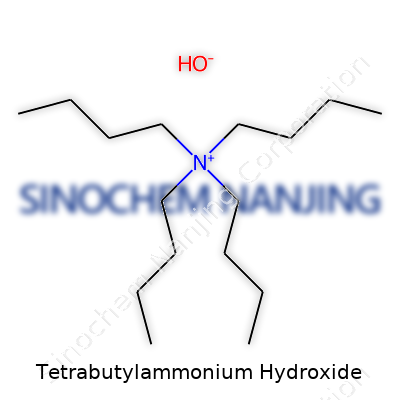
| Names | |
| Preferred IUPAC name | Tetrabutylazanium hydroxide |
| Other names |
TBAOH Tetrabutylammonium hydrate Tetrabutylammonium hydroxide solution |
| Pronunciation | /ˌtɛtrə.bjuːˌtaɪl.əˈmoʊniəm haɪˈdrɒksaɪd/ |
| Identifiers | |
| CAS Number | 2052-49-5 |
| Beilstein Reference | '3562970' |
| ChEBI | CHEBI:133562 |
| ChEMBL | CHEMBL1201591 |
| ChemSpider | 21521 |
| DrugBank | DB11100 |
| ECHA InfoCard | 03e38413-4c64-4f37-aeb3-9b7b53e3b931 |
| EC Number | 215-900-8 |
| Gmelin Reference | 5638 |
| KEGG | C14013 |
| MeSH | D017928 |
| PubChem CID | 8650 |
| RTECS number | WN2975000 |
| UNII | 49TP576K1A |
| UN number | UN2810 |
| CompTox Dashboard (EPA) | HHB919263S |
| Properties | |
| Chemical formula | C16H37NO |
| Molar mass | 242.46 g/mol |
| Appearance | Colorless to pale yellow liquid |
| Odor | Amine-like |
| Density | 0.978 g/mL at 25 °C |
| Solubility in water | Very soluble |
| log P | -0.3 |
| Vapor pressure | 0.6 hPa (20 °C) |
| Acidity (pKa) | 13.2 |
| Basicity (pKb) | pKb ≈ 0.2 |
| Refractive index (nD) | 1.409 |
| Viscosity | 80 cP (20°C) |
| Dipole moment | 3.71 D |
| Thermochemistry | |
| Std molar entropy (S⦵298) | 406.6 J·mol⁻¹·K⁻¹ |
| Hazards | |
| Main hazards | Corrosive. Causes severe skin burns and eye damage. Harmful if swallowed. Toxic to aquatic life. |
| GHS labelling | GHS05, GHS06, GHS08 |
| Pictograms | GHS05,GHS06 |
| Signal word | Danger |
| Hazard statements | Harmful if swallowed. Causes severe skin burns and eye damage. Causes serious eye damage. |
| Precautionary statements | P260, P264, P280, P301+P330+P331, P303+P361+P353, P305+P351+P338, P310, P405, P501 |
| NFPA 704 (fire diamond) | NFPA 704: 3-2-1 |
| Autoignition temperature | 170°C |
| Lethal dose or concentration | LD50 Oral - rat - 245 mg/kg |
| LD50 (median dose) | LD50 (median dose): Oral, rat: 40 mg/kg |
| NIOSH | SN4690000 |
| PEL (Permissible) | Not established |
| REL (Recommended) | 10 mg/m³ |
| IDLH (Immediate danger) | Unknown |
| Related compounds | |
| Related compounds |
Tetraethylammonium hydroxide Tetramethylammonium hydroxide Tetrabutylammonium bromide Tetrabutylammonium chloride Tetrabutylammonium fluoride |



