Tert-Butyl Mercaptan: History, Chemistry, Use, and What Comes Next
Historical Development
Tert-Butyl Mercaptan didn’t just pop up in the chemical world yesterday. Early records from the 1930s mention this sulfur-containing compound, and its offensive odor caught the attention of researchers trying to improve natural gas safety. Before its use, leaking gas sometimes resulted in tragedy, people couldn’t smell it, and accidents followed. Tert-Butyl Mercaptan, with its unmistakable rotten egg smell, changed the game. The addition of mercaptans or thiols—terms thrown around interchangeably—signals a mature approach to public safety. Turning a noxious smell into a lifesaving feature is one of those rare wins for both chemists and the general public.
Product Overview
This compound shows up as a clear liquid, easy to spot by odor but not by sight. Skilled workers in chemical plants know it arrives packed for safety, bottles sealed tight, and only specialists handle it on the shop floor. Companies stock it specifically because of that smell, relying on it for gas leak detection. Besides utilities, the chemical industry uses it during the synthesis of other compounds. The product may appear under various labels, most often “TBM” for short.
Physical & Chemical Properties
At room temperature, Tert-Butyl Mercaptan keeps a low boiling point around 64°C, and its vapor pressure sits high enough that spills become everyone’s problem fast. The density lands at about 0.84 g/cm³, which means it hangs lighter than water. The infamous pungent smell warns workers immediately—no one ignores it. In terms of solubility, it mixes well with organic solvents but avoids water. As a thiol, this compound brings both reactivity and challenges for safe handling. Sulfur’s presence allows it to bind strongly in certain reactions, but it also invites hazards that can’t be ignored.
Technical Specifications & Labeling
Labels on containers read more like warnings than invitations: flammable, toxic, handle with care. Regulations demand clear hazard statements and pictograms as set by the Globally Harmonized System (GHS). Industry standards call for concentrations above 99% for most uses, and gas pipeline operators require strict purity levels. Documentation includes UN numbers and transport advice. Technicians consult safety data sheets daily to stay up-to-date with risk management. Storage requires ventilation, fire-proof cabinets, and access restrictions for unauthorized personnel.
Preparation Method
Making Tert-Butyl Mercaptan involves t-butanol reacting with hydrogen sulfide gas under acidic conditions in batch reactors. Many facilities maintain closed systems to control fumes and protect workers. I’ve seen how investments in modern reactors—equipped with scrubbers and detectors—reduce emissions and prevent on-site exposure. Over the years, process improvements have centered on efficiency and minimizing waste, cutting down by-products that would complicate purification. Upstream, manufacturers have learned to source less hazardous feedstocks, responding to stricter environmental standards.
Chemical Reactions & Modifications
This molecule reacts aggressively with strong oxidizers, catching fire under the right conditions. In labs, chemists use it as a starting point to add thiol groups to more complex targets. Alkylation, oxidation, and even polymerization experiments use tert-butyl mercaptan to create specialty compounds. Industry scientists recognize the tricky balance: enough reactivity to be useful, not so much that storage and transport become nightmares. Recent literature includes studies on catalytic conversions aimed at greener production routes and lower emissions.
Synonyms & Product Names
The language around this chemical can trip up beginners. Tert-Butyl Mercaptan and tertiary butyl mercaptan refer to the same stuff; labeling can also reference “TBM,” “2-Methyl-2-propanethiol,” or “t-butyl mercaptan.” Some safety sheets even list “tert-Butyl thiol.” Industry practitioners stay alert to product names, especially when ordering internationally, since miscommunication can slow down deliveries or create compliance issues.
Safety & Operational Standards
Burns, nausea, respiratory effects—these are the accidents professionals run from. Regulations such as OSHA in the U.S. and REACH in Europe put teeth behind protocols. Strict limits on workplace exposure keep workers safe. Anyone nearby wears gloves, goggles, and chemical-resistant clothing, relying on air monitors to warn about leaks. Facilities require regular emergency drills in the event of spills or fires. In daily work, simple habits, like double-checking seals and washing up, carry big stakes. Safety isn’t theory—it’s about getting home healthy every day.
Application Area
Natural gas odorization takes the lion’s share—it’s no exaggeration to say TBM helps millions of homes stay safe. Utilities introduce it into pipelines at just a few parts per million; noses do the rest. Beyond pipelines, the compound crops up in specialized synthesis work, especially in pharmaceutical research. Certain pesticides and polymer precursors also tie back to this mercaptan. In environmental labs, it’s used to simulate sulfur emergencies for response training, providing real-life conditions in controlled environments.
Research & Development
Research teams at chemical companies now focus on two big goals: greener production and less toxic alternatives. Investments in catalytic methods with lower-carbon footprints have shown promise, but scaling these breakthroughs from the lab to the factory takes grit and time. The push for alternatives has spurred toolkits for odorizing gas with less hazardous molecules, though nothing beats the noses’ sensitivity to mercaptans yet. Universities continue to investigate new reactions and broader applications, leveraging TBM as both a reagent and a benchmark for instruments detecting volatile sulfur compounds.
Toxicity Research
Extensive animal studies and real-world incidents paint a mixed picture on toxicity. Acute exposure causes headaches, dizziness, and at high enough concentrations, unconsciousness. Chronic studies on workers in odorizing plants haven’t found widespread long-term harm, but short-term symptoms still draw attention. Regulatory bodies worldwide monitor new data to set safe exposure standards. Researchers now look into genetic and developmental effects, keen to catch any surprise risks before wider problems arise. Toxicology databases record symptom clusters to help doctors and emergency responders identify and treat cases effectively.
Future Prospects
Future advances may flow from two directions: better detection and safer alternatives. Technology now makes it easier to spot leaks using portable sensors tuned to TBM’s unique signature, giving first responders faster warnings. On the manufacturing side, companies work to refine production for fewer by-products and lower emissions, pinched by both environmental policy and public opinion. Some development teams now hunt for biodegradable analogs without the same sharp odor, hoping to reduce community complaints while preserving performance. As regulations grow tighter and the world demands cleaner, safer chemicals, Tert-Butyl Mercaptan stands as both a proven solution and a challenge—asking for scientists’ best ideas in the next decade.
What is tert-butyl mercaptan used for?
A Smelly Savior with a Surprisingly Noble Job
You probably haven’t given much thought to tert-butyl mercaptan, but this colorless liquid makes a huge difference every time you cook dinner or fire up the heater. Tert-butyl mercaptan meets most people by its smell, which most can’t forget. Rotten eggs, skunk, or what you might imagine old gym socks to be like — that’s tert-butyl mercaptan’s calling card, and people owe a lot to it.
The Nose Knows: Why We Add It to Gas
Natural gas and propane show up at your house without any color or noticeable scent. If a leak starts in your basement or under the street, you rarely see it coming. What stops tragedies and saves lives? Tert-butyl mercaptan. Gas suppliers mix it into fuel so anyone who walks through the door can sniff out trouble before it turns into disaster.
The numbers show this isn’t just a polite offering. According to the National Fire Protection Association, odorized gas has helped cut down major explosions and fires. Emergency calls spike every winter with one thing in common: a sharp nose picks up that sulfur smell and gets professionals on scene before a spark can fly.
Handling the Hazards
Adding a sulfur compound to a fuel might not sound like the best idea off the bat, but it turns risks into obvious warnings. Most people tolerate a stinky tap or heater if it means the risk drops sharply. Fewer folks end up in the emergency room, and fewer homes face major damage. Workers in the industry, those fixing pipelines or working at gas storage sites, learn to respect that scent immediately.
Beyond the Utility Room
Tert-butyl mercaptan also shows up in laboratories, sometimes in the pharmaceutical business, or for chemical research. The massive demand comes from companies keeping homes, schools, and offices safe by making sure leaks stand out. Rarely does someone reach for a bottle of this in daily life, but nearly every home benefits from its presence.
Smarts and Solutions
Proper training and clear communication give this chemical its power. Kids in school fire drills learn to say, "I smell gas," and leave the scene. Utility companies need to keep their staff familiar with detecting leaks and acting fast, and public service campaigns remind people to trust their nose instead of ignoring a "weird smell."
There are better detection systems and sensors out there, but none beat the speed or reach of a well-trained nose. Investing in advanced sensors, giving out clear instructions, and testing gas lines regularly helps build on the basic safety that odorization began. Nothing replaces the warning a strong scent delivers, but adding layers of technology and education brings even more protection.
Tert-butyl mercaptan doesn’t draw headlines or win awards. Still, the chance to stop loss and save lives rests on a simple story — a bad smell with a good goal: safety in every home and neighborhood.
Is tert-butyl mercaptan hazardous or toxic?
Up-Close With a Powerful Odor
Anyone who’s smelled gas from a stove knows how sharp and unforgettable that stench can be. That’s not the natural gas itself—that’s the handiwork of chemicals like tert-butyl mercaptan. It’s one of the go-to additives for giving invisible, odorless gas a warning scent, so you know right away if there’s a leak.
The way this chemical fills a room is hard to forget, even with just a few drops. It’s powerful stuff, a sulfur compound that hits your nose and refuses to back down. Its presence means safety for millions. Without pungent compounds like this, countless gas leaks would slip by unnoticed, leading to danger in homes and businesses.
Is It Dangerous or Just Annoying?
Most of the time, the real risk in a household leak comes from the gas, not tert-butyl mercaptan itself. At levels used for gas odorizing, it’s working as a lifesaver. Still, the idea of any chemical, especially one with a name this long, usually sets off alarm bells.
My own experience in a small-town fire department showed just how cautious people get once they catch even a whiff of this stuff. One call brought out half the block because somebody thought their neighbor’s kitchen was about to blow. The truth: just a few lost drops of mercaptan were enough to start a panic.
Just because it smells strong doesn’t mean it’s deadly in small amounts. The science backs that up. According to the CDC and EPA, exposures at levels used to odorize gas don’t pose a big threat to health. Skin contact and inhalation in big doses bring headaches, nausea, or irritation, but folks would need a much higher concentration than what’s ever used in residential gas.
Where Are the Real Hazards?
Everything changes once you step into the world of large storage tanks and pipelines. At these sites, where workers handle bulk products or pure chemicals, the stakes look very different. Prolonged breathing of high levels causes dizziness, trouble breathing, and—at worst—central nervous system depression. Eyes and lungs can react in minutes. Add in how flammable tert-butyl mercaptan is, and it’s easy to see why professionals use heavy precautions: full-face respirators, sealed gloves, tight ventilation.
Fires at chemical plants have shown how fast tert-butyl mercaptan compounds can escalate into real danger. Once, a neighboring city to mine had an evacuation because a container leaked during transport. Over a dozen people wound up in the ER with breathing trouble. For industrial users, it becomes clear: familiarity never replaces careful risk management.
Taming the Beast: Keeping Safe
Better handling comes from knowing exactly what gets stored and where. Good labeling, tight-fitting containers, and strict leak checks mean fewer surprise exposures. In places where loads are big enough to matter, smart training and solid gear really do keep people out of harm’s way. HVAC techs, utility workers, and lab staff need regular safety drills. Households depend on local gas suppliers taking these rules just as seriously—and most do, thanks to stiff regulations and a long history of learning from near-misses.
Everyone benefits from more awareness. It helps to know that strong smells coming from a gas line spell time to leave and call for help. Blaming the reek on the chemical feels right, but in truth, that stink might just have saved a life.
How should tert-butyl mercaptan be stored and handled?
The Reality Behind Tert-butyl Mercaptan
Tert-butyl mercaptan gives natural gas that telltale rotten egg smell, which saves lives by making gas leaks instantly obvious. It’s strong stuff and doesn't play around—get it on your skin or breathe it in, and you’re in for some trouble. In labs and industrial settings, I’ve seen just how touchy this chemical can get, especially in cramped storage spaces or hot summers. A year ago, I watched a new tech rush through a transfer without full gear, only to end up spending the afternoon in the safety shower. The fumes lingered in the area, forcing an evacuation of half the floor. That day drove home just how crucial discipline really is around chemicals like this.
Keeping Tert-butyl Mercaptan Contained
Storage for tert-butyl mercaptan goes far beyond slapping a barrel in a cool room. Leak-proof steel drums with airtight seals work best. Any valve or fitting—no matter how tight—faces relentless attack from fumes over time. Containment trays under each drum catch spills fast. Even the best-planned warehouse isn't immune to mistakes, so catch basins act as insurance. In practice, I’ve seen a cheap plastic valve fail, releasing a cloud that triggered everyone’s gas detectors. The fix was simple: only use stainless or compatible alloys. A few bad choices in materials can create a world of trouble, including fire risks.
Fire risk hangs over every discussion about this compound. Tert-butyl mercaptan ignites easily at room temperature, so sparks, open flames, or even static electricity spell danger. Watching a coworker use a cell phone too close to a venting line remains one of the worst professional scares I’ve had. Strong ventilation and explosion-proof electrical equipment really can mean the difference between routine operation and a full-blown emergency. Keeping the area cool, away from sunlight, and out of reach from the public protects everyone—including emergency responders who might not realize what they're about to walk into.
Personal Protective Gear Isn’t a Choice
Proper gloves, face shields, and chemical-resistant boots need to become habits. Too many people trust their sense of smell to warn them, but after enough exposure, your nose tunes out the warning. Respirators with cartridges rated for organic vapors stop the headaches and dizziness. Training all staff—especially newcomers—prevents experienced workers from getting blind-sided by shortcuts. There’s no substitute for regular emergency drills. I never forgot the absolute chaos when one summer storm knocked out a ventilation fan. Masks and practice made that situation more manageable than it could have been.
Better Systems Mean Fewer Incidents
Chemical manufacturers and users keep detailed logs for each container. With each inspection, they’re checking for leaks, corrosion, and even signs of tampering. Real transparency matters. Audits by third parties keep everyone honest, and public reporting helps the community know what’s stored in their neighborhood. Automated sensors and alarms—tied straight to building controls—shut things down the second gas escapes, buying time before serious harm strikes. Good practices and strong regulations work together to keep accidents rare, even as use of these additives rises.
Handling tert-butyl mercaptan calls for respect, repeated training, and solid investment in safety. That’s more than a policy—it’s a lesson learned the hard way by anyone who’s ever taken a shortcut. The stuff works wonders, but only under serious controls.
What are the physical properties of tert-butyl mercaptan?
What Tert-Butyl Mercaptan Looks and Smells Like
Tert-butyl mercaptan tends to stand out, not just because of its chemical uses, but for its unforgettable odor—a strong, skunky scent that hits hard even at very low concentrations. Even a whiff at the parts-per-billion level gets your attention. In my experience in the lab, working around this compound means double-checking ventilation, as the smell can cling to clothes and linger in the air much longer than anyone would ever want.
Basic Physical Characteristics
This compound comes as a clear, colorless to sometimes faintly yellow liquid at room temperature. Tert-butyl mercaptan has a boiling point around 64°C, which is much lower than water. That means open containers quickly release vapors. If you’ve ever handled small-vessel distillations, you see firsthand why it’s critical to tightly seal containers.
A density of about 0.84 grams per cubic centimeter puts it a bit lighter than water. Pouring a bit into another liquid, it floats on top and forms distinct layers—easy enough for a chemist to spot separation aligned with the density difference. That also makes it easier to recover from spills using certain absorbents, but any spill is a smelly problem.
Solubility and Flammability
Tert-butyl mercaptan does not mix well with water, dissolving only a small amount; it’s not hard to wash off surfaces with lots of soap and water, but lingering odors persist unless careful cleaning is done. In contrast, it dissolves pretty well in most organic solvents, especially those used in the oil and gas industry. This affinity with organics turns out to be important for both storage and cleanup strategies.
The compound is flammable and volatile. It doesn’t take high heat for the vapors to catch fire—think sparks near open containers and you’re asking for a hazardous situation. Lab safety data points to keeping tert-butyl mercaptan away from open flames or even static electricity. It’s not just theoretical: major storage facilities stamp all their barrels with bold flammability markers, and for good reason. Vapors can create explosive mixtures with air at concentrations from around 1.5% up to 9.7%, so even small leaks can fill a closed room with enough vapor to cause trouble.
Why Physical Properties Matter in the Real World
Folks may ask why these details should matter to anyone outside of the chemical industry. Simple: tert-butyl mercaptan’s volatility, odor, and flammability drive strict regulations around transport and storage. Take the natural gas industry as an example. Utility companies use this chemical to “odorize” natural gas so leaks become quickly noticeable—saving lives through early detection. In practice, that means engineers must handle, store, and inject the mercaptan under tightly controlled conditions: tanks sealed against evaporation, workers in full protective gear, and constant monitoring for leaks. Even home-use liquefied petroleum gas can carry a whiff of this mercaptan, serving as an invisible safety net.
For those using tert-butyl mercaptan in research and industry, understanding its stubborn odor, easy flammability, solubility, and low boiling point means designing workflows for safety, quick cleanup, and effective storage. Every missed detail can mean more than a ruined experiment—it risks real health and safety. It’s a reminder of why respecting physical properties becomes more than an academic exercise. No one forgets their first spill—nor the scramble that follows to contain it.
Facing the Challenges
Lab teams and facility managers have moved toward better air handling, sealed transfer systems, and real-time air monitoring. Personal experience has shown me how small investments in better ventilation and spill response training pay off in efficiency and peace of mind. Developing robust safety cultures—where anyone feels able to report a problem—cuts down on accidents. Builders working with bulk mercaptan make sure sensors trigger fans and alarms long before humans sense a leak. Ultimately, using careful design and practical knowledge keeps this stubbornly potent chemical safe in use, from industrial gas pipelines all the way down to chemistry classrooms.
How do you detect a leak of tert-butyl mercaptan?
A Smell That Won’t Let You Ignore It
Tert-butyl mercaptan shows up in people’s lives in a strange way. This chemical gives natural gas its familiar rotten egg smell. Before working my first summer job in a warehouse near gas lines, I barely thought about it. After one afternoon of catching a whiff that hit like a punch, I realized just how unmistakable its warning could be. Even in tiny amounts, that smell gets your attention, which is exactly what safety experts want. Human noses can sniff out tert-butyl mercaptan at concentrations as low as about 0.33 parts per billion—an impressive superpower we take for granted.
Human Senses Are Good—But They’re Not Enough
Not everyone can trust their nose. Science has shown that up to 10% of people lose the ability to smell certain odors, especially after repeated exposure to things like mercaptans. The sense of smell also fades with age and sometimes with a head cold. I remember a day our maintenance lead, Frank, couldn’t smell a thing thanks to a nasty sinus infection. Nobody noticed a faint leak until a gas sensor started screeching. Relying on our own senses puts the most vulnerable folks—children, older adults, those with reduced olfactory senses—at risk. In workplaces and homes, that's a gap you don’t want to ignore.
Electronic Detectors: The Real Backstop
Metal oxide semiconductor sensors pick up gas traces that noses can miss. These detectors look for shifts in electrical resistance when exposed to target gases like tert-butyl mercaptan. Some models also carry catalytic bead sensors. Places following OSHA guidelines rely on these monitors as part of routine safety checks. After working with both types, I’ve seen semiconductor models give earlier alerts, which buys precious time. And in a gas utility, that time can mean the difference between a quick fix and a major incident.
Testing and Maintenance: Not Just for Show
Every year, lives get put at risk by detectors with dead batteries, corroded parts, or poor placement. More houses put carbon monoxide detectors on the wall than gas sniffers, likely because people underestimate other risks. My neighbor’s unit chirped through the night once—turned out the battery died months ago. So, it’s not enough to just install a detector; putting it near likely leak sources, such as meters and valves, and then testing it regularly, keeps everyone safer. Building managers rarely get thanked for their attention to detail, but their work behind the scenes saves lives.
Building Awareness and Accountability
The industry didn’t create pungent odorants like tert-butyl mercaptan by accident. Leaks can come from loose joints, aging pipes, or even DIY home repairs. City codes require licensed plumbers for a reason. Do-it-yourself spirit fades fast when faced with chemicals that can ignite with a spark or damage lungs with a whiff. The best practices involve teaching residents and workers what those warning smells mean, using sensors that don’t depend on memory or perfect health, and making sure the people responsible for safety checks truly follow through. The annoyance of a false alarm beats any story involving fire trucks and evacuations.
Solutions Worth Repeating
Even humble routines—checking alarms, listening to complaints about odors, and calling a pro if something’s wrong—offer real protection. Modern detectors cost less than a tank of gas and provide insurance no nose can match. For organizations, testing programs and regular training cut through complacency. On a personal level, taking that smell seriously, not brushing it aside, and getting professional help whenever there’s doubt, remain the best ways to keep disaster on the other side of the door.
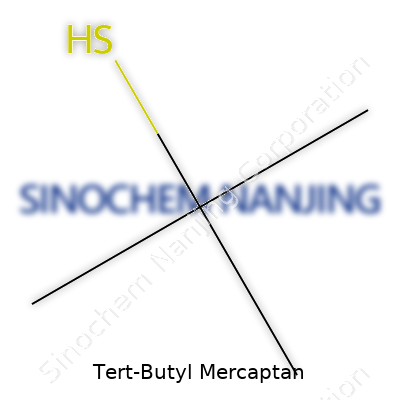
| Names | |
| Preferred IUPAC name | 2-Methyl-2-propanethiol |
| Other names |
TBM tert-Butylthiol 2-Methyl-2-propanethiol t-Butyl mercaptan t-Butylthiol |
| Pronunciation | /ˌtɜːrtˈbjuːtɪl məˈkæpˌtæn/ |
| Identifiers | |
| CAS Number | 75-66-1 |
| Beilstein Reference | 1644966 |
| ChEBI | CHEBI:48145 |
| ChEMBL | CHEMBL168951 |
| ChemSpider | 50588 |
| DrugBank | DB01855 |
| ECHA InfoCard | 100.010.389 |
| EC Number | 200-827-9 |
| Gmelin Reference | 82108 |
| KEGG | C02851 |
| MeSH | D010692 |
| PubChem CID | 6360 |
| RTECS number | YT3225000 |
| UNII | N5Y7G46G2S |
| UN number | UN2347 |
| CompTox Dashboard (EPA) | 'DTXSID9020224' |
| Properties | |
| Chemical formula | C4H10S |
| Molar mass | 90.19 g/mol |
| Appearance | Colorless liquid with a strong, unpleasant odor |
| Odor | Skunk-like |
| Density | 0.84 g/cm³ |
| Solubility in water | slightly soluble |
| log P | 1.98 |
| Vapor pressure | 485 mmHg (20°C) |
| Acidity (pKa) | 10.6 |
| Basicity (pKb) | @25°C: 3.83 |
| Magnetic susceptibility (χ) | -54.5e-6 cm³/mol |
| Refractive index (nD) | 1.385 |
| Viscosity | 0.61 mPa·s (25 °C) |
| Dipole moment | 1.66 D |
| Thermochemistry | |
| Std molar entropy (S⦵298) | 322.7 J·mol⁻¹·K⁻¹ |
| Std enthalpy of formation (ΔfH⦵298) | -183.7 kJ/mol |
| Std enthalpy of combustion (ΔcH⦵298) | -3176 kJ/mol |
| Hazards | |
| GHS labelling | GHS02, GHS06, GHS08, GHS09 |
| Pictograms | GHS02,GHS06,GHS07 |
| Signal word | Danger |
| Hazard statements | H225, H301, H311, H331, H314, H400 |
| Precautionary statements | P210, P233, P261, P271, P273, P280, P301+P310, P303+P361+P353, P304+P340, P305+P351+P338, P312, P370+P378, P403+P235, P501 |
| NFPA 704 (fire diamond) | 2-4-0-W |
| Flash point | -31 °C (-24 °F) (Closed cup) |
| Autoignition temperature | 410 °C |
| Explosive limits | Explosive limits: 1.9% to 8.5% |
| Lethal dose or concentration | LD50 oral rat 2.6 g/kg |
| LD50 (median dose) | LD50 (median dose): Oral rat LD50: 2,600 mg/kg |
| NIOSH | YU1400000 |
| PEL (Permissible) | PEL (Permissible Exposure Limit) of Tert-Butyl Mercaptan: **100 ppm** |
| REL (Recommended) | 10 ppm |
| IDLH (Immediate danger) | IDLH: 200 ppm |
| Related compounds | |
| Related compounds |
Butanethiol Methanethiol Ethanethiol 2-Methyl-2-propanethiol disulfide Tert-Butyl alcohol Tert-Butyl chloride |



