Tert-Butyl Chloride: Chemistry, Context, and Concerns
Charting the Past: How Tert-Butyl Chloride Emerged
Tert-butyl chloride stands on the shoulders of organic chemistry’s breakthrough years at the close of the 19th century, turning up in the scope of research into alkyl halides and their versatile roles in the laboratory and industry. By the early 1900s, tert-butyl chloride had caught the attention of chemists, representing a practical case of tertiary alkyl halides for understanding substitution and elimination reactions. In these classic studies, it offered an ideal test bed to probe reaction rates and the fundamental workings of nucleophilic substitution—the backbone of much organic synthesis. These early days did more than fill chemistry textbooks; they sparked technical progress for the entire class of organochlorides, as practical uses in pharmaceuticals and chemicals unfolded from these laboratory discoveries.
Getting to Know Tert-Butyl Chloride: What It Looks Like and How It Acts
Pick up a bottle from a chemical storeroom, and tert-butyl chloride usually reveals itself as a colorless, mobile liquid with a faintly sweet, sharp odor. Its chemical formula is C4H9Cl, a small molecule, easy to handle under regular lab conditions, but always asking for respect due to its volatility and sharp vapors. Its low boiling point, close to 51°C, means watchfulness with open containers—too much heat, and the chemical quickly fills the air. Though its water solubility stays low, it stirs readily into most organic solvents, which fits its role in organic syntheses. Unlike primary or secondary alkyl chlorides, tert-butyl chloride carries a bulky, branched structure, explaining both its distinctive chemical reactivity and its preferred uses.
Numbers That Matter: Technical Details and Safe Handling
Chemists learn early to pay attention to safety labels, and tert-butyl chloride warrants respect. It falls under flammable liquids due to its vapor pressure, and inhaling the vapors shouldn’t be treated lightly. Tert-butyl chloride often arrives in glass or special plastic containers, sealed tightly, and clearly labeled with hazard warnings drawn from GHS and older systems. The liquid catches fire easily, and exposure through skin or inhalation can cause irritation and sometimes more severe symptoms. Reliable data point to time-weighted exposure limits for laboratory environments, and it takes little exposure to sense the need for good ventilation and gloves. Practical experience says always use it in a fume hood and double-check containers for cracks; mistakes linger in memory, especially when eye or respiratory irritation takes days to fade.
How Chemists Make It: Production and Laboratory Preparation
Industrial and laboratory synthesis of tert-butyl chloride settles itself into classic organic chemistry territory. The most common preparation starts with tert-butyl alcohol, combining it under acidic conditions—usually hydrochloric acid—often accelerated by a strong dehydrating acid such as sulfuric acid. The process is straightforward: acid catalyzes the dehydration of the alcohol, forming a carbocation, and then chloride ions swoop in to cap the carbon with a chlorine atom. It’s all about keeping things cold at the right step to corral the volatile product and control the exothermic kick that these reactions give off. Scale determines whether glassware or bigger steel reactors form the stage, but the essentials remain: manage water, vent vapors, and keep a close eye on temperature and pressure charts. Past mishaps in teaching labs underscore just how easily a careless moment can fill the air with irritating fumes or even spark a minor fire.
Reactions and Chemical Tweaks: Where Tert-Butyl Chloride Leads
Because of its tertiary carbon, tert-butyl chloride reacts through classic SN1 mechanisms in substitution reactions. The molecule’s bulk prefers this two-step pathway—lose the chloride to produce a carbocation, then a nucleophile steps in. This tendency gives tert-butyl chloride a reputation as a benchmark substance for studying reaction kinetics and mechanisms; generations of chemistry students use it for just this purpose. In the laboratory, tert-butyl chloride turns up as a handy alkylating agent, especially where reactivity and regioselectivity call for a strong push. It can yield ethers and esters after further chemical steps, and under heat and base, it heads toward isobutylene, which proves useful for polymer chemistries. These chemical derivations offer openings for innovation in agrochemicals and complex molecule synthesis, pushing the envelope in how chemists build new structures from simple precursors.
The Many Names and Faces of Tert-Butyl Chloride
Dig through chemical catalogs or research papers, and tert-butyl chloride appears under several guises—2-chloro-2-methylpropane, trimethylmethyl chloride, tert-C4H9Cl. Each synonym speaks to a slightly different naming system but flags the same molecule. Across translations and brandings, the distinct branched carbon skeleton and chlorine atom always define the molecule’s identity.
Protecting People and the Environment: Safety, Regulation, and Best Practices
Tert-butyl chloride doesn’t cut corners when it comes to safety needs. Industrially, strict controls on storage mean upright containers, cool and dry spaces, and constant checks for leaks or pressure changes. Labs that brush off good ventilation and personal protective equipment face not just regulatory censure but real physical discomfort and workplace accidents. Regulatory bodies, such as OSHA in the United States, set clear exposure limits and demand safety data sheets as part of routine handling. Training programs make room for spill response, first aid for chemical exposures, and knowledge about emergency procedures. Environmental perspectives push for proper disposal through licensed chemical waste facilities. The lessons here last a lifetime: shortcuts with chemicals, even familiar ones, stack up risks for workers and neighbors alike, and routine respect for protocols pays off in smooth operations and community safety.
What Tert-Butyl Chloride Does: Real-World Applications
Tert-butyl chloride builds its value through its contribution to both practical chemistry and industry. In organic synthesis, it fills a niche as a precursor to other tert-butyl derivatives, making it essential for producing certain pharmaceuticals, polymers, and performance chemicals. The tert-butyl group attached to a molecule can transform its behavior, lending new solubility or shielding sensitive sites during further chemical reactions. Polymers made with isobutylene derived from tert-butyl chloride show up in adhesives and sealants that must last through repeated stress. Some oxidation reactions harness tert-butyl chloride in making flavor or fragrance chemicals, always demanding reliable, high-purity starting materials to avoid byproduct headaches. Chemists often reach for tert-butyl chloride in teaching labs, illustrating the fundamentals of carbocation chemistry. As these applications give way to newer materials and methods, the molecule endures as a staple, thanks to its efficiency and predictable reactivity.
Where Chemistry Is Going: Research and Innovation Paths
Even with long-standing applications, tert-butyl chloride continues to pull researchers’ attention toward questions about reaction mechanisms and method improvements. Investigations into greener synthesis methods try to swap out harsh acids or reduce byproducts that need complex waste management. Nucleophilic substitution reactions involving tert-butyl chloride still inspire kinetic studies, often using modern analytic techniques, such as NMR and mass spectrometry, to probe elusive intermediates that older generations could only infer. Theoretical chemists model tert-butyl chloride’s reactions to understand solvation effects and temperature dependencies, striving to make classic reactions safer and more sustainable. Innovations in catalysis seek to build on the molecule’s reactivity, hoping to design selectivity that goes beyond anything found in the bench-top syntheses of the past. While some research looks outward, trying to switch to renewable feedstocks, others focus on occupational health, working to further curtail accidental releases and exposure in manufacturing environments.
The Story on Toxicity and Human Health
Studies on tert-butyl chloride’s toxicity draw from both animal testing and occupational health follow-ups—none paint the molecule as harmless. Acute exposure leaves a clear picture: irritation of eyes, skin, and especially lungs if vapors build up. Repeated contact can sensitize the skin and lead to dermatitis, and inhalation at significant levels sometimes brings on central nervous system symptoms. Longer-term studies wrestle with sorting out chronic effects, with some animal assays suggesting liver and kidney impacts at high doses. In those workplaces where tert-butyl chloride is produced or used in bulk, regular health monitoring and air quality controls act as frontline defenses. Industry best practices, not just regulations, urge continuous improvements in ventilation, closed-system handling, and spill response, recognizing that health and safety culture depends on more than rules—it needs shared vigilance and personal responsibility.
Looking Ahead: Future Prospects and Open Questions
From where chemistry stands now, tert-butyl chloride faces both ongoing demand and rising scrutiny. Regulatory frameworks have steadily tightened, aiming to shrink emissions and lower occupational risks. As pressure grows to design chemicals and processes for sustainability, innovators ask how to replace legacy chlorinated intermediates or redesign reaction routes to leave fewer persistent residues. Advances in catalysis and green chemistry might someday dim the role of tert-butyl chloride in some syntheses, yet its place in teaching basic organic reactivity or in crafting tert-butyl-protected intermediates currently remains solid. The next decade will likely see safer procedures, new uses as pharmaceutical and electronics industries pursue better performance molecules, and perhaps ways to detoxify waste streams on-site, guided by stricter standards on chemical hazards and environmental loads.
What is tert-butyl chloride used for?
A Closer Look at Tert-Butyl Chloride’s Role
Most folks won’t ever see a bottle of tert-butyl chloride sitting on a store shelf. Still, this chemical gets mixed into all sorts of things we cross paths with every day. You find it in the story of modern plastics, in the hum of lab experiments, and even in the quiet work of purification behind the scenes. Saying tert-butyl chloride belongs only in a chemist’s lab misses the mark. Its impact reaches far beyond glassware and white coats.
The Driving Force Behind Plastic and Solvents
Anyone who’s ever held a piece of clear, tough plastic should tip their hat to compounds like tert-butyl chloride. Manufacturers use it to make other chemicals, known as intermediates, that build up bigger molecules—essential for products like polycarbonates and rubbery elastomers. These kinds of plastics pop up in construction gear, car interiors, safety equipment, and countless other places. With global plastics production topping 400 million metric tons a year according to the United Nations, the machinery behind the molecules deserves a closer look. Tert-butyl chloride helps drive that chain of reactions with efficiency and speed.
In the Heart of the Laboratory
For students starting out in organic chemistry, tert-butyl chloride often shows up in the classic “SN1” reaction experiment. I remember standing in a chilly lab, swirling two clear liquids together, watching a cloud of white form—evidence of a new molecule. These classroom moments matter. They teach future researchers about the fundamentals of how atoms shuffle and connect. Understanding reactions like these forms the backbone of new medical treatments and cleaner technologies for tomorrow.
Pharmaceuticals and Perfumes Rely On It
Step into the world of pharmaceuticals, and you’ll spot tert-butyl chloride again. Manufacturers use it to modify molecules, adding groups that change how drugs act in the body. That kind of precision matters if a painkiller needs to last longer or a cancer drug needs to target certain cells. Its cousin role in fragrances comes up less often in conversation. Some scents carry a punch thanks to compounds made with tert-butyl chloride, giving perfumes staying power and the right punchy notes.
Health and Safety: The Other Side of the Equation
I’ve seen how quickly people in the chemical industry stress the rules around safety when handling tert-butyl chloride. Breathing in the vapors or letting it touch the skin spells trouble—irritation, headaches, or worse. The Centers for Disease Control and Prevention lists it as a potential irritant to eyes and skin. Folks working with it use gloves, face shields, and solid ventilation. Chemical plants invest in strong safeguards and strict training to prevent escapes or spills. The lesson stands: innovation should always run alongside health and safety, especially when making the materials that shape our world.
Cleaner Solutions for Industry
Some companies have started looking at new ways to cut down on chemical dangers while keeping up with market needs. Green chemistry methods try to swap out hazardous compounds for safer ones or recycle what’s left after reactions. Research keeps pushing, hoping to find paths that protect both workers and the wider environment—with less waste, fewer emissions, and tighter control of risks. Supporting these efforts means pressing for updated regulations, investing in research, and educating everyone involved from top to bottom.
What are the safety precautions for handling tert-butyl chloride?
Why Respecting Chemicals Matters
Many people think only chemical engineers or lab scientists deal with hazardous materials. In reality, tert-butyl chloride shows up far outside textbook labs. Cleaning products and basic research often use it, and too many accidents come from forgetting just how unforgiving it can be. That trouble starts with recognizing tert-butyl chloride’s risks: it’s flammable, volatile, and gives off toxic fumes, especially when heated. Once you understand that, you’ll never reach for a chemical bottle without triple-checking the label or asking if you’re missing steps.
The Case for Protective Gear
Splashing chemicals brings to mind heavy lab coats and science fiction goggles, but in real life, small spills cause real harm. Most folks in my old lab learned this the hard way — even a drop on the skin left redness and a nasty burning sensation. Standard nitrile gloves, goggles, and a fitted lab coat provided the first defense. Some skipped the face shield or thought thin gloves were enough, often regretting that shortcut after a single scare. Chlorinated chemicals soak right through the skin, and breathing even low levels of vapor can burn your nose and throat. No shortcut ever justified the pain or cost of an emergency room visit. If you’re working with tert-butyl chloride, the basics—lab coat, goggles, gloves, proper shoes—aren’t negotiable.
Ventilation is a Saviour
Opening a window doesn’t cut it if a chemical leaks or vaporizes. Years ago, I watched a neighbor use tert-butyl chloride on a desk in her basement—no fan, no hood, door barely cracked. The fumes lingered for hours, and a headache followed not long after. Chemical fume hoods make a world of difference. These keep invisible dangers away from your lungs and off your hands. If you’re in a space without one, rethink the setup—no shortcut fixes old lungs or eyes. OSHA and the CDC both point to proper ventilation as a pillar for safe chemical handling. Even a portable enclosure beats the risk of vapors in your workspace, so planning ahead always pays off.
Safe Storage Stops Most Accidents
Fire hazards and tert-butyl chloride go hand in hand. Storing this chemical next to heat sources or sunlight invites trouble. I once saw a bottle melt after sitting near a sunny window. It sounds basic, yet storing flammable chemicals in a cool, locked, clearly labeled cabinet saves more lives than any emergency plan. Don’t mix acids or bases in the same area: tert-butyl chloride reacts dangerously with both. Label every bottle, even temporary containers or dilutions. My old mentor used big, bold notes—never once did we confuse bottles, and that kept our incident count at zero.
Spills Happen—And Plans Save the Day
People freeze during spills or burns, wasting critical seconds. Knowing the right steps lowers panic: contain the spill, wear protective gear, scoop up with absorbent material, ventilate, and never pour leftover chemicals down the drain. Emergency showers and eyewash stations belong close by. It’s easy to laugh off drills, but a colleague once doused his sleeve trying to clean up too quickly—had he memorized the protocol, the chemical burn would have been far less severe.
Why Training and Teamwork Count
Proper habits spread through working together. Regular safety briefings, clear signage, and encouraging people to ask questions make a huge difference. As someone who’s seen both tight ships and sloppy shops, the labs with regular training had far fewer accidents. The main lesson: never work alone with hazardous chemicals like tert-butyl chloride. If something goes wrong, it’s good to have someone nearby—sometimes, teamwork beats toughness.
What is the molecular formula of tert-butyl chloride?
A Closer Look at the Structure
tert-Butyl chloride steps into the laboratory as C4H9Cl. To someone who's early in their study of organic chemistry, these letters might read like a secret code, but the formula holds key details about the molecule’s identity and behavior. Here, you’ve got four carbon atoms, nine hydrogens, and one chlorine. It’s not just about how many atoms, though; the way these atoms come together shapes how this molecule acts when you’re mixing things up in the lab or scaling up for industrial synthesis.
Why the Arrangement Matters
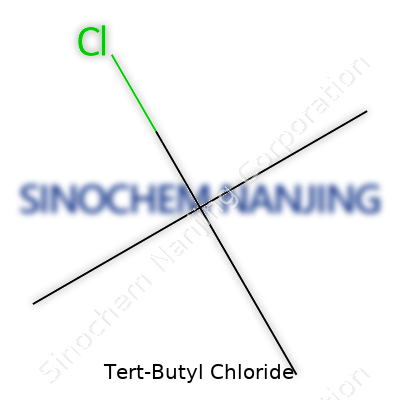
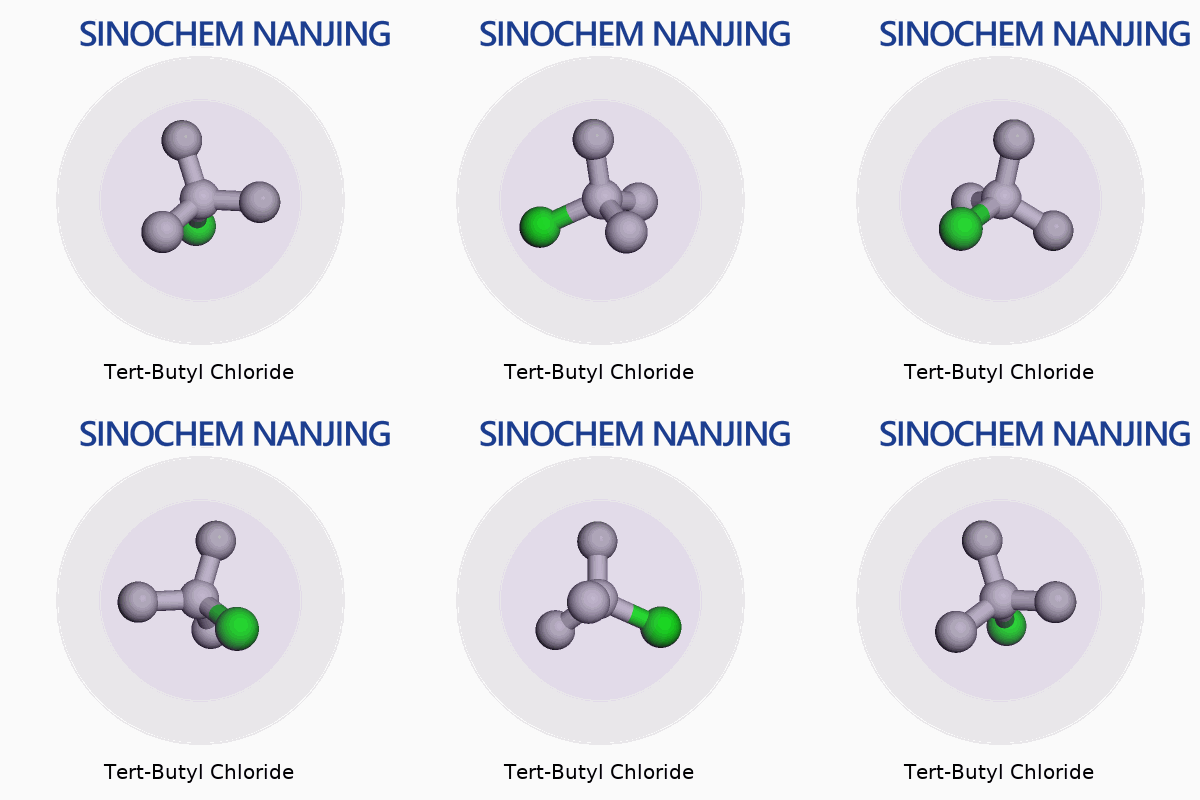
The real hook with tert-butyl chloride lands in its structure. The carbon backbone forms a “tert-butyl” group—a carbon at the center bonded to three other methyl groups, with each methyl earning its spot with three hydrogens. Then, chlorine pushes a hydrogen aside to take a seat on the central carbon. That move locks in a structure known for high reactivity, especially through what chemists call the SN1 reaction mechanism. In my early days working with basic alkyl halides, I saw how tert-butyl chloride sped through reactions that seemed sluggish with simpler molecules like methyl chloride or ethyl bromide.
How This Impacts Everyday Life and Research
The distinct twiggy shape of tert-butyl chloride means it can’t bend and fold the way straight-chain compounds do. That stiffness shows up in the lab. It turns into a classic tool for teaching substitution and elimination reactions, because students see right away how the bulky base can bump out the chloride. Once, during a summer internship, I watched an instructor demonstrate this, letting us track the cloudy white precipitate form as a classic visual cue of this process.
On the industrial side, C4H9Cl slides into pharmaceutical production and the creation of performance chemicals. Its reactivity lets companies bolt on new groups or strip away others, building up molecules that serve as the backbone for solvents, ingredients, and even some medicines. The speed of its reaction—made possible by that crowded center—means less waiting and fewer side products. That becomes a big deal when dealing with ton-scale syntheses, since low byproduct waste cuts both costs and environmental impact. Data from chemical manufacturing reports highlight tert-butyl chloride’s wide usage, especially in North America and China, for this reason.
Potential Concerns and Responsible Use
That high reactivity also brings safety concerns. Chlorinated organics, especially volatile types like tert-butyl chloride, raise flags for both human health and environmental impact. When I first handled it in the lab, the pungent odor told me right away to double-check the fume hood. It evaporates quickly and can irritate skin and lungs. Regulations call for personal protective equipment and robust containment during transport and storage. Environmental data shows that accidental releases can create local hazards, and a few memorable spills have led researchers to favor better containment and ventilation strategies.
Safe and responsible use doesn’t just rest with the technician working the bench. Chemical companies undertake regular safety training, invest in leak detection, and support research into less hazardous substitutes. Green chemistry initiatives encourage switching to processes that use or generate fewer halogenated compounds. I’ve seen universities and startups test alternative alkylating agents with similar reactivity but lower toxicity, showing the push for safer, greener labs and factories has real momentum.
Learning and Growing with Organic Chemistry
tert-Butyl chloride’s molecular formula, C4H9Cl, stands as more than just a collection of letters and numbers. It offers insight into how a molecule’s build guides its reactions and what that means for everyone from a student mixing reagents to a chemical engineer developing cleaner, safer processes. The lessons drawn from this humble molecule ripple through chemistry labs, manufacturing plants, and regulatory policy alike.
How should tert-butyl chloride be stored?
Understanding the Real Risks
Too many labs leave hazardous chemicals on a shelf and hope a warning label does the job. Tert-butyl chloride brings more to the table than most people realize. It’s clear and colorless, but underneath that calm surface, danger waits. I’ve seen the results of chemical mishandling—broken bottles, ruined experiments, and worst, injuries no graduate student forgets. A bottle of this stuff can release strong vapors and catches fire more easily than most folks expect. One careless move near a spark or hot plate can turn “things fine” into mayhem.
Temperature Really Matters
Tert-butyl chloride likes to evaporate. If it gets too warm, the fumes catch fire wickedly fast. Storage away from heat sources isn’t just a box to tick. Put it in a chemical storage fridge or a dedicated flammables cabinet. In winter, nobody wants to walk to that extra cabinet, but going for convenience here is betting safety for speed. Flammables, like this one, do not belong anywhere near sunlight, radiators, or anything that heats up. Nobody likes moving supplies across a busy room, but the alternative involves risking a lab fire, not just a scolding from the safety officer.
Don’t Let That Vapor Out
Opening a bottle feels like a tiny task, but every twist of the cap means vapors will escape. Tert-butyl chloride vapors make eyes water, throats burn, and lightheadedness sets in fast. One time, a student complained about “a sharp smell” after opening a bottle just for a second in the main lab. Everyone present spent the rest of that day with headaches. Always keep containers tightly closed, use a fume hood, and check regularly for damaged seals. Even the smallest crack lets fumes creep out.
Material Makes the Difference
Glass is fine for storage, but don’t trust ancient containers with rusty caps or sticks for stoppers. Metal reacts, giving up corrosion and sometimes even creating more toxic byproducts. Plastic isn’t always safe—certain types break down or leach chemicals back. I always insist new arrivals go into containers recommended by the supplier and double-check compatibility charts, no matter how experienced the person unpacking feels.
Label Everything—And Mean Everything
I’ve walked into labs where mysterious bottles showed up out of nowhere, hand-written tags fading fast, nobody sure what’s inside. Tert-butyl chloride needs a label everyone can read: name, date opened, and clear hazard warnings. Too many accidents start with “I thought it was something else.” If there’s a spill, that clear tag tells responders what to expect.
What Happens in a Spill?
Panicking never works. To deal with a leak or spill, sand or a proper absorbent should stay within arm’s reach of storage areas. Emergency plans don’t just sit on paper. Practice makes muscle memory. Know the eyewash station location and who to call long before an alarm rings.
Improving Everyday Habits
Old habits die hard, but real safety grows from repetition and good examples. Annual safety training won’t cut it by itself. New students need daily reminders about basics: close that cap, glove up, ventilate, double-check that label. Supervisors who walk the talk see fewer accidents, and peer reminders work better than memos posted on a bulletin board nobody reads.
Better Access Means Better Safety
Most labs improve by setting up designated storage for every risk class. Shelves for corrosives, flammables, organics—every group in its lane, secured and inventoried. There’s no single right answer, but storing tert-butyl chloride with careless neighbors is like tossing matches in sawdust. It pays to review every bottle’s place now and then, not just after a near-miss.
What are the physical properties of tert-butyl chloride?
Clear Appearance, Distinct Smell
Tert-butyl chloride pops up in labs as a colorless liquid, which catches the eye because it looks plain, but there’s nothing dull about it if you’ve worked with chemicals before. The smell doesn’t sneak up on you—it’s strong and sharp, reminding you right away to keep the beakers under the hood. This distinct odor isn’t just a warning for those doing chemistry experiments. It also signals the need for proper handling so people stay safe around it. Tert-butyl chloride’s boiling point hits about 51 degrees Celsius, so it turns into vapor much quicker than table water. That makes this chemical far from predictable during heating or evaporation: forget about leaving it out on the bench, unless you want to clean up a mess and breathe something you shouldn’t.
Density and Solubility: Handling and Storage Challenges
A key thing about tert-butyl chloride is that it floats on water, thanks to its density (around 0.85 grams per cubic centimeter). The moment you see drops of it sitting on top of water, you realize the practical side of density in chemistry. But it doesn’t blend in—they’re not mixing. Solubility tells the rest of the story: tert-butyl chloride barely dissolves in water, but it loves mixing into nonpolar solvents, like diethyl ether. In real life, that means spills don’t just rinse away, and washing glassware needs the right solvent, not just water and soap. This chemical strips away the idea that water can clean anything. For those working in labs, that means always staying aware—a little laziness could spell big trouble for expensive equipment or experiments that take weeks to set up.
Volatility Raises Safety Stakes
I’ve seen some students underestimate what “volatile” means. Tert-butyl chloride evaporates with the slightest heat or even at room temperature on a warm day. Fumes build up fast, even if you miss it at first. Its volatility calls for good ventilation and extra-careful handling in schools and professional labs. Companies shipping this chemical always pack it in tightly sealed containers because leaks turn into hazards before you know it. The vapor is heavier than air, so it creeps along benches or lab floors. I learned early in my own lab work to never ignore the simple fans or hoods. Just because you can’t see it doesn’t mean it isn’t there. If you’re ever in a room where someone’s ignored proper storage, it only takes one slip-up for the air to tell you something’s very wrong.
Reacting Under the Right Conditions
Tert-butyl chloride doesn’t just sit around quietly. It breaks down quickly in the presence of water, forming tert-butyl alcohol and hydrochloric acid. That makes for a useful hands-on demonstration of nucleophilic substitution for those studying organic chemistry, but it also means you have to plan your work fast and dispose of waste responsibly. Unplanned contact with moisture means wasted chemicals and surprises for both students and professionals.
Best Practices: Staying One Step Ahead
Safety with tert-butyl chloride starts with acknowledging just how easily it can evaporate and react. Chemistry classes and workplaces that use it benefit from regular safety drills, working fume hoods, and checklists before anyone cracks open a new bottle. Labels in plain language, gloves that fit, and goggles that don’t fog up help create an environment where people don’t have to second-guess what comes next. Emergency showers and eye-wash stations should always be in reach—a lesson nobody forgets after seeing just how quickly a spill becomes serious.
| Names | |
| Preferred IUPAC name | 2-Chloro-2-methylpropane |
| Other names |
1-Chloro-2-methyl-2-propane tert-Butylchloride t-Butyl chloride TBCl 2-Chloro-2-methylpropane Chlorotrimethylmethane |
| Pronunciation | /ˌtɜːrtˈbjuːtɪl ˈklɔːraɪd/ |
| Identifiers | |
| CAS Number | 507-20-0 |
| Beilstein Reference | 87868 |
| ChEBI | CHEBI:64192 |
| ChEMBL | CHEMBL137887 |
| ChemSpider | 10107 |
| DrugBank | DB14163 |
| ECHA InfoCard | 100.700.650 |
| EC Number | 200-857-2 |
| Gmelin Reference | 81857 |
| KEGG | C01782 |
| MeSH | D002032 |
| PubChem CID | 6406 |
| RTECS number | EO1730000 |
| UNII | 2LN7X826K7 |
| UN number | UN1127 |
| Properties | |
| Chemical formula | C4H9Cl |
| Molar mass | 92.57 g/mol |
| Appearance | Colorless to pale yellow liquid |
| Odor | Sharp odor |
| Density | 0.85 g/cm³ |
| Solubility in water | Slightly soluble |
| log P | 2.70 |
| Vapor pressure | 42.7 kPa (20 °C) |
| Acidity (pKa) | 25 |
| Basicity (pKb) | 13.2 |
| Magnetic susceptibility (χ) | -6.44 × 10⁻⁶ |
| Refractive index (nD) | 1.398 |
| Viscosity | 1.177 mPa·s (20 °C) |
| Dipole moment | 2.03 D |
| Thermochemistry | |
| Std molar entropy (S⦵298) | 322.8 J·mol⁻¹·K⁻¹ |
| Std enthalpy of formation (ΔfH⦵298) | -209.2 kJ/mol |
| Std enthalpy of combustion (ΔcH⦵298) | -587.6 kJ/mol |
| Pharmacology | |
| ATC code | D09AA09 |
| Hazards | |
| GHS labelling | GHS02, GHS07 |
| Pictograms | GHS02,GHS07 |
| Signal word | Warning |
| Hazard statements | H225, H315, H319, H335 |
| Precautionary statements | P210, P261, P271, P305+P351+P338, P304+P340, P312, P337+P313 |
| NFPA 704 (fire diamond) | 1-3-0 |
| Flash point | -20 °C (-4 °F) (closed cup) |
| Autoignition temperature | 510 °C |
| Explosive limits | Explosive limits: 5.5–13.5% |
| Lethal dose or concentration | Lethal dose or concentration (LD50/LC50) data for tert-butyl chloride: ``` LD50 (oral, rat): 695 mg/kg ``` |
| LD50 (median dose) | LD50 (median dose): Oral rat 5800 mg/kg |
| NIOSH | KJ8225000 |
| PEL (Permissible) | PEL 1000 ppm |
| REL (Recommended) | 200 ppm |
| IDLH (Immediate danger) | IDLH: 500 ppm |
| Related compounds | |
| Related compounds |
tert-Butyl alcohol tert-Butyl bromide tert-Butyl iodide tert-Butyl fluoride |



