Sulfur Tetrafluoride: A Deep Dive into Its Journey, Properties, and Prospects
Historical Development
Chemistry often advances on the curiosity and necessity of the times. Sulfur tetrafluoride (SF4) stands out as one of those compounds that grabbed the attention of chemists in the early mid-20th century, right as the understanding of fluorine’s unique behaviors matured. Industrial chemists first put it to use by the 1960s, experimenting with fluorinating organics further than hydrogen fluoride alone could manage. The drive to introduce fluorine atoms into carbon frameworks, particularly for pharmaceuticals and advanced materials, created a need for more reactive and controlled reagents. Against this backdrop, researchers pursued scalable methods, recognizing its ability to switch out oxygen atoms for two fluorines in carbonyl groups. Several patents followed, mapping out preparation, safe handling, and application in everything from specialty plastics to pharmaceuticals.
Product Overview
Sulfur tetrafluoride offers a useful punch in both academic synthesis labs and industrial plants. This colorless, toxic gas works as a key fluorinating agent, providing access to valuable fluorinated molecules for more than just academic reasons. Its action opens doors in agrochemical and medicinal chemistry, especially where highly fluorinated scaffolds bring specific biological or material properties. Bulk SF4 arrives in specialized steel cylinders built to withstand corrosive atmospheres, often sitting alongside other strong fluorinating reagents, but standing out for the combination of selectivity and reactivity.
Physical & Chemical Properties
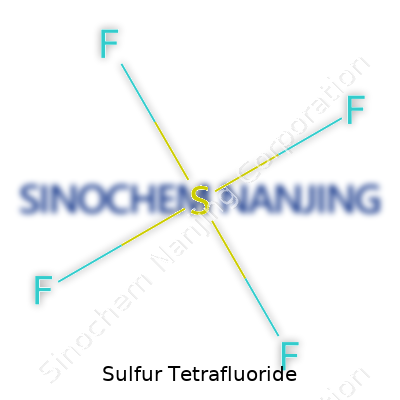
SF4 emits no color but packs a steep sulfurous odor that signals trouble quickly. Its boiling point sits near -38°C, giving it a gaseous form at room temperature. The molecule itself boasts a “see-saw” geometry—two equatorial and two axial fluorine atoms— which defines its reactivity. Density reaches about 1.9 g/L at standard temperature and pressure, making it heavier than air and prone to hugging the floor in case of leaks. This gas readily hydrolyzes in moist air, spitting out sulfur dioxide and hydrogen fluoride, both of which cause burns and respiratory damage. From a technical perspective, SF4 attacks carbonyl groups with gusto, reaching targets that slow down even the most persistent chemist wielding conventional hydrofluoric acid.
Technical Specifications & Labeling
Handling SF4 demands attention to detail and robust labeling. Commercial cylinders carry hazard statements pointing to acute toxicity for lungs, eyes, and skin, with clear reference to the European CLP and American OSHA systems. Specification sheets cover gas purity (often greater than 98%), water content (strictly limited to avoid violent hydrolysis), and packaging pressure ratings. Tracking numbers tie each container to a precise batch traceability and leak integrity testing report. Labeling leaves no doubt, with skull-and-crossbones symbols, transportation codes for corrosive gases (UN 2418), and multilingual statements warning against untrained handling.
Preparation Method
Industry usually turns to direct fluorination routes, often starting from elemental sulfur and fluorine gas, sometimes from sulfur dichloride treated with sodium fluoride, which brings down the risk level a notch. Recirculating systems and cooled reactors control the exothermic reaction that otherwise risks giving off clouds of toxic byproducts. On smaller scales, chemists prefer to mix sulfur dichloride with potassium fluoride, heating the mixture under strictly anhydrous conditions. Each method requires glass-free equipment lined with nickel, Monel, or Teflon, since most metals (besides a privileged few) corrode instantly in the presence of fluorine chemistry.
Chemical Reactions & Modifications
The true charm of SF4 lies in its ability to pluck oxygen atoms from a wide range of organics and slot in two fluorine atoms, creating difluorinated products. Aldehydes, ketones, carboxylic acids—each can become a fluorinated building block thanks to this reagent. In practice, reactions require completely dry glassware and lab environments that keep even trace amounts of water away to avoid nasty incidents. Beyond fluorinations, sulfur tetrafluoride responds to strong bases by breaking down to yield sulfur hexafluoride (a potent greenhouse gas) and fluoride salts, while excess heat or contact with silicates leads to further degradation. Some specialized modifications use SF4 in tandem with other halogen carriers to reach even more exotic products that go far in dyes, imaging agents, and new polymer development.
Synonyms & Product Names
SF4 goes by several names in both the literature and on invoices: sulfur fluoride, tetrafluorosulfane, tetrafluorure de soufre, and sometimes just “STF” in shorthand among process chemists. Major manufacturers might market it simply as “Sulfur Tetrafluoride Gas,” coupled to their branding and guarantees on purity and batch consistency.
Safety & Operational Standards
Years in the lab have shown the importance of standardized procedures when running SF4 reactions. This gas attacks mucous membranes, corrodes eyes, lungs, and skin on brief exposure. Modern workplaces keep it in ventilated gas cabinets with remote shutoffs and monitoring sensors. Emergency protocols include positive-pressure suits, full-face respirators rated to bind hydrofluoric acid, and continuous air monitoring. Fire departments keep special Class D extinguishers on hand, since SF4 can generate highly toxic fumes with water and air. Strict training for every person in the chain, from raw material delivery to cylinder disposal, stands as a non-negotiable. Documentation meets global standards—SDS and technical bulletins from suppliers update regularly with best practices and new research on long-term exposure.
Application Area
Sulfur tetrafluoride fits naturally in the portfolio of any advanced synthetic chemist needing to push the boundary on what fluorination can achieve. Key applications span fluorination of organics for pharmaceutical intermediate production, agrochemical discovery, and in some cases, preparation of specific fluoropolymers that outperform other plastics in resisting heat, chemicals, and wear. Analysts in fluorine specialty manufacturing see SF4 as a tool for making high-purity gases for electronics, particularly when ultra-clean fluorinated molecules are needed in etching and cleaning semiconductor substrates. Beyond fine chemicals, a few niche uses appear in isotope chemistry, especially where switching out oxygen for fluorine tweaks physical or biological properties.
Research & Development
The demand for selective, high-yield fluorination keeps R&D moving at a brisk pace. Research teams put in long hours screening new catalysts and flow reactor designs to keep operators further from direct contact with SF4. Automation pops up more and more, with remote-controlled valves and glovebox systems integrated into pilot plants. Academic research often ties SF4 use to new reactions, including those that step away from traditional batch synthesis. Efforts to mimic its fluorination profile with less toxic analogs or recyclable reagents push at the boundaries— though so far, most alternatives still fall short in terms of versatility and overall selectivity.
Toxicity Research
Toxicologists have ample evidence on the risks tied to SF4 exposure. Short-term contact often means severe chemical burns, pulmonary edema, or systemic toxicity resembling hydrogen fluoride poisoning—especially true since it hydrolyzes on mucous membranes, throwing off aggressive fumes. Long-term studies have flagged the risk of chronic respiratory and bone damage in poorly controlled workplaces. Animal models support these risks, showing both acute lethality at modest concentrations and progressive tissue erosion with low-level, continuous exposure. Out of this research comes relentless attention from regulators, driving limits on workplace exposure to almost undetectable levels and compelling ongoing development of faster leak-detection technology.
Future Prospects
Future progress for SF4 depends on balancing two competing demands: the necessity for highly selective fluorination tools and the need for safer, greener chemistries. Green chemistry initiatives push for efficient use, solvent recycling, and containment, while big innovations could come from closed-loop systems that recover and neutralize any leaked SF4 or byproducts before they reach the workplace or the environment. Meanwhile, demand for high-performance fluorinated molecules in pharmaceuticals, imaging agents, electronics, and materials science is likely to keep SF4 in the playbook for years. R&D works overtime to find selective, low-toxicity alternatives—a tall order, considering the track record for efficiency and specificity that SF4 delivers.
What is Sulfur Tetrafluoride used for?
Sparking Change in the Lab
Chemistry likes its toolbox full, and sulfur tetrafluoride offers something you do not get elsewhere. Quite a few of my colleagues talk about reactions where you have carbon-oxygen bonds that need a swap for something tougher, and it turns out this is where sulfur tetrafluoride shines. It takes carbonyls and turns them into carbon-fluorine bonds—an exchange you almost never see in daily life, but one that quietly powers pharmaceutical labs, agriculture research, and advanced material studies.
Building the Bonds That Medicines Depend On
The pharmaceutical world loves a molecule that behaves reliably inside the body. Fluorine has a way of making drugs stronger and more effective, so replacing hydrogen or oxygen with it can turn an average molecule into a blockbuster treatment. Sulfur tetrafluoride is almost like a shortcut for chemists trying to install these carbon-fluorine bonds. Some blood pressure drugs, anti-inflammatories, and antifungals came about thanks to these precise tweaks. Medicinal chemists will tell you that tweaking a molecule with the help of sulfur tetrafluoride can slow down metabolism, making pills last longer and work better. That sort of control matters when you want both safety and potency.
Crop Protection and Cleaner Chemistry
Pesticide discovery has turned to this molecule too. Herbicides and fungicides work better when their structures resist breaking down under harsh sunlight or rain. Swapping in a fluorine atom sometimes protects those molecules just enough for a full season of pest control. This can head off the need for repeated spraying, which helps farmers and keeps chemical runoff lower. The key fact: sulfur tetrafluoride helps build chemicals that last just as long as they are needed—something every environmental scientist pays attention to.
Materials that Stand Up to Harsh Use
Electronics, membranes, coatings—these products push the limits of stability. Chemists searching for stronger or more weatherproof materials sometimes find that a fluorine swap makes all the difference. Sulfur tetrafluoride helps craft these rugged materials. Engineers then use them for wires, seals, or the insides of batteries. These products do not fail easily under heat, pressure, or chemicals. I have seen industries lean on custom fluorinated molecules to gain just the edge they need for competitive performance.
Growing Responsibility in Handling
Sulfur tetrafluoride does pose handling challenges. Its reactivity can trigger dangerous leaks, and it creates toxic byproducts if released without care. Personal experience in the lab drives home the importance of strong safety training and dedicated fume hoods for this gas. Some plants in the chemical industry have stopped using it for processes where safer reagents work just as well, which shows the shifting safety culture. Good stewardship includes strong controls, specialized equipment, and real training—not just paperwork but hands-on practice. Regulatory agencies keep tightening the rules, too, insisting on containment and emergency plans at every point of use.
Safer Alternatives and Smarter Choices
Green chemistry is about practical solutions, not just ideals. Some labs now reach for other fluorinating reagents instead of sulfur tetrafluoride, especially those with fewer dangers in storage or use. The field keeps looking for ways to sharpen reactions and lower risks. Sharing best practices—whether through journals, coworkers, or conferences—helps speed up that shift. In time, smart regulations, safer chemicals, and innovation together can keep vital discoveries rolling, without sacrificing safety or environmental care.
What are the safety precautions when handling Sulfur Tetrafluoride?
Why This Gas Deserves Respect
Sulfur tetrafluoride isn’t a name you’ll hear much outside of a chemistry lab, but anyone who’s been around reactive gases knows it means business. You don’t get a second chance with something that reacts so harshly with water—even the moisture in your nose or lungs. I've handled some tricky substances over the years, but few demand the attention to detail that this one does.
Personal Protection Comes First
Nothing beats gear that fits and seals well. Lab coats help, but real safety comes from good gloves, splash-resistant goggles, and a full-face shield. If you’re stuck with anything less, that sharp, stinging whiff you’ll detect is a warning you’re already too close. A cartridge respirator doesn’t cut it—use a supplied-air respirator or a self-contained breathing apparatus. Beats coughing your way to the emergency shower.
Sulfur tetrafluoride will race to react with just about any water it finds. Skin contact doesn’t just irritate; it can leave burns and blisters. Every time I trained a new chemist, I’d make one rule clear: treat your own eyes and skin as if you’ll need them tomorrow. Washing with copious amounts of water helped one tech avoid lasting scars—he caught the spill right away, but that luck won’t hold forever.
Keeping Containment Tight
Leaks don’t announce themselves. Regular equipment checks, making sure every seal and connector is tight, saves lives and property. I’ve watched veteran engineers run a leak check with soapy water and spot a pin-hole leak in minutes. Metal piping stands the test of time. Flexible hoses and cobbled-together fittings? Not so much. Avoid them if there’s any better option.
Always store sulfur tetrafluoride in dry, ventilated areas, far away from moisture and anything that could spark. Don’t trust an ordinary storage cabinet; use corrosion-resistant containers, preferably in a separate gas shed. An old boss once kept the gas outside the lab itself, with remote valves fitted. That small change probably kept the whole building from getting evacuated more than once.
Be Prepared for the Worst
Emergency eyewash stations and showers should sit within seconds of the handling area. This means clear access—no boxes in the way, no locks on doors. If anyone gets exposed, time counts for everything. Every incident drill I’ve ever attended turns chaotic fast—the ones that work best are practiced regularly until there’s no confusion.
Labs using sulfur tetrafluoride usually set up continuous air monitoring. Sulfur tetrafluoride quickly breaks down into hydrogen fluoride and sulfur dioxide when it meets water. Air monitors that catch even a whiff can spot a problem before it grows. In my experience, people often wait for a strong smell, but by then, it’s too late. Rely on alarms, not your nose.
Training and Discipline Save Lives
Regular, hands-on training stays more important than paperwork. OSHA and other regulatory bodies keep rules strict for a reason, and routine training helps everyone remember why. Even outside the formal checks, a culture where folks look out for each other and don’t cut corners prevents accidents.
Sulfur tetrafluoride poses a real risk, but treating it with the care and respect it demands makes a big difference. Listening to the stories of those who came before, and sharing your own hard lessons, keeps everyone safer—and that’s something nobody can fake.
What is the chemical formula and physical properties of Sulfur Tetrafluoride?
Chemical Formula of Sulfur Tetrafluoride
Sulfur tetrafluoride, often written as SF4, brings together one sulfur atom with four fluorine atoms. The sulfur atom sits at the center while the four fluorine atoms position themselves around it, forming an unusual seesaw-shaped molecular structure. Chemists find this shape unique compared to what’s common in similar compounds. In the lab, you rarely see products with such design unless the arrangement directly supports the molecule’s purpose.
Physical Properties That Matter
SF4 comes out as a colorless gas under room temperature, sometimes showing up as a condensed liquid if cooled. Its smell hits hard—a sharp odor that pushes anyone to keep clear of it, especially without robust ventilation or protection. The gas draws water from the air so fast you can almost hear it; it hydrolyzes quickly, splitting into acids and some equally concerning byproducts.
If you’re thinking about how much it weighs, its molecular weight sits around 108 grams per mole. The boiling point hovers close to -38 degrees Celsius, so you won’t catch it as a liquid unless you chill things down in your workspace. The melting point drops to nearly -121 degrees Celsius, making it impossible to find this material as a solid unless you’re working in intensely cold conditions.
Sulfur Tetrafluoride Reactivity Risks
This gas doesn’t just sit quietly with other compounds. Expose SF4 to water or even moisture in the air, and the reaction’s aggressive. The gas breaks down into sulfur dioxide and hydrogen fluoride, and that’s trouble for anyone’s lungs or skin. The fumes produce a strong, stinging acid. Just a few years back, I watched a glass line corrode after a faint SF4 leak met some ambient humidity—it didn’t take long. Personal protective gear becomes the first line of defense here.
Use Cases: Chemical Synthesis And Industrial Production
SF4 is an important fluorinating agent in pharmaceutical and agrochemical synthesis. Chemists use it to swap out oxygen atoms for fluorine atoms in organic compounds, often because some final medications show more stability or activity with that modification. Molecules produced using SF4 play a role in making everything from life-saving drugs to pesticides.
The chemical doesn’t win any competitions for ease of handling, though. It needs serious containment and skilled technicians to keep everything safe. In my own experience, specialty chemical facilities design their labs around tight SF4 controls—scrubbers and HF-resistant materials, pressure-rated pipelines, and air filtration that goes well beyond what you see in everyday labs.
Building Safer Spaces Around Hazardous Materials
Exposures to SF4 rarely leave room for mistakes. Both industry veterans and newcomers need regular training and solid emergency plans. Relying on up-to-date personal protective equipment saves lives. Institutions benefit from using continuous leak detection and well-maintained neutralization systems to avoid the worst-case scenarios of accidental SF4 releases. Investment in strong safety cultures pays off; there’s no shortcut around that, especially with chemicals as unforgiving as sulfur tetrafluoride.
Conclusion: Knowledge Brings Control
Working with SF4 means respecting its sharply reactive nature, both in what it does for research and manufacturing, and the damage it causes when mishandled. Following strong chemical hygiene principles and choosing robust equipment set the foundation for all safe operations. For anyone in the sciences or industries handling hazardous gases or specialty reagents, strong procedure and careful learning turn this tricky chemical from a threat into a valuable tool.
How should Sulfur Tetrafluoride be stored and transported?
Why People Handle Sulfur Tetrafluoride With Extra Care
Sulfur tetrafluoride doesn’t have a friendly reputation. This gas reacts with water, even humidity in the air, and produces nasty byproducts like hydrogen fluoride. I’ve spent my share of time around labs and specialty chemical facilities, and there’s always some anxiety when a cylinder holding this stuff gets wheeled in. The sharp, biting odor signals trouble, and those who’ve studied chemical safety know that direct exposure brings pain, both to the lungs and the eyes.
So, storing and transporting sulfur tetrafluoride isn’t just a regulatory hoop to jump through. It’s about protecting everyone near the site and down the supply line—from workers in receiving to drivers and emergency crews.
Materials Have Limits, Human Lives Don’t
Using steel cylinders lined with nickel alloy or Teflon makes sense. I remember one case where a facility kept a close eye on cylinder integrity—one tiny pinhole leak could turn into a big problem since sulfur tetrafluoride reacts with moisture in the air. Sturdy cylinder walls do more than meet a spec sheet; they act as a barrier that keeps the gas from escaping and mixing with humidity, which would be about the last thing anyone wants. Regular inspections help, but so does a culture in which nobody skips steps.
Transport brings its own risks. A simple fender bender on an industrial park road turns deadly if a cylinder valve gets sheared off and gas leaks into a van. Hard restraints, valve protection, and DOT-certified containers save lives. Regulations from OSHA and the U.S. Department of Transportation outline the basics, but real-world experience shows extra precautions pay off. Rust-free storage areas, separated from oxidizers and water sources, keep dangers in check.
Training and Tracking
Proper training builds confidence. I’ve met workers who know how to handle rowdy chemicals as a matter of routine because someone took the time to teach them—not just through boring paperwork but hands-on practice. Emergency drills in the warehouses mean that if something breaks or leaks, nobody wastes time wondering what to do next. Instead, the team acts fast—ventilating areas, donning gear, and calling in decontamination crews.
Tracking every cylinder, knowing exactly where it sits, and which shipment it’s riding on, matters more than ever. Digital inventory systems, barcodes, and manual checks cut down on lost containers. If a cylinder doesn’t make it to the next station, it’s a red flag for a leak or a misplaced asset that could turn dangerous down the line.
Improvements and the Human Element
Nobody loves the paperwork around hazardous materials, but it’s not just red tape. Keeping updated Safety Data Sheets, checking pressure relief valves before every trip, and logging all inspections help keep workers healthy for the long run. Places that use sulfur tetrafluoride need strict humidity controls, with spill kits and neutralizers ready.
Safety breaks down in the details—the missed gasket, the forgotten pressure check, the half-read label. A culture where people feel free to ask questions and flag problems beats fancy technology or written protocols every time. It takes steady effort to keep a team sharp and nobody ever wants sulfur tetrafluoride to remind them why by biting back after a careless shortcut.
Facilities handling this substance carry a big responsibility. Experience counts, but consistent follow-through on safety rules counts even more, especially when the risks follow you out the door and back home at the end of the shift.
What are the potential health hazards of Sulfur Tetrafluoride exposure?
The Risk Behind a Toxic Gas
Sulfur tetrafluoride isn’t a chemical that shows up on most people’s radar, but for those working in labs or chemical plants, it deserves some attention. This clear, colorless gas packs a punch: even a whiff can set off a cascade of health troubles. You don’t need a PhD in chemistry to understand why handling it with care goes a long way. The main reason—it reacts fiercely with moisture, including what lines our eyes, nose, and lungs.
Immediate Effects: More Than Just a Sneeze
Short-term exposure can be scary. Picture walking into a room, taking a breath, and feeling your airways burn. Eyes water instantly, throat tightens, and sometimes, you find yourself coughing before you even realize what hit you. Sulfur tetrafluoride transforms into hydrogen fluoride when it meets water, which can eat away at tissue. This stuff damages skin as well, so a spill on the hands demands a fast response. OSHA and NIOSH recognize the danger here, placing strict exposure limits for anyone working with it.
Quiet but Serious: Chronic Health Damage
Repeated or heavy exposure—the kind that can sneak up on workers who don’t have access to the right gear—puts teeth, bones, and lungs at risk. Deep lung inhalation allows toxic fluorides to settle where air should flow freely. Over time, bones can lose density and teeth may crumble. Joints stiffen. Some folks might notice more fatigue and pain, long before recognizing what’s to blame. I’ve spoken to workers in the chemical industry who’ve seen colleagues develop joint and dental issues, only to trace it back to years spent around improper storage or poor ventilation.
Not Just in Factories: Community Concerns
Accidents happen. Chemical leaks can impact folks living nearby. If a cloud of sulfur tetrafluoride escapes a plant, those downwind breathe the same risks as plant workers. Emergency crews worry about both the acute danger of a gas cloud and the long-term problems if it lingers around heavy equipment or apartment buildings. In some communities, residents push for better monitoring because health problems popped up after repeated leaks. Nobody wants to see that pattern repeat.
Layered Protections: Gearing Up for Safety
No shortcut beats safety gear and strong ventilation. Gloves, respirators, eye shields—each plays a role. It shouldn’t fall to just the workers either. Regular air testing, leak detectors, backup alarms, and clear safety plans keep everyone honest. Companies can prevent exposure by tightly controlling valves, running practice drills for spills, and maintaining equipment that handles sulfur tetrafluoride.
Preventing Trouble: Anticipation Is Key
Regulators like OSHA set clear exposure limits, but that only works if companies follow through. Health surveillance programs, regular medical checkups, and open training sessions all help. When workers see warning signs early—like persistent coughs or tingling hands—they know it’s time to step up precautions. Public agencies need to keep watch on waste storage, spill response, and worker complaints, especially in older jobsites or areas crowded around chemical plants.
Community Role: Public Right to Know
Transparency works both ways. Companies need to alert local emergency planners about their use and storage of sulfur tetrafluoride. Public records put some power back in the community’s hands, letting concerned neighbors ask hard questions or request air quality checks. Quick information sharing helps avoid panic if an accident happens and gets the right resources where they’re needed most.
| Names | |
| Preferred IUPAC name | tetrafluorosulphurane |
| Other names |
Sulfur fluoride (SF4) Sulfur(IV) fluoride Sulphur tetrafluoride |
| Pronunciation | /ˈsʌlfər tɛtrəflaɪˌɔːraɪd/ |
| Identifiers | |
| CAS Number | 7783-60-0 |
| Beilstein Reference | 1204212 |
| ChEBI | CHEBI:30189 |
| ChEMBL | CHEMBL135694 |
| ChemSpider | 53224 |
| DrugBank | DB09463 |
| ECHA InfoCard | 100.028.048 |
| EC Number | 205-183-5 |
| Gmelin Reference | 840 |
| KEGG | C18829 |
| MeSH | D013440 |
| PubChem CID | 6329 |
| RTECS number | WX4175000 |
| UNII | V3P4YZ4B2S |
| UN number | UN2418 |
| Properties | |
| Chemical formula | SF4 |
| Molar mass | 108.06 g/mol |
| Appearance | Colorless gas |
| Odor | Rotten eggs |
| Density | 1.52 g/cm³ |
| Solubility in water | Reacts with water |
| log P | -0.637 |
| Vapor pressure | 3,143 mmHg (25 °C) |
| Acidity (pKa) | -2.0 |
| Basicity (pKb) | 6.18 |
| Magnetic susceptibility (χ) | Diamagnetic |
| Refractive index (nD) | 1.000445 |
| Viscosity | 0.01298 cP |
| Dipole moment | 0.632 D |
| Thermochemistry | |
| Std molar entropy (S⦵298) | 247.6 J·K⁻¹·mol⁻¹ |
| Std enthalpy of formation (ΔfH⦵298) | -878 kJ/mol |
| Std enthalpy of combustion (ΔcH⦵298) | -1215 kJ·mol⁻¹ |
| Hazards | |
| Main hazards | Toxic by inhalation, causes severe burns, reacts violently with water. |
| GHS labelling | GHS02, GHS05, GHS06, GHS09 |
| Pictograms | GHS04,GHS06,GHS05 |
| Signal word | Danger |
| Hazard statements | H331: Toxic if inhaled. H311: Toxic in contact with skin. H301: Toxic if swallowed. H314: Causes severe skin burns and eye damage. H410: Very toxic to aquatic life with long lasting effects. |
| Precautionary statements | P261, P280, P304+P340, P305+P351+P338, P309+P311 |
| NFPA 704 (fire diamond) | 1-4-0 |
| Flash point | -78°C |
| Autoignition temperature | 310°C (590°F) |
| Explosive limits | Lower: 4.5%, Upper: 100% |
| Lethal dose or concentration | Inhalation-rat 600 ppm/1H |
| LD50 (median dose) | LD50 (median dose): 80 ppm (rat, inhalation, 4 hours) |
| NIOSH | TT4300000 |
| PEL (Permissible) | 0.1 ppm |
| REL (Recommended) | 0.1 ppm |
| IDLH (Immediate danger) | 100 ppm |
| Related compounds | |
| Related compounds |
Sulfur dichloride Sulfur hexafluoride Thionyl fluoride Disulfur decafluoride |



