Sulfur Hexafluoride: A Deep Dive Into a Not-So-Innocent Giant
From Curious Discovery to Essential Tool
Sulfur hexafluoride traces its roots back to the early twentieth century, at a moment when ambitious scientists sought new compounds with unique properties for industry. Chemists first synthesized it not for thrills, but out of curiosity for what happened when sulfur and fluorine teamed up. Over the years, the world found out just how potent this simple molecule could be. Its interests now span from electrical engineering to medical imaging, yet what started as a footnote in chemical journals soon became a vital component in large-scale equipment and scientific labs around the planet. This transition speaks more to the thirst for reliable, inert gases in fast-changing industrial landscapes than to any deliberate campaign. Sulfur hexafluoride did not become popular by accident, but because it solved real problems that demanded immediate, practical answers.
What’s Behind the Formula
SF6—that’s the compact chemical code—but the story lies in its structure. Six fluorine atoms surround a core of sulfur in a way that makes it incredibly stable. This tightly bound molecule creates a gas that stays invisible and odorless, which makes accidental leaks so much harder to notice. It resists combustion, shrugs off reactions with most chemicals, and just does not break down under electrical stress. For engineers and scientists tired of gas mixtures causing chaos, SF6 brings relief. Under pressure, it liquefies without drama, allowing easy storage and transport. Its density is much higher than air’s, which sends it straight to floor level if let loose. Nobody has to guess why power utilities dialed in on it for filling up switchgear and circuit breakers—it doesn’t corrode metal, cause sparks, or gum up delicate equipment from the inside.
Unpacking the Details
In technical circles, people recognize sulfur hexafluoride by more than just its chemical shorthand. CAS registry number 2551-62-4 backs it up. Some call it sulphur hexafluoride, basking in a British spelling tradition. Others just say SF6, hexafluoride gas, or refer to it by research-grade purity levels. Looking through product labels, one sees pressures, purity grades, and gas cylinder sizes carefully measured out—not because rules demand so, but to make sure the right tool ends up at the right job. Chemists rely on its purity, checking for contamination at parts-per-million levels, while workers handling high-voltage equipment check designated color codes and valve types for a reason: mix-ups can burn out expensive gear or cause injuries. These routines remind everyone that real stakes lie in each cylinder.
The Making of a Molecule
Producing SF6 is not a glamorous job. Manufacturing plants combine elemental sulfur with fluorine gas at high temperatures, under precisely controlled conditions. Operators keep the reaction tamed—the raw materials alone set off alarm bells—but with proper oversight, yields come high with minimal headache. The raw gas goes through a gauntlet of cold traps and chemical scrubbers. What emerges from these units carries the near-absolute purity demanded by modern electrical and scientific applications. People in this field know that even slight impurities may raise the risk of equipment failure or ruin research runs, so refinement standards get hammered into daily checklists. Teams working in these settings feel the double-edged sword: sulfur hexafluoride brings huge value, but only if handled with a level of scrutiny rare in broader commodity gas production.
Chemical Stubbornness—Blessing and Curse
SF6 rarely reacts with anything under normal conditions. That makes it gold for anyone who needs a gas that won’t rust, corrode, or tarnish metals—even delicate alloys inside multi-million-dollar transformers. In the deep cold, it won’t condense or freeze easily either, which further boosts its appeal. But that same stubbornness makes it a tough nut for environmental chemists. If released, it lingers for more than a thousand years, building up in the atmosphere. No simple reaction can take it down, and ultraviolet light barely makes a dent. The gas becomes an unwelcome guest in climate rooms for this reason—a background presence that ignores most attempts at removal. Its global warming potential overshadows even carbon dioxide by tens of thousands of times, making every careless release matter much more on a planetary scale.
In the Realm of Modifications
Researchers dream up chemical reactions all the time, but with SF6, options prove stubbornly limited. At high temperatures, or under plasma, the molecule does break into smaller fragments, releasing tricky byproducts. Industrial uses for these reactions do exist—semiconductor fabrication often depends on SF6 as a feedstock to generate highly reactive fluorine atoms inside plasma etchers. This lets microchip makers carve precise patterns onto wafers at scales measured in nanometers, well beyond what the unaided eye can fathom. In these niches, designers value reliability and predictability; SF6 delivers both. Otherwise, most labs use the inertness to shield materials that can’t stand up to more aggressive chemicals, rather than as a precursor to fancy new compounds.
Everyday Names and Unseen Influence
Walk through a facility that leans on SF6 heavily and people might call it “breaker gas” or just “the dielectric.” Industry veterans read the fine print on labels, spot grade codes or supplier marks, and treat it like a regular problem-solver. For outsiders, those synonyms often mean little without time spent on factory floors or labs. By whatever name—be it sulfur hexafluoride, SF6, or a quick nod to “switchgear gas”—the impact stays direct. Few materials influence power grids and high-energy labs quite as quietly, but ask anyone who has to maintain the health of a hundred transformers and they will tell you, not always with enthusiasm, just how central this gas has become.
Rules Built on Risk, Not Tradition
Handling SF6 takes more than a mask and gloves. Safety standards run deep—regulated storage, high-end leak detectors, special recovery systems, and regular employee training form the backbone. Most major industrial nations pack their regulations with limits for permissible exposure, tank labeling, maintenance logging, and emergency procedures in case of accidental releases. Power stations and factories install sensors across work sites, since even slow leaks build up in enclosed areas, risking asphyxiation or costly environmental breaches. The hard truth stays the same—no shortcut replaces vigilance. Having spent time with field engineers, I have seen routines that never change: double-checking valves, purging lines, running recovery pumps longer than needed. The margin for error narrows each year that evidence for climate impacts mounts.
Why Power Engineers and Scientists Swear By It
SF6 finds its strongest foothold in electrical power infrastructure. It insulates and quenches arcs inside circuit breakers and switchgear. Picture a high-voltage substation where one misplaced spark could trigger a blackout or destroy equipment worth millions—SF6 stands guard, interrupting the flow with minimal fuss. Medical professionals leaned on it, too; some eye surgeons use carefully controlled puffs of the gas in retinal surgeries, taking advantage of its ability to expand and hold tissues in place. Laboratories bank on it as a tracer gas, mapping airflows and leaks down to the tiniest paths. Semiconductor manufacturing, as mentioned, converts its chemical stability into razor-sharp selectivity. In each case, reliability turns into less downtime, fewer mistakes, and workflows that can scale up to meet modern demands.
Progress—and Its Shadow—In Toxicity Research
Toxicological work on SF6 unfolded quietly, after its rapid adoption in the electrical world prompted concerns for health and safety. Direct toxicity in low concentrations works out to be surprisingly low—most studies show little effect in short-term exposures or accidental contact with skin. The game changes in confined rooms or at high pressures; like all inert gases, it displaces oxygen, which can push workers into danger before they realize it. More insidious threats come from its decomposition. Under electrical arcs or fires, SF6 breaks apart to reveal highly reactive and sometimes toxic fluorinated compounds. Research teams now pay special attention to these breakdown products, noting that gases like sulfur tetrafluoride or thionyl fluoride carry health risks at much lower levels. Precise toxicity data keeps evolving, but the direction remains clear: strict leak prevention and recovery make the best insurance.
Looking Down the Road: Rethinking SF6 for the Planet
Years ago, only a handful of scientists warned about the potential for SF6 as a greenhouse gas. Today, it stands out as a priority target for phase-downs under international treaties. The power industry starts to shift toward alternatives—new “dry air” mixtures, fluoronitriles, or hybrid solutions that match SF6’s insulating strength without its brutal climate cost. Replacing every breaker or switchgear unit won’t happen overnight; legacy equipment stays in place for decades, so the focus sharpens on leak detection, more rigorous gas recovery, and even recycling or destruction methods that minimize atmospheric release. Research teams move in two directions: some chase alternative molecules, others improve the containment and use-cycles for SF6 already in play. Attention now turns to incentives that reward best practices, mandating controls, and supporting innovation aimed at breaking the status quo. Many workers in industry know this change won’t be simple, but the climate case against SF6 now outweighs any pushback built on convenience or habit.
What is sulfur hexafluoride used for?
What Sulfur Hexafluoride Does in the Real World
Sulfur hexafluoride, or SF6, shows up in some surprising places. Electric utilities rely on it as an insulator inside high-voltage switchgear, circuit breakers, and other bulky electrical equipment. SF6 helps prevent electrical accidents and equipment failure. Without it, large power networks would face more outages, and people fixing the grid would face greater risks. I’ve worked near these substations; SF6 keeps those metal boxes humming safely along highways and city outskirts. It’s not something most people notice, but it keeps the lights on for millions.
Some doctors use SF6 too, though not as much as utility workers. Eye surgeons inject a tiny bubble of it to help reattach retinas during delicate procedures. The gas bubble presses the retina flat, giving it a chance to heal. Because SF6 doesn't dissolve into the body too quickly, it gives the eye enough time to mend. It amazed me to learn something from giant circuit breakers also plays a healing role in hospitals.
Cheap, Stable, and Problematic
Part of the reason why SF6 became popular: it’s cheap to produce and almost impossible to ignite. It won’t corrode metal or react with other chemicals in tough environments. For power companies, that makes maintenance straightforward. You don’t need to open the gear and refill the gas every few months. It stays put, working quietly.
The story gets tricky with what happens when SF6 escapes. Out in the open air, this gas lingers for thousands of years. It traps heat inside the atmosphere more than any carbon dioxide molecule ever could. The EPA says one pound of sulfur hexafluoride warms the planet as much as over 23,000 pounds of CO2 over a century. Only a few other gases used by people have such a big punch.
Dealing with Leaks and Wasted Gas
Most leaks from industry come from poor handling—bad seals, old gaskets, or someone forgetting to catch small spills. Over time, every little puff adds up. When I first read field studies, I saw how regular inspections and better tools reduced leaks by half. European rules push companies to track every ounce of SF6. If you lose too much, you pay big fines. This forces utilities to update equipment and train staff, which pays off for both safety and the planet.
People are also asking tougher questions before signing off on new equipment that uses this gas. German engineers created switchgear that runs on air or other gases, though they still cost more up front. Some cities now buy gear only if it avoids SF6 completely, giving new technology a window to replace the old standby.
What Comes Next
As grids add more renewable electricity, demand for reliable high-voltage gear may rise. That makes managing SF6 even more urgent. The tools and know-how to cut leaks already exist. More companies need to follow the examples set in places with tough rules and transparent reporting. For eye surgery, careful procedures and strict storage help keep any impact small.
Getting rid of SF6 entirely won’t happen overnight, but anyone who cares about climate change ought to pay attention. Solutions start small—tightened valves, new tech, and clearer rules—but the impact can echo for centuries.
Is sulfur hexafluoride dangerous to humans?
The Truth About SF6 in Everyday Life
Sulfur hexafluoride, or SF6, tends to pop up in science demonstrations online. Folks inhale it to lower their voices, and at first glance, that seems pretty harmless. Breathing in a gas like SF6 for a few seconds and making your voice sound like a cartoon character looks fun. Most people don’t realize SF6 is heavier than air, and it quickly pushes oxygen out of the lungs. That’s where real risks start. If someone keeps breathing it in, there’s a good chance they could face asphyxiation.
Health Effects and Real Dangers
SF6 itself doesn’t cause immediate chemical damage to the body since it’s inert, colorless, and odorless. Industries like electrical engineering rely on it because it prevents fires and keeps high-voltage equipment stable. Despite these technical uses, nobody should see SF6 as a toy. My university science lab made us sign waivers for demos involving any compressed gas. There was no way any professor would let us handle SF6 without a lot of safety training. Safety gear, strong ventilation, and limits on exposure all mattered. Asphyxiation remains the big problem. The gas can fill up a room or a large container and stay low to the ground, making it tough to notice. If you’re sitting in a spot where SF6 collects, you could lose consciousness before realizing you’re in trouble.
Facts You’ve Got to Know
SF6’s molecular weight sits around six times that of air, so it settles into low places and lingers. Even a tiny bit can crowd out the air and turn a small space dangerous. The U.S. National Institute for Occupational Safety and Health sets limits for SF6 exposure in workplaces. If workers breathe in too much by accident—during some rare equipment failure or leak—they might suffocate, not because the gas is toxic but because it cuts out the oxygen. According to statistics from the U.S. Occupational Safety and Health Administration, accidents involving SF6 in the power industry are extremely rare, mostly thanks to strict controls. Still, one slip-up could carry life-changing risks.
What Makes SF6 Different from Other Gases?
For context, SF6 gets compared with other industrial gases like nitrogen or argon, but its density and tendency to collect in low places gives it an edge in hazard. For anyone who’s worked in chemistry labs or power plants, oxygen meters and emergency alarms are just as important as eye protection and gloves. Inhaling SF6 to make your voice sound funny skips over the main point: oxygen keeps us alive, and any gas that can displace air puts that at risk. Family members who worked around gases at refineries always stressed keeping areas ventilated. SF6 never smells or looks odd, so nobody notices a problem until it starts.
Better Practices, Smarter Solutions
Banning SF6 doesn’t seem practical, given its use in keeping power grids running. The real answer lies in serious respect for the gas, wide access to safety information, and modern systems for detection. Regular checks, strong ventilation, and basic training can keep most folks out of harm’s way. No one outside a lab or power plant should handle SF6 without supervision. Science classes and YouTube tricks sometimes forget breathing is more important than experiments. In my view, the best solution lies with better education and building a culture that values careful handling over short-term fun.
How do you safely handle and store sulfur hexafluoride?
Getting to Know Sulfur Hexafluoride
Sulfur hexafluoride, or SF6, sounds almost harmless from a distance. In reality, it’s a gas that weighs in at over five times heavier than air, does not easily mix into the atmosphere, and never seems to break down. While companies use it for insulating high-voltage electrical gear and as a tracer gas for detecting leaks, it sticks around for thousands of years and traps heat in the air—over 20,000 times more powerful than carbon dioxide at doing so.
What Makes SF6 Tricky to Handle
SF6 never reacts with much, so it rarely causes fires or explosions like some other gases. But that doesn’t mean workers can let their guard down. Once in a closed space, this gas pushes out oxygen—without warning, the area loses the air needed for breathing. Even in an open workshop, SF6 can stick near the ground, unnoticed and unventilated.
Old pipes and hoses can start leaking as fittings wear out. I once saw a tank valve that looked fine from outside. A small puff of SF6 would escape every time the shop door closed hard. Even trained hands miss these weak points, so regular checks with a detector become important. Gas detectors catch leaks that noses never would, and writing down those numbers builds a record worth having.
Safe Storage: Not Just About Labels
A tank grows heavy fast—one full bottle tips the scale at more than 80 kilograms. Setting these up in a dry, cool spot where workers can see and reach them goes a long way. Welding blankets or steel racks fence tanks in, keeping them from falling over if something bumps into them. No one wants to see a bottle tip onto its valve and make a mess.
Every tank has a stamped expiration date, and in hot shops, keeping tanks shaded helps cut down on pressure buildups. Valves stay closed tight unless it’s time to use the gas. Sometimes shops leave tools hanging by the manifold, but if a wrench slips and cracks a fitting, pressure can burst through weak spots. Using the right fitting, and tightening by hand before grabbing a wrench, stops a lot of small mishaps.
Making Safety Stick: Training and Backup
I learned early to never work alone with gas bottles. If something goes sideways, someone nearby can open a door or pull you out. Shops often run monthly drills, where workers try on masks and test emergency fans. Clear instructions nailed up on the wall by the entrance remind everyone of evacuation plans. New hires walk through gas storage rules on their first day, learning what signs to watch for.
Protective gloves and face shields block cuts and burns if a bottle valve shoots loose. Cartridge respirators stand ready for any hint of a leak, and most companies keep a minimum stock of spares for emergencies. Workers double-check pressure readings at the start and end of every shift. No one rushes needle readings—every tick means a difference.
Small Habits Make the Biggest Difference
People in the field agree: it’s the small, steady habits that keep sulfur hexafluoride from becoming a danger. Checking regulators. Marking bottles past their date. Locking tank cages at night. These actions don’t call for big expenses, but they keep the air safer for everyone—and keep fines and reputation losses out of the picture. Tight routines, careful checks, and a little training go further than any expensive alarm system ever could.
What are the environmental effects of sulfur hexafluoride?
Understanding the Gas in the Grid
Sulfur hexafluoride sits behind much of the world’s electrical infrastructure. Power substations and switchgear banks lean on this gas because it fights electrical faults, doesn’t catch fire, and won’t corrode vital metal parts. From personal experience working in auto and energy sectors, engineers trust this stuff — it’s reliable and keeps the lights on. Yet, the comfort found in a sealed breaker box can distract from a problem bubbling up in the air above us.
A Greenhouse Gas With Serious Weight
You can’t see or smell sulfur hexafluoride (SF6), but scientists spot its fingerprint all over the planet. Atmospheric researchers report that each molecule hangs around for thousands of years and traps heat at a rate that dwarfs carbon dioxide. According to the EPA, one ton of SF6 works out to about 23,500 tons of CO2 when it comes to global warming potential over a century. That’s staggering. The slow leak from electrical stations, accidental releases during maintenance, and even careless disposal—all of this steadily stacks up.
The Real Costs of Convenience
There’s always a trade-off with industrial systems. Sulfur hexafluoride supports reliable electrical supply but makes a mess for climate stability. Industry data shows the world loses around 10% of the SF6 in equipment every year. Europe requires strict reporting and attempts recovery of the gas, but spotty enforcement means plenty escapes. It’s easy to overlook this risk in daily work. My colleagues would often treat the gas as little more than a hazard for safety glasses and gloves, not something affecting generations down the line.
Cleaning Up the Grid: The Path Forward
Engineers and regulators face a clear option — keep patching leaks or pivot toward safer alternatives. Some newer electrical equipment swaps SF6 for gases like fluoronitrile blends or vacuum-based interrupters. These substitutes don’t produce the same greenhouse punch. Trials in utilities across Germany and Japan show these breakers hold up under stress and last as long as traditional setups. Still, retrofitting old infrastructure doesn’t happen overnight. Startups and panels of experts urge policymakers to offer incentives or set firm deadlines on cutting SF6 out for good.
Every person familiar with substation work knows the practical need for safety and reliability. At the same time, the climate challenge demands action beyond the wire fence. Transparency, regular maintenance, and honest recordkeeping can catch many leaks today, but real progress depends on replacement technology getting a fair shot. Cutting SF6 emissions needs strong decisions and money put toward innovation. The tools exist — the rest is a matter of policies, budgets, and whether utilities want to push for a cleaner way.
Trust, Technology, and Accountability
The public has good reason to ask how the energy they use ties into global warming. Whenever someone flips a switch, they’re part of a vast network that stretches from city lights to high-voltage lines humming in the countryside. Simply hiding the cost of sulfur hexafluoride behind technical language doesn’t cut it. Clear reporting, regular audits, and support for engineering upgrades build the trust needed for lasting change.
If the past few years have taught us anything, it’s that the impact of a single industrial decision travels far beyond the plant or station it starts in. Tackling sulfur hexafluoride’s environmental fallout means looking at old habits with new eyes — and deciding if a short-term fix is worth the long-term hit to the climate we all share.
Where can I buy sulfur hexafluoride gas?
Not Just Any Chemical
Sulfur hexafluoride, or SF6, often brings up a few questions outside of laboratories or industrial plants. Its use looks pretty narrow, mostly for electrical insulation or in specialty physics experiments. Still, someone might want a cylinder of the stuff for a voice demonstration, particle accelerator, greenhouse gas monitoring, or for use in medical imaging with operator supervision. The search for a source isn’t as simple as filling a propane tank.
Where People Usually Buy SF6
Large chemical suppliers like Airgas, Linde, or Praxair move sulfur hexafluoride in the US. They cater to companies and institutions, not the lone hobbyist, often asking for a business tax ID, a statement of intended use, or some paperwork before permitting a sale. Science supply companies might carry small volumes, but only to registered labs or educators. Most local welding supply shops won’t stock it, since it’s not commonly needed on a shop floor.
It’s possible to find listings on auction sites, industrial resellers, or classified ads, but that usually circles back to surplus items. Risk factors jump with second-hand tanks: gas purity, cylinder integrity, and honest labeling all come into question. A lot of sellers have strict limits on what they can legally ship, so cross-state lines complicate the process even more.
Why So Many Rules?
Sulfur hexafluoride is an extremely potent greenhouse gas. Pound for pound, it traps heat thousands of times more effectively than carbon dioxide, lasting in the atmosphere for centuries. Leaks or careless disposal turn into a problem for everyone. It’s dense and doesn’t break down easily, so casual handling in a garage or classroom could go sideways. Inhaling it for curiosity puts lungs at risk, and if a cylinder leaks indoors, oxygen gets displaced before anyone notices.
There’s a strong emphasis on stewardship. Chemical suppliers carry reputations and licenses, so they vet buyers and track shipments for compliance. This protects staff, customers, and anyone near the supply chain. The EPA tracks industrial uses closely. Supply channels don’t loosen up just because someone waves a credit card.
What About Substitutes or Alternatives?
If someone really only needs SF6 for a science demonstration—like the famous “deep voice” trick—other dense gases like helium’s cousin, sulfur hexafluoride’s less dense counterpart, xenon, or commercially available gases can create safe visual effects without as much hazard. But most people are better off skipping experimental use outside a well-stocked lab. Teachers with proper credentials might connect with a university or teaching supply firm, but the boundaries stay rigid for a good reason.
Potential Ways Forward
For folks with a legitimate need, the route goes through paperwork and patience, not impulse. Build relationships with reputable gas suppliers, prove the intended use, and ensure trained staff handle storage and disposal. If public outreach—like a science show—demands using SF6, work within educational networks to borrow equipment or collaborate with local universities, never at the expense of safety or environmental impact.
Sulfur hexafluoride’s role in the modern world brings up hard choices on safety, regulation, and responsibility. Easy access doesn’t always mean it should be easier. That’s the tradeoff people weigh any time they walk the line between curiosity and chemical stewardship.
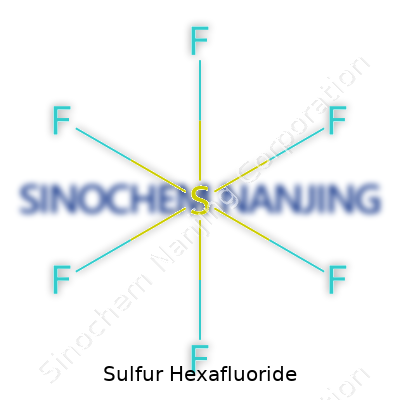
| Names | |
| Preferred IUPAC name | sulfur hexafluoride |
| Other names |
Disulfur hexafluoride Sulphur fluoride UF-6 SF6 |
| Pronunciation | /ˈsʌlfər ˌhɛksəˈfluːraɪd/ |
| Identifiers | |
| CAS Number | 2551-62-4 |
| Beilstein Reference | 109872 |
| ChEBI | CHEBI:39880 |
| ChEMBL | CHEMBL2105937 |
| ChemSpider | 8016 |
| DrugBank | DB11124 |
| ECHA InfoCard | 03d036e3-e9ad-439a-9233-9136fe7ecd6a |
| EC Number | 206-557-8 |
| Gmelin Reference | 110051 |
| KEGG | C14322 |
| MeSH | D013442 |
| PubChem CID | 20633 |
| RTECS number | Vault File : WS4900000 |
| UNII | VEX7UWB8YW |
| UN number | UN1080 |
| Properties | |
| Chemical formula | SF6 |
| Molar mass | 146.06 g/mol |
| Appearance | Colorless gas |
| Odor | Odorless |
| Density | 6.164 g/L |
| Solubility in water | 0.003 g/L (20 °C) |
| log P | -3.635 |
| Vapor pressure | 3200 mmHg (25°C) |
| Basicity (pKb) | > 30 (very weak base) |
| Magnetic susceptibility (χ) | −2.2×10⁻⁸ |
| Refractive index (nD) | 1.000783 |
| Viscosity | 0.015 cP |
| Dipole moment | 0 D |
| Thermochemistry | |
| Std molar entropy (S⦵298) | 247.8 J/(mol·K) |
| Std enthalpy of formation (ΔfH⦵298) | -1220 kJ·mol⁻¹ |
| Std enthalpy of combustion (ΔcH⦵298) | -1220 kJ·mol⁻¹ |
| Pharmacology | |
| ATC code | V08DA09 |
| Hazards | |
| GHS labelling | GHS02, GHS04 |
| Pictograms | GHS04 |
| Signal word | Warning |
| Hazard statements | H280: Contains gas under pressure; may explode if heated. |
| Precautionary statements | Keep away from heat, hot surfaces, sparks, open flames and other ignition sources. No smoking. Do not breathe gas. Use only outdoors or in a well-ventilated area. Store in a well-ventilated place. Protect from sunlight. |
| NFPA 704 (fire diamond) | NFPA 704: 0-0-0 |
| Autoignition temperature | 385°C |
| Lethal dose or concentration | LC50 (rat): 850,000 ppm (1 hour) |
| LD50 (median dose) | > 100,000 mg/m3 (rat, inhalation, 1 hr) |
| NIOSH | SS0100000 |
| PEL (Permissible) | PEL (Permissible Exposure Limit) of Sulfur Hexafluoride: 1000 ppm |
| REL (Recommended) | 5 ppm (30 mg/m3) TWA |
| IDLH (Immediate danger) | 1000 ppm |
| Related compounds | |
| Related compounds |
Sulfur tetrafluoride Disulfur decafluoride Uranium hexafluoride |



