Sulfur Dichloride: Industry’s Fiery Workhorse, From Alchemy to Modern Labs
Historical Development
Looking back over the years, sulfur dichloride has played a unique role in chemical history. Alchemists from centuries ago dreamed of transformations that could turn sulfur into gold. Later, industrial chemists found uses far from the mythic pursuit of wealth, focusing instead on sulfur’s knack for reacting with other elements. By the 19th century, factory chemists started seeing sulfur dichloride as a pathway to new dyes and explosives—one of those rare materials born from sulfur and chlorine that seemed both dangerous and useful. Its trickiness didn’t put off researchers, who understood that big risks sometimes push innovation forward in unexpected ways.
Product Overview
Sulfur dichloride does not hide its personality; one whiff in a lab, and its sharp, choking odor commands respect. It shows up as a reddish-yellow liquid, a warning as plain as a “keep out” sign. The compound’s reactivity jumps out, reminding anyone handling it why safety comes first in chemistry. Decades of industrial application have taught folks to keep it tightly controlled, for the sake of both product quality and personnel. This is a substance that will not let its users get complacent.
Physical & Chemical Properties
Dive into its core, and sulfur dichloride spells trouble for the unprepared. The boiling point hovers near 59°C, making the liquid prone to vaporization when temperatures climb. Dense and eager to interact, it fights water, sparking rapid hydrolysis to release hydrogen chloride gas—strong enough to corrode metals and irritate lungs. The molecular formula SCl2 seems simple, but the molecule’s appetite for reaction stirs up a storm in real-world settings. Forget casual handling; this isn’t tap water. Sometimes, simple solutions hide a record of explosiveness, instability, and daunting risk—sulfur dichloride falls squarely into that bracket.
Technical Specifications & Labeling
Chemists and warehouse managers who have tangled with sulfur dichloride won’t hesitate to repeat those lessons: labeling isn’t a luxury. Strict warning labels follow regulatory standards, including hazard symbols for toxicity and corrosiveness. Batch details matter; trust in purity specifications means fewer nightmares downstream. For me, every time I open a new drum, attention to spec sheets means less chance of an ugly surprise—especially considering its tendency to decompose if exposed to light or air. Clarity now saves damage, confusion, and a call to the fire department later.
Preparation Method
Industry mostly produces sulfur dichloride by passing dry chlorine gas over molten sulfur. This recipe seems straightforward but demands tight process control. Run chlorine too slow, and the product stays as disulfur dichloride; too much chlorine risks over-chlorination, bumping up unwanted byproducts. Skilled operators watch temperatures and flow rates, knowing the difference between a clean synthesis run and a clogged, fuming mess inside the reactor. For those less familiar with large-scale chemical processes, every step here suggests tradition and experience as much as it relies on modern automation.
Chemical Reactions & Modifications
Turning sulfur dichloride into something else starts with its raw temper. Add water, and hydrochloric acid and elemental sulfur explode from the mixture. Mix with ammonia, and you’re neck-deep in sulfur nitrides with fascinating but hazardous properties. It pops up when making sulfur-based pesticides or as a building block for synthetic rubber. I’ve seen research labs adjusting reaction conditions, using it as a chlorinating agent to weave together molecules for everything from pharmaceuticals to specialty polymers. Through these reactions, sulfur dichloride acts like an unpredictable partner—sometimes useful, sometimes volatile, never boring.
Synonyms & Product Names
Across borders, sulfur dichloride collects a flock of aliases—sulfur(II) chloride, dichlorosulfane. Brand names barely stick, since in most cases, workers shrug, pull on their gloves, and call it by its chemical name. Regulations stick to the most recognized forms, leaving little room for creative rebranding. This consistency brings rare clarity in a field often full of ambiguity and marketing gloss.
Safety & Operational Standards
Field experience has hammered home the respect sulfur dichloride commands. Double-layer gloves, splash-proof goggles, and full-face shields count as minimum armor. Even seasoned techs keep the nearest eyewash and safety shower unblocked and ready. Ventilation systems matter—a single whiff leaves a memory sharper than a doctor’s warning. Chemical producers and laboratories rely on robust protocols, not luck. Leaks invite chaos, so sealed containers and careful inventory tracking matter much more than any rushed shortcut.
Application Area
Modern industry taps sulfur dichloride for more than one trick. Agricultural chemists coax it into making insecticides and fungicides, vital for big harvests across the world. Synthetic chemists see it as a bridge to specialty rubber and harsh chlorinating agents. It crops up in the dye industry, bringing color molecules to life with a chemical punch. Even military research has eyed its reactive character for making hazardous agents—though most folks working with it day-to-day would rather keep their distance from those chapters in the history books. Technologies change, but sulfur dichloride’s fingerprints on manufacturing persist decade after decade.
Research & Development
Academic labs and private industries are not leaving sulfur dichloride in the past. Pattern after pattern shows a focus on taming its wildest reactions, hunting for new uses where selectivity and efficiency mean better performance and fewer leftovers for the waste stream. Material scientists push the molecule into new coatings, adhesives, and polymers, aiming to harness its inherent reactivity while dodging its trickier hazards. Every paper published around the world stacks up against the risks, always seeking that elusive sweet spot where benefit trumps hazard.
Toxicity Research
The hazards sulfur dichloride presents are not theoretical. It is known for causing burns, eye damage, and respiratory trouble at low exposures. Toxicologists dig for answers to chronic and acute risks, many of them learned over hard years by those exposed with incomplete protection. We know that contact with water—either in the air or on skin—triggers damaging byproducts. Industrial hygiene protocols stress closed systems, emergency training, and real investment in monitoring equipment. Laboratory disasters, industry reports, and decades of animal studies have built the case for treating sulfur dichloride as a material best handled by seasoned professionals.
Future Prospects
No one expects sulfur dichloride to vanish from the world’s chemical catalog soon. Instead, future thinking points toward improved containment, safer handling, and smarter substitute chemistries that offer its versatility without its baggage. Process engineers talk about automation taking up the riskiest tasks, while researchers explore green chemistry alternatives. Still, manufacturing’s demand for reactive intermediates means sulfur dichloride holds onto its place in the lineup, promising as much opportunity as challenge for the next generation of chemists.
What is Sulfur Dichloride used for?
A Shifty Chemical with a Long Reach
Sulfur dichloride doesn’t show up in everyday conversation, but it pops up in more places than expected. Workers in chemical plants know its sharp, choking smell—a warning that the bright yellow vapor shouldn't be inhaled. For most people outside those industries, the only connection comes through products they never see built step by step. I once toured an industrial facility where sulfur dichloride was stored in thick-walled drums. No one lingered in that part of the building.
From Chemical Warfare to Bug Killers
The first time sulfur dichloride made headlines, it played a dark role. During World War I, it served in the manufacture of mustard gas. Safe use wasn’t something anyone worried about back then. Now, everyone working near sulfur dichloride wears chemical-resistant gear and tracks air quality. This push for safety, pushed by countless industrial accidents, changed the story.
Today’s most familiar use shows up in the world of pesticides. Farmers may not handle sulfur dichloride directly, but it helps make chemicals that protect fields from grubs, worms, and fungus. That might sound like science fiction, but it’s the reality behind the food supply chain. The chemical itself is too dangerous for direct field use, so companies treat and transform it into more stable compounds. Regular inspections make sure storage tanks and pipes don’t leak. I’ve seen how costly even a small spill can be—not just in fines but in clean-up and lost trust.
The Rubber Connection
Drive over a country road, and every tire grabs the surface thanks, in part, to sulfur dichloride. It helps vulcanize natural rubber, linking molecules so tires last through every kind of weather. Truck fleets, car owners, delivery companies—all depend on this unseen step in the rubber-making journey. The chemical industry spends a lot of time explaining these connections when environmental groups raise concerns. The rubber production process includes strict rules, with emergency scrubbing systems and backup containment to avoid environmental harm.
Problems and Protections
Handling something this reactive calls for constant vigilance. Sulfur dichloride reacts with moisture in the air, pumping out clouds of hydrochloric acid. That eats metal and burns skin fast. In the plant I visited, chemical alarms sparked a hive of activity whenever levels crept up. People trained for months to run those alarms without panic, and local emergency crews drilled for possible spills. Communities near these plants demand—and deserve—continuous transparency.
Finding Safer Alternatives
Research teams hunt for substitutes, especially ones less risky for workers and the environment. Some newer pesticides need less hazardous chemicals. Other teams focus on advanced equipment sealing to prevent leaks. No silver bullet has come along to replace sulfur dichloride in every role, but slow progress builds a better safety net year after year. My own conversations with industry engineers show that every regulatory fine, every close call, pushes research forward. Federal agencies like OSHA and the EPA monitor these plants, but the real muscle for safety comes from workers refusing to cut corners.
Sulfur dichloride will not become a household name. Still, its presence affects millions every day. As technology marches on, the hope is for safer processes—to keep production moving without the high stakes for the people who manage the yellow fumes.
What are the safety precautions when handling Sulfur Dichloride?
Understanding the Risks
Sulfur dichloride stands out as a chemical that deserves respect. It's sharp in scent and quick to react with water, air, or many everyday materials. Getting careless or losing focus near this liquid leads to trouble in a hurry—the kind you don’t want in a workday or a lab shift. Exposure may trigger nasty health effects. Chlorine gas gets released upon contact with water or moist air. Eyes, lungs, and skin threaten to pay a heavy price.
I’ve seen workers get lulled into thinking they can cut corners once they get used to strong-smelling chemicals. That sort of comfort is dangerous with something so aggressive. Safety can’t be left to memory or luck. Strong training and clear routines make a difference. Every single step and precaution must get drilled in before handling even a drop.
Personal Protection: More Than Just Gloves
A lab coat or coverall becomes the minimum for a reason. Chemical-resistant gloves that cover the wrist and beyond offer the first line of defense. Your average latex won’t cut it. Nitrile, neoprene, or butyl gloves give more real protection from the burn, sting, and breakdown. Faceshields and goggles keep sharp vapors and drops from turning sight into pain. Fresh air supplied respirators go beyond nuisance masks if there’s any risk of vapors moving around.
I had to learn the difference between “just gloves” and “right gloves” after an accidental spill left a colleague’s hand badly burned. Routine gets boring, but pain brings lessons. Nothing compares to the real fit and the right material.
Ventilation: Keeping Air Safe
Tight rooms and warm air ramp up the odds for accidental breathing of sulfur dichloride fumes. Hoods and strong exhaust fans turn out to be necessities. It goes far beyond cracking a window—full fume hoods or dedicated ventilation keep vapors out of the breathing zone and push contaminated air away from workspaces and workers. Regular air checks pull their weight, since sulfur dichloride can linger in the air longer than expected. Chlorine’s tell-tale odor means danger, not a warning to brush off.
Storage and Handling Habits
Nobody should toss bottles of sulfur dichloride on the same shelf as bleach or anything with water in it. Dry, sealed spaces built from materials that don’t react with acid or chlorine work best. Metal, glass, or specialty plastic containers get the job done, but only if the seal stays tight. Every label needs to face outward, and everyone in the room must know where the emergency showers and eyewash stations are. Anyone working with this chemical should find clear labels, spill kits, and a plan in case something breaks loose.
Strong routines get results. I’ve always felt safer—and made fewer mistakes—if the workflow demands double-checking everything before and after a job. Designate a buddy, set cleanup rules, then stick to them every single time.
Cleanup and Emergency Planning
No one expects a spill, but sulfur dichloride waits for distraction. Spill kits aren’t decorations—they need to sit close, loaded with absorbents that don’t react violently. Soda or lime never get near sulfur dichloride; only materials listed as compatible by safety experts fit the job. Every person in the space should know evacuation routes and how to use a rescue shower. Quick response keeps small mistakes from growing into medical emergencies or toxic clouds.
Over time, regular review keeps these routines sharp. Shortcuts cost real pain. Investing in thorough training and the right gear matters much more than any time saved on the job.
What is the chemical formula of Sulfur Dichloride?
Chemical Formulas Can Make or Break a Lab Experiment
Sulfur dichloride’s formula, SCl2, may sound straightforward, but a lot can happen when mixing chemicals, and a simple mistake in the formula creates chaos. Lab mishaps aren’t rare. Back in my own chemistry days, I jumbled sulfur monochloride (S2Cl2) with sulfur dichloride because the names sounded close enough, and that meant a failed reaction and a wasted afternoon cleaning glassware. SCl2 means a sulfur atom with two chlorine atoms—sounds basic, but this little combo packs more punch than people give it credit for.
Beyond The Classroom: Where Sulfur Dichloride Shows Up
SCl2 has a sharp, choking smell and a red color, which nobody forgets if they’ve once cracked a bottle open. It isn’t something people run into at the grocery store, yet it plays a role in everything from making pesticides to processing rubber. Farmers rely on some of those pesticides, and the rubber industry still uses chemicals like SCl2 to toughen up materials. In academic settings and industry, there’s no room for guessing—precision in chemistry keeps workers and students safe.
Getting the Formula Wrong Isn’t Just an Exam Problem
A wrong formula for sulfur dichloride could lead to confusion with some truly dangerous compounds. Sulfur monochloride, for example, has different properties and applications. In real workspaces, a single missed subscript can mean trouble, from ruined products to hazardous fumes. The last thing anyone wants is a chemical release because of a botched label. People’s health and safety depend on double-checking each chemical identifier.
Why Schools Should Move Beyond Memorization
Teaching SCl2 as a formula isn’t about rote memorization. It’s about understanding how to break down a compound: sulfur from group 16, chlorine from group 17, what their usual charges are, how the naming conventions make sense. When people learn the “why” behind the formula, they make fewer mistakes. I remember teachers who drilled that lesson—some even told stories about lab accidents to show the importance of accurate chemical writing.
Simple Steps Toward Safer Chemistry Practices
Chemical suppliers, educators, and lab leaders can all take small steps for safer work. Clear chemical labeling, double-checking bottles before starting any reaction, and encouraging curiosity in classrooms all help. Visual aids showing the difference between SCl2 and similar chemicals, both in structure and use, cut down mistakes. Nobody enjoys extra labels or safety drills, but having seen my share of minor lab mishaps, I’ll take a little extra effort over unnecessary risk any day.
Looking Ahead: Better Education Means Fewer Mistakes
Getting SCl2 right may seem like a small detail, but it matters. Whether mixing chemicals in a high school lab or producing materials on an industrial scale, precision counts. Teaching students the reasoning and the stakes behind each chemical formula sets everybody up for better scientific work—and keeps classrooms, workplaces, and the environment safer.
How should Sulfur Dichloride be stored?
Why Sulfur Dichloride Demands Respect
Sulfur dichloride, sometimes called SCl2, is not just another chemical on a shelf. Drawn from years working in research and chatting with plant technicians, the most seasoned voices always say the same thing: treat this liquid with care or pay the price. Its aggressive reaction with water, sharp odor, and corrosive bite leave no room for shortcuts. I once watched a bottle leak in a backroom fridge — the clean-up story alone left an impression that’s lasted for years.
Understanding the Risk Factors
This chemical loves to grab any water it can find, pulling moisture from humid air then splitting apart to release hydrochloric acid and sulfur dioxide. That stinging vapor eats away at metal, skin, and lungs. Incidents of accidental release don’t just end with a bad smell; the toxic fumes can send people to the hospital. Industry reports show even a small spill puts workers and equipment at risk for serious burns and corrosion damage.
Best Practices Learned the Hard Way
Stories float around about folks storing SCl2 in a regular storeroom or cheap plastic. Mistakes like this can ruin your day and your building. Sulfur dichloride chews through many plastics. It corrodes most metals. Glass containers work well, but only if capped with Teflon-lined seals. In my university lab, the chemical never went into ordinary fridges — it stayed sealed in assigned flasks, then stored in a dry, locked cabinet away from anything flammable or moist.
Experienced chemists always double-check for compatible packaging. Polyethylene, polypropylene, and certain fluoropolymer-lined bottles resist its bite for years. Anything less, you’re asking for a mess. Industry guides recommend avoiding all exposure to direct sunlight or heat, since SCl2 breaks down, making even nastier byproducts. Sharing a storage space with bases or anything with water content? Recipe for disaster.
Ventilation and Emergency Preparedness
Investing in a good chemical fume hood or dedicated vented storage locker never feels wasted here. Airflow pulls away small fumes before they build up. I’ve seen people underestimate the need for a proper vent system, then watch as a small container release clears an entire section of a building. Routine inspections help too: look for swollen bottles, crusted caps, or strange odors. Those clues save lives and money.
Gloves and goggles should sit next to the storage area, not in a drawer across the room. It doesn’t matter if someone only plans to peek at the supply — one splash changes everything. Nearby eyewash stations and neutralizing spray bottles cut down reaction time if something does go wrong. Labs that run regular drills tend to bounce back stronger after emergencies.
Keeping the Chain of Responsibility Strong
Trust never substitutes for clear labeling and restricted access. Every container needs dates and hazard symbols. Training new team members takes patience, but pays off. In chemical manufacturing, veterans mentor new hires for months before letting them near volatile substances. Records track every transfer. Quick digital checks do more than meet regulations; they remind everyone what’s at stake.
Storing sulfur dichloride boils down to habit, vigilance, and respect for chemistry. Every shortcut increases the odds of trouble, and most mistakes come from trying to save a minute or a buck. People with experience in chemicals know: some lessons just aren’t worth learning the hard way.
What are the potential hazards of Sulfur Dichloride?
Sulfur Dichloride Is More Than a Simple Chemical
Sulfur dichloride doesn’t show up in the mainstream news, but folks working in chemical plants, research labs, or certain manufacturing lines run into it. The bright yellow-to-red liquid with a sharp odor leaves an impression you never forget. If you’ve ever caught a whiff, the acrid smell makes you respect what’s in the bottle long before you look up the safety sheet.
Health Risks You Can’t Shake Off
Sulfur dichloride eats through tissue on contact. It burns your skin and eyes with almost no warning, often leaving deep and painful injuries. It doesn’t stop there—breathing the fumes can shred the inside of your nose and throat. There’s risk of pulmonary edema, meaning fluid builds up in the lungs, cutting off oxygen and creating a medical emergency. The Occupational Safety and Health Administration (OSHA) only allows a low level of sulfur dichloride vapor in the air—1 part per million—because the damage goes from irritation to life-threatening around that threshold.
Fire and Reactivity Hazards
Ever watch sulfur dichloride meet water? The reaction happens right on contact, spitting out hydrochloric acid and sulfur dioxide. Both are toxic gases. The heat generated sometimes sparks fires, turning a simple spill into a chaotic scene. Trying to clean up a leak with water only spreads trouble—with more toxic clouds and more mess.
This chemical also reacts with organic materials—think wood, sawdust, and cloth—which means storage requires strict control. Experienced handlers keep it far from any dampness or combustibles and never let it near open flame or hot surfaces. The explosive reactions with certain metals and metal oxides raise the stakes in any environment where lapses can cost lives.
Environmental Impact
Spilled sulfur dichloride doesn’t just stay put. Once it hits water in soil or streams, the resulting acidic byproducts can wipe out aquatic life and damage plants. Regulators classify it as a hazardous substance partly because of its persistence. Removing the residue and neutralizing spilled material cost time—often days—and significant resources. Local first responders and environmental agencies show up whenever a truck tips or a warehouse leaks.
Solutions and Safer Practices
Protection comes from strong protocol and respect for what this liquid can do. Anyone handling sulfur dichloride wears chemical-resistant gloves, goggles, and full-face protection. Good ventilation is non-negotiable, so fumes don’t concentrate. Storage containers stay sealed in dry, cool locations, with secondary containment to catch leaks.
Facility managers run regular drills to keep teams sharp on evacuation and emergency decontamination. Chemical spills get neutralized with basic compounds like lime, but only by trained staff in protective suits. Safety showers and eyewash stations sit close to work areas. Operations often include real-time air monitors for vapor, and anyone exposed gets medical attention immediately—there’s no toughing out this kind of burn.
Sulfur dichloride brings a toolbox of industrial uses, but that doesn’t lower the risks tied to each drop. Strong rules backed by ongoing training, tightly maintained equipment, and a culture that never cuts corners shield workers and the community. It’s a matter of paying attention, every shift and every shipment.
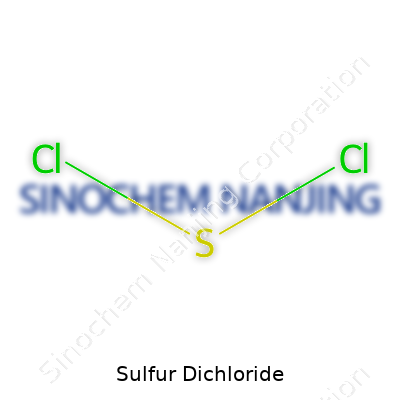
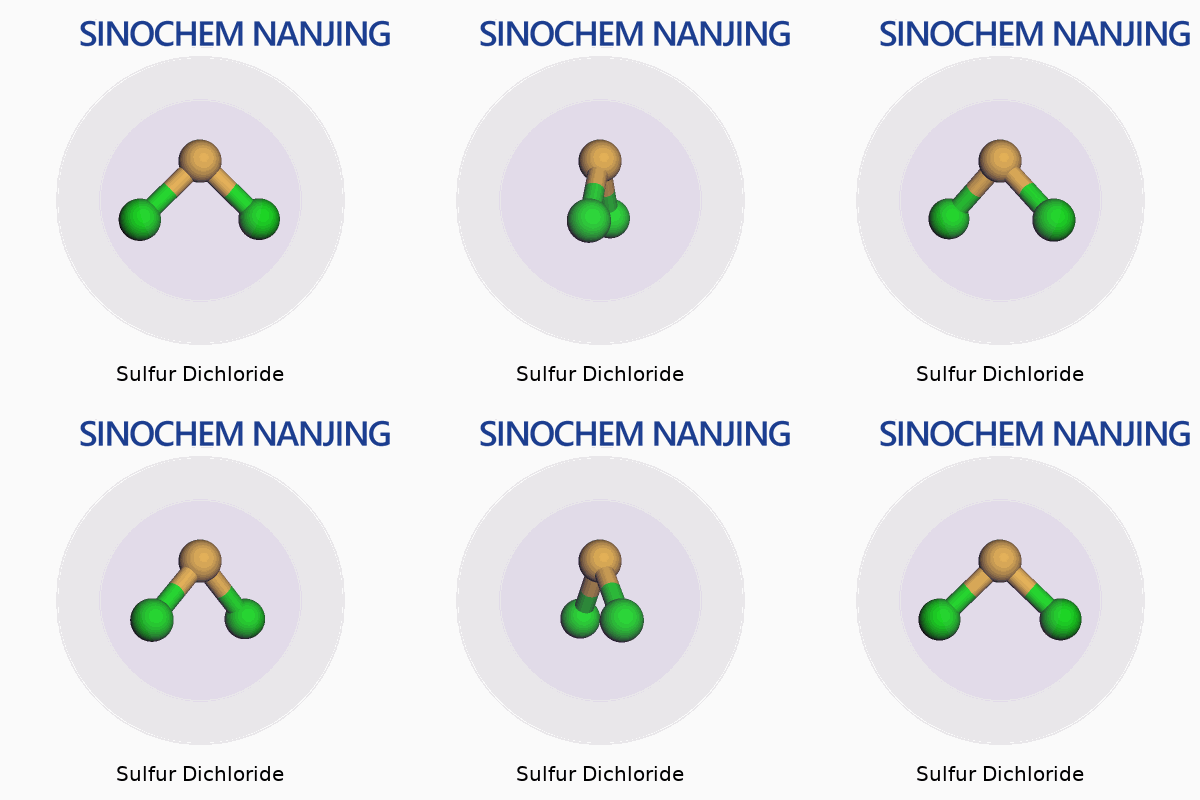
| Names | |
| Preferred IUPAC name | Dichlorosulfane |
| Other names |
Sulfur(II) chloride Sulphur dichloride Sulphur(II) chloride Dichlorosulfane |
| Pronunciation | /ˈsʌlfər daɪˈklɔːraɪd/ |
| Identifiers | |
| CAS Number | 10545-99-0 |
| Beilstein Reference | 1209226 |
| ChEBI | CHEBI:30191 |
| ChEMBL | CHEMBL137072 |
| ChemSpider | 77468 |
| DrugBank | DB11307 |
| ECHA InfoCard | 03ee1563-8f43-43a3-9f6a-431dfcf54d4f |
| EC Number | 233-245-9 |
| Gmelin Reference | Gmelin Reference: 12358 |
| KEGG | C01437 |
| MeSH | D013443 |
| PubChem CID | 24501 |
| RTECS number | WS8575000 |
| UNII | Q508534C1Z |
| UN number | UN1827 |
| Properties | |
| Chemical formula | SCl2 |
| Molar mass | 103.00 g/mol |
| Appearance | Dark red or yellowish liquid |
| Odor | Pungent chlorine-like odor |
| Density | 1.63 g/cm³ |
| Solubility in water | Reacts. |
| log P | -0.38 |
| Vapor pressure | 10 mmHg (at 25 °C) |
| Acidity (pKa) | -4.0 |
| Basicity (pKb) | -6.0 |
| Magnetic susceptibility (χ) | Diamagnetic |
| Refractive index (nD) | 1.527 |
| Viscosity | 1.106 mPa·s (25 °C) |
| Dipole moment | 2.95 D |
| Thermochemistry | |
| Std molar entropy (S⦵298) | 247.6 J·mol⁻¹·K⁻¹ |
| Std enthalpy of formation (ΔfH⦵298) | -121 kJ/mol |
| Std enthalpy of combustion (ΔcH⦵298) | -209.2 kJ/mol |
| Hazards | |
| Main hazards | Toxic if inhaled, causes severe skin burns and eye damage, reacts violently with water, releases toxic gases. |
| GHS labelling | **"GHS02, GHS06, GHS05"** |
| Pictograms | GHS05,GHS06,GHS07 |
| Signal word | Danger |
| Hazard statements | H314: Causes severe skin burns and eye damage. H331: Toxic if inhaled. H410: Very toxic to aquatic life with long lasting effects. |
| Precautionary statements | H261-H301+H311+H331-H314-H400-P210-P260-P264-P270-P271-P273-P280-P301+P310-P302+P352-P305+P351+P338-P310-P321-P330-P363-P361-P304+P340-P303+P361+P353-P405-P501 |
| NFPA 704 (fire diamond) | 3-0-2-W |
| Flash point | <0°F> |
| Autoignition temperature | 230°C |
| Explosive limits | Not explosive |
| Lethal dose or concentration | LD50 oral rat 190 mg/kg |
| LD50 (median dose) | LD50 (median dose): Oral-rat LD50: 107 mg/kg |
| NIOSH | SU8560000 |
| PEL (Permissible) | 1 ppm |
| REL (Recommended) | Sulfur Dichloride REL: 1 ppm (3 mg/m3) as TWA |
| IDLH (Immediate danger) | 20 ppm |
| Related compounds | |
| Related compounds |
Sulfur monochloride Sulfur tetrachloride Disulfur dichloride Thionyl chloride Sulfuryl chloride |



