Sodium Stearate: A Deep Dive into Its Journey and Significance
Historical Development
Soapmaking runs deep in human history, tracing back thousands of years, but the story of sodium stearate, a fundamental ingredient in modern soaps, picks up pace during the Industrial Revolution. Steam-powered factories began producing soap on a mass scale, and the chemistry behind sodium stearate started to gain attention. Chemists discovered that mixing animal fats or vegetable oils with sodium hydroxide led to reliable soap, and out came sodium stearate crystals—a foundation of countless bars in bathrooms and workshops around the world. This leap from artisanal, small-batch soap to uniform, dependable products transformed hygiene standards and laid the groundwork for contemporary cleaning products, cosmetics, and even pharmaceuticals. Learning from early production mishaps and health scares, manufacturers dialed in processes to maximize purity and quality, shaping strict standards for what we use today.
Product Overview
In everyday life, most folks experience sodium stearate as the common soap bar. This salt comes from the marriage of stearic acid and sodium hydroxide. It brings that familiar feel—rich lather, effective cleansing, and a soft finish on the hands. Besides cleaning, sodium stearate works as a thickener in deodorants, stabilizer in skincare formulas, and even serves up antistatic protection in plastics. Manufacturers look to it for these multipurpose traits, relying on its consistent performance in everything from toothpaste to paint. The food, pharmaceutical, and cosmetic industries trust sodium stearate as a backbone ingredient because it reliably dissolves dirt, softens with water, and holds its own across a spectrum of temperatures and pH levels.
Physical & Chemical Properties
Sodium stearate typically appears as a white powder or flake, dissolving with ease in hot water. Drop it into cold water, and it takes a bit more coaxing to break down. Its melting point sits around 245°C, giving it stability in hot conditions. On the chemical front, it's a fatty acid salt—C18H35NaO2—made by neutralizing long-chain stearic acid, usually drawn from beef tallow or palm oil. That long carbon chain offers hydrophobic (water-repelling) muscle, while the sodium part brings hydrophilic (water-attracting) flexibility. This mix lets sodium stearate form micelles, microscopic bubbles that trap oils, dirt, and grime, carrying them away in water during a rinse. These molecular traits also make it a handy emulsifier in lotions and creams.
Technical Specifications & Labeling
Detailed labeling allows buyers and regulators to track every gram that enters a product. Any supplier worth their reputation delivers documentation showing purity—typically upwards of 98%—along with detailed certificates of analysis referencing heavy metals and other contaminants. Labeling sticks to internationally agreed upon norms under the Globally Harmonized System, with hazard pictograms if needed. Companies using sodium stearate spot clear ID numbers, batch codes, supplier addresses, and targeted usage guidelines right on packaging. This level of traceability matters in the hands of food and pharma manufacturers, who must pass regulatory reviews and safety audits before products reach customers.
Preparation Method
Leading manufacturers produce sodium stearate by combining stearic acid with sodium hydroxide under controlled heat. The process usually kicks off with purified animal or vegetable fats, which get split into free fatty acids before sodium hydroxide turns these into the sodium salts. Once the reaction goes full tilt, the resulting sodium stearate floats to the top, where it’s skimmed, washed, and carefully dried. This approach makes consistency possible batch after batch, allowing consumers and industrial buyers alike to expect stable performance every time they open a new container. The whole process uses closed systems and clean-in-place protocols to keep out unwanted impurities.
Chemical Reactions & Modifications
Sodium stearate’s backbone welcomes other chemistries to tweak results. In industrial operations, adding extra sodium chloride helps separate out soap during manufacturing by dropping out sodium stearate from aqueous solutions—a nifty trick for purifying the final product. Beyond soap, chemists sometimes swap sodium with potassium or add co-surfactants to tailor physical properties for different cleaning or lubrication jobs. Sodium stearate also goes all out in metal treatment, playing a role in rust prevention or lubrication, and its derivatives appear as stabilizers in certain plastics and rubbers.
Synonyms & Product Names
Look through an ingredient list, and sodium stearate might turn up as Stearic acid, sodium salt, Sodium octadecanoate, or just plain Soap when the formula is basic. In various technical catalogs, it appears under trade names assigned by major chemical suppliers—often as a component in proprietary blends for cosmetics and personal care. Those familiar with industry or regulation know its Code of Federal Regulations identifier (21CFR172.863) and chemical abstracts number (CAS 822-16-2), both key when tracing data or ordering bulk quantities for production.
Safety & Operational Standards
Safety standards around sodium stearate stem from its widespread use but don't cut corners. Although it’s classified as non-toxic in normal concentrations, workers in production facilities stick to gloves, goggles, and proper ventilation to fend off skin and eye irritation. Occupational Safety and Health Administration (OSHA) and European Chemicals Agency (ECHA) both push for rigorous adherence to safety measures, and top-tier quality assurance teams require batch QA/QC, Emergency Data Sheets, and material handling protocols. Transport and long-term storage follow strict hazard labeling—sometimes flagged for environmental caution in aquatic settings—while end users get directions on disposal and spillage, especially as soap waste in bulk can alter water treatment chemistry.
Application Area
Aside from cleaning skin and homes, sodium stearate powers several commercial sectors. In cosmetics, this salt creates the backbone for stick deodorants, lending structure, glide, and moisture absorption. Pharmaceutical makers use it as a binder, helping pills keep shape and disintegrate on cue. The plastics industry turns to sodium stearate's antistatic and lubricating properties for molding and extrusion. Rubber manufacturing benefits from its mold release effects, and ceramic makers dabble with sodium stearate in slip casting, aiding in fine surface finishes. Textile, paint, and ink industries rely on its emulsification chops, giving stability and workability to a multitude of formulations beyond what old-fashioned soaps ever achieved.
Research & Development
R&D teams keep pushing the boundaries of sodium stearate’s role in greener chemistry and sustainable manufacturing. Industry and university labs look into blending sodium stearate with biodegradable surfactants, reducing reliance on petroleum-based feedstocks. Efforts stretch into nanotechnology, where sodium stearate forms micelles as capsules for drug delivery or disperses fine particles in advanced materials. There’s ongoing research into improving its solubility and compatibility with sensitive bioactive ingredients in personal care products. As consumers demand transparency and fewer synthetic additives, research focuses on extracting baseline materials from renewable sources, aiming to make sodium stearate not just effective, but also genuinely sustainable from start to finish.
Toxicity Research
Early studies on sodium stearate injected some caution, but further toxicological research consistently shows low risk at typical usage levels. The U.S. Environmental Protection Agency and ECHA list sodium stearate as safe when handled properly, flagging only minor threats like eye irritation in concentrated form. Published data from chronic exposure studies highlight no signs of carcinogenicity, mutagenicity, or reproductive harm. Animal testing and human patch trials reinforce that sodium stearate in finished personal care goods rates as non-sensitizing and non-irritant. Children, people with eczema, and the elderly remain safe, provided they avoid swallowing concentrated forms or rubbing it into mucous membranes. Disposal in massive quantities can throw off wastewater processing, and scientists encourage stepped-up research on sodium stearate’s environmental profiles, ensuring city planners and water engineers have enough data for safe handling.
Future Prospects
Demand for simple, versatile molecules like sodium stearate won't drop off soon. Clean label trends push producers to re-examine the source and processing footprint, favoring plant-derived stearic acid and less energy-intensive preparation. As regulatory eyes sharpen around trace contaminants and environmental impacts, sodium stearate manufacturers work on low-waste synthesis, capturing byproducts for biofuel or animal feed. Emerging technologies could harness sodium stearate’s micelle-forming skills in new therapies, advanced coatings, and responsive packaging. Future researchers hope to enhance its environmental credentials while expanding its utility—proving that even a centuries-old chemical can keep up with the next generation of sustainable industry.
What is sodium stearate used for?
Everyday Chemistry in Action
Most people use products containing sodium stearate each day, without ever giving it a second thought. This chemical comes from natural fatty acids and sodium salts. It plays a leading role in many soaps, deodorants, and even cosmetics lining store shelves. That has a real impact: try washing your hands with a simple bar soap—the lather and cleansing power come from sodium stearate. The science is simple; sodium stearate works with water, picks up grease, dirt, and sweat from skin, then holds it in the lather until rinsed away.
Supporting Cleanliness and Hygiene
Personal hygiene products use this ingredient for a good reason. People need soap that works—one that not only foams up but actually cleans. Sodium stearate’s surfactant properties offer just that. It helps soap bars keep their shape, stop melting down in the shower, and last longer with daily use. Manufacturers rely on this quality, and that translates to fewer wasted products for consumers and less overall expense.
Cosmetics, Deodorants, and Texture
Sodium stearate isn’t just about keeping things clean; it's also about how products feel and function. It acts as a thickener and stabilizer in creams, shaving products, and stick deodorants. A deodorant stick that glides on smoothly exists because sodium stearate stiffens the formula to the right texture. From lipstick to foundation, this compound gives a smooth finish and holds ingredients together so nothing separates over time. In my daily life, reading the ingredients list shows just how common it is—even toothpaste uses it to keep formulas consistent.
Environmental and Health Considerations
People ask questions about what’s in their products—rightly so. Sodium stearate stands out because it is often sourced from plant oils or animal fats, so its sustainability depends on the choices manufacturers make. Palm oil, for instance, has been connected with deforestation and habitat loss. More companies now choose to source their ingredients responsibly, driven by consumer demand for greener products. Researchers studying sodium stearate find it is generally non-toxic, non-irritating, and doesn’t accumulate in the body or environment. The Cosmetics Ingredient Review panel affirms its safety for use in personal care products, based on available data. That offers peace of mind for shoppers concerned about long-term health.
Challenges and Solutions
Challenges come up, especially for people with allergies or for those who want vegan products. Sodium stearate sourced from animal fat can be an issue. Product labeling and ingredient sourcing need improvement. Better transparency from companies would help people make choices matching their values and health needs. Opting for plant-based stearates provides a vegan alternative, and demand for such options will likely continue to rise as consumers voice priorities.
Looking Forward
Sodium stearate shapes the soaps and personal care products people use every day. Safety practices, responsible sourcing, and transparency matter. With the right information, anyone can make informed decisions about the products they bring home and the impact those choices have on both well-being and the environment.
Is sodium stearate safe for skin?
What Is Sodium Stearate?
Sodium stearate pops up in most bathrooms, even if people don’t notice it. It’s the main ingredient that gives many bar soaps their solid form and silky lather. This chemical comes from a reaction between stearic acid (often from plants or animal fat) and sodium hydroxide. In everyday language, it’s a kind of soap salt.
Everyday Exposure and Real Concerns
Looking at my own shower shelf, I see it in nearly every bar soap label. Over the last couple decades, millions have used products with sodium stearate on their hands, faces, and bodies without much fuss. The real question sits with sensitive skin types and allergies. Most people don’t notice any irritation, but those with eczema or reactivity have a different story. Dermatology research backs this up—sodium stearate rarely causes problems on its own. Instead, reactions tend to come from fragrances, dyes, or other harsh detergents mixed in.
Evaluating the Science
The FDA allows sodium stearate in cosmetics and does not restrict its use beyond basic safety checks. The Cosmetic Ingredient Review (CIR) Expert Panel reviewed sodium stearate’s safety by looking at years of studies. They found no toxicity concerns when used on skin. Long-term data shows that sodium stearate is not absorbed through the skin in any meaningful amount. It doesn’t build up in body tissues or cause harm in standard cosmetic formulas.
What About Skin Dryness?
Some people link bar soap and dryness, blaming sodium stearate. Here’s my take: pure sodium stearate soap washes away oils from the skin. If you wash too much or use strong, basic bars, you may strip away more oil than you want. The old “squeaky clean” feel means your skin may need a moisturizer. It’s more about how much you wash and what’s in the rest of the bar than sodium stearate alone. Glycerin, plant butters, and other nourishing ingredients in soap can help keep the skin comfortable.
Hidden Ingredients Matter More
In personal experience—and what I tell friends and family—choosing a simple, fragrance-free bar soap is the best move for sensitive skin. Big brands tend to add perfumes and dyes that cause more issues than base soap ingredients like sodium stearate ever will. Reading the label is a small step, but it can help avoid problems. Those who struggle with allergies or dry patches should try testing a new soap on a small area first before lathering up head to toe.
Better Choices for Different Skin Types
Anyone worried about dryness can look for gentle cleansers. Syndet bars (synthetic detergents) often have lower pH, closer to healthy skin. Some people prefer soap-free formulas. Ingredients like shea butter, olive oil, and oat extract in soap can soften the drying effects of any cleanser, sodium stearate included. The shift toward gentle, fragrance-free cleansers is growing, and most dermatologists support this for anyone with sensitive or problem skin.
Final Thoughts
From a science and real-world angle, sodium stearate gets a green light for average, healthy skin. The real troublemakers tend to be the extra chemicals in soaps. Listening to your skin, reading labels, and being honest about your reaction to certain products make the biggest difference.
Is sodium stearate natural or synthetic?
Understanding What Lands on Our Labels
Most of us trust that the ingredients in our soap, deodorant, and even toothpaste don’t require a PhD to understand. So seeing “sodium stearate” on a label sparks questions: did this come from nature, or somebody’s lab? I’ve asked myself the same thing, staring at bars of soap and rows of skin products in grocery aisles. It can feel overwhelming trying to figure out what all these names mean for your health.
Where Does Sodium Stearate Come From?
Sodium stearate comes from a chemical reaction. On one hand, you have stearic acid—a type of fatty acid found in natural sources like beef fat, pork, shea butter, cocoa butter, and many vegetable oils. On the other, sodium hydroxide, known more commonly as lye, which chemists produce from saltwater. Mix these two, and sodium stearate forms. Some companies use animal fats because they’re abundant and cheap, while plant-based stearic acid enters the mix for vegan or cruelty-free claims. Either way, the reaction itself happens in a factory, not in nature. No tree or animal produces sodium stearate on its own.
“Natural” Isn’t Always What it Seems
“Natural” gets tossed around liberally. I remember hearing that word on every shampoo bottle as a teenager, believing it meant straight-from-the-earth. Sodium stearate blurs this line. Its building blocks may start in natural sources, but the process strips away nearly everything but the pure fatty acid, then recombines it. The lye in the reaction is synthetic. Once the reaction finishes, none of the original animal or plant traits are left—just a white, soapy powder. The FDA doesn’t lay out a strict definition for “natural” in cosmetics, which leaves a lot of wiggle room for marketing. So, even if sodium stearate started as something found in shea butter, what’s in your deodorant came from a manufacturing line.
Why Purity Matters
Safety and consistency drive companies to use synthetic versions, even for ingredients with natural roots. Oils and fats from crops vary every season; purity levels vary even more for people who buy raw materials from small suppliers. By making stearic acid in controlled settings, manufacturers cut the risk of contaminants, bacteria, or allergens. For a consumer with sensitive skin or allergies, this precision feels reassuring. The odds of getting a clean, reliable product go up when everything starts in a lab.
How Science Helps Consumers Decide
A lot of people I know want more than advertising—they want to understand what’s going on their skin. Science can provide clear answers. Chemists know exactly how to test the composition and quality of sodium stearate. Public databases and peer-reviewed studies back up claims about how it breaks down in water, how it interacts with skin, and how it’s processed by wastewater plants. This helps cut through greenwashing, so families can find real answers instead of clever slogans.
Better Transparency and Smarter Choices
If brands shared where their stearic acid comes from—vegetable or animal—people could choose what aligns with their values or dietary restrictions. I always look for vegan certification on personal care products, since animal fats don’t line up with my lifestyle. Clear labeling and honest sourcing keep trust strong between companies and customers.
Sodium stearate sits at the crossroads between natural origins and high-tech processes. As consumers, our job isn’t to memorize every chemical, but to ask questions and demand straightforward answers. Only then can we judge if “natural” claims really match how we want to live, and what we put on our bodies every day.
Can sodium stearate be used in food products?
What Sodium Stearate Really Is
Sodium stearate shows up in plenty of everyday products. You’ll find it in soaps and cosmetics, sometimes as a foaming agent or emulsifier. In short, it’s the sodium salt of stearic acid, which comes from animal fat or vegetable oils. The main appeal? It keeps things from separating and helps textures stay smooth. Seems harmless at first glance, especially since food products carry countless E-numbers and chemical-sounding names. It’s worth digging deeper before tossing it into a grocery basket.
Food Use: Facts on the Table
Sodium stearate hasn’t carved out much space on ingredient labels at the supermarket. While some food additives come with familiar E-numbers, sodium stearate doesn’t regularly pop up as an approved food additive in the U.S. or in Europe. The FDA lists stearic acid on its GRAS (Generally Recognized as Safe) register, usually when found naturally in fats and oils. Sodium stearate, though, sits in gray territory. It doesn't have a spot on the authorized food additives lists from major food safety agencies.
In practical terms, you’re more likely to find food-grade calcium or magnesium stearate in tablets and candy coatings than sodium stearate. Those versions keep things from sticking and help powders flow. Even in supplements, manufacturers lean on alternatives because sodium stearate’s properties and safety for consumption haven't been evaluated to the same degree. Trust plays a role here. When I’m shopping or preparing food for family and friends, I want transparency and a clear record of safety.
Health Questions: Caution Required
Stearic acid—what sodium stearate is made from—doesn’t tend to raise alarms in reasonable amounts. It’s a common part of animal and plant fats, and the body can handle it well. The real sticking point appears after sodium gets involved. Eating sodium in large amounts, in any form, links to higher blood pressure and heart issues. That’s not unique to sodium stearate, but it adds one more reason to ask for more evidence before it moves into snack bars or instant meals.
Another issue: chemical processing. Factories often use sodium hydroxide, also known as lye, to make sodium stearate. It matters where the raw materials come from, what’s left after processing, and if food safety standards are being met. Consumers want more than empty assurances. Trust in what’s on the plate comes from openness about ingredient sourcing, manufacturing, and long-term health impacts.
Food Safety and Calls for More Research
Regulatory bodies like the FDA and EFSA set the bar for food safety. Until there’s trustworthy, peer-reviewed data showing that sodium stearate belongs in food, the risk looks unnecessary. Additive approvals aren’t just about avoiding harm; they ask for clear benefits. Testing must show what happens when people eat it—short-term and over years.
Better Choices for Now
Manufacturers wanting a binding or anti-caking agent already have plenty of approved choices. For consumers, sticking with ingredients clearly recognized and vetted for safety just makes sense. Most people prefer whole foods with simple, familiar components. Until science and safety catch up, there’s little reason to open the pantry door to sodium stearate.
What are the side effects or risks of sodium stearate?
Sodium Stearate: Common Ingredient, Uncommon Conversation
Many of us use soap, deodorant, toothpaste, and even some processed foods every day. Sodium stearate is one of those chemical names floating on the ingredients list that most people skip over. It acts as a stabilizer, thickener, and emulsifier. Its job is to help products hold together and give that smooth, solid feel to bars of soap or keep toothpaste from separating. But not many folks stop to consider if using sodium stearate is all that safe, or if there are risks and side effects worth knowing about.
Allergic Reactions Don’t Stay on the Label
Some people find out the hard way that their skin reacts to certain ingredients in personal care products. With sodium stearate, reports of irritation do exist, especially among those with sensitive skin. Allergic reactions sound simple — redness, itching, maybe a rash — but anyone who’s experienced a strong reaction knows it interrupts daily life. Ingredient lists matter a lot to people who spend time searching for triggers that make their eczema or contact dermatitis worse.
Inhalation and Occupational Exposure
Production workers may be at greater risk than the average person washing their hands. Breathing in fine sodium stearate dust can irritate the throat and lungs. They often have to use masks and improved ventilation in plants where this material is processed. Chronic exposure can trigger respiratory symptoms, especially if dust controls aren’t up to par.
What Science Says About Long-Term Risks
Food-grade sodium stearate pops up in chewing gum, chocolate coatings, and other processed foods. The US Food and Drug Administration lists it as "generally recognized as safe" for most uses. Large-scale studies haven’t shown evidence that this ingredient causes cancer or disrupts hormones. Still, the way it’s made — by combining stearic acid with sodium hydroxide — raises questions for some people. Animal studies give little cause for alarm, but long-term effects in humans continue to receive attention.
Contamination Concerns: More Than Just Sodium Stearate
Often, ingredients like sodium stearate aren’t pure. They can contain trace amounts of contaminants left over from production, including heavy metals or residual solvents. While manufacturers must follow strict safety standards, contamination scandals in the food and cosmetic world remind everyone to stay vigilant. The risk comes not so much from sodium stearate itself, but from what could hitch a ride with it.
Reducing Risk Starts at Home and in Industry
People with extra sensitive skin often look for products labeled fragrance-free or made for sensitive skin. Choosing transparent brands and reading labels closely sets the stage for fewer surprise reactions. For those working with raw sodium stearate, using personal protective equipment and ensuring adequate ventilation in the workplace go a long way. Regular inspections and adherence to safety guidelines help keep contamination in check.
Questions Still Worth Asking
Companies owe it to consumers to keep ingredients safe and labels honest. Sodium stearate rarely causes trouble for most people, but for a small group, it creates real headaches. Using reputable brands and checking updates from organizations like the FDA helps keep risks in perspective and backs up choices with solid information.
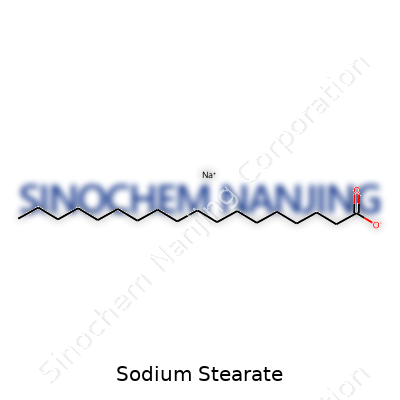
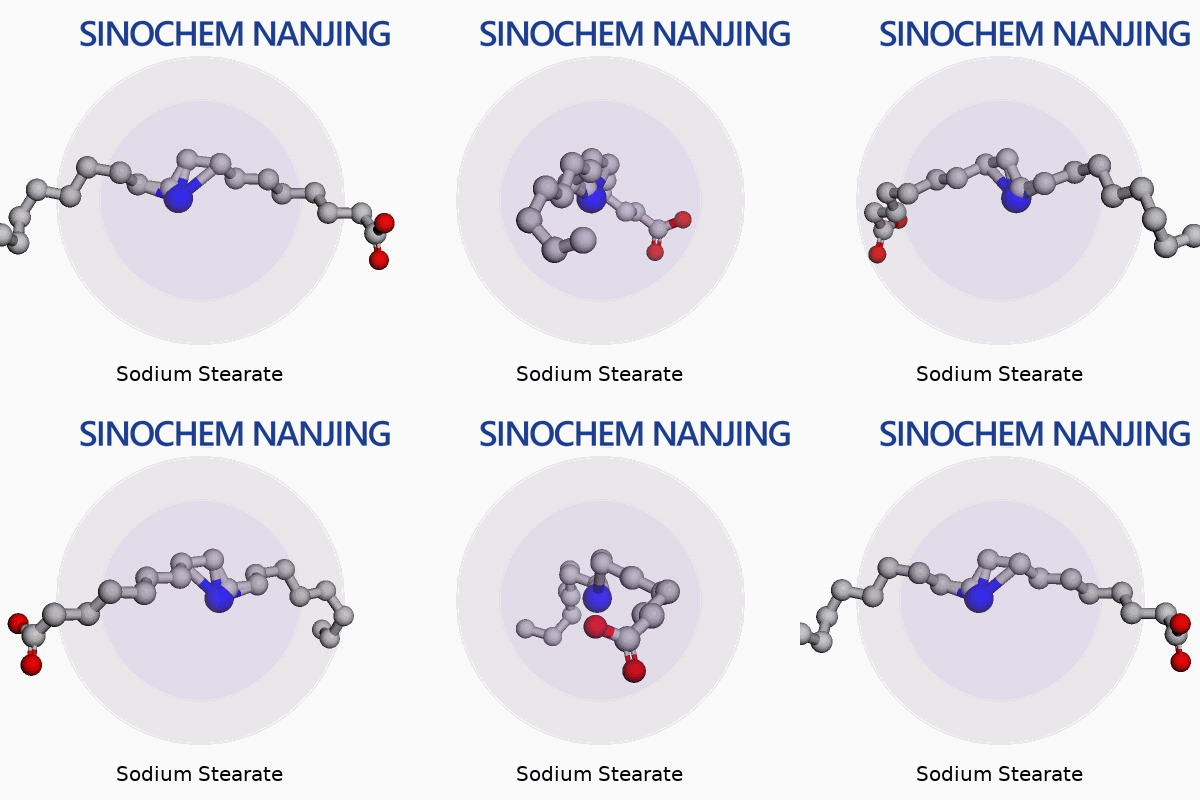
| Names | |
| Preferred IUPAC name | Sodium octadecanoate |
| Other names |
Octadecanoic acid, sodium salt Stearic acid sodium salt Sodium octadecanoate |
| Pronunciation | /ˈsəʊdiəm ˈstɪəreɪt/ |
| Identifiers | |
| CAS Number | 822-16-2 |
| Beilstein Reference | 1208152 |
| ChEBI | CHEBI:90947 |
| ChEMBL | CHEMBL253884 |
| ChemSpider | 18419 |
| DrugBank | DB03247 |
| ECHA InfoCard | 100.031.415 |
| EC Number | EC 209-163-7 |
| Gmelin Reference | 26554 |
| KEGG | C01780 |
| MeSH | D017366 |
| PubChem CID | 23681145 |
| RTECS number | WLK4508000 |
| UNII | 456UQ8K4Y6 |
| UN number | UN2817 |
| Properties | |
| Chemical formula | C18H35NaO2 |
| Molar mass | 306.48 g/mol |
| Appearance | White or off-white powder or granules |
| Odor | odorless |
| Density | 1.08 g/cm³ |
| Solubility in water | Moderately soluble |
| log P | -1.3 |
| Acidity (pKa) | ~10.0 |
| Basicity (pKb) | 14.73 |
| Magnetic susceptibility (χ) | +1400.0e-6 cm³/mol |
| Refractive index (nD) | 1.028 |
| Viscosity | Viscous liquid |
| Dipole moment | 1.70 D |
| Thermochemistry | |
| Std molar entropy (S⦵298) | 504.1 J·mol⁻¹·K⁻¹ |
| Std enthalpy of formation (ΔfH⦵298) | -726.1 kJ/mol |
| Std enthalpy of combustion (ΔcH⦵298) | −9969.8 kJ/mol |
| Pharmacology | |
| ATC code | A01AA01 |
| Hazards | |
| Main hazards | May cause eye, skin, and respiratory irritation. |
| GHS labelling | GHS07, Exclamation mark |
| Pictograms | GHS07 |
| Signal word | Warning |
| Hazard statements | H315: Causes skin irritation. |
| Precautionary statements | P264, P270, P305+P351+P338, P337+P313 |
| NFPA 704 (fire diamond) | 2-0-0 |
| Flash point | > 250 °C |
| Autoignition temperature | > 385 °C |
| Lethal dose or concentration | LD50 Oral Rat > 2000 mg/kg |
| LD50 (median dose) | LD50 (median dose): Oral (Rat) > 20,000 mg/kg |
| NIOSH | WI9880000 |
| PEL (Permissible) | PEL (Permissible Exposure Limit) for Sodium Stearate: Not established |
| REL (Recommended) | 100 mg/kg |
| Related compounds | |
| Related compounds |
Stearic acid Sodium oleate Sodium palmitate Potassium stearate Calcium stearate Magnesium stearate Sodium laurate |



