Sodium Hydrosulfide: Moving Past the Hype of Industrial Chemistry
A Look Back at Its Role in Chemistry
Every so often, the focus of the chemical world shifts to one of its silent workhorses. Sodium hydrosulfide has gotten much less attention than it deserves, despite work dating back to the nineteenth century. Folks working in pulp and paper mills, tanneries, or mining all encountered it at some point, even if they call it by different names. This chemical grew up with industry itself, providing a shortcut in processes that otherwise took days. For those with a memory of the mid-20th century, stories about sulfide’s sharp smell filling the air during a late-night plant shutdown weren’t uncommon. Times have changed, but sodium hydrosulfide still holds a serious place in how raw goods transform into stuff people use every day.
Pulling Back the Curtain on Its Make-Up
Sodium hydrosulfide usually comes as colorless crystals or in solution. Pick up a bag of the solid and you notice a sulfurous sting in the nose. It dissolves well in water, and the solution gets pretty alkaline because of how the hydrogen sulfide breaks up. If you mix it into hot water, there’s a pop—hydrogen sulfide fumes escape, which nobody wants to breathe in. The chemical formula seems simple, NaHS, but its behavior in the real world offers much more to talk about. Left exposed to air, the material starts to oxidize, which means old containers in forgotten labs can hold surprises. Some folks in industry swear by the flake form, others need it in a solution for easier mixing. Either way, the properties shape everything from storage rules to the ways technicians handle it in the field.
Making Sodium Hydrosulfide: Tradition and Tweaks
Unlike many fancy organics, sodium hydrosulfide doesn’t need a long string of intermediates. Manufacturers usually run hydrogen sulfide gas into sodium hydroxide solution, and that’s about as direct as modern chemistry gets. Mistakes in the process mean a cloud of stench escapes, so the folks running the pipes have to be careful. Newer plants try to recover every bit of gas so none leaks, but older setups sometimes still stink up the neighborhood. Some labs can prepare small batches by reacting sodium sulfide with extra acid, but industrial players stick to the gas-and-base approach because it scales. Folks concerned about emissions push for greener methods or extra scrubbing systems, but costs and reliability have the final word in most facilities.
Sodium Hydrosulfide’s Many Faces and Reactions
Every chemist who deals with reducing agents has run into NaHS, but it also shows up under the names sodium monosulfide or hydrosulfuric acid sodium salt. Using it means being quick on your feet, as it reacts easily with acids to release hydrogen sulfide gas. In mining, that reactivity lets engineers separate metals based on their abilities to form sulfur-rich sludges. In leather processing, NaHS breaks apart hairy matter on hides, saving hours of labor. Pulp mills count on it for pulping wood chips—NaHS helps chop up lignin, the stuff that gums up good paper. Each use relies on its strong reducing power, though the by-products require sharp environmental controls. Every modification to the process can mean changes in side-reactions, risks, or even the way workers have to suit up. Those working downstream rarely see the original chemical, but its fingerprints stay on countless products.
Sizing Up Safety and Smarts in Handling
Walking into a plant handling NaHS means recognizing the risks. The smell tells you what’s in the air before you check a label, but not everyone knows the dangers if fumes get high. Hydrogen sulfide knocks out a person’s sense of smell fast, so relying only on your nose leads to trouble. Proper gear—face shields, gloves made for strong alkalis, and good vent systems—makes the difference between safe handling and a medical emergency. Some states or regions set stricter standards, so workers bounce between new protocols depending on the plant. Open drums or leaky pipes have sent people to the hospital, and the stories float around safety meetings as reminders. Rules tend to update after incidents, not before, which pushes experienced workers to teach newcomers what training sessions often forget—those practical tricks that come from years spent in sodium hydrosulfide’s company.
Where It Counts in Industry and Technology
No matter the sector, sodium hydrosulfide threads through modern supply chains. Mining companies use it in ore flotation; it helps pull copper away from unwanted rock. Tanners use it to strip fibers fast, prepping hides for leather goods. Paper mills mix it into the kraft process, breaking down trees into pulp so pressrooms can roll out newsprint or packaging. In waste treatment, NaHS takes care of metal-laden liquids, pulling them out for safer disposal. Each of these uses depends on cost, reliability, and how much tech teams can tweak the process to clean up after themselves. Research labs sometimes use NaHS as a source of sulfide or in growing certain crystals, though safety and cleanup worries usually limit that to experienced hands.
Chasing Safer and Cleaner Approaches
In my experience, most changes to sodium hydrosulfide use grow out of two things: pressure to cut hazards, and the never-ending hunt for cleaner outputs. Environmental regulations push factories to find substitutes, chase after better neutralization techniques, or install recovery units. In practice, true substitutes haven’t caught on in every setting—NaHS is cheap, and its chemical punch hard to beat. So, attention shifts to finding tweaks that patch over the worst risks: closed-system transfers, rapid leak detection, and digital tools that spot buildup before it triggers a response. Industry trade groups and universities run trials on advanced scrubbers and process modifications, but adoption costs and tight job schedules mean change happens slow. Some specialty firms invest in research for alternative reducing agents, but many stick with proven chemistry, preferring to adjust procedures over replacing the core ingredient.
Digging Into Toxicity and Exposure Risks
Toxicity defines the boundaries for this chemical’s use. Breathing in hydrogen sulfide, released from NaHS, leads to rapid poisoning above a certain threshold, causing headaches, nausea, or in serious cases, death. Skin and eye contact can burn; long-term exposure damages health in ways safety manuals sometimes downplay. Real improvements come from monitoring and tight control over ventilation. The best crews I’ve worked with stick to routines that seem obsessive: sensors, buddy checks, double gloves. Periodic reviews bring up stories of near-misses, and old-timers stress the need for quick action if something spills. Regulatory agencies update standards in response to new toxicity data, pressing operators to lower exposure even if old guidance would have let them off the hook. In many places, hard experience sets the real limits, often months or years before new rules catch up.
Outlook for Sodium Hydrosulfide: Stay or Go?
The future for sodium hydrosulfide links straight to technology, environmental policies, and economics. Cleaner reactions and tighter regulations cut into its unquestioned dominance, but so far, few alternatives push it out of core applications. In resource extraction, as lower-grade ores force innovation, researchers chase ways to cut reagent use or recover more product per ton. As companies track every bit of waste now, sodium hydrosulfide processes either get retooled for lower emissions or are swapped out where possible—though only where costs or performance let that happen. The move toward automation in plants opens space for remote monitoring, reducing direct exposure and catching leaks before they become an issue. If research uncovers less toxic, cost-competitive options, industry will shift, but until then, sodium hydrosulfide keeps its place as a backbone chemical. The next big leap likely waits on new rules, fresh scientific breakthroughs, or a major investment from players betting on disruption rather than business as usual.
What is sodium hydrosulfide used for?
The Real Use of Sodium Hydrosulfide
People rarely talk about sodium hydrosulfide unless they work in industries that run on chemistry. Walk into a paper mill or a mining operation and you’ll soon see why this chemical matters so much for modern manufacturing. Sodium hydrosulfide, or NaHS, earns its spot in the supply chain because it gets results nobody else can touch—with all the risk and value that brings.
Turning Trees into Paper
Pulp and paper companies can’t live without NaHS. During the Kraft process, the chemical helps separate wood fibers so paper comes out strong and smooth. I once toured a plant and watched operators carefully monitor tanks as the reaction took place. Without sodium hydrosulfide, producing clean pulp would become expensive and inefficient. The outcome for consumers? Pricier packaging, notebooks, and printing paper.
Mining’s Go-To Helper
Head out to copper or molybdenum mines, and sodium hydrosulfide shows up again. Mining teams use it to float valuable minerals away from waste rock. The stakes are high here, with millions of dollars riding on how well minerals get separated. NaHS reacts with metal ions to help them “stick” to bubbles, which then float to the surface for collection. Without this step, miners would leave money in the ground, and electronics or construction could face shortages.
The “Stink” That Solves Problems
This isn’t just chemistry for profit. Municipal water systems sometimes run into trouble with hydrogen sulfide—the stuff behind that eggy, rotten stench in some tap water or sewer gas. Sodium hydrosulfide neutralizes the problem by converting hydrogen sulfide into something safer to handle. Wastewater treatment plants rely on it to manage odor and corrosion, protecting infrastructure.
Protecting Workers and the Planet
Plenty of these uses come with tough rules for safety. NaHS isn’t the friendliest chemical—exposure causes skin burns or toxic fumes, and spills threaten rivers and wildlife. Over the years, regulators forced facilities to build in serious safeguards, from sealed storage to real-time gas sensors. I spoke to facility managers who say insurance companies won’t even write policies unless operators run regular spill drills and chemical-handling workshops.
Room for Smarter Solutions
Demand isn’t slowing, and the pressure to use NaHS responsibly keeps building. Companies now invest in closed-loop systems that recycle what they can before disposal. Simple oversight makes a huge difference: training workers, using leak-proof pumps, and keeping emergency response gear on hand. More researchers turn to green chemistry, looking for replacements with lower risks but similar performance. Until those hit the market in volume, smart handling and proper technology offer the best way to balance utility and safety.
A Key Piece That’s Hard to Replace
Sodium hydrosulfide isn’t flashy, but it props up industries that touch our daily lives. Its role stretches from paper to metals to public health, showing just how much high-stakes work can happen behind the scenes in industrial chemistry. Like many powerful tools, the real story comes down to how people choose to use it—and what steps they take to control its risks while making things the world relies on every day.
Is sodium hydrosulfide hazardous?
Understanding Sodium Hydrosulfide in Everyday Workplaces
Sodium hydrosulfide pops up in more places than most people realize. Paper mills use it to break down wood into pulp. Mining operations count on it for separating ores. Tanneries apply it to process leather. I spent a summer around a pulp mill, and the local workers joked about the “rotten egg” smell drifting over town—most didn’t laugh for long. That gas actually comes from hydrogen sulfide, released when sodium hydrosulfide gets wet or hits acid.
The Health Risks No One Wants at Work
The smell offers a warning sign, but the threat goes further than an ugly odor. Sodium hydrosulfide triggers chemical burns on contact with skin or eyes. Breathing in its dust or fumes can damage the lungs. I grew up around chemical plants and heard stories of people coughing hard after short exposure while cleaning a spill. Extended contact risks headaches, dizziness, and in higher concentrations, loss of consciousness. The real sting—hydrogen sulfide gas—can numb your sense of smell fast, so workers might not even notice their risk after a few minutes.
Sodium Hydrosulfide’s Hazards Don’t Stop at Health
Water and sodium hydrosulfide make a dangerous mix. Add moisture and you can release enough hydrogen sulfide gas to create fire hazards. Frustratingly, the chemical doesn’t play nice with acids or oxidizers, either. Storage alone asks for expertise. My handful of warehouse jobs showed me that even the best-labeled drums get accidentally knocked, jostled, or stored incorrectly under pressure from busy shifts. With this compound, one slip could turn into a larger emergency fast.
What Data Says About the Dangers
Industry safety data from OSHA and the CDC spell out the dangers clearly. Hydrogen sulfide, released from sodium hydrosulfide, counts among some of the fastest-acting toxic gases. Only a few breaths of concentrated gas can overwhelm lungs, causing collapse. Direct skin contact, even through gloves with small holes, may land someone in an emergency room.
Most accidents come down to lapses in protective gear or faulty ventilation. The U.S. Bureau of Labor Statistics tracks dozens of incidents each year involving this chemical. The numbers don’t lie—companies that put routine training and air monitoring at the center of their safety plans see fewer injuries.
How a Culture of Safety Changes the Outcome
Workers deserve more than band-aid solutions and lecture-hall training. Hands-on demonstrations, clear signage, real-time ventilation monitoring, and access to eye washes and showers should sit front and center in any operation using sodium hydrosulfide. After watching a coworker get sprayed with caustic soda because a valve failed, no one on that shift ever skipped checking their PPE again. This compound requires a zero-shortcut culture.
Engineering controls make a huge difference. Closed systems and local exhausts can keep gases from building up, and automatic leak detectors catch problems before people breathe hazardous air. Some sites have moved to wireless sensors to ping supervisors’ phones if a vapor spike starts.
Regulations and Accountability Matter
National and international regulations call for specific storage, handling, and exposure limits for sodium hydrosulfide. Inspections force companies to keep their guard up—but lasting safety depends on trust between management and staff. Good operators invite worker feedback and run drills for possible spills. From my own experience, clear communication and regular reviews give workers confidence to ask questions or report near-misses instead of hiding them out of fear.
In short, sodium hydrosulfide definitely presents hazards. Plain language training, better equipment, and absolute transparency between teams mean fewer injuries on the job. Each step stands as a test of respect for the people showing up every day to handle the real work.
How should sodium hydrosulfide be stored?
Understanding the Chemical’s Behavior
Anyone who’s worked in a lab or a plant knows sodium hydrosulfide packs a punch. The rotten egg smell is hard to miss, but the real trouble starts with how reactive this compound can get if it’s left unguarded. One forgotten barrel or torn bag, and the strong odor is the least of your worries—corrosive vapors sting the nose, eyes start to water, and before long, you might find metal shelves starting to corrode. Experience tells that, more than anything, keeping sodium hydrosulfide safe starts with airtight containment.
The Role of Packaging and Ventilation
People who’ve handled this stuff day in and day out favor thick, high-density polyethylene drums or steel containers lined to resist corrosion. No one trusts a cardboard box or basic plastic bag for something this strong. It only takes a single night with a loose seal for moisture in the air to sneak inside and start a reaction, releasing toxic hydrogen sulfide gas. A good rule is to double-check every lid and gasket—the importance of a dry, tightly sealed storage container can’t be overstated. Many certified suppliers even provide drums with pressure-relief valves, which help avoid dangerous buildups.
As for the room, forget any idea of crowding sodium hydrosulfide in a cramped, stuffy space. Smart operators leave extra clearance, allow for regular checks, and make sure air flows steadily. Mechanical ventilation, preferably in an isolated chemical storage area, is the only route to go. Emergency exhaust fans won’t just protect folks on the clock; they help meet OSHA’s strict exposure guidelines, which kick in with this compound sooner than most would guess.
Separating Incompatibles and Eyeing Temperatures
Tales about accidental mixing spread fast in industry circles, and for good reason. Sodium hydrosulfide plays rough with acids and strong oxidizers. A simple splash of an acid, and you’ll see clouds of hydrogen sulfide gas, which not only smells foul but can knock people out cold. Seasoned crews stick to one golden rule: store away from acids, with a sturdy divider or even in a different room altogether. Refresher training every few months goes a long way, especially with high staff turnover.
Temperature doesn’t get as much discussion, but it deserves attention. Heat speeds up chemical breakdown, so keeping those containers in a cool spot shields both the chemical and the people working near it. I remember one summer day when an uncooled storeroom’s temperature crept up—plastic drums sweated and left patchy pools, meaning the product was already losing quality and safety.
Labeling and Emergency Planning
Every barrel benefits from a clear, unmissable label. The label should scream ‘Danger: Sodium Hydrosulfide’ and include warnings about corrosivity and toxic gases. Hazmat teams need those alerts when things go wrong. Keeping up-to-date Safety Data Sheets (SDS) close at hand is basic practice, and spill kits charge with neutralizers and absorbents should always be available nearby.
Community and Environmental Responsibility
Old hands know that storing chemicals like sodium hydrosulfide isn’t just about keeping regulations happy; it’s about respect for coworkers, neighbors, and the environment. Regular integrity checks on containers, quick cleanup of minor spills, and never dumping residues down the drain all help prevent bigger disasters.
Practical Steps for Safe Storage
Choosing premium, corrosion-resistant drums and locking up chemicals in well-aired, segregated, and temperature-controlled quarters makes all the difference. Combining this with staff education and clear emergency plans strengthens both safety and peace of mind.
What is the chemical formula of sodium hydrosulfide?
Digging Into Sodium Hydrosulfide
Sodium hydrosulfide goes by the chemical formula NaHS. You might expect to run into it in several industries, and honestly, it’s more present in our lives than most imagine. Most folks don’t spot a bag labelled NaHS at the grocery store, but its impact stretches from mining to wastewater treatment. I remember back in college chemistry labs, the sharp, unmistakable scent lingered in the halls after a class session. We always cracked windows, but the lessons about its use and risks stuck with me more than the smell ever did.
The Chemistry Behind NaHS
Breaking down the formula tells us what’s inside. Sodium, hydrogen, and sulfur link together and create a compound that delivers a punch in both positive and negative ways. The Na+ part comes from sodium, and the HS- part signals the hydrosulfide ion. That single hydrogen atom in HS- makes a major difference compared to sodium sulfide (Na2S). Having fewer sodium atoms means NaHS brings its own unique reactivity and risks.
In the pulp and paper world, NaHS helps remove lignin from wood pulp. It also shows up in tanneries, assisting in the dehairing of animal hides. Copper mines often use it to separate valuable mineral ores, so the formula isn’t stuck in textbooks — it’s out there shaping the stuff we use every day.
Handling and Hazards
Safety takes front stage with chemicals like NaHS. A slip-up sometimes leads to toxic hydrogen sulfide gas, which can be deadly at high concentrations. Every year, accidents connected to improper handling of substances like sodium hydrosulfide lead to worker injuries and hefty fines. Anyone who’s spent time around industrial sites knows the importance of a detailed safety sheet and a well-maintained gas mask. It pays to know that NaHS, for all its usefulness, demands respect. Both hydrogen sulfide and sodium ions are reactive, so it’s not something to leave uncovered or ignored in the lab or factory.
Sodium Hydrosulfide and Environmental Concerns
Runoff from mining or improper storage brings real risks for the waterways nearby. NaHS can lower oxygen levels in water, harming fish and other aquatic life. Seeing fish kills in local streams gives a vivid reminder of the cost that careless chemical management brings. Companies have to track and treat their waste streams. Installing proper neutralization systems and training employees saves not only fines but local ecosystems.
Building Safer Practices and Solutions
Moving toward automation in handling caustic chemicals marks one good step. Automated valves and sensors lower the chance of human error. On top of that, clear and repeated worker training not only covers compliance but also keeps memories sharp about what to do in an emergency. Small changes, like proper signage and ventilation, can block disasters from growing worse.
In my experience, learning and sharing exactly what compounds like sodium hydrosulfide do, and what makes their formulas matter, builds respect and practical awareness. Naming the formula NaHS means more than a chemistry quiz answer; it underlines the real-world consequences, choices, and safety responsibilities we carry in the spaces where science meets the world. Knowing the chemical details pinpoints the starting line for better solutions and safer practices.
What precautions should be taken when handling sodium hydrosulfide?
Why Sodium Hydrosulfide Draws So Much Caution
I’ve worked in labs, seen chemical plants at close range, and have met more than a few folks who know their way around tough materials. Sodium hydrosulfide isn’t something you take lightly. This stuff reacts fast with moisture and acids, releasing hydrogen sulfide gas—that rotten egg smell nobody soon forgets. Even years after setting aside my lab coat, the rule about “treat the container with respect” has stuck with me.
Staying in the Clear: Shield Yourself First
You want protection: splash-proof goggles, chemical-resistant gloves, and a solid face shield. I remember thick rubber gloves doing the trick, but I wouldn’t trust anything lighter. Hydrogen sulfide gas moves quietly. Old-timers taught me that a whiff could take you off your feet. One slip or leaky valve, and you’ve got problems.
A proper lab coat or chemical suit will limit skin contact. Change out gear if it’s torn or gets splashed. A lot of accidents start with people thinking “just this once” or “I’ll risk it.” Trust me, one shortcut can end a career, or worse.
Ventilation Isn’t Optional
I’ve opened a drum in a poorly ventilated stockroom once—the memory gives me chills. Sodium hydrosulfide won’t wait to see if you’re ready. Always work outside or under a working fume hood. Industrial job sites need fixed exhaust systems that meet OSHA requirements. Portable fans or cracked windows won’t save you, since hydrogen sulfide hugs the floor and builds up fast.
Storage Practices Matter
Keep this chemical dry and away from acids or oxidizers. Metal bins with tight-fitting lids last longer than plastic ones. Once, I saw corrosion eat through a flimsy container; the cleanup team worked double shifts for a week. Store drums upright and label everything hard to miss. Some workers toss empty drums out back. Never do that—hydrogen sulfide will keep leaking gas, even from dents or pinholes.
Emergency Plans Save Lives
Every site using sodium hydrosulfide needs a written response plan. No one wants to dig through binders during an emergency. I worked with a group that ran drills twice a year: alarms blared, everyone wore masks, and supervisors had practiced phone scripts for first responders. You recognize true preparedness after seeing a close call go well.
Install gas detectors wherever possible. Hydrogen sulfide dulls your sense of smell quickly—you cannot trust your nose. If things go wrong, eyewash stations and safety showers should be steps away, not tucked far off. Company policies backed by regular safety audits set the tone: you have to assume something will go wrong.
Training Trumps Overconfidence
Tough chemicals demand more than rulebooks—they need people to take safety seriously every time. Get trained in spill response, fire control, and first aid for chemical exposure. I still remember clear video instructions helping everyone spot the risks and handle containers without hesitation. Supervisors need to call out bad habits early, track protective gear supplies, and keep checklists for every process.
Real Job Sites Make All the Difference
Every worker, from the newest hire to the manager, plays a part in chemical safety. Shortcuts can cost lives, and sodium hydrosulfide leaves little room for error. During my years on the floor, I learned that discipline, teamwork, and attention to every step make chemical handling less a gamble and more a job well done.
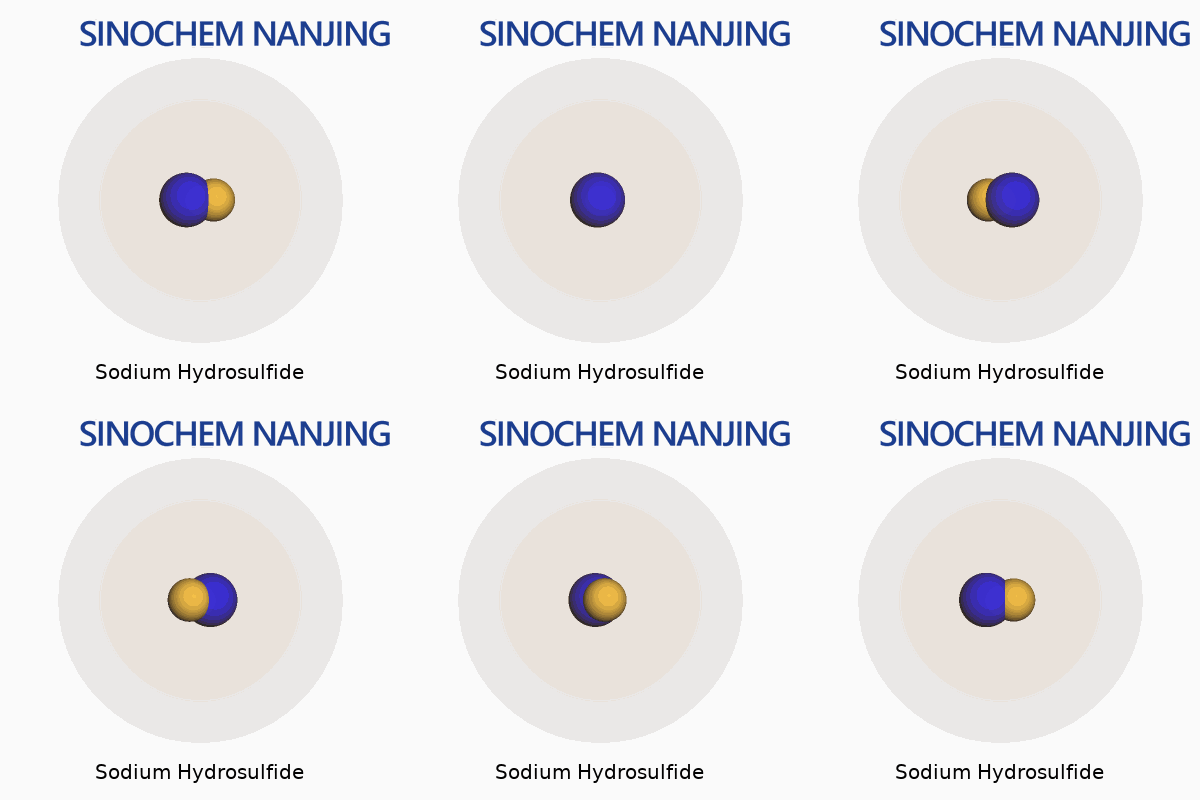
| Names | |
| Preferred IUPAC name | sodium sulfanylide |
| Other names |
Sodium hydrogen sulfide Sodium bisulfide |
| Pronunciation | /ˌsoʊdiəm haɪdrəˈsʌlfaɪd/ |
| Identifiers | |
| CAS Number | 16721-80-5 |
| Beilstein Reference | 3563774 |
| ChEBI | CHEBI:29318 |
| ChEMBL | CHEMBL1233341 |
| ChemSpider | 75478 |
| DrugBank | DB11437 |
| ECHA InfoCard | 100.028.857 |
| EC Number | EC 231-665-7 |
| Gmelin Reference | 13916 |
| KEGG | C01325 |
| MeSH | D013493 |
| PubChem CID | 61357 |
| RTECS number | WB4900000 |
| UNII | 6G8X786UQJ |
| UN number | UN2922 |
| Properties | |
| Chemical formula | NaHS |
| Molar mass | 56.07 g/mol |
| Appearance | Yellowish flakes or crystalline solid |
| Odor | Rotten egg odor |
| Density | 1.4 g/cm³ |
| Solubility in water | Very soluble |
| log P | -2.7 |
| Vapor pressure | Negligible |
| Acidity (pKa) | pKa ≈ 7 |
| Basicity (pKb) | pKb ≈ 6.6 |
| Magnetic susceptibility (χ) | +479.0×10⁻⁶ cm³/mol |
| Refractive index (nD) | 1.477 |
| Viscosity | Viscous liquid |
| Dipole moment | 1.55 D |
| Thermochemistry | |
| Std molar entropy (S⦵298) | 92.1 J/(mol·K) |
| Std enthalpy of formation (ΔfH⦵298) | -86.6 kJ/mol |
| Std enthalpy of combustion (ΔcH⦵298) | -377.3 kJ/mol |
| Pharmacology | |
| ATC code | V03AB38 |
| Hazards | |
| GHS labelling | GHS05, GHS06, GHS09 |
| Pictograms | GHS05,GHS06 |
| Signal word | Danger |
| Hazard statements | H301 + H311 + H331: Toxic if swallowed, in contact with skin or if inhaled. H314: Causes severe skin burns and eye damage. H400: Very toxic to aquatic life. |
| Precautionary statements | P260, P261, P264, P271, P273, P302+P352, P304+P340, P305+P351+P338, P310, P330, P363, P501 |
| NFPA 704 (fire diamond) | 3-0-0-Acidos |
| Autoignition temperature | > 270°C (518°F) |
| Lethal dose or concentration | LD50 oral rat = 115 mg/kg |
| LD50 (median dose) | LD50 (median dose): Oral rat LD50: 115 mg/kg |
| NIOSH | WI0450000 |
| PEL (Permissible) | PEL (Permissible Exposure Limit) for Sodium Hydrosulfide: "Hydrogen sulfide (as released): 20 ppm (Ceiling, OSHA) |
| REL (Recommended) | 35% |
| IDLH (Immediate danger) | 50 ppm |
| Related compounds | |
| Related compounds |
Sodium sulfide Sodium bisulfite Sodium thiosulfate Hydrogen sulfide Potassium hydrosulfide |



