Shining a Light on Sodium Aluminum Hydride: Past, Present, and Future
Tracing its Roots: The Historical Development of Sodium Aluminum Hydride
Looking back at the early days of synthetic chemistry, researchers pushed the limits in reducing metal salts and isolating new compounds. Sodium aluminum hydride, widely known by its formula NaAlH4, came out of this inventive period. The 1940s and 1950s marked breakthroughs in complex metal hydrides. Karl Ziegler and his team recognized the power of these hydrides, opening doors not only for organic synthesis but also for the birth of new hydrogen-storage concepts. Before long, NaAlH4 attracted attention as a stand-in for the more sensitive—and sometimes explosive—lithium aluminum hydride. Its journey shows how curiosity and focused laboratory work can transform something obscure in the periodic table into a tool that shapes large parts of modern organic and energy chemistry.
Product Overview: More Than Just a Chemical
Most folks dealing with sodium aluminum hydride see it in powder form and often give its strong reducing power immediate respect. From bench to industrial reactor, NaAlH4 turns up as a key player in hydrogen storage research, a valuable reducing agent in laboratories, and even as a material with potential in aerospace technology. Its presence in the scientific toolkit offers proof that small, seemingly simple inorganic compounds can have an outsized impact when used with skill and an eye for safety.
Physical & Chemical Properties Unpacked
Here’s what stands out about sodium aluminum hydride: It exists as a fine, white-to-gray crystalline powder. Touching or even inhaling dust from this substance can pose risks due to its reactive nature. In terms of chemistry, NaAlH4 carries four hydride ions per formula unit, making it a compact hydrogen reservoir. The compound releases hydrogen gas when exposed to heat or certain solvents, and this property puts it high on the list for anyone investigating portable hydrogen storage. Unlike more dangerous hydrides, NaAlH4 stays stable under dry, inert conditions; add a little moisture or heat, and things get lively. Chemists learn early to respect the way this material can ignite in humid air, and to always keep it under an inert atmosphere like argon or nitrogen.
Technical Specifications and Labeling: Behind the Chemical Bottle
Labeling conventions matter in the world of sodium aluminum hydride. Chemists pay attention to United Nations numbers and transport regulations, since the compound can ignite and evolve hydrogen explosively if handled incorrectly. You find NaAlH4 sold in varying purities, with manufacturers often stating content by percentage. Some bottles come diluted in mineral oil for added protection. Part of responsible chemical handling is recognizing these distinctions, especially since accidental moisture contact has ended lab sessions—and good glassware—more often than some would like to admit.
Preparation: How Chemists Forge NaAlH4
Most large-scale sodium aluminum hydride forms by directly reacting sodium hydride with aluminum chloride in an ether solvent. This reaction throws off sodium chloride as a byproduct and calls for careful work under inert conditions, often with strict moisture controls. The route has its quirks: Both the hydride and the chloride can be hazardous, and ether brings its own fire risks. Teams that master these synthetic approaches earn a healthy respect for the experience, fine-tuning conditions to tip yields in their favor and to avoid dangerous byproducts. Lab apprentices often get their first lessons in ‘dry box’ or ‘Schlenk line’ methods through work with these hydrides.
Chemical Reactions and Modifications: Beyond Simple Reductions
NaAlH4 does a lot more than just reduce carbonyls to alcohols. In laboratories, it steps up for the selective reduction of esters, amides, and acid chlorides. Over the decades, chemists found ways to modulate its reactivity by adding metal salts or tweaking solvents, stretching its power to meet tricky synthetic challenges. In recent years, researchers studying hydrogen economy and energy storage began modifying NaAlH4 by doping it with transition metals to ramp up how fast it releases hydrogen gas. This research takes the compound from a simple chemical to a material with roles in renewable energy infrastructure. I remember seeing lines of flasks fizz as doped sodium aluminum hydride shed hydrogen under mild heating—proof that chemistry textbooks don’t always prepare you for the real speed of laboratory reactions.
Synonyms and Product Names: Knowing What to Ask For
Nomenclature adds to laboratory confusion. Some call it sodium tetrahydroaluminate, sodium aluminium hydride, or sodium aluminium tetrahydride. No matter the name, the formula remains NaAlH4. Trade names aren’t especially common here; most catalogues stick with the chemical name or offer simple synonyms. While not as notorious as ‘LAH’ for lithium aluminum hydride, it’s still wise to check labeling carefully to avoid mix-ups.
Working Safely: Safety and Operational Standards
It doesn’t take many stories about sodium aluminum hydride going up in a puff of smoke to drive home the need for clear safety standards. Flammable and potentially explosive, NaAlH4 should be kept away from water, oxidizers, acids, and open air. Personal protective gear means eye shields, gloves, and a sturdy lab coat, supported by a fume hood or glove box. From hands-on experience, I’ve seen gloves saved many chemists from chemical burns caused by brief exposure. Emergency procedures must include proper containment, fire extinguishing with Class D agents (not water), and clear evacuation routes. Regulations in the United States and Europe both regard the compound as hazardous, meaning shipping and waste disposal follow strict laws. These aren’t just bureaucratic hoops—they’re key to keeping people and property safe.
Application Area: Where It Matters Most
Chemists reached for sodium aluminum hydride to achieve reductions that less powerful agents couldn’t manage. Industrial organic synthesis gained a bite, particularly for pharmaceuticals, agrochemicals, and dye intermediates. The compound’s promise in hydrogen storage has revived interest over the past twenty years, especially as attention shifted from fossil fuels to renewables. Scientists working in advanced batteries, solid-state hydrogen tanks, and even rocket propulsion systems keep their eyes on NaAlH4 as a material that might make future energy infrastructure less dependent on compressed gases or liquid hydrogen. From my background in energy materials, I see this as one of the more exciting directions, since the hydrogen release properties—not just the chemical structure—lead innovation.
Research & Development: A Field in Motion
The renewable energy revolution pushed sodium aluminum hydride into the spotlight again. Academic and corporate labs race to invent new ways to increase how quickly it can recharge with hydrogen and release the gas under milder conditions. Doping with small amounts of titanium or other transition metals remains a hot topic, effectively speeding up both dehydrogenation and rehydrogenation. Engineers analyze heat management, cycling durability, and compatibility with new fuel cells. Meanwhile, synthetic chemists continue probing NaAlH4 as a mild, controllable reducing agent—sometimes modifying its properties with substrate or co-solvent tricks. Conferences and journals buzz with new findings, and it feels like every year the race tightens between staying true to classic reductions and unlocking new energy storage devices that depend on safer hydride chemistry.
Toxicity Research: Understanding the Risks
Safety data around sodium aluminum hydride requires plain language. Exposure can trigger burns or respiratory irritation, and any contact with water or acids spells trouble. Toxicological studies remain more limited than for some other industrial chemicals, though data suggests possible risks from both skin and inhalational exposure. Researchers in environmental chemistry wonder about byproducts if the compound leaks or spills, especially considering what happens if unspent NaAlH4 reacts with ground moisture. It’s clear that better public data and more transparent toxicological testing would benefit both workers and the environment. Vendors and institutions encourage proper disposal not just as a matter of compliance, but as proof of the chemical community’s commitment to safety and stewardship.
Looking Forward: Future Prospects and Remaining Challenges
NaAlH4 stands as a crossroads between classic synthetic chemistry and the push for clean energy. Its potential in large-scale hydrogen storage offers hope for a future less tied to fossil fuels or pressurized hydrogen tanks. Scientists keep searching for modifications that allow faster charging and discharging without requiring extreme heat or pressure. Regulatory agencies and industries look ahead to safer, more standardized handling guidelines. Bringing these threads together, the challenge becomes one of scaling up production, delivering consistent quality, and integrating new safety protocols that keep up with research breakthroughs. As a chemist with experience in energy materials, I see the future of sodium aluminum hydride written both in the laboratory notebook and in real-world infrastructure. Working across disciplines and sharing risk data broadly will help unlock its promise as a cleaner and safer energy material for the decades to come.
What is Sodium Aluminum Hydride used for?
What It Does in the Lab
Sodium aluminum hydride, often called “Red-Al,” has made its mark as a workhorse in organic chemistry. Folks handling synthetic chemistry praise Red-Al for one big reason: it delivers reductions that other chemicals can’t match. Take pharmaceuticals. Many modern drugs owe their complex structures to this little-known powder. Chemists reach for Red-Al to turn tough carbon-oxygen bonds into something easier to work with, especially when you need to cut down molecules cleanly. The selective power it gives lets people build only the piece they want, without wrecking the rest.
Backbone in Aerospace and Energy
Red-Al isn’t confined to glassware and lab coats. Its ability to release hydrogen has caught the eye of people working on clean energy tech. The push for better ways to store and move hydrogen, especially for fuel cell cars or rockets, keeps turning up Red-Al. Once triggered, it releases hydrogen smoothly. In aerospace, careful handling of every drop of fuel matters. Red-Al steps up as a source for hydrogen fuel, boosting propulsion without adding a pile of heavy tanks.
Tough Chemistry Needs a Steady Hand
My time in a university lab taught me just how important storage and handling become when working with something as reactive as this. Red-Al reacts violently with water, letting off hydrogen quickly. It demands respect—a dry, air-tight bottle is a must, or your experiment might make the evening news for the wrong reasons. There’s an art to measuring, dosing, and quenching; every chemist who uses this compound remembers the throb of adrenaline the first time they see it fizz. This risk means only trained folks get to work with it, and you’ll find safety protocols built into each phase.
Pushing Industry Forward Despite Risks
A lot of discoveries in medical chemistry, flavors, fragrances, and electronic materials tie back to what Red-Al can do. The hope, of course, is better medicines and smarter phones. So while it doesn’t feature in glossy advertisements, its impact echoes in places most of us never see.
Managing these benefits and hazards calls for thoughtful action. Training for chemists and engineers matters just as much as inventing a new chemical reaction. Every company handling Red-Al puts money and time into personal protective gear and emergency plans. Some have begun looking for safer alternatives, or automating steps that keep the most dangerous parts locked in stainless steel boxes, controlled remotely. That’s a big shift from a couple decades ago, when hands-on work dominated the scene.
Searching for Greener and Safer Alternatives
Many are chasing less hazardous options. Chemists compete to design “green” reducing agents that give the same results as Red-Al without the fire risk. Some of these newer compounds open up production to smaller labs and industries that balk at the insurance costs of handling flammable solids. That’s good news, not just for the environment, but for companies outside major pharmaceutical or aerospace firms.
Red-Al’s story shows how a powerful tool offers both promise and challenge. It drives medicine, energy, and research forward, but never lets people forget the price of carelessness. Each step forward depends on blending experience, technical know-how, and common sense—something every seasoned chemist learns to respect.
What are the safety precautions when handling Sodium Aluminum Hydride?
Understanding the Hazards Before Handling
Sodium aluminum hydride, a powerful reducing agent, packs a big punch in the lab. A single grain can catch on fire just from moisture in the air. It reacts violently with water, alcohols, and acids, releasing flammable hydrogen gas. The heat from this reaction turns spills and routine clean-up into potential emergencies. If your career or research puts you near this chemical, it’s not just about reading the label — it’s about knowing what real risks look like, and having lived through the drills when a bottle hits the floor.
Personal Protective Gear: Dress For Survival, Not Just Comfort
Routine gloves won’t cut it. Neoprene or heavy nitrile gloves work better, along with a full-length lab coat and a face shield. Eye protection isn’t a formality — one splash could mean permanent blindness. Long pants and closed-toed, chemical-resistant shoes go from “suggestion” to “must-have” with this compound. It’s worth spending extra time on PPE, not only to protect yourself from the compound but also from harsh byproducts and fires that can happen in seconds.
Proper Storage Keeps Labs Off the News
Sodium aluminum hydride doesn’t belong on open shelves or crowded benches. I’ve seen damage from improper storage — warped metal cabinets, broken glass, and expensive cleanups. Dry, cool storage away from any water source keeps accidents rare. While some insist on inert gas storage, a tight-sealing, moisture-proof container is the bare minimum. Always label the storage spot and use secondary containment, so a tipped bottle doesn’t become a disaster down the road.
Sensible Handling Practices Save Lives
Every opening of a bottle or transfer operation should happen in a fume hood. The powder can aerosolize or react with humidity mid-transfer, so never cut corners to save time. I often use a spatula cleaned with toluene — not water — and I lay out everything needed before starting. If something goes wrong, reaching for a missing tool wastes valuable seconds. Keeping sand or a class D fire extinguisher close by lets you react quickly if sparks fly. Never use water to put out a fire from sodium aluminum hydride; you’ll make things worse by releasing more hydrogen.
Deactivation and Clean-Up: No Shortcuts
Once the reaction with sodium aluminum hydride finishes, treat any leftover solid or waste just as seriously as the fresh powder. Small amounts should be destroyed slowly under controlled conditions by adding them to a hydrocarbon solvent like toluene, and then neutralizing with isopropanol, then ethanol, and finally water, all under a fume hood. Go slow. Rushing the process just for the sake of moving on turns an ordinary day into a lesson on why patience matters.
Training Matters More Than Most People Think
Knowledge and repetition keep labs safe. Watching a YouTube video isn’t enough. Training from experienced colleagues, walking through emergency procedures, and knowing how to spot problems — those things make a difference when a mistake could mean burns, blindness, or worse. Experienced researchers pass down stories about accidents and near-misses, and those stories stick around for a reason.
Safe Labs Build Better Science
Labs that treat sodium aluminum hydride with respect don’t just avoid injuries, they build a culture where people look out for each other. The focus on safety means research doesn’t hit a dead end after an accident. Handling chemicals like this isn’t about fear; it’s about smart choices, learning from mistakes before they happen, and helping others take those lessons seriously. That attitude keeps discoveries coming and people protected.
How should Sodium Aluminum Hydride be stored?
Why Sodium Aluminum Hydride Deserves Respect
Anyone working with chemicals long enough finds out that some compounds just refuse to play nice. Sodium aluminum hydride is one of those substances. Chemists know it as a strong reducing agent, but behind the technical jargon lies a material ready to react with air and water in dangerous ways. People have learned this through hard lessons—lab mishaps turn into emergency calls, and sometimes even split-second mistakes cause property damage or worse. I've seen firsthand how a lapse in vigilance puts safety at risk, so it makes sense to stay sharp about how we store chemicals like this one.
Keep Moisture and Oxygen Out
Sodium aluminum hydride reacts violently with moisture, releasing hydrogen gas that can ignite easily. Even a tiny leak or damp air in a storeroom creates the perfect storm. I remember labs where humidity crept up unexpectedly, triggering hydrogen alarms. Whether you’re running a university research setup or managing an industrial storage site, it's smart to use airtight, sealed containers. Screw-top bottles with robust seals keep oxygen and water far away. Many experienced chemists add a layer of dry, inert gas—usually argon or nitrogen—over the powder in each container, because air sneaks in during a moment's distraction.
Choosing Containers and Labels
Glass containers rarely cut it since this substance sometimes etches or attacks certain kinds of glass. Working in the field, I’ve seen plastic bottles crack under the compound’s stress. Good practice favors metal containers lined for chemical resistance—steel or aluminum in particular. A rigid storage protocol with clear, unmistakable labels avoids dangerous mix-ups. I once witnessed a rushed grad student almost grab sodium aluminum hydride instead of a benign salt, simply because the labels looked the same. It pays to use bright hazard stickers and keep storage records up to date.
A Cool, Dry, Safe Room
Heat turns an already risky material into a disaster waiting to happen. Storage areas should stay cool—much lower than standard room temperature. Some facilities use dedicated dry rooms, with climate control that blocks humidity and heat. Every responsible storeroom manager checks for leaks before locking up at night. Investing in humidity sensors and temperature alarms pays off. After one incident of overheating, colleagues learned to demand redundant monitoring—nobody wants to roll the dice with volatile chemicals.
Training and Emergency Planning
It’s easy to overlook the human element. Experience tells me people always make mistakes, no matter how good the labels or hardware. Proper training stands between a calm day and a major accident. Teams review emergency procedures again and again. Every responsible lab includes rigorous drills and runs through what-if scenarios: fire, leaks, exposures. Fire extinguishers and spill kits tailored for chemical fires (not water-based types) line every exit. Regular audits and practice runs build habits that last even during stressful moments.
Return Unused Material Quickly
Unused sodium aluminum hydride should not linger. Most seasoned chemists transfer leftover material back to secure storage or dispose of it according to hazardous waste protocols without hesitation. Lingering open containers increase risks for everyone in the building. Long-term safety depends on minimizing exposure—and resisting the temptation to leave a little for “later.”
Conclusion: Setting the Standard Through Vigilance
Safe storage calls for more than just equipment or written guidelines. Years of handling dangerous materials teach that building a safety culture—one that never lets its guard down—remains the best way to protect people and property. Whether working in commercial industry or academia, respect for sodium aluminum hydride means choosing caution, every single time.
What is the chemical formula of Sodium Aluminum Hydride?
Getting Right to the Chemical Formula
The chemical formula for Sodium Aluminum Hydride reads as NaAlH4. Four hydrogens, one sodium, one aluminum. Simple enough, but this compound packs a punch in practical chemistry, especially wherever hydrogen transfer and reduction matter.
Understanding Real-world Relevance
Now, NaAlH4 stands out because it works as a reducing agent. People working in organic synthesis rely on it to get the job done when breaking down certain chemical groups or adding hydrogen. I remember a project in a university lab: the goal was to reduce a stubborn ester. The usual stuff on the shelf wouldn’t do, but NaAlH4 sliced through the problem, turning it into a valuable alcohol product. That speaks to its power in fine chemical and pharmaceutical fields where the purity and accuracy of reactions show up in every batch.
Why Sodium Aluminum Hydride Matters
It feels tempting to think of chemistry as a bunch of arcane formulas, but sodium aluminum hydride gets used by real people, solving real problems. The rechargeable battery sector kept an eye on this material for a while. Researchers explored NaAlH4 as a potential hydrogen storage medium. Its decent hydrogen content makes it a candidate in renewable energy tech, where moving and storing hydrogen means everything. Data from the National Renewable Energy Laboratory highlights the potential for sodium aluminum hydride in portable or mobile systems, especially considering energy density per unit mass.
Safety, Handling, and Practical Worries
Every person who has cracked open a bottle of sodium aluminum hydride knows about its dangers. This is not the compound you handle casually — contact with water triggers a strong reaction, pouring out hydrogen gas and releasing heat. A spark at the wrong time, or careless storage, can lead to serious fire risk. That is why solid training and proper protocols, including use of inert gases like nitrogen, count. It only takes one accident to bring home how important safety is in chemical work. Regulatory agencies like OSHA and EPA lay out clear storage and handling guidelines, and following them is just part of doing the right thing.
Supply, Cost, and Sustainability Issues
Labs and industries using NaAlH4 face real supply and disposal concerns. The cost can add up, especially when purity matters for pharmaceutical syntheses or high-grade battery research. Disposal presents another hurdle since the byproducts have to be neutralized and handled with appropriate environmental responsibility. Waste managers and safety officers have to stay one step ahead, making sure nothing leaks into the environment.
Pursuing Better Alternatives
There’s always a need for smarter, safer alternatives or recycling methods for sodium aluminum hydride. New research looks at catalyst systems, greener reducing agents, and ways to regenerate or reuse hydrides. Experience tells me the best labs keep updating their playbook, testing new compounds and weighing the risks and rewards. Collaboration between chemists, engineers, and environmental scientists gives the best shot at safer, more efficient hydrogen carriers, whether the goal is a smaller carbon footprint or a leaner production process.
Is Sodium Aluminum Hydride soluble in water?
Diving into the Reaction
Anyone working with sodium aluminum hydride learns quickly: water is not a friend. This compound, known among chemists as NaAlH4, shows almost no solubility in water. The reason isn’t about the usual tale of polar versus non-polar; it's about violent chemistry. Introduce sodium aluminum hydride to water, and you don’t get gentle mixing — you get an energetic reaction that releases hydrogen gas. Sometimes, I joke that if you’re planning a demonstration for high schoolers, bring safety goggles and stand back.
This reactive quality makes sodium aluminum hydride both fascinating and risky. Water splits the compound into sodium hydroxide, aluminum hydroxide, and hydrogen gas. In fact, the hydrogen comes off fast enough that it’s a real fire risk. Instead of seeking to dissolve, the hydride is destroyed in water. I remember my early lab days, watching my advisor warn a new intern not to even think about cleaning a spatula that touched NaAlH4 with a wet towel.
Why Solubility Matters
Solubility rules dictate a lot in chemistry. Being able to dissolve a compound lets us work with it more efficiently — reactions run cleaner, separation gets easier, and analysis turns straightforward. Sodium aluminum hydride doesn’t let lab workers pull off those tricks in water. This limits how people handle it, store it, and use it in synthesis. The absence of solubility means anyone working with it has to reach for different solvents, usually ethers such as tetrahydrofuran or diglyme. These carry their own hazards, but at least reactions don’t explode on contact.
It’s not just a lab issue. Industrial uses of sodium aluminum hydride show the same safety challenges. Nobody pipes water anywhere near NaAlH4 except to neutralize spills in a strictly controlled way, because once hydrogen gas builds up, so does the risk of a dangerous ignition.
Seeking Solutions
Chemists keep searching for better alternatives. If a safer, more water-compatible reducing agent existed with the same potent effects, labs around the world would breathe easier. Lithium aluminum hydride, another staple for reductions, brings similar headaches. Researchers look at new options like solid-state hydrogen stores and milder hydrides to lower danger and waste. The future might bring more selective reducing agents that let us skip the hazardous dance with water entirely.
Strict safety protocols matter more than ever in places where students or early-career researchers use sodium aluminum hydride. Emphasizing proper storage — in airtight, non-glass containers, often under nitrogen or argon — and good labeling habits reduces the odds of someone making a costly mistake. Working under dry conditions, and keeping all washing and cleaning tools clear of any traces until a full neutralization process, becomes second nature. The extra effort pays off in safer labs and fewer stories about runaway reactions.
The Takeaway
Working with sodium aluminum hydride never gets routine. There’s a good reason few outside chemistry circles have heard of it: most people steer clear of things waiting to ignite from a drop of water. That’s not a reason to ignore it though — from hydride reductions to research in hydrogen storage, the world of chemistry needs those who respect the hazards and push for safer innovations. Scientific progress demands care, not just curiosity.
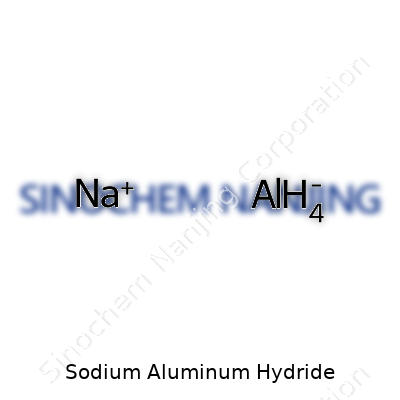
| Names | |
| Preferred IUPAC name | sodium tetrahydridoaluminate |
| Other names |
Sodium tetrahydroaluminate Sodium aluminium hydride Tetrahydridoaluminate (1-), sodium |
| Pronunciation | /ˈsəʊdiəm əˈluːmɪnəm haɪˈdraɪd/ |
| Identifiers | |
| CAS Number | 13770-96-2 |
| 3D model (JSmol) | `ALH2-1.NA.H2-1` |
| Beilstein Reference | 3538732 |
| ChEBI | CHEBI:30568 |
| ChEMBL | CHEMBL1201181 |
| ChemSpider | 74585 |
| DrugBank | DB11538 |
| ECHA InfoCard | 100.028.726 |
| EC Number | 244-373-0 |
| Gmelin Reference | 8427 |
| KEGG | C05546 |
| MeSH | D013481 |
| PubChem CID | 162115 |
| RTECS number | WX9810000 |
| UNII | TY4LO03H7H |
| UN number | UN1427 |
| Properties | |
| Chemical formula | NaAlH4 |
| Molar mass | 54.002 g/mol |
| Appearance | White to gray powder |
| Odor | odorless |
| Density | 0.95 g/cm³ |
| Solubility in water | Reacts violently |
| log P | -3.43 |
| Vapor pressure | Negligible |
| Basicity (pKb) | 11.5 |
| Magnetic susceptibility (χ) | -46·10⁻⁶ cm³/mol |
| Refractive index (nD) | 1.420 |
| Dipole moment | 0.00 D |
| Thermochemistry | |
| Std molar entropy (S⦵298) | 92.1 J·mol⁻¹·K⁻¹ |
| Std enthalpy of formation (ΔfH⦵298) | -36 kJ/mol |
| Std enthalpy of combustion (ΔcH⦵298) | -210.0 kJ/mol |
| Pharmacology | |
| ATC code | S01XA13 |
| Hazards | |
| GHS labelling | GHS02, GHS05, GHS06, GHS08 |
| Pictograms | GHS02,GHS05,GHS06 |
| Signal word | Danger |
| Hazard statements | H260, H314, H318, H335 |
| Precautionary statements | P222, P223, P231, P232, P280, P370+P378, P402+P404, P501 |
| NFPA 704 (fire diamond) | 3-4-1-W |
| Autoignition temperature | > 230°C (446°F) |
| Lethal dose or concentration | LD50 (oral, rat): 220 mg/kg |
| NIOSH | RN875-89-6 |
| PEL (Permissible) | Not established |
| REL (Recommended) | REL (Recommended Exposure Limit) of Sodium Aluminum Hydride: 5 mg/m³ |
| IDLH (Immediate danger) | Not established |
| Related compounds | |
| Related compounds |
Lithium aluminium hydride Potassium aluminium hydride Sodium borohydride |



