Sodium Acetate: A Closer Look at an Everyday Chemical with a Storied Past
Historical Development
Sodium acetate has been around for a long time, showing up in chemistry textbooks, industrial processes, and even the kitchen. Dive into old records and it appears in dye works during the 1800s, giving textiles a helping hand to set color. The history of this chemical ties into the deep roots of the textile industry and glass-making, where artisans blended acetic acid with baking soda or sodium carbonate and harnessed the resulting sodium acetate for their crafts. As chemical science matured, researchers learned that sodium acetate could be made more pure, paving the way for widespread use in labs and factories. The historical journey from accidental byproduct to valuable staple speaks to human curiosity and the drive to solve everyday problems with science.
Product Overview
Sodium acetate, often seen as colorless crystals or a white powder, finds use in places people might not expect. The chemical formula, CH3COONa, hides a simple structure with two sodium ions and an acetate group. Some people call it sodium ethanoate, but most stick to the common name. The stuff dissolves quickly in water, making it easy to use in industrial processes and household experiments. The taste has a slight tang, so the food industry sometimes blends sodium acetate into salty snacks for a vinegar-like punch. With roots in basic chemistry, sodium acetate still carries a quiet importance in daily life, science labs, and manufacturing plants.
Physical & Chemical Properties
Sodium acetate has a melting point around 324°C and a moderate solubility in water, which makes it handy for quick reaction setups and energy storage packs. Once dissolved, it forms an alkaline solution. Some people recall the clear, glassy crystals from their school science projects, where a simple reaction of vinegar and baking soda produced the first batch right before their eyes. The trihydrate form, a version bound with water, releases heat as it crystallizes, forming the basis for reusable hand warmers. The ability to supercool a solution without freezing adds a dash of magic, drawing kids and adults alike into the fun side of chemistry.
Technical Specifications & Labeling
Bags, drums, and jars of sodium acetate usually feature labels with warnings and content certifications, making sure the quality matches industry needs. Pure batches meet standards for laboratory or food grade, with clarity on contamination limits and moisture content. Some manufacturers include details about the absence of heavy metals, keeping the product safe for direct and indirect contact. Efforts to harmonize global labeling have brought chemical safety information into multiple languages and pictogram systems, giving workers and users key alerts before opening a container.
Preparation Method
Turning acetic acid and sodium carbonate or sodium hydroxide into sodium acetate stands as one of the simplest syntheses in a chemist’s toolkit. Mix vinegar and baking soda at home, watch the fizzing reaction, and after evaporation, sodium acetate crystals appear. In industry, the process gets refined: controlled reaction rates, careful purifying steps, and filtration all produce larger volumes with higher purity. The chemical reaction releases carbon dioxide, requiring proper ventilation. Food processors often use a slightly different approach to guarantee no unwanted flavors slip through. These hands-on experiences shape how chemists and engineers consider process control and environmental impact.
Chemical Reactions & Modifications
Sodium acetate interacts with a variety of chemicals, serving as a buffer in labs by stabilizing pH, or acting as a catalyst in organic synthesis. Adding a strong acid like hydrochloric acid throws off acetic acid gas, a sharp-smelling compound people recognize from vinegar. Alkali metals and acids change how sodium acetate behaves, opening doors for chemical engineers to tweak pathways and improve yields. These reactions support the creation of dyes, resins, and pharmaceuticals. The acetate ion also joins forces with metals, creating salts with specialized properties for research and industry.
Synonyms & Product Names
Chemists and suppliers often use names like sodium ethanoate, acetic acid sodium salt, or just NaOAc. These names reflect different naming traditions—systematic, common, and shorthand. In catalogs, sodium acetate may show up under multiple synonyms, requiring buyers to double-check they’re ordering the right compound. The variety in names sometimes creates confusion, but also reflects how widely used and studied this chemical has become.
Safety & Operational Standards
Working with sodium acetate usually poses little risk, but standard procedures demand respect for even mild chemicals. Eyes and lungs can react to dust, so labs and factories keep goggles and masks handy. Food plants watch closely for cross-contamination and allergen concerns, while researchers focus on training and emergency response. Regulatory bodies like OSHA and food safety agencies require clear hazard labeling, spill control plans, and documentation of worker training. Safe storage means keeping the powder or crystals dry and away from incompatible materials, reducing the risk of accidental reactions. These layers of protection show both respect for people’s health and an understanding that even everyday chemicals should be handled with care.
Application Area
The list of uses for sodium acetate stretches far. Textile makers rely on it as a mordant to fix colors in cotton and other fibers. In the food world, sodium acetate adds a hint of acidity without overwhelming the snack, working together with salt to flavor potato chips or popcorn. Hot packs exploiting its supercooling and exothermic crystallization properties offer quick, reusable warmth, a small marvel in emergency kits and winter pockets. The compound also acts as a buffering agent in molecular biology, helping labs extract DNA from cells without breaking delicate bonds. Industrial cleaners, pharmaceuticals, tanning processes, and water treatment all draw on sodium acetate’s chemical versatility.
Research & Development
Science never stops looking for better ways to use common chemicals. Sodium acetate continues to star in studies about energy storage, as the crystallization process in reusable heat packs hints at potential for low-cost thermal batteries. Agricultural research explores whether sodium acetate can improve plant uptake of nutrients, reduce stress, or boost soil health. Green chemistry circles experiment with sodium acetate as a catalyst or reagent, since it breaks down into benign components. The food industry monitors new research on flavor stability and shelf life, while waste managers consider how sodium acetate could help treat industrial effluent. The overwhelming curiosity driving research in these areas comes from the desire to solve real-world problems with solutions that do not create new ones.
Toxicity Research
Sodium acetate does not show strong toxicity in routine handling, but careful study forms the backbone of worker protection and food safety. Animal studies and cellular assays check whether exposure causes cancer, reproductive harm, or DNA damage. So far, data suggest typical exposures in the lab or kitchen pose little threat. Inhalation of dust or ingestion of excessive amounts can cause throat and stomach discomfort, but symptoms usually resolve with water and time. Regulatory bodies set acceptable daily intake levels to guide food makers and workplaces. This ongoing vigilance keeps people safe and builds trust among users, producers, and regulators.
Future Prospects
Sodium acetate may seem like an old workhorse, but opportunities for new use keep cropping up. Startup founders and academics alike seek ways to turn sodium acetate’s low toxicity and ease of use into innovations for green energy, sustainable agriculture, and safer consumer goods. The push for circular economies points to chemicals that can be recycled, repurposed, or broken down safely, and sodium acetate fits this bill. Advances in material science hint that sodium acetate-based gels and composites could help manage building temperatures or stabilize infrastructure. As energy costs and environmental concerns escalate, practical and sustainable uses for established chemicals like sodium acetate will keep gaining ground, weaving old knowledge into new solutions.
What is sodium acetate used for?
What Makes Sodium Acetate Stand Out?
Sodium acetate often gets overlooked outside the chemistry world, but it plays a surprising number of roles throughout daily life, and not just in science classrooms or labs. I remember burning through a batch of sodium acetate in high school to make "hot ice" for a science demonstration. The heat from that reaction always left a mark, and not just on my memory. It turns out, companies harness this very property for products as diverse as hand warmers and heating pads. In one simple ingredient, you find both reliable heat and intriguing chemistry—both of which connect to hands-on health and comfort.
Helping Food Taste Better and Stay Fresh
Most people don’t realize sodium acetate often sneaks onto ingredient lists. That tangy zing in salt and vinegar chips? There’s often a little sodium acetate in there. Snack makers use it for flavoring, and it also helps keep pH stable, reducing the risk of spoilage. The U.S. Food and Drug Administration (FDA) lists sodium acetate as generally recognized as safe (GRAS), so snack lovers don’t have to worry about health risks in reasonable consumption. My family’s kitchen often has at least one snack pack—flavored with just the right hit of sodium acetate for that unmistakable bite.
Bakeries and large-scale food operations add it as an acidity regulator, aiming for fresh taste and longer shelf life. Especially in processed meats and dressings, sodium acetate puts up a good fight against bacteria.
Warming Up Without Electricity
Chemical hand warmers stay popular during winters or outdoor adventures. These work because sodium acetate changes phase from liquid to solid, releasing a burst of heat. Pop the metal disc inside a reusable hand warmer filled with a sodium acetate solution, and you see the liquid harden while warmth spreads to cold fingers.
During hikes or chilly morning commutes, I’ve relied on these little pouches plenty of times. No batteries needed, just simple chemistry kicking into action—a comfort that reaches beyond science and feels tangible in the fingers. Hospitals sometimes use the same principle for portable heating pads in physical therapy, providing a practical edge for recovery and comfort without bulky machinery.
Cleaning Up Industrial Messes
Sodium acetate finds its way into wastewater treatment plants as a solution for adjusting pH or balancing bacteria during biological treatment. In big cities where wastewater volumes run high, treatment operations can’t rely on guesswork. Factories need an efficient way to feed bacteria so they break down hazardous materials before water gets recycled back into rivers or the tap. Sodium acetate, with its organic base, goes down easily in these environments, supporting both environmental safety and regulatory compliance.
Supporting Concrete and Textiles
Building professionals sometimes add sodium acetate to concrete. It helps slow water damage and resists harsh winter salts thrown onto roads and sidewalks. Growing up in a snowy city, I watched how often road crews tossed down salt in winter. Structures and walkways naturally broke down faster—anything that helped resist that cycle always seemed like a small victory. In textile dying, sodium acetate stabilizes color so that bright shirts and uniforms don’t lose color in the first few washes.
Moving Forward With Reliable Ingredients
Sodium acetate may not get much of the spotlight, but its practical benefits already ripple across the foods we eat, the warmth we rely on, the safety of cities, and the clothes we wear. Regulations from authorities like the FDA and EPA shape how companies use it, making sure health and environment get proper attention. As society leans towards greener, more efficient solutions, practical chemistry staples like sodium acetate will keep finding new homes and new purposes.
Is sodium acetate safe to handle?
Getting to Know Sodium Acetate
Sodium acetate pops up in all sorts of places. I’ve seen it in heating pads, science classrooms, even sprinkled in food as a seasoning or preservative. It’s that salty powder people use for a “hot ice” demonstration, and most folks call it safe. Still, anytime I handle a chemical, even a mild one, I like to pause and ask whether I’m treating it with enough respect. That’s a lesson I learned back in college, after a mishap with a kitchen cleaning product left my hands red and sore for days. The moral: nothing is completely harmless until you know how to use it.
Direct Contact: What You Should Know
Sodium acetate doesn’t demand full hazmat gear. It won’t burn holes in your clothes or send up dangerous fumes. The United States Occupational Safety and Health Administration (OSHA) doesn’t even list it as a hazardous chemical. But dumping a fistful on your skin or getting it in your eyes isn’t fun, and the dust can be irritating — especially if you already have sensitive skin like me. My advice: gloves are a smart, simple choice. Washing up after handling any powdered chemical just makes good sense, especially before you eat or touch your face.
Safety in Science and Daily Life
Curiosity takes people to the lab bench, and I’ve seen sodium acetate fuelling a lot of cool demonstrations. In those “heat packs” you see for sore muscles, a click of a metal disc starts a rapid crystallization. Kids ooh and aah, and teachers wave the packs around. Still, I always tell folks to supervise young children closely. Kids don’t always remember not to touch their mouths or rub their eyes, and even mild irritants can cause a bad afternoon.
Sodium acetate gets a pass for food use, too. The Food and Drug Administration allows it as a food additive, popping up in salt and vinegar chips. You eat much less than you’d ever handle in a lab, so there isn’t much to worry about in normal diets. Some people with chronic kidney conditions receive advice to avoid excess sodium, but that’s about the same advice doctors give for table salt.
Environmental and Health Considerations
I’ve worked in places where chemical disposal caused real headaches. Thankfully, sodium acetate breaks down fast in water and soil—bacteria love eating it, so it doesn’t pile up in the environment. Small spills are easy to sweep up and toss in the trash, though big amounts from an industrial site should follow local waste rules. Breathing clouds of any powder isn’t healthy, so good ventilation or a dust mask isn’t overkill. Asthmatics know how a stray cloud of fine dust can kick off symptoms, even with “safe” substances.
Smart Handling Tips
Care goes a long way. People wearing eye protection and gloves avoid silly accidents. I keep a habit of labeling every jar, no matter how familiar the powder looks. That small bit of diligence stops mix-ups, and keeps both new students and seasoned pros out of trouble. Open jars gently, measure carefully, and keep food far from the workbench. These sound like “mom” rules, but they keep smart people out of the emergency room.
Summing Up With Common Sense
Sodium acetate sits in the “not scary, but not for sloppy handling” zone. Gloves, goggles, and careful cleanup mean most people enjoy its benefits without regrets. If you’ve got kids, students, or curious friends around, model caution. A few tiny habits go a long way toward safety, and you end up with hands free of irritation and stories free of accidents.
How should sodium acetate be stored?
Why Fallible Storage Choices Matter
Sodium acetate pops up in plenty of settings—classrooms, food labs, chemistry benches. Folks usually find it as a powder or crystals that promise consistency and versatility. Sometimes you see it in those hand warmers that get hot with a snap. As simple as it looks, a little sloppy storage can wreck the product or, worse, create a mess that’s harder to clean up than it seems.
Moisture Always Sneaks In
Humidity will break the spirits of sodium acetate. The crystals soak up water from the air, getting lumpy or sticky in just a few days. I once left a bag of the stuff open on a muggy afternoon—came back the next morning to a soggy clump stuck to the bag. If you want to keep it dry and ready to use, not just for a few weeks but for months, good containers matter more than most people guess.
Safe, Sealed, and Labeled
A screw-top jar with a solid seal slows down the march of moisture. Glass works well because it won’t react with sodium acetate, and it keeps out air better than cheap plastic. People sometimes reuse jam jars or spice containers, but the catch is making sure the lid fits tight. Food lovers use sodium acetate for that tangy “salt and vinegar” flavor, but, in any setting, the stuff deserves a label that shows what’s inside and when it hit your shelf.
Keep It Cool, Not Cold
High temperatures can nudge sodium acetate to break down or melt, depending on the form. No need to toss it in the fridge—just avoid hot tops of stoves or window sills. A cabinet at room temperature, away from any heat source, usually works for most home or school needs. I’ve seen sodium acetate start to clump when stored near heat vents, which just shortens its life and ruins recipes or experiments.
Don’t Let Kids or Pets Stick Their Noses In
Sodium acetate isn’t deadly, but it’s not snack time either. My nephew once poked his finger into a container on the garage shelf because it looked like sugar. He didn’t get sick, but it was a wake-up call to keep it somewhere curious hands or noses won’t find it. Locked cabinets or high shelves serve the purpose; it’s just basic peace of mind.
No Surprises: Keep Water and Acids Away
Accidental spills can end with gooey chunks or weird reactions. Acids and bases both mess with sodium acetate. Keeping it segregated from other chemicals cuts the risk. Even at home, it’s smart practice. In a lab, this kind of separation follows long-standing rulebooks—and ignores the temptation to store everything on one shelf just to save space.
Small Batches for Frequent Use
If someone uses sodium acetate often, say for classroom demos or food experiments, scooping from one big container means more chances for contamination and moisture. Splitting supplies into smaller containers gives you more control. Use one at a time and leave the others alone—this method keeps most of your stock dry and steady for future projects.
Moving Forward: Consistency Pays Off
Experience counts for a lot. Years of handling powders in all kinds of conditions taught me that shortcuts usually come back to haunt you. Resealing after every use and checking for lumps or odd smells prevents ruined batches and wasted money. A little effort up front leads to safer, longer-lasting chemicals—whether for science, cooking, or heat packs. In the end, clear habits make sodium acetate storage easy to handle and easy to trust for next time.
What are the physical properties of sodium acetate?
A Closer Look at Its Physical Side
Sodium acetate turns up in a lot of places you wouldn’t expect. On sight, it’s a white, crystalline powder—think table sugar but lighter and with far less appeal for your taste buds. It clumps together, but it runs through your fingers pretty easily if you grab a handful. You see this stuff outside the lab in heating pads or even in certain food products, though the reason for that lies just as much in its physical makeup as its chemical one.
Most sources put its melting point around 324 degrees Celsius. That’s much higher than anything you’ll hit in a home kitchen, but it comes in handy if you hear about hand warmers. I remember snapping one as a kid, watching the packet solidify and turn warm. The trick comes from sodium acetate trihydrate—the version with three water molecules attached. In the solid form at room temperature, it stays pretty stable, but as soon as it’s supersaturated and triggered, it turns solid and releases heat. You don’t need any fancy lab gear to feel that reaction, just your own hands.
Another one of its quirks is its solubility. Toss some in water, and it dissolves quickly. Twenty grams vanish into just 100 grams of cold water, and almost 170 grams mix right up in hot water straight off the stove. This matters if you’re in the lab or mixing up a buffer for food preservation. It’s not fussy about dissolving, which makes it easy to work with on a daily basis. Someone learning to make chemical hot packs at home would see this in action.
The stuff doesn’t give off any strong smell unless it starts breaking down under heat, and even then, you’re more likely to notice a bit of vinegar in the air. Nobody wants a science experiment stinking up the kitchen, so sodium acetate stays under the radar compared to sulfur-containing salts or ammonia-based mixes.
It takes some effort to get it to change shape or crumble under pressure. It’s got a Mohs hardness of around 2.5, which is still soft—somewhere between your fingernail and a copper penny. If you had a chunk, it would scratch but not crack easily during normal handling.
Why Everyday Properties Still Matter
The little details in how sodium acetate acts—how it handles heat, water, and pressure—mean more than just theoretical facts. For the food industry, being able to dissolve it fast matters for recipes and shelf-life, since preserving food takes fast-dissolving powders that don’t leave uneven tastes behind. Hospitals and athletic trainers use sodium acetate for instant heat packs, counting on its sharp melting point and reliability.
Schools use the substance for classroom demonstrations. Kids can see crystallization and exothermic reactions in real time—nobody needs to crack open a university textbook to know something cool just happened on their desk when a supersaturated solution crystallizes at a flick or a knock.
If you look at what makes sodium acetate stick around in so many industries, you have to start by thinking about its plain, practical details you see and feel yourself: stable as a dry powder, eager to dissolve, safe to handle. Applications in science education work because teachers trust it not to combust or ruin the building’s air quality. Safety, ease, and predictability make a bigger difference to the end user than a stack of technical stats ever will.
Can sodium acetate be used in food or cooking?
A Curious Addition to Everyday Cooking
Most people meet sodium acetate in science class. Teachers pour a clear liquid into a beaker, flick it, and crystals race out from nowhere. It looks magical, not edible. Still, sodium acetate shows up in processed food, and if you poke through your pantry, it sometimes hides under a code name—E262. It's not just for science tricks or those click-heat packs; it actually plays a practical role in the world of food.
Real Uses in Food
Sodium acetate comes from mixing acetic acid (what gives vinegar its punch) with baking soda or another base. In food, it often acts as a preservative or flavor booster, especially for anything pickled or sour. Potato chips sometimes contain sodium acetate to mimic that vinegar tang. It keeps foods shelf-stable by helping to balance pH, slowing down bacteria and mold. Some chain restaurants and snack giants pay attention to acidity and freshness, and sodium acetate makes that job easier.
Safety and Regulation
Food chemists and regulators have studied sodium acetate for years. The U.S. Food and Drug Administration (FDA) lists it as generally recognized as safe (GRAS) at levels found in foods. European authorities also allow it as a food additive. A person would need to eat an unrealistic amount before seeing any negative effects. In snack-sized doses, the body processes it much like the acetate we get from vinegar. That said, nobody expects a home cook to dump heaps into dinner. Fancy gastronomy chefs experiment with sodium acetate for pickling vegetables or making sour gels, but most home cooks rarely touch the stuff directly.
Why It Matters in Home Cooking
People search for clean labels and short ingredient lists. Every chemical-sounding name gets side-eyed, even though compound names often hide ingredients that come straight from fermentation or dairy. I’ve seen plenty of folks skeptical about E-numbers, but sodium acetate doesn’t fit the villain story. It’s not made from anything scary, and it keeps food tasting better a bit longer. In small kitchens, you probably rely on straight vinegar and salt for pickling, but sodium acetate lets commercial producers control sourness more precisely. Still, most home recipes don’t require that kind of fine-tuning—vinegar or lemon do the job.
Potential Downsides
Despite its acceptance, overuse creates overly sharp, artificial flavors, especially in snacks or preserved foods. Not everyone likes the taste it brings. For folks managing sodium intake, every little bit matters, even from an “invisible” source like this. The trend toward minimal processing and transparency in the food industry should keep sodium acetate in check. A study published in “Food Additives & Contaminants” in 2020 found that sodium acetate didn’t pose risks at approved levels but encouraged manufacturers to keep clear labeling, so people can make informed choices.
Finding a Balance
Home cooks don’t reach for sodium acetate the way they reach for salt or vinegar. It shows up in a specific slice of the market—processed snacks, some pickled products, and a few gastronomy experiments. If you want the effect without the additive, a splash of vinegar or citrus delivers plenty of sharpness. For most people, sticking to familiar acids does the trick. Knowing why sodium acetate appears in food might ease some concerns, especially since its track record for food safety is as strong as any common kitchen ingredient.
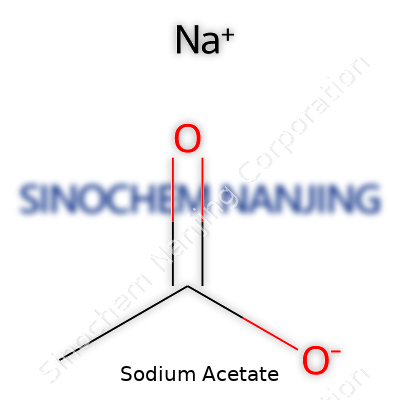
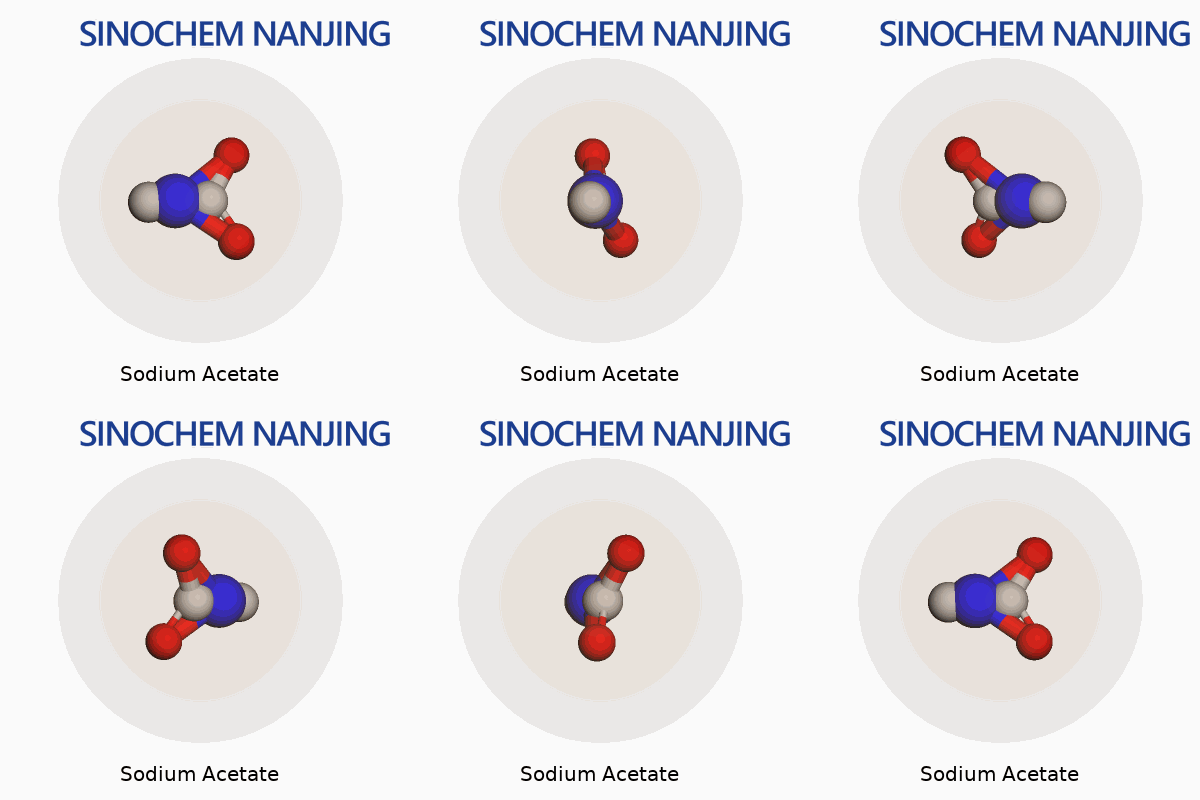
| Names | |
| Preferred IUPAC name | Sodium ethanoate |
| Other names |
Acetic acid sodium salt Sodium ethanoate E262 |
| Pronunciation | /ˈsəʊdiəm əˈsiːteɪt/ |
| Identifiers | |
| CAS Number | 127-09-3 |
| Beilstein Reference | 3569236 |
| ChEBI | CHEBI:32139 |
| ChEMBL | CHEMBL15559 |
| ChemSpider | 517055 |
| DrugBank | DB09211 |
| ECHA InfoCard | 100.007.468 |
| EC Number | 200-580-7 |
| Gmelin Reference | 6046 |
| KEGG | C01624 |
| MeSH | D013487 |
| PubChem CID | 33582 |
| RTECS number | AJ4300010 |
| UNII | 8025SXD26P |
| UN number | UN3077 |
| CompTox Dashboard (EPA) | Z98ADI7R9P |
| Properties | |
| Chemical formula | CH3COONa |
| Molar mass | 82.03 g/mol |
| Appearance | White crystalline powder |
| Odor | Odorless |
| Density | 1.528 g/cm³ |
| Solubility in water | freely soluble |
| log P | -4.41 |
| Vapor pressure | Vapor pressure: Negligible |
| Acidity (pKa) | 9.2 |
| Basicity (pKb) | 9.15 |
| Magnetic susceptibility (χ) | -33.6·10⁻⁶ cm³/mol |
| Refractive index (nD) | 1.422 |
| Viscosity | 1.11 mPa·s (at 20 °C, 15% solution) |
| Dipole moment | 2.73 D |
| Thermochemistry | |
| Std molar entropy (S⦵298) | 86.6 J·mol⁻¹·K⁻¹ |
| Std enthalpy of formation (ΔfH⦵298) | -711.2 kJ/mol |
| Std enthalpy of combustion (ΔcH⦵298) | -947.7 kJ/mol |
| Pharmacology | |
| ATC code | B05XA04 |
| Hazards | |
| Main hazards | May cause eye, skin, and respiratory tract irritation |
| GHS labelling | GHS07 |
| Pictograms | GHS07 |
| Signal word | Warning |
| Hazard statements | H319: Causes serious eye irritation. |
| Precautionary statements | P264, P270, P305+P351+P338, P337+P313 |
| NFPA 704 (fire diamond) | Health: 1, Flammability: 1, Instability: 0, Special: - |
| Autoignition temperature | 607 °C |
| Lethal dose or concentration | LD50 (oral, rat): 3530 mg/kg |
| LD50 (median dose) | 3,532 mg/kg (Rat, oral) |
| NIOSH | NA1237 |
| PEL (Permissible) | PEL: Not established |
| REL (Recommended) | 3.0 g |
| IDLH (Immediate danger) | Not listed |
| Related compounds | |
| Related compounds |
Acetic acid Sodium carbonate Sodium bicarbonate Calcium acetate Potassium acetate |



