Silicon Tetrachloride: Deep Dive into a Critical Chemical
Historical Development
Silicon tetrachloride made its debut in the mid-19th century, back when chemists pushed boundaries in their pursuit of understanding elements and their interactions. Early research circled around isolating pure silicon from its naturally occurring compounds. Chemist Jöns Jacob Berzelius first documented its synthesis in 1823, giving industry the tools to produce high-purity silicon much later. Over decades, the glow of the incandescent lamp, the rise of optical fibers, and the need for microelectronics elevated its significance. Wartime advancements in the 20th century set off a spike in production, as military and telecommunications branches needed ever-more reliable materials.
Product Overview
A clear liquid at room temperature, silicon tetrachloride catches the eye through its sharp odor and tendency to fume when it meets moist air. It looks unassuming on the shelf, yet packs massive potential wherever silicon is in demand. Producers bottle it in steel drums or pressurized cylinders, making sure it never gets near water. Most people bump into it indirectly, through electronics, glass optics, or the very cables that link homes to the internet.
Physical & Chemical Properties
Silicon tetrachloride weighs in with a molar mass of about 169.9 grams per mole. It boils around 57.6°C and freezes near -70°C, with a density just north of 1.48 g/cm³. Its colorless appearance disguises a mighty reactivity: once exposed to moisture, it tears apart water molecules, producing dense plumes of hydrochloric acid and silica. Its molecular shape—tetrahedral, with a silicon atom at the center—shows why it stays stable under dry conditions but reacts violently with water or alcohol. These traits steer strict storage protocols, as even minor accidental exposure can release choking vapors and corrode nearby metal.
Technical Specifications & Labeling
Manufacturers list purity by percentage, often quoting figures above 99.5% for electronic-grade batches. Impurities such as iron, aluminum, or phosphorus drop to low parts per million. Labels carry United Nations number 1818, hazard pictograms for acute toxicity, and storage instructions pegged to dry environments. Batch numbers, net weight, and production dates hold regulators’ attention, especially for companies exporting to regions with tough chemical controls. No one wants a misshipment or mislabeled drum to turn a warehouse into an emergency site.
Preparation Method
Industry makes most silicon tetrachloride by treating silicon with chlorine gas at high temperatures. The reaction throws off silicon tetrachloride vapor, which gets cooled and condensed for collection. Old-school approaches started with silicon carbide or even ferrosilicon, but with tighter energy demands, most plants upgraded furnaces and monitoring systems. The process kicks out byproducts like trichlorosilane, which feed into other parts of the silicon value chain. In university labs, smaller amounts can come from treating silica with concentrated hydrochloric acid, although this route proves less efficient on a larger scale.
Chemical Reactions & Modifications
Chemists appreciate silicon tetrachloride’s knack for reacting with water to give pure silica—a building block for optical fibers and microchips. Throw in alcohols, and you get alkoxysilanes, used for coatings. Shift to ammonia, and silicon nitride appears, prized for its hardness in cutting tools. Halide exchange reactions can swap out chlorine for other halogens, though toxicity risks ramp up. The raw reactivity has launched new families of silicones and resins, helping industries customize glass, ceramics, and engineered plastics.
Synonyms & Product Names
Catalogs list “tetrachlorosilane,” “silicon(IV) chloride,” and “silicium tetrachloride.” In the semiconductor world, it sometimes goes by product codes tied to purity or manufacturer. Certain European safety agencies call it “chlorosilan” in regulatory materials. Whatever the moniker, the compound stands out because few chemicals offer such a direct route to pure silicon-based products.
Safety & Operational Standards
No operator jumps into handling silicon tetrachloride without heavy gloves, splash-proof goggles, and specialized respirators. Inhalation of its vapors can cause respiratory distress, while accidental skin contact instantly forms hydrochloric acid burns. In one factory I visited, emergency showers and air extractors took pride of place. Regulatory compliance starts with sealed transfer systems, dry nitrogen blankets over storage tanks, and hydrant access. OSHA and EU REACH both maintain lists of required precautions. Most emergency response drills assume at least some airborne release, showing just how fast the situation can shift from routine to critical.
Application Area
Fiber optics swallow the lion’s share of global silicon tetrachloride. Inside giant towers, manufacturers flame-hydrolyze it into silica soot, then consolidate it into transparent glass for signal-carrying cables. Semiconductor plants use high-purity grades to grow silicon crystals or coat chips through chemical vapor deposition. It finds its way into specialty glasses, casting resins, and corrosion-resistant coatings. Defense programs lean on it for specialized ceramics, while research labs exploit its reactivity to push new boundaries. Its value climbs further for growing solar-grade polycrystalline silicon, the heart of photovoltaic cells powering today's green revolution.
Research & Development
Current R&D attacks two primary challenges: cutting down environmental hazards and boosting silicon yield. My colleagues in the field keep refining purification steps, driving impurity levels lower while slashing energy use. Industry and academia work hand-in-hand to capture and recycle chlorine and hydrogen chloride byproducts, limiting waste streams. Some startups pivot toward “greener” chlorination, using alternative sources or milder conditions. The arms race continues for even purer silicon, especially as chip node sizes shrink year after year. New surface modification techniques let engineers tailor silica microstructures for next-generation sensors or lasers.
Toxicity Research
Toxicologists paint a clear picture. Inhaling fumes or swallowing liquid causes severe tissue damage, with animal models showing lung and digestive system scarring after exposure. Chronic low-level leaks degrade workplace air and can spark respiratory complaints long before acute poisoning appears. Research in my former lab tested air filtration materials to absorb silicon tetrachloride vapor in emergencies. Monitoring systems, placed near storage tanks, log day-night cycles of emissions and feed data into safety protocols. Studies continue to probe possible long-term effects from small, repeated exposures, especially as optical fiber capacity and chip foundries grow in emerging markets.
Future Prospects
Every sign points toward rising demand. The telecom industry’s hunger for faster, denser optical cables puts pressure on silicon tetrachloride producers to maintain quality and scale. Solar energy targets hinge on greater volumes of ultra-pure silicon, fueling investments in plant upgrades and recycling loops. Regulatory scrutiny sharpens as public awareness of chemical safety rises. Sustainable production methods open opportunities for value-added byproducts, especially in regions with strict emissions caps. Researchers dive into hybrid materials—combining silicon tetrachloride derivatives with organic polymers—driving pieces of the digital, sustainable future. The race won’t slow anytime soon, as society stays glued to ever-faster networks and tech keeps shrinking in size but growing in ambition.
What is Silicon Tetrachloride used for?
The Role Silicon Tetrachloride Plays in Industry
Silicon tetrachloride changes the game in manufacturing, but most people outside chemical or tech fields rarely hear about it. This colorless, fuming liquid often makes the middleman’s journey between raw minerals and high-tech devices. In my experience working near specialty glass plants, trucks hauling chemicals often marked with hazmat warnings are not uncommon—they often carry compounds like silicon tetrachloride, a sign of the heavy chemistry involved before gadgets ever reach shelves.
Fiber Optics: The Big Driver
So much of what we do now depends on fast, uninterrupted internet. Silicon tetrachloride sits behind the curtain, quietly central to the fiber optics revolution. During fiber optic cable production, manufacturers need glass that’s incredibly pure. It matters because even tiny flaws in these fibers mean lost signals or slower speeds. Silicon tetrachloride vaporizes under controlled conditions and reacts to make ultra-pure silicon dioxide. This glass forms the clear core of fiber optic cables, responsible for carrying your video calls or streaming your favorite show. As countries push for better internet, the demand for this compound keeps climbing.
Connecting to Solar Power
Solar energy has become a major part of the conversation about sustainable power. Silicon tetrachloride doesn’t go onto solar panels itself, but helps make the hyper-pure silicon that does. This compound links to polysilicon manufacturing, a step that’s vital for turning crude silicon into the polished, light-capturing cells used in both rooftop and industrial solar setups. High-quality solar cells convert more sunlight into energy. Anything that brings down production costs or raises efficiency ripples out to lower electricity costs and a faster renewable transition.
Challenges on the Environmental Front
Silicon tetrachloride doesn’t just vanish after use. Mishandling brings environmental risks, and I’ve watched headlines about chemical leaks cause unrest in nearby communities. Contact with water or any bit of humidity quickly knocks out a cloud of hydrochloric acid and gritty silica dust. Reports from regions with little regulation show toxic waste poisoning farmland and air. That’s a heavy price paid far from the shiny offices enjoying fast internet or sunny power.
Finding a Safer Path
Producers in countries like Japan and the U.S. have invested in recycling waste silicon tetrachloride, keeping it moving in a closed loop instead of dumping it. This saves money and keeps toxic gas out of water and lungs. Countries building new polysilicon plants today stand at a fork in the road. They can opt for tougher handling rules, better equipment, and worker training right away—cutting costs and risk in the long run. Sharing technology across borders helps too, since everyone wants clean energy and safe work.
Everyday Devices Depend on Chemistry
Silicon tetrachloride rarely shows up in media or political discussions, yet it sits in the chain behind modern screens and clean energy. Its story ties back to decisions about safety, investment, and global trade. More awareness leads to better policies and choices—not just for people in chemistry labs, but for anyone counting on clear connections and greener power.
What are the safety precautions when handling Silicon Tetrachloride?
Why Working with This Chemical Gets Serious
Silicon tetrachloride turns plenty of heads for a reason—it reacts strongly, sometimes violently, with water and air. Splash a drop of water on it and clouds of hydrochloric acid vapor pour out. That kind of reaction isn’t something to gamble with, especially if you’ve got lungs, skin, or eyes anywhere nearby. I remember the first time someone dropped a pipette tip with a tiny trace in the sink at my old lab. Sirens, confusion, and eye-watering fumes happened instantly. It became clear pretty fast how careful we needed to be.
Solid Barriers and Good Habits
Personal protective equipment always comes up in chemical safety talks, but with silicon tetrachloride, it’s non-negotiable. Splash goggles, chemical-resistant gloves, and a fitted lab coat form the basic defense line. Latex won’t hold up—go for nitrile or even neoprene if you can swing it. Full-face shields help, especially during transfer from a bulk container. In that same lab, our oldest apron had burn markings across the chest and stomach. A constant reminder: one slip can leave permanent scars.
Fume hoods aren’t just handy; they're the absolute rule. The chemical whips up nasty fumes quick. Even a brief sniff can sting deep into the nose and throat, and prolonged exposure leads to serious lung trouble. Good ventilation protects more than just you—others around need that clean air, too. Always check that the airflow stays steady, and don’t block the vents with glassware or boxes.
Planning for the Worst
Leaks or spills can happen, even after years of accident-free handling. I’ve seen someone rush and crack a bottle at the neck. Emergency showers and eyewash stations aren’t window dressing—they saved a technician from vision loss right in front of me. Spill kits beside the hood, stocked and ready, give you a fighting chance to contain the fallout using absorbent material that doesn’t react further. Sand and soda ash do the trick—never use water. Even cleanups call for full gear and smart teamwork.
Training Makes All the Difference
No one gets it right the first time. Experience comes from hands-on, supervised practice. Bringing new team members up to speed takes dedication. We rehearse not just the steps for safe transfer and disposal, but also what to say and do if something goes off track. There’s real value in knowing exactly where every exit, safety kit, and alarm button sits. Walking those drills saved us precious seconds before.
Smart Storage and Responsible Disposal
Store this chemical in tightly closed, corrosion-resistant containers—glass lined or plastic do better than metal. Keep it dry at all costs, and never ever use local tap water to clean tools or surfaces that had contact. Accidents almost always trace back to ignoring this simple rule. Label storage areas upfront, away from acids, organics, and especially water. Inventory checks help catch slow leaks before they turn into big problems.
Disposal isn't a quick fix. Waste sits in sealed drums until a licensed specialist hauls it away. Don’t cut corners; illegal dumping isn’t just risky, it invites heavy fines and environmental damage. Protocols guide these steps for a reason. As someone who’s managed lab safety records, I’ve seen how one lazy shortcut can create weeks of headaches or legal mess.
Better Tools, Better Outcomes
More labs and plants invest in safer transfer pumps and automated dilution units. Machines can limit human exposure, and sensors catch vapor leaks well before a human nose can. These upgrades cost extra, sure—but after an incident or two, most teams agree the upfront savings aren’t worth the risk. If you work with silicon tetrachloride, every bit of extra effort pays dividends in health and peace of mind.
What is the chemical formula and physical appearance of Silicon Tetrachloride?
Chemical Formula
Silicon tetrachloride carries the formula SiCl4. It sounds like an old chemistry class memory, but this molecule keeps showing up in surprising places. Each one brings together a single silicon atom with four chlorine atoms. Those bonds don’t just form by accident – they pull silicon out of rocks to make something both reactive and useful.
Out on the Lab Bench
Anyone who has worked around chemicals learns to respect the tricky ones. Silicon tetrachloride isn’t exactly gentle. It comes out as a clear, colorless liquid that gives off a powerful, suffocating smell. Folks describe it as sharp, almost like burning metal. I’ve stood near an open bottle, and the scent alone sends you looking for fresh air. As soon as it catches a bit of moisture from the air, a cloud of white fumes rises up. That’s hydrochloric acid forming right in front of your eyes.
This reaction with water isn’t just a minor nuisance. It matters right down to the construction of storage tanks and lab equipment. Chemists keep it in tightly sealed glass, never plastics (chlorides can chew through many things), and always with plenty of ventilation. Even the outside of bottles gets wiped down quickly since any drips start to eat away at whatever surface they touch.
Why People Care About This Stuff
People sometimes believe silicon tetrachloride only matters in dusty academic labs, but I once toured a fiber optics facility and saw otherwise. This compound plays a huge role in making the pure silicon dioxide used in fiber optic cables. Without that level of purity, our internet would slow down, video calls would glitch, and cloud storage wouldn’t be half as reliable. It also pops up in creating semiconductors, those tiny chips that run the entire digital world.
Industrial-scale production shows off both the usefulness and the risk. A bad spill can spell disaster. Environmental hazard stories out of some parts of China made the news, with silicon tetrachloride leaking into fields and causing health problems for farmers. What happens in the lab feels small compared to the scale of danger in a city-sized chemical plant.
Facing the Hazards: A Real-World Focus
Anyone who’s seen a minor spill of this liquid understands the panic. That white fume isn’t just a science show; it’s dangerous. Breathing in those hydrochloric acid mists burns your throat and eyes. Over time, skin contact can lead to real injuries. Safety routines matter, but they aren’t perfect. High-profile incidents often point to training gaps, underfunded safety systems, or sometimes just people getting comfortable with the familiar bottle in the corner.
Some progress is real, though. Companies started switching to better sealed containers and required workers to use personal protective gear even for quick tasks. Emergency wash stations now show up outside storage rooms instead of halfway across a building. In the right hands, silicon tetrachloride does its job. Still, every new engineer or technician learns the hard truth – a clear, colorless liquid like this one needs never to be underestimated.
How should Silicon Tetrachloride be stored and transported?
Danger in a Bottle
Silicon tetrachloride doesn’t put on a flashy show, but it turns into a real hazard when it connects with water in the air. The reaction spits out hydrochloric acid, which burns skin and lungs and leaves a mess. Stories from the solar panel industry still haunt local communities in China: leaks and poor handling end up sending choking clouds through neighborhoods. The stuff strips the paint off cars and leaves folks worried about their next breath. At no point does it act forgiving — so working with it means taking the human element seriously. People live near these factories and drive on the same highways as these tankers.
Respect for Moisture
Dry air wins the battle against silicon tetrachloride. If humidity sneaks in, trouble follows. Sealed steel drums—usually lined with phenolic—stand between safety and chaos. Smaller batches suit high-purity work, but tank trucks and railcars haul big loads. Each drum or tank wears a tight-fitting gasket and strong seal. Valves stay closed when not in use, and workers always triple-check before turning a knob. To stop a runaway reaction, storage rooms use low ambient moisture, often with dehumidifiers running night and day. Hydrogen chloride detectors alert workers before they face the stinging cloud themselves.
Who Handles the Moving?
Anyone driving a load of silicon tetrachloride needs special training. The DOT classifies it as a corrosive and dangerous good. Truckers don hazmat gear wherever a valve might leak. I’ve talked with drivers who swap horror stories on salty winter roads, because calcium chloride used for de-icing can slip into tank valves and trigger leaks. Routes matter. Haulers avoid busy neighborhoods or areas without quick emergency response. Each tanker shows clear, bold placards — no one can mistake what sits inside. Railroads follow similar standards, controlling every transfer point and requiring emergency gear at every yard.
Prepping for Accidents
Accident drills mean more than a dusty piece of paperwork. Anyone on a storage team should run through mock leaks, with real gear: boots, gloves, and full face shields. Spill kits need to sit near every storage spot, ready with large containers of lime or soda ash to neutralize any puddles. Local fire departments know the risks; they talk with site managers, visit warehouses, and keep their own plan updated. In communities with nearby chemical plants, local hospitals prepare to handle acid burns and inhalation injuries.
Looking Ahead: Smarter Storage and Safer Highways
Smart companies don’t skimp on risk reviews. A few invest in double-walled tanks, leak detection cables, and automated shutoff valves. Some new tank sensors track even the smallest vapor releases in real time. Others work with emergency crews, adding roadside spill barriers or remote shutoff features near city limits. Some governments pressure factories to recycle or neutralize their by-products, instead of just shipping them across long distances. That doesn’t just cut risk, it keeps bad headlines away from industries that rely on sensitive materials.
All Eyes on Oversight
Strict rules and regular audits hold companies in check. I’ve seen poorly run facilities lose contracts because they ignore safety. Workers quit over shoddy training or broken pumps. Neighbors don’t stay quiet if they see yellow vapor drifting over fences. Regulators lean hard on reported spills, and news outlets publish stories fast in any local language. The reputation of the entire supply chain hangs on each sealed drum and every safety log entry.
What are the hazards and first aid measures for Silicon Tetrachloride exposure?
Why Silicon Tetrachloride Deserves Caution
Silicon tetrachloride stands out as a chemical that most folks don’t run into outside of labs or chemical plants. Its main job is in electronics, fiber optics, and specialty glass production. Trouble starts with its nature — it reacts fiercely with water in the air, pumping out hydrochloric acid fumes. One whiff will tell your lungs that something is wrong. You might feel your nose and throat burn, your eyes start to water, or worse, your breathing could tighten up. Even folks used to working around chemicals know that this is not something to brush off.
Serious Hazards on the Shop Floor
Contact with silicon tetrachloride goes beyond just being uncomfortable. Get it on your skin or in your eyes, and you can expect chemical burns. Inhaling the gas or mist draws acid deep into airways, risking permanent lung damage if exposure carries on. The stuff works fast, so short-term carelessness has landed many workers in hospitals with burn injuries. In field reports from manufacturing plants, those caught off-guard often described the sudden sting and choking feeling, struggling to get to fresh air fast enough. Long-term risks remain less clear, yet frequent exposure to hydrochloric acid in general is tied to asthma, bronchitis, and tooth erosion.
The Facts Behind Its Dangers
There’s a reason why industrial safety guidelines make silicon tetrachloride a top priority. The chemical takes moisture from the air, instantly whipping up a cloud of hydrochloric acid gas. This means spills or leaks don’t just stay local — fumes can drift, threatening anybody nearby. According to the Centers for Disease Control, exposure can turn routine workplace accidents fatal if not handled immediately. Even protective gear like gloves and goggles won’t make you invincible; a splash on bare skin, or fume inhalation without a proper respirator, can overwhelm a worker in minutes.
What to Do If Exposure Strikes
Quick action counts more than fancy medical treatments in the first few minutes. If silicon tetrachloride gets on your skin, drop everything and flush the area with plenty of running water, no scrubbing, for at least 15 minutes. Big spills mean losing clothing that soaked up the liquid. For eye contact, pry the eyelids open and wash with water — anything less risks long-term damage. If someone breathes in the gas, don’t press on; get them out to fresh air straight away. They might start coughing or gasping, and anyone showing signs of trouble breathing needs immediate medical attention. Swallowing silicon tetrachloride calls for medical treatment too — you don’t want to give water, because it just forms more acid.
Solutions and Lessons from the Field
The best fix is always strong prevention. In the chemical industry, every worker remembers near-misses and close calls on line shifts. Reliable ventilation, splash shields, and airtight containers block many hazards from ever happening. Regular drills help folks remember what to do if trouble starts, not just rely on luck or bravado. Emergency showers, eyewash stations, and up-to-date respirators save more than just skin — they mean families get everyone home in one piece. For people outside the industry, there’s usually no reason to tangle with silicon tetrachloride, but the story here echoes a broader truth: respect for the power of chemicals keeps everyone safer, no matter what the day’s job brings.
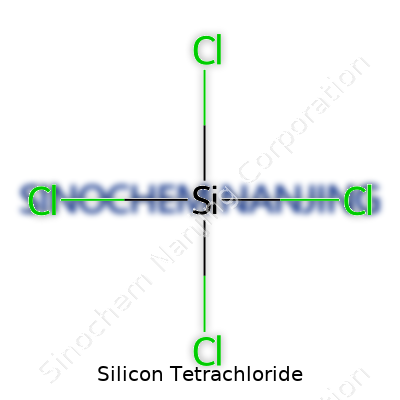
| Names | |
| Preferred IUPAC name | Tetrachlorosilane |
| Other names |
Tetrachlorosilane Silicic chloride Silicon(IV) chloride |
| Pronunciation | /ˈsɪlɪˌkɒn ˌtɛtrəˈklɔːraɪd/ |
| Identifiers | |
| CAS Number | 10026-04-7 |
| Beilstein Reference | 358715 |
| ChEBI | CHEBI:30189 |
| ChEMBL | CHEMBL49961 |
| ChemSpider | 21504 |
| DrugBank | DB14523 |
| ECHA InfoCard | 03c9cd0f-6b0d-4600-80be-07a1272dd013 |
| EC Number | 200-543-5 |
| Gmelin Reference | 656 |
| KEGG | C06450 |
| MeSH | D012829 |
| PubChem CID | 24816 |
| RTECS number | WX4375000 |
| UNII | VXL2U79V3B |
| UN number | 1818 |
| Properties | |
| Chemical formula | SiCl4 |
| Molar mass | 169.90 g/mol |
| Appearance | Colorless fuming liquid |
| Odor | Pungent odor |
| Density | 1.48 g/cm³ |
| Solubility in water | Reacts violently with water |
| log P | -2.6 |
| Vapor pressure | 10 mmHg (20 °C) |
| Acidity (pKa) | -3.5 |
| Basicity (pKb) | 15.6 |
| Magnetic susceptibility (χ) | −68.5×10⁻⁶ cm³/mol |
| Refractive index (nD) | 1.398 |
| Viscosity | 0.41 mPa·s (25 °C) |
| Dipole moment | 0 Debye |
| Thermochemistry | |
| Std molar entropy (S⦵298) | Entropy std molar (S⦵298) of Silicon Tetrachloride: "311.7 J·mol⁻¹·K⁻¹ |
| Std enthalpy of formation (ΔfH⦵298) | -638.8 kJ/mol |
| Std enthalpy of combustion (ΔcH⦵298) | -6423.1 kJ/mol |
| Pharmacology | |
| ATC code | V09AX04 |
| Hazards | |
| Main hazards | Corrosive, releases toxic hydrogen chloride gas on contact with water, causes severe burns to skin and eyes, harmful if inhaled. |
| GHS labelling | GHS02, GHS05, GHS06 |
| Pictograms | GHS05,GHS06 |
| Signal word | Danger |
| Hazard statements | H314: Causes severe skin burns and eye damage. H331: Toxic if inhaled. H335: May cause respiratory irritation. |
| Precautionary statements | P260, P261, P264, P271, P280, P301+P330+P331, P303+P361+P353, P304+P340, P305+P351+P338, P312, P321, P363, P405, P501 |
| NFPA 704 (fire diamond) | 3-0-2-W |
| Autoignition temperature | 410°C |
| Lethal dose or concentration | LD50 oral rat: 862 mg/kg |
| LD50 (median dose) | LD50 (median dose): Oral rat: 860 mg/kg |
| NIOSH | WX2975000 |
| PEL (Permissible) | PEL (Permissible Exposure Limit) of Silicon Tetrachloride: "1 ppm (7 mg/m³) as an 8-hour TWA (OSHA) |
| REL (Recommended) | 5 ppm |
| IDLH (Immediate danger) | 50 ppm |
| Related compounds | |
| Related compounds |
Silicon tetrafluoride Silicon tetrabromide Silicon tetraiodide Tetrachlorosilane Trichlorosilane Dichlorosilane |



