Selenium Tetrabromide: From Past Discovery to Modern Impact
Historical Development
Selenium tetrabromide didn’t just appear in the textbooks out of nowhere. Chemists first started looking closely at selenium compounds in the nineteenth century because selenium, despite being less famous than sulfur, kept poking through in curious ways—especially in mineral refining. Selenium’s deep roots trace back to Berzelius, but it took a few decades for researchers to tease out its reactivity with halogens, including bromine. By the time selenium tetrabromide was isolated, chemists had already started using halogen chemistry as a tool for extracting and characterizing elements. The early reports from European laboratories detail crude synthesis using elemental mixtures in sealed vessels, a far cry from today’s precision. Even now, textbooks mention these early days, not just for nostalgia but to remind us that the foundations of modern chemical understanding came through muddy experimentation with ugly glassware in dimly lit rooms.
Product Overview
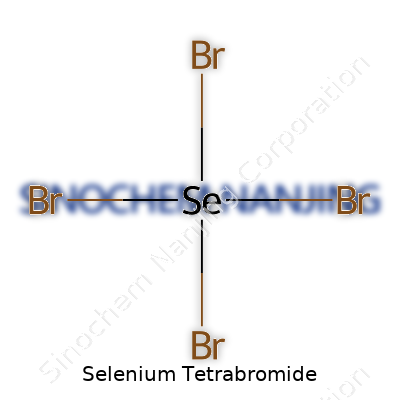
Selenium tetrabromide stands out because it brings a unique profile to the table: a selenium atom surrounded by four bromine atoms in a molecular structure that packs more punch than the simple formula lets on. This compound doesn’t crowd laboratory shelves, but where niche reactions or specific scientific requirements turn up, you can bet selenium tetrabromide gets a second look. Chemists appreciate it for its dramatic color, its role in synthesizing other selenium-based derivatives, and certain niche uses in analytical laboratories. Rarely does it hit the general chemical market in bulk—typical customers include research institutions or specialty manufacturers, often working at the intersection of elemental analysis and creative synthetic methods.
Physical & Chemical Properties
Anyone who’s seen selenium tetrabromide in person usually remembers the color first: the material usually forms deep red or dark orange crystals. It reacts strongly with water, decomposing rapidly and releasing nasty vapors—nobody forgets the smell or the sting in the nose if safety gear slips. At room temperature, it stays relatively stable if it’s kept dry, but leave it exposed and it will quickly draw moisture and fall apart. Under heat, it decomposes into selenium and bromine gases. Selenium tetrabromide dissolves in carbon disulfide and a few other nonpolar solvents, which means it works well in certain organic syntheses where water can’t be present. Density sits above 3 g/cm³, making it a heavy hitter for its volume, and its melting point, hovering around 220°C, means routine handling calls for sturdy glassware rated for elevated temps.
Technical Specifications & Labeling
The technical data sheet on a bottle of selenium tetrabromide gives a few immediate warnings: purity often tallies upward of 98%, with trace residues of selenium dioxide and free bromine kept as low as possible. Standard labeling lists its UN number and relevant hazard codes, plus explicit handling instructions due to its volatile and corrosive character. Despite strict regulations, shipping standards in most countries draw clear lines: only certified containers, clear hazard diamonds, and paperwork showing chain of custody from manufacturer to end user. Handling guidelines typically highlight the use of fume hoods, gloves rated for halogen exposure, and eye protection. Labels also make it clear that even trace spills must be reported and cleaned immediately, not only for lab safety but also for compliance with environmental protocols.
Preparation Method
Lab-scale synthesis calls for direct combination of elemental selenium with dry bromine. The process demands careful temperature control and absolute exclusion of water. Some chemists use an excess of bromine to drive the reaction, then distill off the product under reduced pressure. In a trick practiced for decades, product purification sometimes uses sublimation, as unreacted selenium or polybromides never make it through cleanly. Some research-grade preparations swap pure bromine gas for bromine dissolved in nonpolar solvents to better control the reaction rate and suppress formation of side products. Throughout all steps, the key challenge remains keeping everything anhydrous—water entering the system means loss of yield and corrosion of equipment.
Chemical Reactions & Modifications
Selenium tetrabromide loves to react, especially if water lurks nearby. Add a drop of moisture, and the compound splits quickly, liberating hydrogen bromide and precipitating selenium dioxide. In organic synthesis, chemists use it to introduce selenium or bromine atoms onto aromatic rings or other activated compounds, sometimes generating rare or otherwise difficult-to-access intermediates for research. It doesn’t just hydrolyze; when combined with certain metal halides, it forms unusual coordination complexes. In rare cases, reduction reactions with strong donors yield selenium dibromide or even elemental selenium, offering a stepping-stone for preparing specific selenium-containing catalysts. Every reaction needs careful monitoring because exothermic behavior can spin out of control in seconds if not contained.
Synonyms & Product Names
Most scientific literature sticks with the plain name, selenium tetrabromide, sometimes abbreviating as SeBr₄. Older sources reference it as “tetrabromo selenide.” In industrial circles, you might see catalog entries listing its CAS number or referring back to historic naming conventions. Despite rare uses, brand names are usually lacking—suppliers rely mainly on IUPAC conventions and safety classifications for clarity.
Safety & Operational Standards
Safety sits front and center with selenium tetrabromide, for good reason. Many operators learn the hard way that even a small fume slip can clear out a lab. Side effects of accidental exposure include severe irritation of mucous membranes, corneal burns, and potential respiratory problems. Wearing gloves, goggles, face shields, and laboratory coats isn’t optional—it’s basic survival. Disposal procedures force every lab tech to store spent container and residual waste in separate sealed bins, clearly identified and shipped off for controlled incineration alongside other selenium and bromine waste. Air monitoring and regular safety audits make up the daily routine in places where this material enters the workflow. Local and federal agencies keep a sharp eye on selenium compounds because environmental toxicity risks run high: accidental release means not only lab closure but also extended remediation and possible fines.
Application Area
Selenium tetrabromide finds value where precise chemical manipulation is critical. In analytical chemistry, it sometimes plays a key role in specific micro-scale assays, helping researchers determine selenium or halogen content in challenging matrices. In research labs, it opens up niche opportunities for bromination or chalcogen modification, especially when alternative reagents fail. A handful of electronics manufacturers employ related selenium compounds in glass production or thin film deposition, though selenium tetrabromide itself remains uncommon outside specialized synthesis. On the academic side, students and researchers harness its reactivity to demonstrate core concepts in non-aqueous inorganic chemistry. Its volatile nature blocks most routine or consumer-directed uses, but those pursuing new halide chemistry or fine-tuning existing processes keep it close for small-scale trials.
Research & Development
Scientists continue exploring the ability of selenium tetrabromide to serve as a platform for making novel selenium-containing molecules. A recurring target in organoselenium chemistry involves transferring selenium centers to organic substrates, sometimes to create unique catalysts or pharmaceutical intermediates. Teams in Europe and Asia pursue new reaction pathways, searching for alternatives to toxic mercury or thallium reagents, and selenium compounds often catch attention. Computational chemists keep running simulations on the electronic structure of selenium tetrabromide to better predict its interactions with other halides and organic donors. Research funding agencies push for better handling protocols and faster remediation technologies, recognizing that the environmental profiles of selenium compounds make them high-priority targets in green chemistry.
Toxicity Research
The darker side of selenium tetrabromide lies in its acute toxicity. Inhalation, ingestion, or skin contact produces symptoms fast: burning pain, tissue corrosion, or, at higher doses, central nervous complications. Chronic exposure to low levels of selenium compounds sometimes links to selenosis, a build-up of selenium causing brittle nails, hair loss, and neurological symptoms. Animal studies show that acute doses cause liver and lung damage, demanding strict laboratory protocols. Toxicologists stress that no acceptable daily intake exists for this compound; any significant exposure gets treated as an incident. Waste treatment and containment measures, from fume hood design to air filtration, keep pushing toward zero-exposure targets after repeated evidence from workplace health studies. Regulatory bodies in the EU, US, and Asia all classify selenium tetrabromide as hazardous, demanding ongoing toxicity assessment and tighter manufacturing controls.
Future Prospects
Looking forward, selenium tetrabromide will likely keep its place in tightly controlled settings where its unique reactivity enables essential chemistry. Advances in micro-scale reactions and greener handling technologies might open the door for safer, more accessible research applications, but large-scale industrial adoption remains unlikely unless new breakthroughs arrive. Some researchers are already targeting selenium tetrabromide for roles in catalysis, aiming to extract its unique electronic properties without releasing free selenium into the environment. As green chemistry gains ground, any new protocols for recycling or neutralizing selenium bromides could help researchers use this compound more frequently with lower overall risk. Young chemists joining laboratories that handle selenium tetrabromide quickly realize the compound’s hazards push innovation toward better engineering, stricter oversight, and smarter experimental design—all lessons that combine the wisdom of the past with demands for safer science ahead.
What is Selenium Tetrabromide used for?
Understanding its Real-World Uses
Not many people think about selenium tetrabromide unless they work in a lab or with specialty chemicals. To most folks, it’s just another chemical with a long name and a complicated formula (SeBr4). But dig a bit deeper, and it plays a few key roles in science and industry.
A Building Block in Chemistry
For a chemist, selenium tetrabromide works a bit like a toolkit. It’s often put to use as a starting point for making other selenium compounds. That matters because selenium chemistry isn’t just about filling bottles and labeling shelves. Researchers rely on compounds like this to figure out how selenium interacts with other elements, which is vital for developing new catalysts and specialized materials.
An example hits close to home from my grad school days. I spent long evenings in the lab, mixing up different selenium halides, trying to coax new reactions out of stubborn reagents. Some experiments fizzled, but a few led to colorful crystals that acted as precursors to electronics-grade materials. In those moments, simple compounds like selenium tetrabromide became launchpads for innovation.
How Industry Uses It
Selenium tetrabromide isn’t sold on street corners or poured into consumer products. Its main value shows up in the manufacturing sector, where companies chase improved glass, better semiconductors, and rare specialty alloys. Because this compound dissolves well in solvents like carbon disulfide or chloroform, specialists can blend it into mixtures that react under controlled conditions.
I remember visiting a small tech plant in the Pacific Northwest. Technicians described blending strange halides— including selenium tetrabromide— into artisanal glass meant for sensors and scientific instruments. The tech itself flew under the radar, but those custom glasses helped their clients measure trace amounts of gases and light in medical labs and environmental monitoring stations.
Safety Comes First
No chemical is without risk, and selenium tetrabromide sure isn’t one to splash on your skin. Touching or breathing in its vapors could cause irritation or worse. Folks working with it need solid training, tight ventilation, and protective gloves and goggles. Regulations kick in from the minute drums land on loading docks. Improper handling isn’t just a paperwork issue; it can send someone to the hospital.
I’ve seen safety meetings where stories from the past—the old burnt-finger tales—still pop up, and they serve as real reminders: one small mistake with reactive halides can cause big problems. The lesson always stuck with me: respect the risks and follow the protocols.
Thinking About the Future
Some innovations ask researchers to rethink the building blocks. As industries chase greener processes and safer materials, the future might not rest with every old halide. Still, compounds like selenium tetrabromide help keep science moving forward. Maybe someday, a cleaner alternative will take its place. For now, smart handling and responsible processes offer the best way to manage the benefits and downsides. Responsible research, backed by facts and careful practice, helps keep workspaces safe and technology moving ahead.
What is the chemical formula of Selenium Tetrabromide?
The Formula Breaks Down Barriers
Selenium tetrabromide grabs your attention with its formula: SeBr4. At a glance, you see selenium (Se) bonded with four bromine (Br) atoms. For me, seeing that 'tetra-' right before bromide brings me back to learning chemistry basics—where prefixes reflect the number of atoms, turning abstract elemental symbols into something easier to grasp. I remember my first time mixing chemicals in a high school lab. That world seemed full of magic until you realized most of it boiled down to ratios and the nature of chemical bonds.
Why This Chemical Matters Now
Most people probably don’t cross paths with selenium tetrabromide outside of academic settings, but it sparks curiosity. The chemical fits into a wider world where compounds like these drive research in material science and inorganic chemistry. I once chatted with a researcher at a university who was using selenium compounds to develop new semiconductors. Sure, not every compound goes commercial, but the components often open doors. SeBr4 stands as a building block, and understanding it helps students wrap their minds around bonding and molecular geometry—concepts with ripple effects in fields ranging from electronics to environmental studies.
Diving Deeper into Its Structure
Looking at its formula—SeBr4—you see a central selenium atom holding on to four bromine atoms. Picture a see-saw, because these molecules don’t lay flat; they arrange themselves in a “see-saw” shape, thanks to lone electron pairs and repulsions. The real world isn’t tidy, and neither is chemistry. I’ve made mistakes in the lab—misreading a formula, counting atoms wrong—it’s easy to do. Yet, the principle of counting electrons, knowing which atoms bond and how, brings structure to the confusing mess.
Getting Facts Straight
Selenium itself sits below sulfur in the periodic table, and both share similar chemistry, so compounds like SeBr4 aren’t unusual at all. The formula makes sense once you picture selenium acting with a +4 oxidation state and each bromine taking up a -1 spot. Chemists love seeing things add up. It’s factual and precise. Try blending in outdated facts, and real-world application gets messy fast. Safety, storage, and disposal aren’t afterthoughts, either. Selenium tetrabromide gets handled with care since it reacts strongly with water, releasing nasty fumes. Safety sheets matter—something that sticks with you after a near-miss in a college lab when someone ignored the guidelines and clouded up the entire bench area.
Practical Challenges and Solutions
The name might sound exotic, but SeBr4 shares the usual headaches of specialty inorganics. It’s sensitive to air and moisture, so you need real discipline in handling and storage. Glassware must stay bone dry—I’ve lost a batch before just because of a stray water droplet. Labs working with it tend to use glove boxes and inert gas atmospheres. Knowledge, in this case, isn’t just theory; it’s sweat, spills, and learning from mistakes. Developing better containers and routines goes hand-in-hand with these experiences—lessons best not repeated in the next generation of scientists.
Why Getting the Formula Right Remains Important
Chemical formulas serve as more than homework answers. They start conversations, build experiments, and occasionally make headlines when new properties turn up in surprising places. The more I work within science, the clearer it gets—precision and clear understanding underpin safer labs, stronger materials, and even greener technology. SeBr4 may not win a popularity contest, but its formula steps up as a teaching tool and a nudge toward being meticulous in chemistry—and in life.
Is Selenium Tetrabromide hazardous or toxic?
Looking Closer at Selenium Tetrabromide
Most people have never heard of selenium tetrabromide, much less handled it. Found as SeBr4, this orange-red crystalline compound often gets stashed away in school or research labs. Its sharp, pungent odor hints at something unfriendly lurking beneath that vivid color. Once you dig into its makeup and risks, the reality becomes harder to ignore.
Health Risks that Deserve Respect
I remember reading safety briefings in the lab and thinking they seemed overcautious. Later, a splash on a gloved hand taught me to take chemical risks seriously, especially with things like selenium tetrabromide. It reacts with moisture, even from humid air, releasing hydrogen bromide gas. That gas loves to irritate lungs and eyes and doesn't take much exposure to make you cough or feel your eyes burn. If this substance touches bare skin, prepare for swift, painful burns or blisters. Forget accidental ingestion – swallowing selenium or bromine compounds invites nausea, vomiting, and all the symptoms you never want to experience.
Environmental Impact: Not Just a Human Problem
What we spill or dump doesn’t stay put. Selenium finds its way through soil, plants, or water tables. In farming communities where runoff drips toward rivers and ponds, birds and fish pay the price for casual disposal or leaks. Selenium compounds build up in animal tissue and, over time, poison the very creatures that keep food webs humming. One study of contaminated irrigation runoff in California’s San Joaquin Valley showed deformed waterfowl eggs and declining fish. We can’t claim ignorance when the science stays public and clear. SeBr4 isn’t just a local issue; environmental damage ripples further than most folks expect.
Truth in Handling and Regulation
Some labs look at material safety data sheets (MSDS) and keep personal protective equipment ready: goggles, gloves rated for corrosive chemicals, fume hoods humming along. Those steps matter every single day. The legal side weighs in with restrictions. Shipping companies label containers as dangerous goods, so only certified labs and professionals usually touch this stuff. Most countries list selenium tetrabromide as hazardous or harmful to aquatic life and people, which means clear warnings and rules.
Why It Matters for Everybody
Maybe most of us won’t grab a vial of selenium tetrabromide off the shelf. But the risks reach beyond specialists. The Toxic Substances Control Act in the U.S. and international guidelines highlight the need for tracking and regulating chemicals like this. Lab workers, local authorities, farmers, and waste handlers all share responsibility for stewardship. It falls on our generation to learn from mistakes—trouble with mercury and lead taught us hard lessons about dismissing risk. Many health agencies urge routine monitoring and spill response training. Good habits and making safety rules routine might seem small until one accident makes headlines.
Possible Solutions and Safer Practices
Selenium’s industrial roles aren’t going away, but there’s a shift toward greener alternatives and stricter recycling. Closed-loop systems and robust training programs keep those who work hands-on with SeBr4 better protected than in the past. Simple practices — double-checking PPE, airtight labeling, and real-world emergency drills for chemical spills — turn theoretical safety into real safety. Schools and labs can push for substitute reagents when possible, lowering the danger before it even gets close to the bench.
Trust Built Through Careful Action
Trust grows from transparent decision making, not wishful thinking. Staying informed, teaching safety honestly, and keeping hazardous material out of the wrong hands matters as much as the rules themselves. The real test comes every day in small labs, shipping warehouses, and the fields nearby. Respect for chemicals like selenium tetrabromide safeguards families, workers, and the planet we share.
How should Selenium Tetrabromide be stored?
Real Dangers from a Powerful Compound
Anyone who’s handled selenium tetrabromide in a lab knows it’s more than just another chemical jar tucked away on a shelf. This compound reacts quickly with moisture in the air, producing toxic fumes and sometimes acid. Breathing in or touching these byproducts brings immediate risk, which makes honest, day-to-day safety habits so important.
Even experienced scientists occasionally underestimate how unpredictable these orange crystals can act outside their safe zone. I remember a grad school lab where a tiny crack in a stopper led to a cloud of irritating smoke. The lesson stuck: careless storage can cancel out even the best chemistry skills or intentions.
Storage: Simple Steps Save Trouble
Keeping selenium tetrabromide secure starts with the basics: a tight, sealed container that blocks out air and moisture. Glass bottles with PTFE-lined caps work better than most plastic ones, which can corrode or let in trace humidity. Keeping it in a cool, dry spot keeps reactions slow, so temperature control also matters.
Chemicals like this need more than a home under a fume hood or behind a simple cabinet door. Secure chemical storage lockers with solid ventilation pull fumes away if a leak happens. Laboratories that use this substance post warning signs and restrict access; this keeps accidents down and helps everyone know when to put on real protection—gloves, goggles, respirators, and full sleeves.
Compliance Keeps Laboratories Safer
Laws and guidelines from OSHA and similar groups don’t just sit on paper. Regulators expect proper labeling: every bottle, no matter how small or half-used, needs a clear chemical name, hazard class, and the date it went inside. Mixing up bottles or re-using empty ones leads to confusion and, in some cases, dangerous accidents. Experience says that double-checking labels stops a lot of errors before they happen.
Regular checks help too. Rotating stock prevents old, degraded chemicals from building up. Removing expired or badly stored ones keeps the space safer for everyone. Labs that train students or new staff run emergency drills and create real response plans for spills or leaks—fast reaction cuts down injury rates and stops small mistakes from snowballing.
Solutions for Less Risk
Lower-risk substitutes exist for certain processes, but for those who must use selenium tetrabromide, knowledge makes the biggest difference. Digital inventory systems reduce surprises by keeping track of chemicals in storage and signaling when safety checks fall behind.
Collaboration helps: open conversations between facility managers, chemists, and safety officers build a community that takes all hazards seriously, instead of waiting for policies to catch up after an incident. Chemists who share their close calls spread valuable lessons. Reliable storage practices—airtight seals, dry environment, secure access—save lives and keep research going.
Selenium tetrabromide poses real risks, but clear processes and teamwork turn daily handling from an accident waiting to happen into just another routine task—one the whole lab can trust, every day.
What safety precautions should be taken when handling Selenium Tetrabromide?
Understanding the Risks
Working in a chemistry lab, you run into all kinds of substances, but selenium tetrabromide demands close attention. This yellow-orange compound releases vapors that irritate the eyes, nose, and throat. Long exposure, even in small amounts, may lead to more serious trouble like tissue damage. Over time, selenium compounds can build up in the body and target nerves, skin, and organs.
Accidents don’t offer second chances in chemistry. You spill a bit of selenium tetrabromide on your skin, or breathe in a whiff, and that moment lingers. Personal experience reminds me: one careless move can bring a stinging pain or, worse, a lasting health issue. I’ve seen old gloves eat through after handling strong chemicals, and I’ve watched coworkers learn the meaning of “volatile” the hard way. That’s why the smallest routine—washing up or checking for glove tears—makes a difference.
Basic Protective Gear Is Not Optional
Forget short sleeves or worn-out gloves. Put on a lab coat, nitrile gloves, and goggles that seal completely. Fume hood use is non-negotiable—never work with selenium tetrabromide in open air. Vapor escapes easily, and what your nose doesn't warn you about, your lungs will. A proper fume hood carries the fumes away before you even smell trouble. The best labs keep tight controls on airflow and air filtration, too, to protect everyone in the room.
Check gloves and eyewear for cracks before starting. Double-gloving lowers odds of skin exposure. I always run a mental checklist: coat, gloves, goggles, hood on, work tray lined. Every step keeps your body—and your nerves—settled.
Smart Handling and Storage Matters
Old habits can lead to trouble with reactive chemicals. Never touch pipettes or bottles with greasy or moist hands; water meets selenium tetrabromide, and the reaction releases toxic fumes. Storing the compound in glass containers with airtight seals helps, since many plastics degrade or leak. Label everything, especially waste containers, and keep incompatible materials far away.
If you spill a crystal or drop a bottle, act fast. Evacuate, turn up the fan, grab the spill kit—no shortcuts, ever. Most spill kits in academic and industrial labs now include special absorbents and neutralizers for halides and selenium compounds. Don’t try to improvise. Call for trained responders if the spill spreads or the fumes linger.
Training Builds Good Habits
Remember the awkward safety lectures during lab orientation? Truth is, the best chemists pay attention and update training every year or two. Labs that skip refreshers see more incidents. I once worked with a group where shortcuts led to a close call; that day taught us more than any policy manual could. Now, we run through mock drills twice a year—hands-on, not just slideshows.
Treated right, chemistry remains safe, exciting, and productive. Staff and students share responsibility for each other's wellbeing. Stick with up-to-date safety data sheets, buy quality gear, never bypass ventilation, and learn from every close call.
Solutions and Best Practices
Keep procedures and emergency plans easy to understand and easy to reach. Store selenium tetrabromide in a cool, dry area, away from sunlight. Always dispose of waste according to hazardous-materials rules—local, state, and federal. Train new staff before allowing them access, and keep records of all incidents and near misses.
No chemical is worth risking your health—or someone else's. Take the steps, listen to those who have been there, and you’ll keep control where it belongs: in your hands.
| Names | |
| Preferred IUPAC name | tetrabromoselane |
| Other names |
Selenium(IV) bromide Selenium tetrabromide Selenium(4+) bromide |
| Pronunciation | /sɪˈliːniəm tɛtrəˈbrəʊmaɪd/ |
| Identifiers | |
| CAS Number | 7789-44-8 |
| Beilstein Reference | 1206957 |
| ChEBI | CHEBI:30401 |
| ChEMBL | CHEMBL1231685 |
| ChemSpider | 13711048 |
| DrugBank | DB14411 |
| ECHA InfoCard | 100.032.636 |
| EC Number | 236-700-7 |
| Gmelin Reference | 78667 |
| KEGG | C18618 |
| MeSH | D01374 |
| PubChem CID | 24635 |
| RTECS number | XN8225000 |
| UNII | Q663V9956X |
| UN number | UN2630 |
| CompTox Dashboard (EPA) | DTXSID6021599 |
| Properties | |
| Chemical formula | SeBr4 |
| Molar mass | PBr4Se: 478.489 g/mol |
| Appearance | Red-orange crystals |
| Odor | Pungent |
| Density | 4.35 g/cm³ |
| Solubility in water | Reacts violently |
| log P | -1.22 |
| Vapor pressure | 0.00068 mmHg (25°C) |
| Acidity (pKa) | -3.22 |
| Basicity (pKb) | -1.7 |
| Magnetic susceptibility (χ) | -1370.0 × 10⁻⁶ cm³/mol |
| Refractive index (nD) | 1.934 |
| Viscosity | Viscous liquid |
| Dipole moment | 0 D |
| Thermochemistry | |
| Std molar entropy (S⦵298) | 290.6 J·mol⁻¹·K⁻¹ |
| Std enthalpy of formation (ΔfH⦵298) | -234 kJ/mol |
| Pharmacology | |
| ATC code | A12CE04 |
| Hazards | |
| Main hazards | Toxic if swallowed. Causes severe skin burns and eye damage. Causes serious eye damage. |
| GHS labelling | GHS02, GHS05, GHS06 |
| Pictograms | GHS05,GHS06 |
| Signal word | Danger |
| Hazard statements | H301 + H331: Toxic if swallowed or if inhaled. H314: Causes severe skin burns and eye damage. |
| Precautionary statements | P234, P260, P264, P270, P271, P273, P301+P330+P331, P303+P361+P353, P304+P340, P305+P351+P338, P312, P321, P363, P370+P378, P391, P403+P233, P405, P501 |
| NFPA 704 (fire diamond) | 3-0-2 |
| Autoignition temperature | 200 °C |
| Lethal dose or concentration | LD50 (oral, rat): 25 mg/kg |
| NIOSH | WH1410000 |
| PEL (Permissible) | PEL (Permissible Exposure Limit) for Selenium Tetrabromide: 0.2 mg/m³ (as Selenium) |
| REL (Recommended) | 5g |
| IDLH (Immediate danger) | IDLH: 1 mg/m³ |
| Related compounds | |
| Related compounds |
Selenium tetrafluoride Selenium tetrachloride Selenium tetraiodide |



