Selenium Oxychloride: Unpacking Its Path From Discovery To Future Prospects
Historical Development
Chemistry often advances through practical necessity and chance discovery. Selenium oxychloride came into the scientific world through the growing demand for specialized reagents and solvents in the early 20th century. Its formation wasn’t a result of a single “Eureka!” moment, but rather, it came about as researchers tried to tackle problems in inorganic synthesis and analytical chemistry. Explorations into selenium compounds first highlighted its potential, and as chemical industries expanded, the need for reactive and selective agents like selenium oxychloride grew. Over the decades, chemical suppliers refined isolation and purification methods, improving their ability to deliver reliable reagents to industry and research labs. Demand, in large part, tracked the advances in electronics and metallurgical processes, where selenium played a surprisingly crucial role.
Product Overview
Selenium oxychloride, a colorless to slightly yellow liquid, tends to grab attention for its aggressive chemical nature. This isn’t a bottle for the beginners’ shelf in the teaching lab. Its formula, SeOCl2, represents a molecule that reacts readily with water and a wide array of organic compounds. The substance attacks glass and corrodes certain metals, which says a lot before even reading the safety sheet. For chemists looking for a powerful chlorinating or dehydrating agent, selenium oxychloride offers a choice that stands apart from the friendlier faces of the periodic table.
Physical & Chemical Properties
In practical handling, selenium oxychloride’s pungent odor and fuming nature means careful bottle opening and thorough ventilation. The boiling point hovers around 192°C, which gives enough space above room temperature for many applications but doesn’t call for elaborate distillation. On the density chart, it lands at about 2.01 g/cm³, noticeably heavier than water. Solubility is a story of strong selectivity: it doesn’t easily mix with water, promptly decomposing and releasing hydrogen chloride and other irritating fumes. Exposure to air triggers hydrolysis, so chemists use containers lined with resistant materials and work in glove boxes or fume hoods.
Technical Specifications & Labeling
Modern suppliers include detailed specification sheets with every shipment: purity levels often hit 98-99%, halide content gets measured, and moisture limits stay below 0.1%. Companies list corrosion warnings, UN identification numbers, required hazard pictograms, and emergency procedures right next to the lot number. Proper labeling doesn’t just keep regulators satisfied; it helps professionals recognize danger at a glance rather than rummage through documentation in a crisis.
Preparation Method
Making selenium oxychloride involves passing chlorine gas over finely powdered selenium dioxide. This reaction takes place within glass or specially coated apparatus under a controlled stream of dry chlorine, usually heated to favor the substitution. By adjusting temperature and chlorine input, chemists limit the formation of by-products such as selenium tetrachloride or elemental chlorine. Success relies on controlling moisture throughout the setup, since even small leaks of water vapor can sabotage purity and clog the process with corrosive slurries. Once formed, distillation helps collect selenium oxychloride in its pure form.
Chemical Reactions & Modifications
Selenium oxychloride shows a strong appetite for acting as a source of both selenium and chloride ions. It behaves aggressively toward nucleophiles, especially water and alcohols, liberating hydrogen chloride and creating a persistent vapor in the reaction vessel. Chemists tap into these reactions to carry out specific chlorinations or to synthesize organoselenium intermediates. Selenoxides prepared from selenium oxychloride often play key roles in oxidation processes. By pairing SeOCl2 with suitable ligands, researchers unlock new pathways to chalcogen-containing heterocycles, which hold promise for advanced materials and medicinal chemistry. Sometimes these methods demand careful temperature control to avoid runaway reactions or excessive side products.
Synonyms & Product Names
In catalogues, selenium oxychloride often hides behind alternate names: selenyl chloride, selenium oxychloride, or SeOCl2. Each points toward the same tough, fuming agent prized for its effectiveness and selectivity. Chemical suppliers sometimes use longer descriptors tied to packaging or purification grades, but these don’t change the essentials. Researchers naming compounds in papers tend to stick to the classic “selenium oxychloride,” though certain brands and product lines use proprietary designations aimed at traceability or regulatory compliance.
Safety & Operational Standards
Handling selenium oxychloride means treating it with a careful, methodical respect borne from hard experience. Direct contact with skin or eyes causes severe burns, and inhaling the vapors triggers immediate irritation. Facilities enforce the use of chemical splash goggles, face shields, and nitrile gloves, never settling for casual handling. Emergency eyewash stations and showers need to stand ready, since even a small splash calls for a fast response. Staff receive training to work with this class of chemicals, from safe transport and storage to decontamination and incineration of residues. Storage in tightly sealed borosilicate glass or PTFE-lined containers slows down the corrosive attack and guards against unintentional leaks. Air monitoring and proper signage build a culture of caution around any operation involving selenium oxychloride.
Application Area
Selenium oxychloride’s main value shines in synthetic laboratories and specialty chemical plants. It finds a niche in advanced chlorinations, providing selective conversion unattainable by more benign reagents. In the world of organoselenium chemistry, it enables the construction of key intermediates needed for the latest crop-protection molecules and potential pharmaceuticals. Certain metallurgical processes lean on its powerful properties to modify alloys in ways that simpler halides just can’t achieve. Universities and industrial research divisions alike turn to SeOCl2 for small-scale exploratory work, especially for reactions demanding chalcogen incorporation or tough dehydration conditions. High-purity selenium compounds provide benefit for electronics, glass production, and specialty optics, with SeOCl2 sometimes forming an essential feedstock.
Research & Development
Research continues to push the boundaries of what selenium oxychloride can do. New reaction schemes promise more selective pathways for synthesizing heteroatom-rich materials. Analytical chemists pursue improved detection methods for trace selenium, with interest in environmental monitoring and toxicity mapping. Pressure from safety and environmental regulations steers work toward containment improvements and neutralization chemistry that can quickly render selenium residues harmless. The trend in green chemistry motivates exploration of alternatives, but research recognizes that nothing yet replicates the effectiveness of selenium oxychloride for certain applications. Collaboration between academic groups and chemical manufacturers keeps the field moving, as new routes and safer handling protocols emerge from shared experience.
Toxicity Research
Toxicologists pay close attention to selenium oxychloride due to its high reactivity and acute toxicity. Exposure limits sit low, reflecting both the substance’s corrosivity and the danger posed by soluble selenium species released during decomposition. Chronic exposure links to selenium poisoning, which produces neurological symptoms, liver dysfunction, and in serious cases, death. Animal studies begin with low doses, recognizing that even minimal systemic uptake disrupts key enzymes and hormone balances. Environmental release poses additional concerns, since selenium persists in some ecosystems and bioaccumulates in aquatic organisms. Laboratories test new neutralization methods to control accidental spills, and regulatory agencies update recommendations to reduce occupational risk. Toxicity studies now incorporate molecular-level insight, hoping to unravel the detailed biochemical mechanisms of selenium species and identify early-warning signs of exposure.
Future Prospects
Technology pressures give selenium oxychloride a tricky future. Its unmatched reactivity will continue to attract researchers and specialized manufacturers, while shifting regulatory environments might pressure industries to seek alternatives. Green chemistry seeks safer replacements, but so far, nothing matches SeOCl2’s unique capabilities for certain functional group transformations. Digital monitoring and automation in laboratories could shrink the risk threshold, making each operation safer and more efficient. If new containment strategies and personal protection technologies advance, some hazards may reduce, making the compound more accessible beyond select high-security labs. At the same time, increased understanding of selenium chemistry might reveal unexpected applications, especially as demand for semiconductors, high-performance glass, and novel pharmaceuticals grows. The story of selenium oxychloride isn’t just about a dangerous reagent— it’s a window into the complex balance between risk and innovation in modern chemical science.
What is Selenium Oxychloride used for?
What Selenium Oxychloride Brings to the Table
Selenium oxychloride has its place in chemical labs and factories, though many folks outside those circles never bump into it. People handling glass manufacturing and chemical synthesis often use this compound for its unique properties. It acts as a powerful chlorinating agent, meaning it can swap out atoms in other molecules, which helps chemists build up certain compounds that would otherwise take a lot of effort to make. Some manufacturers count on selenium oxychloride to produce glasses with special optical qualities, like those used in lenses and specialized windows. Its role there is pretty focused but crucial—the compound introduces selenium atoms into the glass, which can shift how the glass interacts with light or resist certain types of chemical wear.
If you’ve wondered about pigments in plastics or glass that have a red or deep orange hue, selenium-based compounds play a part. Selenium oxychloride helps create these pigments by serving as a stepping stone in the chemical process. The vivid color gives manufacturers a way to add visual features to their products or differentiate glass used in traffic lights and warning signals.
Danger Lurks Behind the Science
Not everything about selenium oxychloride wins praise. It’s a liquid that fumes easily and carries a sharp, choking smell. Direct exposure poses danger to the skin, eyes, and lungs. Short contact can burn skin and cause vision loss if splashed into eyes. People inhaling its vapors might feel their throats seize up and lungs rebel. The U.S. National Institute for Occupational Safety and Health lists selenium oxychloride as hazardous, and it belongs on safety data sheets as a “poison by inhalation.”
Industry workers handle this liquid using chemical-resistant gloves, heavy ventilation, and face shields. Employers put training and emergency eye-wash stations in place, not as an option but as a necessity. Over the years, workplace accidents involving selenium oxychloride have led to calls for stricter oversight. In some regions, regulations mandate tight storage and quick spill-cleanup routines. I remember talking with a chemical plant manager who told stories about alarms sounding over the smallest vapor leaks—nobody shrugs off the risk.
Looking at Safer Roads Ahead
With modern labs moving toward green chemistry, many researchers look for options that cut down on hazards. For selenium oxychloride, alternatives exist for some of its jobs, though not all. The push to swap in less harmful chemicals takes time and money. Companies weigh risks, costs, and the availability of replacements. Some glass applications still depend on selenium’s chemistry, so the focus shifts to safer handling, improved ventilation, and closed systems that keep fumes away from workers.
Education matters here. Workers get hands-on practice with spills, ventilation checks, and emergency situations. The younger generation of chemists learns what compounds like selenium oxychloride can do, but also why caution never goes out of style. Even so, global demand for niche glass products continues, especially as industries develop new lenses for phones or renewable energy windows. So, selenium oxychloride keeps a spot in chemical toolboxes—with eyes wide open about what it brings and the watchfulness it demands.
What are the safety precautions when handling Selenium Oxychloride?
The Risks Hiding Behind the Label
A clear bottle in the lab marked “Selenium Oxychloride” often sits unnoticed, but that label signals danger beneath the surface. This chemical has been around for decades, showing up in industries from glassmaking to organic synthesis. My first encounter with it landed me with a stinging burn and a lasting respect for how easily small mistakes turn into big problems. Even experienced chemists fall into habits that put them at risk, so it pays to refresh what really matters.
Personal Protection Must Go Beyond the Basics
Most folks remember gloves and goggles, but that’s just the start. The fumes hassle your eyes and respiratory system faster than many anticipate. I learned early to double up on splash protection—face shield, coated gloves, and long sleeves. Cotton lab coats help since synthetics melt if the chemical splashes. Forgetting to check glove compatibility can cost—nitrile or neoprene do the job better than latex, and changing gloves if splashes happen makes all the difference.
Ventilation as a First Line of Defense
Opening a bottle outside a hood spells trouble. No one expects a spill or vapor cloud until it happens. Fume hoods aren’t optional with this compound; those vapors corrode hardware, eat into mucous membranes, and can trigger asthma in people who never had it before. Many accidents start because people trust their nose—by the time you smell it, it’s too late. Continuous airflow and working with the sash down forms a habit that saves lungs and eyes.
Emergency Procedures—Preparation Matters Most
For every run with Selenium Oxychloride, I make sure a source of running water and an eyewash station work and have been tested that shift. Spills can’t wait for maintenance to show up. I’ve witnessed a fast response limit the damage and a slow one leave someone with lasting scars. A chemical spill kit designed for corrosive liquids beats old towels every time. Everyone on-site should expect to use one at least once, so practice drills aren’t overkill—they’re survival training.
Storage and Disposal—Cutting Corners Turns Small Problems Into Disasters
Just last year, a cracked bottle leaked Selenium Oxychloride inside a cabinet, corroding the shelving and ruining nearby supplies. That could’ve turned into a bigger emergency if vapors filled the room. Compatible, leak-proof containers matter, stored far from anything with water or strong bases. A dry, cool room with good air movement gives fewer surprises. Segregating chemicals sounds tedious, but it keeps incompatible materials away and slashes the odds of a chain reaction.
Knowledge and Reporting Save More Than Just Careers
Many places rely on Material Safety Data Sheets (MSDS), but I still keep a printed page handy for quick reference. Regular short meetings build a culture where people really share close calls and things learned the hard way. No one likes paperwork, but incident reporting uncovers weak spots that would otherwise wait until someone gets hurt. Every organization benefits from honest conversations about what went right and what nearly went wrong.
Final Thoughts on Everyday Decisions
Handling Selenium Oxychloride safely doesn’t come from lucky streaks. It relies on habits: wearing protection, using a hood, preparing for mistakes, storing right, and sharing what you learn. By treating each step seriously, I’ve seen labs build a place where chemicals serve us, not the other way around.
What is the chemical formula of Selenium Oxychloride?
Cutting Through the Science: SeOCl2
A bottle on a dusty shelf in a high school chemistry classroom caught my eye once. The label read: “Selenium Oxychloride.” Back then, a string of letters and numbers—SeOCl2—meant about as much to me as hieroglyphics. Now, as someone who’s spent a fair bit of time both reading and writing about chemicals, I see more behind these symbols. The formula SeOCl2 blends selenium, oxygen, and chlorine in a way that’s both sharp and useful.
Why SeOCl2 Matters in the Lab
Selenium oxychloride doesn’t pop up in everyday conversation. In research circles, though, people who work with organoselenium compounds or who need a versatile solvent know this chemical. Its formula speaks to a structure that’s somewhere between selenium dioxide and selenium tetrachloride—both familiar faces in industrial chemistry. The formula breaks down into one selenium atom, one oxygen, and two chlorine atoms. All bonded together, they end up forming a liquid that’s colorless or pale yellow and gives off a strong, biting smell.
A lot of its value comes down to its reactivity. It won’t just sit in a bottle and do nothing. In chemical syntheses, it provides a way to add selenium to organic molecules under controlled conditions. For anyone working on materials that involve selenium, or even on fine-tuning the properties of certain glasses and ceramics, knowing exactly what’s in the chemical and how it behaves is essential.
Health, Safety, and Environmental Concerns
Most people look at a chemical formula and think about the lab. But the importance runs further—a wrong move with selenium oxychloride and you could end up with a chemical burn or a lungful of nasty vapors. The formula hints at its danger. Selenium compounds, especially when mixed with halogens like chlorine, get dicey. SeOCl2 can fume in moist air, releasing hydrochloric acid and selenium dioxide, both of which are corrosive and hazardous.
As much as science values innovation, facts about safety stay permanent. Material safety data sheets (MSDS) stress keeping SeOCl2 away from water and always using personal protective gear like gloves and goggles. Good ventilation is non-negotiable. In case of a spill or accidental exposure, having a quick path to the safety shower and an eyewash station matters much more than it seems on paper.
From an environmental view, selenium and chlorine both need careful handling. Trace selenium is critical for health, but step over the line and it turns toxic. Sorting and disposal fall under tight regulations. Incineration has to happen at certified facilities, because regular burners could spew out hazardous byproducts.
Solutions for Laboratory and Industry Safety
The best way to keep trouble away comes down to three things: knowledge, respect, and preparation. Proper labeling, up-to-date safety training, and a clear understanding of the hazards make any chemical, even one too obscure for the kitchen table, less scary and more manageable. Sharing updated resources and case studies across the scientific community promotes a healthier attitude toward chemical safety.
Digital databases now keep track of inventory and flag hazards. Automation in chemical synthesis, with closed systems and remote monitoring, reduces the kind of direct contact that often leads to accidents. In my own experience, following basics like buddy systems in the lab and regular drills pays off. Problems tend to shrink the moment everyone stops treating them as someone else’s job.
Final Thoughts
Knowing what SeOCl2 stands for does more than unlock a trivia nugget; it shapes decisions in chemistry labs, guides proper safety measures, and steers industry toward more responsible disposal. Being grounded in real experience, built on evidence, and focused on protecting people and the environment, builds the trust science needs.
How should Selenium Oxychloride be stored?
People and Chemicals: Respect for Risk
Selenium oxychloride doesn’t turn up in most homes. Folks working with it know each drop brings more risk than the average cleaner under your sink. I remember my first time around industrial chemicals. We learned early: don’t just look at your materials, but also your habits around them. Open containers, rusty shelves, crowded benches—one forgotten rule, and you’re looking at trouble. Selenium oxychloride, a fuming, corrosive liquid, kicks off toxic gases on contact with water. It eats through organic matter and gives off sharp fumes. Touching it can burn skin, breathing it in can poke holes in your lungs—so why chance a spill or leaky cap?
Storage Does the Heavy Lifting
A few basic practices mean the difference between safe storage and a nasty accident. Always work with solid glass containers fitted with Teflon-lined stoppers. This chemical doesn’t play nice with plastic; it softens or corrodes most common polymers and metals. A solid shelf in a dedicated storage room—no high-traffic zones—makes tracking leaks easier. I’ve seen busy labs where incompatible chemicals crowd together, unnoticed until a label falls off. In one incident, a splash corroded a metal shelf and left a faint mist in the air. Best practice: keep it away from moisture, acids, bases, organics—anything reactive. Humidity itself can be enough to start a problem.
Environment Keeps Us Honest
A cool, dry, and well-ventilated space offers some peace of mind. Even with a thick-walled bottle, too much heat can build up vapor pressure. I never store harsh reagents near windows or radiators—the cycles of heating and cooling will test the limits of every container. Fume hoods or storage cabinets with mechanical ventilation make life easier. You want anything escaping to get pulled away fast. Every chemical supplier I’ve worked with swears by double containment: place the main bottle in a sealed plastic tub with a chemical-resistant tray underneath. Any drip, break, or spill stays inside the bounds.
Labeling and Accountability
Once the bottle arrives, it gets a full label—name, hazards, date received, and the responsible user. Sloppy habits here can haunt you down the line. I’ve reviewed storage rooms with sketchy markers faded to nothing, making emergencies worse. Digital inventory systems help; log every movement and make sure only authorized folks have keys to the chemical store. Training matters as much as formality—relying on one expert leaves everyone else in the dark. Safety grows from everyone pitching in, not just the person with “chemist” printed on their badge.
Spill Kits Are Real, Not Decorative
Emergency planning means more than a binder on the shelf. Every storage area should have a kit ready to go: chemical-resistant gloves, goggles, plenty of absorbent pads, and a neutralizing agent. I’ve seen people freeze up in the moment. The difference between a small mess and a medical emergency often comes down to having your tools at arm’s length. Practice makes ugly accidents boring and preventable.
The people who share a space with selenium oxychloride deserve constant respect for the rules—never just for compliance, always for their own safety. Every step in storing selenium oxychloride points back to basics: know your risks, respect your space, and never get lazy about the details.Is Selenium Oxychloride toxic to humans or the environment?
Understanding Selenium Oxychloride
Selenium oxychloride often shows up in niche chemical processes, sometimes in labs and sometimes in industrial settings. It’s a colorless to pale yellow liquid that reacts quickly with water and organic material, giving off toxic fumes. Many chemists know it for its corrosive power, which means skin, eyes, and lungs are in the danger zone around this compound.
Human Health Matters
Exposure to selenium oxychloride spells real trouble. Just a splash on the skin can cause nasty burns. Eyes exposed to its vapor or spray might get permanently damaged. Breathing it in is even worse, leading to coughing fits, breathing trouble, or, at high doses, choking and long-term lung injuries. According to the International Programme on Chemical Safety, workers in storage or handling facilities need full protection, including chemical suits and proper respiratory gear.
Reports from hazardous material accidents, such as a 2016 lab spill in Europe, keep surfacing every few years. Most health departments urge strict emergency protocols since a few minutes of unprotected contact can set off severe pain and tissue damage. The Centers for Disease Control and Prevention (CDC) links inhaling selenium-containing vapors to dizziness, headaches, and even potential nerve issues if the dose is high enough.
Selenium itself isn’t new—it makes its way into dietary supplements at trace levels, and most people get what they need through food. But in the form of oxychloride, its reactivity turns it into something far more dangerous. Old stories from industrial workers—many of them working in poorly ventilated spaces—mention nosebleeds, chronic cough, and mysterious skin lesions traced back to bad exposure controls or ignored safety protocols.
Environmental Hazards
Large spills or improper disposal of selenium oxychloride spill into another big problem: environmental contamination. Any contact with water breaks it down quickly, releasing hydrochloric acid and selenium dioxide, both toxic to aquatic life. The selenium compounds can accumulate through the food chain. Fish and small water creatures don’t take kindly to sudden chemical changes like these, and high concentrations turn up in local water tests for months after a leak.
Runoff from even one industrial accident can burn plants and harm soil microbes, affecting crops or wild growth for seasons. Some selenium chemicals stick around, cycling through plants, animals, and soil, pushing levels higher year after year. Local health agencies keep a close watch whenever facilities declare releases.
Better Safety, Smarter Handling
Looking at solutions, safety training and airtight chemical protocols help keep selenium oxychloride out of trouble. Spills demand an immediate cleanup crew with proper gear—no shortcuts, no excuses. Ventilation systems and chemical fume hoods stop vapor and splash from reaching unsuspecting workers. Regular inspections and proper labeling help everyone spot the hazard before accidents happen.
Disposal gets special attention. Treating waste with neutralizers or using sealed containers keeps toxic byproducts out of the ground and water. Facilities that use this chemical typically require permits and strict oversight from environmental authorities to keep tabs on emissions and waste.
Teaching workers to respect this compound sets the foundation for safety. Clear rules, real protective gear, and backup plans whenever selenium oxychloride comes into play make a difference you can feel—not just in the numbers on a safety record but in the lived health of people and places around the site.
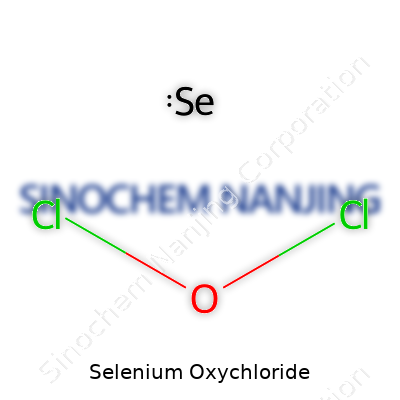
| Names | |
| Preferred IUPAC name | Selenium oxychloride |
| Other names |
Selenium dichloride oxide Selenous oxychloride Selenium(IV) oxychloride |
| Pronunciation | /siˌliːniəm ˌɒksɪˈklɔːraɪd/ |
| Identifiers | |
| CAS Number | 7783-00-8 |
| Beilstein Reference | 1209188 |
| ChEBI | CHEBI:30153 |
| ChEMBL | CHEMBL2105970 |
| ChemSpider | 55550 |
| DrugBank | DB11125 |
| ECHA InfoCard | ECHA InfoCard: 100.029.781 |
| EC Number | 234-892-6 |
| Gmelin Reference | 120105 |
| KEGG | C18607 |
| MeSH | D013439 |
| PubChem CID | 24814 |
| RTECS number | VS8575000 |
| UNII | 6K7D9G617A |
| UN number | UN2047 |
| Properties | |
| Chemical formula | SeOCl2 |
| Molar mass | 183.41 g/mol |
| Appearance | Colorless to slightly yellow fuming liquid |
| Odor | Pungent |
| Density | 2.551 g/cm³ |
| Solubility in water | Reacts violently |
| log P | -2.6 |
| Vapor pressure | 14 mm Hg (25°C) |
| Acidity (pKa) | -4.28 |
| Basicity (pKb) | -4.4 |
| Magnetic susceptibility (χ) | −52.0e−6 cm³/mol |
| Refractive index (nD) | 1.740 |
| Viscosity | 1.22 cP (20 °C) |
| Dipole moment | 1.92 D |
| Thermochemistry | |
| Std molar entropy (S⦵298) | 156.6 J·mol⁻¹·K⁻¹ |
| Std enthalpy of formation (ΔfH⦵298) | -208.1 kJ/mol |
| Std enthalpy of combustion (ΔcH⦵298) | -384.6 kJ/mol |
| Pharmacology | |
| ATC code | S01AX06 |
| Hazards | |
| Main hazards | Corrosive, causes burns to skin and eyes, toxic by inhalation, ingestion or skin absorption, reacts violently with water. |
| GHS labelling | GHS02, GHS05, GHS06 |
| Pictograms | GHS05,GHS06 |
| Signal word | Danger |
| Hazard statements | H301 + H331: Toxic if swallowed or if inhaled. H314: Causes severe skin burns and eye damage. H410: Very toxic to aquatic life with long lasting effects. |
| Precautionary statements | P210, P260, P264, P271, P280, P301+P330+P331, P303+P361+P353, P304+P340, P305+P351+P338, P310, P321, P337+P313, P363, P405, P501 |
| NFPA 704 (fire diamond) | 3-0-2-W |
| Flash point | 41 °C |
| Autoignition temperature | 210°C |
| Lethal dose or concentration | LD50 oral rat 15 mg/kg |
| LD50 (median dose) | LD50 (median dose): 15 mg/kg (oral, rat) |
| NIOSH | YO8225000 |
| PEL (Permissible) | 0.2 mg/m³ |
| REL (Recommended) | 10 mg/m³ |
| IDLH (Immediate danger) | IDLH: 1 ppm |
| Related compounds | |
| Related compounds |
Selenium dioxide Selenium tetrachloride Selenium hexafluoride |



