Wrestling with Sebacoyl Chloride: A Chemical That Shapes Industry and Lab Work
Historical Development
People who spend time around chemistry labs and factories might know sebacoyl chloride as one of those chemicals that has been showing up since the early days of polymer chemistry. Its trail began picking up steam with the birth of nylon, a fabric that replaced silk in parachutes and stockings during the twentieth century. The building blocks for the famous "nylon rope trick" in college classrooms involve sebacoyl chloride and hexamethylenediamine. For years, that reaction found its place not just in textbooks, but in anything needing strong, versatile polymers. My first encounter with sebacoyl chloride happened during a university demonstration, with its biting smell filling the air and the professor stressing just how careful everybody needed to stay. That sort of warning has always stuck with me, highlighting not just books, but the way real chemicals in jars carry legacies—both scientific and practical.
Product Overview
Sebacoyl chloride usually comes as a clear to yellowish, oily liquid, best kept tightly sealed. Its reputation in industrial production circles comes from its central role in making specialty polyamides and some plasticizers. Folks who work in synthetic chemistry value its two active chloride sites, which make it a go-to for making long-chain polymers. It’s not something you’ll find at your neighborhood store, but chemical supply catalogs keep it on shelf for labs, research outfits, and plastic manufacturers who want consistent results when building tough, flexible materials. Once you get past its sharp, acrid odor, you see why so much plastic engineering relies on the reliable backbone it provides in polymer chains.
Physical & Chemical Properties
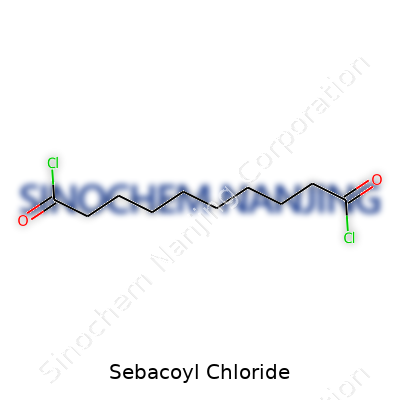
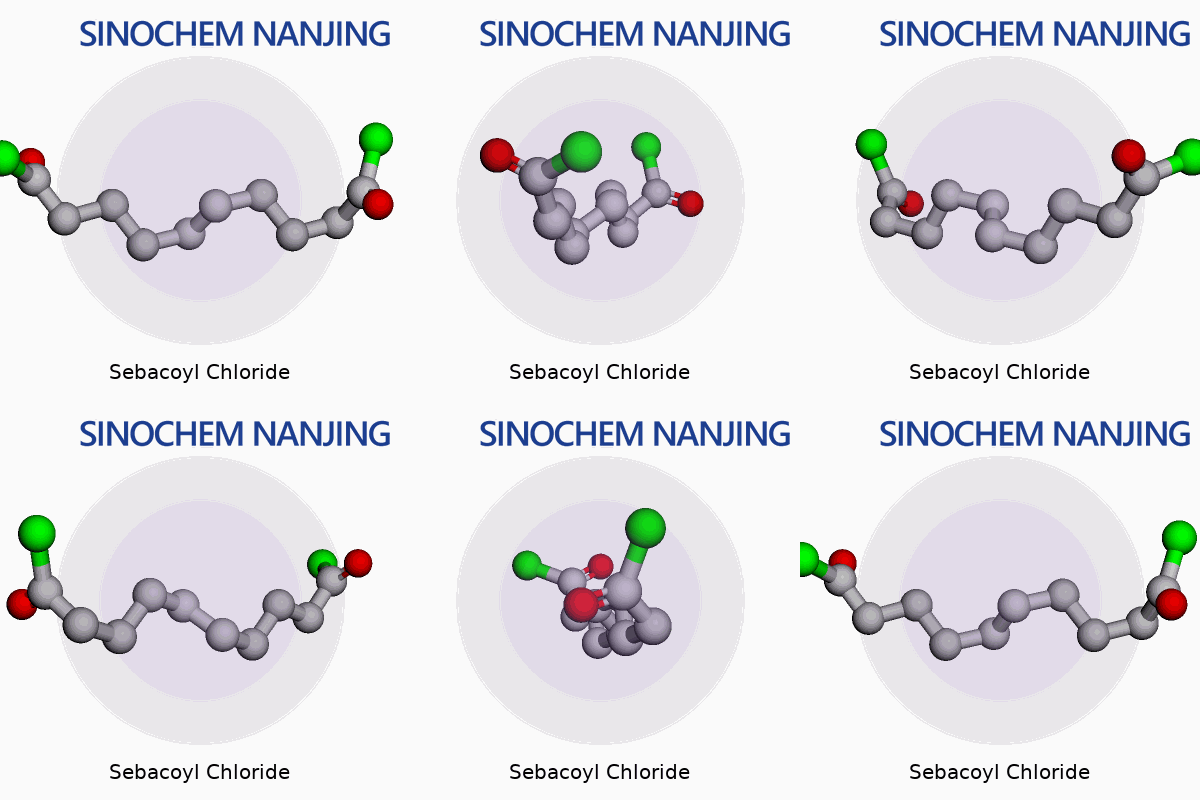
The liquid form runs thin, a bit heavier than water, and it boils at high temperatures, which means most folks need to handle it with respect. If you spill sebacoyl chloride on your skin or inhale the fumes, it can quickly cause severe burns and lung irritation, which is why lab coats and fume hoods are a must. The molecule itself packs ten carbon atoms in a straight chain, capped off by acid chloride groups on both ends. This chemistry turns out to be more than a textbook curiosity. Those chloride atoms act like magnets for nucleophiles, inviting other chemical groups to snip them off and link up for a growing polymer. That hungry reactivity means water turns it into clouds of hydrochloric acid and sebacic acid—convenient if you want to make a polyamide, hazardous if you're careless at the sink.
Technical Specifications & Labeling
If you order sebacoyl chloride for a lab, you will see labeling that makes crystal clear it must stay dry and cool, with hazard symbols plastered across the bottle. Purity ratings usually run 98% or better for industrial and lab use, with the rest made up by trace organic impurities. Nobody treats it as a "grab off the shelf and go" supply; handling rules add another layer because the fumes corrode metal and glassware, and storage near water spells disaster. Federal and local guidelines force suppliers to label each container with clear chemical names and hazard pictograms. Even after all my years around such chemicals, I appreciate these reminders. In a job where one slip can lead to acid burns, repeating these warnings always feels worthwhile, for rookies and veterans alike.
Preparation Method
Getting sebacoyl chloride from raw materials depends on classic acid chemistry. The common path starts with sebacic acid—a ten-carbon dicarboxylic acid found in castor oil. By reacting sebacic acid with thionyl chloride or phosphorus pentachloride, chemical engineers swap carboxyl groups for acid chloride ends. The product comes out as the liquid familiar to anyone who’s stood in a chem lab. For me, the smell in the air after such a reaction lingers longer than the lesson itself. It underlines just how important strong ventilation and tight safety procedures become whenever someone runs such transformations, not just for their own health but for everyone else in the space.
Chemical Reactions & Modifications
What makes sebacoyl chloride so important lies in its friendly relationship with diamines. The iconic nylon creation happens when each chloride meets an amine, popping out hydrochloric acid and making sturdy amide bonds. This trick forms fibers with a strong backbone, giving factories the tools to spin artificial silk or engineer custom hoses and tubing. Beyond simple polymerization, sebacoyl chloride participates in making certain esters and modified plastics. I always found the real-world demonstrations to be the most convincing. Watching a film form instantly between two immiscible liquids in a beaker makes the chemistry deeper than any formula could. That daily impact—turning liquid chemicals into strong, lasting materials—drives innovation far outside the lab.
Synonyms & Product Names
Sebacoyl chloride also goes by names like decanedioyl dichloride or 1,10-decanedicarbonyl dichloride, reflecting its structure. Some catalog listings mention dichlorodecanedioyl or just shorthand “sebacoyl dichloride.” While sorting through bottle labels or chemical inventories, this jumble of names can trip up even trained professionals. Chemical identifiers from regulatory documents and labeling requirements try to smooth out confusion, but it pays to double-check each time. Incorrect names have caused more than a few headaches in my own experience, especially if you’re troubleshooting a supply chain or trying to match up reference standards for an experiment.
Safety & Operational Standards
Few chemicals command respect like sebacoyl chloride. Every chemist learns early how reactive acid chlorides can burn skin, eyes, and lung tissue. Safety Data Sheets set out strict PPE: gloves, goggles, full lab coats, and work in a hood. Accidental exposure means finding eyewash stations fast, because pain and injury arrive in seconds. Chemical spill kits and fume extraction systems ensure that trace leaks do not turn into workplace emergencies. In my own lab work, I always relied on a “buddy system” when opening or transferring bottles and the habit of labeling every step. Beyond personal harm, acid chlorides eat away at metal and glass, meaning stainless steel and special polymers make up most transfer lines. Each year, safety training refreshes best practices, from avoiding water contact to proper waste disposal. Regulators apply pressure at every level because nobody wants strong acids or harmful vapors drifting beyond the lab or factory doors.
Application Area
If you wear modern clothing, drive a car, or use specialized medical tubing, chances are you’ve come in contact with sebacoyl chloride’s legacy. Polyamides like nylon 6,10 result from its pairing with diamines, giving manufacturers the power to build abrasion-resistant fibers and tough, chemical-resistant plastics. Some coatings, adhesives, and lubricants owe their strength and flexibility to polymers built from sebacoyl chloride. In engineering workshops, molded components made from these resins stand up to oil, moisture, and tough temperatures. As I’ve learned over the years, factory workers and mechanics alike depend on this durability every day, whether repairing vehicles or keeping machines running. In the pharmaceutical world, some drug-delivery devices and packaging need these same sturdy materials to stay safe and effective.
Research & Development
Ongoing research keeps looking for new reactions, alternative monomers, and safer handling strategies. Polymer scientists tinker with the backbone structure to go beyond nylon, trying to design plastics that break down after use or perform better in harsh environments. Environmental researchers are chasing processes that cut out dangerous byproducts, hoping to keep hydrochloric acid out of effluent streams. Some use greener chemistry or closed-loop systems, recycling waste and improving yield. In academic circles, the classroom “nylon rope trick” remains a favorite, but the latest research continually publishes strategies to boost efficiency, raise polymer quality, or invent brand-new materials. The challenge remains: find innovative uses without sacrificing worker safety or environmental health. Nearly every conference brings stories from teams who have made small breakthroughs, even as big-picture questions about plastic waste and chemical exposure loom large.
Toxicity Research
Toxicologists have studied what happens when people or animals accidentally take in sebacoyl chloride—focusing on burns, tissue damage, and respiratory distress. Direct exposure causes chemical burns and severe irritation, with inhalation leading to coughing, choking, and sometimes fluid accumulation in the lungs. Chronic exposure does not usually get discussed because safety protocols aim to avoid repeated contact. Environmental agencies track the release of acid chlorides due to the corrosive gas and acid that form if spilled into water. Many regulatory warnings stem from these findings, setting occupational exposure limits and forcing all users to spell out spill response plans. From my early days in the lab until now, I have watched risk assessments grow stricter. Organizations now push for closed systems, improved training, and alarms that catch even small leaks before they turn dangerous. It’s a lesson in respecting chemistry’s power and setting limits that save lives.
Future Prospects
Looking ahead, sebacoyl chloride will stay central to many forms of advanced manufacturing and materials science. Polymer research digs deeper, chasing biodegradable and recyclable plastics that do not leave permanent scars on the environment. Some labs are developing alternative catalysts and greener reaction methods to cut out toxic waste streams entirely. Automation and robotics now offer fewer touchpoints for direct human contact, improving workplace safety. Innovators explore new ways to repurpose byproducts and boost lifecycle sustainability beyond the limits set by earlier generations. Even as demand grows for better, safer polymers, the case for strict regulation only strengthens. For those of us who care about the next generation of chemists and product designers, the challenge will come from balancing productivity with safety, quality with sustainability. The lessons learned from generations working with sebacoyl chloride show the value of respect, continuous learning, and the unending search for smarter answers in a world built from molecules up.
What is Sebacoyl Chloride used for?
Straightforward Chemistry, Real-Life Impact
Sebacoyl chloride has a reputation among chemists and material engineers. This compound works its way into manufacturing, especially plastics and fibers. People may not think about chemicals like this in their day-to-day, but the products that rely on it show up everywhere.
Core Use: Making Nylon
The most well-known job for sebacoyl chloride involves creating nylon 6,10. To get that famous nylon rope or tough clothing fiber, you mix this chemical with hexamethylenediamine. Together, they form long chains — called polyamides. I remember my high school science class doing this "nylon rope trick," pulling a strand right out of the beaker. Simple reaction, but the result changed the way we wear and use fabrics. Nylon shows up in everything from socks to engine parts. Without sebacoyl chloride, this common plastic would look very different or might demand more expensive processes.
Synthesis of Special Polymers
Industries that build advanced plastics also look to sebacoyl chloride. Makers of coatings, adhesives, and membranes count on it to create polymers that stand up to harsh conditions. These materials bring real value—pipes, protective gear, and sieves all gain extra ruggedness or chemical resistance, making daily life safer and more reliable. Disposable or single-use goods don't benefit as much from chemical engineering, but gear designed to last leans heavily on this kind of chemistry.
Pharmaceutical Manufacturing
Sebacoyl chloride has a place on the pharma side too. Its structure lets researchers add specific “building blocks” together with accuracy. These reactions don’t just speed up research—they also help chemists scale up important drugs for larger groups of people. When a medicine needs strong connections between small molecules, this chemical gets the nod from developers. It isn’t usually part of the pill you swallow, but it joins the chain somewhere along the manufacturing line.
Making Additives and Plasticizers
Some products wind up too brittle or too hard after initial mixing. Sebacoyl chloride steps in to help soften plastics, boost flexibility, or give certain materials a nicer finish. For businesses aiming to fine-tune their plastic products, this chemical offers a flexible tool. Sporting goods, wire coatings, or even parts inside electronics—each needs its own mix for the right balance of strength and give.
Environmental and Health Concerns
The benefits don’t mean sebacoyl chloride comes without risk. This compound reacts fast, and that’s useful in controlled settings. But exposure to its vapors or residues can burn skin or irritate airways. Companies must handle it with safety gear and strong procedures. Environmental rules push for smart disposal and limited emissions. I’ve seen protocols grow stricter over time, especially in Europe and North America, to protect both workers and nearby communities.
Toward Cleaner Production
People always look for ways to improve. Researchers experiment with greener alternatives, recycling old plastics, or replacing tough chemicals like sebacoyl chloride with safer options. These changes don’t happen overnight, but everyone in the field knows that safety and sustainability should move alongside productivity. Open conversations between companies, regulators, and communities play a key role in shaping what comes next.
Final Thoughts
Sebacoyl chloride’s story offers a real-world reminder: even small parts of the supply chain can carry a big weight. From durable nylon to high-tech coatings, a single chemical helps hold so much together. And just as manufacturers rely on it for progress, they also carry the responsibility to keep people and the planet in mind with each batch they create.
What is the chemical formula of Sebacoyl Chloride?
Understanding Sebacoyl Chloride
Sebacoyl chloride carries the chemical formula C10H16Cl2O2. Found in labs and important behind closed doors of chemical plants, this compound shows up on ingredient lists for several synthetic polymers. I remember my first experience with sebacoyl chloride during an undergraduate organic chemistry lab. The dense, acrid smell of halogenated chemicals drove home the seriousness of working with reactive molecules. What struck me wasn’t just the sharp odor, but the amount of care needed to handle such chlorinated substances safely.
Why the Structure Matters
Chemists don’t throw formulas around to sound smart. The C10H16Cl2O2 backbone reveals a lot. Two acid chloride groups rest at each end of a ten-carbon chain. Those chloride atoms swap easily with other molecules, especially in the presence of diamines, sparking the reaction that forms nylon-6,10. Most people don’t spend their days thinking about chemical reactions, but nylon ropes, toothbrush bristles, and fuel lines all trace their durability back to basic chemistry like this.
Real-World Importance
Industry doesn’t run on theory alone. At the factory scale, handling sebacoyl chloride safely takes skill, good lab ventilation, and personal protection. Hydrochloric acid fumes rise off any spilled droplets or poorly capped bottles. Mixing with water leads to corrosive byproducts and can damage both equipment and health. Reports from workplace safety agencies back up the need for gloves and goggles, no shortcuts allowed.
From a business angle, sebacoyl chloride helps meet global demand for tough, lightweight plastics. The polymerization step that relies on it often plays out in water baths, where sebacoyl chloride floats on top, ready to react with a water-soluble diamine below. This hands-on method helps highlight the beauty of chemistry: building complex materials from basic building blocks. New engineers walk away from their first batch of freshly-formed nylon with purple hands and a memory that sticks.
Potential Issues & Moving Forward
On the practical side, environmental impact can’t stay an afterthought. Chlorinated chemicals bring risks of pollution. Effluent treatment systems catch most of the byproducts, but every chemical processor I’ve ever known worries about spills or accidental releases. Stricter storage regulations and incentives for recycling spent chemicals have grown the field of green chemistry. My own time spent troubleshooting a malfunctioning containment unit taught me that system checks, training, and honest communication do more than binders full of spread sheets or compliance reports.
Looking ahead, teams hunt for cleaner ways to make similar polymers. Biobased alternatives step closer each year. Until then, knowledge about compounds like sebacoyl chloride, from its precise formula to its hazards, makes a real difference for safer science and more responsible manufacturing.
How should Sebacoyl Chloride be stored?
No-Nonsense Storage: Safety Comes First
Sebacoyl chloride doesn’t belong on a casual shelf. This chemical, which helps build nylon polymers, throws off hydrogen chloride gas when it meets water. That means even a bit of humidity in the air can turn a routine storage job into a risky mess. Anyone handling sebacoyl chloride must treat it with respect, and they’ve got a real responsibility to guard against leaks, fumes, and surprise reactions.
Why Location and Containers Matter
It’s pretty tempting to stash bottles wherever there’s space. Bad call. Sebacoyl chloride needs a spot away from moisture, with temperatures that don’t swing wildly. Metal containers spark trouble, as this chemical gnaws right through them. Glass bottles or tightly sealed, high-density polyethylene containers stand up best. I’ve seen labs where one careless cap led to a corroded bench and a panicked evacuation. Small mistakes add up fast.
Avoid the Water—At All Costs
Humidity is more than a minor inconvenience, especially with sebacoyl chloride. One missed drop of water can release choking, corrosive fumes. That’s not theoretical. Emergency rooms see real injuries from people who overlook a loose seal or leave a bottle open for five minutes too long. It makes sense to store it in a dry, well-ventilated cupboard—think desiccators lined with silica gel or a dry box with reliable seals. Long-term exposure to air even damages the material inside the bottle, making it unreliable for production or research.
Don’t Mix It Up
Everyone’s seen crowded chemical storerooms and the temptation to line up containers alphabetically. That doesn’t work for sebacoyl chloride. Never let it share space with alcohols, amines, or other reactive chemicals. One accidental splash or spill triggers an instant, hazardous reaction. Some labs stick color-coded warnings across cupboards, and for once, those stickers are not overkill. It makes life easier—and safer—for the next person in the room.
Real-World Impact: The Human Side of Storage
There’s more to this than just following rules. People get hurt when safety slips. A few years back, I worked in a workshop where someone cracked open a vaguely labeled jar, hoping it was something mundane. Within seconds, fumes filled the air, and the person’s eyes and lungs burned. Now, that space uses clear labels, tight chains of responsibility, and always has spill kits and proper ventilation ready. Not everyone gets a second chance like he did.
Building a Safer Routine
Regular checkups matter. I make it a point to walk through storage every week, inspecting seals, checking humidity levels, and making sure nothing gets misplaced. Training new staff on the danger spots saves time—and keeps everyone healthy. Storing sebacoyl chloride well isn’t just about protecting a bottle, it’s about valuing the people who work around it. Automation helps: using inventory systems and alarms cuts down on forgotten supplies that slowly degrade and build up pressure.
Practical Steps That Make a Difference
Some fixes are simple. Invest in reliable containers, label everything with creation dates and hazard symbols, and stack bottles so the oldest material is used first. Make sure every person in the lab knows what to do in an emergency and doesn’t have to rely on memory under stress. Good practices stop tragedies before they start. Safe storage isn’t a box to check off, it has to become a habit. Serious attention to detail here isn’t about bureaucracy; it’s about coming in the next day with a clean bill of health—and carrying on with the work that matters.
What safety precautions are needed when handling Sebacoyl Chloride?
Why Sebacoyl Chloride Deserves Respect
Sebacoyl chloride grabs attention in the lab for its sharp, choking fumes and its reputation for causing bad burns. Anyone who’s had to clean up a splash or got too close to an uncapped bottle will remember that biting sensation in the throat. As a key ingredient in making nylon and certain polymers, chemists and students use it more often than people might think. With its usefulness comes a layer of risk, and treating those risks casually leads straight to injury or ruined equipment.
The Hazard Profile
This liquid reacts violently with water, giving off hydrochloric acid gas and heat. Even a drop of moisture—damp gloves, breathing on it, or humid summer air—starts this reaction. Skin contact burns. Eye exposure can cause permanent damage. Vapor inhalation triggers coughing, tightness in the chest, and sometimes, days-long sensitivity. One study published by the National Institute for Occupational Safety and Health (NIOSH) points out the importance of limiting any exposure to sub-ppm levels, since repeated contact strips away natural defenses fast.
Personal Protective Equipment (PPE)
Not all gloves stop sebacoyl chloride. Ordinary lab latex or vinyl breaks down almost at once. Thick nitrile or butyl gloves last much longer. Splash goggles and a face shield end up saving vision, especially during transfer or dilution. Long-sleeved lab coats and acid-resistant aprons block splashes, with cuffs tucked under gloves to keep wrists covered. Closed shoes and chemical-resistant pants avoid chemical puddles seeping onto skin. In any lab where fumes linger, a certified respirator adds a needed barrier for lungs.
Ventilation and Containment Matter
Never work with sebacoyl chloride in an open room. Fume hoods pull corrosive gases away as soon as they form. A chemical’s smell fading doesn’t mean it’s gone; it means sensors in the nose have turned off and exposure risks climb even higher. Work in a space with negative pressure, where air gets pulled away from you, and always check the hood’s airflow before uncapping the bottle. Spills and tiny leaks get trapped if secondary containment—a tray or plastic-lined surface—catches drips.
Storage Practices
Keep sebacoyl chloride far from water, alcohols, bases, and anything likely to trigger a reaction. Stainless steel or glass containers with corrosion-resistant seals avoid slow leaks and keep fumes inside. A cool, ventilated chemical cabinet—ideally one just for reactive acid chlorides—reduces the pressure build-up, and clear labeling keeps mistakes low even on busy days. Don't reuse old containers for new batches; lingering residue reacts with almost anything.
Emergency Preparedness
Everyone in the workspace should know the location and function of the emergency shower, eyewash station, and spill kit. If sebacoyl chloride touches skin, rinse the spot for a solid 15 minutes and get medical help right away. For a splash near the eyes, don’t hesitate: hold them open and flood with water. Neutralizing agents, like solid sodium bicarbonate, help control small spills. Larger leaks may call for specialized response teams.
Training and Culture
Labs where people respect sebacoyl chloride have clear training and don’t shortcut the basics. New team members watch experienced chemists work through each step. Stories about accidents—sometimes told with a bit of dark humor—stick in people’s minds longer than dry warnings in lab manuals. The safest workplaces encourage speaking up, even if it’s just to ask, “Are you sure your gloves are rated for this?”
Building Safety into Every Step
In my own lab days, we never rushed work with reagents like sebacoyl chloride, no matter how pressed for time. Small rituals—cracking open a fresh pair of gloves, double-checking the hood’s airflow—turned into habits. That’s the only way to make handling tough chemicals routine and avoid a trip to the emergency room. Writing safety into each part of the process doesn’t slow things down nearly as much as anyone thinks. Mistakes with dangerous chemicals cost a person a lot more than a few extra minutes ever will.
What are the physical properties of Sebacoyl Chloride?
Appearance and State
Sebacoyl chloride enters the scene as a clear, almost oily liquid. Its color falls somewhere between colorless and a pale yellow hue. Sometimes the liquid may show a faint brownish tint, often linked to storage conditions or age. Unlike a lot of reactive chemicals, it doesn’t form crystals or powders in a usual lab environment, and anyone who’s worked with it will recognize that distinctive, sharp odor wafting through the lab—pretty hard to miss, actually.
Density and Viscosity
Poured into a beaker, sebacoyl chloride moves more slowly than water, with a density of about 1.08 grams per cubic centimeter at room temperature. It’s not as heavy as some of the other diacid chlorides, which means spills travel fast along a benchtop and sneak into corners if you aren’t quick with the cleanup. Viscosity lands in the low range. The liquid easily spreads around glassware. This comes in handy for polymerization experiments and coatings—less mess sticks around, but fumes linger in the air for longer, so good ventilation matters a lot.
Boiling and Melting Behavior
Sebacoyl chloride boils around 320°C under normal pressure. Bringing it up to that point in a standard lab isn’t common—most work gets done at lower temperatures. If you’re heating the stuff, it decomposes before turning to vapor, which sends off an irritable, acrid smoke loaded with hydrochloric acid. Lower the pressure, and its boiling point drops a bit, but decomposing is still a real threat. The melting point sits somewhere between -10°C and -5°C, so the liquid won’t freeze in most climate-controlled rooms. I once left a bottle near a drafty window in January, and only then did it begin to thicken; the rest of the time, it stays liquid and mobile in storage.
Solubility and Reactivity with Water
This chemical hates water. Even a tiny splash sends it into a vigorous reaction, releasing heat and clouds of hydrochloric acid. That means if you drop sebacoyl chloride into water, both substances react at the interface, usually making sebacic acid and plenty of HCl gas. Old-timers in the plastics industry develop a sixth sense for avoiding humid storage spaces because of this. Pouring it into common organic solvents like hexane or chloroform works fine, though—solubility in nonpolar solvents makes it a favorite for certain polymer reactions, polyester intermediates, and even special lubricants.
Pressure Sensitivity and Storage Advice
A tightly-sealed glass bottle stays the standard for storage. Sebacoyl chloride doesn’t build pressure rapidly at average room temperatures, so as long as the cap holds, leaks and pressure spikes rarely happen. In sunlight or high heat, it tends to discolor and produce breakdown products that can damage other chemicals in the cabinet. I always keep it in a secondary container, since the smell travels even if just a few drops escape. Rubber stoppers and corks don’t last—fumes break them down over time.
Safety and Handling
Direct contact burns skin on the spot. Lab coats, gloves, and goggles aren’t optional here—they’re your best protection. Any spills bring a sharp, biting sensation to exposed skin or eyes. Once, a colleague of mine forgot to tighten the cap and discovered just how persistent and clingy the vapors could get. Inhalation quickly becomes an issue, irritating the throat and lungs almost instantly. Good ventilation and awareness keep accidents to a minimum.
Why the Physical Properties Matter
Knowing how sebacoyl chloride acts physically changes the way people handle laboratory synthesis and manufacturing. Its reactivity with water means extra care goes into storage practices—desiccants, sealed vessels, and a dry workspace get everyone home safe. Its liquid state at room temperature and its readiness to mix with organic solvents give it major flexibility as a reagent for making nylon and other polymers. Every physical trait ties back to safety, efficiency, and the need for respect around the lab bench, which is something I’ve learned firsthand after years working with reactive organics. Those who underestimate its properties wind up learning hard lessons fast.
| Names | |
| Preferred IUPAC name | decanedioyl dichloride |
| Other names |
Sebacoyl dichloride Decanedioyl dichloride 1,8-Octanedicarboxylic acid dichloride Decanedioic acid dichloride |
| Pronunciation | /ˌsɛbəˈkɔɪl ˈklɔːraɪd/ |
| Identifiers | |
| CAS Number | 111-19-3 |
| Beilstein Reference | 1208734 |
| ChEBI | CHEBI:52254 |
| ChEMBL | CHEMBL141876 |
| ChemSpider | 5951 |
| DrugBank | DB14006 |
| ECHA InfoCard | 19d45edc-bc8d-49fd-a6b2-5885ad86e8b8 |
| EC Number | 203-931-2 |
| Gmelin Reference | 79522 |
| KEGG | C14433 |
| MeSH | D020072 |
| PubChem CID | 8550 |
| RTECS number | WF0875000 |
| UNII | N08W72QNSH |
| UN number | UN3261 |
| Properties | |
| Chemical formula | C10H16Cl2O2 |
| Molar mass | 239.08 g/mol |
| Appearance | Colorless to pale yellow liquid |
| Odor | Pungent |
| Density | 1.1 g/mL at 25 °C |
| Solubility in water | Decomposes |
| log P | 2.78 |
| Vapor pressure | 0.15 mmHg (20 °C) |
| Acidity (pKa) | 1.48 |
| Magnetic susceptibility (χ) | -7.49 × 10⁻⁶ cm³/mol |
| Refractive index (nD) | 1.447 |
| Viscosity | 1.503 cP (20°C) |
| Dipole moment | 2.78 D |
| Thermochemistry | |
| Std molar entropy (S⦵298) | 509.7 J·mol⁻¹·K⁻¹ |
| Std enthalpy of formation (ΔfH⦵298) | -725.4 kJ/mol |
| Std enthalpy of combustion (ΔcH⦵298) | -7516 kJ/mol |
| Pharmacology | |
| ATC code | JI014 |
| Hazards | |
| Main hazards | Corrosive, causes burns, reacts violently with water, releases toxic and corrosive gases. |
| GHS labelling | GHS02, GHS05, GHS06 |
| Pictograms | GHS05,GHS06 |
| Signal word | Danger |
| Hazard statements | H314, H331, H410 |
| Precautionary statements | P210, P223, P260, P264, P271, P280, P301+P330+P331, P303+P361+P353, P304+P340, P305+P351+P338, P310, P321, P363, P405, P501 |
| NFPA 704 (fire diamond) | 3-2-1-W |
| Flash point | 120°C (248°F) |
| Autoignition temperature | 250°C |
| Lethal dose or concentration | LD₅₀ (oral, rat): 3300 mg/kg |
| LD50 (median dose) | LD50 (median dose): Oral rat LD50: 960 mg/kg |
| NIOSH | SY8575000 |
| PEL (Permissible) | PEL: 0.2 mg/m³ |
| REL (Recommended) | REL: 0.2 mg/m³ |
| IDLH (Immediate danger) | Unknown |
| Related compounds | |
| Related compounds |
Sebacic acid Adipoyl chloride Azelaoyl chloride Phthaloyl chloride Succinyl chloride |



