Rhodium Nitrate: From Discovery to Today’s Applications
Historical Development
Rhodium nitrate pops up in niche chemistry discussions, but its roots run to the early 20th century, as industrial chemistry started to thrive and chemists began breaking down platinum group metals. You don’t find a bonanza of old records about rhodium nitrate, likely because rhodium itself was discovered only in 1803 by William Hyde Wollaston. Turning raw precious metal into chemically pure compounds took decades, with the isolation and cataloguing of rhodium(III) nitrate forming part of a broader push to understand and exploit transition metals. By World War II, researchers figured out how to consistently create and analyze these rhodium complexes, paving the way for modern industrial uses. As catalytic science took off in the latter half of the century, so did interest in all things rhodium—nitrate included.
Product Overview
Rhodium nitrate appears primarily as a hydrate salt—yellow or orange crystals, highly soluble in water. You’re not going to see it on the shelf at a local hardware store; it’s mainly made for lab or industry use. Its chemical formula—in its trihydrate form—is Rh(NO3)3·3H2O. Compared to more common nitrate compounds, the cost and rarity of rhodium mean this isn’t a chemical you’d find outside high-value, specialist settings.
Physical & Chemical Properties
In the lab, rhodium nitrate behaves a bit like its metal peers: stability matters. The compound typically forms dark yellow or orange rhombohedral crystals. Dissolving it in water produces a clear solution, something that matters for analytical and catalytic processes. Heating rhodium nitrate drives off water and eventually breaks it down to rhodium oxide, with nitrogen dioxide gas released. Unlike silver or lead nitrates, you don’t see photoreactivity—light hardly messes with it, making storage easier. Rhodium’s noble character means its nitrate salts resist quick reduction—you need the right reducing conditions if you want to turn it back into metal, a key part of precious metal recycling.
Technical Specifications & Labeling
Factories and research suppliers usually deliver rhodium nitrate in concentrations above 99% purity. Labels cover the hydrate level—often trihydrate—and note the molar mass, which, unhydrated, clocks in just under 240 g/mol. Packaging keeps out moisture, relying on sturdy amber glass or Teflon-sealed containers. Barcode and batch tracking matter; in industry, every milligram of precious metal counts, and losses eat into company margins fast. Shipping documents must highlight the oxidizing nature of the compound for customs and compliance officers.
Preparation Method
Creating rhodium nitrate in the lab involves dissolving metallic rhodium or rhodium oxide in high-purity nitric acid—usually under gentle heat. It’s a slow process, helped along by nitric acid’s stubborn oxidizing power. Once reaction ends, the acid concentration gets adjusted, and the solution is evaporated. Crystallization brings out those characteristic orange crystals. Purity checks follow, using spectroscopic methods and gravimetric analysis. Waste solutions see careful neutralization, since nitrate-rich industrial waste brings legal headaches and environmental impact.
Chemical Reactions & Modifications
Chemists have explored rhodium nitrate’s appetite for forming diverse complexes. Add a reducing agent—hydrazine, hydrogen, or even a sturdy organic compound—and you coax the nitrate into surrendering its rhodium content, which falls out as metallic powder. Rhodium nitrate, in solution, often serves as a precursor for growing other rhodium compounds, including catalysts with carbonyl or amine ligands. Scientists fiddle with ligand swaps, sometimes using bidentate or tridentate organics, which unlocks new uses in catalysis or sensing. Nitrate’s release of nitrogen dioxide during thermal decomposition opens up additional room for nanomaterial synthesis, since gases help template tiny rhodium particles.
Synonyms & Product Names
In scientific circles, folks might call it rhodium(III) nitrate, rhodium nitrate trihydrate, or just “rhodium nitrate solution” if it’s not been isolated as a solid. On supply catalogs, names like “Rhodium(III) nitrate hydrate” surface, along with the chemical’s CAS registry number for unambiguous reference in compliance paperwork.
Safety & Operational Standards
Rhodium nitrate stands out as both costly and hazardous, demanding strict protocols in handling and storage. The dust or solution proves corrosive to skin and eyes, similar to other transition metal nitrates. Nitrates count as oxidizers, so mixing with organics or stray chemicals puts workers at real risk for fire or uncontrolled reactions. Labs enforce acid-resistant gloves, splash goggles, and effective ventilation. Companies adopt ISO 9001 and 14001 standards, aiming not only for product quality but also environmental safety. Waste solutions route through specialty disposal contractors, with strict paperwork for cradle-to-grave traceability.
Application Area
Most rhodium nitrate ends up in advanced chemical research or as a starting material for making tailored catalysts. Chemists use its solubility and reactivity to design homogeneous and supported catalysts, especially for hydrogenation or environmental cleanup. Sensor makers and medical researchers have explored its role in new detection schemes, banking on rhodium’s electronics. You’ll also find it in nanotech research; rhodium nanoparticles grown from nitrates get tested for their strength in fuel cell electrodes. Even with its price tag, rhodium nitrate’s performance keeps it on the procurement list for top-tier industrial labs tweaking process chemistry.
Research & Development
Over the years, research around rhodium nitrate keeps circling back to its catalytic backbone. Scientists use it as a jump-off point for crafting new complexes that tackle tricky chemical reactions—think asymmetric hydrogenations or polymer building. Universities keep pushing into greener chemistry, looking to use rhodium nitrate for milder, selective reactions that avoid waste. Analytical chemists design detection protocols using its chromogenic behavior, trying to save time and cut costs in precious metal monitoring. The diversity of ligand exchange and redox behavior feeds a steady stream of journal articles and patent filings.
Toxicity Research
Workplace safety teams track rhodium compounds for both acute and long-term effects. Rhodium nitrate doesn’t show the outright toxicity of cadmium or mercury salts, but it still earns hazard labels. Direct exposure often results in skin or respiratory irritation, and nitrates by themselves raise the risk for methemoglobinemia, where red blood cell performance drops off. Chronic exposures—thankfully rare—suggest low accumulation in tissues, thanks to rhodium’s poor bioavailability, but medical studies remain sparse due to the compound’s high cost and limited use. Modern labs encourage single-use gloves, face masks for powder handling, and fume hoods, sticking close to OSHA and REACH guidelines.
Future Prospects
Chemists who look at the price of rhodium nitrate and its niche footprint could write it off, but the march of green technology brings new interest. Clean energy applications, from upgraded fuel cells to catalytic converters that cut air pollution, rely partly on well-dispersed rhodium from nitrate routes. Researchers chase ways to recycle and recover rhodium from industrial waste and consumer goods, which steers more attention back to the nitrate as a flexible, recoverable intermediate. As markets shift and demand for smaller, cleaner, more efficient machines ramps up, investment in rhodium nitrate processes may grow—especially if breakthrough catalysts or sensors give a leg up in low-carbon chemistry. Advances in nanomaterial synthesis, combined with stricter environmental and worker safety standards, mean manufacturers can’t ignore process innovation. Far from obsolete, rhodium nitrate sits poised for another round of advances, whether in synthesizing high-value catalysts, enabling greener processes, or supporting the next wave of analytical instruments.
What is Rhodium Nitrate used for?
The Real-World Value of Rhodium Nitrate
Walking through a typical lab, you might find bottles labeled with strange names, and rhodium nitrate easily falls into that “what’s this for?” category. Yet behind that label, you’ll find a bit of science and a lot of opportunity. Motivations for using rhodium nitrate stretch from strict research to the hunt for better environmental solutions.
How the Catalyst World Benefits
Rhodium ranks as one of those rare elements known for its ability to help chemical reactions along. Its nitrate form dissolves in water, which makes it much easier to work with in lab settings. Scientists use rhodium nitrate to prepare catalysts. These help industries lower pollution by cleaning up car exhaust through catalytic converters. Rhodium nitrate provides that rhodium boost needed to break down harmful gases before they reach the air we breathe. The World Health Organization and US EPA keep tracking vehicle emissions, and tighter regulations push for better and more active cleaning materials. Rhodium nitrate sits right at the starting point for creating those special catalysts that chip away at air pollution.
Precision Research Matters
Chemists often use rhodium nitrate as a source of rhodium ions. These ions bring value to analytical chemistry, particularly when developing new testing techniques or tracking environmental pollutants. Years spent in the lab show just how picky reactions can be about their helpers. Rhodium’s unique way of interacting with other molecules often speeds things up or even changes the path of a reaction. This allows researchers to build new compounds for medicine, energy, and clean technology. For example, in the drug development space, finding the right building blocks saves time and money, and rhodium complexes often figure into experiments looking for better cancer treatments.
Challenges and What Comes Next
Working with rhodium nitrate isn’t easy. It poses health and environmental risks if mishandled. Safe disposal and storage stay top priorities, since this chemical can cause problems both for workers and natural ecosystems. Prices for rhodium also climb due to its rarity and the growing list of industrial uses, leaving smaller labs and companies hunting for alternatives or recycled sources. Just last year, rhodium prices surged, sending ripples through auto manufacturing and research circles, and those costs trickle down to consumers.
Some chemists are now pushing for recovery and recycling efforts. Used car parts and old catalysts find their way into recycling plants where technicians extract rhodium. It’s tough work, but with the material being so rare, it makes sense. Smarter recovery not only keeps costs in check but also limits mining, which often damages the environment. Tech companies and green engineers keep looking for substitutes that deliver strong results without relying on rare, costly metals. So far, few replacements match rhodium’s top-tier performance—especially when cleaning up toxic emissions—so the demand for compounds like rhodium nitrate keeps climbing.
Real Impact, Long Road Ahead
Rhodium nitrate’s reach often stays hidden behind the scenes, but its impact shows up every time emissions fall a little lower or when research unlocks a new medical breakthrough. As prices rise and demand keeps growing, both industry and science face pressure to innovate—whether by developing better recycling methods, searching for new catalysts, or improving how they handle the materials they already rely on. My own experience in research hints that the next great innovation rests not just with new elements, but with how we manage and reuse the rare resources already on hand.
What is the chemical formula of Rhodium Nitrate?
Getting to Know Rhodium Nitrate
Rhodium isn’t the sort of metal most folks deal with daily. It pops up quietly in the world of science, often tucked into catalytic converters or used by chemists exploring new ground. Rhodium nitrate comes out when chemists dissolve rhodium in nitric acid. Out in laboratories, its chemical formula—Rh(NO3)3—ends up written on jar after jar of a pale solution, signaling both danger and promise to anyone standing nearby.
Why Rhodium Nitrate Stands Out
Rhodium nitrate draws attention for good reason. The formula, Rh(NO3)3, means each rhodium atom matches up with three nitrate ions. That makes this compound a reliable source of soluble rhodium for research. Folks in material science or precious metal recovery know how hard it can be to coax rhodium into something useful—its refusal to dissolve in most acids sets it apart from metals like silver or copper. Nitric acid stands out as one of the rare acids that wins the fight.
Even though rhodium may sound exotic, the research around it grows busier every year. From experience, seeing how precious metals shape fast-moving tech fields makes you respect the chemistry behind them. Each time a new catalyst appears or an emissions standard tightens, someone is likely relying on a blend involving rhodium nitrate. Its unique chemistry helps build fuel cells and electronics that need both speed and precision.
Real-World Concerns: Safety and Scarcity
Safety walks side-by-side with value in most rhodium work. Exposure to rhodium compounds—nitrate included—can raise serious health questions. Bringing strong acids and heavy metals under the same roof introduces risks for skin, eyes, and lungs. Labs stress protective gear and strict procedures. In my own lab days, glassware marked “RH nitrate” always drew fresh gloves, sealed containers, and full respect for fume hoods. Shortcuts land people in trouble.
Scarcity trails rhodium everywhere, standing tall among reasons prices rise and fall. Pulling even a tiny amount out of ore demands careful separation and plenty of chemicals. Numbers from the United States Geological Survey put rhodium reserves far below metals like nickel or gold. Mining, refining, and disposal all pile pressure onto the environment. If demand climbs, supply might not keep up, and the headaches get passed down the line.
How to Move Forward
Solving tough problems around rhodium nitrate needs a mix of chemistry and common sense. Research can chase new ways to recycle rhodium, so less ends up lost at every step. Companies that collect spent catalysts and send them back for processing have already made a dent. Cleaner synthesis paths cut risks and waste. Education also matters—chemists and students need warnings built into their first introductions.
Sharing honest facts gets more people involved—from policymakers to teachers. Open data from regulatory agencies reveals health limits and safe-handling tips. Anyone who works with rhodium nitrate, from technician to research lead, benefits from a clear trail of evidence and firsthand lessons. Sometimes small changes—like better labeling or updated storage rules—protect both workers and the planet.
Informed Science and Responsible Use
Rhodium nitrate, with its formula Rh(NO3)3, deserves more attention from anyone invested in tech, environment, or education. Keeping science honest means passing along not just numbers but the reasons behind them, drawing from both research and real-world habits. Each bottle, whether in a high school lab or high-tech factory, holds a reminder: chemistry shapes not just products, but lives.
How should Rhodium Nitrate be stored?
Rhodium Nitrate: Not Just Another Chemical
Anyone who has spent time working in a lab recognizes the pressure that comes with handling less-common compounds. Rhodium nitrate fits this description. With its bright orange crystals and its reputation for being both rare and reactive, this material asks for respect—both for the chemical itself and for the people working with it. Choices around storage have real consequences, not only for product integrity but for health and safety as well.
Why Storage Matters
I've seen what happens when chemicals get stashed on a random shelf. It’s a recipe for accidental spills, contamination, or even injury. Rhodium nitrate crumbles under careless storage habits, because it reacts with moisture and decomposes if temperatures climb or sunlight pours in. These reactions create toxic fumes, which no one wants floating through a workspace. According to the National Institute for Occupational Safety and Health (NIOSH), contact with rhodium nitrate can damage skin, eyes, and the respiratory system. Even trace exposure may cause harm over time. That's why responsible storage isn’t about following rules to the letter—it's about avoiding regret, hassle, and danger.
Simple Steps for Safer Storage
Those working with rhodium nitrate keep the material in a cool, dry, dark spot. Moisture acts as a silent enemy, slipping into containers and setting off unwanted reactions. Tight, corrosion-resistant bottles (glass with Teflon-lined caps or high-quality HDPE) prevent leaks and keep air out. Laboratories that see frequent use often set up marked shelves away from heat sources or direct light. If the bottle features a clear label and hazard pictogram, everyone knows what's inside and how to handle it.
The type of container matters more than people might guess. Polyethylene and polypropylene stand up to rhodium nitrate, but soft plastics and metals can degrade or corrode over time. Glass works, though only if storage areas never drop or jostle containers. Once, a broken bottle left our lab with cleanup headaches and downtime that should have been avoided with better shelving and less overcrowding.
Layered Security for People and Environment
Lockable chemical cabinets save headaches. Combine them with acids or oxidizers, and the chance of an unplanned reaction jumps. Segregation isn’t just a nice-to-have, it's non-negotiable. Some labs go as far as using special ventilated cabinets with built-in secondary containment trays. This practice may look expensive at first, but one uncontrolled spill can cost orders of magnitude more—especially with a scarce metal like rhodium.
Don't forget about temperature. Even if air conditioning hums all day, a power outage or equipment failure can ruin months of careful inventory. I’ve learned to log both temperature and humidity near storage spaces. Several digital thermometers and a simple checklist keep staff honest and accountable. Routine inspections ensure nothing slides out of hand. Emergency protocols, eyewash stations, and spill kits round out the system for safety.
Staying One Step Ahead
Handling rhodium nitrate doesn’t only come down to chemicals and bottles. Training newcomers in practical, straightforward language builds a culture of care. Reinforcing those habits, refreshing MSDS knowledge, and running drills helps everyone take storage seriously. Sometimes, these steps feel like overkill, but they pay off through years of incident-free work. Chemical safety isn’t about checking boxes—it's about sending everyone home healthy and keeping research on track.
Is Rhodium Nitrate hazardous?
The Basics Behind the Name
I’ve come across a lot of shiny metals and their chemical relatives in research and industry stories. Rhodium nitrate, with its rich name and complex roots, pops up in specialty fields like advanced electronics and chemical labs. It doesn’t land on most shopping lists, but that’s part of what makes its risks worth looking at. The stuff seems obscure, yet it holds some serious safety baggage.
Toxicity: More Than Just Science Class Warnings
Handling rhodium nitrate is no backyard project. The compound carries the weight of nitrates and the rare metal rhodium, making it far from friendly. Scientists have found that the combination irritates skin, damages eyes, and, when inhaled, delivers a punch to the lungs. I’ve seen hazard warning labels call out respiratory danger with a big font for a reason. Even limited studies in labs point to acute effects—from aggressive coughing fits to potential chemical burns.
Digging into toxicology reports published by international agencies, most flag nitrate compounds for their knack for disrupting blood’s ability to carry oxygen. With rhodium nitrate, the stakes get higher: the metal itself doesn’t belong anywhere near living cells. Inhaling the vapor or dust can lead to serious symptoms. I remember reading a first-person account from a lab technician who got a dose of rhodium salt dust—chest tightness lasted days, and clearance took weeks.
Environmental Fallout: Small Quantities, Long-Lasting Trouble
Rhodium nitrate isn’t just about human health. Letting it slip down the drain or into the soil spells real problems. The nitrate part—familiar to anyone who follows water contamination stories—feeds algae blooms and can help kill off fish and other aquatic life. Rhodium doesn’t go away, either. It finds a spot in soil and water, sticking around much longer than most would expect. Unchecked spills set the stage for environmental headaches that last years.
Industry and Lab Controls: Lessons from Experience
Manufacturers lean on rigorous controls for a reason. I’ve watched engineers train rookies to suit up in full protective gear before going anywhere near rhodium nitrate. Fume hoods aren’t just suggestions—they’re non-negotiable. Closed systems, regular inspections, and emergency protocols all carry real weight.
I've learned from incidents that even a tiny slip—like a torn glove or a crack in an exhaust line—can send people scrambling. Labs that set clear boundaries, keep fresh spill kits on hand, and drill their people on safety responses see fewer incidents. Skipping on these measures often lands articles in safety journals for the wrong reasons.
Building Solutions Starts with Respect
Strong policies, not just printed warnings, change the story. Frequent training, real-time air monitoring, and strict chemical inventory checks create habits that cut risks. I've noticed that workplaces that encourage questions—where people feel free to ask “Does this look right?”—spot hazards sooner. Sharing near-miss stories anonymously can shift attitudes from “here’s the rulebook” to “here’s how one mistake nearly got out of hand.”
Suppliers owe the world better labeling, and clear disposal instructions. Regulators can pitch in by updating rules whenever new findings surface, not waiting for incidents to happen. Responsibility doesn’t end at the lab door; disposal and environmental plans matter. It’s worth adopting habits seen in nuclear or pharmaceutical safety, since the risks from rhodium nitrate demand the same respect.
What is the purity specification of Rhodium Nitrate available for purchase?
What Buyers Actually Get with Rhodium Nitrate Purity
Rhodium nitrate stands out as one of those specialty chemicals that researchers, manufacturers, and jewelers pay close attention to. Purity makes or breaks its usefulness. Purity for rhodium nitrate usually lands in the 99.9% to 99.99% range. That remaining sliver—less than a tenth of one percent—holds a handful of metallic or nonmetallic impurities. Look at any supplier spec sheet, and you’ll notice those last decimal places matter. Somebody working in a high-precision field—say, advanced electronics or thin-film catalysts—usually looks for the four nines.
Why Purity Matters So Much
Contaminants spell trouble. A chemist relying on 99.99% pure rhodium nitrate knows that trace elements like lead, iron, or copper won’t sneak into a reaction or alter a deposit’s properties. Some of these impurities can shorten a product’s life span or make it work less efficiently. Take glass coating tech as a real-world example: if rhodium nitrate contains even a small amount of sodium or potassium, the final surface loses its desired features. The whole batch ends up in the scrap bin. In medicine, where compounds interact directly with living tissues, even tinier amounts of impurity can spark unwanted reactions or compromise safety.
Earning Trust through Testing and Data
Labs rely on published technical data to know what they’re buying. Trusted chemical suppliers produce detailed certificates of analysis. ICP-MS or XRF tests often reveal impurity levels down to parts per million. It’s not all about the big names—smaller companies can sometimes match or exceed these standards, too. I’ve seen customers call manufacturers directly, asking for recent analysis reports before pulling the trigger on a purchase order. The best suppliers don’t shy away from sharing these numbers. Anyone who’s invested in quality control audits has learned to spot vague or recycled paperwork—the risk of mixed or mislabeled chemicals is real, especially in global trade.
Who Sets the Purity Standards?
No single authority dictates what counts as “pure enough” rhodium nitrate. Instead, end-users and industry leaders push suppliers to refine their processes. International standards, like those from ASTM or ISO, can give benchmarks for analysis methods and paperwork, but rhodium nitrate purity specs mostly pop up in procurement documents and research papers. Academics, electronics companies, and refineries create an informal but powerful network of expectations. Word travels quickly when a supplier cuts corners. This self-policing proves more effective than any regulation at maintaining quality in such a specialized field.
Looking Forward: How to Raise the Bar
Getting ultra-pure chemicals isn’t just about trusting existing players. Buyers should insist on batch-level documentation that lists all detectable impurities. Real innovation comes when suppliers invest in cleaner feedstocks and better separation equipment. There’s always room to cut contamination on the factory floor—dedicated production lines, sealed transfer systems, and more rigorous cleaning routines help keep stray atoms out. Supplier transparency builds confidence among scientists and industry insiders.
Making Better Choices
Purchasing high-purity rhodium nitrate can feel intimidating. I encourage anyone in the market for this compound: connect directly with technical experts at the supplier, get your hands on recent analysis reports, and ask the tough questions. The science is there; so are the honest suppliers who care about their reputation and your results.
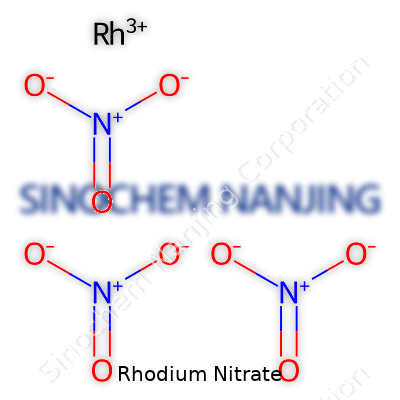
| Names | |
| Preferred IUPAC name | rhodium(III) nitrate |
| Other names |
Rhodium trinitrate Rhodium(III) nitrate Nitrate de rhodium |
| Pronunciation | /ˈroʊdiəm ˈnaɪtreɪt/ |
| Identifiers | |
| CAS Number | 10139-58-9 |
| Beilstein Reference | 3587157 |
| ChEBI | CHEBI:52732 |
| ChEMBL | CHEMBL3306516 |
| ChemSpider | 21459662 |
| DrugBank | DB14509 |
| ECHA InfoCard | 100.034.550 |
| EC Number | 236-900-2 |
| Gmelin Reference | 71641 |
| KEGG | C06438 |
| MeSH | D017180 |
| PubChem CID | 10485987 |
| RTECS number | VI9950000 |
| UNII | 4G8G39V438 |
| UN number | UN3288 |
| Properties | |
| Chemical formula | Rh(NO3)3 |
| Molar mass | 209.92 g/mol |
| Appearance | yellow or brown solid |
| Odor | odorless |
| Density | 2.52 g/cm³ |
| Solubility in water | Soluble |
| log P | -2.6 |
| Basicity (pKb) | 12.5 |
| Magnetic susceptibility (χ) | Paramagnetic |
| Refractive index (nD) | 1.85 |
| Dipole moment | 0 D |
| Thermochemistry | |
| Std molar entropy (S⦵298) | 284.0 J·mol⁻¹·K⁻¹ |
| Std enthalpy of formation (ΔfH⦵298) | -457.5 kJ/mol |
| Pharmacology | |
| ATC code | V09GX04 |
| Hazards | |
| Main hazards | Oxidizer, harmful if swallowed, causes severe skin burns and eye damage, may cause respiratory irritation. |
| GHS labelling | GHS02, GHS05, GHS07, GHS08 |
| Pictograms | GHS03,GHS05,GHS06 |
| Signal word | Danger |
| Hazard statements | H272, H314, H302 |
| Precautionary statements | P260, P264, P271, P280, P301+P330+P331, P304+P340, P305+P351+P338, P308+P313, P310 |
| NFPA 704 (fire diamond) | 1-3-0-OX |
| Autoignition temperature | 170 °C |
| Lethal dose or concentration | LDLo oral rat 100 mg/kg |
| LD50 (median dose) | LD50 (median dose): 325 mg/kg (rat, oral) |
| NIOSH | NA |
| PEL (Permissible) | PEL (Permissible Exposure Limit) for Rhodium Nitrate: Not established |
| REL (Recommended) | 0°C |
| Related compounds | |
| Related compounds |
Rhodium(III) chloride Rhodium(III) sulfate Rhodium(III) acetate Rhodium(III) oxide |



