Pyridinium Tribromide: An In-Depth Commentary
Historical Development
Interest in brominating agents took off long before anyone ever stocked Pyridinium Tribromide on a lab shelf. Chemists used elemental bromine for decades, despite the hazards: choking fumes, corrosive spills, and sometimes, nasty accidents in the fume hood. Then came the rise of safer, more controlled alternatives. Pyridinium Tribromide first saw the light in the middle of the 20th century, after a handful of clever researchers spotted that trapping bromine in a salt with pyridine could cut down on risk and deliver the same chemistry. This shift marked a practical step in organic laboratories, where scientists looked for ways to keep their hands and lungs safe while still generating reliable results. Over the years, Pyridinium Tribromide secured a reputation as a convenient, cost-effective substitute for liquid bromine, influencing both academic studies and industrial production.
Product Overview
Today, Pyridinium Tribromide shows up as a reddish-brown crystalline powder. Chemists count on it for bromination—it starts reactions cleanly and can be measured with precision, sparing users from the hazardous guesswork of measuring out dark, volatile bromine liquid. The reactivity stands strong: break open the container, measure the desired quantity, and the work proceeds with less fear of spills and fumes. For folks working in drug discovery or routine synthesis, Pyridinium Tribromide has become a staple that allows repeatable work and fosters genuine safety in both research and teaching labs.
Physical & Chemical Properties
A glance at Pyridinium Tribromide gives away much about its make-up. The compound takes the form of reddish-brown, nearly brick-colored crystals. Soluble in polar solvents—especially acetonitrile and dichloromethane—it dissolves quickly, letting chemists launch reactions without endlessly stirring or heating. The compound releases bromine in situ, which gives the same powerful electrophilic brominating force without uncorking a dangerous bottle of bromine. The melting point hovers near 175–180°C, but at normal temperatures on the benchtop, Pyridinium Tribromide stays stable, and not as prone to decomposition as pure Br2. Its chemical formula, C5H5NBr3, brings together pyridine and three bromine atoms in a salt; this forms a handy, shelf-stable reagent—a small improvement, yet one that can matter a lot for careful hands.
Technical Specifications & Labeling
Reagent labels should always show more than a name. Pyridinium Tribromide comes marked by its CAS number, typically 39416-48-3. Specifications usually demand purity above 98%, and reputable suppliers run batch testing to confirm this with NMR and titration. Moisture content stays low, under 0.5%, since water not only affects storage but risks accidental hydrolysis—anyone using this material in synthesis needs to read up on the technical sheet and follow packing instructions, often involving tightly sealed amber bottles stored in cool, dry places. Labels provide UN number (3260, corrosive solid, acidic, organic, n.o.s.), hazard codes for skin and eye irritation, and explicit fire precautions. In my own experience, the clearest labels not only save time—they also prevent accidents by stopping misuse before it starts.
Preparation Method
Manufacturing Pyridinium Tribromide doesn’t call for vast machinery but needs exactness and patience. The classic way involves bubbling dry bromine gas into cold pyridine under tightly controlled conditions. Liquid bromine gets added, often dropwise and always inside a fume hood, into a solution of pyridine in anhydrous solvents like dichloromethane. As the reaction proceeds, the salt crystallizes and can be filtered, washed, and dried. Yields stay high if temperatures and stoichiometry fall within tight ranges; sloppy technique can result in a product streaked with side-products or lessen efficiency. This preparation method stands as a reminder that even simple chemistry demands thoroughness for quality and safety.
Chemical Reactions & Modifications
No two labs use Pyridinium Tribromide the same way, but its core chemistry remains consistent: it transfers bromine atoms onto organic molecules, often alkenes or aromatics. This is the backbone of electrophilic bromination—converting relatively inert hydrocarbons into items like dibromoalkanes or aromatic bromides. The compound’s controlled release of bromine lets scientists pace reactions and halt them at just the right intermediate, instead of racing to contain an out-of-control exotherm. Chemists also use modifications, blending Pyridinium Tribromide in combination with co-solvents or acids to tweak selectivity. Some recent research toys with replacing pyridine with substituted analogs, seeking even milder or more selective alternatives for delicate syntheses. These ongoing tweaks keep the field fresh and open doors for more scope in synthetic routes.
Synonyms & Product Names
In catalogs and papers, Pyridinium Tribromide sometimes appears as Pyridine Hydrobromide Perbromide or Pyridinium Perbromide. Certain suppliers use trade names, but the chemical structure doesn’t change. The most common abbreviation, Py·Br3, shows up often in research. Awareness of synonyms matters, as mismatched names across catalogs can snag purchasing or compliance, and old research articles sometimes bury useful data under synonyms now rarely seen. I’ve had to double-check CAS numbers myself, because confusion between Pyridinium Tribromide and other brominating salts (like NBS, N-bromosuccinimide) can ruin a day’s work.
Safety & Operational Standards
Lab safety officers often remind staff that handling any bromine-containing chemical deserves respect, and Pyridinium Tribromide demands it daily. Gloves, goggles, and ventilation stand as non-negotiable. Avoiding moisture in storage keeps the material from degrading or giving off corrosive vapors. Spilled crystals release bromine if mixed with acids or water, so cleanup means thorough, careful methods and not sweeping dust under the rug. Emergency protocols require knowing where the eyewash and neutralizing spill kits are located. Waste collection happens in halogenated organic disposal streams, not poured down the drain. Strict adherence to safety standards, OSHA recommendations, and GHS labeling follow from painful lessons in labs across the world. Anyone who’s seen a mishap with brominating agents comes away with a healthy respect for robust safety culture.
Application Area
Organic synthesis makes up the main domain for Pyridinium Tribromide. Researchers use it for brominating alkenes, alkynes, and aromatics, which forms key intermediates in pharmaceutical pipelines, flavors, fragrances, and materials science. Large companies order it in bulk for scale-up work, as solid reagents simplify inventory and waste handling. Academic research benefits from its hassle-free handling, especially in student laboratories, where minimizing hazards remains a major concern. Analysts sometimes rely on it for qualitative detection of organic compounds, since its reaction outcomes tend to be sharp and unambiguous. For small molecule scaleups, Pyridinium Tribromide’s predictability becomes an asset. In my own work, brominating a tricky arene for library synthesis took less troubleshooting with solid Py·Br3 at hand than when dealing with volatilized bromine.
Research & Development
Much of the latest research centers on making brominations cleaner, greener, and more selective. Worker safety and sustainable chemistry have moved to the front of the line, so labs keep evaluating whether Pyridinium Tribromide can be made from recyclable pyridine or paired with catalytic additives. Teams investigate slow-release versions, where encapsulated reagent offers longer shelf lives and smoother dosing, especially for industrial reactors. Improved process monitoring—by in-line NMR or automated sampling—yields a more thorough map of how reaction times and temperatures affect outcomes. Some university groups have pushed “designer” analogs by swapping the pyridine core for more exotic heterocycles, which could lead to even more precise chemical tools. Each of these advances puts less strain on workers and waste streams, pointing toward a more sustainable future in chemical synthesis.
Toxicity Research
Pyridinium Tribromide falls into the moderate to hazardous toxicity range. Direct contact with skin, eyes, or mucous membranes can burn and irritate. Inhalation should be avoided, especially in powder form, as some decomposition can generate free bromine gas. Animal studies show acute toxicity with ingestion, and ecological research highlights the effects of halogenated runoff on aquatic life. Regulations in the EU, US, and China restrict shipment and storage quantities, and some companies run in-house tests to make sure accidental exposure remains limited, thanks to clearly enforced PPE protocols. Anyone handling it often knows the importance of post-use handwashing and keeping the reagent far from food or common surfaces. Safety data sheets offer real-world injury reports—these keep new researchers on their toes and serve as grim reminders of what happens if anyone gets complacent.
Future Prospects
Bromination won’t vanish from chemical synthesis, so demand for smarter, safer reagents looks set to grow. Pyridinium Tribromide stands at a crossroads: companies invest in better storage technologies, automate dosing in large reactors, and switch to digital monitoring to avoid waste and human exposure. Upcoming formulations could debut with stabilized binders or hybridized with other mild oxidants. Demand for greener chemistry nudges research groups to invent ways to recover spent pyridine for reuse, or convert waste bromide into less toxic by-products. Emerging applications—especially in materials science, agrochemicals, and advanced intermediates—promise wider relevance beyond traditional organic synthesis. As governments and industries lean into tighter environmental controls, chemists responding to these pressures will shape whether Pyridinium Tribromide keeps its trusted slot in the toolbox or gives way to next-generation reagents.
What is Pyridinium Tribromide used for?
The Reagent Behind the Curtain
Walking through a university chemistry lab, you can spot rows of brown bottles. One name that pops up on those labels is pyridinium tribromide. People who haven’t worked behind the protective glass might not give it a thought, but ask any serious chemist — this orange-red compound holds surprising weight in getting messy work done.
From Theory to Touch: Why Pyridinium Tribromide?
Picture this: researchers aiming to add bromine to a hydrocarbon. Free bromine isn’t a joy to handle. It’s toxic, evaporates fast, and if you’ve ever caught a whiff of it, you remember. So, pyridinium tribromide shows its value by bundling bromine into a solid, moderately stable salt. That form lets people work safer and with more predictable results. It frees labs from wrestling with hazardous red-brown vapors.
This isn’t just a matter of convenience. The need to avoid liquid bromine accidents or regulatory headaches sets the stage for using compounds like pyridinium tribromide. I remember one late-night session in graduate school: even experienced students counted their luck as we swapped traditional reagents for something safer.
Real Uses: Catalyzing Progress in the Lab
Bromination reactions often pop up in organic synthesis. Take the challenge of converting alkenes or phenols for making drugs, dyes, or natural product analogs. Pyridinium tribromide hands over bromine atoms right where the chemist asks. It’s like a precise delivery guy in the world of atoms and molecules.
Some protocols in medicinal chemistry swear by it, not just for clean results but for ease of use. Chemists trust it when building building-blocks for antibiotics or anti-inflammatory drugs. Researchers also use it for analytical purposes, like quantifying unsaturated fats in oils. In these cases, accuracy and reproducibility beat speed.
Safety, Skill, and Responsibility
Nobody should forget that pyridinium tribromide isn’t a toy. Skin, eyes, and lungs don’t fare well with brominated compounds. Laboratories using it require solid training and reliable protective gear. That’s one area the science community can continue to improve — better guidance for students and professionals just starting with hands-on chemistry.
You won’t find pyridinium tribromide stacked on supermarket shelves — and that’s a good thing. Oversight helps reduce accidental exposure and keeps powerful chemical tools where they’re needed most: academic, industrial, and forensic settings where professionals carry a real sense of care. Following best practices, from safe storage to thoughtful disposal, makes a difference for the people working in the lab and the environment outside it.
Looking Ahead: Paths Toward Greener Chemistry
Researchers are always pushing for safer and more sustainable options. Some groups are experimenting with reagents that use less toxic halogens or cut down on waste. The hope is that future generations bring bromination to the table using even more controlled, less hazardous sources. As green chemistry picks up steam, thoughtful selection of reagents will shape the next era of science. In the meantime, pyridinium tribromide keeps playing a role in transforming ideas into results, quietly supporting the search for new medicines, materials, and knowledge.
How should Pyridinium Tribromide be stored?
The Substance in Question
Pyridinium tribromide exists as a red-brown crystalline material, popular as a bromination reagent in labs. Labs value it for its predictable behavior and relatively stable performance during reactions. Despite those points, ignoring safe storage risks health, the workplace, and experimental results.
Real Hazards in Real Labs
My time working with organic reagents showed that bromine compounds deserve respect. Pyridinium tribromide releases corrosive fumes, irritates eyes and skin, and stains nearly everything. Tossing it in a random drawer may turn a minor inconvenience into an emergency. Colleagues have complained about persistent odors and occasional headaches when someone left the bottle loose or cracked the lid. People expect chemicals to behave; they forget that containment keeps that reputation.
Keys to Reliable Storage
Successful storage, to me, means clear rules that anyone in the lab can follow, day or night. Pyridinium tribromide fits into this neatly. Store it tightly sealed, away from moisture, since water kicks off dangerous bromine release. Standard chemical safety cabinets create a buffer against humidity and accidental contact. I always put such bottles in secondary containment — a plastic tray or bin. If the bottle leaks, the bin buys precious cleanup time.
Temperature matters. Shelf lives drop in hot rooms. Keep storage spots cool, away from direct sun or unavoidable heat. During a maintenance incident in our building one July, a colleague found an overheated shelf with sticky, degraded bottles of chemicals including brominating agents. We lost an afternoon, garbage bags, and some dignity to the cleanup. Fridge storage isn’t a must, but hot storage courts disaster.
Label Clarity and Routine Checks
Chemicals outlast memories. Labels fade or fall off, especially with rough handling or cleaning. Write boldly, with date opened and safety signals in plain language. Check storage areas monthly for sticky residue or odd colors that warn of decomposition. One time, I caught crystals creeping out from beneath a cap and stopped an accident before it started. Most people rush through inventories, but a five-minute pause and a flashlight have saved more than one lab.
Who Can Access the Bottle?
Access shapes safety. I’ve seen coworker injuries after trainees grabbed reagents on a whim without realizing the dangers. Supervisors should clearly post access instructions. Digital sign-ins or logbooks create accountability. If a spill happens, tracking down responsible parties gets simpler.
Disposal Has No Shortcuts
Inherited chemicals pile up if no one sets disposal routines. Old or degraded pyridinium tribromide deserves swift removal, not a “someday” shelf. Arrange for hazardous waste pickup through reputable sources. Pouring it down the drain harms pipes, people, and waterways.
The Takeaway: It’s About People, Not Just Chemicals
Anyone can treat pyridinium tribromide as a jar with a fancy label. Avoid trouble by keeping simple habits: dry, cool space, secondary containment, clear labeling, scheduled checks, and strict access. Lessons learned after incidents rarely forget the human cost. Smart storage plans let researchers focus on discovery instead of damage control.
Is Pyridinium Tribromide hazardous to handle?
The Straightforward Risks in the Lab
Pyridinium tribromide shows up in synthetic chemistry work as a convenient source of bromine. Anyone who’s ever worked with this deep red crystalline compound in a teaching or research lab knows it carries risks. Skin contact causes immediate irritation, a burning feeling, sometimes redness and itching that lasts hours. The dust stings eyes, leaves lingering discomfort, and if you take in the vapors, the coughing starts quick. People sometimes underestimate chemicals that don’t release strong odors or fumes on their own—this one gives few early warnings beyond its color, so the surprise is worse when something goes wrong.
Corrosive Power, Acute Toxicity, and Chemical Burns
Bromine’s reactivity defines the risks here. Pyridinium tribromide carries a punch. If it touches moist skin or eyes, expect a reaction. Bromine corrosion doesn’t just dry or redden—painful burns, blistering, and possible long-term scars aren’t rare. The compound can also affect breathing, causing wheezing, sore throat, and potentially triggering asthma-like symptoms for those prone. One slip up in a fume hood, with bare fingertips or a mask pulled down, and trouble starts. Inhalation may cause delayed lung inflammation, so symptoms do not always appear right away. Emergency room doctors sometimes trace sudden symptoms to an hour-old exposure after a routine lab session.
Fire Dangers and Mixing Woes
Pyridinium tribromide isn’t flammable itself but tosses its own hazards into the mix. If it contacts organic matter, some reducing agents, or accidental spills of acetone and other solvents, it can set off fires or unexpected runaway reactions. Bromine gas release is possible, especially with heat or incorrect storage. Even in cool, dry cabinets, I have seen bottles degrade—stains and odor hint at the fumes silently filling the air after months on a neglected shelf. Chemical compatibility matters, yet people sometimes stash oxidizers in general chemical storage, risking more than just property damage if something tips over or powder scatters.
Staying Safe Without Lab Theater
Stories from seasoned technicians help more than lists of rules. I learned early to double-glove and check for cuts before handling reactivity bromine sources. Disposable splash goggles, not just glasses, go on before the lid comes off. Ventilation counts most—using a chemical fume hood faithfully makes a difference. Open bench work tempts people for “just one quick measurement.” That shortcut causes more accidents than most care to remember. Spills never disappear on their own. A bromine stain on a countertop eats away at it, so a paper towel is not good enough—proper neutralizers and plenty of ventilation matter every time.
Regulation, Access, and Responsible Use
In research settings, safety data sheets and university protocols address most problems, as long as people actually read them. Outside of regulated environments, risks go up. Casual handling, improper disposal (like rinsing down a sink), or ignoring proper waste collection sends bromine compounds into wastewater and exposes maintenance staff. In Europe and North America, pyridinium tribromide gets flagged under hazardous substance laws, so access remains controlled. Still, backyard chemists and amateur experimenters catch news headlines every year after injuries or hazardous waste issues arise. Respect grows out of stories passed among chemists as much as regulations.
Pushing for Safer Alternatives and Awareness
Green chemistry offers routes for safer bromination, using catalytic or in situ generation of bromine that skip dangerous solid reagents. Companies now develop encapsulated or liquid alternatives that lower risk. But older compounds stay popular due to low cost or habit. The right path means clear training, honest discussions about risk, and real investment in lab infrastructure—chemical safety should feel as routine as checking a door lock. Pyridinium tribromide serves chemistry well but deserves a badge that reads: “Handle with full respect, or pay the price in scars and stories.”
What is the molecular formula of Pyridinium Tribromide?
Why Pyridinium Tribromide Matters in Chemistry
Pyridinium tribromide grabs attention in chemistry labs because it acts as a safe, solid source of bromine for a range of reactions. Handling bromine on its own gets messy—it's toxic, corrosive, and tough on protective equipment. Having a solid, relatively stable compound like pyridinium tribromide makes life much easier. People often skip past the deeper chemistry and focus on its use in brominations or halogenations, but understanding the formula tells a bigger story about safety and reactivity in the lab.
Based on everyday work with halogenation reagents, I've seen how a stable, solid compound changes the workflow for students and chemists. No need to battle with the strong fumes of liquid bromine. A single chemical replaces risky glassware and nervous assistants with a simple scoop from a bottle.
Breaking Down the Formula
The molecular formula always gets traced back to the two core ingredients. You take pyridinium ion, which comes out as C5H5N+ (that classic aromatic ring with an extra hydrogen on the nitrogen), and pair it with the tribromide anion, Br3−. The full formula for pyridinium tribromide ends up as C5H5NBr3.
I learned this the hard way—as a student huddled over organic chemistry synthesis, where the difference between making the right salt and a potentially hazardous mistake could be a single atom out of place. If someone tossed “pyridine hydrobromide” into the mix, you’d get a totally different product, designed for a different task. So nailing the formula, C5H5NBr3, matters.
Why Accurate Chemical Formulas Are Essential
Mislabeling reagents leads to problems no one wants. In large academic labs, a formula on a bottle often gets trusted without question. That trust only works if the underlying chemistry stands on solid ground. If someone swaps pyridinium tribromide for another brominating agent, yields drop, safety gets compromised, and it takes more troubleshooting than most folks have time for. Chemists across the world have published research based on pyridinium tribromide’s reliable molecular formula. A simple error can snowball into wasted budgets, irreproducible data, or worse, dangerous working environments.
People trust formulas as shorthand for safety, effectiveness, and transparency. Every label signals to students, researchers, and the occasional regulatory inspector that a process stands ready to be repeated and verified. Trusted suppliers like Sigma-Aldrich list C5H5NBr3 in all their product info, and the scientific literature backs up that formula. Meeting the expectations set by E-E-A-T isn't just for web searches. Long-term trust in chemistry comes from that same expectation: correct, consistent, and fact-checked formulas.
Better Lab Practices for the Future
The use of safer chemical alternatives can help close the gap between academic research, industrial settings, and high school labs. By providing accurate information, from molecular formulas to safe handling instructions, mistakes and accidents become much less likely. Encouraging chemists and educators to double-check formulas before purchasing or using any specialty reagent saves money, avoids confusion, and keeps everyone safer. Updating chemical inventory systems and digital databases with trustworthy details also builds a stronger foundation for future discoveries.
How can Pyridinium Tribromide be safely disposed of?
No Shortcuts with Hazardous Chemicals
Anytime Pyridinium Tribromide lands on a laboratory workbench, the game changes. This chemical brings real risks. Even folks used to handling bromine-based compounds recognize its potential hazards: corrosiveness, environmental threats, toxic fumes if mishandled. The bottle often carries a skull-and-crossbones label for a reason. Disposing of it can’t be a quick-and-easy job. Too many labs and amateur chemists learn this the hard way: improper disposal pollutes water supplies and can land an institution with regulatory heat. Growing up in a rural town, I remember a local business that casually poured unwanted chemicals down a drain. Water downstream became undrinkable; frogs and fish vanished for a season. That lesson sticks with me.
Don’t Go It Alone: Professional Disposal Matters
Mainstream guidance stresses working with certified chemical waste handlers. Disposal companies know the federal, state, and local rules. In the U.S., the EPA’s Resource Conservation and Recovery Act (RCRA) sets the tone, but states often add their own bite. Pyridinium Tribromide qualifies as hazardous: it contains bromine, a strong oxidizer known to harm both humans and ecosystems. Sending it to a regular landfill or down a drain will likely violate several laws—big fines, reputational damage, and guilt all follow.
Safe Inactivation: A Step for Qualified Hands Only
Some experienced chemists consider chemical neutralization in fume hoods, where diluted sodium thiosulfate solution converts residual bromine to harmless bromide. This sounds simple, but the margin for error sits razor-thin. Splash a drop on skin—chemical burns follow. Inhale the fumes—the lungs burn. I’ve watched senior lab managers keep neutralization protocols laminated and posted for a reason. Everything happens under powerful ventilation, with gloves, goggles, and backup neutralizer on hand. Containers get triple-rinsed and wastewaters processed as hazardous, not dumped. Most organizations wisely avoid in-lab neutralization unless absolutely necessary.
Storage Until Collection: Sealed, Labeled, Secure
Safe handling continues with short-term storage. Sealing Pyridinium Tribromide in a compatible, tight-lidded container, away from heat and organic materials, helps prevent accidental leaks or reactions. Clear labels showing contents, hazards, and date ensure waste managers know exactly what they’re handling. Some labs keep robust chemical tracking logs. If a cleanup worker spots an unlabeled jar, panic, not curiosity, usually sets in. Accurate, upfront labeling prevents accidents and eases the collection process for everyone down the line.
Cost, Accountability, and Decision Time
Professional disposal costs real money, especially with hazardous waste. Cutting corners—and the temptation always lurks—ends up costing far more in clean-up, legal action, or even reputational collapse. I once spoke with a university researcher who calculated that proper disposal costs barely a fraction compared to fines issued during EPA audits. Simple math won the debate. Institutions should budget for safe disposal, train new lab members, and invite environmental health officers to inspect protocols periodically.
Building a Culture of Safety
Regulatory bodies, lab technicians, chemistry instructors, and waste handlers share this challenge. Making chemical safety and responsible disposal central values keeps communities safe. Incorporating disposal planning into every experiment, no matter how routine, forms an effective safety net. Schools and companies that treat disposal education as foundational, not an afterthought, drastically lower chances of hazardous events. The best labs I’ve seen keep their disposal plan as visible as the eyewash station.
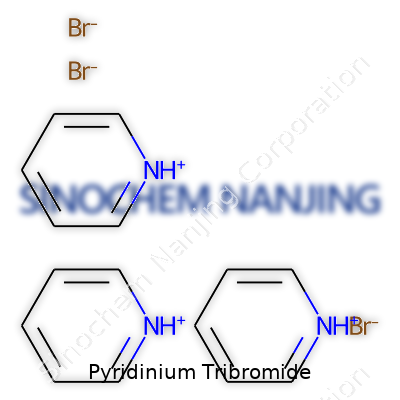
| Names | |
| Preferred IUPAC name | Pyridin-1-ium tribromide |
| Other names |
Pyridinium perbromide Pyridinium bromide perbromide |
| Pronunciation | /paɪˈrɪdɪniəm traɪˈbroʊmaɪd/ |
| Identifiers | |
| CAS Number | 39416-48-3 |
| 3D model (JSmol) | `Pyridinium Tribromide: JSmol="C1=CC=[N+](=CC=1)Br.[Br-].[Br-]"` |
| Beilstein Reference | 3586073 |
| ChEBI | CHEBI:38946 |
| ChEMBL | CHEMBL51739 |
| ChemSpider | 23419 |
| DrugBank | DB11110 |
| ECHA InfoCard | 100.039.908 |
| EC Number | 222-701-4 |
| Gmelin Reference | 76722 |
| KEGG | C07481 |
| MeSH | D017972 |
| PubChem CID | 22588 |
| RTECS number | UX8225000 |
| UNII | 4U5V5TQS3G |
| UN number | UN2811 |
| CompTox Dashboard (EPA) | DTXSID9020663 |
| Properties | |
| Chemical formula | C5H5NBr3 |
| Molar mass | 285.804 g/mol |
| Appearance | Red to dark-orange crystals |
| Odor | pungent |
| Density | 2.22 g/cm3 |
| Solubility in water | Soluble |
| log P | -1.2 |
| Vapor pressure | Negligible |
| Acidity (pKa) | -0.6 |
| Basicity (pKb) | 4.25 |
| Magnetic susceptibility (χ) | -85.0×10⁻⁶ cm³/mol |
| Refractive index (nD) | 1.620 |
| Viscosity | Viscous solid |
| Dipole moment | 2.13 D |
| Thermochemistry | |
| Std molar entropy (S⦵298) | 216 J·mol⁻¹·K⁻¹ |
| Hazards | |
| Main hazards | Harmful if swallowed, causes severe skin burns and eye damage, may cause respiratory irritation. |
| GHS labelling | GHS02, GHS05, GHS06 |
| Pictograms | GHS05,GHS06 |
| Signal word | Warning |
| Hazard statements | H302, H314 |
| Precautionary statements | P264, P270, P273, P280, P301+P330+P331, P301+P312, P305+P351+P338, P310, P321, P330, P362+P364 |
| NFPA 704 (fire diamond) | 2-0-1-OX |
| Flash point | no flash point |
| Lethal dose or concentration | LD₅₀ (oral, rat): 290 mg/kg |
| LD50 (median dose) | LD50 (median dose): 489 mg/kg (oral, rat) |
| PEL (Permissible) | Not established |
| REL (Recommended) | 1 mg/m³ |
| Related compounds | |
| Related compounds |
Pyridinium chlorochromate Pyridinium dichromate N-Bromosuccinimide Tetra-n-butylammonium tribromide |



