Propylene Glycol Monoethyl Ether: An Editorial Commentary
A Journey Through Historical Development
The chemical industry never stands still. Looking back, the story of propylene glycol monoethyl ether traces the path of progress across decades. Making headway in the mid-20th century, research began to steer away from earlier, more hazardous solvents toward alternatives that balanced effectiveness and safety. As demand for safer formulations flourished, especially where workplace health drew tighter regulation, development on glycol ethers ramped up. Propylene glycol monoethyl ether managed to carve a space for itself as both a technical breakthrough and a practical answer. Its unique dip in volatility offered a less aggressive smell compared to older ethers, and this detail alone prompted a shift in both industrial and consumer use. Over the years, those navigating the field saw production methods mature and standardize so that consistency in quality became the norm rather than the exception.
Defining the Product
Every bottle tells a story. Propylene glycol monoethyl ether, a colorless liquid, acts as a workhorse in many applications—its slight odor setting it apart from more pungent cousins. Thanks to its nifty ability to dissolve both water- and oil-loving substances, it fills an awkward gap that many old-school solvents left wide open. This quality led to its increased popularity in cleaning fluids, paints, coatings, and ink formulations. The product adapts to countless uses not only on the factory floor but at the consumer level, often quietly tucked into products where users never notice its presence.
Physical and Chemical Properties Matter
Nobody working with chemicals ignores the basic traits that make one substance special. With its moderate boiling point and low viscosity, propylene glycol monoethyl ether finds itself poured, pumped, and blended without fuss. Its miscibility with water means formulating solutions becomes easier, and the measured evaporation rate helps strike a balance between drying time and optimal working conditions. What’s more, this ether resists breaking down under most light and temperature conditions, so stability concerns shrink. With a molecular structure just different enough from its ethylene glycol ether relatives, it sidesteps some of the toxicity issues that regulators now view with a critical eye.
Clear and Essential Technical Specifications
Consistency saves mistakes. Labels and quality specifications spell out the basic requirements: purity often runs above 98 percent, offering confidence to end-users. Physical stats like density, refractive index, and flash point take center stage for those writing safety protocols or fine-tuning a paint recipe. Regulatory standards keep a close watch. Across Europe, the US, and Asia, labeling requirements reflect the global push for transparency—users deserve to know what’s in each drum or bottle, especially for handling and storage. Authorized synonyms rarely confuse, but everyone's better off checking the CAS number than risking a mix-up with similar-sounding chemicals.
Preparation Methods: Old Formulas Meet New Tech
Experienced chemists remember the inefficient processes of the past. Today’s production leans toward catalyzed reactions that consume less energy and waste less raw material. Direct etherification forms the backbone of most syntheses. Manufacturers employ robust monitoring at each stage to keep impurities out, which spares end-users from worrying over unexpected variables in their applications. Improvements in separation and purification have tipped the scale away from guesswork, a point not lost on researchers trying to fine-tune product grades for electronics, pharmaceuticals, or the food industry. Today’s preparation methods translate into a more predictable product—crucial for any operation that can’t risk surprises down the line.
Getting Into the Chemistry
A practical understanding of chemical reactivity makes the difference between safe use and costly errors. Propylene glycol monoethyl ether resists most forms of acidic and basic attack, so shelf stability rarely presents trouble. Yet folks need awareness that under extreme heat or in the presence of strong oxidizers, decomposition can lead to unpleasant surprises. Companies pushing for innovative applications explore chemical modifications, using the ether group as a launching pad to engineer molecules for new specialty chemicals or solvent blends that aim to outcompete traditional players. In this work, the knowledge of possible reactions informs not only safety margins but also future creativity.
Synonyms and Product Names: Navigating the Tangle
Walking through a storeroom or flipping through catalogs, one quickly finds how chemical names breed confusion. Common synonyms like “1-ethoxy-2-propanol” crop up, reflecting different naming traditions. You’ll see abbreviations such as “PGME” or internationally recognized codes like the CAS number 1569-02-4. While this tangle challenges some newcomers, most experienced professionals keep a directory close at hand and confirm suppliers’ details before any order. These layers of naming persist in an industry filled with tradition and change, and they remind anyone in the field to check twice.
Following Safety and Operational Standards
For those working with chemicals every day, safety never takes a back seat. Regulatory bodies now expect manufacturers, transporters, and users to meet a long checklist: handling procedures, proper packaging, and exposure control. Propylene glycol monoethyl ether, while less hazardous than many older glycol ethers, still calls for gloves and goggles in most environments. When spills happen, quick action makes the difference, and proper ventilation ensures workers don’t experience unnecessary irritation. Training becomes the most valuable tool—without it, even a “safer” solvent might land someone in the emergency room. At every step from shipping to storage, standardized practices cut down on injury and property damage.
Real-World Applications: Why People Care
What sets this chemical apart isn’t the molecular logic—it’s what it achieves outside the lab. Paints and coatings get smoother finishes and longer working times, all without the sting of harsher solvents. Ink manufacturers engineer blends where stability and evaporation speed can make or break sales. Cleaning and degreasing fluids draw from its solvent power, tackling residues that stubbornly resist water-based solutions. Its profile fits many jobs, and as regulations tighten around ingredients that linger in the environment or bioaccumulate, industries turn to propylene glycol monoethyl ether for a more workable risk-benefit balance. The breadth of use keeps pushing both production and research costs down for everyone.
Driving Changes Through Research and Development
Innovation forms the backbone of the chemical world. Research teams, both in-house and academic, dedicate effort to optimizing synthesis, cutting waste, and pushing performance in real-world tasks. Many focus on lowering residual impurities, which, even at parts-per-million concentrations, can mess with sensitive downstream processes. There’s ongoing interest in green chemistry—replacing fossil-based sources with renewables, or rendering byproducts safe for disposal without costly treatment. As market demands shift toward safer and more sustainable options, research plays a direct role in future regulatory acceptance and consumer confidence. Larger firms roll out product line extensions that target emerging niches, all fueled by a steady flow of R&D investment and hard-won experience.
Toxicity and Health: Getting Past the Headlines
Stories about chemical hazards often miss the finer points of exposure and risk. Studies over the years suggest propylene glycol monoethyl ether brings far fewer toxicity concerns compared to many earlier glycol ethers, particularly in terms of reproductive impacts and chronic toxicity. That said, it’s no panacea. Users regularly report mild skin and eye irritation under high concentrations or poorly ventilated spaces. Industry experts take care in setting exposure limits, reflecting both the experimental data and the unpredictable ways people interact with products on the ground. End users and employers benefit by reviewing the latest toxicity data and not cutting corners on safety, especially in busy facilities where multiple exposures add up.
Looking Down the Road: Future Prospects
The world rarely stops craving improved solutions. Propylene glycol monoethyl ether isn’t going away. Pressure mounts for products that check both performance and environmental boxes, and this chemical keeps showing up at the intersection. New paint technologies, advanced cleaning systems, and specialty coatings all look for the Goldilocks candidate: good solvency, mild hazard, stable pricing. As green chemistry marches forward, researchers aim for synthetic routes that cut carbon footprint, curb waste, and boost bio-based production. Regulatory climates keep shifting; smart manufacturers read these signals and adjust before rules tighten further. The next decade looks set to keep this chemical in play—perhaps not at the front of splashy headlines, but always high on the list of practical problem-solvers for those who understand what’s at stake.
What is Propylene Glycol Monoethyl Ether used for?
This Stuff Gets into a Lot of Things
At first glance, propylene glycol monoethyl ether (PGME) looks like one of those chemicals best left to scientists in lab coats. Truth is, plenty of folks cross paths with it all the time without even realizing it. I remember helping repaint my neighbor’s fence a couple of summers ago. The label listed PGME near the top. Most casual painters probably breeze past that part, but it turns out PGME plays a small but vital role in paint’s performance. It doesn’t just disappear once the paint dries, either.
Why Manufacturers Rely on PGME
Ask anyone in paint manufacturing why PGME keeps showing up in their formulas. It helps dissolve many of the ingredients that make up high-quality paint and helps the final mix spread smoothly. Try painting with a batch missing this solvent, and the difference becomes clear: brush marks, uneven drying, and more wasted product. PGME makes sure things blend just right, keeps paints stable during transport, and helps the whole project look a lot more professional. That benefit translates straight to the end user—less hassle, easier cleanup, and paints that actually last.
I have seen it show up outside the paint world, too. Cleaners, inks, coatings for every type of surface, and even electronics production all count on this compound’s ability to cut through oily residues or tough grime. Hospitals rely on PGME in specialized disinfectants, because it helps ingredients reach the places they’re needed most. Good cleaning means better patient outcomes and fewer infections.
Health and Environmental Questions Always Matter
It’s easy to ignore long chemical names, but people ask bigger questions once they find out how far these substances reach. Some of my friends with asthma ask about air quality when using products with PGME. The jury’s still out on some long-term effects, but what’s clear is that high concentrations can cause irritation to skin and lungs. I always open a window and wear gloves if I work with products containing PGME, even if the bottle says it’s safe. Occupational guidelines exist, and workers in factories should know their limits, since overexposure can lead to headaches and other issues.
The environment is another concern. PGME won’t linger as long as some tougher chemicals, so it tends to break down faster outdoors. Still, it makes sense to keep it out of water systems and avoid careless dumping. As more consumers start to care where their products end up, smaller and greener alternatives are slowly trickling into the market. Researchers keep studying safer ways to do the same job, and some newer paints and cleaners skip solvents like PGME altogether. Technology keeps moving forward, but the main drive rests with workplace safety rules, testing, and clear labeling.
Safer Use Starts with Better Information
The way I see it, understanding what’s in the bucket before you grab a brush or a rag can only help. It keeps families, workers, and the planet a little bit safer. Labels need to be clear and honest. People benefit from knowing that things like propylene glycol monoethyl ether work behind the scenes to make products useful, but there’s always room for smarter design and safer options. Where alternatives exist, it pays to support responsible companies and stay up to date as industries adapt and improve. That’s the sort of transparency we all deserve.
Is Propylene Glycol Monoethyl Ether safe for skin contact?
Looking Beyond the Fine Print
Propylene glycol monoethyl ether, or PGME, pops up in more skin products and industrial cleaners than most folks realize. Formulators use it because it dissolves oils and greases pretty well, and it helps other ingredients mix and spread more smoothly. So, it's no surprise to see it on ingredient lists from household cleaners to specialty paints, and even some personal care goods. The big question still stands: should folks feel okay with this chemical touching their skin?
What Science Says About Skin Safety
PGME gets some nods from health agencies. The US Environmental Protection Agency has run its own toxicity reviews. Take the European Chemicals Agency, for example—they say it comes with “no hazard identified” for skin irritation if used wisely and exposure stays low. The data, though, comes mostly from animal tests and short-term use studies. In these cases, PGME left little impact. At high levels or with prolonged use, mild irritation showed up in guinea pigs and rabbits, but nothing too dramatic.
Human studies give a better sense of everyday risks. Patch tests, which check for allergic reactions and irritation, rarely show much trouble unless the solution sits a long time or goes on under occlusion (which holds it against skin tightly). People with jobs that involve a lot of contact—think painters, cleaners, folks in maintenance—sometimes mention dryness or redness. This matches up with how most synthetic solvents behave.
What Transparency Teaches Us
Safety ratings count on how the substance actually gets used. Low-strength mixes in hand soaps or wipes won’t hit skin the same as splashing full-strength cleaning solvent. No matter what, rinsing with water after use cuts the risk. From years working in manufacturing plants, I’ve seen that gloves and simple wash stations make a serious difference in whether people suffer dry, cracked skin or stay comfortable. Each step up in concentration pushes up the risk. Kids and folks with sensitive skin feel that irritation sooner.
It doesn’t get into the deeper layers of skin very easily. Tests show less than one percent passes through healthy human skin over several hours. Still, some folks react fast—they notice itching or redness after just one use. Allergies to propylene glycol itself, or to similar compounds, make irritation a real concern for some.
What to Do in Real Life
Nobody likes nasty surprises. Label reading helps. Most home cleaners and hand wipes spell out their ingredients. If PGME or a related compound shows up near the top, gloves make sense. In workplaces, good ventilation and smart handling go a long way. Switch products, or tweak your routine, if skin stays red, itchy, or sore. The FDA and health authorities suggest skin-friendly alternatives for extra-sensitive people.
Over the years, teaching folks about chemical exposures in the workplace made one thing clear: a little attention to personal habits prevents almost all irritation problems. Employers who keep up with changing regulations and update safety sheets see fewer complaints. For people at home, switching to milder cleaners does the trick if skin irritation flares up.
Wrapping Up the Facts
PGME sits within the “generally safe” category for skin—if you use it diluted, take it off quickly, and avoid constant soaking. Anyone with eczema, allergies, or sensitive skin should probably pick gentler options. Experience shows that good habits and quick cleanup make all the difference. Knowledge, not luck, keeps skin trouble away as chemical technology keeps evolving.
What are the storage and handling requirements for Propylene Glycol Monoethyl Ether?
Understanding What You’re Dealing With
Propylene Glycol Monoethyl Ether gets called PGMEE or often just “Ether” in industrial circles. You’ll find it in paints, inks, cleaners, and sometimes in electronics production. As folks who have spent time around chemical drums know, handling this stuff gets tricky fast if the basics get ignored. Health and safety teams usually wave the flag about fumes or accidental skin exposure for good reason. Wrong moves with PGMEE can lead to headaches or worse, especially in stuffy workshops.
Storage Advice That Actually Works
On the ground, recommendations from chemical suppliers always start with “keep cool, keep dry.” My own work in maintenance convinced me these aren’t empty words. Temperatures above 30°C and direct sunlight break down this solvent faster. Even in a pinch, never push drums toward heaters or steaming pipes. You want a storage spot with real ventilation. Air out the room, even if you have to leave a small window cracked. Over months, sweating containers signal a humidity problem. Moisture crawls in and mixes with PGMEE, increasing the risk of pressure buildup inside containers. Checked labels with batch dates often catch early signs of trouble.
Metal or high-density plastic drums seal the best, though gasket integrity can fail after a season. Anyone storing this chemical for the first time quickly learns about closed cap discipline. Never use a half-bent lid or duct tape. Spillage turns into sticky, slipping hazards in moments.
Handling That Puts Safety in the Spotlight
Direct contact isn’t worth the risk. You’d never find me topping drums of PGMEE without gloves. Face shields or tight goggles keep splashes out. Chemical-resistant aprons remain the cheap insurance no one regrets. Some shop managers insist on double-layer gloves. Allergic reactions crop up unexpectedly, and replacement hands haven’t been invented yet.
The vapor hazard often gets overlooked. You can’t rely on your nose—PGMEE mixes into air unnoticed at low concentrations. Local extraction fans above filling stations push vapors away. Makeshift setups, such as box fans or swinging doors, never match up to a good local exhaust system. Friends who tried shortcuts landed with surprise visits from workplace inspectors. It only takes one slip to cause headaches, shortness of breath, or even a minor fire incident.
Fire, Leaks, and Being Proactive
Despite what some folks believe, PGMEE catches fire at moderate temperatures. No open flames in the storage space—this rule saves lives and hassle. Static discharge while pouring can really cause sparks. My habit? Grounding metal containers every time. A coworker skipped this once and learned the hard way. You’re better off with a dedicated, labeled chemical cabinet if your shop deals with dozens of different solvents.
Leaks and spills challenge even experienced crews. Standard absorbents mop up most of it, but sticky residue lingers. A written plan for spills turns panic into quick action. Nobody wants solvents marching through a warehouse, mixing with other chemicals, or heading for drains where they can pollute.
Getting Training and Support Right
Companies that cut out corners on staff training see the disaster. Safe chemical handling only sticks after hands-on sessions. Suppliers often include technical data sheets—use them. Also, keep emergency response phone numbers pinned close to storage areas for quick access. Everyone feels safer when they know what to do and how to call for help.
In the end, practical care with propylene glycol monoethyl ether rests on straight talk, decent equipment, and sharing real-world stories. Guided by people who put lessons into practice, safer workplaces come within reach for everyone involved.
Is Propylene Glycol Monoethyl Ether flammable?
Reality Check: Flammability in Daily Workplaces
Propylene glycol monoethyl ether turns up a lot in paints, cleaners, inks, and even some electronics and household products. Most folks handle it without much thought. Yet, this colorless liquid has a higher flash point than other industrial solvents. Still, it can catch fire at about 49°C (120°F). Many assume it’s less risky because it isn’t as volatile or smelly as some old-school chemicals. But in hot storage rooms, near heating elements, or enclosed spaces, vapors can reach that flammable threshold.
Practical Safety & Personal Experience
I’ve worked in several factories, and there’s a tendency to trust what “doesn’t smell dangerous.” One coworker once remarked that if you can’t light up a match and start a fire quickly, everything’s safe. This attitude forgets that vapors gather without notice. A spark from a faulty switch can ignite them, even if liquid spills seem minor. Factory reports across North America and Europe list solvent flash fires every year. Too often, people chalk them up to “bad luck” instead of chemical properties and sloppy habits.
Why This Matters for Small Businesses
Many small businesses use cleaning agents or coatings with propylene glycol monoethyl ether because they believe it’s gentle compared to harsher solvents. In print shops and janitorial closets, flammable labels get ignored. People sometimes store these bottles right next to heat-producing gear. The U.S. Department of Labor’s OSHA database shows that improper storage—like stacking solvents above 25°C or grouping them close to open flames—makes a big difference in accident rates.
Health Matters Too
Fire isn’t the only risk on the table. Breathing the solvent’s fumes over time irritates the nose, throat, and lungs. In small, poorly ventilated spaces, symptoms pop up faster. I’ve seen workers work longer shifts, only to go home dizzy or with headaches. Most believed they’d just caught the tail end of a cold, but better airflow fixed those symptoms nearly overnight. So, storing flammables safely also means better health.
Smart Steps Everyone Can Take
Simple changes create safer workspaces. Store propylene glycol monoethyl ether in dedicated cabinets away from ignition sources. Keep containers tightly sealed when not in use. Use fans or open windows when applying or mixing any solvents in enclosed areas. Train everyone—laborers and managers alike—to read container labels and safety data sheets. Share accident stories along with technical know-how. Real examples stick with people longer than a dry rulebook.
Responsible Choices at Home and Work
Even outside of factories, folks use strong cleaners and specialty paints in garages and basements. That makes it worth investing in fire-safe storage and proper labeling at home. One overlooked shed or forgotten bottle is all it takes for things to go south. Small changes in routine keep flammable chemicals from turning into headlines.
What is the shelf life of Propylene Glycol Monoethyl Ether?
Practical Significance of Shelf Life
Propylene glycol monoethyl ether pops up in cleaners, paints, coatings, inks, and even in some specialty formulations that touch healthcare and electronics. I’ve seen it listed everywhere from janitorial closets to manufacturing floors. Knowing its shelf life isn’t just a fact to stick on a datasheet — it connects right to quality, safety, and budget decisions. You don’t want a drum to spoil and cause downtime or risk products failing regulatory checks because of old raw material. In this industry, expired chemicals can mean scrapped batches and reputational headaches.
Expected Shelf Life in Storage
Most suppliers stamp a shelf life of two years — sometimes three, if the drum never gets opened and storage conditions favor stability. The chemical itself holds up pretty well under normal temperatures. Oxidation creeps in if the drum lid stays loose or gets popped open too many times. Humidity, sunlight, and swings in temperature will shorten a product’s life faster than a sticker on a barrel ever lets on. I’ve found that warehouses fall short here — rooms near receiving docks force chemicals to ride out hot summers and cold winters. Heat and moisture don’t just speed up breakdown; they change how the product smells and looks. That’s a red flag.
What Happens Past Expiry?
An expired solvent doesn’t always mean a useless one. Sometimes folks keep using it, especially smaller operations chasing savings. But performance drops. Over time, impurities form, combustion points can change, and separation can occur in the drum. Customers who use the chemical past its stated shelf life risk failed application or changes in evaporation rate. The quality control folks I talk to keep a close eye on batch numbers for this reason. I’ve heard more than one story where ignoring the date led to sticky prints or failed coatings — all traced back to someone not checking the shelf life.
What Affects the Shelf Life?
Container type plays a huge role. Steel drums usually outlast plastic or pails. Unopened drums fare much better than those that get tapped every week for samples or decanting. Direct sunlight, heat, and even the air inside an open drum chip away at stability. People sometimes overlook labeling and accidental mixing. Once, I saw an entire batch marked for disposal because someone topped off one chemical with another — error traced straight back to sloppy storage and unclear signage. Attention to these details can stretch shelf life closer to what’s advertised by manufacturers.
How to Make It Last Longer
Storing chemicals in tightly sealed, original containers protects against contamination and evaporation. Bringing storage areas out of direct sunlight and controlling humidity goes a long way. Keeping an eye on temperature logs helps. I’ve seen companies use simple checklists to rotate inventory, labeling everything with both the delivery and first-open dates. If your staff turns over a lot, one training session on chemical handling can save thousands down the road. Don’t wait until drums start leaking or strange smells catch someone’s nose.
Supporting Safe Use
Trusting in shelf life dates without checking storage realities doesn’t hold up. Regular audit and sample testing make a difference, especially in industries where reliability trumps every other concern. This approach keeps both workers and consumers safe. Manufacturers like Dow and BASF highlight humidity and exposure to open air as major factors, and peer-reviewed studies back up real-world experience: storage and handling matter as much as chemistry. A little extra attention pays off in safe, predictable products all the way to the end user.
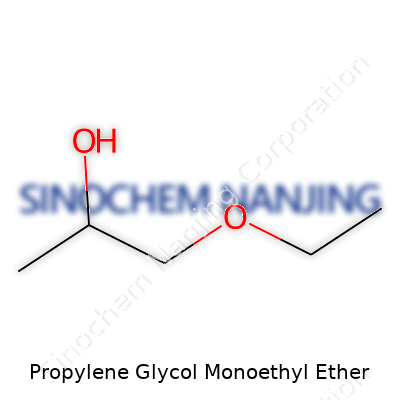
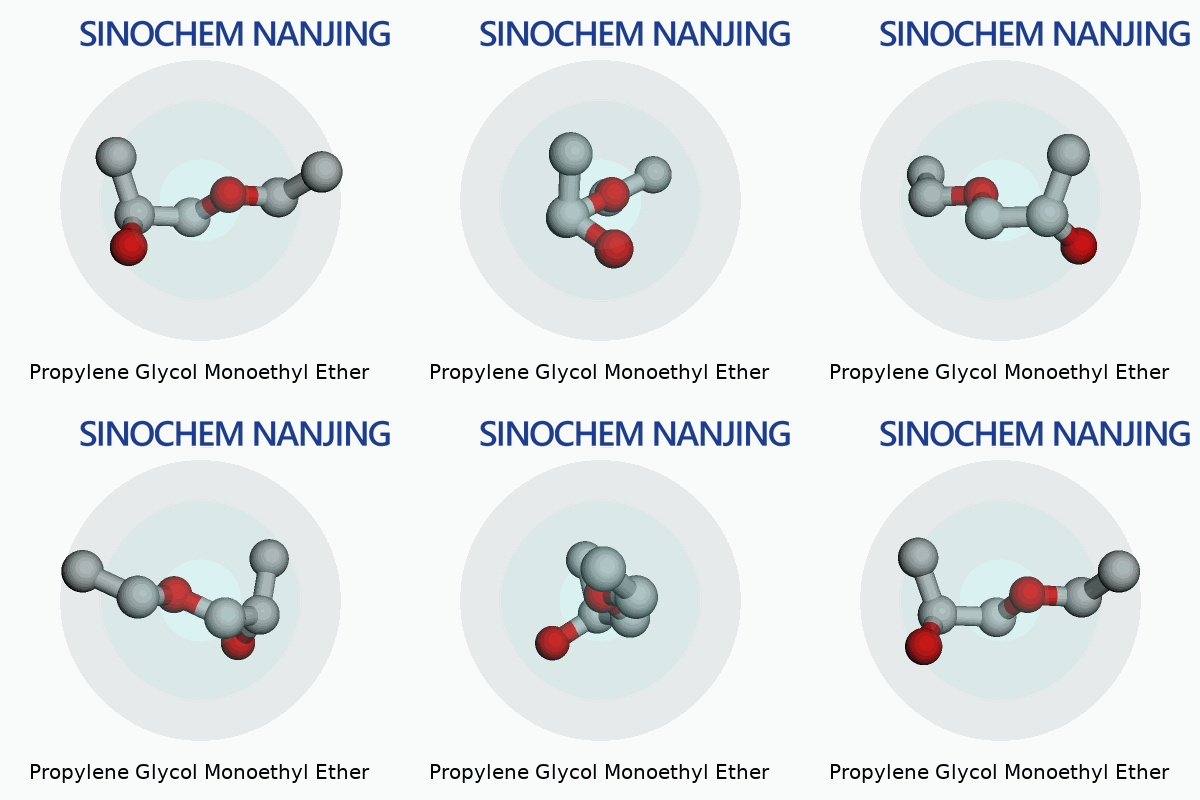
| Names | |
| Preferred IUPAC name | 1-Ethoxypropan-2-ol |
| Other names |
Ethoxy-1-propanol 1-Ethoxy-2-propanol PGME Propylene glycol ethyl ether 2-Propanol, 1-ethoxy- |
| Pronunciation | /ˈproʊpiːliːn ˈɡlaɪˌkɒl ˌmoʊniːˈθɪl ˈiːθər/ |
| Identifiers | |
| CAS Number | 2807-30-9 |
| Beilstein Reference | Z700044 |
| ChEBI | CHEBI:81805 |
| ChEMBL | CHEMBL165598 |
| ChemSpider | 16121 |
| DrugBank | DB14183 |
| ECHA InfoCard | 100.004.291 |
| EC Number | 603-177-00-8 |
| Gmelin Reference | 9359 |
| KEGG | C19544 |
| MeSH | D017210 |
| PubChem CID | 8047 |
| RTECS number | **KL9275000** |
| UNII | 3X6O0U1697 |
| UN number | UN3083 |
| CompTox Dashboard (EPA) | DTXSID5022065 |
| Properties | |
| Chemical formula | C5H12O2 |
| Molar mass | 120.16 g/mol |
| Appearance | Colorless transparent liquid |
| Odor | Mild, ether-like odor |
| Density | 0.921 g/cm3 at 25 °C |
| Solubility in water | Miscible |
| log P | 0.32 |
| Vapor pressure | 0.56 mmHg (20°C) |
| Acidity (pKa) | 14.8 |
| Basicity (pKb) | 13.55 |
| Magnetic susceptibility (χ) | -8.05×10⁻⁶ |
| Refractive index (nD) | 1.403 |
| Viscosity | 2.5 mPa·s (25 °C) |
| Dipole moment | 2.97 D |
| Thermochemistry | |
| Std molar entropy (S⦵298) | 359.1 J·mol⁻¹·K⁻¹ |
| Std enthalpy of formation (ΔfH⦵298) | -471.15 kJ/mol |
| Std enthalpy of combustion (ΔcH⦵298) | -3296.7 kJ/mol |
| Pharmacology | |
| ATC code | D07AX61 |
| Hazards | |
| GHS labelling | GHS02, GHS07 |
| Pictograms | GHS02,GHS07 |
| Signal word | Warning |
| Precautionary statements | P210, P233, P240, P241, P242, P243, P261, P264, P271, P280, P303+P361+P353, P304+P340, P305+P351+P338, P312, P337+P313, P370+P378, P403+P235, P405, P501 |
| NFPA 704 (fire diamond) | 1-2-0 |
| Flash point | 49 °C (120 °F) |
| Autoignition temperature | 230°C |
| Explosive limits | 1.6% - 12.1% |
| Lethal dose or concentration | LD50 oral rat 2,738 mg/kg |
| LD50 (median dose) | LD50 (median dose): Oral rat 2136 mg/kg |
| NIOSH | RN 521 |
| PEL (Permissible) | PEL: 25 ppm |
| REL (Recommended) | 25 ppm |
| IDLH (Immediate danger) | 500 ppm |
| Related compounds | |
| Related compounds |
Propylene glycol methyl ether Propylene glycol butyl ether Ethylene glycol monoethyl ether Diethylene glycol monoethyl ether Propylene glycol Ethylene glycol Diethylene glycol |



