Potassium Sodium Tartrate Tetrahydrate: A Down-to-Earth Look at a Classic Compound
Historical Development
Potassium sodium tartrate tetrahydrate, often called Rochelle salt, goes way back in both science and everyday life. Its origins date to the 17th century, discovered in Seignette’s pharmacy in La Rochelle, France. Chemists then saw it as more than just a curious byproduct from winemaking. Before modern lab glassware and electronics, folks relied on it for minute electrical tricks—like kickstarting early piezoelectric research. By the late 1800s and early 1900s, it even played a role in making measuring devices more reliable. Many kids from older generations met it in crystal-growing kits at school, drawn by its chunky transparent shapes. Picking up on its uses for electroplating and analytical chemistry, scientists and tradespeople made this salt part of daily lab routines and small-scale industrial jobs.
Product Overview
Potassium sodium tartrate tetrahydrate stands out as a colorless, odorless crystalline material. The average person might have brushed past it in a high school lab or seen it listed on ingredient labels for certain baking powders. Rochele salt doesn’t just sit on a shelf—it finds its way into everything from laboratories to manufacturing workbenches. Some know it as E337 in food additives. Others see its touch in the vintage realm of old gramophone pickups and crystal microphones. Chemists notice it most for its solubility in water and ease of handling, a reason it stays relevant for titration and calibration.
Physical & Chemical Properties
This salt forms large, chunky crystals that shine clear under bright light. Each molecule grabs four water molecules, which you really feel if you accidentally leave the lid off the jar—it picks up more water from the air and breaks down. Density sits around 1.79 g/cm³, and it melts close to 70°C before losing water and breaking up structurally. Toss it in water, and it dissolves pretty quickly—helpful for many bench chemists testing for reducing sugars using Fehling’s solution. Chemically, it’s a double salt: potassium, sodium, and tartrate anion balance each other out. Its distinct taste leaves a slightly salty, tangy after-note.
Technical Specifications & Labeling
Retailers and bulk suppliers indicate potassium sodium tartrate tetrahydrate by CAS 6381-59-5 and its E number if it’s headed for food use. Purity levels often exceed 99%, especially when destined for analytical work. Bags and bottles bear moisture warnings and use-by dates because it draws water like a sponge. Packaging lists batch numbers, country of origin, and recommended storage (always dry, sealed tight). Food-grade material gets an extra safety check for heavy metals or contaminants, which isn’t just a regulation box-tick—consumers rely on knowing they're not ingesting anything dubious. As with any salt, a desiccant pack in the container helps keep texture and performance reliable.
Preparation Method
On an industrial scale, the recipe stays straightforward: you’ll see tartaric acid react with potassium and sodium carbonate or hydroxide under controlled conditions. Winemakers historically scooped up crude tartar deposits from barrel walls and processed them into purified tartaric acid. By mixing carefully measured quantities of potassium carbonate and sodium carbonate, adding tartaric acid, and combining with purified water, plant chemists start the crystallization process. Over time, the solution sits cool and undisturbed so large, clean crystals grow, signaling time to harvest and dry them gently, keeping hydration intact. Precise temperature and pH control make all the difference, whether in small flasks in teaching labs or large-scale vats in the chemical industry.
Chemical Reactions & Modifications
Potassium sodium tartrate tetrahydrate grabs chemists' attention for the way it interacts with copper sulfate to produce Fehling’s solution, handy for spotting glucose and other reducing sugars. During this reaction, tartrate ions stabilize copper(II) ions in an alkaline solution, a little trick that historically helped diabetes diagnosis. Electroplaters use it for leveling and brightening metals, relying on those tartrate ions to complex with metals like silver. Modify the solution, and you can tweak reaction rates or the final look of plated items. In piezoelectric applications, carefully formed single crystals offer subtle responses to physical or electrical shocks. That piezoelectric property added value in sound equipment and measuring tools, though newer ceramics have squeezed it out of many roles.
Synonyms & Product Names
Walk down a chemical supplier’s aisle or peek at a list of food additives, and you’ll spot potassium sodium tartrate tetrahydrate under names like Rochelle salt, Seignette’s salt, E337, or just plain “sodium potassium tartrate.” For scientific circles, the shorter “KNaC4H4O6·4H2O” shows up on bottles. European food processors often settle for E337. Across older scientific texts, “tartrate of soda and potash” crops up. It’s all the same compound, used in the same handful of time-tested applications.
Safety & Operational Standards
Handling potassium sodium tartrate tetrahydrate doesn’t bring heavy risks to trained workers, though nobody wants to get it in their eyes or breathe in dust. Material safety data sheets put it well: wear goggles and gloves, avoid open wounds, and don’t eat in the lab. Labels warn of some slight irritation if mishandled, but it hasn’t shown the toxic punch of lead or heavy metals. Regulations still push for proper ventilation, dust control, and hygiene—wash hands after use, keep work surfaces wiped. In food use, regulatory agencies cap acceptable daily intake and demand high purity. Operators check storage for leaks and moisture, never letting the crystals cake or dissolve due to damp air. Companies handling big volumes invest in precise weighing scales and temperature alarms to avoid losing batches or compromising with accidental hydration changes.
Application Area
Few salts can match the variety of this one. Medicinal uses have dwindled, but potassium sodium tartrate tetrahydrate long saw life as a mild laxative and part of oral rehydration salts. Analytical labs favor it in Fehling’s and Benedict’s solutions for easy carbohydrate tests. Electroplaters count on it to smooth and brighten metal coatings, especially silver. Piezoelectric applications, though less common now, gave it a starring role in early microphones and gramophones—a piece of material science history still discussed in physics classrooms. Food producers add it as a stabilizer and acidity regulator, especially in baking powders and sweet treats. For home chemists, it’s an approachable entry point to both crystal-growing and simple redox chemistry. Over the years, researchers used it to model molecular interactions and test the limits of crystal growth.
Research & Development
Labs keep looking at ways to push potassium sodium tartrate tetrahydrate’s old-school credentials into new territory. Scientists probe new ways to harness piezoelectric effects for thin, flexible sensors and try to beat ceramics’ accuracy and cost. Others study how this salt can improve electrochemical processes, especially when handling metals tricky for traditional electrolytes. Researchers in food and pharma want even higher purity grades that sidestep caking and guarantee batch-to-batch consistency, techniques that help avoid surprises during large-scale processing. University programs still use it to anchor basic chemistry lessons, giving students hands-on exposure to double-salt crystallization and thermodynamics. Combine these research threads, and you see an old compound getting modern tweaks—sometimes in ways its discoverers could never have pictured.
Toxicity Research
Toxicologists weigh risk by dose, route of entry, and susceptibility. Potassium sodium tartrate tetrahydrate carries low acute toxicity. Swallowing more than a few grams, though, can trigger gastrointestinal issues—nausea, vomiting, or diarrhea. That reflected its occasional use as a purgative in the past, though modern medical standards abandoned such practices. Laboratory safety assessments set exposure limits but, for most people, food additives with this salt fly well below any harmful threshold. Animal studies show no evidence of significant long-term harm or buildup, and routine screening ensures food-grade material doesn't hide contaminants. Workers might run into skin or eye irritation from dust. Regulatory agencies set purity criteria high to eliminate risk from residues or process byproducts. Reports on environmental toxicity often show easy breakdown during wastewater treatment, meaning no build-up in rivers or soil—still, regular audits and environmental monitoring never go amiss.
Future Prospects
Despite the push-away of old-fashioned electrolytes and crystalline devices, potassium sodium tartrate tetrahydrate isn’t about to disappear. Sustainable manufacturing leans toward salts with low toxicity, and this one ticks that box. As piezoelectric sensors get smaller and cleaner, researchers still hope to coax new tricks from these age-old crystals—especially if they can net higher purity on the cheap. Analytical methods keep building on it, since the clarity of its reaction with sugars proves useful in diagnostics. Food processing tweaks will probably call for new blends, often with tighter controls on origin and trace metal content. Electroplaters exploring greener processes look twice at tartrate-based bath formulations. With the ongoing interest in revisiting “old” chemicals for new high-tech applications, this reliable double salt will keep showing up in unexpected places—from modern medical devices to next-generation solar cells, wherever a blend of dependability and low hazard carries weight.
What is Potassium Sodium Tartrate Tetrahydrate used for?
Science and Kitchens: More Connected Than We Think
Potassium sodium tartrate tetrahydrate might sound like it belongs in some far-off laboratory, but it actually pops up in everyday life more than most people realize. This compound, better known as Rochelle salt, holds a quiet spot in the world of chemistry, food prep, and even electronics. My first encounter with the stuff happened in a college chemistry lab where we tried to grow crystals. Watching those clear, angular shapes form got me hooked. Yet, this same salt shares kitchens, classrooms, and even cutting-edge research spaces.
Baking and Food: Lifting More Than Spirits
Rochelle salt shows up in baking powder, doing much more than sitting on the shelf. Working as an acid-base buffer, it reacts with baking soda to produce carbon dioxide gas. The batter rises, cakes fluff up, cookies stay tender, all because of chemistry at work. Home cooks may not know the exact name, but their scones would slump without it.
Many recognize cream of tartar in recipes, and potassium sodium tartrate pulls off similar stunts. Its safety record for food use goes back generations. Regulations from agencies like the FDA guide its application, so there’s no hidden risk when people enjoy their morning muffins.
In the Lab and Beyond: Taking Precision Seriously
Laboratories lean on potassium sodium tartrate in precise measuring work. Its stable structure and predictable reactions make it ideal for titrations, the careful measuring of chemical concentrations. It’s often paired with copper sulfate in Fehling’s solution to test for reducing sugars, a core step in checking for diabetes in basic urine analysis. Many chemistry students struggle through that experiment, holding tubes over bunsen burners hoping to spot the color change. Accuracy relies on trustworthy chemicals, and this salt delivers.
Out Of The Kitchen, Onto The Workbench
What fascinates me most: its piezoelectric properties. Rochelle salt responds to pressure by generating electric charge, a discovery that led to early microphones and radio receivers. I came across a vintage radio with one of these crystal microphones. It’s old tech but clever, getting sound into electricity without wires or magnets—just using minerals and smart engineering.
Today, other materials have replaced Rochelle salt in most electronic devices, but its role shaped how industries approached sensors and audio equipment. Students building simple sensors often use it to show how crystalline solids can bridge the physical and digital world.
Addressing Safety and Environmental Concerns
We can’t talk about chemicals without thinking about health and safety. Potassium sodium tartrate scores high on safety for most applications, yet like many salts, it can be a mild irritant if you mishandle it. Proper lab gloves and goggles take care of most minor risks. In food use, the established safety record holds up, thanks to monitoring by regulatory bodies around the world.
As people look for more sustainable technologies, the story doesn’t end with old radios and cakes. Scientists experiment with new piezoelectric materials, but Rochelle salt remains a teaching tool and an eco-friendlier option because it doesn’t bring toxic heavy metals or harsh synthesis requirements.
Practicality Over Prestige
It’s easy to point at exotic chemicals and overlook the ones working quietly behind the scenes. Potassium sodium tartrate tetrahydrate just gets the job done, whether in a home kitchen, a classroom, or a test bench. There’s value in these unsung helpers that support moments both big and small—rising dough, reliable lab results, and that flash of discovery that gets people hooked on science. Responsible use and recycling practices will keep it available without unnecessary waste or risk, letting us build on its reliable groundwork for many more years.
What are the chemical properties of Potassium Sodium Tartrate Tetrahydrate?
Out on the Lab Table: Not Just Another Salt
Potassium sodium tartrate tetrahydrate, often called Rochelle salt, stands out in the chemistry world for good reason. A mix of potassium, sodium, and the tartrate ion with four water molecules bound in, this compound turns up in both science classrooms and long-established industries. The formula, KNaC4H4O6·4H2O, tells its story: two different alkali metals sharing real estate on the tartrate framework.
Solubility and Stability: What Happens in Water
Drop a spoonful of potassium sodium tartrate into water, and it vanishes quickly. That’s due to its strong affinity for water – the ionic bonds break up and the ions spread out. In practice, this kind of solubility makes solutions easy to prepare and use in analytical labs. I’ve made test solutions from it without any stubborn clumps. Trying that with less cooperative salts can leave you stirring with frustration. It remains stable as long as it stays cool and dry. Leave it exposed to air for too long, and you’ll see it lose water – those four hydration molecules slowly escape, and eventually, the crystals may start to powder or break apart.
Chemical Reactivity: How the Salt Performs
Potassium sodium tartrate doesn’t just sit there. Mixed with strong acids, it decomposes, releasing tartaric acid and forming salts of sodium or potassium, depending on the reactant. In alkaline conditions, it maintains stability. Its action as a reducing agent matters. It helps turn cupric ions to cuprous ones, a trick put to use in Fehling’s and Benedict’s solutions for sugar detection. I’ve witnessed classroom tests showing a brick-red precipitate when glucose gets involved. That reaction only works because the tartrate acts as the “handshake” between the metal and the sugar.
Piezoelectric Effect: Beyond Simple Chemistry
If you put crystals of this tartrate between metal plates and squeeze them, a voltage appears. This piezoelectric property draws engineers and electronic hobbyists. Well-made Rochelle salt crystals found spots in early microphones and radio equipment. These days, new materials with less fragility and better response have taken over, but the science that started with this salt keeps moving forward. Growing crystals large enough for those uses can be tricky; even in careful setups, temperature shifts can crack them, and humidity leads to surface hydration changes, impacting performance.
Health and Safety: Small Risks, Simple Precautions
Handling potassium sodium tartrate rarely raises health flags. Contact with skin and eyes should be avoided, just like with any lab-grade substance. Washing hands after use and keeping the powder off food prep surfaces is enough. Accidental ingestion in large doses can cause stomach upset. It featured in some old-fashioned medicines as a mild laxative, but that’s not its main role today. Using appropriate lab practices – gloves, goggles, proper storage containers – takes care of most practical concerns.
Looking at Solutions: Optimizing Use and Reducing Waste
Discarded tartrate solutions shouldn’t go down the sink in bulk; chemistry that seems benign at small scales builds up in industrial waste streams. Collection and neutralization methods make sure environmental impact stays low. Someone managing a teaching lab can set up recovery for tartrate waste, reducing the need for new stock and cutting disposal costs. If local waste management allows, sending it with other non-toxic inorganic materials avoids unnecessary landfill pressure.
Roots in Evidence and Experience
From my hands-on work in teaching labs to time spent shadowing factory chemists, I’ve seen potassium sodium tartrate bridge basic science and practical tech. Its value sits not just in what it’s made of, but in what it helps us accomplish: clear test results, clever electronics, safer analytical work, and responsible disposal. Potassium sodium tartrate serves as a reminder that chemistry isn’t just about formulas – it’s about solutions, risks, and possibilities grounded in evidence and lived experience.
Is Potassium Sodium Tartrate Tetrahydrate safe for consumption?
Understanding This Ingredient
Potassium sodium tartrate tetrahydrate—sometimes called Rochelle salt—lands in candies, cream of tartar, and some baked goods. I remember as a child helping my grandmother bake old-fashioned fudge, and this ingredient would often make an appearance among the odd jars and boxes in her cupboard. Decades later, I’ve spent a lot of time researching curious food additives to see what’s truly safe. Rochelle salt sits in a crowd of additives chemists designed to tweak texture or react with other substances in recipes, but many folks want to know if it’s actually okay to eat.
Looking at the Science
Rochelle salt shows up on the FDA’s list of substances generally recognized as safe (GRAS) for human use in food. This label means toxicologists and chemists have studied the salt pretty closely, and long-term research didn’t flag consistent, major problems at the small doses found in foods. I’ve combed through medical case studies, and it’s rare to find stories of someone running into harm from normal food-based exposure. Problems seem to arise mostly in cases of massive, deliberate ingestion (think laxatives, which were an early use for this salt).
One key point: quantity matters. Even water causes harm if overdone, so anything added to food deserves a careful look at serving sizes. Potassium and sodium remain essential minerals we need for nerves and hydration—but in balance. The salt provides these elements, but in baked goods or candies, the amount is usually minuscule.
Who Should Watch Out?
Most healthy adults, eating an ordinary amount of products containing potassium sodium tartrate, won’t face issues. Still, my cousin with chronic kidney problems always has to think before eating anything with extra potassium. Folks with severe kidney or heart disease sometimes get specific warnings about their potassium and sodium intake. In those cases, doctors use blood tests to keep a careful eye on mineral levels. So, for people already on a restricted diet, it helps to check ingredient labels on processed foods and talk with a nutrition professional.
Some people worry about “chemical” sounding food ingredients. From my own journey with family members who read every label, I learned that any compound—natural or synthetic—should earn our trust through real evidence, not just familiarity or the lack of a scary name. Rochelle salt doesn’t build up in the body. Our kidneys clear it out quickly, and unless your doctor gave you special instructions about potassium or sodium, the tiny amounts in a slice of cake or a piece of fudge won’t push you into a danger zone.
Supporting Safe Food Choices
Everyone deserves to eat food that won’t harm them. I’ve always believed the way forward involves more transparency, simpler labels, and a bit of science with every recipe card and food package. If you have a health condition that makes potassium or sodium a concern, get guidance from a dietitian or doctor. For anyone without these health flags, potassium sodium tartrate tetrahydrate used in baking and confections today remains a safe choice, rooted in more than a century of kitchen chemistry and careful oversight.
What are the storage conditions required for Potassium Sodium Tartrate Tetrahydrate?
Paying Attention to Temperature and Moisture
Potassium sodium tartrate tetrahydrate turns up often in labs, sometimes for science contests involving crystals, sometimes as Fehling’s reagent to test for reducing sugars. Through my own time in educational chemistry spaces, I’ve run into this salt more often than I’d expected. Its long, unwieldy name hides a simple truth: keeping it in good shape takes more care than tossing the bottle on a shelf.
Like many hydrates, this salt pulls moisture from the air, but it’s not just about water. Over time, humidity and temperature swings encourage clumping or, worse, crystal breakdown. I remember a batch left open in a college prep room. Within months, it faded, got sticky, and the instructor wasted a whole afternoon trying to coax results out of it before realizing storage conditions ruined the stuff. This isn’t fancy chemistry – spoiled materials set everyone back, cost money, and waste precious time.
What Does the Data Say?
Companies like Sigma-Aldrich and Merck give pretty clear directions. Store it tightly sealed, below 25°C — room temperature in labs that avoid wild swings. Avoid sunlight. Keep it dry. The guidelines draw from actual stability and degradation studies, so this isn’t just regulatory caution; it comes from lab disasters and failed reactions piling up over decades.
If you’ve worked in a place where the air conditioning is flaky, you know products behave differently each season. High humidity doesn’t just make reading the thermometer feel worse; it turns solid crystalline chemicals into sticky messes. Potassium sodium tartrate tetrahydrate, with those four attached water molecules, can shrink and lose water fast. That changes the weight, the reactivity, and messes up analytical results. It’s not a “set and forget” material.
Practical Solutions from the Field
Desiccators earn their keep here. They seem like museum pieces until you realize how much hassle they save. Tossing in a little silica gel means this salt won’t soak up stray water, so the next time you measure out a gram, you’re actually getting what the label says. I’ve even seen some people use household airtight boxes with cheap humidity cards for day-to-day lab work; it’s a low-tech but real-world way to keep things honest.
Labeling helps a lot, not just to list purchase dates but to spot when the powder caked up or shows signs of water damage. I’ve picked up containers with old tape covered in scribbled warnings like “do not use – ruined.” Writing down opening dates and storage conditions matters. Nobody wants to risk a spoiled sample sabotaging the day’s work.
Why Proper Storage Makes All the Difference
I’ve watched classmates and coworkers alike curse over botched experiments before realizing their chemicals betrayed them. It only takes one ruined batch to understand. Potassium sodium tartrate tetrahydrate isn’t rare. Replacement orders are usually easy. The point isn’t scarcity — it’s trust. The results matter, whether it’s an undergrad titration or a food lab checking for sugar content. Cleaning up after poor storage means higher costs, more trash, and avoidable risk in everything from food safety tests to demonstrations in front of curious high schoolers.
Giving this compound a dry, cool, dark place isn’t about satisfying a textbook checklist. It’s how science keeps its word. Real labs, classrooms, and home setups all benefit when a simple salt gets the respect its quirks demand. Take care of it, and it’ll take care of the science.
How should Potassium Sodium Tartrate Tetrahydrate be handled in case of a spill or exposure?
Why a Spill Isn’t Just a Mess
Anyone who works in a science lab knows spills come with the territory. Still, every chemical brings its quirks, and potassium sodium tartrate tetrahydrate, often called Rochelle salt, deserves proper respect. People might not always think much about it because you’ll see it in educational labs and sometimes in industry. This chemical doesn’t explode or burn skin straight away, so folks might get careless. That attitude turns small mistakes into bigger problems. I’ve seen a simple spill push students out of a teaching lab for an hour, not because of drama, but careless hands and confusion about the clean-up.
Don’t Shrug Off Lab Protocol
While potassium sodium tartrate tetrahydrate isn’t the nastiest substance around, smart labs treat every chemical with the same baseline: gloves, safety goggles, and a solid knowledge of what you’re handling. This chemical can irritate your skin, eyes, and respiration. The white crystals turn sticky when wet, and they track with shoes if not dealt with promptly. That matters. I’ve watched janitors try to mop up unknown powders without gloves because they weren’t briefed on chemical cleanup. It’s an unnecessary risk for professionals who already do enough dirty work.
If a Spill Happens: Real Steps, Not Guesswork
If you spill potassium sodium tartrate tetrahydrate, reach for gloves and ensure good ventilation. Avoid using your hands directly. Push the powder gently into a pile using disposable towels or a dedicated dustpan. I’ve seen people try to sweep quickly — this makes the fine stuff airborne, which nobody needs to breathe. If someone gets the chemical on their skin, wash with water and mild soap for several minutes. Even though it isn’t highly toxic, that persistent tingling or dryness kicks in fast.
Eye contact brings extra precautions. Rinse under a gentle stream of water for a good 10-15 minutes. It feels long, but you only get one pair of eyes. If clothing gets contaminated, shed the affected item and rinse the skin. Sometimes skin rashes or irritation pop up an hour later, so pay attention. No one wants to explain a chemical burn that could’ve been avoided by a minute of caution.
Why Communication and Training Matter Most
Old habits in labs stick because people learn by copying senior students or colleagues. But not every senior does things right. I once watched a new technician learn faster ways to cut corners cleaning spills, just by watching an overconfident grad student. That never ends well—every shortcut traded for a few seconds of convenience can lead to someone’s bad day.
Clear signage, training, and a lab manager committed to running drills cut down on mistakes. People remember practice far more than half-hearted safety seminars. Suppose your lab brings in new students every semester. Walk them through a dry-run spill. Most will never see potassium sodium tartrate outside a textbook, but training for the worst prepares everyone for the day they blink and see crystals everywhere.
Solid Solutions Make Safe Labs
Locking chemicals in labeled storage, keeping personal protective equipment in easy reach, and posting spill response steps at eye level beat any lecture. If something does go wrong, the goal isn’t to avoid blame but to act fast and finish the day with everyone healthy. That’s how you build lab culture that values safety for real people, not just the paperwork.
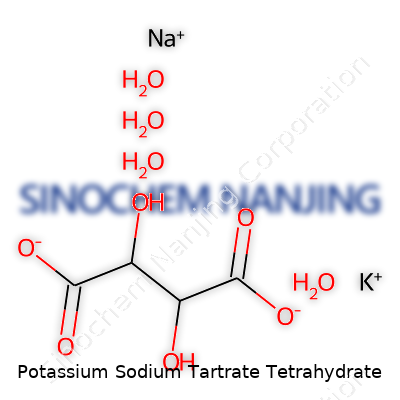
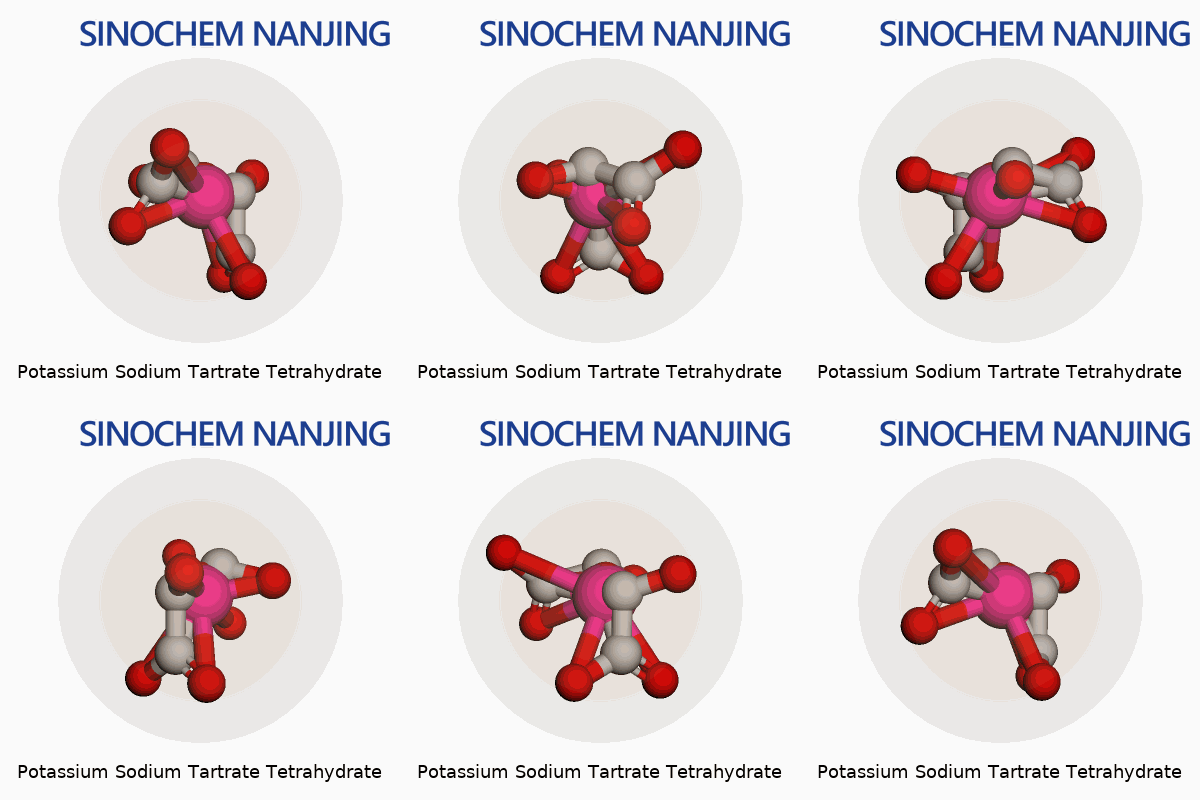
| Names | |
| Preferred IUPAC name | potassium sodium 2,3-dihydroxybutanedioate tetrahydrate |
| Other names |
Rochelle salt Seignette salt Potassium sodium tartrate E337 Potassio-sodio tartrato tetraidrato |
| Pronunciation | /pəˈtæsiəm ˈsəʊdiəm tɑːˈtreɪt ˌtɛtrəˈhaɪdreɪt/ |
| Identifiers | |
| CAS Number | 6381-59-5 |
| Beilstein Reference | 3954743 |
| ChEBI | CHEBI:8346 |
| ChEMBL | CHEMBL1201563 |
| ChemSpider | 53613 |
| DrugBank | DB14586 |
| ECHA InfoCard | 13bb56fe-538e-4e96-a660-3c38a775ec7d |
| EC Number | '208-953-6' |
| Gmelin Reference | Gm.835 |
| KEGG | C14149 |
| MeSH | D011084 |
| PubChem CID | 24853161 |
| RTECS number | WN6510000 |
| UNII | W4035U7B08 |
| UN number | UN3077 |
| CompTox Dashboard (EPA) | urn:lsid:epa.gov:CompToxDashboard:DTXSID8036197 |
| Properties | |
| Chemical formula | KNaC4H4O6·4H2O |
| Molar mass | 282.22 g/mol |
| Appearance | White crystalline powder |
| Odor | Odorless |
| Density | 1.79 g/cm3 |
| Solubility in water | Very soluble in water |
| log P | -4.3 |
| Acidity (pKa) | 3.56 |
| Basicity (pKb) | 8.5 |
| Magnetic susceptibility (χ) | -64.0·10⁻⁶ cm³/mol |
| Refractive index (nD) | 1.495 |
| Viscosity | Viscous liquid |
| Dipole moment | 7.0 D |
| Thermochemistry | |
| Std molar entropy (S⦵298) | 237.6 J·mol⁻¹·K⁻¹ |
| Std enthalpy of formation (ΔfH⦵298) | -2077.1 kJ/mol |
| Pharmacology | |
| ATC code | A12CE01 |
| Hazards | |
| Main hazards | May cause eye, skin, and respiratory tract irritation. |
| GHS labelling | GHS07, Warning, H319, P264, P280, P305+P351+P338, P337+P313 |
| Pictograms | GHS07 |
| Signal word | Warning |
| Hazard statements | No hazard statements. |
| Precautionary statements | Precautionary statements: "P264, P270, P301+P312, P330, P501 |
| Autoignition temperature | 210 °C (410 °F; 483 K) |
| Lethal dose or concentration | LD50 (oral, rat): 5290 mg/kg |
| LD50 (median dose) | LD50 (median dose): Oral rat LD50: 5290 mg/kg |
| NIOSH | UK1860000 |
| PEL (Permissible) | Not established |
| REL (Recommended) | 20-50 g/L |
| IDLH (Immediate danger) | Not listed |
| Related compounds | |
| Related compounds |
Potassium tartrate Sodium tartrate Rochelle salt Tartaric acid |



