Potassium Nickel Cyanide: A Chemical With Vital Uses and Significant Risks
Historical Development
Potassium nickel cyanide entered the world of chemistry over a century ago. Scientists of the late 1800s and early 1900s pushed their craft by seeking out new metal-cyanide compounds, partly driven by curiosity and partly by the demands from the burgeoning electroplating industry. The discoveries grew out of that era’s tinkering spirit and a lack of modern safety awareness. Early workers had to trust their instincts, since detailed toxicological studies and regulatory guidance hadn’t come along yet. These pioneers, sometimes unknowingly, passed along both advances and hazards to future generations.
Product Overview and Synonyms
This compound bears a mouthful of names, but chemists usually call it potassium nickel cyanide. Industrial catalogs list it as potassium nickel(II) cyanide, and sometimes refer to it simply as nickel cyanide, potassium salt. It looks like a pale green or yellow crystalline solid. As far as chemical shapes go, it tucks into a category with a reputation for toxicity: the cyanides. That alone should make anyone think twice before handling or storing the substance improperly. The compound typically ships in tightly sealed containers because even trace fumes or dust can spell trouble, both for people and for the environment.
Physical and Chemical Properties
Solid potassium nickel cyanide dissolves readily in water, and its solubility opens doors to a range of technical uses like electroplating. On first encounter, the color—a faint green or sometimes yellow tint—sets it apart from plainer alkali salts. The compound stands as a salt forged from potassium cations and the complex nickel-cyanide anion. Once in solution, the cyanide raises both the utility and the risk profile of the material. The minute someone starts tinkering with it, they face a chemical that reacts strongly to acids, which free up deadly hydrogen cyanide gas in an instant. The heavyweight metal ion, nickel, forms intricate coordination complexes, giving this substance particular value in surface treatment industries.
Technical Specifications and Labeling
Labeling for potassium nickel cyanide tends to read like a soap opera of warning signs. Shipping containers and lab bottles carry hazard diamonds and strong language: toxic by inhalation, contact, and ingestion; environmentally hazardous. Labels demand immediate access to personal protective equipment and explicit storage protocols. The technical standards for purity haven’t changed much in decades, as the electroplating business thrives on consistent quality, but the documentation attached keeps growing thicker as countries respond to public awareness and legal requirements. Labels reflect not just what’s inside, but also the legacy of lessons paid for by medical emergencies and tragic accidents.
Preparation Method
Preparation usually involves reacting a nickel salt with an excess of potassium cyanide solution. Everything I’ve seen and read about this step boils down to one word: caution. Working up nickel sulfate or nickel chloride with potassium cyanide generates the product, but also requires careful control of temperature, venting, and waste streams to avoid cyanide escape. In industrial practice, closed vessels and scrubbers handle fumes. For anyone who’s ever set foot in a plating shop or research-grade synthesis lab, the hiss of fume hoods and the whiff of caution in the air stand as constant reminders of the risks running through every stage of production.
Chemical Reactions and Modifications
Potassium nickel cyanide plugs into a long string of coordination and substitution reactions. On a basic level, it acts as a nickel ion donor under electrochemical conditions, a property prized in platings. Strong acids tear it apart, kicking out hydrogen cyanide gas, which brings an immediate health emergency. Oxidizing agents can also disrupt the structure, converting both the metal and cyanide—often with violent results. These reactivities account for the compound’s key uses but also for many of the response protocols developed in labs and factories. In technical workshops, instructors drill trainees hard because the boundary between a controlled reaction and a crisis can be disturbingly thin.
Safety and Operational Standards
Potassium nickel cyanide commands respect not just for its utility, but for the damage it can cause. Contact with the skin or inhaling dust delivers a double blow: acute cyanide poisoning on top of nickel’s toxic and allergenic effects. Every handling protocol stresses airtight containers and ventilation. Regulatory agencies like OSHA and the EPA have laid out rules requiring eye protection, gloves, and respirators. In places where outdated habits linger, the risks don’t just live in theory—collectors can trace poisonings back to forgotten canisters or casual dumping. The compound enters the bloodstream quickly, so emergency procedures focus on evacuation and rapid medical response. From firsthand stories shared by experienced chemists, panic and confusion during actual leaks or spills often makes an already serious situation worse.
Application Area
Electroplating shops use potassium nickel cyanide to lay down even, corrosion-resistant coatings on metal objects, from watch bands to automotive parts. The choice of this compound brings fine control over nickel deposition, giving end products a durable shine. Beyond jewelry and hardware, the compound features in specialty catalysis and even analytical chemistry, although these niche uses pale in comparison to the volume tied up in plating tanks. Over the years, environmental restrictions and worker health initiatives have pushed companies to reconsider process design. Longtime users have started investing in closed-loop electrolyte recovery systems and wastewater treatment upgrades.
Research and Development
Research on potassium nickel cyanide has shifted noticeably toward minimizing exposure and finding effective substitutes. Lab teams dig into nickel-cyanide chemistry, searching for coatings that retain corrosion resistance without such extreme hazards. Graduate students comparing decades-old plating methods with modern approaches have driven progress in safer formulations and waste handling. The field attracts materials scientists and occupational health experts alike, as everyone recognizes that the legacy of cyanide chemistry includes both technical triumphs and mounting public health liabilities. Innovators experiment with sulfate-based and sulfur-rich baths, chipping away at the grip that potassium nickel cyanide holds on the market.
Toxicity Research
No one can ignore the toxic punch packed by potassium nickel cyanide. Cyanide acts by shutting down cellular respiration. Nickel, on its own, triggers allergic reactions and can cause chronic lung and nasal problems among workers. Rats and rabbits exposed experimentally have demonstrated that ingestion or inhalation ends quickly and often fatally, with seizure and cardiac arrest among the immediate consequences. Surveys of plating workers from the mid-20th century forward have linked insufficient safety training and industrial accidents to preventable health problems and death. These studies have fed into employment regulations worldwide, but enforcement remains a weak spot wherever profit or ignorance outweighs caution.
Future Prospects
Looking ahead, potassium nickel cyanide sits at the edge of obsolescence in several industries. The march of green chemistry continues to push for replacements, but the quest for perfect functional analogs hasn’t quite reached the finish line. Companies that rely heavily on this compound already see the writing on the wall: regulatory tightening and consumer pressure are forcing a reckoning. Environmental activists and concerned citizens increasingly point to the legacy of contaminated waterways and long-term health problems traced back to cyanide-laden waste. If safer, effective substitutes arrive at a reasonable cost, potassium nickel cyanide could fade into the background, reserved for only the rarest specialty uses. Until then, hard lessons from history demand that users stay vigilant about risks, keep safety protocols tight, and never get complacent during even the most routine tasks.
What is Potassium Nickel Cyanide used for?
The Role of Potassium Nickel Cyanide in Industry
Potassium nickel cyanide comes up mostly around metal finishing workshops and plating lines. This chemical finds its primary use in electroplating, where manufacturers want to coat surfaces—often steel or brass—with a layer of nickel. Plating makes everyday things like bathroom fixtures, door handles, tools, and coins look sharp, less likely to rust, and smoother to the touch.
I remember walking through a plating plant as a curious visitor. It’s not some glamorous factory, but there’s plenty to respect in the skill it takes to mix chemicals to exact specifications. Too much of one substance throws off the finish, and clients might reject a ‘patchy’ batch. Potassium nickel cyanide offers some benefits for fine-tuning that nickel layer. The cyanide part helps keep nickel dissolved in the liquid bath, so the plating process runs smoother. Workers can produce brighter, more even coatings. The science behind it is solid—cyanide complexes act as a steady delivery vehicle for nickel ions.
The Trade-Offs and Hazards
Dig into safety manuals, and the warnings pile up fast. Both nickel and cyanide bring some serious health risks. Contact with potassium nickel cyanide can irritate skin and eyes. Breathing or eating it by accident can turn serious or even deadly, since cyanide stops cells from using oxygen. Workers need gloves, heavy-duty ventilation, and strict protocols to limit accidents. The Occupational Safety and Health Administration lays out clear rules for chemical handling and personal protection.
From what I’ve learned, this isn’t just paranoia. Improper handling leads to chemical spills, accidents, and sometimes tragic outcomes. As someone who’s seen grit and callouses on the hands of people working with these substances, I can tell you: mistakes are costly. Over time, the buildup of hazardous chemicals near communities can spark environmental concerns, too. Cyanide spills into rivers can wipe out entire sections of aquatic life, as seen in mining disasters that hit the headlines from time to time.
Balance Between Progress and Responsibility
Nickel plating delivers real value. Most homes today have small parts or appliances protected by this technology. The process helps reduce corrosion, extends product lifespans, and keeps things looking sharp. Still, using potassium nickel cyanide means taking on a burden of responsibility. Manufacturers must implement safeguards—airtight containers, regular health checks for employees, and robust training programs matter just as much as the shiny end result.
Alternatives to cyanide-based solutions are on the horizon. Scientists have been experimenting with other plating chemicals—nickel sulfamate and newer organic compounds might offer safer routes. Some plants are switching over, especially if they face tight environmental regulations. Getting there takes investment and willingness to adapt, but the trend is real. Customers and end-users can help by asking questions, supporting companies that pursue safer methods, and recognizing the social cost of cheap metallic finishes.
Is Potassium Nickel Cyanide hazardous to health?
The Real Dangers of Potassium Nickel Cyanide
Potassium nickel cyanide often shows up in industries that deal with metal finishing and electroplating. Its name alone gives off a sense of caution, mixing a heavy metal with cyanide, both of which rarely spell good news for health. Growing up, my neighbor worked at a plating shop. He always talked about the importance of safety gloves and solid ventilation, and potassium nickel cyanide was part of the reason. Let’s be clear—this isn’t just another workplace chemical. It deserves real respect, mostly because both nickel and cyanide compounds can cause trouble in different ways.
Chemistry Meets the Body
Even a small amount of cyanide interrupts how cells process oxygen. Once cyanide gets into the bloodstream, it sticks to enzymes in the cells and blocks them from turning the oxygen you breathe into energy. People caught in environments with airborne cyanides or swallowing trace amounts can end up dizzy or worse, with shortness of breath, headache, and nausea. Larger exposures throw the body into a health crisis, causing seizures or even death. Cyanide needs careful handling at all times.
Nickel brings its own problems. Some workers develop skin rashes or swelling after skin contact. Repeated nickel exposure can cause asthma. For anyone who spends hours around dust or fumes loaded with nickel, the risks pile up. A 2022 review in the journal Environmental Toxicology summed up decades of research: nickel compounds can build up inside lung tissue and, over time, increase cancer risks. Add the cyanide to the mix, and the chemical goes from troublesome to outright hazardous.
Who Faces the Most Risk?
Folks in plating shops, chemical labs, and factories are the ones closest to potassium nickel cyanide. Accidents tend to happen when storing, transferring, or mixing the powder. A local report from a small manufacturing plant last year described how a single powder spill sent three workers to the hospital. They made it out because the plant manager knew the drill—pull the fire alarm, get outside, call hazmat, and don’t try to mop anything up without proper gear.
It’s easy to see how carelessness leads to regret. You can’t smell cyanide in these salts, and sometimes you only know about leaks when someone feels sick. Kids or pets stumbling into unsecured storage face real danger, so the responsibility sits with everyone who handles this chemical—at work or anywhere else.
The Path Forward: Smarter Protection
Staying safe starts with knowledge. Real training helps. At one plating shop I visited, signs outlined steps for spills, and the shop ran monthly drills, right down to eye flush stations and first aid. Respirators, tight gloves, and good ventilation do more than check a compliance box. They actually keep workers healthy. The usual “wash your hands” advice isn’t enough. Full face shields, respirators, and chemical suits matter when spills or splashes happen. Heavy-duty safety rules around transfer and storage, plus up-to-date first aid kits, matter just as much.
No one single fix erases all risk, but mixing up proper engineering controls, steady training, and real awareness helps keep potassium nickel cyanide from turning a job into a medical emergency. For the public, stricter oversight and regular inspections keep accidents from reaching beyond factory walls. In the end, respect for the hazards, honesty about the dangers, and solid protective habits give people their best shot at safety.
How should Potassium Nickel Cyanide be stored?
Staying Safe with a Dangerous Substance
Potassium nickel cyanide shows up in certain industries, especially in metal finishing. From personal experience in chemical handling, I know that this isn’t something to stash on a random shelf or under the sink. It contains cyanide, which can release hydrogen cyanide gas. That gas, even in small amounts, can cause dizziness, trouble breathing, or even worse if inhaled. Those hard facts mean mistakes during storage have consequences—sometimes fatal.
Key Principles for Storing Potassium Nickel Cyanide
One lesson stands out from working in labs: treat every step as if someone’s life depends on it. Store this chemical in a tightly sealed container, clearly marked with hazard labels. Forget plastic bags or any unpredictable jars. Use corrosion-resistant materials for containers, since reactions with common metals or acids can trigger the release of toxic gas. Labels serve more than just compliance—they help anyone, even in emergencies, to identify and react quickly.
Controlling the Storage Environment
Keep potassium nickel cyanide in a cool, well-ventilated area, away from sources of moisture or acid. I’ve seen small acid leaks eat away at shelving and nearby containers—mix a drop of acid with cyanide salts, and you invite disaster. No eating or drinking anywhere near storage areas. Store it separately from strong acids, oxidizers, or anything that might react violently. I once saw a warehouse fail an inspection for stacking incompatible chemicals on top of each other, risking accidental mixing from leaks or drop damage.
Access Control and Training Matter
Not every storage rule comes down to physical containers. Control who can access these stores. Use a locked cabinet or a secure storeroom and keep keys limited to trained personnel. In my time working in hazardous chemical storage, access logs and sign-in sheets became more than bureaucracy. They held people accountable and gave a paper trail if things ever went wrong. Sometimes, the most dangerous accidents happen through ignorance—“I thought it was just another salt,” some might say. That’s why anyone with access should undergo regular training on proper handling and emergency response.
Emergency Preparedness
Before bringing potassium nickel cyanide into any facility, make sure emergency equipment is in place. This means eyewash stations, spill kits, and good ventilation. Never cut corners on PPE—always use gloves, safety goggles, and lab coats. Facilities near my old workplace set up local procedures so workers knew to evacuate, neutralize small spills with approved agents, and call for help immediately. Collaboration with local fire departments and HazMat teams ensured everyone was prepared for worst-case scenarios.
Documentation and Disposal
Document every shipment, usage, and transfer. Proper paperwork keeps inventories up to date and prevents “lost” containers in forgotten corners—a lesson drawn from old storerooms I’ve cleared out. When it’s time to dispose of potassium nickel cyanide, seek out certified chemical waste handlers. Never pour residues down the drain or toss them with regular trash.
Protecting People and the Environment
Following best practices in potassium nickel cyanide storage does more than keep workers safe. It protects families who might live nearby, emergency crews, and the environment. With the right habits, training, and equipment, a workplace can avoid tragedy and show respect for every life that might cross its path.
What are the handling precautions for Potassium Nickel Cyanide?
Understanding the Real Dangers
Potassium nickel cyanide comes with a reputation. It’s toxic, enough to cause real harm with just a small slip-up. The dangers aren’t exaggerated. Cyanide exposure attacks the body suddenly, cutting off how cells use oxygen. You won’t always know you’ve inhaled fumes or gotten dust on your hands because symptoms are slippery at first. That’s what makes this compound so threatening. I’ve learned in chemical plants that losing focus around materials like this puts lives at risk—not just your own, but your teammates’ as well.
Beyond Gloves: Clothing and Gear Choices Matter
Nitrile or neoprene gloves go on before opening containers. Cotton gloves don’t cut it. Disposable lab coats hold up better than street clothes, but dense coveralls offer more. Steel-toed boots aren’t flashy, but loose shoes can trap spilled powder against the skin—small mistakes add up. Some of the old-timers I worked with always double-checked for rips or weakened sleeves. Even after years, they never treated a glove puncture as minor.
Breathing Easy Isn’t Automatic
Proper ventilation saves lives. Cyanide compounds never belong in poorly ventilated spaces. Fume hoods make a difference you can feel—your eyes and nose tell you when rooms get stuffy, but you can’t always smell cyanide. Airflow checks—paper strips, smoke wands, even a simple tissue test—help me spot dead zones before work begins. Respirators go on if dust spreads beyond workbenches, even if supervisors say things are “probably fine.”
Solid Storage Habits Prevent Crises
Tightly sealing containers reduces leaks. Hard plastic wins over glass, since dropped bottles shatter and leak faster. Labels get replaced every few months, not once a year. I learned the hard way that rushing to stash chemicals on the “quick” shelf means someone finds them somewhere unexpected months later. Metal cabinets with locking handles stop both evaporation and snooping, which keeps careless hands off dangerous material.
Water Doesn’t Solve Everything
Spills demand more than a mop. For potassium nickel cyanide, acids and chlorinated cleaners can set off toxic gas. Reaching for a bleach wipe gets dangerous, fast. A dry towel can push powder into crevices—so spill kits with absorbent pads work better. Scrubbing a bench with plain soap and water afterward keeps trace amounts from sticking around where people touch.
Emergency Routines Save Real Lives
Teams drill ways to help if something goes wrong. Cyanide antidote kits sit closer than you think, and every person in the lab learns where they’re kept. Eye wash stations mean nothing if blocked by empty boxes. Years ago, someone froze when an alarm went off—the rest of us ran through the steps out loud, helping her keep moving. Stress turns simple directions into riddles. Repeating actions together every few weeks builds muscle memory, not just confidence.
Learning From the Past Improves the Future
Stories get shared more than written reports: times someone let a container lid slip, or when a friend’s glove came apart mid-cleanup. These stories travel farther than safety posters. Sometimes, that is what makes a new hire pause before rushing through cleanup. Everyone picks up safety tips that stick long after the shift ends. You don’t forget those lessons.
What is the chemical formula of Potassium Nickel Cyanide?
Understanding the Compound
Potassium nickel cyanide goes by the formula K2[Ni(CN)4]. It’s a mouthful, but this chemical has played a steady role in both industry and science. The structure hides a story of chemistry in action: two potassium ions hold up a nickel center, which grabs onto four cyanide groups. This setup gives it power in businesses like electronics and metal finishing.
Daily Reasons to Care About K2[Ni(CN)4]
Growing up watching people work in plating shops, I picked up how metal surfaces shine with the right treatment. Many old-school plating shops used this compound to coat products. Potassium nickel cyanide delivers uniform nickel layers, giving everything from circuit boards to watches the resilience to last. It also played a part in complex chemistry for separating metals or creating other nickel compounds. In a way, it helps turn raw ideas into technology we don’t even think about—like the tight connectors that power a computer or the finishes on high-end tools.
There’s a flip side. Cyanide sticks out for good reason—it’s dangerous. Once, a friend in industrial safety shared stories of old plants and the careful dance needed to keep people safe around it. Cyanide releases fumes and compounds that can put health at risk if you skip steps. The formula reminds experts of invisible problems trailing behind shiny products. Understanding the structure K2[Ni(CN)4] makes you realize it combines things that build and things that endanger.
Where Facts and People Meet
The facts back up how potassium nickel cyanide found a place in industry. According to the CDC and OSHA, proper gear can mean the line between safe use and disaster. Long-term exposure damages nerves, skin, and lungs, making chemical safety teams crucial. Countries with tighter workplace rules show fewer accidents and exposures. It’s not just about the product—the chain of people handling it deserve equal thought.
K2[Ni(CN)4] proves that chemistry can bring good results and costs. From what I’ve seen at labs and on shop floors, skipping safety training usually ends with someone sick. These stories hit closer to home than textbook warnings. Each label and storage rule grows from lessons learned, often the hard way.
Finding a Safer Path Forward
Companies everywhere hunt for safer alternatives. Researchers in Germany and Japan have cooked up new bath mixtures without cyanide, offering hope that one day, plating shops might ditch dangerous chemicals for greener compounds. Nickel-based baths keep evolving, but laser focus on the K2[Ni(CN)4] formula means staying careful in the meantime.
Discussing potassium nickel cyanide’s formula brings up tough questions. Value, risk, and care interact any time this chemical enters the scene. I’ve noticed the best-run companies take the facts seriously and treat every new worker as part of the safety chain. The formula may look simple, but it throws a shadow long enough to reach from chemical plants to the smallest gadget on your desk.
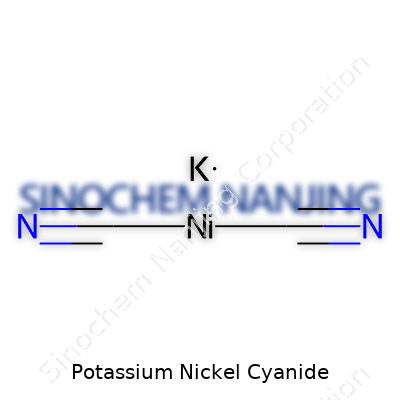
| Names | |
| Preferred IUPAC name | Potassium tetracyanidonickelate(II) |
| Other names |
Dipotassium hexacyanonickelate(II) Nickel potassium cyanide |
| Pronunciation | /pəˈtæsiəm ˈnɪkəl saɪˈənaɪd/ |
| Identifiers | |
| CAS Number | 13967-50-5 |
| Beilstein Reference | 3589122 |
| ChEBI | CHEBI:61392 |
| ChEMBL | CHEMBL511094 |
| ChemSpider | 22245 |
| DrugBank | DB11436 |
| ECHA InfoCard | 03fc8b19-f7f1-4151-8341-0fbe6d95b2fc |
| EC Number | 208-859-7 |
| Gmelin Reference | Gmelin 106014 |
| KEGG | C18906 |
| MeSH | D010394 |
| PubChem CID | 153220 |
| RTECS number | QR6475000 |
| UNII | V798V6E61M |
| UN number | UN2722 |
| Properties | |
| Chemical formula | K2[Ni(CN)4] |
| Molar mass | 232.94 g/mol |
| Appearance | Yellow crystals |
| Odor | Odorless |
| Density | 1.85 g/cm³ |
| Solubility in water | Slightly soluble |
| log P | -2.6 |
| Vapor pressure | Negligible |
| Basicity (pKb) | pKb ≈ 4.0 |
| Magnetic susceptibility (χ) | Paramagnetic |
| Dipole moment | 0 D |
| Thermochemistry | |
| Std molar entropy (S⦵298) | 259.6 J/(mol·K) |
| Std enthalpy of formation (ΔfH⦵298) | -1125.7 kJ/mol |
| Pharmacology | |
| ATC code | V03AB33 |
| Hazards | |
| Main hazards | Toxic if swallowed, inhaled, or in contact with skin; releases toxic cyanide gas on contact with acids; may cause skin and eye irritation; environmental hazard. |
| GHS labelling | GHS06, GHS08, GHS09 |
| Pictograms | GHS06,GHS09 |
| Signal word | Danger |
| Hazard statements | Hazard statements: H300+H310+H330, H301, H311, H314, H317, H331, H334, H341, H350, H360D, H373, H410 |
| Precautionary statements | P260, P262, P264, P273, P280, P301+P310, P302+P352, P304+P340, P305+P351+P338, P308+P313, P314, P330, P363, P404, P405, P501 |
| NFPA 704 (fire diamond) | 3-2-0 |
| Lethal dose or concentration | LD50 oral rat 5 mg/kg |
| LD50 (median dose) | LD50 (median dose): Oral - rat - 5 mg/kg |
| NIOSH | SR2625000 |
| PEL (Permissible) | 0.015 mg/m3 |
| REL (Recommended) | REL (Recommended): lowest feasible concentration |
| IDLH (Immediate danger) | 5 mg/m3 |
| Related compounds | |
| Related compounds |
Potassium dicyanoargentate Potassium dicyanoaurate Potassium tetracyanonickelate Potassium tetracyanoplatinate Sodium nickel cyanide |



