Potassium Metaperiodate: An Essential Compound Moving Science Forward
Roots in the Age of Discovery
Potassium metaperiodate, often reduced to KIO4 in chemical shorthand, stands as a testament to centuries of quiet innovation in chemistry. Its development links back to the nineteenth century, when advances in both analytic and synthetic chemistry began to unlock the hidden potential of lesser-known elements like iodine. European chemists, eager to expand their toolkit, isolated and experimented with this white, crystalline compound, discovering its unique oxidative capabilities. Through these early efforts, potassium metaperiodate found its place in both laboratory research and industry, helping chemists make sense of complex molecules and drive reactions previous generations could barely imagine.
Product at a Glance
On a lab bench, potassium metaperiodate appears as a clean, odorless, white powder. It draws the eye with its neat, salt-like crystals, dissolving easily in hot water but lingering in cooler solutions. Despite what looks like simplicity, it hides an oxidizing power that's harnessed by scientists across disciplines. Pharmaceuticals labs reach for it to break apart sugars in precise ways. Environmental chemists call on it to help tease out contaminants in soil or water. For anyone who spends time with this compound, its reliability and straightforward handling make it a mainstay, especially whenever careful, targeted oxidation is part of the plan.
Physical and Chemical Traits
Potassium metaperiodate resists the tendency to absorb moisture from the air. This trait not only helps with storage but also adds to its value in long-term experiments where consistency matters. Melting at temperatures above 500°C, it doesn’t break down easily at room temperature. It’s an oxidative heavyweight, often used to cleave vicinal diols gently but thoroughly. Rather than attacking all at once, this compound targets specific chemical bonds, a property that enables clever synthetic strategies in organic labs. It doesn’t mess around in alkaline settings; strong bases can reduce it, but under mild, neutral, or acidic conditions, it keeps its shape and selectivity.
Technical Specifics and Packaging
A reagent’s label matters as much as its contents. For potassium metaperiodate, users expect purity above 99 percent, with no lingering chloride or sulfate ions to introduce surprises. Packaging skews towards dark, airtight bottles, protecting the powder from light and moisture that could chip away at its potency. Most chemists appreciate a straightforward label—chemical name, batch number, expiration date—without useless fluff, since mistakes here can throw an entire run of samples into question. Sublime as its crystalline form looks on a shelf, the real trust in this compound comes from proper labeling and delivery, and laboratories don’t gamble with those basics.
Getting It Done: Preparation Methods
Years ago, preparation methods leaned heavily on the reaction of potassium iodate with an oxidizing acid. These days, scaled-up synthesis usually starts with potassium iodide and a strong oxidizer—typically chlorine or bromine—under tightly controlled temperature and pH. Precision matters, since impurities muddy the results and block the selective oxidations at the heart of KIO4 chemistry. Recrystallization and careful drying round out the process. While bulk production is streamlined, labs sometimes run small-scale syntheses for fresh material, particularly in delicate research where every trace of contamination can skew conclusions.
Chemical Behavior and Modifications
Potassium metaperiodate stands apart for its ability to split molecules at neighboring (vicinal) diols, cutting carbon-carbon bonds to yield two aldehyde or ketone end groups. This reaction, known as periodic acid cleavage or Malaprade reaction, underpins intricate carbohydrate mapping, supporting the building of new drugs or the tracing of metabolic pathways. Beyond diols, researchers push its limits with transition metals or in novel solvent systems, sometimes coaxing unexpected reactivity—though outside traditional settings, the results can veer unpredictable. The chemistry world debates modifications to the core structure, but in practice, straightforward use of KIO4 outpaces altered analogs for reliability.
Alternate Names and Synonyms
In daily lab conversation, potassium metaperiodate also answers to potassium periodate or simply KIO4. Some texts refer to it as potassium salt of periodic acid. Its registry numbers and codings change with suppliers, yet scientists mostly stick with the shortest possible names, cutting through confusion and sidestepping jargon that only slows communication.
Trust and Safety Matter
Potassium metaperiodate rewards attention to handling. Its oxidizing strength demands gloves, goggles, and good ventilation, even if it doesn’t exude poisonous fumes at room temperature. Sensible protocols keep accidental mixing with organic solvents or reducing agents off the table, avoiding dangerous reactions. Disposal requires neutralization and separation—no chemist with an ounce of care pours leftovers down the drain. Calibration standards from agencies like OSHA or the European Chemicals Agency lay out the basics, but genuine lab safety depends more on culture and habit than on regulations printed on a wall. Training, checklists, and regular reminders keep surprises rare.
Pushing the Boundaries: Applications
Analytic chemists favor potassium metaperiodate for structure analysis, especially in carbohydrates, as its methodical attack on vicinal diols peels away complex sugars layer by layer. In medical research, its role gets even more prominent, where mapping glycoprotein structures feeds into vaccine and antibody development. Water treatment specialists draw from its bag of tricks to oxidize trace organics, prepping samples for accurate measurement or destruction of lingering pollutants. Materials scientists borrow its oxidative snap for surface modification, boosting prep of films or nano-materials that underpin new sensors. Wherever selective oxidation is needed without massive collateral damage to other functional groups, this compound remains a trusted ally.
Science Never Sleeps: Ongoing Research
Groups across universities and research institutes keep ferreting out new uses for potassium metaperiodate. Some focus on its controlled oxidation for crafting complex, highly specific molecules in pharmaceuticals—an industry where every atom counts in tailoring drugs for tighter effects and lower side effects. In bioanalytical avenues, combining KIO4 with sensitive assays opens windows into long-standing puzzles in protein modification and cell wall architecture. Teams working on green chemistry probe how this oxidizer fits into sustainable, minimal-waste methods that cut out hazardous byproducts and slash solvent volumes. Each finding adds another brick to the foundation of chemical knowledge, providing tools for the next generation of researchers.
Health and Environmental Impact
Workplace exposure calls for close attention, since strong oxidizers can irritate skin, eyes, or the respiratory tract. While acute incidents are rare, chronic exposure at low levels over months or years raises red flags. Researchers studying its toxicity look at animal models and cell cultures, noting how the compound may affect tissues or interfere with enzymes. Waste disposal policies focus on segregation, neutralization, and strict documentation, especially to avoid accidental mixing with reducing agents or organic matter, which could lead to fires or toxic byproducts. Outside the lab, KIO4 doesn’t usually show up in large volumes, but those who oversee chemical safety keep a running tab on how oxidizing agents affect both human health and the broader environment, adapting rules as new data emerges.
Looking Ahead: The Road Forward
Potassium metaperiodate remains a valued player in the shifting world of modern chemistry. Researchers search for ways to make its preparation less resource-heavy, streamline waste management, and sharpen its precision in both specialty syntheses and environmental clean-up. In drug discovery, the demand for even more exacting structural elucidation only grows, keeping this old standby at center stage. As sustainability pushes science to rethink resource use, potassium metaperiodate will undergo its own evolution, finding spots in more efficient, eco-conscious methodologies. No one expects this compound to vanish from research labs any time soon, given its tough mix of reliability, versatility, and time-tested results.
What is Potassium Metaperiodate used for?
Chemical Background and Practical Roles
Potassium metaperiodate serves important roles in labs, factories, and even in water treatment plants. Its real strength comes from being a reliable oxidizing agent. With the formula KIO4, this white crystalline powder dissolves in water and releases active oxygen. Chemists often use it because it reacts quickly and cleans up without leaving behind heavy residue.
Analytical Chemistry and Testing Applications
I remember my first chemistry internship, pouring over test tubes and crystals. We used potassium metaperiodate in the lab for detecting and measuring specific sugars. It reacts with certain organic compounds and helps break down molecules in a controlled way. Professionals often rely on it when they need to transform molecules carefully, such as cutting long chains at specific places. Researchers analyzing fingerprints or stains use it because of the sharp, clean color changes it produces with organic material. In these hands-on situations, accuracy counts, and potassium metaperiodate brings a level of trust.
Photography and Staining
Outside the lab, potassium metaperiodate finds work in photography and microscopy. Histology labs use it to stain tissues so that cell structures show up clearly under the microscope. Medical researchers count on the crisp separation of color for understanding how cells behave or change with disease.
Old-school photographers once counted on potassium metaperiodate to process black-and-white film. Even as film photography fades, some artists and scientists still use it for specialized prints and experiments. The chemical’s role in enhancing contrast reveals details that weren’t visible before. That hands-on experience makes it a favorite for those passionate about film or medical imaging.
Industrial and Environmental Uses
Factories use potassium metaperiodate for cleaning up water or removing chemical stains from products. Sometimes, small amounts help remove iron and manganese from drinking water. In textile factories, it helps prepare fabric by removing traces of natural oils without damaging the fibers.
I have seen environmental services use potassium metaperiodate when testing for pollutants. Its strong oxidizing power turns tough contaminants into easier-to-detect forms. In reality, these uses matter more than you might think, given how much of the world relies on clean water or high-quality materials.
Challenges and Safety Considerations
Potassium metaperiodate has a harsh side. It can irritate skin and eyes or damage the lungs if handled carelessly. In my time around industrial chemicals, I saw that safety always comes down to respect. Gloves, goggles, and thoughtful storage keep risks in check. Factories should provide thorough safety training, not just instructions taped to a cabinet.
Disposal also requires care. Pouring leftover solution down the drain hurts the environment. Sites that use the chemical should have clear protocols for waste, and local regulations need to match the science. Responsible handling of potassium metaperiodate protects workers and the community.
Moving Forward
The chemical’s benefits speak for themselves, from lab breakthroughs to clean drinking water. Scientists and workers can keep making progress by staying serious about safety and environmental impact. Regular training, updated procedures, and honest feedback make a powerful difference. Safe, effective use ensures potassium metaperiodate remains a valuable tool for years to come.
What is the chemical formula of Potassium Metaperiodate?
Understanding the Formula
Potassium metaperiodate shows up in labs as a clear, white crystalline solid. Its chemical formula—KIO4—looks simple, but its makeup carries some weight in chemistry, particularly in the fields of synthesis and analytical testing. Each molecule contains a potassium (K) ion tied to a periodate ion, which itself holds one iodine atom and four oxygen atoms. That arrangement packs a punch in both reactivity and specificity for certain reactions.
The Context in Chemistry Labs and Industry
Many folks in chemistry labs get stuck working with complicated mixtures. Separating substances, identifying components, or preparing materials for further study depends on the right reagents. Potassium metaperiodate stands out as a go-to oxidizer because of that chemical structure. In my time working alongside analytical chemists, I’ve seen KIO4 used to break down sugars—especially in carbohydrate analysis. It reacts in a way that “cuts” certain chemical bonds neatly, making it easier to study what’s left behind.
Reliable results in the lab create the difference between a wild-goose chase and a productive afternoon. Using the proper chemical form—metaperiodate, not the orthoperiodate version—saves hours and ensures results match the expectations set out by textbooks and previous research. More than once, I’ve seen a batch of data thrown out because someone reached for the wrong periodate salt.
Handling and Safety: Not Just a Classroom Detail
Potassium metaperiodate’s formula predicts its behavior. Compounds containing a lot of oxygen like this one tend to be strong oxidizers. They can react quickly, sometimes violently, if mixed with organic material or reducing agents. In one small-scale lab fire I witnessed, a misplaced scoop led to a mess of smoke and alarms. Basic respect for the chemical’s power—thanks to a proper understanding of its makeup—keeps these accidents rare.
Many workplaces have leaned into training, making sure that anyone touching an oxidizer like KIO4 knows the risks up front. The lessons get repeated—dry storage, proper containers, never mixing with flammable stuff. I’ve found hands-on demos beat handouts by a mile for getting this safety message across. These steps keep workers protected and protect investments in equipment, too.
Environmental Considerations and Waste
The iodine in KIO4 sets off alarms not only for chemists, but for environmental staff. Iodine compounds, if washed down the drain in volume, can harm aquatic life and disrupt the balance in wastewater treatment. That’s not just a theoretical worry. One local college got written up for careless disposal practices—a wake-up call for everyone. Waste capture systems and simple labeling cut these risks. In labs where I’ve worked, a shared responsibility for chemical waste reduced incidents and promoted safer routines.
Improving Knowledge and Practice
Looking back at my days as a student, nobody appreciated the power of a chemical formula until it explained a ruined experiment or a health scare. Putting KIO4 in context—not just on a flashcard—helps prevent mistakes and saves effort all around. Keeping up to date with best practices and encouraging curiosity about the function behind the formula mark the start of better, safer chemistry. Education rooted in real experience, not just rules, makes all the difference.
How should Potassium Metaperiodate be stored?
Getting Real About Storage
Potassium metaperiodate doesn’t come up often over coffee, but for anyone in a laboratory or industrial setting, the storage of this compound isn’t something to treat lightly. Every seasoned chemist knows that some chemicals demand respect. Potassium metaperiodate stands out thanks to its strong oxidizing property. Keeping it right means safety for people and equipment. Some of the biggest lab disasters have started with neglecting storage basics.
Why Moisture Ruins the Day
From seeing white crusts on unused bottles to ruined experiments, moisture wreaks havoc on potassium metaperiodate. It absorbs water easily, clumping into useless chunks or reacting with other chemicals left nearby. Forgetting to tighten a lid can spoil an entire batch. Humidity sneaks past the best intentions, turning a reliable reagent into a mess or even a hazard. Dry, sealed containers are the answer. Use desiccators or silica gel to keep the environment bone-dry.
Heat and Sunlight: Not Friends
I once watched a curious intern leave a sample near a sunny window. The color changed and the container warped. Potassium metaperiodate doesn’t need a sunbath. Elevated temperatures can lead to decomposition, ruining the product and filling the room with unpleasant byproducts. Sunlight isn’t just warming, it triggers photochemical reactions, which can create new compounds you don’t want. Keep it in a cool, dark cabinet, far from radiators and window sills.
Forget the Family: Keep Away from Organics
Working in a shared workspace teaches you to notice more than your bench. Potassium metaperiodate reacts fiercely with organics or reducing agents. Storing oxidizers next to solvents or acids risks violent reactions. Segregation stops accidents before they start. Make sure the cabinet holds only compatible chemicals. Regular checks save lives. Label everything clearly and take leaks seriously.
Container Choices and Real-Life Reminders
Glass bottles with tight lids work best. Plastic degrades and events from lab history show a warped cap lets air and moisture in over time. Reusable containers sound thrifty, but residue contaminates pure chemicals and triggers reactions during the next use. If you spot discolored crystals or odd smells, don’t roll the dice—dispose of them according to your institution’s hazardous waste protocols. Rushed cleanups lead to skin burns and worse.
Real-World Lessons and Practical Steps
Training isn’t just red tape; stories circulate for a reason. Poorly labeled shelves once led a colleague to fetch potassium metaperiodate for an experiment involving flammable liquids. The cleanup took days, and the lesson stuck. Storage logs, regular audits, and honest checklists make daily routines smoother. Simple steps, like placing the chemical on the right shelf, save money and peace of mind over time. Teach new team members how to spot risk signs, not just how to read labels.
No Substitute for Discipline
Potassium metaperiodate storage acts as a reminder that chemical safety grows from habit, not just rules. Everyone gets busy, but skipping the basics leads to incidents nobody wants. Practicing solid storage—dry, cool, segregated, securely labeled—protects not only the chemical but your workspace and life. Safety grows from mundane habits, day in and day out.
Is Potassium Metaperiodate hazardous or toxic?
Realities of Handling Potassium Metaperiodate
Potassium metaperiodate looks like a simple white powder, but that appearance hides some risks. People often see chemicals as dangerous only when they emit strong odors or smoke, yet some of the most persistent threats in the lab come from compounds that give no warning before they create a problem. Potassium metaperiodate falls into that group. Instructors in college chemistry courses drill safety basics into students' heads every semester, and handling periodates with care remains one of those key lessons.
Exposure and Harm
Potassium metaperiodate isn't something most folks keep under the kitchen sink. It shows up in labs where scientists run oxidative reactions or prepare certain calibration standards. Anyone who's worked with it knows the crystalline dust seems to escape from bottles almost magically. Inhalation causes irritation in the nose and throat—anyone getting a whiff learns fast to respect personal protective equipment. Skin contact may look like nothing at first, but a tingling and mild burn can follow, especially with cuts or scrapes on the hands.
Larger concerns stem from its oxidizing power. The substance doesn’t just burn—it reacts violently with organic materials, reducing agents, and combustible substances. In schools, teachers tell horror stories of chemical-soaked rags spontaneously catching fire after contact with strong oxidizers like potassium metaperiodate. Such stories usually stick in your head longer than any warning on the bottle. Ingestion is rare but more severe; exposure can damage the kidneys and disrupt hemoglobin in the blood. The International Chemical Safety Cards and various occupational health agencies mark these periodate compounds as hazardous, and their guidelines reflect real risk, not just bureaucratic caution.
Environmental Considerations
The story doesn’t end at direct harm. Eventually, chemical wastes end up in soil and water, so the risk to the greater ecosystem can’t be ignored. Potassium metaperiodate reacts with organic matter in water or sewage, creating downstream effects that reach fish and plants. Municipal wastewater treatment settings stress the need for proper disposal. Ignorant pouring down a drain can start a chain reaction that doesn’t stop at the laboratory door.
Turning Knowledge into Practice
The science behind potassium metaperiodate tells a clear story about respect and moderation. Good ventilation and gloves aren't optional. After years working in academic labs, the smartest safety upgrades weren't always high-tech—sometimes they were simply posters reminding everyone not to eat or drink near chemicals or check that their goggles fit. Warehouses with clear labeling and secondary containment make a big difference, too.
Safer use begins with honest conversation. Instructors and lab leaders need to explain not just rules, but the reasons behind them. Training that brings in real incidents—near-misses as well as accidents—makes people listen more closely. Institutions benefit from routine refresher sessions, not just lectures on the first day.
Health Monitoring and Emergency Steps
Quick response matters. First aid for skin or eye contact means rinsing thoroughly and seeking evaluation if any sensation lingers. Anyone exposed by inhalation should get fresh air and medical evaluation if coughing or irritation remains. Hospitals report few periodate poisonings but maintain protocols because symptoms might start mild and worsen.
Labs making sustainable progress phase out strong oxidizers when possible. Substituting safer chemicals or changing experimental procedures creates fewer headaches for both researchers and disposal services. The right training and personal accountability keep accidents from becoming headlines.
What are the common applications of Potassium Metaperiodate in industry or laboratory?
Using a Powerful Oxidizer Every Day
Potassium metaperiodate doesn’t get much spotlight outside of chemistry circles, but this crystalline white salt quietly keeps things moving in both labs and industry. Powerful oxidizers like this one do heavy lifting — breaking down tough organic molecules or revealing what’s hiding in a mixture. Experienced folks in chemical labs see its value most during tricky oxidation reactions, where regular agents fall short or create messy byproducts. Potassium metaperiodate steps up and allows precise control, creating results that researchers trust, especially in fields like organic synthesis and analytical chemistry.
Solving Problems in Analytical Chemistry
One of the biggest roles for potassium metaperiodate sits in analytical labs. Chemists rely on it for the selective oxidation of certain sugars and alcohols. Because it targets vicinal diols, it helps researchers snap otherwise stubborn molecules into simpler forms. For example, in carbohydrate analysis, breaking rings to produce identifiable fragments brings clarity to even tangled mixtures of sugars. I remember working through undergraduate organic chemistry labs, where percent yield seemed impossible to control—until we used potassium metaperiodate and saw sharp improvements overnight.
It also ends up in colorimetric tests. The compound’s ability to generate iodine from iodide makes it a solid agent for detecting traces of certain ions in water analyses and even some enzyme tests. If you’re ever worried about the quality of your drinking water, odds are this chemical has already helped someone measure trace pollutants or check for bacteria.
Tough Jobs in Industry
Factories reach for potassium metaperiodate when gentle reactions are out of the question. Textile manufacturers use it to “bleach” fabric without wearing down the fibers. Paper processing plants harness its oxidative punch to lift stains from pulp, prepping paper for crisp whites. Industrial producers in electronics value it too, especially for etching specialty glasses or fine-tuning certain circuit materials. It allows for cleaner processing than harsher alternatives and leaves behind less unwelcome residue.
Why Purity Always Counts
Results depend on the purity of your potassium metaperiodate. Impurities throw off measurements and leave unknowns in chemical syntheses. I’ve seen how inconsistent batches make for endless troubleshooting in labs, which costs both time and credibility. Validation protocols ask for high-grade reactants, especially in pharmaceutical or diagnostic work, since sloppy controls introduce unwanted risks. Suppliers know that safety and reliability matter to experienced users in both research and industry settings.
Meeting the Hazards Head-On
Potassium metaperiodate poses risks if handled lightly. It can irritate skin and eyes, and, as an oxidizer, it speeds up the combustion of nearby organic materials. Proper storage and handling procedures, like keeping it away from flammable substances and wearing personal protective gear, matter a lot—I’ve seen otherwise well-prepared labs trip up when staff got casual about safety data sheets. Training helps sharpen awareness, and regular checks on chemical inventories keep surprises low.
Moving Toward Safer Chemistry
More industries want eco-friendly solutions, and potassium metaperiodate’s stability compared to related compounds means less hazardous waste. Researchers often look toward capturing spent reagents for safe disposal. You see this especially in water treatment, where people want clean outcomes without adding new pollutants to the environment. It’s not a perfect solution, but the ability to recycle and responsibly discard this chemical helps meet stricter rules and community expectations.
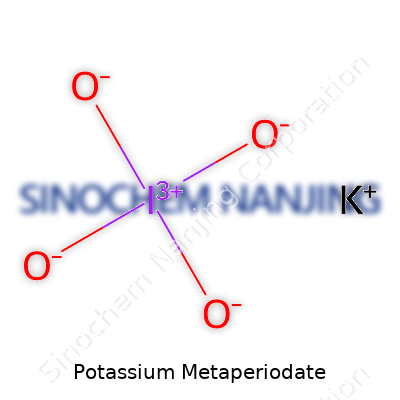
| Names | |
| Preferred IUPAC name | Potassium dioxido(dioxo)iodate(I) |
| Other names |
Metaperiodic acid, potassium salt Potassium periodate Potassium meta-periodate Periodic acid, potassium salt KIO4 |
| Pronunciation | /pəˈtæsiəm ˌmɛtəˈpɪərioʊdeɪt/ |
| Identifiers | |
| CAS Number | 7790-21-8 |
| Beilstein Reference | 136111 |
| ChEBI | CHEBI:48663 |
| ChEMBL | CHEMBL1200892 |
| ChemSpider | 81945 |
| DrugBank | DB14526 |
| ECHA InfoCard | echa.europa.eu/substance-information/-/substanceinfo/100.028.848 |
| EC Number | 231-653-9 |
| Gmelin Reference | 1647 |
| KEGG | C00777 |
| MeSH | D011104 |
| PubChem CID | 24858 |
| RTECS number | SD6475000 |
| UNII | V9N3AG8D0D |
| UN number | UN1479 |
| CompTox Dashboard (EPA) | DTXSID7046790 |
| Properties | |
| Chemical formula | KIO4 |
| Molar mass | KM5O6 |
| Appearance | White crystalline powder |
| Odor | Odorless |
| Density | 3.85 g/cm³ |
| Solubility in water | Soluble in water |
| log P | -4.51 |
| Vapor pressure | Negligible |
| Acidity (pKa) | 11.6 |
| Basicity (pKb) | 11.9 |
| Magnetic susceptibility (χ) | −48.0·10⁻⁶ cgs |
| Dipole moment | 0 D |
| Thermochemistry | |
| Std molar entropy (S⦵298) | 217.5 J·mol⁻¹·K⁻¹ |
| Std enthalpy of formation (ΔfH⦵298) | -572.5 kJ/mol |
| Pharmacology | |
| ATC code | V03AB55 |
| Hazards | |
| Main hazards | Oxidizer, harmful if swallowed, causes eye and skin irritation |
| GHS labelling | GHS05, GHS07 |
| Pictograms | GHS05,GHS07 |
| Signal word | Danger |
| Hazard statements | H272, H319 |
| Precautionary statements | P220, P221, P280, P305+P351+P338, P337+P313 |
| NFPA 704 (fire diamond) | 2-0-1-OX |
| Lethal dose or concentration | LD₅₀ (oral, rat): 2,352 mg/kg |
| LD50 (median dose) | > Oral rat LD50: 210 mg/kg |
| NIOSH | SN2980000 |
| PEL (Permissible) | Not established. |
| REL (Recommended) | 0.05 mg/m³ |
| Related compounds | |
| Related compounds |
Sodium metaperiodate Potassium periodate Potassium permanganate Potassium iodate |



