Potassium Iodate: The Chemical Backbone in Modern Life
Historical Development
Potassium iodate has roots in stories of famine and crisis, not just chemistry labs. Governments and scientists came together to fight iodine deficiency, realizing how a tasteless, almost invisible lack of a mineral spelled disaster for entire populations. Goitre and intellectual impairment weren’t things the early pioneers wanted to see increasing, so iodine fortification began charting a course through the twentieth century’s rise of technology and health science. Supplementing salt was the first breakthrough, but quality control proved tricky. Potassium iodate rose to attention because it handled storage and shipping better than potassium iodide, especially in hot, humid places. The chemical’s stability directly translated to healthier communities. For decades, chemists, epidemiologists, and manufacturers have built on these early wins, expanding potassium iodate’s applications beyond nutrition and into industry, research, and emergency preparedness.
Product Overview
Potassium iodate lives on shelves as a white, crystalline powder. It falls in line with other simple salts at first glance, but its story stretches far beyond the average compound. You’ll find it stockpiled by agencies who plan for nuclear emergencies, sitting in laboratories for analytical work, and tucked away in the back rooms of food producers working to ward off micronutrient deficiencies. Its chemical formula, KIO3, conveys little of the impact behind the label, with relevance in public health and as a reagent in research chemistry. The product gets handled with care — not due to elusive dangers, but because its sheer importance justifies looking after every batch.
Physical and Chemical Properties
Often showing up as a free-flowing crystalline solid, potassium iodate stands apart because of its stability under normal conditions. Unlike potassium iodide, it resists oxidation and light, which matters in warm climates and on long shipping routes. Its solubility in water supports diverse applications but leaves little taste or color, meaning it fits discreetly into processes and products. As an oxidizing agent, it brings its share of responsibility, especially in labs or industrial settings where mixing with organic matter or reducing agents introduces risks. Its melting point sits quite high among salts, a sign it can tolerate challenging environments.
Technical Specifications and Labeling
A bottle of potassium iodate comes marked with concentration, purity, and warnings about its potential as an oxidizer. Reliable suppliers focus on minimizing impurities like chloride or nitrate, knowing these can undermine both analytical accuracy and regulatory standards. Labeling reflects its role: It warns users about incompatibility with combustible substances and often displays safety icons. Storage advice focuses on keeping the powder dry and away from acids and organics — not just for stability, but to prevent accidental chemical reactions that put staff and facilities at risk. Packaging varies, but all shares a common goal: prevent moisture and accidental contamination.
Preparation Method
Making potassium iodate involves oxidation of potassium iodide, typically using chlorine or bromine, and acidified environments. Chemical engineers and quality control teams pay close attention to yield and by-product management. The process invites efficiency improvements, especially in energy use and waste handling. Once formed, potassium iodate crystals get separated, washed, and dried before moving on to applications or further modification. Controls at every step limit the risks of contamination, which might alter its function or safety profile in end uses. These processes echo a broader trend in chemical manufacture: balancing purity, environmental responsibility, and production scale.
Chemical Reactions and Modifications
Potassium iodate does more than sit around in storage; its oxidizing nature invites a variety of chemical explorations. In laboratories, it participates in redox titrations, providing reliable results due to its consistent reactivity. When exposed to reducing agents, it releases iodine, which analysts put to work in quantifying everything from vitamin C to sulfites in food and environmental samples. Certain modifications allow for more complex applications, like radiolabeling or production of iodine-rich compounds for specialized uses. Its chemistry stays rooted in predictability, a trait researchers count on for both routine and advanced techniques.
Synonyms and Product Names
The label might read potassium iodate, or dipotassium trioxoiodate(V), but most professionals stick with the short and simple abbreviation KIO3. Some regions favor local language variants, and you’ll spot alternative descriptions in various industries. Pharmaceutical and food-grade potassium iodate brings specific grades into the conversation, highlighting differences in purity or permissible additives. The official IUPAC name sometimes appears in scientific literature, though most day-to-day users recognize it by its most common names or by the elemental makeup lifted straight from the periodic table.
Safety and Operational Standards
Anyone who’s worked with potassium iodate in a warehouse or laboratory understands the blend of respect and routine surrounding its handling. Spills can escalate, especially in the presence of combustible materials. Operation manuals point workers toward gloves, safety goggles, and well-ventilated spaces, reducing the chance for skin contact or inhalation. Local authority rules — including OSHA and relevant European regulations — address how much can be stored and what documentation accompanies each delivery. Training remains as important as technical specification, with experienced staff showing new team members how to avoid casual shortcuts that could undermine safety or product quality. Disposal rules steer clear of letting potassium iodate into waterways, emphasizing neutralization steps and containment.
Application Area
Public health dominates stories about potassium iodate, especially in countries battling iodine deficiency. Health ministries and aid organizations lean on the compound to keep entire populations safe from preventable diseases. Nuclear accidents reveal another critical role; potassium iodate and its cousin potassium iodide block radioactive iodine from gathering in thyroid glands, preventing long-term health catastrophes. Still, industry and laboratory science keep demand steady through analytical chemistry, photography, disinfectant production, and more. Bakers sometimes reach for it as a dough conditioner, while water treatment specialists value its reactivity. The glue in these stories is reliability — a chemical that steps out of the shadows when failure isn’t an option.
Research and Development
Research teams carry forward the tradition of scrutinizing potassium iodate, from trace analysis methodologies to novel preparation routes. Efforts to lower production costs and lift sustainability standards drive development in factories and academic labs alike. Some researchers look for ways to integrate potassium iodate into medical diagnostics or targeted treatments, building off its predictable redox behavior. Analytical chemistry evolves in parallel, as innovators work to boost accuracy, minimize reagent use, and automate detection of low concentrations. The compound’s enduring role in nutrition spurs ongoing conversations about optimal dosing, innovative delivery, and monitoring, especially in places where diet and environmental shifts challenge traditional fortification efforts.
Toxicity Research
Toxicologists study potassium iodate with both caution and perspective. They document its low but significant toxicity in large doses, especially in young children or those with thyroid disorders. In fortification, rigorous controls set strict limits — too much iodine triggers its own set of diseases, from hyperthyroidism to autoimmune complications. Lab animals form part of the safety assessment process before a single bag ships for public consumption, with testing protocols sticking to scientific rigor. Chronic exposure, accidental ingestion, and occupational risks produce regular journal articles, often calling for more awareness, clearer labeling, and continued research into population health effects.
Future Prospects
Potassium iodate’s future relies on the world’s changing landscape. Urbanization, climate-driven food insecurity, and renewed scrutiny around micronutrient deficiency put the compound in the spotlight. Innovations in chemical engineering promise greener, more efficient production. Public health shifts drive tighter regulations and broader applications, while nuclear preparedness and bioterrorism defense keep demand alive in sectors the public seldom sees. Researchers and environmentalists push for ways to recover iodine from industrial waste streams, lessening reliance on finite natural resources. All the while, potassium iodate remains a practical, adaptable compound — a quiet mainstay as societies work to safeguard health and respond to new challenges.
What is potassium iodate used for?
Supporting Thyroid Health in Everyday Life
Most people overlook their thyroid until it stops working right, but this butterfly-shaped gland depends heavily on iodine. In many countries, iodine shows up in table salt to keep people healthy. Potassium iodate stands out as a solid source of iodine—literally. It doesn’t break down as quickly as potassium iodide, especially in humid or hot conditions, making it a favorite for fortifying salt in places where storage can get tricky.
I remember growing up with a jar of iodized salt on the table and not giving it a second thought. But looking back at family stories from older generations, iodine deficiency didn’t seem so distant. My grandmother would talk about goiters, and the sense of fatigue that seemed to run in rural communities before fortified salt became the norm. These days, potassium iodate helps cut the risk of those problems, especially in parts of the world where fresh produce from the sea isn’t on every table.
Disaster Preparedness and Nuclear Safety
Potassium iodate doesn’t sit quietly on the shelf—it gets packed into the emergency kits of people living near nuclear plants or war zones. In the event of a nuclear accident, radioactive iodine floats into the air. The human body can’t tell the difference between regular and radioactive iodine, so it soaks up whichever version gets there first. By taking potassium iodate, people can fill up their thyroid with stable iodine, blocking much of the radioactive stuff. The World Health Organization supports its use for this reason.
There’s a personal side to this—years ago, after the Fukushima disaster, families everywhere checked the batteries in their flashlights, stacked up canned food, and stocked potassium iodate pills. Some people asked whether those pills even worked, but studies and responses from nuclear medicine doctors support their value, as long as governments hand them out fast enough and explain how to use them.
Food Safety and Storage Lifespan
Bakeries and big flour mills use potassium iodate as a ‘dough conditioner.’ It helps bread rise higher and improves texture, especially in commercial baking. Critics point out possible health concerns if too much potassium iodate makes its way into food, but regulatory agencies review safety data and limit allowable amounts. My own attempt at making a loaf with non-fortified flour didn’t come close to supermarket bread—there’s a noticeable difference.
On a larger scale, governments still debate whether potassium iodate or potassium iodide suits their nation best. Both have pros and cons: one lasts longer on the shelf, the other works more quickly in emergency situations. Decision-makers study local climates, storage infrastructure, and distribution networks before setting policies.
Finding a Balance with Supplementation
Adding extra iodine carries risks if people already get enough from their diets. Too much can trigger thyroid issues or other health problems. Education here matters. People trust that their salt contains just enough to keep disease away but not enough to cause problems. Health authorities track population iodine intake through regular surveys and tailor fortification programs to real world data.
Potassium iodate’s usefulness stretches from the quiet shelf in a grocery store to the frontlines of disaster relief. In the end, it’s about protecting health—sometimes quietly, sometimes urgently—and making sure the basics are covered even when the world gets unpredictable.
Is potassium iodate safe for human consumption?
What Potassium Iodate Does in Food
A lot of people rely on salt for their daily dose of iodine. Iodine works like a shield against thyroid problems, like goiter and hypothyroidism. Potassium iodate is one way manufacturers add iodine to table salt, especially in countries where natural iodine in soil falls short. It performs its job as a food additive because it remains stable and delivers reliable iodine, even in humid climates. The World Health Organization recognizes it as a practical choice for salt fortification where potassium iodide—another commonly used compound—might break down in storage.I grew up in a part of the world where goiter was common in older relatives, since iodine deficiency used to be the norm. By my time, iodized salt with either potassium iodate or potassium iodide on the label felt like a safety net—a fact backed up by countless public health studies. Real data show that iodized salt slashed goiter rates and even helped improve school performance through better brain development.
What the Science Says About Safety
Potassium iodate can sound ominous, just by its chemistry-heavy name. But it’s been studied thoroughly. Researchers and global food safety agencies agree on one thing: potassium iodate is safe when used in proper amounts. The Acceptable Daily Intake set by organizations like the Joint FAO/WHO Expert Committee on Food Additives (JECFA) lets people consume far more iodine than found in salt, before hitting risky territory.Some folks do face risk from too much iodine—those with autoimmune thyroid issues, for example. If you already have thyroid disease, sudden large intakes of iodine can trigger flare-ups. Healthy people rarely reach those levels from iodized salt alone. Concerns pop up around natural disasters, when authorities distribute potassium iodate tablets to block radioactive iodine after nuclear accidents. These are medical doses, far above what you find in food. People with allergies to iodine—rare, but serious—should stay away from these supplements and anything heavily fortified.
Why Proper Fortification Matters
Salt with added potassium iodate keeps populations from facing hidden health threats. The body cannot make iodine on its own. Most plant-based diets—unless seaweed is a regular feature—lack enough iodine to support thyroid health. In kids, that shortage can cause brain development delays. During pregnancy, it increases the risk for miscarriage or developmental problems. Relying on seawater or fancy Himalayan salts with no added iodine puts people at unnecessary risk.Not every country chooses potassium iodate. Some stick to potassium iodide; some don’t iodize at all, often due to policy or supply chain issues. In places without regulation, fake “iodized” salts sometimes reach store shelves, shortchanging entire families. National monitoring and clear labeling make the real difference. Producers are required to check batches and governments inspect supplies. Spot tests in some markets make it easy for anyone to see if their salt actually contains iodine.
How to Stay Informed and Healthy
Checking the label is more than a formality. Potassium iodate’s presence means the salt offers a shield against a problem most of us would otherwise forget. Reading up on local regulations and sticking with trusted brands can help anyone avoid under- or overexposure. People with known thyroid issues should talk to their doctor before adding high-iodine products or supplements. Most adults just need that pinch on their food every day. For parents, expecting moms, and older folks, it makes sense to pick a salt that lists potassium iodate or potassium iodide as a fortifying agent.
What Could Make Things Better
More education about iodine keeps health failures at bay. Doctors, schools, and public health campaigns all need to remind people about the benefits of iodine and the real safety track record of potassium iodate. The focus stays on getting enough, not too much, through diet—something a balanced approach to fortification provides.
How should potassium iodate be stored?
Keeping Chemicals Secure: Why It Matters
Potassium iodate plays a big role in many labs, medicine cabinets, and emergency supply kits. If you work with chemicals, safe storage is part of life. I remember overseeing a small lab where each chemical had to earn its shelf—potassium iodate included. Poor storage leads to ruined product, wasted money, and, worse, possible danger if the wrong mix-up happens. It pays to understand how to store it right, so it offers the help you count on, not a headache.
Protecting Potassium Iodate from Moisture and Light
Potassium iodate pulls in moisture from the air. I once saw a bottle left half open for a week, and it had clumped up hard as a rock. It also changes with light over time, losing some punch and purity. The answer: keep it in a tightly sealed container away from windows or direct light sources. High-quality amber glass jars work well, but food-grade plastic works, too—just check it doesn’t react with anything inside.
Storing these containers in a dry, cool place makes a big difference. A closet or dedicated cupboard away from water lines and sinks gives peace of mind. It reduces the chances of leaks, decreases moisture exposure, and helps keep unwanted hands out.
Labeling Prevents Costly Mix-ups
Labels might sound old-school, but they keep people safe. I label every jar and bottle with large, straightforward text—potassium iodate, with the purchase date, and any important handling notes. Cross-contamination from grabbing the wrong jar isn’t worth the risk. It’s a lesson learned once and never repeated.
Avoiding Dangerous Combos and Spills
Potassium iodate doesn’t mix well with certain organic compounds, strong acids, or reducing agents. Keep it away from bleach, sugar, and rows of reactive cleaners. Once, a spilled bottle left near cleaning supplies caused a near mess due to possible reaction risk. Store it apart—preferably with oxidizers, if your workplace follows the chemical classification chart, but never with acids or combustibles. Closed cupboards with spill trays add an extra layer of protection. Even small, clear bins underneath grouped jars can catch crystals or flakes before they go where they shouldn’t.
Temperature and Emergency Preparation
Heat speeds up changes in potassium iodate. I’ve kept it on a shelf above eye level, away from heaters and vents. Closeness to strong temperatures wears it down faster. Emergency plans belong in every storage setup. Ask yourself: if this spills or leaks, who cleans it up? Do I have gloves and a mask ready? I keep cleanup kits nearby with gloves, masks, and simple spill guidance—even for small home stocks.
Shared Spaces Bring Extra Risks
Kitchens and busy workrooms create trouble. I remind friends who keep potassium iodate around for emergency kits to lock it away, out of sight and out of reach from children or pets. Even small amounts can cause harm in curious hands. A high shelf with a simple lock prevents most trouble before it begins.
Trusted Sources and Expiry Checks
Purchase from companies with clear sourcing, purity tests, and shelf life information. Counterfeit or old product compromises safety, making all the careful storage pointless. I keep my purchase receipts and test reports in a binder with other chemical papers.
Lastly, make a habit of checking expiry dates—old potassium iodate breaks down, and loses strength. Rotate out old jars before they spoil a batch or dull their effectiveness.
Practical Steps Pay Off
Potassium iodate rewards a little extra care. Store it well, keep it dry and cool, and label it loud. In both labs and homes, a few simple moves protect your investment and the people around you.
What is the recommended dosage of potassium iodate in case of a nuclear emergency?
Why Potassium Iodate Matters In Radiation Events
Living in a world where nuclear power is both a source of electricity and a source of anxiety, folks sometimes ask about potassium iodate tablets. They don’t just sit on pharmacy shelves for show. When radioactive iodine threatens to drift in from a reactor accident, a dose of the right chemical can protect the thyroid gland, which acts like a sponge for iodine.
Right Amount, Right Moment
Rushing to take pills without understanding the proper dose often does more harm than good. So, let’s talk specifics. The World Health Organization and many health agencies recommend these potassium iodate (KIO3) guidelines if radioactive iodine exposure is expected:
- Adults (over 12 years): 170 mg once daily as long as exposure risk continues.
- Children (3–12 years): 85 mg daily.
- Infants and young children (1 month–3 years): 42 mg daily.
- Newborns (birth to 1 month): 21 mg daily.
- Pregnant or lactating women: Same dose as adults (170 mg), since protecting maternal and infant thyroids is important.
These numbers come from decades of study, and public health agencies update them based on new research. Do not double up for extra protection. Too much can cause as many problems as too little, sometimes leading to thyroid issues, especially for newborns.
Side Effects and Who Should Avoid Potassium Iodate
Most people tolerate these tablets for a short period, usually a few days at most. Realistically, thyroid problems occur if someone keeps taking them far longer than recommended or swallows a mega-dose in panic. Certain people—like those with thyroid disease or iodine allergies—need to be even more careful, and children’s bodies react differently than adults.
Doctors usually say, if you are unsure about safety, talk to a health professional if time allows. For pregnant or breast-feeding people, following guidance becomes even more critical, because the baby relies on the parent’s thyroid and iodine status for proper development.
Beyond Pills: Practical Preparation
Simply having a pack of potassium iodate tablets in the medicine drawer won’t do the trick if you don’t know when—or why—to use them. Local authorities and emergency officials issue clear instructions based on wind direction and the size of the release. Randomly popping tablets at the first news report does little but add stress to an already tense moment.
Planning ahead goes further than owning tablets. Write down the proper dosage for each family member, including infants and children, and store it with the package. I keep our guidance sheet with our emergency kit—just like allergy or asthma plans for my kids. Remember, potassium iodate only protects the thyroid from radioactive iodine, not other types of radiation. Staying informed, sealing up indoors, and listening to emergency broadcasts save more lives than any single pill.
Community Role in Education
Communities can reduce panic and confusion by working with family doctors, pharmacists, and schools to raise awareness. Just passing out tablets or telling people to keep them on hand doesn’t cut it. Honest conversations and clear instructions matter more during a crisis than any bottled product ever will.
Is potassium iodate the same as potassium iodide?
Why the Difference Matters
Many folks have glanced at a label on table salt or radiation preparedness kit and seen these two names—potassium iodate and potassium iodide. The names look similar, but they play quite different roles in human health, food safety, and even emergency response. For most of my life, I didn’t know the difference. A lot of people make the same mistake, and I think it’s a big reason that confusion still surrounds conversations about iodine supplementation.
Basic Chemistry, Vital Outcomes
Potassium iodide (KI) and potassium iodate (KIO3) both give iodine, but their chemical structures change how they work inside the body and out in the world. Potassium iodide dissolves quickly in water and the body absorbs it fast, which explains why it’s used in medical emergencies—like nuclear incidents—to protect the thyroid from radioactive iodine. That’s not just science talk; pills of potassium iodide are stored in homes close to nuclear plants as a first line of defense.
Potassium iodate acts differently. This compound comes with an extra oxygen atom, so it doesn’t break down as easily. It lasts longer on the shelf, especially in humid climates where iodide might go bad in a hurry. Many countries that add iodine to salt use iodate instead of iodide—particularly in places with high humidity—because it keeps its potency over time.
Public Health: Details Make a Difference
Deficiency in iodine brings real harm. Babies can suffer stunted growth and learning problems without it. Millions around the world still face this risk, despite fortification programs. The form of iodine added to food goes a long way toward ensuring people actually get it. If salt carries potassium iodide in a damp climate, much of it might break down before reaching the plate. Using potassium iodate for salt turns out to be a practical solution in those regions.
Emergency kits often include potassium iodide tablets, not iodate. That isn’t just tradition; it’s clinical guidance. Potassium iodide moves quickly through the bloodstream to block radioactive iodine from lodging in the thyroid. Potassium iodate could work if prepared right, but it’s less common and not as well studied for this purpose. The subtle chemistry shapes the rules that hospitals and governments rely on, and it’s easy to lose sight of this until a crisis makes it headline news.
The Importance of Clear Labeling and Regulation
Iodine compounds are no place for guesswork. Clear labeling protects people who expect one but get another, and strong regulation keeps supplements and food-safe. Governments and health agencies control which one gets used in salt or medicine. The World Health Organization sets guidelines based on science, but enforcement depends on local authorities and industry follow-through.
Smarter Choices, Stronger Health
More public education about these two chemicals could save lives. Simple explanations help demystify what’s in emergency kits, salt on store shelves, or supplements sold online. Better manufacturing practices and robust supply chain checks help too—making sure what’s in the package actually matches the promise on the label. For anyone who has had to buy supplements for their family, or wondered what makes salt “iodized,” getting these details right gives real peace of mind. It’s about more than just science; it’s about trust, safety, and the health of our communities.
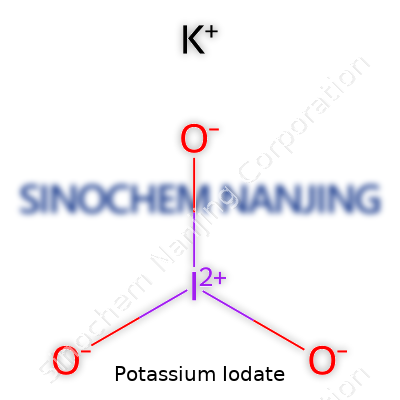
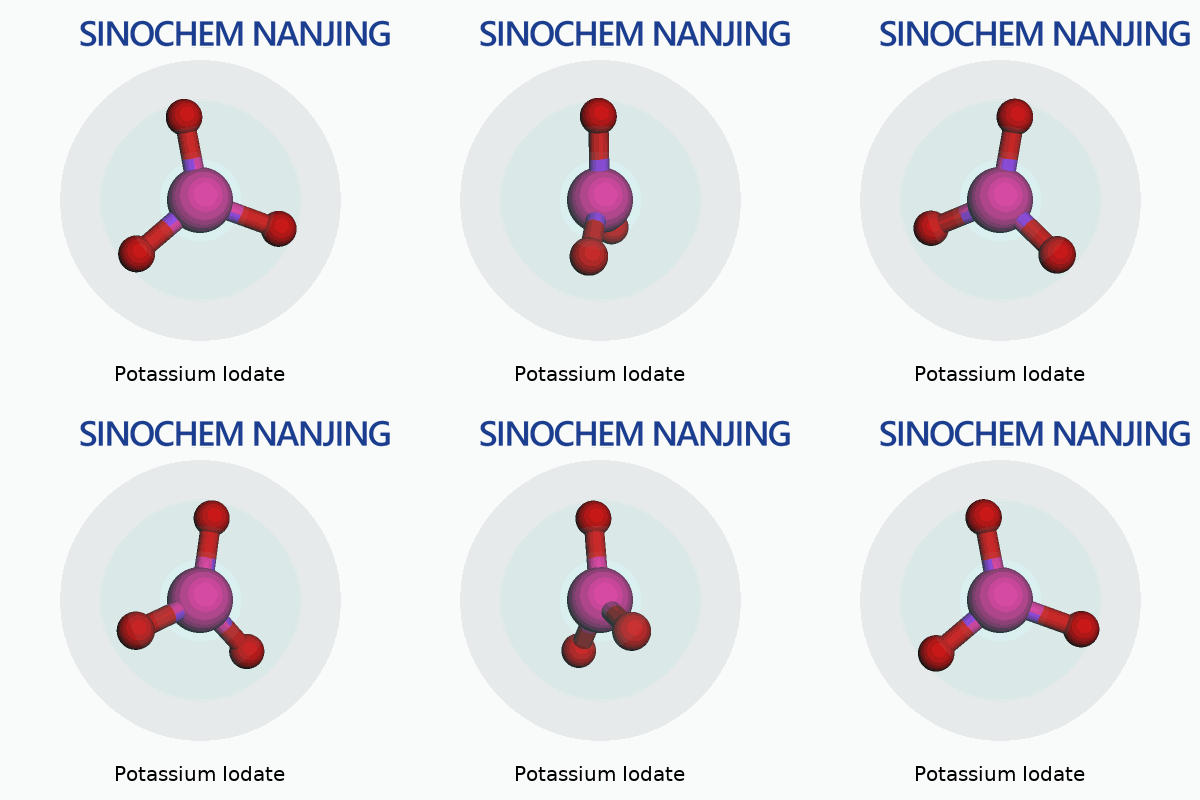
| Names | |
| Preferred IUPAC name | Potassium trioxidoiodate(1-) |
| Other names |
Iodic acid, potassium salt Potassium salt of iodic acid KIO3 |
| Pronunciation | /poʊˌtæsiəm aɪˈoʊdeɪt/ |
| Identifiers | |
| CAS Number | 7758-05-6 |
| Beilstein Reference | 3599627 |
| ChEBI | CHEBI:83414 |
| ChEMBL | CHEMBL1200939 |
| ChemSpider | 54673 |
| DrugBank | DB14672 |
| ECHA InfoCard | 100.011.510 |
| EC Number | 231-831-9 |
| Gmelin Reference | 63306 |
| KEGG | C14303 |
| MeSH | D011103 |
| PubChem CID | 24247 |
| RTECS number | TT2975000 |
| UNII | 9HE0W3810W |
| UN number | UN1479 |
| Properties | |
| Chemical formula | KIO3 |
| Molar mass | 214.00 g/mol |
| Appearance | White crystalline powder |
| Odor | Odorless |
| Density | 3.89 g/cm³ |
| Solubility in water | 7.45 g/100 mL (20 °C) |
| log P | 0.35 |
| Vapor pressure | Negligible |
| Magnetic susceptibility (χ) | −73.0·10⁻⁶ cm³/mol |
| Refractive index (nD) | 1.734 |
| Dipole moment | 3.07 D |
| Thermochemistry | |
| Std molar entropy (S⦵298) | 221.9 J·mol⁻¹·K⁻¹ |
| Std enthalpy of formation (ΔfH⦵298) | -328.6 kJ/mol |
| Std enthalpy of combustion (ΔcH⦵298) | -295.0 kJ·mol⁻¹ |
| Pharmacology | |
| ATC code | A12CA02 |
| Hazards | |
| Main hazards | Oxidizer, may cause fire or explosion; harmful if swallowed or inhaled; causes serious eye irritation. |
| GHS labelling | GHS05, GHS07 |
| Pictograms | GHS07,GHS09 |
| Signal word | Danger |
| Hazard statements | H272, H319 |
| Precautionary statements | Precautionary statements: "P210, P220, P221, P264, P273, P280, P305+P351+P338, P370+P378, P501 |
| NFPA 704 (fire diamond) | 1-0-2-ox |
| Autoignition temperature | 540 °C |
| Lethal dose or concentration | LD50 (oral, rat): 2,780 mg/kg |
| LD50 (median dose) | LD50 (median dose): 2,780 mg/kg (oral, rat) |
| NIOSH | WN6075000 |
| PEL (Permissible) | PEL: Not established |
| REL (Recommended) | 0.017 mg/kg bw |
| IDLH (Immediate danger) | No IDLH established. |
| Related compounds | |
| Related compounds |
Potassium iodide Sodium iodate Iodic acid |



