Potassium Guaiacolsulfonate: A Deep Dive
Historical Development
The story of potassium guaiacolsulfonate traces back to late nineteenth-century pharmaceutical chemistry. Back then, researchers worked tirelessly to improve expectorant options in treating respiratory disorders. Guaiacol had earned a reputation for helping clear mucous, but problems with taste, stability, and solubility led scientists to look for something better. By introducing the sulfonate group, they crafted guaiacolsulfonic acid, and pairing it with potassium salts helped chemists get around issues with taste and solubility. Over time, this compound gained traction in medical circles for its reliability and a long track record of use. The road to mainstream use wasn’t smooth—changes in manufacturing regulation, refinement in purification techniques, and pressure to improve product safety kept the evolution going for decades. Today, potassium guaiacolsulfonate stands as a well-recognized option in the world of mucolytic agents, supported by more than a century of careful observation and clinical trial.
Product Overview
Inside laboratories and hospitals, potassium guaiacolsulfonate is widely known for its primary use in cough medicines. Its ability to thin mucus means it continues to appear on formularies for chronic bronchitis, bronchiectasis, and other lung diseases. Both generic and branded cough solutions contain it, often blended with other ingredients to shape effects. Its shelf presence stretches across syrups, effervescent powders, and tablets. Compared to its sodium counterpart, potassium guaiacolsulfonate sometimes receives the nod in patients sensitive to sodium intake. It usually takes center stage in multi-component mixtures designed for over-the-counter cough remedies. Over countless prescriptions, this compound has built up trust among clinicians who need reliable symptom management.
Physical & Chemical Properties
Potassium guaiacolsulfonate arrives as a white or pale crystalline powder. It dissolves well in water and gives off a mild aromatic odor reminiscent of guaiacol. Molecularly, it consists of C7H7KO4S, setting it firmly in the aromatic sulfonate chemical family. Its melting point hovers just above 160°C. Many labs test its solubility in ethanol, noting only partial dissolution, which changes how it fits into certain compound forms. The powder resists light and oxygen breakdown, but long-term exposure to moisture or heat can degrade efficacy. These properties make it manageable during large-scale manufacture and comfortable for formulation in various finished forms. Care in storage and transit helps preserve its potency for years.
Technical Specifications & Labeling
Drug regulatory bodies demand accurate labeling for potassium guaiacolsulfonate. Typical specifications require a pure crystalline powder, free of visible contaminants, and clear documentation of water content, usually kept below a fixed percentage. Safety sheets highlight its reactivity with strong oxidizers and acids, so storage in dry, closed containers remains standard. Labeling must give the full chemical name, concentration per tablet or volume, list of excipients, and batch information. Pharmaceutical manufacturers follow international pharmacopeia guidelines such as USP or Ph. Eur. for quality control, covering proof of purity, loss on drying, and identification by chromatography or titration. Documentation at each step ensures traceability from raw source to patient dose.
Preparation Method
To make potassium guaiacolsulfonate, chemists start with guaiacol, drawing on its natural abundance in wood-tar. Guaiacol is treated with concentrated sulfuric acid, leading to sulfonation—an introduction of a sulfonic acid group onto the aromatic ring. The intermediate, guaiacolsulfonic acid, is then neutralized using potassium carbonate or potassium hydroxide. Filtration and careful pH adjustments produce a purified potassium salt. Solution evaporation and crystallization yield the dry product ready for pharmaceutical mixing. The entire process demands tightly controlled reaction times and temperatures. Even small changes in pH or concentration shift the yield and purity, underscoring the importance of experienced manufacturing oversight. Scale-up from lab bench to industrial batch frequently exposes new challenges, including unwanted by-products or variations in crystal size.
Chemical Reactions & Modifications
In the realm of organic chemistry, potassium guaiacolsulfonate can undergo several transformations. Its phenolic group invites esterification and etherification, producing derivatives designed for altered absorption rates. Sulfonic acid moiety supports further substitution reactions, broadening the array of related compounds. Chemical engineers sometimes tweak the guaiacol backbone, aiming for changes in solubility or mucolytic action—an effort that leads to new generations of expectorants. The core sulfonate-linked potassium salt remains stable under ordinary conditions, but exposure to strong oxidizing agents can degrade it rapidly. Interest in prodrugs has led to work on masking the phenolic group, hoping for better bioavailability or taste masking. These studies remind scientists that small structural tinkering can produce big changes in biological profile or side effect risks.
Synonyms & Product Names
Potassium guaiacolsulfonate surfaces under a handful of different names in medical literature and commerce. Common synonyms include potassium sulfo-guaiacolate and potassium o-methoxyphenol-4-sulfonate. Some countries use trade names like Calmesin or Sulfogaiacol Potassium, especially for branded formulations. The diversity in naming stems from differences in translation, patent restrictions, and local drug regulations. Ingredient listings on medicine boxes may use either the full systematic designation or the simple abbreviation “PGS.” This lack of naming consistency can confuse consumers, so professionals rely on registry numbers like CAS for clarity. Pharmacy software and labeling systems depend on these detailed nomenclature lists for safe dispensing.
Safety & Operational Standards
Safe handling guidelines reflect its dual identity as a medicine and a chemical. While therapeutic doses remain low, industrial-scale preparation calls for gloves, eye protection, and proper ventilation—especially in the early steps involving concentrated acids. Routine batch testing checks for impurities that could spark adverse effects. Finished medicines must comply with regulatory standards regarding heavy metals, microbial contamination, and breakdown products. Transport rules treat it as a low-risk material, though large spills or exposure to the eyes or mucous membranes still prompt a call to poison control. Hospitals maintain clear drug reference guides listing maximum daily concentrations, contraindications, and guidance for overdose management. As someone who trained in pharmacy, I remember detailed safety briefings on expectorants—reminding us that even time-tested ingredients deserve respect and attentiveness.
Application Area
Therapeutic use revolves mainly around respiratory care. Doctors reach for potassium guaiacolsulfonate when mucus clogs up the lungs or thickens due to infection or chronic airway disease. Chronic bronchitis, emphysema, and pneumonia all respond to the increased liquidity of mucous, making it easier for patients to cough out blockages. In some countries, it holds a spot in veterinary medicine, particularly for horses with respiratory congestion. OTC cold remedies often include the compound for symptomatic relief, even though new options crowd the shelves. Some researchers test its effects in rare gastrointestinal disorders where mucous viscosity presents a challenge. While its popularity lags behind newer mucolytics in some settings, plenty of clinics, especially in areas with limited drug options, keep it as a workhorse ingredient.
Research & Development
New work in the lab never seems to stop for potassium guaiacolsulfonate. Research teams routinely look for ways to boost its absorption or prolong action, investigating novel delivery systems like inhalers and slow-release tablets. Some chemists experiment with combination drugs, adding anti-inflammatories or antihistamines to extend symptom control. Comparative trials continue to stack it up against newer expectorants, testing just how much it can shave off duration or intensity of symptoms. Patient surveys shape reformulation efforts, prompting manufacturers to improve flavoring and minimize unpleasant aftertaste. Safety studies expand far beyond the basics, pulling in data on long-term use in young children, the elderly, and patients with kidney issues. Even with advances in alternative therapies and biologics, funding for guaiacolsulfonate research persists on the strength of its long record and affordable production.
Toxicity Research
Detailed toxicology work supports the broad clinical use of potassium guaiacolsulfonate. Doses used in cough syrups leave a wide margin before side effects appear. Overdoses can bring on nausea, vomiting, and mild gastrointestinal upset, but serious toxicity is rare. Lab studies in animals suggest a low acute toxicity profile—LD50 values sit well above therapeutic ranges. Human case reports offer little evidence of serious organ damage, though allergies, especially in sensitive individuals, occasionally arise. Repeated studies rule out cancer-causing potential or DNA mutation at expected exposure levels. Clinical trials hammer home the importance of respecting dose limits in people with kidney trouble, as potassium load could increase risk for hyperkalemia. Pharmacovigilance programs keep tracking reported adverse events, helping reinforce safe patterns of use worldwide.
Future Prospects
Looking to the future, potassium guaiacolsulfonate faces both hurdles and opportunities. New mucolytics with fewer side effects and wider mechanisms continually appear, and patient preferences shift toward single-dose, flavored solutions. Generic drug makers keep prices low, making it a strong contender for cash-strapped healthcare systems. Increased interest in precision medicine could reinvigorate research, with teams tweaking the molecule to target narrow disease states or genetic profiles. Environmental scientists monitor manufacturing runoff from aromatic sulfonates, pushing the industry to adopt cleaner, greener synthesis. Given the ongoing need for dependable expectorants, potassium guaiacolsulfonate keeps earning its place, especially for populations needing proven treatments at the lowest possible cost. Improvements in drug regulation and automated manufacturing promise tighter quality control, raising the bar for every batch that leaves the warehouse.
What is Potassium Guaiacolsulfonate used for?
What is it Really Doing?
Potassium guaiacolsulfonate sounds like something that got lost in a chemistry lab, but it’s been tucked into cough syrups and expectorants for decades. It helps thin out mucus, making coughs more productive. So, if you’ve ever felt that heavy-congested feeling in your chest during a cold, this ingredient helped move things along so you can actually breathe. It’s not just fluff in your medicine cabinet—it’s got a job to do, and it does it well.
How Does It Help People?
Coughs are part of life. You pick up a bug, and suddenly you’re hacking away. The real problem starts once thick mucus clogs up your airways. That’s where potassium guaiacolsulfonate steps in. By liquefying that sticky gunk, it helps clear lungs faster. Families use it, hospitals rely on it, and parents trust it on late nights when their kid just can’t catch a break from a nagging cough.
Why Should Anyone Care?
Our breathing is something we all take for granted—until we can’t. Respiratory infections still land thousands in emergency rooms every year. The CDC has stressed how lower respiratory tract infections contribute to hospitalizations, especially in children and seniors. Eliminating mucus more quickly means fewer infections that drag on, less risk for complications like pneumonia, and shorter misery during flu season.
Looking at the Science
The use of expectorants like potassium guaiacolsulfonate came from a simple idea: instead of just quieting a cough, help the body expel what’s causing it. Decades-old studies set the tone for modern treatment. In clinical settings, people reported improved symptom relief when mucus thinned out rather than just suppressing the cough reflex. Big studies from the American Journal of Respiratory and Critical Care Medicine often highlight that persistent coughs loaded with mucus can spiral into chronic bronchitis or worsen asthma. So using this active ingredient helps cut down on those risks.
What Can Go Wrong?
No medicine fits every person. Sometimes people report mild stomach upset or nausea. Very rarely, folks might see allergic reactions. But compared with the risks of untreated lung infections or complications from clogged airways, most side effects are mild. It’s important to talk with a doctor, especially for folks with asthma or those already taking several medications.
A Broader Picture: Access and Education
Cough syrups don’t reach everyone equally. Some rural or low-income communities might not always find these medicines on the shelf. Education plays a role—some people don’t know the difference between suppressants and expectorants. Teaching families about what works, what doesn’t, and when to visit a clinic helps take the guesswork out of recovery. Pharmacists can offer a lot of clarity just by having that quick conversation at the counter.
Where We Go Now
Potassium guaiacolsulfonate isn’t just a mouthful—it’s a tried-and-true helper for stuffed lungs and restless nights. Instead of reaching for whatever is on the shelf, understanding what it does lets people make better decisions about their health. Simple medicines can mean less suffering, faster recoveries, and airways that actually do their job.
What are the possible side effects of Potassium Guaiacolsulfonate?
What Happens After Taking Potassium Guaiacolsulfonate
Potassium guaiacolsulfonate often pops up in cough medicines and expectorants. The compound helps thin out mucus, making it easier to get out of your airway. Like many over-the-counter remedies, it can come with some baggage. Speaking from experience and plenty of research, no medication comes without trade-offs. It's tempting to think only about relief, but it pays to consider the rest of the story.
The Most Noticeable Side Effects
Nausea shows up in a good number of people using this medication. Sometimes, that queasy feeling grows hard to ignore, especially if you take a dose on an empty stomach. Upset stomach goes hand in hand with nausea. Vomiting may follow after enough use, though this happens less often. From the reports I’ve seen as well as a few family stories, taking potassium guaiacolsulfonate with food can help tame some of that discomfort.
Less Common Physical Effects
Some folks complain about headaches. My neighbor once told me he ended up with more of a pounding head after just two days on a syrup containing the drug. Diarrhea, dizziness, and lightheadedness can also show up, but most people don’t experience these unless they're sensitive to ingredients in general. Partner this drug with other medications that have similar side effects and you raise the risk. Reading every label matters, because surprises in medicine cabinets never end well.
Allergic Reactions
Allergies mark a real concern. Doctors talk about rashes, hives, or itching. Facial swelling, tightness in the chest, or trouble breathing set off alarm bells. In my own extended family, prescription cough syrup landed a cousin in the ER with swelling and wheezing, so quick action in these situations cannot be stressed enough.
Long-Term Use and Rare Outcomes
Few people keep using potassium guaiacolsulfonate for long stretches, but prolonged use can sometimes stir up chronic digestive upset. The literature also notes electrolyte changes with heavy or improper use, though this isn’t daily news for most people. Monitoring matters most for kids, older adults, or folks with underlying kidney or heart issues, because their bodies don’t clear drugs the same way.
Why Side Effects Should Not Be Ignored
Side effects tend to get brushed off in casual conversation. I’ve seen people tough it out until they land in a doctor’s office with bigger problems. Surveys show that side effects keep too many people from finishing a course of medication, and sharing this information can help others avoid the same pitfalls. The FDA lists gastrointestinal effects as the most commonly reported problems, while rare but serious reactions demand an immediate call to a healthcare provider.
Practical Steps to Stay Safe
Reading instructions and talking to a pharmacist before starting something new pays off. Bringing up all current medications and health conditions helps head off possible drug interactions. If side effects like vomiting, swelling, or shortness of breath show up, don’t wait to see if it passes. Call a provider or head to urgent care. Holding onto old cough syrup can encourage overuse, so safely tossing unused medicine can prevent accidental problems later.
How should Potassium Guaiacolsulfonate be taken or administered?
Why People Use Potassium Guaiacolsulfonate
Potassium guaiacolsulfonate goes into cough syrups for a reason—it works as an expectorant. When my kids catch a cough that lingers for days, a doctor often picks something to break up the mucus, not just dull the urge to cough. That’s where this ingredient shows up. It thins out secretions and makes it easier to clear them. So usage revolves around stubborn, thick coughs, not a routine sore throat.
How to Take Potassium Guaiacolsulfonate
There’s no one-size-fits-all dose. Doctors decide how much and how often based on age and symptoms. Most pharmacy bottles have clear measuring instructions, but real life complicates things. I’ve watched people shrug and just “take a gulp.” The truth is, measurement matters. Even a common cold medicine can trip people up if they double a dose after a missed one, or eyeball two teaspoons as one.
Children especially are at risk for dosing errors. Years ago, my daughter’s pediatrician scrawled the dose in milliliters on the bottle, not teaspoons. They encouraged using the syringe that came with the syrup. Such simple steps mean the difference between effective relief and miserable side effects.
Adults with kidney or liver issues don’t always metabolize medicines the same way. People often forget to mention other cough medicines or painkillers they’re taking. Overlapping ingredients can go unnoticed. Rushed doctor visits don’t always surface these details. Modern pharmacies flag some interactions, but at home, people need to double check labels themselves.
Side Effects: Not Always Obvious
The biggest headache comes from not paying attention to potential side effects. Potassium guaiacolsulfonate usually stays safe at recommended doses, but some report stomach upset or cramps. Taking more “just to feel better” usually makes it worse. That lesson came home during flu season a couple years ago—one friend pushed the dose and ended up with more digestive complaints than cough relief.
Rarely, allergic reactions occur. Red skin, itching, shortness of breath—these signal real trouble. Getting help fast matters more than finishing a bottle of cough syrup.
How to Avoid Problems
Simple habits work best. Read the instructions that come with the medication, and measure every dose. Ask a doctor or pharmacist about what else you’re taking. Keep all cough syrups out of reach of children, even if they come with “childproof” caps. Adults slip up during hectic days, so a sticky note on the fridge can help.
If symptoms drag on for more than a week, or get worse, cough syrup can’t fix the bigger problem. My own rule—a call to the doctor beats another dose of over-the-counter medicine. If you see blood, fever, or chest pain, it’s time to skip the home remedies and get help.
Potassium guaiacolsulfonate works when used correctly, but smart, cautious dosing keeps families healthier—and away from unnecessary trouble.
Is Potassium Guaiacolsulfonate safe during pregnancy or breastfeeding?
Why Some Cough Syrups in Pregnancy Raise Eyebrows
Walking into a pharmacy during pregnancy can feel overwhelming—shelves lined with remedies promising relief. One name that stands out on some cough syrups is potassium guaiacolsulfonate, often pitched as an expectorant for stubborn coughs. My own experience with expectorants during pregnancy involved a lot of second-guessing and many questions for my doctor. Most people just want to know: Will this ingredient cause harm if used while carrying a baby or nursing?
What the Experts Say
Medical research leaves plenty of gaps. Potassium guaiacolsulfonate hasn’t landed in the spotlights of many large studies about safety in pregnancy or breastfeeding. Turning to trusted sources like the FDA, you won’t find official approval for use in these groups. The American College of Obstetricians and Gynecologists tends to highlight the lack of enough data. That absence doesn’t always mean something’s unsafe, but it gives reason to pause before reaching for a bottle.
Working as a health writer taught me something important: absence of evidence is not the same as evidence of absence. Moms-to-be often face difficult choices with little clear data. Unlike acetaminophen or even some old benign cold remedies, potassium guaiacolsulfonate doesn’t appear in most obstetricians’ lists of time-tested ingredients.
How This Ingredient Acts in the Body
Potassium guaiacolsulfonate aims to thin mucus. That lets you cough it up more easily. It’s part of the same chemical family as guaifenesin, better known and somewhat better studied. Guaifenesin pops up in pregnancy-safe lists, with the caveat that it’s best used under medical supervision and only if symptoms interfere with daily life. Potassium guaiacolsulfonate lags behind in evidence, and structure alone doesn’t guarantee an identical safety record.
Nobody knows if this chemical crosses the placenta or seeps into breast milk in amounts that matter, since real-world studies haven’t been done. With so many changes to hormone levels, kidney function and metabolism during pregnancy, even small differences in drug processing can matter more than most people realize.
Risk vs. Relief
A sick pregnant person faces a tough choice. Suffering through a nasty cough can exhaust the body and rob much-needed sleep. But add the stress of worrying about medication safety and sleep can seem even further away. The only thing that made sense to me was asking my healthcare provider directly—laying out all the symptoms, what I tried at home, and my fears.
Doctors often recommend non-drug approaches before turning to medications not well-studied in pregnancy. A humidifier, saltwater gargles, extra fluids, or honey for soothing (for non-infants) come up in conversations again and again. Sometimes, nothing works quite well enough. In those moments, many people push for a tried and true remedy, not one shrouded in uncertainty.
What Needs to Change
Pregnant and breastfeeding folks deserve better. Clinical studies should include more participants from these groups. Real-world data can help close the information gaps so families and doctors don’t have to guess. For now, if a bottle lists potassium guaiacolsulfonate, it’s worth asking the prescriber and weighing other options.
Trust in the expertise of a known healthcare professional counts. Until better research arrives, caution feels like the wisest approach. If in doubt, skip the over-the-counter guesswork and pick up the phone for real guidance.
Are there any drug interactions with Potassium Guaiacolsulfonate?
Meeting Potassium Guaiacolsulfonate at the Pharmacy
Potassium guaiacolsulfonate isn’t a household name, but it crops up in plenty of cough remedies and mucus-relief medicines. Most people don’t ask about it, even as they glide through the pharmacy aisle, scanning for something to ease a chest cold. The active role this medicine plays—helping to thin and loosen mucus—makes it easy to see why people reach for it when congestion strikes. Still, with so many folks taking other prescriptions at the same time, thinking through possible drug interactions can make a big difference for your health.
Common Concerns: What to Watch for at Home
You hear a lot about major interactions with blood thinners, antibiotics, or antidepressants. Potassium guaiacolsulfonate doesn’t turn up many red flags in big pharmacology guides. That might bring a sigh of relief, but that doesn’t mean it sails smoothly on its own, especially inside a body managing other pills or underlying health issues.
It is worth zeroing in on the potassium part of this medicine. Potassium affects heart rhythm and muscle function, and all it takes is one strong diuretic or blood pressure pill to nudge your potassium levels the wrong direction. Extra potassium, along with drugs that help your body hang on to potassium (like some ACE inhibitors or potassium-sparing diuretics), can tip things into dangerous territory. High potassium in the blood doesn’t always feel like something at first—you might not get a tingle or a zap—but that sudden muscle weakness or irregular heartbeat means things are already out of balance.
Cough Meds Can Sneak In Other Ingredients
Many of the over-the-counter syrups mix potassium guaiacolsulfonate with other agents, such as codeine or dextromethorphan. Codeine can slow breathing and interact with antidepressants, muscle relaxants, or alcohol. Some people double up by accident, not realizing two brands in the medicine cabinet share the same active ingredient. Others miss the fine print about extra sugars in liquid medicines, which can rile up blood sugar for people with diabetes.
Personal experience from working in a family practice clinic taught me to ask about all the “as needed” meds, not just the daily ones. People want quick relief and don’t always pause to check if their new cough syrup adds unnecessary risks alongside their daily heart medication or diabetes management plan.
Digging Deeper into What Science Says
Published medical literature and FDA drug databases rarely call out severe interactions with potassium guaiacolsulfonate. That’s a vote of confidence for its safety, yet no two bodies handle medicine exactly the same. Doctors tend to trust medicines that have been studied for decades, but they also know invisible interactions exist. Age changes drug clearance. Kidneys that don’t clear waste as efficiently can build up potassium, sending someone straight to the emergency room if they mix in potassium supplements or certain heart medications.
Many health systems and pharmacies use electronic cross-checkers to flag drug clashes. These tools help, but they only work if people know every prescription and supplement they’re taking. Herbs, over-the-counter vitamins, and “natural” cough remedies sometimes alter potassium handling too—even though they receive less scrutiny than prescription drugs.
How People Can Stay Safer
Good communication beats any pill bottle warning. Talking with your doctor or pharmacist gives you a safety net that web searches just can’t match. If you’re already managing heart, kidney, or high blood pressure medications, check in before adding anything with potassium guaiacolsulfonate to your routine. Keeping a running list of all medications, even just snapped on your phone’s notepad, lets healthcare providers spot a potential problem before it starts.
Cough season always brings a rush for relief. Still, a few minutes spent talking about your medicines might keep you out of trouble—and, in some cases, even save your life.
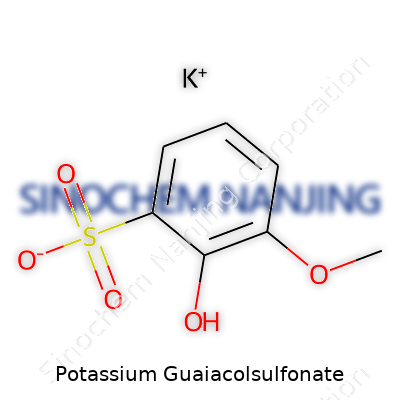
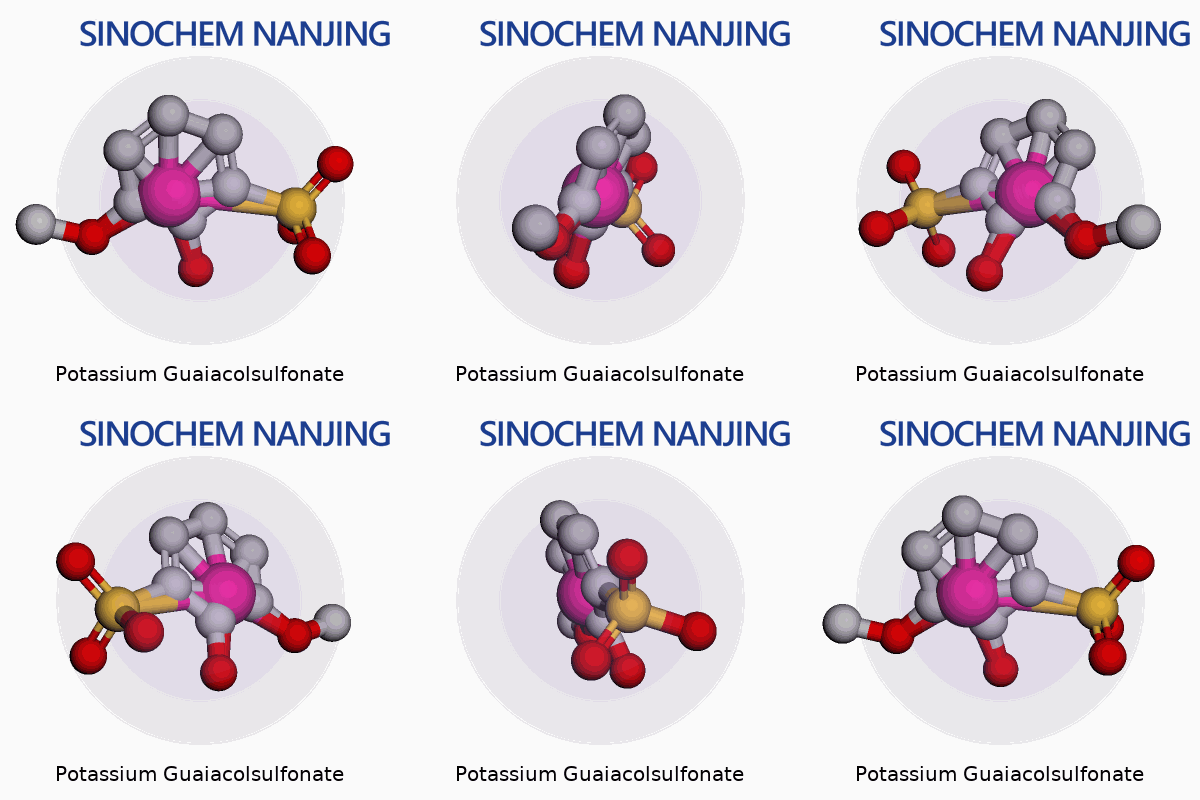
| Names | |
| Preferred IUPAC name | potassium 2-methoxyphenolate-1-sulfonate |
| Other names |
Guaiacolsulfonic acid potassium salt Potassium guaiacolsulphonate Sulfo-Gaiacol Sulphoguaiacolate potassium Potassium o-(hydroxy-3-methoxybenzene)sulfonate |
| Pronunciation | /poʊˌtæsiəm ɡwaɪˌækəlˈsʌl.fəˌneɪt/ |
| Identifiers | |
| CAS Number | 1321-14-8 |
| Beilstein Reference | 3496214 |
| ChEBI | CHEBI:132738 |
| ChEMBL | CHEMBL1201099 |
| ChemSpider | 5113 |
| DrugBank | DB00319 |
| ECHA InfoCard | epa-ec-230-780-7 |
| EC Number | 215-693-9 |
| Gmelin Reference | 6935 |
| KEGG | C14286 |
| MeSH | D011082 |
| PubChem CID | 24853009 |
| RTECS number | GN8575000 |
| UNII | E6F54H41G8 |
| UN number | UN2811 |
| Properties | |
| Chemical formula | C7H7KO4S |
| Molar mass | 364.42 g/mol |
| Appearance | white crystalline powder |
| Odor | Odorless |
| Density | 0.5 g/cm³ |
| Solubility in water | Soluble in water |
| log P | -2.1 |
| Acidity (pKa) | 7.2 |
| Basicity (pKb) | 6.57 |
| Magnetic susceptibility (χ) | -82.0e-6 cm³/mol |
| Refractive index (nD) | 1.58 |
| Viscosity | Viscosity: 2.43 cP (20°C) |
| Dipole moment | 4.12 D |
| Thermochemistry | |
| Std molar entropy (S⦵298) | 321.9 J·mol⁻¹·K⁻¹ |
| Pharmacology | |
| ATC code | R05CA06 |
| Hazards | |
| Main hazards | Causes serious eye irritation. May cause respiratory irritation. |
| GHS labelling | GHS07, GHS08 |
| Pictograms | GHS07 |
| Signal word | Warning |
| Hazard statements | H319: Causes serious eye irritation. |
| Precautionary statements | Keep out of reach of children. If medical advice is needed, have product container or label at hand. |
| NFPA 704 (fire diamond) | 1-1-0 |
| Flash point | >100°C |
| Autoignition temperature | > 500 °C (932 °F, 773 K) |
| Lethal dose or concentration | LD50 oral rat 9330 mg/kg |
| LD50 (median dose) | LD50 (median dose): Mouse oral 5000 mg/kg |
| NIOSH | UR8225000 |
| PEL (Permissible) | PEL (Permissible) of Potassium Guaiacolsulfonate: Not established |
| REL (Recommended) | 30 mg/kg bw |
| Related compounds | |
| Related compounds |
Guaiacol Guaiacolsulfonic acid Creosol Potassium sulfate Potassium phenolate |



