Potassium Dichromate: A Deep Dive
Historical Development
Potassium dichromate’s story stretches back centuries. Chemists in the late 1700s first isolated and identified chromium compounds while searching for new pigments. Potassium dichromate, with its vivid orange crystal form, quickly caught their attention. Early use revolved around textile dyeing and leather tanning. Over time, industries latched onto its strong oxidizing power, pushing it into every corner of chemical technology. During the twentieth century, environmental concerns began to rise. Chemists and regulators started to question both the essential nature of the compound and its potential risks, especially as chromium’s role in industrial pollution came to light.
Product Overview
Potassium dichromate, known by formula K2Cr2O7, is a strong oxidizing agent. It turns up as orange-red, needle-shaped crystals. Numerous laboratories rely on this substance for both classic chemical analyses and industrial-scale synthesis. Working with it, I found its vibrant color both daunting and mesmerizing. The substance appears in small reagent bottles on science benches, but also in large drums for metal finishing operations. Producers package it for strict industrial specifications, ensuring quality and minimizing the impurities that could skew chemical processes. The cost reflects its purity, and users routinely check certificates of analysis for each shipment.
Physical & Chemical Properties
Experience with potassium dichromate quickly makes certain traits obvious. It dissolves well in water, more so in hot water, giving a fiery orange solution. The solid form packs a decent density—about 2.68 g/cm3. It melts at 398°C, decomposing before boiling. In air or water, it remains stable unless it meets a strong reductant. Its oxidizing nature comes through in titration experiments, shifting colors as it reacts with organic compounds, reducing sugars, and even common iron salts. The substance resists slow decomposition in storage but must avoid moisture and direct sunlight. Exposure to acids leads to different chromate salts and possible release of hazardous fumes, which makes storage and lab technique critically important.
Technical Specifications & Labeling
Producers must label potassium dichromate with clear, regulated signals. The compound’s hazardous status means any package carries warnings about carcinogenicity, environmental hazard, and acute toxicity. Storage recommendations — cool, dry, and tightly sealed containers — aren’t just formalities. On-site, I’ve seen careless handling lead to contamination that became both a health risk and a costly legal issue. Reagent grade potassium dichromate finds its way onto analytical lab shelves, meeting tight benchmarks for iron, sulfate, and moisture content. Technical grade, a bit less pure, suits rougher industrial purposes. Every shipment requires batch numbers, lot codes, and hazard classifications, all verified by the supplier before acceptance or storage.
Preparation Method
Potassium dichromate production relies on extracting chromium from chromite ore. Factories roast chromite with potassium carbonate and lime in air, driving chemical changes that lift chromium into a soluble form. Acidification and filtration strip out by-products, leaving a concentrated liquor. Crystallization then delivers the orange crystals. In a world increasingly aware of industrial pollution, some plants recycle waste streams and capture chromium for re-use. Throughout, precise temperature control and impure feedstock management can make the difference between a clean batch and troublesome contamination.
Chemical Reactions & Modifications
Potassium dichromate has powered countless redox reactions. In my own undergraduate labs, I watched it oxidize alcohols to carboxylic acids, change green iron(II) to orange iron(III), and bleach stubborn organic stains on glassware. In water treatment, it helps break down residual organic material. The compound combines with acids to liberate chromic acid, useful for cleaning glassware or etching metals. With reducing agents, from iron powder to sulfur dioxide, potassium dichromate’s Cr6+ ion slips down to Cr3+, generating color changes prized as end-points in titrations. Chemists have found that pairing it with organic co-reactants extends its reach, spawning new pathways in organic synthesis or specialized material preparation.
Synonyms & Product Names
Potassium dichromate goes by many names, including bichromate of potash, dipotassium dichromate, and potassium bichromate. European regulations might list it under its EC Number (231-906-6) or refer to it by its EINECS or UN hazardous substance codes. Reagent suppliers market it under catalog names, often tacking on the words “laboratory grade” or “analytical grade” to clarify its intended use. In decades past, some industries shortened its label to “PD,” but this fell out of favor because of confusion with unrelated chemicals. Safety data sheets and shipping manifests must always spell out its full regulatory names to keep workers and regulators clear about exactly what they’re handling.
Safety & Operational Standards
This chemical commands respect. It stands among substances classified as carcinogenic, mutagenic, and highly toxic to both humans and aquatic life. Labs and factories rigorously enforce controls: gloves, goggles, sealed containers, local exhaust ventilation, secure waste collection. I’ve watched colleagues develop allergic skin reactions and chronic respiratory symptoms after repeated exposure to even small amounts. Local regulations require spill kits, regular training, and detailed records for use and disposal. No shortcut delivers real safety. Decades of regulatory science have pointed to the dangers chromium(VI) compounds pose, leading to outright bans in cosmetics, consumer dyes, and most school labs. No one can afford to ignore the lessons written in the health records of past generations.
Application Area
Potassium dichromate’s reach covers a surprising range of activities. It finds use in volumetric analysis, especially as a primary standard for iron titrations. It powers photographic processing, especially early twentieth-century gum bichromate prints, where it hardened gelatin to form permanent images. Industrially, it sits in the heart of metal passivation, stained glass coloration, and pigment production. Water treatment plants once relied on its power to measure organic pollution using the chemical oxygen demand test, and its traces persist in academic curricula everywhere. Despite health concerns, select research and industrial processes still require its unique properties, often with layered safeguards in place.
Research & Development
Research on potassium dichromate keeps shifting in response to regulatory changes and new health data. Scientists hunt for less toxic alternatives in chemistry teaching labs and develop greener oxidation catalysts for industrial reactions. Material scientists are probing new crystal forms and seeking chromium-based compounds with built-in safety features. Green chemistry initiatives now drive much of the innovation, as researchers aim to phase out chromium(VI) compounds. In some high-tech arenas—microelectronics fabrication, precision etching—potassium dichromate’s performance is tough to match, sparking fresh studies on how to minimize waste or neutralize risks. The pace of development often quickens after regulatory deadlines, forcing both public and private labs to rethink long-held habits and routines.
Toxicity Research
Toxicologists have amassed a grim library of findings on chromium(VI) compounds. Potassium dichromate damages tissues by forcing oxidative stress and genetic mutations. Inhalation, skin contact, or ingestion can lead to respiratory disease, contact dermatitis, and, over years, cancer. Animal studies show organ failure at surprisingly low doses. Regulatory authorities—OSHA, REACH, NIOSH—have set tight limits on exposure, often measured in parts per billion. The science here isn’t abstract. Colleagues who missed a simple glove change can recount angry, weeping skin and months of ongoing symptoms. Waste disposal rules have toughened sharply, requiring neutralization and special landfills to reduce downstream risk. Current research focuses on better antidotes, real-time exposure sensors, and early intervention for exposed workers.
Future Prospects
Potassium dichromate’s days as a widespread industrial material appear numbered. Environmental laws keep tightening, and shareholders push firms to adopt greener, safer chemistries. Still, some analytical, pigment, and metal-coating processes remain hard to replace. The chemical’s legacy outlasts its technical dominance. New research, solid regulations, and committed corporate responsibility stand as the only realistic path forward. Substitutes—ranging from less-toxic iron derivatives to enzymatic oxidizers—take over where possible, and state-of-the-art detection technologies help workers spot exposure long before harm accumulates. If my experience in chemical safety training has taught me anything, it’s that transparency, investment in better tools, and honesty about risks make the real difference—far more than clever molecular tweaks or new industry slogans. The future for chromium(VI) will hinge on how seriously regulators, users, and researchers take both the challenges and solutions now staring them in the face.
What are the main uses of Potassium Dichromate?
A Chemical with Heavy Footprints
Potassium dichromate, a bright orange-red crystalline compound, carries a reputation that stretches across classrooms, factories, and labs. The substance shows up in places few people think about, and it’s a reliable workhorse for chemists—even with all the health warnings that come along with it. I remember, in college, seeing those unmistakable orange crystals locked behind glass. It stuck with me how seriously my chemistry professors treated handling, always with gloves, goggles, and barely a breath above the beaker. Science never felt so real as in those moments.
Industrial Power in Cleaning and Manufacturing
Walk into any metal finishing plant, and you’ll find potassium dichromate at work. Employees use it for cleaning and preparing metals before electroplating. Nothing cleans up corrosion or polishes metal surfaces quite like it. Chrome plating, which gives car parts and tools that mirror shine, leans on this chemical because it removes impurities fast. The end result isn’t just about appearances—it’s about long-lasting protection against rust. That’s a major reason car doors and bumpers don’t dissolve after the first salty winter.
Breathing Color into the Textile and Leather Industry
There’s little chance we’d have bright, colorfast textiles and beautifully tanned leather without potassium dichromate. Textile processors use it to fix dyes, locking hues into cotton and wool so shirts survive wash after wash. Leather tanners rely on it for the same reason. Without this compound, natural colors wash out, and leather would rot faster and lose strength. They also use it to craft the deep browns and oranges that attract buyers to gloves, belts, and boots. Chromate-tanned leather feels soft and stays flexible for years.
Vital Role in Laboratories and Education
Chemistry students everywhere learn about redox reactions through titration experiments involving potassium dichromate. This chemical’s sharp color change gives students instant feedback about their technique. In the lab, analysts depend on its accuracy to measure alcohol in breathalyzer tests, iron in water samples, or even sugar in blood. Hospitals use it for diagnostic tests, so lives can turn on a simple reaction that lasts only seconds. Despite its dangers, the precision potassium dichromate offers keeps it on the shelves in labs and education settings.
Photography and Historical Printing
Long before Instagram, potassium dichromate played a starring role in bringing images to life. Photographers developed black-and-white negatives using this compound because it controls light sensitivity so well. Until digital took over, potassium dichromate was a go-to in specialized printing methods—like gum bichromate and carbon printing. Museums still restore classic works with techniques using this substance, preserving photos that might otherwise fade forever.
Sustainability and Safer Alternatives
Potassium dichromate stands as one of the most hazardous chemicals in widespread use. Workers exposed to its dust risk cancer, skin ulcers, and respiratory problems. The environmental impact lasts for years, affecting water, soil, and nearby communities. Many organizations search for greener solutions. Electroplating shops switch to trivalent chromium baths, which offer much less toxicity. Some dye and leather industries look toward plant-based alternatives, and laboratories phase out potassium dichromate in favor of safer oxidizing agents.
Real progress means blending safety with tradition—finding a balance where industry, artisans, and scientists get the results they need without damaging health or environment in the process.
Is Potassium Dichromate hazardous to health?
Bright Orange, Big Risk
You might remember potassium dichromate from high school chemistry, that bright orange chemical in the little glass jar. The color stands out and so does the risk. Used in everything from lab experiments to leather tanning and metal cleaning, potassium dichromate packs a real punch. The trouble is, it doesn’t just bring color to classes and factories. It brings a serious threat to health, especially when handled without the right protections.
What Makes Potassium Dichromate So Dangerous?
Potassium dichromate isn’t just tough on rust and stains. It’s a powerful oxidizer and contains chromium(VI), a known human carcinogen. Breathing in its dust or coming into contact with the powder or solution can set off real trouble inside the body. Studies from the International Agency for Research on Cancer place chromium(VI) compounds among the substances most likely to cause cancer in humans.
Beyond cancer, there’s a range of problems. Skin contact can leave nasty sores or lead to chronic ulcers. Get it in your eyes by accident, you’re facing severe irritation or even long-term damage. If someone swallows even a small amount, immediate medical attention becomes critical. Potassium dichromate doesn’t just pass through the system; it attacks organs and impacts kidneys, liver, and the respiratory tract.
Workplace Hazards and Daily Life
People working in industries that use this substance most often run the biggest risks. Old tannery workers, lab workers, and some construction workers dealing with cement can all run into potassium dichromate without always knowing it. Even brief exposure without gloves or a mask leaves some folks with skin allergies for life. That allergy isn’t just a simple rash; it often returns in severe form after even tiny new exposures, making future work difficult or impossible near the chemical.
Official numbers from OSHA set strict exposure limits, and with good reason. Studies of workers in older industrial settings tell a harsh story: higher rates of lung cancer, chronic nose and throat illnesses, and a toll on overall life expectancy. Even people who never work in those industries can face low-level risks—think about contamination incidents in water supplies. Chromium(VI) leaks from factories leave communities worried, sometimes sick, and dealing with cleanup for years.
Managing the Risk and Moving Forward
Good news: careful handling slashes the odds of disaster. Lab workers wearing gloves, goggles, and proper masks don’t see the same health issues. Modern factories now lean on ventilation systems and closed processing to keep dust out of the air. Switching to less toxic alternatives where possible keeps everyone safer, from workers to surrounding neighborhoods. Laws around the world have pushed industries to get serious about cutting or phasing out chromium(VI) chemicals like potassium dichromate when good substitutes exist.
Home and hobby use absolutely demands respect for the substance. Anyone planning to use it for glass etching or science experiments needs to respect those risks and follow safety instructions to the letter—gloves, goggles, and good ventilation aren’t optional luxuries, they’re the line between health and harm.
Lessons From the Lab and Beyond
No matter how familiar potassium dichromate may seem from chemistry sets or industrial catalogs, it can’t be treated like ordinary cleaning powder or table salt. Real lives get changed by careless exposure—stories from workers who lost their health or children who picked up strange rashes speak louder than any label. With modern knowledge and simple precautions, there’s no good reason to gamble with health when the risks of this chemical are so well-known. Being careful with strong chemicals isn’t just for factories; it’s good sense for anyone who wants life and work to stay safe and healthy.
How should Potassium Dichromate be stored and handled safely?
The Real Dangers Hiding in Orange Powder
Potassium dichromate looks like harmless orange crystals, but the risks lie beneath that bright color. This compound ranks high among the most hazardous chemicals used in labs and industry. It causes burns, triggers cancer, and damages kidneys if handled carelessly. Many chemists, including myself, have seen minor slips grow into medical emergencies. Without real care, the promise of an easy job unravels fast.
Knowing the Risks, Not Blindly Trusting the Label
Anyone who reads about potassium dichromate spots the words “toxic” and “oxidizer” right away. What those words leave out is how skin peels after contact, how breathing the dust starts a cough that refuses to fade, or how long-term exposure shortens life. This isn’t a theoretical risk. I recall a case in college where improper storage let the grains contaminate a glovebox. Evacuation came too late—the cleanup cost days, and a researcher battled health fallout for years.
Solid Storage Habits Save Lives
The right solution starts by treating storage as a daily ritual, not a checklist item. Here’s what real-world practice shows:
- Tight, Labelled Containers: Glass jars with Teflon-lined lids work well. Keeping potassium dichromate double-sealed blocks leaks and keeps out moisture that turns this chemical nasty fast. Labels stick out, and dates get updated every restock.
- Isolation from Fuel and Organics: It reacts violently with common solvents, so shelves stay organized. Flammables move far away, reducing surprise fires that erupt from overlooked spills or splashes.
- Locked Cabinets for Toxins: At work, a designated cabinet, metal-lined and vented, keeps oxidizers away from both acids and bases. No one steps in except those who completed hands-on training. This step proves far more effective than trust or verbal reminders.
- Low Humidity, Stable Temperatures: Air in the storage room always dries out, thanks to silica gels. Temperature stays steady, since potassium dichromate shifts properties if sweat builds up on the crystals.
Handling: Habits Over Protocols
Safe handling grows from building muscle memory:
- Personal Protection: No shortcuts—goggles, thick nitrile gloves, and a full lab coat. I’ve seen lab mates regret “quick” open-lid transfers, so a fitted mask and eye protection earn daily use. Even a grain on bare skin can lead to blistering.
- Freshly Cleaned Tools: Dedicated spatulas, never borrowed or rinsed in the sink. One wrong mix—say, a trace of sugar from organic work—can spark a dangerous reaction.
- Ventilated Work Areas: The chemical hood stays on. Even weighing a pinch outside makes the room reek and leaves an orange trace that’s tough to spot. Regular mop-downs with sodium thiosulfate neutralize spills.
Building a Safety-First Mindset
Routine safety training works best if it sticks. Telling stories from past mishaps sends the message deeper than any slide deck. Posting incident records in communal spaces, reviewing material safety data monthly, stepping in when coworkers cut corners—each habit helps create an environment where new techs, seasoned chemists, and the cleaning crew know how to spot a problem before it grows.
Better Checks, Better Outcomes
Tracking inventory reduces risk. Regular audits catch leaky containers or outdated stocks. The checklist isn’t just a formality; labs where audits go missing see more accidents. It’s easy to put off, but every ounce accounted for means nobody forgets about that half-used bottle tucked on a back shelf. Professionals from chemical safety groups like the ACS and NIOSH recommend twice-yearly reviews, and their research backs up the real drop in accident rates wherever these routines take hold.
What are the disposal guidelines for Potassium Dichromate?
The Stakes Around Potassium Dichromate
Potassium dichromate grabs attention for all the wrong reasons—it’s toxic, a proven carcinogen, and dangerous in small amounts. In school labs, old factories, or even art studios, folks sometimes underestimate what a few stray grams can do. A single careless spill ends up in the sink, and a city’s water supply has one more harmful substance to tackle. Nobody wants that on their conscience or their record. Most people don’t realize those bright orange crystals pack a punch capable of causing cancer, allergies, and chronic breathing problems.
Why It Needs Special Disposal
Unlike typical lab reagents, potassium dichromate’s chromium (VI) content wreaks havoc in waterways and soil. Once it seeps in, plants and animals don’t get much of a chance. According to the Environmental Protection Agency, chromium compounds can build up in water systems, making them tough to clean out and dangerous for years. Workers exposed to dust or solutions have higher rates of lung cancer and skin ulcers. These aren’t risks anyone should gamble on.
Personal Experience in the Lab
Years of working with semi-volatile chemicals in an academic setting taught me respect for the disposal process. We used potassium dichromate in old-school titrations, and it always demanded full gloves, goggles, and ventilation on high. Every spent container, filter paper, or rinse got dedicated waste bottles—no exceptions, even after a long day or short deadline. The horror stories circulate widely enough: a rushed intern pours leftover solution down a drain, gets a fine, and finds their name on an internal memo as an example to others.
Clear Steps: What to Do With Potassium Dichromate Waste
Separate and Label: Don’t toss potassium dichromate with general waste—keep it in tight, corrosion-resistant containers, clearly marked “Hazardous: Chromium (VI) Waste.” Mislabeling just adds confusion for waste collectors and creates more danger down the line.
Storage:Keep the waste in a secure, well-ventilated place, away from acids and combustible materials. Leaks or fumes from poor storage could harm anyone nearby. Even a drip from an old flask can spell trouble on a rushed morning.
Call Professional Disposal:Leave it to certified hazardous waste handlers. Licensed companies specialize in collecting, transporting, and neutralizing high-risk chemicals. No school custodian or amateur can promise safe destruction. These companies usually reduce chromium (VI) to the less toxic chromium (III) using chemicals like sodium bisulfite or ferrous sulfate, followed by filtration and legal disposal. This science isn’t backyard chemistry—improper handling creates even more dangerous by-products.
Document Everything:Keep a clear log of what’s stored, the amount, and the date. Regulators might check these records, especially in schools or universities. There’s comfort in knowing an audit won’t uncover a forgotten bottle tucked behind a stack of old jars.
Better Practices and Safer Labs
Folks using potassium dichromate benefit by switching to greener alternatives whenever possible. Many labs now swap chromate-based tests for safer options, slashing the volume of hazardous waste. Training new staff and students prevents slip-ups. Posters with disposal steps on the lab wall often catch busy hands in the nick of time.
Potassium dichromate won’t disappear soon, but careful habits stop it from ending up where nobody wants it—our water, soil, and lungs. Dealing with it properly isn’t just a rule; it’s about protecting coworkers, families, and the communities we all share.
What precautions should be taken while using Potassium Dichromate in the laboratory?
Why Potassium Dichromate Draws Caution
Potassium dichromate isn’t your average lab chemical. Its poisonous nature and reputation for causing cancer aren’t just footnotes in a safety data sheet. Back when I trained in a teaching lab, it sat double-locked with other chromium(VI) compounds. Handling it is a lesson in respect—one mistake can mean the difference between routine science and a trip to the doctor.
Potassium dichromate attacks the skin and lungs. It can bring on allergies, rashes, and sneaky respiratory problems months after the exposure. People with breathing issues or cuts have told me how contact brings extra pain nobody wants. The science is clear: studies link chromates to higher cancer rates among exposed workers. Cr(VI) damages DNA. Every chemist should know and act on that fact.
Practical Steps All Labs Should Take
Lab coats and gloves aren’t accessories but shields. Latex doesn’t offer enough protection here—nitrile or neoprene gloves block the orange crystals better. Skip the open-toed shoes and short sleeves, since a small spill finds bare skin fast. Goggles keep accidental splashes from turning a day toxic. I’ve seen full face shields in teaching labs, and they prevent accidents before they start.
Work inside a fume hood. Potassium dichromate dust lingers in the air longer than most folks realize. Respirators work, but nothing beats proper ventilation. Clean benches can’t have food, drinks, or textbooks nearby. I keep all personal items in a separate room; it’s easy discipline that keeps work and life separate.
Dispose smartly. Dumping this stuff in the regular trash turns a mistake into a neighborhood problem. Follow local hazardous waste rules without shortcuts; most cities have special drop-off days or contracts. Label all waste containers clearly. I remember hearing about someone who tossed a potassium dichromate solution into a shared drain—it led to weeks of investigation and hefty fines.
Nothing beats washing hands. Residue turns up even with perfect technique. A friend checked his lab’s door handles one day and found traces with a simple spot test. The reminder: contamination follows us out unless we make handwashing second nature.
The Role of Supervision and Training
No one should hand potassium dichromate to new students without real training. I learned to teach safety by modeling every step and quizzing students before letting them anywhere near the bottle. Emergency showers and eyewash stations should be nearby, not just for show. Spot checks of lab spaces keep everyone more aware.
Label all reagents. Use the word carcinogen right on the bottle; being blunt saves confusion and keeps people from going on autopilot. Implement a sign-in system so no one “just borrows” a little for a side experiment.
Seeking Safer Alternatives
Plenty of labs now look for substitutes when possible. Green chemistry isn’t just about the environment—it keeps those of us in lab coats healthy in the long run. While potassium dichromate works for oxidation, alternatives exist for many teaching and research methods. Some places already phased out Cr(VI) for eco-friendly options.
A Safeguard Culture Lasts
Labs that make safety a habit don’t just protect data—they protect people. Taking these precautions takes effort every single day. Potassium dichromate isn’t getting less dangerous, but well-trained chemists sidestep most of the risk.
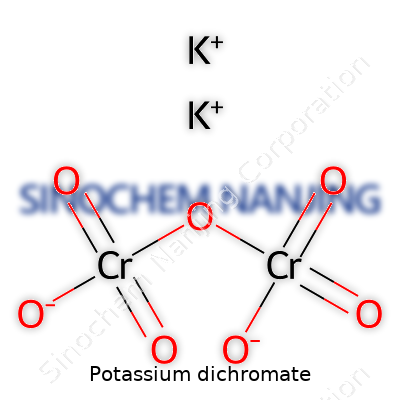
| Names | |
| Preferred IUPAC name | Dipotassium dichromate |
| Other names |
Potassium bichromate Dichromic acid, dipotassium salt Pyrolusite potassium Potassii bichromas Potassium dichromate(VI) |
| Pronunciation | /poʊˈtæsiəm daɪˈkroʊmeɪt/ |
| Identifiers | |
| CAS Number | 7778-50-9 |
| Beilstein Reference | 1209861 |
| ChEBI | CHEBI:48561 |
| ChEMBL | CHEMBL1376 |
| ChemSpider | 66472 |
| DrugBank | DB11379 |
| ECHA InfoCard | 100.192.112 |
| EC Number | 231-906-6 |
| Gmelin Reference | **Gmelin Reference:** 14210 |
| KEGG | C14528 |
| MeSH | D011086 |
| PubChem CID | 24507 |
| RTECS number | HX7660000 |
| UNII | 7V6T4VZW53 |
| UN number | UN3288 |
| Properties | |
| Chemical formula | K2Cr2O7 |
| Molar mass | 294.18 g/mol |
| Appearance | Orange red crystalline solid |
| Odor | Odorless |
| Density | 2.676 g/cm³ |
| Solubility in water | 12.7 g/100 mL (20 °C) |
| log P | -2.5 |
| Vapor pressure | Negligible |
| Acidity (pKa) | 1.15 |
| Basicity (pKb) | 8.55 |
| Magnetic susceptibility (χ) | 'Antiferromagnetic' |
| Refractive index (nD) | 2.409 |
| Viscosity | 2.52 mPa·s (at 20 °C, aqueous solution) |
| Dipole moment | 0 D |
| Thermochemistry | |
| Std molar entropy (S⦵298) | 244.0 J·mol⁻¹·K⁻¹ |
| Std enthalpy of formation (ΔfH⦵298) | -941.4 kJ/mol |
| Std enthalpy of combustion (ΔcH⦵298) | −2378 kJ/mol |
| Pharmacology | |
| ATC code | V03AB15 |
| Hazards | |
| Main hazards | Oxidizing, harmful if swallowed, toxic by inhalation, causes severe skin burns and eye damage, may cause cancer, may cause genetic defects, may cause damage to organs through prolonged or repeated exposure, very toxic to aquatic life. |
| GHS labelling | GHS02, GHS05, GHS06, GHS08, GHS09 |
| Pictograms | GHS05,GHS06,GHS08,GHS09 |
| Signal word | Danger |
| Hazard statements | H301, H312, H314, H317, H340, H350, H400, H410 |
| Precautionary statements | P201, P202, P220, P264, P270, P273, P280, P301+P310, P301+P330+P331, P302+P352, P304+P340, P308+P313, P314, P321, P330, P362+P364, P391, P403+P233, P405, P501 |
| NFPA 704 (fire diamond) | 3-0-2-OX |
| Lethal dose or concentration | LD50 oral rat 190 mg/kg |
| LD50 (median dose) | LD50 (median dose): Oral-rat LD50: 190 mg/kg |
| NIOSH | TTK190 |
| PEL (Permissible) | PEL (Permissible Exposure Limit) for Potassium Dichromate: 0.005 mg/m³ (as Cr(VI)), OSHA standard |
| REL (Recommended) | 0.05 mg/m³ |
| IDLH (Immediate danger) | 15 mg/m3 |
| Related compounds | |
| Related compounds |
Chromyl chloride Chromic acid Potassium chromate Sodium dichromate Ammonium dichromate |



