Phosphorus Tribromide: A Substance with History and Future
The Road from Alchemy to Industry
Long before modern chemistry found its stride, early scientists obsessed over the puzzle of phosphorus. Lighting up the curiosity of researchers from various centuries, phosphorus and its compounds served not only alchemists but serious chemists. The real milestone came in the late 19th century when researchers discovered new ways to make phosphorus tribromide, a compound offering unique properties compared to its cousins. As organic synthesis took off in the early 20th century, the use of phosphorus tribromide made a noticeable impact in labs across Europe and North America. Chemists handled glass flasks and simple distillation setups, but the cloud of pungent smoke that followed careless work quickly warned them of this compound’s reactive vigor. That reputation as a “no-nonsense reagent” has continued into this century. Even those who first met phosphorus tribromide in graduate school remember being handed a chemical safety form and told, plainly: Take this stuff seriously.
Beyond the Label: What Stands Out About Phosphorus Tribromide
Phosphorus tribromide—PBr3 for short—always strikes folks familiar with lab work as a slightly oily, colorless or faintly yellow liquid. There is no perfume here; its fuming, irritating scent announces itself as soon as the bottle is opened. Anyone who gets a whiff knows it doesn’t mix well with water, since it reacts instantly and vigorously. Solubility in organic solvents gives it an edge in synthesis, helping organic chemists find reliable results. Its boiling point sits around 175°C, far higher than water, which matters for scientists controlling complex reactions. The compound’s density and viscosity demand respect—spill a drop, and it spreads but clings, resisting clean-up and, worse, starting to fume.
Specifications That Matter to Real Users
Purchase orders for phosphorus tribromide don’t come from casual shoppers. Researchers and industry buyers care about clear technical specifications, such as purity expressed in decimals, trace impurities measured in ppm, and batch testing reports from reputed suppliers. They want bar codes and hazard labels, yes, but they focus on the supporting documentation, such as certificates of analysis and recommendations for safe, airtight storage in glass or Teflon. The reality is practical: You break the ampoule or crack the bottle in a poorly ventilated area, and you’re guaranteed a headache—sometimes much worse. The labeling warns of corrosive, toxic vapors and the need for goggles, face shields, gloves—the sort of details undergraduates roll their eyes at until they make a mistake.
Making Phosphorus Tribromide Still Involves Risk
Preparation of phosphorus tribromide sticks close to a classic chemical equation—mixing red phosphorus and bromine, often under inert gas and at controlled temperature. It’s not a school project; this reaction generates heat, and bromine’s volatility triples the hazard level. Fume hoods and remote-handling tools aren’t optional here. After the reaction, technicians separate out the product, distilling it under reduced pressure to keep impurities down and handling waste streams that demand careful treatment. Every chemist who’s ever read up on this step comes away knowing that the process never tolerates shortcuts; one slip-up, and you’re dealing with an irritating, sometimes choking, cloud. Most researchers favor buying ready-made phosphorus tribromide, skipping synthesis altogether because the benefits rarely outweigh the risks.
Letting Chemistry Do Its Work: Reactivity and Versatility
Forget anything slow about phosphorus tribromide. It reacts with water so fast, you see white fumes and hear sputtering. Translated to a lab setting—the chemical turns alcohols into alkyl bromides with unmatched efficiency, especially when purity and scalability matter. Plenty of textbooks use the conversion of an alcohol to a bromoalkane as the go-to reference reaction. PBr3 also turns carboxylic acids into acyl bromides, making it a cornerstone for synthesizing pharmaceuticals, agrochemicals, and specialty materials. Chemists push its reactivity further, reaching into heterocycle construction, peptide modification, and protective group strategies that keep innovation moving. Entire patents ride on new ways of using phosphorus tribromide to stitch together molecules nobody dreamed of half a century ago.
Multiple Names, One Powerful Compound
Whether you call it phosphorus(III) bromide, tribromophosphane, or PBr3, the compound’s reputation doesn’t change. Synonyms aren’t just trivia; they show the breadth of its recognition in both academic papers and industrial supply catalogs. In trade journals and research grants alike, the same structure emerges, with naming conventions that reflect a variety of chemistries and industries. Students scrambling to prepare for oral exams recognize PBr3 as shorthand for trouble if the ventilation isn’t just right, while purchasing agents look for the name that matches their laboratory's nomenclature standard. Its consistent identity across languages and regulatory boundaries keeps confusion to a minimum—safety and accuracy depend on everyone calling it the same thing.
Safety Isn’t Optional: Setting the Standard for Responsible Handling
Personal experience brings home the reality of safe handling. A misplaced flask or an ignored whiff of fumes leaves eyes watering and throats raw for hours. Literature reviews are stuffed with case studies, and regulatory agencies maintain strict guidelines for storage, transport, and disposal. Only highly trained workers handle phosphorus tribromide outside the most modern fume hoods. Respiratory protection, chemical-resistant gloves, and splash-proof goggles turn from recommendations into essential gear. Drains and water-based extinguishers stay off-limits, since adding moisture just means more toxic gas. Disposal takes place in regulated facilities, where waste streams move through neutralization tanks under the watch of dedicated environmental engineers. For university chemists and industry plant operators, the rules aren’t theoretical; compliance means peace of mind and, often, job security.
Where It Matters: Applications from Lab Bench to Factory Floor
Most organic synthesis labs keep a bottle of phosphorus tribromide on hand, using it for making alkyl and acyl bromides. These chemicals domino into dozens of downstream products: pharmaceuticals, fragrances, specialty polymers, and agricultural intermediates. A student brushing up for exams likely learned a named reaction involving phosphorus tribromide, while process chemists design it into scalable steps for making hundreds of kilograms at a time. The material's ability to swap functional groups brings simplicity and reliability to synthetic planning, saving both time and money in the lab. In manufacturing, supply chain reliability matters too—shortages or quality slips slow down entire production lines. For companies close to the edge of innovation, phosphorus tribromide unlocks paths to exploratory compounds and new molecular architectures nobody else has.
Innovation Keeps the Spotlight: Research and Development
The pace of change in industrial chemistry means legacy processes rarely last a decade before someone finds a tweak, an improvement, or a competitor to phosphorus tribromide’s role. Recent research centers on selectivity—reducing byproducts and increasing yield. Academic teams use high-throughput experiments to study catalyst interactions with PBr3, and computer modeling now predicts outcomes before the first flask is filled. For those pushing regulatory and environmental boundaries, the quest involves greener alternatives and better recycling techniques. This ongoing work reflects a blend of tradition and change—drawing on generations of chemists while thinking beyond current limits. Innovation means students and professionals alike focus on minimizing risks, reducing waste, and designing smarter syntheses that keep this classic chemical relevant.
Toxicology: No Margin for Error
Exposure to phosphorus tribromide attacks mucous membranes and lungs, and even the seasoned chemists know the line between minor irritation and acute poisoning can dissolve quickly. Toxicology research backs up these personal accounts, pointing to animal studies that show corrosive damage, as well as long-term concerns about repeated low-level exposure. Regulatory bodies respond with increasingly strict guidelines for air monitoring, exposure times, and emergency procedures. Daily reality for users means knowing the early warning signs—coughs, labored breathing, burning eyes—and responding quickly with decontamination and medical help. Safety data sheets stress that ordinary first aid doesn’t always cut it; you need specialized knowledge and training to handle spills or exposures. The lesson isn’t lost, even on experienced teams—complacency invites trouble.
Looking Ahead: Prospects for Phosphorus Tribromide
With the chemical industry under pressure to improve safety and cut environmental impact, the future for phosphorus tribromide may involve change, not just continuity. Researchers search for alternatives with lower toxicity and less aggressive reactivity, especially as consumer demand for “greener” products grows louder. Teams in both academia and industry focus on recycling and reduction of hazardous waste, hoping for breakthroughs that let this powerful chemical keep serving science without as much risk to workers or the environment. Some forecast novel uses tied to materials science and new pharmaceuticals, betting on its proven ability to transform structures others can’t touch. Whether as a workhorse for classic transformations or as a stepping-stone to safer, cleaner chemistry, phosphorus tribromide’s story continues—anchored by a respect for its dangers and an appreciation for its utility in creative hands.
What is Phosphorus Tribromide used for?
The Backbone of a Lab Toolkit
Phosphorus tribromide is not the flashy compound that grabs headlines. Inside the chemistry world, though, it quietly shapes entire processes. If you step into any university or a pharmaceutical company’s lab, you can almost bet there’s a bottle with its pungent contents tucked away on a shelf. Its job is usually pretty clear cut: swapping out oxygen for bromine in organic molecules, especially when someone needs to turn an alcohol into an alkyl bromide. Without this step, a lot of modern chemical syntheses would stall out. Imagine building a house but never moving past the framing—phosphorus tribromide lets scientists put up the walls.
Driving Pharmaceutical Innovation
Synthesis in drug research always walks a tightrope between practicality and safety. Phosphorus tribromide lands in a spot where it offers both efficiency and flexibility. Chemists reach for it most often while making antibiotics and heart medications. The reason it stands out comes down to “selectivity”—the reaction doesn’t just swap out a group with brute force, it does it with a certain finesse. A smoother reaction means fewer byproducts, and each extra impurity can complicate the way a medicine acts in the body. Nobody wants mystery chemicals in their prescriptions.
Pushing Beyond Pharmaceuticals
It’s not just about pills and powders. Agrochemical companies also use phosphorus tribromide to manufacture compounds that help farmers protect crops from pests. Its work here means stronger yields in the field and food that lands on tables across the world. It also gets called up in the lab to make flame retardants, dyes, and other specialty chemicals. This variety surprised me the first time I started reading labels during my graduate projects. Many products owe their existence to the reactions this chemical kicks off.
Challenges that Come with Power
Working with phosphorus tribromide brings real risks. It reacts fiercely with water, and contact with skin feels rough—think of an angry wasp sting, but longer lasting. Mixing with the wrong material can spit out toxic fumes. Anyone handling it wears full protective gear: gloves, goggles, lab coats, and often a full face shield. Proper storage keeps it far from moisture and heat. The safety lessons from my own lab courses still stick in my mind: take it seriously or pay the price. Training goes a long way, and strict policies must cover disposal, too.
Safer Practices and Responsible Use
Reducing hazard without giving up the benefits matters more than ever. Many labs now use micro-scale reactions or better ventilation to limit exposure. Regulations guide storage, usage, and waste. Investing in automation removes people from direct contact, shrinking risks even further. Teachers drill these habits into students from day one—respect the reagent, respect your health. Companies share their safety data, and transparent incident reporting helps researchers everywhere learn from past mistakes.
Phosphorus tribromide remains a solid tool for chemists, but its power brings responsibility. Using the best practices and sharing what works will always matter more than shortcuts or convenience. I’ve seen cautious handling and open communication make a difference. We can keep the chemistry running without turning a blind eye to the dangers along the way.
What is the chemical formula of Phosphorus Tribromide?
The Simple Answer: PBr3
Phosphorus tribromide has the chemical formula PBr3. This comes from one phosphorus atom bonded to three bromine atoms. Think of this like a small but powerful team—phosphorus in the center, handing out its connections to three bromine partners. That’s the whole structure in a nutshell. Chemistry students often encounter PBr3 early on, since it’s not just a textbook example; it actually gets used for real work in the lab.
Why This Matters in Real Chemistry
PBr3 isn’t one of those reagents people keep on the shelf just to look good. This stuff has a strong role in making alkyl bromides from alcohols. If you’ve done any organic chemistry, converting an alcohol to an alkyl bromide can turn a locked door into an open one for all kinds of reaction pathways. Instead of brute-forcing the process, chemists turn to PBr3 for its reliability and efficiency. It doesn’t just push the reaction forward; it minimizes side products, which saves time, money, and resources in a real-world lab.
Health and Safety in the Lab
Anyone who’s ever opened a bottle of PBr3 can tell you something else: this reagent gets respect fast. Breathing in the fumes causes serious irritation, and touching the liquid can leave burns. Having proper ventilation and gloves isn’t optional. That lesson comes from personal experience—the one time a colleague got a bit careless, we had to clear the lab for half an hour to let the air filters do their job. Safety isn’t just a checklist—it's survival.
Environmental Considerations
Disposing of phosphorus tribromide gets tricky. The compound hydrolyzes in water, producing phosphorous acid and hydrogen bromide. If that runoff lands where it shouldn’t, both the acidity and bromine can wreak havoc. That brings up an important point about responsible disposal. Neutralizing and diluting the waste needs a real process, not improv. Factories must invest in treatment systems, making sure nothing dangerous ends up in the soil or water around production sites.
Better Training and Sustainable Alternatives
There’s another side to this conversation. With chemistry evolving, people keep looking for safer, greener options. Bromine as a leaving group works really well, but its supply and environmental footprint deserve attention. Newer methods use milder reagents, or even enzymatic approaches. Broad adoption takes time—old habits, after all, persist—yet universities and industries are starting to push for training that emphasizes responsible use and disposal.
The Takeaway
The formula PBr3 seems simple. In practice, every bottle of phosphorus tribromide demands respect. Working safely, thinking critically about waste, and searching for better methods—these values matter as much in industry as in the classroom. Chemists have a responsibility to handle every tool wisely, and phosphorus tribromide makes a lasting impression, both in reactions and in lessons learned.
How should Phosphorus Tribromide be stored?
Understanding the Risks Upfront
Many chemicals demand respect, but phosphorus tribromide can surprise even seasoned professionals. It reacts fiercely with water, turning any leak into a safety emergency. That ferocity comes from how quickly it breaks down, producing corrosive and toxic fumes. For anyone working in a lab or industrial setting, dealing with phosphorus tribromide isn’t about following a routine checklist; it’s about doing things right every single time. Safety isn’t just a word in the manual; it lives in every choice you make, from the containers you pick to the spot you put the drums.
No Room for Error with Container Selection
The wrong storage container starts problems that only get worse. Ordinary plastics and metals can’t handle phosphorus tribromide. Stainless steel, nickel, or glass bottles have stood the test of time. Glass with an airtight seal, never a scratched or chipped bottle, always kept dry before filling. Plastic brings risk, especially if you haven’t checked the compatibility chart or end up with a batch that’s too permeable. Jars and bottles with airtight, chemical-resistant stoppers win out every day. Skip rubber corks; they can react. Screw caps lined with PTFE are a safer bet.
Moisture — The Hidden Enemy
Water and phosphorus tribromide never mix. Even a humid storage room can spell trouble. Some labs learned this the hard way, watching labels peel from bottles as fumes did their work. Every container pulls double duty: keeping the liquid in, and every bit of moisture out. Desiccators help, especially for small amounts, but larger stores count on climate-controlled, low-humidity storage. Ventilation gets more attention here than in most stockrooms, since fumes from an accident have to go somewhere safe, not into the next work area.
Securing the Space
Phosphorus tribromide asks for isolation. Storing it next to acids, bases, oxidizers, or even common solvents has ended in frustrating clean-ups and lost product. It shouldn’t share a shelf or even a cabinet with reactive or flammable chemicals. Suppliers and regulators agree: dedicate a cabinet, make it clearly labeled, tuck it away from direct light and heat. Access can’t be a free-for-all. Only folks trained to handle hazardous materials deserve a key.
Labels Keep People Honest
Experience teaches the value of a sturdy, printed label. Every bottle should have its name, date in, and a clear hazard warning. If anything leaks, or if an inspection comes around, the label saves time, confusion, and explains exactly what’s inside. After one close call in a university lab, I’ve relabeled every bottle in reach before storing it. Documentation means no surprises for you or anyone after you.
Disposal and Emergency Readiness
No matter how careful you are, spills happen. Spill kits with inert absorbents and neutralizing agents don’t sit on the back shelf; they should live near the storage area where everyone can grab them if trouble strikes. Quick access to eyewash stations and safety showers isn’t optional. Old, degraded, or excess phosphorus tribromide can’t go down the drain — trained professionals remove it following local hazardous waste rules.
Raising the Bar Every Time
Safe storage shapes the reputation of any lab or facility. One careless moment puts people, projects, and reputations at risk. Setting the standard with phosphorus tribromide means never relaxing the rules or letting the routine slip. Everyone in the building sleeps better for it.
What are the safety precautions when handling Phosphorus Tribromide?
The Risks You Can't Ignore
Phosphorus tribromide brings trouble for anyone who brushes up against it in a lab. It mixes with water in the air, letting out sharp, biting fumes of hydrogen bromide and phosphorous acid. Any time I open a bottle, I smell the problem: it's not just stinky, it bites at the nose and eyes, and you can almost taste the burn after just a second too close.
Touch it, and skin damage comes fast. Breathe it, and lungs start fighting back with coughing and tightness that lingers for hours. One drop in the eyes can mean permanent loss of vision. Emergency data from the National Institute for Occupational Safety and Health (NIOSH) puts phosphorus tribromide’s permissible exposure level at only 0.5 ppm in air. Even brief exposure can corrode tissue deeply.
Protective Gear: The Non-Negotiable Layer
Anyone sliding on gloves for this work needs more than the thin blue kind found in every drawer. Thick nitrile or butyl rubber gloves shield skin from the burn this stuff causes. I always reach for a splash-proof face shield and safety goggles — regular glasses don’t cut it. A chemical-resistant apron takes the hit if a spill happens.
Nobody should ever open phosphorus tribromide outside a working fume hood. One time a coworker skipped this step; minutes later everyone nearby cleared the room, eyes streaming and throats sore, and the mistake turned a routine day into a full lab evacuation.
Smart Storage Practices
Leaving phosphorus tribromide in the open invites disaster. I make sure every bottle sits in a ventilated, tightly closed container. The material reacts wildly with water, so it belongs away from sinks or damp spots. Dedicated chemical storage cabinets, vented and labeled, stop accidental mix-ups. Store it low — if a bottle topples, less energy gets behind the spray.
Never trust the seal on a half-used bottle. Vapors slip past loose threads over time and cause corrosion on shelves and even nearby metal bins. Regular checks for leaks, and clean, dry spill trays, limit surprise contact.
Emergency Steps That Save the Day
Despite best habits, spills and splashes still happen. I keep a running checklist taped above our hazard kit: remove contaminated clothes right away, rinse with water for at least fifteen minutes, call for emergency help straight away. Having a proper eyewash station and safety shower within arm’s reach can shift an accident from life-changing to a lesson learned.
Don’t reach for paper towels. Water is the only thing that slows the burning. I keep extra gloves, goggles, and neutralizing agents on hand, so nobody wastes time searching if something goes wrong.
Keeping Knowledge Up to Date
Training helps everyone in the room look out for each other. Re-reading the safety protocols, checking chemical compatibility, and running regular drills matter as much as any equipment. In my experience, the labs that avoid injuries aren’t filled with scientists boasting superhuman steadiness; they're staffed by people who take the extra five minutes to double-check and speak up.
Solutions Beyond the Lab Table
Preventing accidents calls for clear labeling, rigorous routine, and mutual accountability. If I see someone reaching for phosphorus tribromide without gear, I stop and remind them, no matter how busy the day looks. Cutting corners invites chaos, and the stories about missed precautions almost always finish with a trip to urgent care. Real safety means making the right choice automatic, so nobody has to pause and wonder what comes next.
What are the hazards and first aid measures for Phosphorus Tribromide exposure?
Why Phosphorus Tribromide Matters in Safety Routines
Phosphorus Tribromide makes life riskier in any chemical lab or plant where it shows up on the inventory list. Its sharp, pungent odor warns people nearby long before a safety officer does, but most learning happens too late, after the fumes have already made their mark. Even careful workers sometimes feel the sting: eyes water, throat tightens, skin breaks down. As a corrosive and highly reactive chemical, it’s not something anyone ignores for long. Knowing what to do isn’t about fancy protocol; it’s about staying healthy and going home in one piece.
How Hazard Sneaks Up
Phosphorus Tribromide does its damage on contact — fumes irritate airways, destroy tissue, and, in worst cases, eat through skin layers. I saw a technician get a splash on his glove; within a minute, the glove looked like it had met a lighter, and blisters followed on his wrist. Gloves and goggles become shields, not suggestions, any time this chemical comes out. Even a small spill can fill a room with acidic smoke that leaves everyone gasping and coughing.
Every safety sheet warns about the same dangers: it reacts violently with water, gives off white vapors that ruin lungs, and stings stronger than bleach. Mixed with humidity, it becomes even more hazardous, releasing fumes capable of burning skin and corroding metal. Accidental splashes or vapor exposure can put workers on a fast path to the emergency room. If it gets on your skin and you don’t wash fast, you’ll know pain in a whole new way. Eyes take even less – one mistake, and vision could fade permanently.
First Moves After Exposure
Here’s the hard truth: stalling costs tissue and time. If phosphorus tribromide touches skin or eyes, the best move involves running for a safety shower or eyewash station, even if it means getting soaked. My experience in chemical handling drills taught me—not just from books, but sweating in PPE—speed changes everything. Flush the area with lots of running water for no less than fifteen minutes. Remove contaminated clothes so the stuff doesn’t keep burning your skin. Don’t bother trying to “clean up” first; rinse now, argue later.
Inhaling the vapors throws another kind of panic into the mix. Get out to fresh air immediately, even if it means ditching the job before it’s finished. Help anyone struggling to breathe, but keep yourself protected as well. Sometimes oxygen comes next if breathing feels impossible. Chest tightness or trouble catching your breath means you need medical care fast.
Swallowing phosphorus tribromide sends you straight to a poison center or a hospital. Don’t induce vomiting—burning once is bad, twice is worse. Professionals handle the next steps from there.
Learning to Manage What We Can’t Avoid
Nobody gets through work with phosphorus tribromide by luck alone. Real protection flows from good habits and quick, confident first aid. Training needs to go beyond printed instructions taped to the wall—practical drills, stories from old-timers, and reminders during every safety meeting keep everyone alert. PPE must fit well, and showers should work fast. No one should ever work alone with this chemical. Company safety policies, OSHA guidance, and hard-won bruises all line up behind a simple truth: a well-prepared team can avoid the worst-case scenario, or at least keep it from getting any uglier.
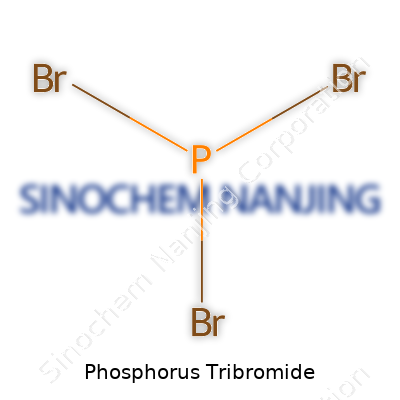
| Names | |
| Preferred IUPAC name | tribromophosphane |
| Other names |
Phosphorus(III) bromide Tribromophosphane |
| Pronunciation | /ˌfɒs.fə.rəs traɪˈbroʊ.maɪd/ |
| Identifiers | |
| CAS Number | 7789-60-8 |
| Beilstein Reference | 358726 |
| ChEBI | CHEBI:30278 |
| ChEMBL | CHEMBL1231345 |
| ChemSpider | 536011 |
| DrugBank | DB11378 |
| ECHA InfoCard | DTXSID0020692 |
| EC Number | 231-793-3 |
| Gmelin Reference | 83758 |
| KEGG | C01089 |
| MeSH | D010754 |
| PubChem CID | 24410 |
| RTECS number | TH3850000 |
| UNII | 013C2V43OO |
| UN number | UN1808 |
| CompTox Dashboard (EPA) | DTXSID1020295 |
| Properties | |
| Chemical formula | PBr3 |
| Molar mass | 270.687 g/mol |
| Appearance | Colorless to reddish-yellow fuming liquid |
| Odor | pungent |
| Density | 2.852 g/cm³ |
| Solubility in water | Reacts violently |
| log P | 1.285 |
| Vapor pressure | 0.62 kPa (at 20 °C) |
| Acidity (pKa) | -2.7 |
| Basicity (pKb) | 2.86 |
| Magnetic susceptibility (χ) | -53.0e-6 cm³/mol |
| Refractive index (nD) | 1.693 |
| Viscosity | 1.027 mPa·s (at 20 °C) |
| Dipole moment | 1.03 D |
| Thermochemistry | |
| Std molar entropy (S⦵298) | 330.6 J·mol⁻¹·K⁻¹ |
| Std enthalpy of formation (ΔfH⦵298) | -288.07 kJ·mol⁻¹ |
| Pharmacology | |
| ATC code | V09AX04 |
| Hazards | |
| Main hazards | Toxic if swallowed, causes severe skin burns and eye damage, causes serious eye damage, releases toxic and corrosive fumes upon contact with water. |
| GHS labelling | GHS02, GHS05, GHS06 |
| Pictograms | GHS05,GHS06 |
| Signal word | Danger |
| Hazard statements | H290, H301, H314 |
| Precautionary statements | P260, P261, P264, P271, P273, P280, P301+P330+P331, P303+P361+P353, P304+P340, P305+P351+P338, P310, P321, P330, P363, P391, P403+P233, P405, P501 |
| NFPA 704 (fire diamond) | 3-0-2-W |
| Flash point | 70 °C (158 °F; 343 K) - closed cup |
| Autoignition temperature | 160 °C (320 °F; 433 K) |
| Lethal dose or concentration | LD50 oral rat 470 mg/kg |
| LD50 (median dose) | LD50 (median dose): Oral-rat LD50: 110 mg/kg |
| NIOSH | WA8400000 |
| PEL (Permissible) | PEL (Permissible Exposure Limit) of Phosphorus Tribromide: "0.1 ppm (0.7 mg/m3) as TWA (OSHA) |
| REL (Recommended) | 2 to 8°C |
| IDLH (Immediate danger) | 40 ppm |
| Related compounds | |
| Related compounds |
Phosphorus trichloride Phosphorus trifluoride Phosphorus triiodide Phosphorus pentabromide |



