Phosphorus Pentabromide: An In-depth Commentary
Historical Development
Phosphorus pentabromide's history reflects a period when chemists started unlocking the possibilities of halogen compounds. In the late nineteenth century, researchers discovered that combining phosphorus with an excess of bromine could produce new substances with unique reactivity. Work in European laboratories led to the isolation and characterization of phosphorus pentabromide, giving rise to the recognition of its formula, PBr5. Chemists were excited to see products with vivid colors and reactive behaviors. The compound’s development meshed with the wider industrial need for phosphorus derivatives as science raced to supply new reagents and catalysts for organic transformations.
Product Overview
Phosphorus pentabromide serves as a solid addition to the roster of phosphorus halides that chemists reach for in synthetic labs. The distinctive yellow-orange color of this compound catches the eye, and the product reaches users primarily as a crystalline solid under normal storage conditions. Laboratories and chemical plants often keep it sealed and in cool storage, away from moisture and incompatible substances. The compound displays a willingness to decompose, so handling and logistics require experience and some respect for the tricky personality it brings to a storeroom or reaction vessel.
Physical & Chemical Properties
At room temperature, phosphorus pentabromide exists as a brightly colored solid, showing yellow or red-orange tones. The compound releases toxic bromine fumes and may fume visibly when exposed to air due to decomposition. Unlike many other halides, PBr5 does not stick around in water—exposure leads it to break down and yield hydrobromic and phosphoric acids, often in an energetic and hazardous manner. Above 100°C, phosphorus pentabromide rapidly ceases to act as a stable solid and instead reverts to phosphorus tribromide and bromine vapor, part of a reversible system familiar to anyone teaching undergraduate inorganic labs. Its molecular weight registers around 430 g/mol, and its structure usually takes a trigonal bipyramidal shape in the solid state.
Technical Specifications & Labeling
Suppliers catalogue phosphorus pentabromide under the name “phosphorus pentabromide” or “PBr5” and link it with identifiers like CAS 7789-70-4. Shipments often arrive in tightly sealed, moisture-protected bottles, clearly marked with hazard warnings on flammability and corrosiveness. Product specs list a minimum purity—frequently above 98%, with strict controls on water content, bromide impurities, and other halogenated phosphorus species. Regulatory and transportation details specify its placement under toxic and corrosive goods, so it never finds its way into amateur hands, and documentation always follows shipments in compliance with international chemical safety laws.
Preparation Method
The standard synthesis of phosphorus pentabromide draws from reliable fundamentals. One starts with phosphorus tribromide, adding elemental bromine in a controlled reaction. Here, temperature and stoichiometry carry great importance: too much heat, and the compound decomposes; too much bromine too quickly, and unwanted side reactions pile up. Laboratories employ anhydrous environments to reduce hydrolysis, often working in fume hoods with professional exhaust systems. In commercial operations, glass or special-grade steel reactors minimize corrosion, and procedures include staged additions and cooling cycles that prevent runaway exothermic behaviors.
Chemical Reactions & Modifications
Phosphorus pentabromide functions as a powerful brominating agent, trading places with alcohol groups and sometimes activating halogen exchanges in other compounds. Organic synthesis relies on it to convert alcohols into alkyl bromides. PBr5 steps into aromatic chemistry as well, providing bromine atoms in substitution or addition reactions, including transformations of ketones to geminal dibromides or similar structures. When introduced to water or humid air, hydrolysis occurs swiftly, generating corrosive fumes and leading to lower phosphate salts and hydrogen bromide—an unsafe scenario for open-bench chemistry. Beyond organic labs, industrial chemists recognize that misuse can lead to unplanned fires or toxic exposures due to its ready decomposition and reactivity, underlining the need for skilled hands in every reaction.
Synonyms & Product Names
Phosphorus pentabromide finds itself known by other names in global trade and scientific circles. A few listings under “Phosphorane, pentabromo-,” “pentabromophosphorane,” and simply PBr5 may appear in commercial catalogs. Regulatory systems index it by the aforementioned CAS 7789-70-4, EINECS 232-193-9, and in some contexts as an alternative trade name reflecting its strong halogenating power. This diversity of nomenclature sometimes causes hiccups in ordering or literature review, but any chemical supplier familiar with international standards cross-references these identifiers.
Safety & Operational Standards
Safety practices for phosphorus pentabromide go beyond the basics you’d expect from strong chemicals. Its toxicity and aggressiveness mean users must check their goggles, fume hoods, and gloves before charging a reaction vessel. Companies train workers to respond to spills and equip storerooms with neutralizing agents and emergency eyewash stations. Every protocol addresses the dust, toxic fumes, and corrosive potential, guiding users to store the chemical far from sources of water or incompatible reagents. Inhalation of vapors or skin contact can inflict lasting harm, with acute and chronic health effects well documented in both production and research settings. Compliance with OSHA and REACH requirements shapes operating standards, and regulatory authorities strictly watch the supply chain from manufacturer to end-user.
Application Area
The most notable application of phosphorus pentabromide sits in organic synthesis. For many organic chemists, it remains a go-to for swapping hydroxyl groups for bromides—speeding up the pathway from alcohols to alkyl bromides. Industrial producers of pharmaceuticals or agrochemicals still use it, especially when gentler agents fall short. Specialty intermediates, like certain brominated aromatics, rely on PBr5 for efficient, clean conversion steps. Some research teams have applied it for the preparation of complex ligands or as a catalyst for distinctive transformations in coordination chemistry. Despite competition from more benign agents, its efficiency in delivering bromine in a reactive state secures its place on chemical shelves worldwide.
Research & Development
Ongoing research continues to probe safer and more selective uses for phosphorus pentabromide. Green chemistry drives some laboratories to seek less hazardous alternatives—these efforts require creative approaches since bromination remains a cornerstone in the toolbox of organic synthesis. Researchers continue to document pathways for minimizing hazardous waste in reactions involving phosphorus pentabromide, exploring solvent-free or low-waste protocols and improved containment methods. Reports in the last decade highlight collaborative efforts among industrial and academic teams, pushing for sustainable options without sacrificing yield or selectivity. Instrument companies have built specialized glassware and containment devices to make handling these dangerous reagents less risky, showing how technical invention meets chemical creativity. My own work in the lab brought me face to face with just how challenging, yet essential, these improvements are. Facing a spill or an unexpected gas release reminds one exactly how crucial preparation and respect for hazardous materials can be.
Toxicity Research
Toxicologists regard phosphorus pentabromide with justified wariness. Direct exposure can cause respiratory distress, eye damage, and persistent skin burns. Chronic exposure links to long-term organ damage and respiratory illness. Inhalation of the fumes has resulted in acute injury among laboratory workers in poorly ventilated environments. Environmental studies also warn that uncontained releases threaten water sources, with hydrolysis products lowering pH and introducing bromide contamination. Regulatory agencies classify the compound as hazardous to human health and the environment, with strong restrictions on its manufacture, use, and disposal. This tough regulatory stance reflects widespread recognition—what’s dangerous in the lab can be disastrous in the wild. Facilities now face strict reporting requirements and must establish clear emergency procedures before ever uncapping a bottle.
Future Prospects
Phosphorus pentabromide stands at a crossroads. Its longstanding value as a brominating agent gets challenged by a new generation of reagents promising lower toxicity and reduced environmental footprints. Process chemists now trial alternative halogen sources, but replacing PBr5 fully requires finding the same reactivity and speed it provides. I’ve watched this evolution from inside academia and industrial consulting. Many firms now support research into controllable micro-scale reactors or encapsulated formulations, aiming to tame the hazards while delivering the performance users expect. As sustainability and worker safety take stronger roles in legal and public expectations, trends in green chemistry and improved hazard management draw an optimistic picture. The path forward means respecting tradition while pushing the science toward better, safer, and more responsible chemical tools.
What is Phosphorus Pentabromide used for?
Understanding Its Place in Chemistry Labs
A lot of people see lists of chemicals and tune out, but in my experience working among scientists, each one tells a story. Phosphorus pentabromide gets some raised eyebrows for its bold name, but its uses run deep in the world of organic chemistry. Ask anyone who’s spent time in a college lab or pharmaceutical research, and they’ll talk about how this red-brown solid plays a starring role in making complex compounds happen.
The Role in Chemical Reactions
Phosphorus pentabromide acts as a brominating agent. In simpler terms, it swaps in bromine atoms where they’re needed, nudging reactions along that just wouldn’t work as cleanly with weaker chemicals. Picture a chemist trying to turn an alcohol into an alkyl bromide—the process hums along smoothly thanks to phosphorus pentabromide. These transformations aren’t just exercises; they connect directly to building blocks used for medicines, dyes, and agricultural agents.
My college professor used to remind us that this isn’t just magic. The compound’s reactive nature gives it serious utility, but it expects respect. Uncontrolled exposure can be rough on both people and the environment, which always inspired double-checks and constant safety training.
Pharmaceutical and Materials Science Applications
Take a peek at new drug patents and advanced materials, and you’ll see why researchers value this compound. Pharmaceutical discovery often runs on reactions that demand high selectivity, which phosphorus pentabromide delivers. If a chemist needs to introduce bromine atoms into a sensitive molecule—something that happens all the time in medicinal chemistry for making new antivirals or anti-inflammatories—this tool gets the call. The difference it makes shows up in medicines that reach the market and change lives.
Materials chemists use it for custom molecules aimed at electronics and nanotechnology. They’re working at the edge of what’s possible, blending theory and craft. Without effective brominating agents like phosphorus pentabromide, that progress would stall out.
Issues of Safety, Handling, and the Way Forward
No chemistry lesson would be complete without real talk about safety. Phosphorus pentabromide generates hydrogen bromide gas on contact with moisture—something I learned firsthand from a near-miss during an undergraduate lab. Even a moment of carelessness can mean harmful fumes or nasty burns. This isn’t the kind of substance you stash in a closet and forget. Trained personnel use fume hoods, protective gloves, and tightly controlled environments.
As more industries chase sustainable solutions, the pressure grows to cut back on hazardous chemicals. Researchers work on safer alternatives and green processes that either use much less phosphorus pentabromide or replace it entirely. This kind of progress takes time and cleverness, since not every substitute can keep up with the reactivity or efficiency needed in high-end synthesis.
A Need for Skill and Care
Phosphorus pentabromide might not grab headlines like some other lab staples, but anyone who recognizes the work behind a new cancer drug or a better microchip has seen what such compounds can enable. Using it safely and looking for ways to minimize its risks marks the difference between responsible science and empty progress. Talking with colleagues, I see consistent themes—respect, discipline, and a shared goal of making industry safer for the next generation.
What is the chemical formula of Phosphorus Pentabromide?
Looking Closer at Phosphorus Pentabromide
In the world of chemistry, every compound tells a story. Phosphorus pentabromide brings red phosphorus and bromine together, forming a bright yellow or orange solid that plays its part in both academic labs and industrial reactions. For many who remember their high school chemistry days, this compound pops up often enough to demand a little attention. Its chemical formula, PBr5, is built on a basic rule: "penta-" means five, showing phosphorus at the center, coordinated to five bromine atoms.
Why PBr5 Matters in Real Experiments
During organic synthesis, chemists often look for reagents to turn alcohols into alkyl bromides. PBr5 stands out for this reason. My own introduction to this compound came in an undergraduate lab, where everything about the reaction screamed caution: fumes, a solid that fizzes on contact with water, and the promise of a cleaner product if handled well. Phosphorus pentabromide helped streamline a reaction that seemed stubborn without it, taking a tricky conversion and making it more predictable.
Outside school, manufacturers use PBr5 in pharmaceuticals and dye production. Converting alcohol groups to bromine atoms opens the door to further transformations, letting chemists build more complex molecules. In medicinal chemistry, the ability to make these changes quickly can mean faster development of treatments, new antibiotics, or even specialty polymers.
Health and Environmental Concerns
Handling phosphorus pentabromide brings hazards. Safety goggles and gloves become nonnegotiable, since moisture from the air or skin triggers hydrolysis, releasing corrosive hydrogen bromide gas. This isn’t just a story for the textbooks—small accidents with this compound can cause serious injuries. I remember a classmate who ignored the warning, only to deal with burning eyes and a ruined experiment. Reliable data shows that repeated exposure to the compound or its vapors harms not only humans but also ecosystems if leaks happen at scale.
Waste from these reactions also requires careful disposal. Brominated byproducts build up in water systems, causing issues for aquatic life. Labs and plants need strict protocols—a simple drain won’t cut it. Regulators keep a close eye on any facility that uses PBr5, demanding secondary containment and emergency plans for spills and leaks.
Improving Safety and Sustainability
Chemists look for alternatives that offer the same utility with less risk. Newer reagents aim for lower toxicity and better control. Some research groups explore milder bromination agents or completely shift away from phosphorus-based options. Education plays a huge role—instructors spend more time on lab safety and proper handling, which decreases the chance of accidents for everyone involved.
Technology also lends a hand with real-time sensors and automated mixing systems, reducing direct contact between people and hazardous substances. These improvements cost money, but the payoff comes through fewer incidents and a cleaner environmental record. Sharing these lessons, not just across universities but throughout the chemical industry, raises the standard for handling all reactive compounds.
Phosphorus Pentabromide in Today’s Chemistry
PBr5 serves as a clear example of how chemistry links the classroom, the factory, and real life. Its formula might look simple, but the practices around its use reflect decades of experience, evolving rules, hard-learned lessons, and a growing commitment to safer science. Whether in a small glass flask or a large production drum, it pays to treat this compound with respect—and an eye to the future.
How should Phosphorus Pentabromide be stored?
Facing a Tough Chemical
Phosphorus pentabromide can be a troublemaker in the world of chemicals. You might see it in labs or industrial sites, yet few people truly grasp just how reactive it gets. I remember years ago, a warehouse in my city saw disaster when a staff member pushed containers of this stuff against a damp wall. Within hours, a yellow haze snaked through the aisles and forced an evacuation. That’s no average storage slip—that’s the risk you run with a strong reagent like this.
Why This Chemical Demands Extra Care
Even a small whiff of phosphorus pentabromide can burn the nostrils and make you cough. It draws in moisture and starts releasing hydrogen bromide gas—hardly something you want mixing with the air in your storage space. This is not just about safety for the staff, either. Fires do not wait for a safety officer’s green light, and this substance feeds them quickly. The water it absorbs from a humid storeroom stands ready to react and turn the air toxic, or worse—kick up flames.
Smart Moves for Storage
Every time the conversation turns to safe chemical storage, I recall the basics that haven’t changed. First, keep it dry. Moisture is this chemical’s worst enemy, and a simple leaky roof could spell disaster. Lined metal drums or tightly sealed glass bottles work well, but the lids must close tight. You want zero chance for water sneaking inside. Plastic can break down or miss the mark if you are unlucky, so solid glass or metal stands as the go-to.
Store it away from the usual suspects—water lines, emergency washes, and windows. There’s no room for shortcuts. Humidity runs high in my city during summer, so humidity monitors and dehumidifiers are a must. I’ve seen workplaces rig up portable dehumidifiers right next to storage racks; that can mean the difference between safe working and an avoidable gas leak.
Keep It Cool, Keep It Separate
Phosphorus pentabromide should stay cool, far from direct sunlight. Temperature swings can pop open containers or push pressure past the safe limit. Label everything, place it on inventory logs, and separate it from anything flammable or with water content. This includes not just water jugs but also cleaning fluids and some paints.
Never store it next to acids or other halogenated compounds. I once visited a site where acids stood just one shelf over. A single spill or valve failure could have kicked off a runaway reaction. Just moving one drum to the right shelf solved a serious problem. Those are the small fixes that keep workplace disasters out of the local news.
Investment in Training and Equipment
Storage rules mean little without people who know and follow them. Short safety briefings every month, clear signage, and personal protective kits keep mistakes to a minimum. Employers who invest in solid shelving and high-quality containers rarely regret that extra cost. Local fire codes and industry regulations already set tight limits, but it’s workers and supervisors who keep those standards real on the ground.
Better Practices Yield Safer Workplaces
A handful of steps—dry, cool, clear labeling, no contact with water—turns a dangerous chemical into one that’s manageable. Getting these practices right keeps people safe, property undamaged, and neighbors at ease. Mixing up careless storage with luck can quickly test both, and from my experience, luck runs dry a lot sooner than good habits do.
What safety precautions are needed when handling Phosphorus Pentabromide?
Understanding the Hazards
Phosphorus pentabromide doesn’t play nice. One wrong move, and someone could end up with nasty chemical burns or stuck breathing in fumes that really tear up the lungs. Some chemists picture it as a powder sitting quietly on a shelf, but the moment moisture hits, it breaks apart, giving off hydrogen bromide gas. That gas burns eyes, skin, and airways on contact. Handling this stuff without a plan signals trouble.
Why Proper Gear Matters
Anyone who works in chemistry long enough knows there’s no substitute for personal protective equipment. Splash goggles and a solid lab coat keep splatter off your eyes and skin. A quality pair of butyl rubber gloves helps when the usual nitrile ones don’t stand up to harsh reagents. Too many people regret skipping these basics when an accident happens. Face shields come in handy during transfers or reactions where solids and liquids might splatter. A fume hood stands between you and those hazardous fumes, keeping the breathing zone clear of hydrogen bromide. Ventilation takes effort to maintain, but the payoff shows in lowered exposure and fewer incidents.
Safe Storage Isn’t Optional
Storage makes a real difference in chemical safety. Leave phosphorus pentabromide exposed to humid air and it quickly starts to decompose. Sealed, labeled containers filled with inert gas like nitrogen or argon help. These chemicals leave zero room for accidents if they’re closed up tight. Locked chemical cabinets keep out both visitors and workers not trained to fight chemical fires. Adding warning labels prevents mix-ups and mistakes, especially at the end of a long workday. If things go wrong, spills on a benchtop or lab coat often lead to serious injury or lab evacuations, so prevention stays a top priority.
Responding Quickly to Emergencies
Experience with chemical incidents changes your outlook. No one expects to knock over a beaker, but training builds the reflexes needed for quick action. Spills demand dousing with a lot of water—no half measures—and a safety shower should be close by. Eyes need a dedicated station for a real flush, not just a splash at the sink. Cleanup kits with neutralizing agents and absorbents stand ready in well-run labs. Each team member should know not just the location, but how to use these supplies under pressure. Small actions—closing the lab door, alerting a supervisor—keep the worst situations from spiraling out of control.
Education and Training Build Strong Habits
Memorizing a chemical’s hazards only gets you so far. Training must go beyond reading the safety data sheet or signing a checklist. Regular drills help muscle memory take over during a crisis. Clear instructions, real demonstrations, not endless paperwork, form the backbone of good lab practice. Sharing stories of real accidents helps new team members understand risks aren’t theoretical. A close colleague once told me how a small spill made them rethink every shortcut they’d ever taken. Culture changes through these stories, not just through posters on the wall.
Supporting Safe Laboratories
Leadership shapes the day-to-day approach to safety more than any manual. When supervisors refuse to cut corners, it spreads. Supplying every piece of equipment, scheduling honest safety training, and expecting everyone to act as if every chemical represents real danger—these habits create a shared sense of responsibility. Mistakes happen less often when everyone feels accountable, and the whole lab stands ready to step in before a problem turns into an emergency.
Is Phosphorus Pentabromide toxic or hazardous?
Looking At Phosphorus Pentabromide Up Close
Phosphorus pentabromide doesn’t exactly pop up in casual conversation, but plenty of folks who’ve worked in a chemical lab remember the red-brown fumes and the way people handled even sealed containers with thick gloves. The main worry isn't about getting your hands dirty—it’s much more serious, tied to the way the compound interacts with air, skin, and living tissue.
Real People, Real Risks
Experienced chemists often share their own cautionary tales. Direct contact with phosphorus pentabromide usually means burning pain, red skin, and blisters within minutes. Shortness of breath starts with just a sniff of the fumes, and sometimes you’ll see coughing fits. All this misery isn’t exaggerated. The compound breaks down in humid air, turning into hydrogen bromide and phosphorus oxybromide, both of which are harsh on lungs and skin. Handling this stuff outside a fume hood will eventually teach anyone a harsh lesson about protective gear.
The National Institute for Occupational Safety and Health (NIOSH) and the European Chemicals Agency have both flagged phosphorus pentabromide as cause for concern. Spilled granules eat through fabric and corrode metal surfaces, not just skin. Fire departments treat storage rooms for this substance like they would a warehouse stacked with old dynamite; special ventilation, careful temperature control, spill kits always within arm’s reach.
Bigger Picture: Environmental Spill and Exposure
Factories sometimes use phosphorus pentabromide for making flame retardants, dyes, or other specialty chemicals. A small spill might sound like a headache only for workers, but rainwater or indoor humidity can turn an accident into a big emergency. If phosphorus pentabromide ends up in water, it doesn't stay harmless. New compounds form, traveling through soil and water. Environmental health researchers warn that runoff from industrial sites brings chemicals into streams and into fish, even if the spill looked minor at first glance. Neighbors living near facilities feel the impact before official paperwork catches up.
Tackling the Risks
Working with phosphorus pentabromide means old-school safety protocols. Nobody trusts just a dust mask here—full-face respirators, chemical-resistant gloves, and good ventilation are basic expectations. A few chemistry professors tell their students, “Assume burns, not just stains.” They’re right. Even experienced workers sometimes wind up with small burns when gloves break or goggles slip. Regular training on spill response helps keep rare accidents from becoming historic ones.
Disposal has its own set of headaches. You can’t toss old phosphorus pentabromide into any trash bin. Licensed hazardous waste handlers treat leftover product and spill residue. Neutralization often takes special chemicals, careful timing, and plenty of patience. Even nearby surfaces need cleaning to remove any remaining toxic dust or residue before workers can breathe easier.
It’s easy to think that a lab’s safety equipment or markings on a drum are overkill until you’ve witnessed firsthand what a breach looks like. I spent a summer organizing a university chemical storeroom and watched older colleagues chase me away from a cracked bottle of phosphorus pentabromide. None of them wanted to risk even a whiff of the fumes. Since then, stories like theirs keep safety at the top of my list.
Finding a Smarter Path Forward
The best kind of risk reduction often comes from switching to safer chemicals for common lab reactions. Research teams invest a lot of time in greener chemistry—sometimes trading efficiency for safer handling. Factories and laboratories that use phosphorus pentabromide often review alternatives, though some specialty products still don’t have a replacement. Even then, tighter controls and tougher training make all the difference.
Plain truth: Phosphorus pentabromide calls for respect. There’s no gentle way of working with it, only careful routines and the learned wisdom of people who’ve spent years in labs where a few drops or grams can cause harm. Outsiders might never see its dangers up close, but those who work with it rarely forget the risks it brings into the room.
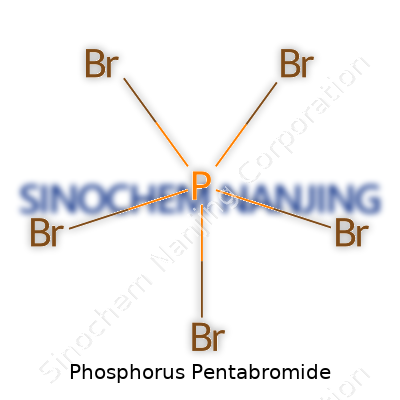
| Names | |
| Preferred IUPAC name | phosphorane, pentabromo- |
| Other names |
Phosphoribromid Phosphorus(V) bromide Phosphorus bromide |
| Pronunciation | /ˌfɒs.fə.rəs ˌpɛn.təˈbrəʊ.maɪd/ |
| Identifiers | |
| CAS Number | 7789-60-8 |
| Beilstein Reference | 3586772 |
| ChEBI | CHEBI:29737 |
| ChEMBL | CHEMBL1201589 |
| ChemSpider | 184515 |
| DrugBank | DB14490 |
| ECHA InfoCard | 100.031.059 |
| EC Number | 215-714-4 |
| Gmelin Reference | 11355 |
| KEGG | C18789 |
| MeSH | D000077207 |
| PubChem CID | 24635 |
| RTECS number | TH3850000 |
| UNII | K0706D6L3G |
| UN number | UN2446 |
| Properties | |
| Chemical formula | PBr5 |
| Molar mass | 591.49 g/mol |
| Appearance | Red crystals |
| Odor | Pungent |
| Density | 4.72 g/cm³ |
| Solubility in water | Reacts |
| log P | 1.86 |
| Vapor pressure | 0.3 hPa (20 °C) |
| Acidity (pKa) | -7 |
| Basicity (pKb) | -3.1 |
| Magnetic susceptibility (χ) | -76.6·10⁻⁶ cm³/mol |
| Refractive index (nD) | 1.903 |
| Dipole moment | 0 D |
| Thermochemistry | |
| Std molar entropy (S⦵298) | 222.7 J·mol⁻¹·K⁻¹ |
| Std enthalpy of formation (ΔfH⦵298) | -243.1 kJ/mol |
| Hazards | |
| Main hazards | Reacts violently with water, causes severe burns, releases toxic and corrosive fumes. |
| GHS labelling | GHS02, GHS06 |
| Pictograms | GHS05,GHS06 |
| Signal word | Danger |
| Hazard statements | H302, H314, H335 |
| Precautionary statements | P223, P231+P232, P280, P305+P351+P338, P370+P378, P422 |
| NFPA 704 (fire diamond) | 3-0-2 |
| Autoignition temperature | 160 °C (320 °F; 433 K) |
| Lethal dose or concentration | LD50 (oral, rat): 250 mg/kg |
| LD50 (median dose) | LD50 (median dose): Oral rat LD50: 187 mg/kg |
| REL (Recommended) | 10-30°C |
| Related compounds | |
| Related compounds |
Phosphorus tribromide Phosphorus trichloride Phosphorus pentachloride |



