3-Chloro-4-Methylphenyl Isocyanate: An In-Depth Look
Historical Development
Scientists in the mid-twentieth century made great strides by exploring aromatic isocyanates, chasing better crop protection agents and more versatile building blocks for pharmaceuticals and polymers. Among these, 3-Chloro-4-Methylphenyl Isocyanate emerged from demand in both academic labs and factory settings. Research papers and patents from the 1960s and 1970s reflect efforts to improve yields and lower impurities during synthesis. The late-century move towards stricter chemical regulation led to tighter scrutiny and safety testing, pressing both commercial and university labs to document their work more thoroughly and share best practices. Today's chemical suppliers can trace their methods and standards back to this iterative, solution-driven approach.
Product Overview
3-Chloro-4-Methylphenyl Isocyanate belongs to the family of aromatic isocyanates. Its rigid, reactive backbone and selectively substituted ring set it apart from simpler isocyanate cousins. This compound draws special interest for forming strong urea and carbamate bonds—key steps in manufacturing active pharmaceutical ingredients, specialty pesticides, and crosslinked polymers. Chemists reach for this chemical when they want targeted reactivity thanks to its streamlined structure, blending efficiency with functional punch. It occupies a quiet but crucial spot on many synthetic benches, especially where stepwise modification or targeted substitution is needed. It’s neither as common nor as notorious as toluene diisocyanate, but Anyone who has tried making certain agrochemicals or peptide mimetics knows its worth.
Physical & Chemical Properties
3-Chloro-4-Methylphenyl Isocyanate comes as a pale to yellowish liquid, sometimes faintly crystalline if cooled. It carries a pungent, acrid scent typical of isocyanates—one whiff reminds chemists to handle it with care. It clocks in with a molecular weight of around 183.6 g/mol and a melting point just below room temperature for pure samples. Solubility tilts toward organic solvents like dichloromethane, benzene, and toluene, while water contact triggers hydrolysis and stings the nose with carbon dioxide fumes and amines. The carbon–nitrogen double bond in the isocyanate group acts like a tripwire, eager to react with nucleophiles and polar species. Stable storage takes a dry, cool environment—humidity nudges it toward breakdown and loss of reactivity.
Technical Specifications & Labeling
Labeling from responsible suppliers spells out the CAS number, purity (typically stated as over 98%), and batch-specific findings on color, melting point, and known impurities. Transport and storage demand UN hazard labeling aligned with global transport guidelines, including warnings about toxicity and reactivity. Shelf-life data relies on regular analysis through techniques like NMR and GC-MS, which help spot the early signs of hydrolysis or polymerization. Professional users check certificates of analysis for isocyanate content, maximum tolerated water, and contaminant caps, knowing that safety in the supply chain underpins reliable results in the lab or on the production line.
Preparation Method
Synthesis of 3-Chloro-4-Methylphenyl Isocyanate begins with chlorotoluene derivatives undergoing nitration, reduction, and then phosgenation steps. Early approaches leaned on direct reaction of phosgene with the relevant aniline derivative—risky, but scalable. Safer, modern routes use triphosgene or even solid-phase reagents, cutting down on dangerous gases and opening up greener protocols. Each process demands precise temperature control and vigilant exclusion of moisture. Over the years, operators have refined reaction monitoring, shifting from simple visual clues to inline spectroscopy and chromatographic assessment. The push for greener chemistry and worker protection continues to shape improvements in equipment, batch purification, and waste management.
Chemical Reactions & Modifications
Reactivity revolves around the isocyanate group. Chemists exploit this for rapid coupling with primary or secondary amines to form ureas, alcohols or phenols to give carbamates, and even with water for rapid hydrolysis and formation of amines and carbon dioxide. Substitution on the aromatic ring (with the methyl group and chlorine) shifts reactivity just enough to tune outcomes—yielding different selectivity in downstream modifications or multistep syntheses. While side-reactions (including NCO group polymerization or unwanted hydrolysis) challenge less experienced hands, careful execution turns this molecule into a gateway for complex intermediates in the hands of medicinal chemists, materials scientists, and crop protection researchers alike.
Synonyms & Product Names
This chemical is known by several names across catalogs and research reports: 3-Chloro-4-methylphenyl isocyanate, m-Chloro-p-tolyl isocyanate, and 1-Isocyanato-3-chloro-4-methylbenzene. Some industry supply lists use abbreviations like CMPI or highlight the parent aniline precursor. While the chemical structure stays the same, small differences in labeling sometimes lead to confusion—so both buyers and researchers check InChI keys and CAS registry numbers to verify exact compounds, especially when tweaking protocols or scaling up.
Safety & Operational Standards
Daily users do not underestimate the hazards of 3-Chloro-4-Methylphenyl Isocyanate. One splash or inhalation incident cuts experiments short and raises sharp reminders about personal protective equipment. The chemical’s volatility and reactivity demand sealed transfer systems, chemical hoods, and full nitrile gloves, goggles, and respirators for open handling. It can cause skin and respiratory irritation and sensitize airways over repeated exposure. Workers learn from industry standards—reading Safety Data Sheets issued under REACH or OSHA Hazard Communication Standard, conducting leak checks, and maintaining proper spill response kits nearby. Disposal is tightly controlled, with neutralizing agents at the ready and collection for incineration or approved chemical waste facilities. Regular drills and technical training remain vital, as even experts occasionally face surprises in practice.
Application Area
This compound rarely makes it onto lists of consumer chemicals, but its fingerprints show up across several major industries. Agrochemical companies convert it into selective herbicides and fungicides by leveraging its isocyanate group to add functionality or control release rates. Polymer scientists value it for building block synthesis—whether for polyurethane prepolymers or as a cross-linker to impart rigidity and resistance in coatings. In the pharmaceutical sector, medicinal chemists transform 3-Chloro-4-Methylphenyl Isocyanate into central motifs for scaffold-based drugs or peptide mimics, counting on its precise reactivity to fine-tune activity and selectivity. Analytical chemists, too, sometimes use it for derivatization reactions, sharpening detection of tricky analytes.
Research & Development
Better methods for making, storing, and using 3-Chloro-4-Methylphenyl Isocyanate still occupy scientists at the bench and on the pilot line. Teams look for new catalysts, flow-chemistry setups, and alternate reagents to replace hazardous phosgene without sacrificing product purity. There’s ongoing work to study subtle electronic effects from the methyl and chloro substitutions—efforts that feed both computational models and hands-on trials. Analytical toolkits have grown sharper too, with real-time NMR and infrared sensors helping catch impurities or degradation in storage. Back in regulatory offices and on collaborative consortium teams, professionals share new toxicology findings, risk assessments, and smarter packaging tech to keep users and the environment safer.
Toxicity Research
No one in the lab ignores the toxicity record of aromatic isocyanates. Handling trials show both acute and chronic risks—skin and airway irritation at low doses, along with potential for asthma-like sensitization after repeated exposure. Eyes and lungs prove particularly vulnerable. Published animal studies guide safe handling limits and spur tighter controls inside workplaces. Toxicologists and regulatory officials keep adjusting exposure limits based on the latest biological and environmental findings. Even low-level environmental releases raise red flags for persistence and breakdown products, so monitoring and cleanup protocols have tightened. Ongoing research explores detailed metabolic breakdown and links to long-term occupational health—a field where new tech and data share one goal: not repeating the mistakes of industrial chemistry’s rougher past.
Future Prospects
Years ahead will bring more efficient, safer synthetic methods, shaped by both environmental regulations and market demand. Current R&D pushes for greener reagents, automated sealed reaction platforms, and ambiguous-hazard labeling for global safety. Digital supply chains help trace every batch from precursor to waste stream—a practice that gives buyers confidence and keeps regulators at bay. At the same time, discovery chemists keep driving demand for specialty isocyanates that offer even tighter selectivity, lower toxicity, or unique reactivity. While the world will always need careful oversight and strict operational rules around compounds like 3-Chloro-4-Methylphenyl Isocyanate, smarter use and design will allow society to benefit from these reactive tools without repeating past dangers.
What is 3-Chloro-4-Methylphenyl Isocyanate used for?
The Backbone of Specialized Chemistry
3-Chloro-4-methylphenyl isocyanate often ends up in chemical labs because it brings a lot of value in the production of specialty chemicals. This compound doesn’t reach households on its own, but many folks will benefit from products that rely on building blocks like this. I’ve seen it pop up in research settings where people look to create new molecules with specific properties, including pharmaceuticals and crop protection agents.
Role in Pharmaceutical Development
Drug discovery remains one of the main fields where this chemical stays relevant. It helps chemists build molecules that form the backbones of new medications. The isocyanate group links with other molecules to form ureas and carbamates, which can alter how a drug behaves in the body. I’ve seen scientific journals describing how compounds based on structures like this show promise against tough diseases, including cancer and auto-immune conditions. Some researchers pointed out that 3-chloro-4-methyl groups help improve drug stability and selectivity, which can mean fewer side effects for patients over time.
Agriculture Counts on Synthetic Chemistry
Farmers depend on products that keep crops safe from pests and disease, often without realizing the web of chemistry behind them. Companies developing new herbicides and insecticides depend on starting materials like 3-chloro-4-methylphenyl isocyanate. It acts as a precursory piece for manufacturing active ingredients. With the world’s population growing and pressure on food systems mounting, chemists continue searching for ways to make pest control both safer and more effective. Careful design, starting with scaffolds like this, plays a part in balancing effectiveness, safety, and environmental impact.
Manufacturing and Material Science
Some applications don’t grab headlines—yet they affect daily life. Manufacturers working with polymers and advanced coatings reach for chemicals like 3-chloro-4-methylphenyl isocyanate to help customize surface properties. It has the right chemical “hooks” to attach customized features on plastics, foams, and paints. These tweaks improve product durability or compatibility with other chemicals. For example, I’ve seen materials with tailored surfaces that simplify cleaning in hospitals or improve how adhesives work in electronics.
Safety, Oversight, and Responsible Use
Handling 3-chloro-4-methylphenyl isocyanate comes with risk. Anyone using it in a lab or plant must know about its reactivity and potential health hazards. I remember working with isocyanates and hearing stories about acute allergic reactions and respiratory concerns from improper handling. Regulators in the US, EU, and Asia have set up safety requirements to reduce exposure. Chemical suppliers offer detailed safety data sheets and personal protective equipment. Strong training programs and modern ventilation systems can turn laboratories and factories into much safer places to work. It’s important that industry leaders promote a culture where asking questions about safety is just part of the job.
The Road Ahead: Innovation With Oversight
There’s no slowing down in the search for new medicines, smarter materials, and better crop protection tools. Compounds like 3-chloro-4-methylphenyl isocyanate anchor this kind of innovation. Forward-thinking companies invest in green chemistry—developing cleaner manufacturing processes that cut waste and limit exposure. Continued collaboration between chemists, engineers, policymakers, and health professionals remains central to safe, responsible progress. With the right guardrails, specialized chemicals will keep fueling new solutions to some of today’s biggest challenges.
What are the storage and handling precautions for 3-Chloro-4-Methylphenyl Isocyanate?
Why Storage Matters More Than Tidy Shelves
3-Chloro-4-Methylphenyl Isocyanate is nobody’s friend if handled carelessly. A few years back, working in a small specialty lab, I saw someone skip the right container just to save time. The result: fumes, alarms, and a hazmat rush. That moment hammered home how leaks or vapor from poorly stored isocyanates don’t just disappear; they chase down lungs and corrode equipment.
Precautions That Make a Difference
This compound reacts fiercely with water. Even traces of moisture in the air can trigger a chain reaction that ends with dangerous gas. Keep containers tightly sealed, preferably in a cool, dry cabinet lined with corrosion-resistant material. Stay away from copper, brass, or other metals that spark reactions.
I learned from an old supervisor—who always checked the weather reports—that high humidity days spell trouble. In damp air, the risk of container lids collecting condensation climbs. Even a few drops can set off toxic emissions. That lesson stuck with me, so I always push for labs to run dehumidifiers and monitor shelves for sweating jars.
Separate to Stay Safe
Don’t store this chemical near acids or bases. Accidental mixing—say, from a toppled bottle or a spill—can lead to violent heat, fumes, and fires. Space the shelves, label everything, and use trays to contain leaks. Anyone who walks into a storeroom should know which areas spell out ‘danger’ just by looking.
Skin contact causes burns and allergic reactions. Even a moment’s distraction—like pulling off gloves too soon—could put a handler in the emergency room. Chemical-resistant gloves and splash goggles sound routine, but ignoring them has real costs. Clothes matter, too: long sleeves and sturdy aprons block accidental splashes.
Ventilation: A Must, Not a Luxury
A decade ago, ventilation seemed a technical detail. Now I see it as life-saving. Fume hoods are built for a reason, and opening containers outside one risks everyone in the room. Instead of relying on luck, invest in dedicated exhaust systems and train staff to spot dead zones where air doesn’t move.
Waste Isn’t Just Trash
Waste from this material needs its own game plan. Pouring leftovers into general chemical waste piles up risk for everyone. Specialized containers, clear labeling, and frequent waste pickups lower the odds of leaks and explosions. Talking to disposal experts, not just reading a manual, sets up safer habits and saves money in accident claims.
Training and Accountability
Knowledge stands as the biggest shield against accidents. Regular drills, new staff orientations, and safety checklists keep everyone sharp. It’s worth tracing where procedures break down—the tiniest shortcut often signals bigger gaps in training or culture.
Compliance officers, government inspectors, and insurance auditors are not just red tape. Their surprise visits and questions spot the habits—good or bad—that shape real safety records. Adopting their standards brings peace of mind and keeps lives and livelihoods intact.
What are the potential health hazards of 3-Chloro-4-Methylphenyl Isocyanate?
Picturing the Chemical in Real Settings
Spend a little time in labs or near chemical plants, and words like “isocyanate” spark caution. 3-Chloro-4-Methylphenyl Isocyanate belongs to a family of chemicals that factory workers and lab techs don’t take lightly. Its smell, irritation, and fuming potential make folks reach for masks and gloves. Companies mainly use this compound for synthesizing other chemical products, especially where rubber, adhesives, or specialty coatings emerge. Some researchers remember skin stings and that sharp, harsh odor during synth runs, which sticks in memory even years later.
What Can Go Wrong After Exposure?
Breathing in isocyantes can feel like inhaling pepper spray blended with ammonia. Eyes water, throats turn rough, and coughing follows instantly. Pulmonary doctors track cases where workers exposed to isocyanates faced asthma attacks weeks or even months after initial contact. The US National Institute for Occupational Safety and Health (NIOSH) warns that repeated inhalation may lead to chronic occupational asthma, a danger that sneaks up as sensitivity builds. Short-term exposures hit faster and harder for those with allergies or asthma already on the books.
Touching this compound with unprotected skin gives an entirely different problem. Some users tell of burning, redness, and blisters that linger far longer than with other lab chemicals. These irritations come with a risk of becoming allergic to the compound—once skin gets sensitized, even trace exposures can cause patches of swelling or itch. It doesn’t take much for “just another day” in the lab to turn into a trip to urgent care.
Getting splashed in the eyes brings almost instant pain, burning, and in some cases, temporary—or even permanent—vision issues. Anyone working with this material remembers hearing stories about people needing emergency eyewash stations, sometimes with long-term eye inflammation afterward.
Wider Impact on Health: Facts from Research
Studies from the European Chemicals Agency highlight risks connected to both immediate and chronic health effects. These isocyanates rank among the main causes of occupational asthma in Western countries. A 2021 medical review found that chemical exposure in manufacturing increases over time as workers become more tolerant of minor symptoms, leading to more severe problems if supervisors or company leadership fall behind on routine air monitoring.
OSHA’s chemical safety data points out that fumes from heating or burning this material release gases that irritate airways, lungs, and skin much more than many other industrial toxins. Medical experts flag its capacity to create severe anaphylactic reactions in people with previous allergies, meaning one small mistake might cause a trip to the ER.
Changing the Story: Steps Toward Safety
Relying on personal protective equipment isn’t just a box-ticking exercise. Every seasoned worker treats masks, gloves, and splash-proof goggles as their lifeline. Good ventilation stands as the gold standard—not only in main rooms but in handling tanks, mixing vats, and waste storage areas. Smart shops invest in regular training, making sure no one walks into a dangerous zone uncertain of emergency exits and decontamination showers.
On the leadership side, companies must schedule regular exposure monitoring, both in the air and on surfaces. Labs and factories see better compliance on safety when teams run regular drills and reward crews who stick to the rules. Pulling new research—such as allergy monitoring and rapid response kits—into day-to-day operations transforms chemical handling from a game of chance into a field rooted in evidence-based practice.
What is the chemical formula and molecular weight of 3-Chloro-4-Methylphenyl Isocyanate?
Chemical Profile
3-Chloro-4-Methylphenyl Isocyanate stands as a noteworthy compound for chemists in industrial and research settings. Its chemical formula, C8H6ClNO, highlights a familiar aromatic layout with a chlorine and a methyl group tweaking the usual benzene setup. The molecular weight of this compound clocks in at 167.59 grams per mole. Those numbers might just seem like trivia to some, but to those who work with synthesis and formulations, accuracy in these figures keeps experiments reproducible and safe.
Real-World Context
I remember my first time in a small synthesis lab years ago, where these details weren’t just notes on paper. The air would carry a hint of solvents, the bench filled with labeled vials—all reminding us that forgetting a single molecular weight could spell disaster for a day’s work. With isocyanates, including 3-Chloro-4-Methylphenyl Isocyanate, precision grows even more crucial. Miscalculating just one decimal while measuring the amount needed risks turning a controlled reaction into something frustrating or, at worst, hazardous.
Safety Comes First
People in the field know isocyanates for their sharp reactivity. They don’t just linger in beakers—inhalation or skin contact can provoke respiratory issues, so lab staff respect proper handling. Good ventilation, gloves, and goggles become non-negotiable, not just box-ticking exercises. The chemical formula and molecular weight aren’t just homework questions; they directly influence how much chemical the team adds to a process, how to neutralize spills, and what kind of emergency response suits the lab setup.
Industrial Relevance
Products built on compounds like 3-Chloro-4-Methylphenyl Isocyanate matter outside of the lab as well. Companies might use it to make specialized polymers or intermediates for pharmaceuticals. Each application asks for tailored reaction conditions, where precision in weighing and measuring means saving money, working safely, and steering clear of environmental run-ins. Synthetic chemists and plant operators count on these essentials, so production doesn’t grind to a halt—a lesson many learn the hard way when process streams stall due to contaminated or mislabeled starting materials.
Improving the Status Quo
Some labs and factories still rely on hand-written notes or legacy chemistry sets. Upgrading to modern analytical balances, implementing digital batch tracking, and offering thorough staff education instantly boost handling accuracy. When memory falters, technology steps in—barcode systems can double-check labels or blend recipes, flagging errors before small issues snowball. Knowledge-sharing between labs and plant floors also stops bad habits in their tracks, nudging newcomers to pay attention to details like molar mass differences that could otherwise escape notice.
Action for a Safer Future
Enforcing tougher training standards and updating safety documentation whenever chemical inventories change keep everyone a few steps ahead of trouble. Regular audits, open communication channels, and encouraging questions whenever uncertainty arises all help foster a workplace where accuracy beats haste. For a compound like 3-Chloro-4-Methylphenyl Isocyanate, every decimal in a formula or every gram on a scale shapes outcomes across industries—from academic research to advanced manufacturing.
How should 3-Chloro-4-Methylphenyl Isocyanate be disposed of safely?
Real Risks in the Lab and Beyond
3-Chloro-4-Methylphenyl Isocyanate pops up in specialty chemical synthesis. To the untrained eye, it looks a lot like any other clear liquid in a flask, but the danger lurking here can get downright personal. This stuff is an irritant to skin, eyes, and lungs, and anyone who’s spilled a potent isocyanate on a benchtop knows the mess isn’t just about the clean-up — it’s about who gets exposed. Years ago, I worked with aromatic isocyanates, and everyone on our team had strict routines to keep exposures zero. These chemicals, if handled with shortcuts, can lead to serious injury and hazardous environmental releases.
Understanding the True Threat
Disposal mistakes with chemicals like this don’t just threaten workers on site. Isocyanates react violently with water, giving off carbon dioxide and heat, which ramps up pressure inside sealed containers. A few unlucky labs have discovered pressure build-ups the hard way — not only do lids blow off, but noxious vapors follow close behind. Released into the environment, these compounds can put local wastewater plants in trouble, or worse, poison streams and rivers.
Why Every Step Counts
The law in most regions, including the US and EU, calls out isocyanates as hazardous waste. Dumping them down the drain or tossing them in regular trash isn’t just sloppy work — it’s illegal and dangerous. The Resource Conservation and Recovery Act keeps a tight watch on this, and for good reason. Chronic exposure to isocyanates has been linked to serious health issues, including occupational asthma, and once released, these compounds don’t vanish quickly.
What Safe Disposal Looks Like
My team learned that small mistakes can spiral fast. We dedicated a fume hood just for isocyanate waste. It always paid off to use chemical-resistant gloves, goggles, and long sleeves, even during disposal. We never mixed isocyanate leftovers with liquid waste unless a professional guide said it’s okay, and we always kept incompatible wastes in separate sealed containers. That approach came from direct training and a few industry horror stories.
The real solution involves working with hazardous waste professionals. Certified chemical waste haulers know how to neutralize isocyanates with agents like dilute acids, converting the hazardous stuff to less toxic urea derivatives. The job should always take place in controlled settings, never on an open bench or, worse, outdoors. Some companies use batch hydrolysis — slowly adding isocyanate to a dilute acid bath, keeping temperature and pressure under watch. It takes patience, but the science is sound and, more importantly, keeps folks safe.
Responsibility Doesn’t End at Work
Safe disposal with chemicals isn’t just about following rules. It’s about protecting the folks down the hall, the neighbors near the plant fence, and the wildlife nobody ever sees. Too many times, sloppy chemical handling comes out in local headlines after the damage’s done. Good training, the right tools, and a willingness to double-check procedures go further than any thick rulebook. From my own experience, nothing builds trust in a work team like knowing you’ve handled the dangerous stuff right, every time.
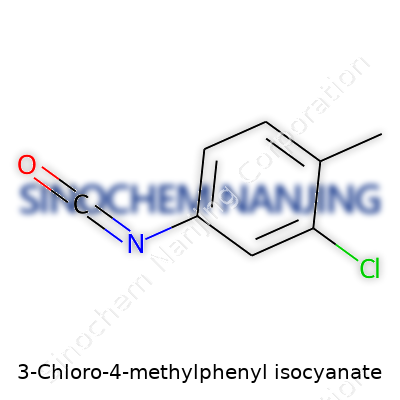
| Names | |
| Preferred IUPAC name | 3-chloro-4-methylphenyl isocyanate |
| Other names |
3-Chloro-4-methylphenyl isocyanate Isocyanic acid, 3-chloro-4-methylphenyl ester 3-Chloro-4-methylphenylisocyanat m-Isocyanato-o-chlorotoluene Benzene, 1-chloro-2-isocyanato-4-methyl- 3-Chloro-4-methylisocyanatobenzene |
| Pronunciation | /ˈθriː-klɔːrəʊ fɔː ˈmɛθɪlˌfiːnaɪl ˌaɪsəʊˈsaɪəneɪt/ |
| Identifiers | |
| CAS Number | 34887-99-5 |
| Beilstein Reference | 1109085 |
| ChEBI | CHEBI:131748 |
| ChEMBL | CHEMBL1713602 |
| ChemSpider | 22280986 |
| DrugBank | DB08347 |
| ECHA InfoCard | ECHA InfoCard: 100.041.875 |
| EC Number | is not assigned |
| Gmelin Reference | 76656 |
| KEGG | C19202 |
| MeSH | Dichlorophenyl Isocyanates |
| PubChem CID | 101600 |
| RTECS number | GW2975000 |
| UNII | T8109Q00SQ |
| UN number | UN3330 |
| Properties | |
| Chemical formula | C8H6ClNO |
| Molar mass | 163.59 g/mol |
| Appearance | Colorless to yellow liquid |
| Odor | Aromatic |
| Density | 1.19 g/cm³ |
| Solubility in water | Insoluble |
| log P | 2.8 |
| Vapor pressure | 0.03 mmHg (25°C) |
| Acidity (pKa) | 15.0 |
| Basicity (pKb) | 11.98 |
| Magnetic susceptibility (χ) | NA |
| Refractive index (nD) | 1.567 |
| Viscosity | 160.00 cP (25°C) |
| Dipole moment | 2.59 D |
| Thermochemistry | |
| Std molar entropy (S⦵298) | 328.6 J·mol⁻¹·K⁻¹ |
| Std enthalpy of formation (ΔfH⦵298) | -74.7 kJ/mol |
| Std enthalpy of combustion (ΔcH⦵298) | -5317.7 kJ/mol |
| Hazards | |
| Main hazards | Toxic if inhaled, causes severe skin burns and eye damage, may cause respiratory irritation. |
| GHS labelling | GHS02, GHS05, GHS06, GHS08 |
| Pictograms | GHS05,GHS06 |
| Signal word | Danger |
| Hazard statements | H302, H311, H315, H317, H319, H330, H334, H335, H410 |
| Precautionary statements | P261, P264, P271, P272, P280, P302+P352, P304+P340, P305+P351+P338, P310, P312, P321, P332+P313, P333+P313, P362+P364, P405, P501 |
| NFPA 704 (fire diamond) | 1-2-0-W |
| Flash point | 113 °C |
| Autoignition temperature | 230 °C |
| Lethal dose or concentration | Lethal dose or concentration: **LD50 oral rat 670 mg/kg** |
| LD50 (median dose) | LD50 (median dose): Rat oral 640 mg/kg |
| NIOSH | NIOSH: GTJ55940 |
| PEL (Permissible) | PEL (Permissible Exposure Limit) for 3-Chloro-4-Methylphenyl Isocyanate: Not established |
| REL (Recommended) | 0.02 mg/m³ |
| IDLH (Immediate danger) | Unknown |
| Related compounds | |
| Related compounds |
3-Chloro-4-methylaniline 3-Chloro-4-methylphenylamine 4-Methylphenyl isocyanate 3-Chlorophenyl isocyanate 4-Methylphenyl isocyanate 4-Chloro-3-methylphenyl isocyanate 2-Chloro-4-methylphenyl isocyanate |



