Phenyl Chloroformate: More Than Just a Reagent
Historical Development
Chemistry’s path always brings up early discoveries that shape research for years. Phenyl chloroformate came onto the scene in the early 1900s, following work on organic chlorides that helped define paths to more advanced materials. With its roots in the wave of organic synthesis that swept across research labs in Europe and the United States, phenyl chloroformate answered the call for a reagent that could bridge acids and alcohols to esters and urethanes. Research momentum built after World War II, as polymer science and pharmaceuticals looked for easier routes to activate carboxylic acids. Phenyl chloroformate’s reactivity, reliability, and manageable handling put it on shopping lists from industrial chemists to university groups. The growth of peptide synthesis and protective group chemistry in the 1970s gave it another boost. Since then, it’s stuck around as a quiet workhorse in the toolkit, helping labs take small molecules and build them out into something more useful.
Product Overview
At a glance, phenyl chloroformate looks simple—just a phenyl group hooked to a chloroformate. Its formula tells a clear story: C7H5ClO2. This isn’t a chemical that grabs headlines until folks see what it can do. As a clear, colorless to pale yellow liquid, with that distinct, pungent smell you come to associate with reactive chlorides, it isn’t marketed with bells and whistles. Instead it gets the job done in peptide coupling, creating carbonates, and setting up other complex organic reactions. Chemists pick it not for the drama, but because its reactions run clean, and it’s relatively straightforward to purify downstream products.
Physical & Chemical Properties
With a boiling point around 243°C and a tendency to react quickly with moisture, phenyl chloroformate demands careful storage. Anyone who has cracked open a fresh bottle in a humid lab knows how it smokes as tiny bits hit the air. Its density sits a little above 1 g/cm3. Reactivity stands as its most useful trait: the carbonyl carbon gets attacked eagerly by nucleophiles, which is why it facilitates so many useful conversions. Hydrolysis is always a concern; a careless move, a sweaty glove, or an unsealed bottle, and you face a real mess with release of hydrochloric acid and phenol. That risk keeps researchers on their toes, pushing them to plan reactions and waste handling in advance.
Technical Specifications & Labeling
Phenyl chloroformate usually lands with a purity above 98 percent, since even small impurities can throw off reactions. Labels warn of its corrosiveness and potential to generate harmful gases with water or bases. Transport and storage regulations kick in above certain volumes, demanding proper secondary containment and signage about toxic inhalation hazard. From my time in the lab, I always respected those pictograms warning of severe burns and acute toxicity. No one ever casually tossed a bottle into a random fume hood, and everyone checked the stopper before handling.
Preparation Method
Chemists take care preparing phenyl chloroformate, starting by treating phenol with phosgene or, in more modern processes, safer phosgene substitutes. The method feels old-fashioned because the hazards are real—phosgene has a dark history, but it’s hard to beat for high-yield processes. Occasionally, carbonyl diimidazole or triphosgene serve as more manageable options, especially on a smaller scale or in teaching settings. Extractive workups follow, cutting down the risk of water exposure and improving safety. Solvent choices matter: dry chlorinated solvents like dichloromethane reduce the chances of side reactions. Every chemist learns quickly to work smoothly—any lapse can result in phosgene or HCl escaping, which leads to a round of fume hood evacuations and a stern safety talk.
Chemical Reactions & Modifications
Phenyl chloroformate carves out its niche in reactions with amines or alcohols, building carbamates and carbonates that open doors to pharmaceuticals, agrochemicals, and plastics. Its selective behavior lets chemists protect groups or activate molecules, setting up sequences that take weeks instead of months. You can see its fingerprints on peptide couplings, surface derivatizations, and in the fine-tuning of specialty polymers. Take a primary amine, add phenyl chloroformate, and you get phenyl carbamate—a trick that makes purification easier and controls stepwise synthesis. Its modifications also include partial hydrolysis or gentle substitutions, letting scientists tailor endpoints for research or production needs. This short list of reactions hides just how central it has become to flexible, efficient organic chemistry.
Synonyms & Product Names
Walking through catalogs, phenyl chloroformate goes by several names: carbonochloridic acid, phenyl ester, phenyl chlorocarbonate, and sometimes just labeled as PhOCOCl. Some packaging or regional suppliers lean into trade names, but at the bench, almost every chemist calls it phenyl chloroformate and reads the hazard statements twice before pulling the bottle off the shelf. The synonyms crop up in patents and research articles, creating occasional confusion for students digging through the literature, but with a little context, it becomes clear they mean the same reactive liquid.
Safety & Operational Standards
Safety dominates discussion at every step. Phenyl chloroformate responds poorly to careless gloves, open containers, or clogged waste lines. Acute hazards include skin burns, eye damage, respiratory irritation, and the potential for delayed-onset health effects if inhaled. I remember every training on “treat it with full PPE and always in a ventilated hood.” Guidelines set by organizations like OSHA and the European Chemicals Agency call for local exhaust, airtight containers, and chemical splash goggles. Spills warrant quick neutralization with sodium bicarbonate and thorough area decontamination. Disposal standards often require neutralization followed by controlled incineration, never mixed carelessly with incompatible chemicals. Sharing the fume hood with someone running phenyl chloroformate, everyone kept a wary eye for leaks or any odd smell—a team responsibility, not just personal discipline.
Application Area
Labs keep phenyl chloroformate close for its crucial role in peptide synthesis, where protective groups and active esters speed up assembly of short and long peptides. In pharmaceuticals, it simplifies routes to carbamates and carbonates, which pop up across drug families as intermediates or active groups. Agrochemical companies use it for tailored pesticides and herbicides. In materials science, it sets up surface modifications for specialty polymers, resins, and advanced coatings. I’ve seen it in new battery research, automated organic synthesis systems, and in fine-tuning diagnostic probes. Biotech startups and chemical manufacturers both appreciate its clean activation and well-understood reactivity, supporting projects that need reliable links between molecules.
Research & Development
For every new reaction or synthetic pathway, researchers ask if phenyl chloroformate can cut out unnecessary steps and reduce side products. Peptide and oligonucleotide synthesis benefit from shorter routes, and that drives ongoing demand for improved or safer variants. Some groups focus innovation on greener, less toxic preparation methods, aiming to drop phosgene out of the picture. High-throughput screening, drug optimization, and rapid scale-up for clinical trials all benefit from a reagent that plays well with others, and phenyl chloroformate fits the bill. Analytical techniques have honed in on trace impurities, giving even tighter reins on product specs and opening up applications in more sensitive settings, like biomedical research.
Toxicity Research
Experience teaches that improper handling of phenyl chloroformate can do real damage. Acute exposure brings swift skin burns or severe respiratory irritation. Chronic effects from long-term exposure remain less documented in people, but worries mount as more high-throughput screening and automation bring more frequent reagent handling. Scientists have studied breakdown pathways, finding that hydrolysis reverts it to phenol and CO2—and the phenol itself is no treat to water systems or workers. Animal studies reveal central nervous system impacts and eye damage, pushing researchers to reconsider working concentrations and venting protocols. The drive continues for safer protocols and encapsulated, single-use doses to limit accidental exposures. Each near-miss or spill drills in the lesson: safety protocols only work as well as the users’ attention span.
Future Prospects
With chemical industries moving toward greener operations and tighter regulatory scrutiny, phenyl chloroformate faces pressure to evolve. Companies look for lower-toxicity replacements or ways to package smaller, pre-measured quantities for safer handling. Research teams test alternatives for peptide and polymer work, but none have managed to match its versatility and efficiency at scale. Automation of organic synthesis, next-generation pharmaceuticals, and designer polymers keep phenyl chloroformate on the front lines for now. The next chapter likely holds safer production methods, lower-emission disposal procedures, and possibly new analogs that trade some reactivity for less environmental risk. Even as synthetic biology and advanced materials evolve, the lessons learned from safe, skillful handling of classic reagents like phenyl chloroformate will keep shaping laboratory culture and chemical industry standards for years to come.
What is Phenyl Chloroformate used for?
A Closer Look at a Key Chemical Player
Walk through any research lab or peek into the world of industrial chemistry, and you’re bound to find Phenyl Chloroformate quietly underpinning a range of innovations. Not exactly a household name, yet this compound finds itself involved in the assembly of some familiar end-products, from life-saving pharmaceuticals to specialized plastics. What’s so special about this colorless, sometimes pungent liquid? Let’s break it down—simple, straight, and grounded in the real-world consequences of chemical science.
More Than Just a Reagent
In my years around bench scientists and process engineers, Phenyl Chloroformate usually remained in the background, playing a pivotal role as a building block in organic synthesis. Chemists rely on it for a job that demands finesse: creating carbamates and carbonates. These two groups of compounds serve as the backbone for dyes, drugs, pesticides, and polymers.
One way to think about Phenyl Chloroformate is as a connector in complex chemical puzzles, particularly during the design of active pharmaceutical ingredients. For example, it’s essential for creating certain anesthetics and enzyme inhibitors, some of which have reshaped modern medicine by improving pain management and treatment options for chronic diseases. Forget the stereotype of chemistry as detached from the daily grind—this is a reagent that, down the line, enables a kid to get numbed safely at the dentist’s office or a cancer patient to receive a targeted therapy.
The Craft of Drug Design
The pharmaceutical industry gives this compound a starring role. I recall a former colleague mentioning the headache of finding a reagent both reactive enough to help assemble a drug molecule, yet well understood to manage and control during scale-up. Phenyl Chloroformate fits the bill. It helps introduce protecting groups and forms bonds without causing chaos in a reaction vessel, keeping the process efficient. This level of control speeds up drug discovery and accelerates new medicines’ path to the pharmacy shelf.
Out on the Factory Floor
Step out of the medical sphere, and you’ll spot this compound at work in specialty materials. Manufacturers lean on it to craft high-quality polycarbonate plastics. These plastics turn up everywhere from CDs to optical lenses, and the demands remain high for clarity, durability, and safety. The chemical’s role in shaping the structure of these polymers means it holds a real-world value beyond a laboratory glass bottle.
Balancing Safety With Progress
Handling Phenyl Chloroformate always brings up the question of safety. Direct exposure irritates skin, eyes, and the respiratory tract, so proper ventilation and personal protective equipment are more than just box-ticking—they keep workers healthy and processes compliant with regulations. Investment in safer handling technologies, rigorous training, and regular monitoring can minimize hazards without slowing industrial progress.
Looking Ahead: Smarter, Safer Chemistry
As an advocate for responsible science, I see a hopeful trend. Researchers have been searching for greener substitutes and reaction processes that reduce waste or the release of hazardous byproducts tied to this class of chemicals. Academic publications reflect a push for more sustainable chemistry, and the big players in the industry aren’t just watching—they’re acting. The way forward involves a mix of old-school chemical knowledge and new-school green innovations. If you work around Phenyl Chloroformate, or rely on products crafted with its help, you’re already connected to this evolving story—a reminder that smart chemistry isn’t just about molecules, but about people and lives improved down the line.
What is the chemical formula of Phenyl Chloroformate?
Understanding Phenyl Chloroformate
The formula for Phenyl Chloroformate is C7H5ClO2. This molecule isn’t a household name, but anybody who’s worked in a chemistry lab or has dabbled in organic synthesis might recognize it straight away. Mine is a background in chemistry, and it’s hard not to remember handling this strong-smelling, reactive chemical—carefully, always with gloves and a fume hood. Safety comes first because those fumes are no joke.
Why Chemists Value Phenyl Chloroformate
This chemical gets a lot of attention in the lab because it acts as a building block for more complex molecules. Anyone designing pharmaceuticals or new materials may reach for Phenyl Chloroformate when there’s a need to introduce specific groups into a molecule. It’s often used in the preparation of carbamates and urethanes. These aren’t just research curiosities—they show up in medicine, coatings, and certain polymers.
I’ve seen researchers use it in small-scale reactions where exact control over conditions means success or failure. Each carbon, hydrogen, and oxygen atom is accounted for in reactions, so accuracy with chemical formulas is vital. One wrong symbol, and the entire reaction could fail or, worse, become hazardous. There’s a good reason chemistry lectures drill those formulas into your head.
How Precaution and Knowledge Go Hand in Hand
Working safely with Phenyl Chloroformate takes a combination of training, discipline, and respect for chemistry’s risks. Even today, many university labs keep only small amounts on hand because it can irritate the eyes, skin, and respiratory system. Proper fume hoods, goggles, and gloves are non-negotiable. I’ve watched newcomers learn the hard way that splashes or spills require swift and thorough clean-up, or they risk exposure.
Mistakes in labs often come from carelessness or a lack of understanding. Reactions involving Phenyl Chloroformate produce hydrochloric acid gas if they go wrong, and that gets dangerous quickly. Lab safety officers emphasize the formula because every element hints at reactivity. Students memorize molecular weights, atom arrangements, and chemical properties as part of staying safe and effective in research.
The Importance of Accurate Chemical Information
Providing the precise formula—C7H5ClO2 for Phenyl Chloroformate—goes way beyond trivia. Sourcing, labeling, storage, and disposal all depend on correct identification. Regulations for chemical handling and transport rely on these details. In my time consulting for small biotech startups, I’ve seen how even a minor mistake on a shipping label could cause delays or trigger investigations.
Educational resources should break down what the formula really means. The phenyl group (a simple aromatic ring), attached to a carbon with both a chlorine and two oxygens, offers reactivity that scientists leverage to enhance other compounds. A molecular understanding helps professionals anticipate reactions and prevent mistakes.
Toward Safer and Smarter Chemistry
Improving training around chemicals like Phenyl Chloroformate matters for every lab worker. Hands-on safety demonstrations, up-to-date reference materials, and strong regulatory guidelines protect both people and the environment. The formula isn’t just a set of numbers and letters—it’s the language that guides work in chemistry, and neglecting its importance often costs real money and real safety.
As science advances, so do safety practices and knowledge-sharing. Open discussion about experiences, accidents, and workflows helps young chemists learn the ropes. I’ve seen real progress in how labs document chemical procedures, and it always starts with the basics: knowing your formulas, understanding your chemicals, and respecting the craft.
What are the storage conditions for Phenyl Chloroformate?
It’s Not Your Average Chemical
Phenyl chloroformate doesn’t belong in the “just stick it on the shelf” category of reagents. Anyone working in research labs knows that certain compounds can turn a regular workday upside down in a matter of seconds. This one belongs in that camp. Its strong reactivity and volatility make storage decisions crucial to safety and process reliability.
Cold Storage First, But That’s Just the Start
The label usually says “cool, dry place,” but trust me, leaving this bottle in a standard storeroom at twenty degrees Celsius is playing with fire. A refrigerator or dedicated chemical cold room is a better bet. Those running older fridges—without explosion-proof mechanisms—should rethink their setup. That sparks-and-vapors recipe is famous in lab incident reports.
Experience with leaking bottles reinforces the need for tight temperature control. Phenyl chloroformate breaks down easily when left near heat, and ambient warmth encourages the release of corrosive vapors. Inhalation hazards multiply fast, and cracked glassware can lead to dangerous splashing. Facts show that even a few degrees above ideal ranges can accelerate both decomposition and pressurization within sealed bottles.
Moisture Wrecks Stability—And Safety
Ask any chemist about bad surprises, and accidental hydrolysis of phenyl chloroformate will rank high. This stuff reacts with water in the air, not just visible spills. Keeping the container tightly closed is a given, but folks who keep desiccant canisters nearby or in the same box sleep better at night. If the lab gets humid in summer, double wrapping or using sealed secondary containers helps out.
There’s plenty of evidence in both research and industry that accidental moisture introduction means toxic phenol and hydrochloric acid fumes. The health impact from a short exposure can haunt you for days: burning nose, eyes watering, cough that won’t quit. OSHA and NIOSH documents both warn against underestimating the risk. I’ve witnessed labs evacuated over tiny leaks, causing lost research time and real financial setbacks.
Separation Prevents Dangerous Interactions
Some chemicals just don’t play well together. Phenyl chloroformate reacts aggressively with strong acids, bases, and amines. Store it far from those shelves. A little time spent organizing pays off big if things go sideways—better to open a bottle knowing there’s nothing next to it that could kick off a runaway reaction.
People starting out sometimes overlook the risk from old, incompatible storage spaces. I once found a bottle misfiled among reducing agents—luckily, it was intact. If it hadn’t been caught, the entire building could have ended up in the news.
Company Training Tops the List
It’s easy to get complacent with routine chemical handling, but phenyl chloroformate pushes experienced hands to stay sharp. Well-kept protocols, safety data sheets close at hand, and regular training sessions keep the information fresh. It helps to have visual reminders of hazards, not just lists of do’s and don’ts.
Labs and warehouses investing in staff knowledge and equipment maintenance see lower insurance claims, fewer accidents, and longer chemical shelf life. Stories from colleagues underline the message—a bit of care during storage today keeps your team, your data, and your career out of the headlines tomorrow.
Is Phenyl Chloroformate hazardous and how should it be handled?
What Makes Phenyl Chloroformate Risky in the Lab?
Walking into a chemistry lab, bottles marked with unfamiliar names catch the eye. Phenyl chloroformate is one of those names that demand respect. This colorless liquid doesn’t belong in a casual setting. It gives off strong fumes that prompt even seasoned chemists to grab a fume hood without a second thought. Inhalation can irritate the respiratory system, trigger coughing, and set off headaches before one even realizes what’s happening. If it touches skin, the burning sensation starts right away, sometimes leaving long-lasting damage. Eyes are especially defenseless—a few drops and vision could suffer permanent injury.
Why Take These Hazards Seriously?
Phenyl chloroformate comes up in academic labs and industries making pharmaceuticals or specialty chemicals. Having seen safety breaches first-hand, I know too well how complacency breeds incidents. A researcher once rushed a transfer without gloves, believing a quick wipe would keep them safe. It ended with a chemical burn that needed weeks to heal. These risks aren’t rare cautionary tales. Official data from safety agencies confirm that repeated mishandling leads to emergency room trips every year. Both acute exposure and long-term mishandling can have lasting health effects—lung, liver, and kidney damage are possibilities with enough exposure. The compound breaks down in an acidic or damp environment, releasing phosgene and hydrogen chloride, both highly toxic gases. It often surprises new lab workers that a spill can fill a room with invisible dangers, and a simple nose test for odor can deliver a lifetime regret.
Reducing Risk—Responsibility Starts With the Right Tools and Mindset
Risk shrinks when protective gear stands as the first line of defense. Lab coats, goggles, thick gloves, and a solid fume hood are non-negotiable. During training, some might roll their eyes at the checklist of safety gear, but experience always rewards careful preparation. Fume hoods help by whisking away vapor before it’s breathed in. Never take shortcuts like transferring chemicals outside protective zones for “just a second.”
Storage matters almost as much as immediate safety. Keep phenyl chloroformate in a cool, dry spot locked away from acids and water. Good labeling practices also cut down on confusion—every bottle should carry clear warnings and hazard information with the date it was received and opened. Spills or accidental contact require a fast, planned response. Neutralizing spilled chemical with appropriate agents, then disposing of waste materials following regulations, keeps disasters from spreading. Every institution should post emergency numbers and spill response plans nearby; relying on memory in a crisis rarely works out.
Cultivating Respect Means Sharing Knowledge
In my years mentoring students and coworkers, the best results came from sharing real stories, not only repeating rulebooks. Giving people hands-on practice with spill kits, eyewash stations, and incident simulations boosts confidence. Fresh eyes often spot unsafe habits veterans overlook out of routine. Encouraging everyone, from new interns to managers, to report hazards pays off. Culture drives safety. Managers and senior chemists who take time to walk through proper handling, answer questions, and admit their own close calls, foster an environment where voicing concerns is the norm.
Everyone around phenyl chloroformate owes it to themselves and their colleagues to maintain high vigilance. Attention to detail, practical training, and a supportive, informed team set the foundation for safe work with chemicals that demand nothing less.
What is the purity and packaging information for Phenyl Chloroformate?
Poking Into Purity
Chemists always eye purity the way chefs watch the salt shaker. Impurities can mess up reactions or bring on side products. With phenyl chloroformate, most lab suppliers promise a purity of at least 98%. Some push it above 99%. It matters, because even that sneaky 1% left behind can mean trouble. I’ve seen reactions stall or side products show up when a bottle from a shady vendor contained extra stuff—sometimes water, sometimes leftover chloroform, sometimes trace acids. Quality checks like NMR spectra or GC reports don’t lie and plenty of researchers demand certificates of analysis before buying.
I learned early that purity claims deserve double-checking, especially for something as sensitive as phenyl chloroformate. One time, our team chased a stuck synthesis and lost days before realizing the bottle was short on spec. The moment we switched to a fresher bottle from a better source, the prep clicked. For those in pharma or materials chemistry, even tiny scraps of extra chlorides or phenol leftovers can wreck yields or contaminate a batch, so many look for HPLC data or just stick with household names in chemicals.
What the Label Says About Packaging
Phenyl chloroformate doesn’t deal well with moisture or air. Its reactive carbonyl and chloride groups fight with water in humid air. I’ve bought it only in tightly sealed glass bottles, always with foam liners or even Teflon-sealed caps. Sizes go from 25 mL up to half-liter bottles. Larger pack sizes cost less per gram, but few want to risk spoilage on the shelf. If a facility uses drummed quantities, they’ll use gas-tight drums, vacuum-sealed liners, and will write clear “air sensitive” warnings.
Every time I open a new bottle, I check for crystal clear liquid, and if I see any cloudiness or a suspicious smell, I don’t take chances. Some vendors fill under dry nitrogen and double bag the bottle. I’ve been upset more than once by cracked bottles in transit—most suppliers today cushion packaging with foam or bubble wrap, and ship by ground for short distances to reduce jostling. It’s not paranoia, just real experience. Anyone who’s mopped up after a leaky bottle of phosgene cousin knows it stains, smells, and lingers on the mind.
Direct Experience Calls for Smarter Handling
Mistakes with phenyl chloroformate hurt. It stings to clean up, and the fumes make coworkers grumpy. I always double-check seals, dodge buying more than needed, and work in a hood. Not every lab does this, but a smart supervisor budgets a little extra for high-grade stuff in smaller packs, allowing fast turnover and fresher reagents. Quality trumps bulk discounts every time.
Smart folks care where their chemicals come from and how they’re shipped. Not every supplier takes the same care with purity and seals, and you feel that in the lab. Packaging says a lot about the vendor’s commitment. Purity isn’t just for paperwork—without it, your hard work heads down the drain.
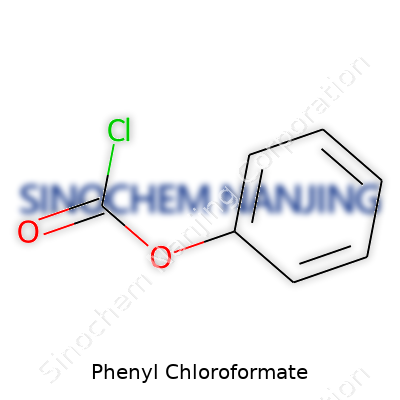
| Names | |
| Preferred IUPAC name | Phenyl carbonochloridate |
| Other names |
Chloroformic acid phenyl ester Carbonochloridic acid, phenyl ester Phenyl chlorocarbonate O-Phenyl chlorocarbonate Chloroformyloxybenzene |
| Pronunciation | /ˌfiːnaɪl klɔːˈrɒfəˌmeɪt/ |
| Identifiers | |
| CAS Number | 1885-14-9 |
| Beilstein Reference | 1209084 |
| ChEBI | CHEBI:51085 |
| ChEMBL | CHEMBL50620 |
| ChemSpider | 7177 |
| DrugBank | DB14106 |
| ECHA InfoCard | 100.006.722 |
| EC Number | 205-119-3 |
| Gmelin Reference | 88229 |
| KEGG | C01002 |
| MeSH | D010630 |
| PubChem CID | 6289 |
| RTECS number | SN6475000 |
| UNII | V08TI1TZTZ |
| UN number | UN1987 |
| Properties | |
| Chemical formula | C7H5ClO2 |
| Molar mass | 170.57 g/mol |
| Appearance | Colorless to pale yellow transparent liquid |
| Odor | Sharp odor |
| Density | 1.18 g/mL at 25 °C |
| Solubility in water | Decomposes |
| log P | 2.8 |
| Vapor pressure | 0.5 mmHg (20 °C) |
| Acidity (pKa) | 13.8 |
| Basicity (pKb) | pKb ≈ 11.2 |
| Magnetic susceptibility (χ) | -59.0 × 10⁻⁶ cm³/mol |
| Refractive index (nD) | 1.518 |
| Viscosity | 2.38 cP (20 °C) |
| Dipole moment | 1.81 D |
| Thermochemistry | |
| Std molar entropy (S⦵298) | 216.6 J·mol⁻¹·K⁻¹ |
| Std enthalpy of formation (ΔfH⦵298) | -348.7 kJ/mol |
| Std enthalpy of combustion (ΔcH⦵298) | -736.2 kJ/mol |
| Hazards | |
| Main hazards | Toxic if inhaled, causes severe skin burns and eye damage, may cause respiratory irritation. |
| GHS labelling | GHS02, GHS05, GHS06 |
| Pictograms | GHS02,GHS05,GHS07 |
| Signal word | Danger |
| Hazard statements | Hazard statements for Phenyl Chloroformate: "H301 + H331: Toxic if swallowed or if inhaled. H311: Toxic in contact with skin. H314: Causes severe skin burns and eye damage. H335: May cause respiratory irritation. |
| Precautionary statements | P261, P280, P305+P351+P338, P309+P311 |
| NFPA 704 (fire diamond) | 1-2-1-W |
| Flash point | 94°C |
| Autoignition temperature | 480 °C (896 °F; 753 K) |
| Lethal dose or concentration | LD₅₀ (oral, rat): 640 mg/kg |
| LD50 (median dose) | LD50 (oral, rat): 365 mg/kg |
| NIOSH | PC6300000 |
| PEL (Permissible) | PEL: 0.05 ppm |
| REL (Recommended) | 1 year |
| IDLH (Immediate danger) | 50 ppm |
| Related compounds | |
| Related compounds |
Phenyl formate Phenyl carbonochloridate Chloroformic acid Methyl chloroformate Ethyl chloroformate |



