Phenacyl Bromide: History, Chemistry, and Modern Perspectives
Historical Development
Back in the late nineteenth century, chemists started chasing down new ways to build reactive organic molecules, especially those that could serve as stepping stones for other compounds. Phenacyl bromide came out of that chase, first reported in the literature in the 1870s. The method, often involving bromination of acetophenone, seemed simple enough for the labs of that era, but this compound’s practical usefulness only grew with time. Early synthetic chemists, fascinated with its reactivity, kept finding reasons to reach for their bottles of phenacyl bromide. That persistence shaped much of what organic chemistry looks like today, with structure-reactivity lessons gleaned along the way that still show up in undergraduate textbooks and industrial handbooks alike.
Product Overview
Phenacyl bromide, or 2-bromo-1-phenylethanone, stands out because it packs a benzene ring, a bromo group, and a carbonyl functional group all in one compact package. That unusual combination turns it into a workhorse in the synthesis of heterocycles and other fine chemicals. Students might meet it for the first time in a sophomore organic course as “the classic alpha-bromoketone,” but in specialized labs, experienced chemists use it to trigger specific nucleophilic reactions that are tough to pull off with less reactive molecules. In the flavor and fragrance sector, preparative routes use this compound as a building block, and outside the classroom, it has also played a darker historical role as a tear gas (CS precursor) during early chemical warfare research.
Physical & Chemical Properties
Phenacyl bromide appears as colorless to pale yellow crystals, although that color can deepen if the compound sits out in the open or collects impurities. It melts at about 51-53°C and boils above 280°C (at reduced pressure); it's pretty dense, too, hovering around 1.6 g/cm³. Its strong, pungent odor warns experienced chemists to keep it closed tight. Solubility in organic solvents like diethyl ether, ethanol, and chloroform makes it remarkably convenient in synthesis, but it barely dissolves in water. The compound reacts quickly with nucleophiles—add a bit of base or amine, and the bromo group pops off, replaced by something new each time. Though stable at room temperature and away from light and moisture, phenacyl bromide will decompose under strong heat or direct sunlight, so experienced lab workers keep it in dark bottles on their shelves.
Technical Specifications & Labeling
Good practice calls for clear and detailed labeling, especially for a reagent known for its reactivity. Packages list names like “Phenacyl bromide,” CAS No. 70-11-1, EC Number 200-707-6, and its structural formula. Typical purity for analytical or preparative use sits at or above 98%. Most commercially sourced material arrives as fine crystals, sealed inside amber bottles, and suppliers often include expiry dates plus hazard warning icons for acute toxicity and corrosivity. The UN number (UN 2811) for transport flags it as a toxic solid, and clear pictograms help ensure proper handling throughout the supply chain.
Preparation Method
Chemists mainly prepare phenacyl bromide by brominating acetophenone. The most straightforward route bubbles bromine through a cooled solution of acetophenone in glacial acetic acid. The reaction takes off with gentle stirring and a watchful eye on the exotherm. Once the reaction finishes, crystal formation signals completion. Filtration, washing, and recrystallization from ethanol or a similar solvent gives a product pure enough for most uses on both laboratory and industrial scales. Doing this at any meaningful volume demands careful ventilation, personal protective equipment, and an understanding of how to handle reactive organobromines.
Chemical Reactions & Modifications
Sometimes I think phenacyl bromide operates much like a Swiss Army knife in the lab. It reacts with nitrogen nucleophiles to make phenacyl derivatives of imidazoles, oxazoles, and more. That’s just the start—swap in a sulfur or oxygen nucleophile, and the product lineup grows even longer, yielding thioethers or ether derivatives. If sodium hydride enters the scene, alkylation steps follow. Even free-radical reactions have leveraged phenacyl bromide to insert its carbon skeleton into more elaborate frameworks. I’ve found that altering the starting materials or tweaking the conditions leads to sizeable differences in the end result, evidence that this molecule holds a place right in the middle of synthetic organic chemistry’s toolbox.
Synonyms & Product Names
Phenacyl bromide shows up in catalogs and papers under plenty of aliases, including 2-Bromoacetophenone, Bromomethyl phenyl ketone, and alpha-Bromoketone. International suppliers sometimes use numbers such as NSC 7412 or registry terms like 1-Bromo-2-phenylethanone. No matter the name, the substance inside the bottle brings the same suite of properties and hazards to any chemical operation.
Safety & Operational Standards
This is not a compound to treat lightly. Direct skin or eye contact can burn or blister, and its vapor carries a sharply irritating sting—one whiff sends chemists scrambling for fresh air. Inhalation harms mucous membranes and can bring on coughing, tearing, and worse at higher doses. Working with phenacyl bromide calls for gloves made of nitrile or butyl rubber, full eye protection, and solid fume hoods. Proper storage matters, too—the bottles work best in dry, cool, dark cabinets, away from acids, alkalis, and oxidizing agents. Waste goes to collection by professionals who understand halogenated solvents. In my own experience, following standard protocols avoids close calls; the cost of skipping even simple precautions often turns out higher than anyone expects.
Application Area
Synthesis is where phenacyl bromide thrives. Medicinal chemists put this compound to work in making hydantoins, thiazoles, and other pharmaceutical intermediates. Sometimes it shows up in fragrance and dye manufacture, pulling double duty because of its ability to introduce both aryl and carbonyl groups. Years ago, military researchers eyed it for riot control, valuing the nasty effects it causes on exposed tissue. These days, its industrial use leans more towards fine organic synthesis, where reliable routes to heterocyclic scaffolds keep demand steady. University and contract labs keep a bottle on hand for specialized reactions that won’t run as cleanly with alternatives.
Research & Development
Recent progress in synthetic chemistry keeps finding new directions for phenacyl bromide. Green chemistry initiatives, for example, push for milder, less toxic reaction conditions. Researchers have explored solvent-free reactions or microwave-enhanced protocols that cut down reaction times and waste. I’ve seen new work using phenacyl bromide in tandem with biocatalysts, probing ways to couple traditional organic approaches with more sustainable ones. Computation and machine learning models increasingly predict pathways that make better use of this molecule, trimming side products and boosting yields. Collaboration between academic labs and industrial teams ensures that technical advances reach manufacturing lines without getting stuck as just proofs-of-concept.
Toxicity Research
Toxicologists have paid special attention to phenacyl bromide since early reports described its severe irritant properties. At low concentrations, it inflames the eyes, skin, and respiratory tract. Higher or prolonged exposures lead to corneal damage, pulmonary edema, or systemic toxicity. Animal studies underline the compound’s acute dangers, cementing its reputation as a candidate for restricted handling. Safety data sheets describe acute LD50 values in the milligrams per kilogram range for rats and mice—numbers that raise eyebrows even among experienced chemists. Occupational exposure limits are strict, and safety protocols call for incident response plans in every lab or facility using this reagent. My own reviews of incident reports show that nearly every event links back to either improper ventilation, accidental spillage, or a brief lapse in personal protection. Staying diligent pays off in peace of mind and personal safety.
Future Prospects
Looking forward, phenacyl bromide will likely keep its place in specialized synthesis as long as chemists need efficient ways to introduce alpha-bromo ketone structures. I expect more research in greener synthetic routes, given the push from regulatory bodies worldwide. Companies have begun exploring “safer-by-design” analogs—molecules that mimic its reactivity without carrying the same acute hazards. Analytical tools will keep improving detection in trace amounts, supporting environmental monitoring and process safety. Educational labs and industry both stand to benefit from initiatives that reduce both risk and waste in using this compound. As new methods and technologies come along, the lessons drawn from phenacyl bromide’s long history—balancing utility with respect for risk—will stay as relevant as ever.
What is Phenacyl Bromide used for?
The Science Behind Phenacyl Bromide
Phenacyl bromide doesn’t catch headlines like other chemicals, but for labs across the world, it holds a steady spot on the shelf. This compound, C8H7BrO, shows up as a white, crystalline powder that’s anything but harmless if handled the wrong way. I learned early on — after a whiff left my nose burning — that even small accidents remind you why safety gear isn’t just for show.
Uses in Chemical Synthesis
Most of phenacyl bromide’s value comes from its reactivity. Chemists put it to work making other, more complicated compounds. It helps build molecules that end up as pharmaceuticals, dyes, or additives. Its strong bromo group acts like a handle, letting other pieces snap on during organic reactions. In some university labs, students use phenacyl bromide during coursework to help them understand reaction pathways. That hands-on work sticks with you. I remember using it as a reagent for making esters and measuring yields, which hammered home just how important purity and temperature control become in organic chemistry.
Medical and Analytical Applications
While it’s not a medicine, phenacyl bromide contributes to medical progress behind the scenes. Some research teams rely on it while building test drugs. It also finds a purpose in analytical chemistry, where it acts as a derivatizing agent — a chemical that helps make certain molecules easier to detect or measure. For instance, it can help scientists tag a part of a complex molecule so machines can find and quantify it during analysis. In this sense, it’s not the star but more like a backstage crew member making sure everything goes according to plan.
Dangers and the Need for Caution
Anyone who has worked with phenacyl bromide knows it demands respect. Even opening the bottle can fill the room with a pungent odor that lingers on clothes for hours. Exposure brings real risks: it irritates the eyes, skin, and lungs. For people used to the old tales, it was even considered for use as a tear gas. Lab safety sheets stress gloves, goggles, and fume hoods, and I think about younger colleagues who sometimes skip those steps because they’re in a rush. A single slip can lead to burns, breathing problems, or a ruined experiment.
The Case for Better Training and Handling
Given its role and the risks, proper training feels just as important as knowing the recipe for a reaction. I’ve worked with students and new researchers who didn’t know how dangerous some “routine” reagents really are. Schools and workplaces need to reinforce safe handling — not in a dry, checkbox way, but through hands-on demos and clear personal stories. Updated safety protocols and investment in better ventilation for labs would prevent most accidents. Open conversations about near-misses or small incidents help drive home the message more than any warning on a label.
Final Thoughts on Its Place in Modern Chemistry
Phenacyl bromide stands as a reminder that the backbone of chemistry involves both creativity and caution. It gives us access to new structures, improved detection, and deeper understanding of molecules. At the same time, its hazards call for a culture of responsibility. Chemical progress doesn’t just ride on breakthroughs — it relies on workers who care enough to do things right, every time.
What are the safety precautions when handling Phenacyl Bromide?
A Chemical that Demands Respect
Phenacyl bromide might sound like something distant unless chemistry is part of your daily routine, but its bite can reach anyone who brushes up against it. This compound, often used in labs as a tear gas precursor or for research, comes with some strong warnings for good reason. I’ve known plenty of folks who underestimated corrosive or lachrymatory chemicals and got more than watery eyes for their trouble. Once, just opening a bottle sent fumes right through a poorly sealed glove box. That kind of first-hand scare sticks, and it shows there’s no such thing as “just a quick task” with some reagents.
Understanding the Real Risks
Phenacyl bromide is maddeningly sneaky. Eyes, nose, lungs—none are safe if it escapes its container. It irritates skin and mucous membranes on contact, and, in higher concentrations, causes serious respiratory distress. Mistakes here can mean more than a day off work. Data from the CDC and European Chemicals Agency both stress its acute toxicity and the need for proper controls during use. As someone who’s handled tear gases or toxic reagents, it’s never just about knowing the material safety data sheet—it’s about taking it seriously every time.
Setting Up Before Handling
Strict routines and habits keep people safe, not luck. Good research labs always use fume hoods. That’s because even small spills or uncapped bottles quickly fill the room with vapor. Respiratory protection isn’t optional for accidental releases—fit-tested N95 or better, along with sealed goggles. I’ve seen safety glasses fail where goggles kept eyes clear. Double nitrile gloves protect skin better than single layers, and a lab coat makes a big difference.
Opening a fresh bottle away from unnecessary clutter keeps accidents from escalating. Fresh air exchange, not a window propped open, gives the best shot at minimizing exposure. Emergencies rarely give time to don extra safety gear, so think ahead. All sorbent kits, eyewash bottles, and emergency showers must be working—and everyone nearby knows how to use them. A drill helps more than a shelf full of forgotten spill kits. Dry burns faster than panicky confusion.
Safe Storage Saves Trouble
Storing phenacyl bromide right ends a lot of headaches before they begin. Cool, well-ventilated locked cabinets keep heat and unauthorized hands away. A bonding company once lost thousands after a junior employee stashed chemicals unlabelled next to acid, and pressure built up. Only store it in clearly marked containers, away from acids and bases that react. Each step—label, lock, consult—pays off daily.
What to Do in Case of Exposure
If phenacyl bromide touches skin, flush well with water and remove contaminated clothing fast. If inhaled, get into fresh air and seek medical attention. Years of working in university and private labs drilled these steps until they became second nature. It’s automatic because hesitation hurts.
Spotting a Culture of Safety
Handling chemicals like phenacyl bromide teaches more than just technical skill. It builds respect for protocols, equips teams to speak up, and pushes for regular safety reviews. The strongest labs ask questions, keep training fresh, and never take shortcuts. Taking personal and group responsibility—well, that’s what keeps us all going back to work in one piece.
What is the chemical formula and structure of Phenacyl Bromide?
The Basics: Formula and Structure
Phenacyl bromide pops up in chemistry labs more often than most folks would guess. This compound carries the chemical formula C8H7BrO. Every time I see it written out, I remember my university instructor’s trick: break down the formula, spot the phenyl ring (C6H5), tack on the acetyl group (COCH2), and see where the bromine snaps into place.
The structure tells a story by itself. Imagine a benzene ring (that’s six carbon atoms arranged in a flat ring), waving a CH2Br group off one carbon. In chemistry speak, bromine takes the place where a hydrogen would otherwise stick to the methyl group of acetophenone. The result? A molecule that’s part aromatic, part reactive. This design gives phenacyl bromide some punch.
A Closer Look at Why Structure Shapes Function
Back in my undergrad days, we respected the sharp behavior of phenacyl bromide in the lab. The arrangement of atoms leaves the carbon next to bromine wide open to attack—a textbook example of a molecule eager to react. That reactivity has a lot to do with the presence of the electron-withdrawing carbonyl group, making the adjacent carbon (the one bearing the bromine) extra attractive for nucleophiles. This trait turns phenacyl bromide into a solid tool for synthesizing other compounds.
People remember phenacyl bromide as a classic lacrimator (tear gas) from the past, but it’s the same chemical reactivity behind that effect. Eyes water, noses sting, and the air clears pretty fast when this stuff is in play. There’s science in that unpleasantness: the molecule seeks out proteins and messes around with key enzymes in sensitive tissues.
The Real-World Value—and the Risks
Any chemist juggling phenacyl bromide knows to have ventilation humming. This isn’t just a rule—it’s the smarts learned from those who got a whiff and never wanted it again. The bromine atom’s presence left enough folk coughing that safety data sheets come plastered with warning triangles. As a building block, though, it unlocks a path to many synthetic compounds. Researchers have used it to make dyes, pharmaceuticals, and imaging agents. The well-documented chemical pathway makes for efficient transformations in the hands of those who understand both the power and the risk.
Skilled chemists look to improve how labs handle and dispose of compounds like phenacyl bromide. Engineering controls—real fume hoods, sealed containers—beat wishful thinking every time. Training comes in next. Students and staff who know the hazards don’t take shortcuts, and that saves both projects and people. Substitution is another strategy—new reagents sometimes mimic phenacyl bromide without the stinging side effects, and it pays to put those options on the table wherever possible.
Education and responsible use go hand in hand
Learning about chemicals like phenacyl bromide bridges textbook chemistry and real-world stakes. Researchers and educators pass along not just knowledge, but lessons about respect and readiness. That’s how chemistry stays both a science and a practice, with safety and curiosity side by side.
How should Phenacyl Bromide be stored?
Why Proper Storage Matters
Phenacyl bromide isn’t something folks tend to keep around the house, and for good reason. This chemical reacts sharply to heat, moisture, or sunlight. Anyone whose skin or lungs have come across it knows it can cause some real damage. A slip-up with storage can mean far more than a ruined experiment; it could result in an emergency. Years back, a colleague forgot to reseal a similar compound, and it meant an unplanned evacuation and weeks of regret. That moment made the risk very real for me.
Safe Storage: Not Just a Suggestion
Phenacyl bromide should stay in a tightly sealed glass container, away from lab walkways or any place where things get bumped. Glass works because it doesn’t react with the chemical, and those clear jars make inspection easy if crystals start to form or if there’s a leak. The container must sit inside a chemical fume hood or, at the very least, be placed in a well-ventilated storage cabinet rated for toxic organic compounds. Ordinary shelves can’t offer enough protection, so chemical-resistant cabinets become a must.
Direct sunlight accelerates decomposition, so windowsills or open benches are off-limits. Heat speeds up the release of toxic fumes and can trigger violent reactions. It’s all about picking a cool, dry, dark area. Moisture acts as a catalyst, which means humid labs pose extra risk. In the worst-case scenario, you’ll look at an ugly chemical spill that could send people to the hospital. Keeping desiccants nearby helps pull out any stray moisture in the air. A thermometer in the storage space ensures temperatures don’t inch past the recommended safe range, usually around room temperature or lower.
Keeping People Safe in Practice
Labeling stands as more than a formality—it protects lives. Clear hazard labels, with dates and handling instructions, help new lab members avoid nasty surprises. In my teaching days, I watched bright students stumble because someone had scribbled “PB” in a handwriting only the author could decode. Print the full name, date received, date opened, and include emergency handling steps.
Beyond labels, open access should stay limited. Only trained folks who know what phenacyl bromide can do belong near it. A logbook tracking who opened the storage cabinet helps pinpoint problems quickly. Clean gloves, goggles, and a fitted mask protect against accidental exposure. Even if you think you’ll only handle it for a second, gear up. I keep a spill kit close, always ready to soak up trouble before things spiral.
Better Solutions Start With Respect
No short cuts exist with dangerous chemicals. Some labs invest in automated storage systems that trigger alerts if a bottle leaves its spot. Others rely on detailed checklists and regular audits. Both options show respect for what these compounds can do if left unchecked. I’ve seen firsthand how simple discipline—such as checking seals and logging storage temperature—can prevent near misses from turning into headlines.
Phenacyl bromide demands careful handling because the stakes stretch beyond ruined research. For labs and workplaces everywhere, treating storage as an afterthought guarantees nothing but trouble. With steady routines, solid training, and healthy respect, everyone gets to walk away safe at the end of the day. For me, that’s always been worth a few extra minutes double-checking the cabinet door.
What should I do in case of exposure to Phenacyl Bromide?
The Danger Behind Phenacyl Bromide
Phenacyl bromide works as a tear gas compound, often used for crowd control. Its effects on the body can involve burning eyes, throats, and skin. Breathing it in may trigger coughing, shortness of breath, or even choking. Dealing with this chemical means thinking fast and staying prepared. I’ve worked in labs with hazardous substances for years, and stories from coworkers about accidental exposure stick with me. This stuff is no joke. It acts fast and doesn’t cut you any slack.
The Right Response After Exposure
If you ever come across phenacyl bromide, the first thought should always be safety—yours and those with you. Get away from the area. Move upwind or inside a building with good ventilation. Getting away from the chemical matters most.
If you notice it on your skin or in your eyes, wash with water—lots of it—right away. Remove clothing that touched the chemical. Toss contaminated shirts or jackets into a sealed bag to keep fumes away. Wearing gloves—if you have them—keeps your hands safe as you help someone else out. Someone I know hesitated to get rid of their shirt after a spill, hoping a few splashes of water would do the trick. Their skin kept stinging until a medic forced them to strip and rinse off fully. It’s uncomfortable, but it works much better.
Inhaling the chemical means stepping outside and breathing the cleanest air available. Sometimes that means cupping a wet cloth over your nose and mouth until you reach fresh air. If someone passes out or starts having trouble breathing, get help right away—call emergency services and follow their advice. Don’t wait for symptoms to worsen, since the damage from deep breathing or heavy exposure stacks up fast.
Prevention: Keeping Workplaces and Homes Safe
Phenacyl bromide shouldn’t end up in most homes, but I’ve seen small labs run by amateur chemists or hobbyists stockpiling these compounds. Knowing the rules for storage protects more than just the person doing the mixing. It stops accidents for neighbors, pets, and family. Always store chemicals according to the label, away from heat sources and out of reach for kids. Work in spaces with lots of ventilation and keep a safety shower or eye-wash station available if you handle anything remotely dangerous.
Reading up on Material Safety Data Sheets (MSDS) before starting any experiment or work project that involves this chemical saves lives. These documents lay out risks and emergency steps in plain terms. I always keep digital and printed copies near workbenches. Training doesn’t end after orientation—regular safety drills help keep reactions sharp in the moment. I’ve joined fire department walk-throughs in labs; the best-prepared places run quick practice runs on spill and exposure response every few months.
Long-Term Health Concerns and Medical Follow-Up
Short-term exposure can leave lingering effects like headaches, coughs, or vision problems. If the burning feeling stays after washing up, or if any symptoms seem to snowball, seek medical care right away. Doctors need details: how it happened, how long the contact lasted, and what steps you took. It feels embarrassing to walk into a clinic covered in rashy red skin or stinking of chemicals, but letting a doctor see and examine the problem stops worse health issues down the line. Fast, open communication with health professionals beats trying to tough it out alone.
Staying Prepared Pays Off
No one expects to deal with a chemical attack or a spill, but a little planning goes a long way. Keep emergency numbers posted where you can see them. Make sure everyone in your home or workplace knows what phenacyl bromide can do and how to respond. Experiences from the field show most bad outcomes sneak up on people who think, “It'll never happen to me.” Treat every interaction with hazardous chemicals with respect, and you’ll stand a much better chance if trouble ever comes knocking.
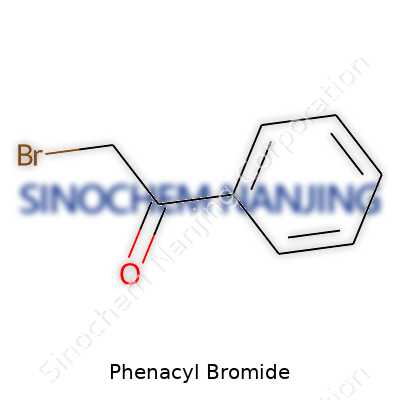
| Names | |
| Preferred IUPAC name | 2-Bromo-1-phenylethan-1-one |
| Pronunciation | /fiːˈneɪsɪl ˈbroʊmaɪd/ |
| Identifiers | |
| CAS Number | 99-90-1 |
| Beilstein Reference | 358067 |
| ChEBI | CHEBI:51700 |
| ChEMBL | CHEMBL140621 |
| ChemSpider | 5753 |
| DrugBank | DB04107 |
| ECHA InfoCard | 100.002.764 |
| EC Number | 208-912-8 |
| Gmelin Reference | 5886 |
| KEGG | C01768 |
| MeSH | D010624 |
| PubChem CID | 6059 |
| RTECS number | SN6475000 |
| UNII | 49L1WD4653 |
| UN number | UN2646 |
| Properties | |
| Chemical formula | C8H7BrO |
| Molar mass | 199.02 g/mol |
| Appearance | White to pale yellow crystalline solid |
| Odor | penetrating odor |
| Density | 1.441 g/cm3 |
| Solubility in water | slightly soluble |
| log P | 1.95 |
| Vapor pressure | 0.025 mmHg (25 °C) |
| Acidity (pKa) | 5.06 |
| Basicity (pKb) | Phenacyl bromide does not have a pKb value because it is not a base. |
| Magnetic susceptibility (χ) | -7.1 × 10⁻⁶ cm³/mol |
| Refractive index (nD) | 1.595 |
| Viscosity | 1.679 cP at 20 °C |
| Dipole moment | 3.55 D |
| Thermochemistry | |
| Std molar entropy (S⦵298) | 367.6 J·mol⁻¹·K⁻¹ |
| Std enthalpy of formation (ΔfH⦵298) | “−11.3 kJ/mol” |
| Hazards | |
| Main hazards | Harmful if swallowed, causes severe skin burns and eye damage, may cause respiratory irritation. |
| GHS labelling | GHS02, GHS05, GHS06, GHS07 |
| Pictograms | GHS06,GHS05 |
| Signal word | Danger |
| Hazard statements | H301, H315, H319, H335 |
| Precautionary statements | P261, P264, P271, P280, P301+P310, P305+P351+P338, P311, P330, P403+P233, P405, P501 |
| NFPA 704 (fire diamond) | 3-2-0 |
| Flash point | 79°C |
| Autoignition temperature | 138 °C |
| Lethal dose or concentration | LD50 oral rat 390 mg/kg |
| LD50 (median dose) | LD50 (median dose): 170 mg/kg (oral, rat) |
| NIOSH | PH0400000 |
| PEL (Permissible) | PEL: 0.05 mg/m³ |
| REL (Recommended) | 0.1 mg/m³ |
| IDLH (Immediate danger) | 10 mg/m3 |



