Phenol: A Closer Look at a Chemical Workhorse
History’s Footprint on Phenol
Phenol, once known as carbolic acid, tracks its modern roots to the gritty days of 19th-century chemistry. As a writer and longtime chemistry enthusiast, I appreciate how Joseph Lister’s use of phenol changed the face of surgery. People forget that hospital infections killed more than any single disease in those days. When Lister started cleaning wounds and surgical tools with phenol, surgical death rates dropped like never before. This chemical, which started out as a simple distillate from coal tar, reshaped medical hygiene and essentially gave humanity permission to cut into the body, patch it up, and send people home.
But phenol’s story never stopped at medicine. During two world wars, industrial demand pushed for new phenol routes as it became essential for explosives, plastics, and resins. Phenol reached into households through Bakelite telephones and radios, then industrial plants as insulation, adhesive, and disinfectant. The historical arc of phenol underlines the value of chemistry in every corner of society, going far beyond initial laboratory wins.
Understanding Phenol’s Physical and Chemical Muscle
Anyone working with phenol knows its distinct sharp smell and crystalline form at room temperature. It looks a bit like sugar but acts nothing like it. This solid melts just above 40°C, a temperature you’d hit on a warm summer day. If you handle a flask of phenol, you’ll notice skin irritation almost instantly – it burns, stings, and lingers. Phenol dissolves well in water, especially when it’s warm, but its real value comes from the active –OH group perched on the aromatic benzene ring. This simple functional group behaves both as a weak acid and a reactive site for further transformations.
Combining that acidity with the rigid ring backbone lets phenol participate in complex syntheses. Chemists who work with it every day count on its reliability in electrophilic aromatic substitution, and the –OH group allows easy work in making dyes, resins, pharmaceuticals, and even disinfectants. With so much versatility in a single molecule, it’s no shock phenol pops up under countless guises in industry and the lab.
On Labels and Specifications: Why Details Matter
I’ve watched colleagues get tripped up by poor labeling more times than I can count. Standards demand clear labeling: concentration, purity grade, hazard warnings, storage conditions, manufacturer, and batch numbers. Detailed labels matter because impurities like cresols or water affect reaction outcomes and safety. A batch labeled “analytical grade” will be nearly spotless, suited for sensitive syntheses, while “technical grade” may carry enough contamination to throw off a careful process. Lab techs and plant operators have learned, sometimes the hard way, that misunderstanding a phenol label can lead to botched experiments or dangerous releases.
Preparation: From Coal Tar to Modern Chemistry
The first big route for phenol involved roasting coal into coke and capturing the vapors as tar. Extraction and distillation would tease out phenol. This method, cursed with inefficiency, died off as modern chemistry took over. Today’s phenol almost always comes from the cumene process, which starts with benzene and propylene. This process, reliant on oxygen and acid catalysis, spits out both phenol and acetone as co-products. As a researcher, I find it fascinating – advances in catalysis and feedstock supply keep shaping phenol’s cost and supply, with eco concerns pushing for bio-based benzene in select labs.
Chemical Life: Reactions and Tweaks
In my own work, phenol’s chemistry feels reliably reactive. Its aromatic ring, activated by the –OH group, soaks up electrophiles, swapping out hydrogens for the likes of nitro or sulfonic groups under controlled conditions. Alkylation brings forth compounds like thymol or butylated hydroxytoluene, both household preservatives. With oxidation, phenol gives way to quinones, a staple for dyes and electron transport studies. Etherification brings out phenoxy resins, and interaction with formaldehyde remains a backbone of phenol-formaldehyde plastics. Such chemical pliability keeps phenol a mainstay on lab shelves and factory floors.
Identity: Synonyms and Alternative Names
You’ll hear phenol called carbolic acid in hospital halls, hydroxybenzene in textbooks, and by IUPAC or trade names in industrial circles. Across applications, synonyms like monophenol, phenylic acid, or benzenol sneak into documentation. For a casual reader, this tangle of names confuses, so anyone dealing with regulations or supply chains benefits from learning them.
Staying Safe: Operational Standards & Exposure Control
There’s no forgiving nature to phenol exposure. I’ve had spills in a student lab; the discomfort is immediate and memorable. Its ability to pass through skin, even intact, ramps up the health risks. Standard operating procedures now tell workers to suit up in gloves, goggles, and lab coats, under the watch of fume hoods and robust ventilation. Occupational limits govern air concentrations, with regular monitoring in sensitive environments. Emergency showers and eye washes often sit just a few steps away, a daily reminder that chemistry respects nobody who takes shortcuts.
Phenol at Work: Applications with Broad Reach
Phenol’s reach shows up in pharmaceuticals, plastics, and household products. Most aspirin on pharmacy shelves owes its lineage to phenol. Epoxy and nylon production begin with phenolic resins or intermediates. Scientists crafting herbicides and fungicides rely on phenol-derived building blocks. On another front, phenol’s antiseptic properties helped clean up early operating theaters – those same qualities drive today's disinfectants and cleaners. Its presence in mouthwash and throat sprays, though more regulated today, still lingers.
Pushing Science: Research & Development Horizons
Interest in greener synthesis routes for phenol has ramped up, mostly from closer scrutiny of benzene sourcing and downstream waste. Some university labs now chase direct oxidation of benzene to phenol using milder catalysts, hoping to cut waste and energy. Enzyme-based synthesis draws attention too, hinting at future bio-factories using engineered microbes. Such work, often slow to see commercial daylight, signals a blunt truth: our future with phenol must balance function and footprint. Exploration into safe, biodegradable phenol alternatives for limited markets underscores this challenge.
Understanding Toxicity and Health Impacts
Anyone who spends time around phenol learns quickly about its dangers. A drop on the skin can numb, then destroy tissue. Chronic exposure messes with the liver, kidneys, and nervous system. Animal studies paint a dire picture for careless handling. Regulatory agencies like OSHA and the EPA tightly limit permissible exposures, and modern plants invest in detection and neutralization systems. Medical surveillance for workers in high-exposure environments helps, but public discussion around phenol contamination in water supplies illustrates how vigilance must continue long after a product leaves the factory floor.
The Road Ahead: Keeping Phenol Relevant
Society’s relationship with phenol will keep evolving. Global demand for plastics and pharmaceuticals gives phenol a secure spot in industry, but eco-certification, supply chain transparency, and calls for safer chemistry set new hurdles. There’s a push from startups and established firms alike to tune production for lower emissions and sustainable feedstocks. I see efforts to recycle phenol-based polymers rising, but regulatory clarity and infrastructure investment must keep pace. The chemistry, rich and proven, doesn't stand still; future generations may judge us by how we manage phenol’s promise and risks in the face of shifting public priorities and tougher environmental scrutiny.
What is phenol used for?
Phenol Finds Its Way into Plenty of Ordinary Stuff
Walk around your home, and you’re probably bumping into products touched by phenol, even if you’ve never heard of it. It’s a basic building block that leads to things like plastics, household cleaners, and even some medicines. When I learned how many common objects have a connection to this chemical, I was a little stunned. Take the case of plastic—especially those tough, clear plastics used in eyeglasses, water bottles, or the dashboards in cars. Most of the time, these get their backbone from bisphenol A, which owes its existence to phenol. That means a lot of items you lean on for daily convenience start with a step that runs through phenol.
Tools to Stay Healthy and Safe
Beyond plastics, phenol holds a spot in the toolkits of healthcare and cleaning. Hospitals sometimes put it to work as a disinfectant, given its strong knack for killing off bacteria on surfaces. Back in the day, even mouthwashes and throat sprays included small amounts, and some older folks still remember that wintergreen scent they’d breathe in during sore throats. Safety standards have changed, so most folks use gentler alternatives today, but the chemical’s role in fighting germs helped lay groundwork for better hygiene.
The Chemistry of Everyday Living
What surprised me is how much of phenol’s value comes from its role as a starter for bigger, better things. Aspirin starts from phenol—the stuff you take for headaches and sore muscles. Dive just a little deeper, and you’ll see that dyes, paints, wood preservatives, and even some sunscreen formulations lean on chemistry that kicks off with phenol. Every job it does, whether holding wood furniture together or keeping medicine cabinets stocked, seems to run through the same reliable logic: start small and simple, turn into something safer and more useful.
Risk and Responsibility
No story about a powerful chemical would be honest without a nod to its dangers. Pure phenol has a sharp smell and can burn skin pretty badly. Breathing in high amounts can mess with your nervous system. My chemistry teacher in high school hammered home that even though scientists can design safer compounds, folks making and handling the building blocks need to follow strict rules. Mistakes in storage or handling could spell trouble, not just for workers but for neighbors and the environment, too.
Finding the Right Balance
The importance of phenol in industry doesn’t mean it shows up everywhere without checks. Big manufacturing outfits invest in protective equipment, air filtration, and emergency plans to keep everyone out of harm’s way. Regulators in countries like the U.S. and Canada set limits on how much can be released into air or water. People living near plants watch for accidental leaks, and watchdog groups push for cleaner, safer alternatives where possible. Sometimes, old habits change for good—see the shift away from BPA in baby bottles after concerns about health risks. All of this highlights one thing: chemicals can make life easier but demand respect at every step.
Searching for Safer Alternatives
As science advances, researchers keep an eye out for replacements that do phenol’s job with less risk. Some experiments look at plant-based ingredients, especially for things like disinfectants or preservatives. It’s not always easy to beat the original, but every improvement cuts down on potential harm for workers and families. For now, phenol stays woven into the fabric of daily life—reminding us how chemistry keeps moving forward, step by step, trying to land on safer ground.
Is phenol safe to handle?
Getting to Know Phenol in Real Life
Phenol pops up in all sorts of places: labs, factories, even in small amounts in antiseptic products. The first thing anyone learns about phenol is that it comes with a punch—it can burn skin, sting the eyes, and its fumes can send your head spinning. When I walked into a college lab for the first time, phenol’s sharp, medicinal smell stuck with me. It didn’t take long to figure out why people approach it with real caution.
Skin and Health Risks
Phenol causes trouble fast if it touches the skin. Even small spills can burn and kill tissue, and it doesn’t take much more than a splash to set off real problems. Hospital records show clear cases—workers exposed without gloves end up with white, blistered skin, needing medical help. If it gets in your eyes, the risk jumps. Vision loss happens, not just irritation. And for people breathing in phenol’s fumes, headaches and dizziness start quickly.
Not Just an Everyday Household Chemical
Big chemical companies and research labs use phenol for plastics and resins, or as a solvent. They use closed systems, ventilation, gloves, coats, and sometimes masks—not because companies enjoy spending extra money, but because skipping protection causes injury. Safety data sheets, which speak straight, rank phenol as a severe hazard: “toxic if absorbed through skin,” “toxic if inhaled.”
The Dose Matters—But So Does Preparation
Exposure limits are strict—just a few parts per million in the air can become dangerous to workers. The U.S. Occupational Safety and Health Administration (OSHA) sets a ceiling limit of 5 parts per million. Go above that, health risks grow fast. I remember working with phenol for a DNA extraction—our instructor kept repeating, “Wear the right gloves, work in the fume hood,” because the smallest mistake leads to pain or worse.
Long-Term Effects: What the Science Shows
Long-term exposure can hit the nervous system and cause kidney or liver problems. Workers with repeated contact face losing feeling in their fingertips, brownish skin spots, or systemic poisoning. Calls to poison control centers say it clearly—phenol is not something that can be brushed off as harmless. Proper handling remains a serious business.
How to Handle Phenol Right
Real protection works: thick nitrile gloves, face shields, fume hoods, and immediate cleanup plans. Keeping phenol locked up, labeling bottles clearly, and teaching new staff how spills should get managed go a long way. I've seen labs where nobody explains the risks—the mistakes add up fast. Training and respect for the risks make a world of difference.
Seeking Safer Alternatives
Some labs switch to less aggressive chemicals whenever possible, but the reality is phenol does its job in a way few substitutes manage. Until real replacements cover the same ground, handling comes down to solid training, reliable safety gear, and a straightforward culture of caution.
Responsible Use Makes the Difference
Safe phenol use comes down to understanding that tools with power demand respect. Leaving safety on the back burner puts everyone at risk. Authorities and companies can keep making rules, but in the end, each worker and student faces that choice every single time phenol comes out of the bottle.
What are the health risks associated with phenol exposure?
Personal Encounters Bring the Risks to Life
Phenol doesn’t grab headlines the way lead or asbestos do, yet it crops up in plenty of places: lab work, some household products, even medical settings. My old job at a chemistry lab offered me plenty of time near phenol, so I’ve seen how carelessness can backfire. Most people don’t realize the ease with which phenol can get absorbed. Contacting phenol with bare skin brings a risk that most lab newcomers underestimate. It slips through skin fast, sometimes within seconds, causing burns, blisters, or in bad cases, numbness that masks how deep the damage really goes. Anyone who’s seen someone try to “tough it out” after a spill understands the need for speed in rinsing it off.
Direct Health Effects
Breathing in phenol fumes irritates your nose and throat, and sometimes sparks headaches, dizziness, or even confusion. Back in the lab, we got used to the sharp, medicinal smell. Familiarity didn’t make it safe, though; repeated exposure slowed reaction times and made staying sharp much harder. Peer-reviewed studies from regulatory agencies place phenol on watch lists for clear reasons—it impacts the central nervous system and can lead to irregular heartbeats. A few colleagues who pushed through long projects without proper ventilation found their symptoms showed up fast.
The Danger Isn’t Just Immediate Exposure
Long-term phenol contact increases risk, particularly in workplaces that still rely on outdated safety practices. Chronic exposure links to kidney and liver damage. Early research found that regular, even small, exposures strain these organs over time. One factory nearby had workers handling materials soaked with phenol for years. By their 40s, several reported kidney trouble and fatigue. These stories aren’t rare, according to reports from the National Institute for Occupational Safety and Health. Regular skin contact over the years or breathing in small amounts every day can push your body to the brink long before symptoms show up.
Solutions Rooted in Common Sense and Evidence
Real change doesn’t begin with another set of rules. People need clear reminders that every spill and whiff matters. Companies with good training programs use accidents as teaching opportunities, showing just how quickly injuries can happen. Updating safety equipment and good lab habits saves skin—literally. Water and polyethylene glycol work for decontaminating phenol on skin better than plain soap. Labels on bottles mean nothing without the right gloves, splash goggles, and functional exhaust hoods.
At home, folks should take ingredient labels seriously. Cleaning products, throat sprays, and even some cosmetics may use phenol. If the label lists phenol and there’s irritation or mystery symptoms, find safer alternatives or call a doctor. Spreading awareness in the workplace and at home keeps people out of emergency rooms and off long-term medication later in life.
Looking Forward
The health risks from phenol aren’t a distant threat. They creep up in labs, factories, and homes. Simple changes—protective gear, improved workplace design, better education—make a huge difference. Government agencies like OSHA put out detailed guidelines for a reason. Following science-backed protocols and staying alert protect not just individual workers, but whole families. Experience taught me that safe work with phenol goes far beyond luck; it starts with respect for the chemical, a willingness to learn from mistakes, and a commitment to protect ourselves and others.
How should phenol be stored and disposed of?
Why Care About Phenol?
Phenol packs a punch both in industry and in nature. It disinfects, forms plastics, dyes, pharmaceuticals, and crops up in chemistry labs. But anyone who’s cracked open a bottle will remember its sharp odor and the sting it delivers to skin. Phenol becomes dangerous on contact, causing burns or worse. I once watched a lab partner touch a drop during an experiment—quick reactions and lots of water spared him scars, but the memory stuck. That day underlined the point: respect for phenol matters, every single time it’s handled.
Proper Storage—No Corners to Cut
Storing phenol goes beyond tossing it in a cabinet. Phenol breaks down when exposed to light, air, or moisture, turning from a white solid to a loose, discolored mess. Glass bottles with tight, chemical-resistant lids do the job best for small quantities. Those bottles belong in cool, dry spaces that offer good ventilation, far away from heat or sunlight—and locked, so strangers don’t stumble across them. Signs and secondary containers back up safe storage. A neighbor of mine, a local school teacher, locked her chemicals in a ventilated cabinet and double-checked labels before every lesson. Kids, pets, and even adults make mistakes. Clear storage steps stave off accidents.
Larger scale use—think manufacturing—makes containment even more serious. Stainless steel or polyethylene tanks, with lined interiors, stop unwanted reactions and leaks. Spill trays and eyewash stations surround every handling point. Sprinkler systems and fans lower risks. People who work in those areas rely on detailed protocols. National Fire Protection Association codes outline storage rules, so nobody has to guess.
Disposal: The Unsung Duty
Throwing phenol down a drain or into the trash creates problems nobody wants. Once phenol hits water, it poisons aquatic life and finds its way up the food chain fast. Landfills don’t break it down, so it lingers for years. Hospitals, universities, and factories schedule regular pickups by certified chemical waste handlers because skipping that step causes fires and health crises. My old campus performed monthly checks and logged every bottle and beaker. Only trained teams collected the waste, and nobody cut corners. Regulators, including the Environmental Protection Agency, recommend chemical incineration at high heat—over 1,200 degrees Fahrenheit—so toxic byproducts break down, turning phenol into less troublesome compounds. Some facilities use chemical neutralizers, adding oxidizers or bases, but only under exhaust hoods with plenty of monitoring. It’s not “set and forget.” Every stage needs careful tracking and paperwork from start to finish.
Smart Steps for Safer Workplaces
Common sense beats neglect. Anyone handling phenol wears gloves, goggles, and lab coats, and reads every label before moving a bottle. New users benefit from real-world stories and mistakes—training videos sometimes skip those. Culture matters: workplaces that encourage double-checking and asking for help avoid disasters. Government inspection shouldn’t be the only barrier between workers and accidents—peer checks help just as much.
Safe phenol storage and disposal shape a safer workplace and community. Nobody wins from shortcuts. Clear steps, vigilance, and respect won’t win headlines, but they keep lives safe and water clean—that’s the real measure of good science and responsible industry.
What is the chemical formula and structure of phenol?
The Basics: Formula and Structure
Phenol has the chemical formula C6H5OH. You get a benzene ring—a flat, hexagonal arrangement of six carbons—where one hydrogen has been swapped out for a hydroxyl group (that’s the -OH). It sounds pretty simple, but this tweak changes everything. The ring and the attached -OH group work together, creating a new set of behaviors compared to plain benzene or most alcohols.
Why Does Phenol Matter?
Chemicals like phenol don’t stay locked up in labs. You’ll find phenol’s fingerprints all over things you might never expect. I remember my college days handling phenol, always slightly cautious. It’s not just the strong medicinal smell—it’s because phenol isn’t harmless. In the early days, doctors used it as an antiseptic. Joseph Lister swore by it for preventing infection during surgery back in the 1800s. Turns out, phenol disrupts bacteria by breaking down their cell membranes. Thanks to researchers, we learned about the benefits and the risks. Prolonged contact causes burns. Its vapor irritates the eyes and lungs. That’s why safety training isn’t taken lightly around this chemical.
In the modern world, you’ll still see phenol as a vital building block. Chemists rely on it for making plastics like Bakelite, pharmaceuticals including aspirin, and even some herbicides. It plays a huge part in adhesives and resins, helping bind plywood for homes and furniture. Whenever anyone talks about synthetic production of everyday items, chances are, phenol comes into play at some point.
Digging Deeper: Structure’s Role
Here’s where experience in the lab changes how you see phenol. Looking at a simple stick figure doesn’t show what’s really happening. That -OH group on the ring flips the script on benzene chemistry. Now, that hydrogen on the -OH can slide off fairly easily. Phenol ends up behaving like a weak acid. Drop it in water and it creates phenoxide ions, especially if the pH goes up. That makes phenol unlike most other alcohols, which hang onto their hydrogen tightly. Because of the electron-rich ring, reactions pop up at the positions just next to the -OH group. This property turns phenol into a handy starting point for all sorts of chemical products. Synthesize dyes or drugs, and you often find yourself adding things to phenol’s special spots on the ring.
Risks, Regulations, and Solutions
Pound for pound, the world produces millions of tons of phenol each year. Not all of it winds up somewhere good. Spills can harm water and soil, so factories use special containers and track every drop. I remember tours of production plants where engineers walked us through safety systems in place—emergency scrubbers, leak detectors, strict disposal methods. Regulators set maximum exposure limits in workplaces and for the environment. The U.S. Occupational Safety and Health Administration and environmental agencies keep tabs to limit harm.
Handling phenol safely demands respect, real training, and solid planning. Industries have invested in cleaner processes, recycling, and developing less toxic alternatives. Transparency about health effects and risks helps workers protect themselves. Investing in research for greener chemistry isn’t just a buzzword—companies that do this reduce accidents, improve reputation, and stay ahead of the curve.
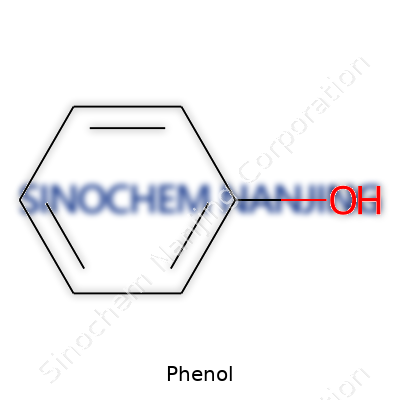
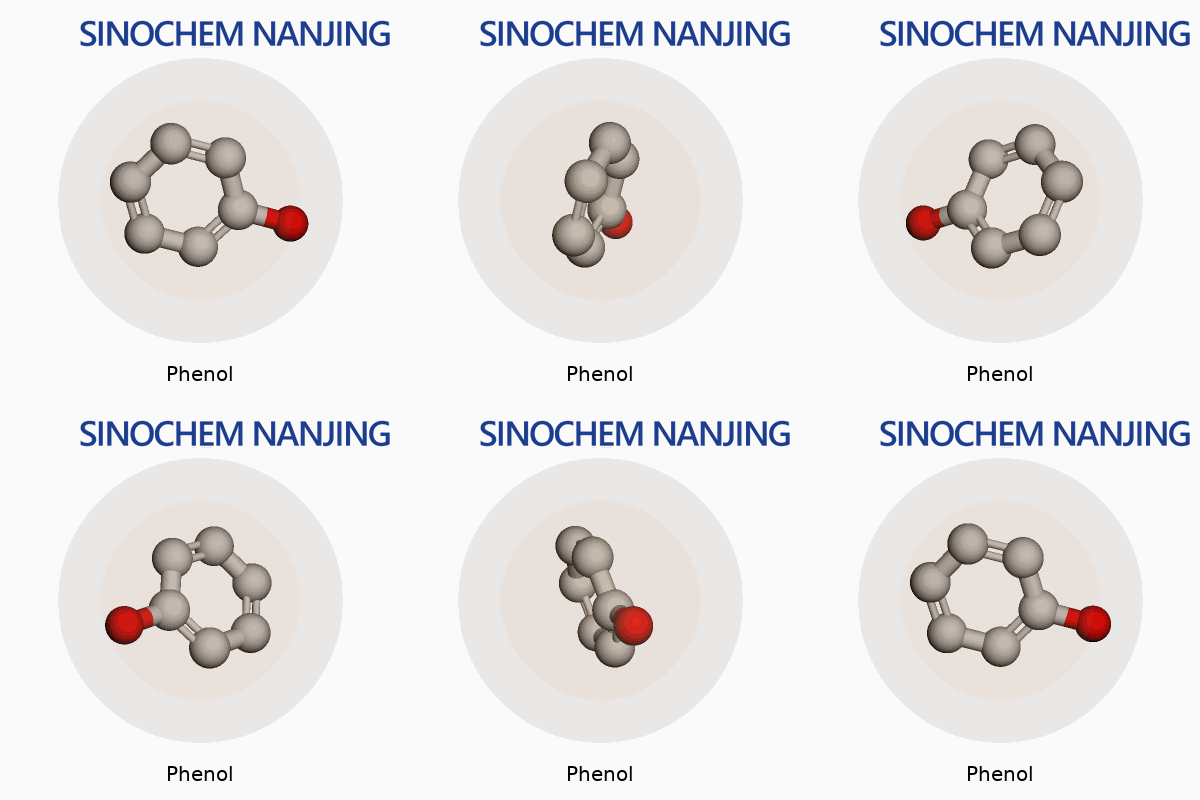
| Names | |
| Preferred IUPAC name | benzenol |
| Other names |
Carbolic acid Hydroxybenzene Phenic acid Benzenol Phenylic acid Phenyl alcohol |
| Pronunciation | /ˈfiː.nɒl/ |
| Identifiers | |
| CAS Number | 108-95-2 |
| 3D model (JSmol) | `phenol|C1=CC=C(C=C1)O` |
| Beilstein Reference | 1209225 |
| ChEBI | CHEBI:15882 |
| ChEMBL | CHEMBL277 |
| ChemSpider | 969 |
| DrugBank | DB03255 |
| ECHA InfoCard | 100.003.236 |
| EC Number | 1.14.13.7 |
| Gmelin Reference | 514 |
| KEGG | C00123 |
| MeSH | D010668 |
| PubChem CID | 996 |
| RTECS number | SJ3325000 |
| UNII | 4T9KWH62GR |
| UN number | UN1671 |
| Properties | |
| Chemical formula | C6H5OH |
| Molar mass | 94.11 g/mol |
| Appearance | Colorless to pinkish, crystalline solid with a characteristic odor |
| Odor | Characteristic odor |
| Density | 1.07 g/cm³ |
| Solubility in water | 8.3 g/100 mL (20 °C) |
| log P | 1.46 |
| Vapor pressure | 0.4 mmHg (20°C) |
| Acidity (pKa) | 9.95 |
| Basicity (pKb) | 9.9 |
| Magnetic susceptibility (χ) | χ = -64.5·10⁻⁶ cm³/mol |
| Refractive index (nD) | 1.542 |
| Viscosity | 13 cP |
| Dipole moment | 1.70 D |
| Thermochemistry | |
| Std molar entropy (S⦵298) | 144.0 J·mol⁻¹·K⁻¹ |
| Std enthalpy of formation (ΔfH⦵298) | -165.0 kJ mol⁻¹ |
| Std enthalpy of combustion (ΔcH⦵298) | −3055 kJ·mol⁻¹ |
| Pharmacology | |
| ATC code | D08AX06 |
| Hazards | |
| GHS labelling | **GHS labelling of Phenol:** "GHS02, GHS06, GHS08 |
| Pictograms | GHS02,GHS06,GHS08 |
| Signal word | Danger |
| Hazard statements | H301, H311, H331, H314, H341, H373 |
| Precautionary statements | P210, P260, P264, P270, P271, P280, P301+P310, P303+P361+P353, P305+P351+P338, P307+P311, P320, P321, P330, P362+P364, P405, P501 |
| Flash point | 79°C |
| Autoignition temperature | 715 °F (379 °C) |
| Explosive limits | 1.8–9.5% |
| Lethal dose or concentration | LD₅₀ (oral, rat): 340 mg/kg |
| LD50 (median dose) | LD50 (median dose): 317 mg/kg (oral, rat) |
| NIOSH | 174 |
| PEL (Permissible) | 5 ppm |
| REL (Recommended) | 5 mg/m³ |
| IDLH (Immediate danger) | 250 ppm |



