Exploring Periodic Acid: History, Practice, and Promise in Chemistry
Historical Development
Periodic acid has a story reaching back to the 19th century, drawing in curious scientists with its sharp oxidizing abilities. Chemists didn’t stumble across it in a random experiment—it came out of a growing understanding of halogens and their oxoacids. Around 1833, German chemist Heinrich Will managed to produce periodic acid from barium metaperiodate, immersing early chemistry in a world where iodine climbed to a rarely seen oxidation state. With time and patience, scientists unlocked methods to prepare and harness this acid, using tools that now seem primitive compared to today’s glassware and precision balances. Over decades, researchers pieced together how periodic acid fit into the family tree of iodine compounds, slowly revealing its role beyond laboratory curiosities.
Product Overview
Periodic acid comes in two main forms: orthoperiodic acid, symbolized as H5IO6, and metaperiodic acid, HIO4. Both land on laboratory shelves as white crystalline solids. This acid doesn’t gather dust for long among chemical stocks; scientists grab it for its power to cleave 1,2-diols in organic molecules, a technique vital for structural analysis and synthesis. Over the years, manufacturers have honed methods to produce it with high purity, keeping contamination at bay to match demands from researchers and industrial users alike. It has carved out a reputation for reliability, turning up in biochemistry, textiles, and even electronics. From bench-scale synthesis to bulk materials refinement, periodic acid serves as a dependable oxidant for jobs that call for pointed reactivity.
Physical & Chemical Properties
Periodic acid stands out for its strong oxidizing character, tackling molecules that resist other treatments. Its crystals dissolve well in water, forming clear, colorless solutions, yet they remain sensitive to strong light and temperature swings. Heating can drive off water of hydration, shifting its composition and properties. This acid stays stable as long as it’s kept dry and cool, far from sunlight or pollutants that spark decomposition. Unlike many mineral acids, periodic acid doesn’t fume or give off sharp odors. Its chemical reactivity comes not from volatility, but from iodine in a +7 oxidation state. That high energy level lets periodic acid cleanly split carbon-carbon bonds in vicinal diols and certain polysaccharides—an action at the core of many analytical protocols.
Technical Specifications & Labeling
Periodic acid usually hits the lab labeled with purity ratings and key hazard warnings. Purity reaches 99% or higher, judging by current analytical methods. Typical labels emphasize its caustic potential and strict storage guidelines, with warnings about inhalation and direct skin contact. Packaging carries standardized codes under major chemical regulations. Chemists routinely check material safety data, knowing that error in handling strong oxidants often leads to ruined samples or personal injury. Reliable suppliers aim for consistently small particle sizes and batch uniformity, easing dissolution and mixing. In my work, opening a new bottle always starts with checking for clumping or discoloration, using the senses as a first round of quality assurance before diving into calibrated measurements.
Preparation Method
Lab-scale synthesis of periodic acid tends to follow a well-worn path. Most routes start with sodium or potassium periodate, prepared by oxidizing iodate with sodium hypochlorite or chlorine in an alkaline solution. Treatment with nitric acid or another strong acid releases periodic acid, which crystallizes out as the solution cools. Filtration and drying under reduced pressure yield pure, stable crystals. Industrial methods scale this process, bringing in robust filtration and careful temperature control to maximize product recovery. Each step demands respect for both chemical reactivity and personal safety—accidental mixing or overheating can produce runaway reactions or dangerous byproducts. Chemists who value their sight, skin, and lungs stick to fume hoods, eye shields, and thick gloves.
Chemical Reactions & Modifications
Periodic acid owes its fame to the so-called Malaprade reaction—an elegant cleavage of 1,2-diols to yield two carbonyl fragments. This transformation slices sugars and glycols neatly in half, opening doors for analysis of carbohydrate structure and metabolism. Unlike many oxidants, periodic acid rarely lingers in solution; once it reacts, iodine drops from +7 to +5, forming iodate in the process. Beyond classic cleavage, periodic acid participates in shaping specialty chemicals, serving as a gateway to iodate salts and other iodine(V) compounds. I’ve watched textbook reactions play out under the lens of thin-layer chromatography, where spots vanish and new products appear after a dose of periodic acid, proof that a well-chosen reagent does more than just move electrons around.
Synonyms & Product Names
Periodic acid goes by several labels: chemists might write orthoperiodic acid, metaperiodic acid, or even the shorthand HIO4. Older literature sometimes mentions periodic(VII) acid, drawing attention to iodine’s top oxidation state. In catalogs, it sits alongside sodium periodate and other close relatives, but the “periodic acid” name has stuck for over a century. Gaining familiarity with its aliases helps avoid costly mistakes—swapping in a periodate salt for the pure acid doesn’t always yield the right outcome in sensitive protocols.
Safety & Operational Standards
Every chemist learns to treat periodic acid as a hazardous material. Its oxidizing strength makes it as unforgiving as strong acids or peroxides—one loose cap or spill can destroy a work surface, eat through gloves, or react explosively with incompatible substances. In our lab, we thread routine into every handling: double-gloving, working under fume hoods, keeping tight logs on storage and use. Standard practice never puts periodic acid near flammable solvents or powdered metals. Spills earn immediate attention—dilution with lots of water and disposal following local hazardous waste rules. For those working on scale, proper ventilation and spill containment gear are needed. Government oversight and internal audits both play roles in keeping the workplace safe, minimizing risk through strict adherence to hazard communication standards and periodic retraining.
Application Area
Periodic acid finds its way into a surprising spread of scientific fields. Organic chemists lean on it for structural analysis of ring systems and sugars—especially valuable in carbohydrate chemistry, where mapping out glycan linkages shapes drug discovery and disease research. Histologists use periodic acid-Schiff (PAS) staining to expose polysaccharides in tissue samples, key for diagnosing illnesses or tracking cell metabolism. The textile industry applies it for controlled oxidation, enhancing dye uptake or modifying fibers for specific properties. Photographic processing once used it to bleach silver images, though digital technology has pushed that role into the background. Its versatility grows wherever chemists value sharp, predictable oxidation without the mess left behind by less selective reagents.
Research & Development
Periodic acid hasn’t stood still since Will’s first isolation. Researchers continue to probe its utility, chasing milder reaction conditions and expanded substrate compatibility. Chemists have built routes around solid-supported or recyclable versions, aiming for greener synthesis with easier recovery. In carbohydrate research, new detection schemes link periodic acid oxidations with mass spectrometry, squeezing ever more information out of tiny samples. Some groups explore blending periodic acid with catalysis or photochemical steps, unlocking chemoselectivity that cuts down on side products and waste. Tightening the science behind its reactions and containment could lead to safer, more sustainable processes—an important goal given tightening regulatory pressure on strong oxidants.
Toxicity Research
Periodic acid’s hazards reach beyond its sharp reactivity. Animal tests and accident reports point to significant acute toxicity, with concentrated solutions causing burns, respiratory irritation, and even lasting damage if inhaled or ingested. Chronic exposure has yet to reveal sweeping long-term risks, but the evidence is plain enough to keep usage limited and monitored. Most accidents trace back to slips in protocol or poor planning, not some unpredictable property. In my own time in shared labs, strict chemical hygiene—regular training, labeled secondary containers, up-to-date spill kits—carries the day. Safety research keeps pushing for improved fire suppression and leak detection technologies, especially in industrial facilities where hundreds of kilograms get handled every year.
Future Prospects
Looking ahead, periodic acid stands on the border of legacy chemistry and new opportunity. Rising demand from advanced battery materials, green reagents in synthesis, and complex glycan mapping could push new production and application methods. Researchers eyeing more selective or recyclable oxidants may build off periodic acid’s platform, tweaking structure or delivery. There’s talk of safer encapsulation for handling and smarter sensors for detecting leaks or decomposition—a boon in both academic and industrial settings. With sustainability and workplace safety under the microscope, continuous improvement carries more value than ever. Periodic acid, already a fixture in labs old and new, will likely keep evolving, shaped by changing needs and the creative minds determined to make chemistry work smarter and safer for all involved.
What is Periodic Acid used for?
Chemistry Shaped by Curiosity
Periodic acid doesn’t show up on many kitchen shelves. Its value comes alive in laboratories, not living rooms. Chemists turn to it when they want to chop up complex sugars and uncover their secrets. The real power of periodic acid rests in its ability to break bonds, especially in carbohydrates. Through a reaction named after Malaprade, periodic acid cleaves the carbon-carbon bond next to two hydroxyl groups. A scientist with a tangled mix of molecules can clear the fog using this technique. Suddenly, the structure of a tough sugar becomes simpler and easier to analyze.
Beyond Sugar: Pursuing Precision
This isn’t just chemical trivia. Take clinical labs. Periodic acid shows up in the diagnosis of fungal infections. Stains like Periodic Acid-Schiff help pathologists spot polysaccharides in tissue samples. Armed with stained slides, doctors find the signs they need to treat patients. Researchers tackling glycoproteins and glycolipids use the same process to learn what sits on the surface of cells, offering clues about immune responses and disease.
Lessons From the Lab Bench
Working with periodic acid comes with strong reminders. The crystalline powder seems harmless, yet its oxidizing bite can burn skin and cloud lungs if handled carelessly. Proper gloves, goggles, and good ventilation form the frontline of safety. Once, I saw a poorly sealed bottle corrode its label and stain a benchtop bright purple—evidence that this reagent wants respect. For students and newcomers in the lab, safety data sheets should be more than paperwork. They act as serious guides on how to stay safe and how to dispose of this chemical without endangering wastewater systems or the environment.
Balancing Progress With Care
Periodic acid fuels progress in biology, medicine, and chemistry. Its careful use helps unravel the makeup of sugars that play central roles in health and disease. At the same time, it reminds us of the responsibility tied to every powerful chemical. Not every advance starts loudly. Periodic acid doesn’t explode or emit a whiff of excitement. Its quiet efficiency marks progress. Newer, greener alternatives might someday take its place, but so far, few match its precision for certain analytic jobs. Thoughtful disposal and controlled use can shrink its environmental harm, letting advancements continue without adding to pollution worries.
Where Science and Experience Meet
Periodic acid keeps its spot in the toolkit because it flat-out works. Labs get clearer results faster. Doctors rely on those results. Researchers use the data to uncover new treatments and to learn how cells dodge disease. Seeing this chemical in action makes the textbook pages real—and shows how the smallest tools can make a big difference. Each practical lesson, each safety step, builds a layer of trust in technology that stands up to scrutiny and helps keep science honest, accurate, and useful for more people.
How should Periodic Acid be stored?
Getting the Basics Right with Periodic Acid
Periodic acid keeps cropping up in labs thanks to its role as an oxidizing agent, especially in carbohydrate analysis. The stuff doesn’t play around—its strong oxidizing potential means careless handling can ruin samples or even risk safety. Those white crystals look harmless, but their strength demands respect. Over years of working around reactive chemicals, I learned that the best defense is a combination of planning, communication, and solid habit. Dangerous surprises often result from missed details, not from exotic accidents.
Storage Location: Cool, Dry, and Well-labeled
Periodic acid reacts in unpredictable ways with the wrong materials. Damp air can destabilize it, creating pressure in the containers and causing them to rupture. I remember my mentor shaking a vial and frowning at a suspicious fizz—too much humidity in the storeroom had spoiled an entire batch.
For that reason, always store periodic acid in a controlled environment. The cabinet should stay cool, around standard room temperature or lower. Never park it by heat sources or sunlight. Avoid humid spots, especially shelving above sinks or close to water purification systems. Silica gel and other desiccants inside cabinets act as insurance against stray moisture.
Container Choice: Original and Airtight Matters
Periodic acid belongs in its original, tightly sealed bottle with a chemical-resistant lid. Experience teaches that generic containers or repurposed jars won’t cut it in the long run. Some chemicals slowly chew through plastic over time, and glass may shatter under stress if vapor pressure builds. Professional-grade polyethylene or amber glass, chosen by manufacturers, stay stable for good reason.
Always label bottles clearly. Faded labels mess up inventory checks and confuse new staff. I like to double up on labeling—one for the main chemical, one for its hazard class. When handling acids, easy identification protects everyone.
Segregation: Keeping Incompatibles Apart
Mixing oxidizers and organics ranks among classic laboratory mistakes. Storing periodic acid near flammable solvents or reducing agents, even for a day, risks dangerous reactions. In my early days, I saw a careless stacking of peroxide cleaners next to oxidizers, which ended in a near miss and an extended safety review. Dedicated cabinets labeled for "Oxidizers Only" help avoid these headaches by forcing everyone to sort chemicals properly.
Check industry safety sheets like the Safety Data Sheet (SDS) before moving bottles. The data isn’t just paperwork—it saves lives. Digital inventories also help track expiration and storage conditions. A single check online often prevents expensive blunders.
Personal Safeguards and Training
No system works without trained eyes. Newcomers need direct instruction about periodic acid hazards. I’ve found mock drills—running through what to do during spills or leaks—build confidence. Basic gear like splash goggles, nitrile gloves, and sturdy lab coats make every transfer or weighing less risky.
Spill kits, fire extinguishers, and emergency showers should all stay nearby, not collecting dust. Security in storage goes hand-in-hand with quick response plans. If a mistake happens, knowing where to run and what to grab matters.
Long-term Solutions and a Culture of Care
Regular audits curb complacency. Checking stocks for leaks, crusted lids, or dampness detects trouble early. Never buy more periodic acid than a team needs for current work—stockpiling hazardous chemicals almost always backfires. Respecting periodic acid’s dangers means investing in safe storage, up-to-date training, and turning safety rules into daily routines. Fewer surprises, safer work, and better research—the payoff carries through every shelf in the building.
Is Periodic Acid hazardous?
What Makes Periodic Acid Noteworthy?
Periodic acid turns up in labs every now and then, especially where chemistry or biology gets hands-on. This isn’t a household product. It often helps scientists break down complex sugars, especially when researching biomarkers and disease pathways. The real question is whether this substance poses a risk to students, lab workers, or anyone else who comes across it.
Real Hazards Behind the Science
Periodic acid isn’t something to treat lightly. Its chemical bite comes from its strong oxidizing nature. That means the stuff reacts fiercely with certain materials, which can mean trouble if spilled on skin, near eyes, or even touched without care. Documentation from NIOSH recognizes that even a few drops can irritate skin or mucous membranes, and contact with eyes sometimes leads to more lasting damage.
Take respiratory exposure: inhaling its dust or vapors may lead to coughing or damage the respiratory tract. Back in undergraduate labs, I watched as some students turned red-faced after mishandling a spilled beaker. Most folks never forget that raw stinging or the smell after an accidental whiff.
What Lab Workers Actually See
Over the years, repeated safety briefings drilled home that periodic acid can burn fabrics, corrode countertops, or even eat through gloves that aren’t chemically resistant. If someone leans on a contaminated surface or muddles through an experiment gloveless, nettled skin pops up. Even trace residue sometimes bleaches clothing within minutes. My own experience: a single droplet once chewed through a cotton lab coat, leaving a hole the size of a pencil tip.
Environmental Troubles
Periodic acid trickling down the drain joins a long line of waterway pollutants. Fish and aquatic insects may not stand much chance if exposed, due to its oxidative punch. Many labs collect spent solutions in special drums for hazardous waste pickup instead of pouring it away. This isn’t just about penalties and regulations—it ties into what scientists call responsible stewardship. Nobody wants to cause collateral damage in the name of data gathering or discovery.
Reducing the Risk Without Spoiling Discovery
Risk control beats anxiety. Most experts point to strict protocols: gloves, goggles, lab coats, and fume hoods that pull dangerous vapors out of breathing range. Training every semester prevents forgetfulness. Some labs switch to less aggressive oxidizers unless periodic acid’s unique chemistry is absolutely necessary. It’s not about scaring students off from experimentation—it’s about teaching real-world caution.
Mistakes still happen, especially with beginners. Quick access to safety showers and eyewash stations limits injury. Mistakes, though memorable, tend to stick with you for life and sharpen habits. For schools and research centers, the best bet lies with strong oversight from staff, proper personal protective equipment, and chemical storage systems that actually get checked, not just signed off on paper.
Better Awareness Means Fewer Accidents
Too often, people think lab safety starts and stops with wearing goggles. There’s more to real safety than that. Periodic acid shows how even a single compound brings plenty of lessons. Experts emphasize a strong safety culture, and anyone handling harsh chemicals ought to keep that front and center—not just to escape blame, but to be sure science moves forward without avoidable accidents.
What is the chemical formula of Periodic Acid?
Getting to Know Periodic Acid
Periodic acid pops up in chemistry classrooms and laboratories alike. It’s a player in the group of oxoacids, a name for acids built around oxygen and another element. The most recognized chemical formula for periodic acid is H5IO6. Another form, metaperiodic acid, takes on the formula HIO4. Chemists usually see these two forms when they dig into periodic acid topics in university or in advanced testing.
Why the Formula Matters
Chemical formulas aren’t just for trivia. Every symbol tells you about an atom or a bond. Take periodic acid’s formula: hydrogen, iodine, and oxygen. These elements don’t just keep company for no reason. The formula tells you about its reactivity, safety, and practical uses. H5IO6 (orthoperiodic acid) holds more water in its structure. If you work in a school lab, spotting those extra hydrogens can help figure out which form you’re holding. Mix-ups could spoil research or even cause safety issues. Iodine brings strong oxidizing power, a property lab technicians respect and use with care.
How Chemists Use Periodic Acid
Periodic acid plays a big part in breaking up sugars. Biochemists and analysts take advantage of its ability to chop up 1,2-diols, a common setup in carbohydrates. The process, called periodic acid cleavage, makes mapping out sugar structures possible. It helps labs measure blood sugar in hospitals and fine-tune the production of pharmaceuticals.
Safe handling stays front and center, too. Even experienced chemists keep gloves and eye protection close when they work with this acid. Too much exposure can cause burns or respiratory issues. Training in handling and disposal of oxidizers like periodic acid makes a real difference. Simple reminders on the lab bench—such as labeling bottles clearly—protect people and equipment.
The Challenge of Confusion
Learning and teaching chemistry sometimes means getting lost in the details. I remember prepping for my senior year tests, cracking open textbooks and hoping to find just one formula—then facing both H5IO6 and HIO4 options. That mix-up cost me test points. Students everywhere run into the same snag. Knowing the context, such as whether you’re using the metaperiodic or orthoperiodic form, helps keep information accurate.
Solutions Lie in Communication and Context
Teaching and research settings improve when instructors and lab managers stress clarity. Clear teaching materials with diagrams, not just words, make a difference. Using safety data sheets before handling any chemical, along with double-checking formulas on reagent bottles, prevents mistakes. Digital learning tools play into this well, letting students quiz themselves or run virtual experiments before facing the real thing.
Universities and workplaces that put safety and precision front and center see fewer accidents and better results in the lab. Even chemistry hobbyists at home benefit from accurate labels and open information. Big breakthroughs start with small details—and for periodic acid, that detail starts with its formula.
How should Periodic Acid be handled safely?
Understanding What We’re Dealing With
Periodic acid isn’t the go-to compound for most folks outside chemical labs, but for those who use it, getting a grip on its hazards is key. This substance, known for its strong oxidizing ability, brings risks that go beyond a minor skin rash. If a bottle breaks or some spills during an experiment, things can escalate fast — chemical burns, damaged equipment, nasty vapor release. I’ve watched the aftermath of such accidents, and it’s never pretty. Lab safety has a way of feeling like overkill until those goggles or gloves end up making all the difference.
Personal Protective Equipment Isn’t Overhyped
One thing that stands out from years working around periodic acid and similar chemicals: personal protective equipment always pays off. Gloves—preferably nitrile or neoprene—keep the acid from eating through your skin. Chemical splash goggles make sure eyes stay unscathed. Lab coats and face shields make up the rest of the armor. Trust me; I’ve seen colleagues pull off gloves to check their phones and end up with a tingling sensation that soon turns into a rash. Even seasoned professionals slip up when they let comfort get in the way.
Working Space and Ventilation Make a Difference
A cramped, poorly ventilated room never does anyone favors when dealing with heavy-duty acids. Periodic acid in particular doesn’t just pose a liquid hazard — vapors sneak up, especially in small spaces. Fume hoods aren’t a luxury; they keep air clean and keep the crew breathing safely. It’s tempting to think a quick transfer out on the benchtop won’t cause problems, but those are exactly the moments spills and inhalation risks turn into incidents. I have seen a researcher once underestimate this and cough his way through the rest of the day. After that, he only used the hood.
Storage and Labeling: Out of Sight, Never Out of Mind
Chemicals can’t simply get shoved onto a shelf. Proper storage means acid-proof cabinets, with clear labeling and separation from anything flammable or likely to react. Periodic acid has a reputation for going after organic matter — papers, solvents, even a forgotten cotton swab. Segregated storage stands out in every serious lab I’ve worked in. Labels yell out what’s inside each container; missing or faded ones bring chaos where certainty should be. In my own practice, routine checks of shelving and containers became a habit after seeing what happens when old stock gets forgotten.
Dealing with Spills and Accidents
No matter how careful the process, spills still happen. What sets professional labs apart is how they react. Neutralizing solutions such as sodium thiosulfate stay at arm’s reach. It isn’t about luck—it’s about readiness. Wipe up the acid, neutralize, and dispose of the waste in a dedicated bin. Any incident gets logged. I’ve had to train new team members on spill kits and response drills more times than I can count. Practice isn’t just for show; when someone freezes during a real mishap, the difference between practice and panic becomes stark.
Education and Accountability Stay Essential
Keen oversight and shared responsibility hold everything together in a lab culture. Supervisors keep protocols current, updates flow out in staff meetings, and nobody shrugs off the rules. It makes a difference when team members understand not just what to do, but why it matters—periodic acid’s history of accidents and the serious repercussions. Seasoned chemists watch out for newcomers, and open conversations about safety prevent complacency. Labs that treat safety as a team sport don’t just protect their people; they keep doors open and science moving forward.
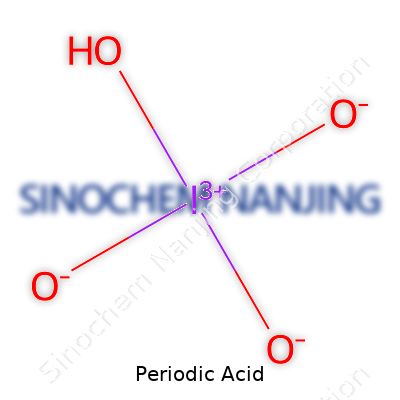
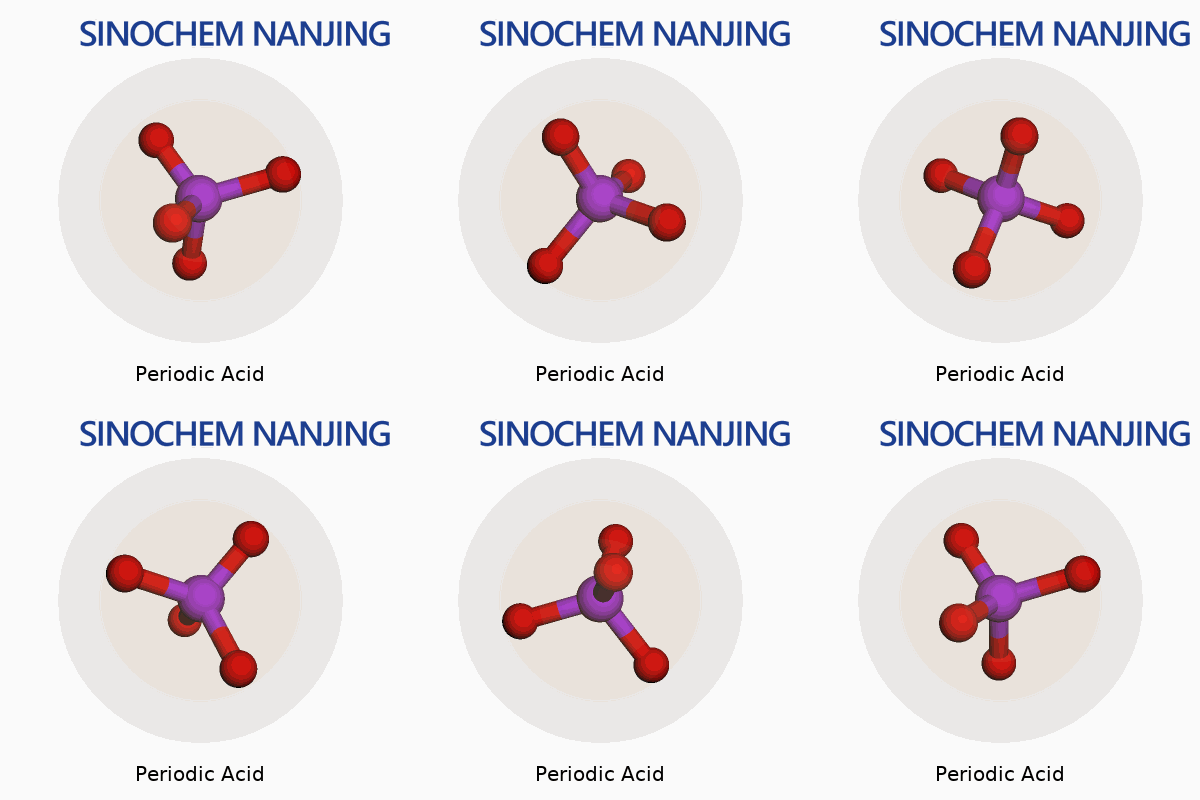
| Names | |
| Preferred IUPAC name | Orthoperiodic acid |
| Other names |
Orthoperiodic acid Metaperiodic acid Orthoperiodate |
| Pronunciation | /ˌpɪə.riˈɒd.ɪk ˈeɪ.sɪd/ |
| Identifiers | |
| CAS Number | 10450-60-9 |
| Beilstein Reference | 358715 |
| ChEBI | CHEBI:27373 |
| ChEMBL | CHEMBL1371 |
| ChemSpider | 64077 |
| DrugBank | DB01808 |
| ECHA InfoCard | 100.028.893 |
| EC Number | 231-760-3 |
| Gmelin Reference | 16210 |
| KEGG | C01236 |
| MeSH | D010504 |
| PubChem CID | 24846 |
| RTECS number | SD6475000 |
| UNII | 9C6D1M3A6Z |
| UN number | UN3262 |
| Properties | |
| Chemical formula | HIO4 |
| Molar mass | 227.938 g/mol |
| Appearance | White solid |
| Odor | Pungent |
| Density | D=2.24 g/cm³ |
| Solubility in water | Very soluble |
| log P | -1.6 |
| Vapor pressure | 1 mmHg (20 °C) |
| Acidity (pKa) | 1.6 |
| Basicity (pKb) | -8.4 |
| Magnetic susceptibility (χ) | Diamagnetic |
| Refractive index (nD) | 1.896 |
| Viscosity | 2.43 mPa·s (20 °C) |
| Dipole moment | 3.57 D |
| Thermochemistry | |
| Std molar entropy (S⦵298) | 151.6 J·mol⁻¹·K⁻¹ |
| Std enthalpy of formation (ΔfH⦵298) | -840.6 kJ/mol |
| Std enthalpy of combustion (ΔcH⦵298) | -1213 kJ/mol |
| Pharmacology | |
| ATC code | S01AD10 |
| Hazards | |
| Main hazards | Oxidizing, harmful if swallowed, causes severe skin burns and eye damage |
| GHS labelling | GHS05, GHS07 |
| Pictograms | GHS05,GHS06 |
| Signal word | Danger |
| Hazard statements | Hazard statements: "H301, H314, H318 |
| Precautionary statements | P260, P264, P280, P301+P330+P331, P305+P351+P338, P310, P405, P501 |
| NFPA 704 (fire diamond) | 3-0-2-OX |
| Flash point | 80 °C |
| Autoignition temperature | 160 °C |
| Lethal dose or concentration | LD50 Oral Rat 200 mg/kg |
| LD50 (median dose) | LD50 (median dose): Oral rat LD50: 192 mg/kg |
| NIOSH | WI4410000 |
| PEL (Permissible) | PEL: 1 ppm |
| REL (Recommended) | 0.5 g/L |
| IDLH (Immediate danger) | IDLH: 0.5 ppm |
| Related compounds | |
| Related compounds |
Metaperiodic acid Orthoperiodic acid Potassium periodate Sodium periodate |



