Perfluorooctanesulfonic Acid: Looking Beyond the Laboratory
Historical Development
Perfluorooctanesulfonic acid (PFOS) came into the world on the wave of post-World War II innovation. Back then, the industry felt invincible, and PFOS seemed like an answer to stains and fire. Chemists discovered early on that its unique fluorine-carbon chain created chemical bonds almost impossible to break. This kind of durability gave it a ticket into a staggering range of consumer products—once you open the old archives, you see PFOS in waterproofing sprays, fire-fighting foams, non-stick cookware, stain-resistant fabrics, and even some insecticides. Demand outpaced most regulations. Governments and scientists didn’t question its safety at first, so for decades, the industry poured PFOS compounds into consumer goods, factories, and the water.
Product Overview and Application
PFOS gets people’s attention because of how easy it is for manufacturers to work with and how well it performs under stress. In electrical and electronic parts, PFOS created coatings that didn’t rust or corrode. Textile workers added it to clothing that shrugged off oil and water like nothing else. Airport fire departments trusted AFFF foams containing high levels of PFOS for their ability to smother jet fuel blazes that nothing else could put out. It found its way into photographic film, semiconductor manufacture, metal plating, and even hydraulic fluids. People lived and worked with PFOS all around them—silent, effective, and reliable.
Physical & Chemical Properties
What sets PFOS apart chemically is its extraordinarily strong carbon-fluorine backbone, capped by a sulfonic acid group. This structure makes it one of the most chemically stable substances industry workers encounter. PFOS repels both water and oil. Most bacteria, fungi, and regular chemical treatments can’t break it down, so it sticks around in any environment. Water solubility varies, but the acid form dissolves enough for environmental contamination to spread through rivers and groundwaters. PFOS doesn’t burn or explode at normal temperatures—stability is both its strength and its curse.
Technical Specifications and Labeling
Labels on PFOS or related chemicals now carry warnings and restrictions you didn’t see decades ago. There’s a reason—regulators in Europe, the United States, and parts of Asia have finally stepped up, responding to research linking PFOS to health problems. Recent technical documents list purity levels, byproducts, and trace contamination, not to mention environmental hazards in disposal. Factories that still use legacy PFOS compounds must log every step, store them in secure containers, and track waste with rigorous paperwork. Regulations forced change, but the chemical’s persistence lingers.
Preparation Method
Making PFOS isn’t something anyone can do on a whim. The process, called electrochemical fluorination, uses electricity to force fluorine atoms into organic molecules, usually starting with octanesulfonyl fluoride. It requires specialized equipment and produces dangerous byproducts, including hydrogen fluoride. This technique made PFOS cheap and plentiful during its heyday, but it pumps out more than one kind of waste—improper disposal or leaks harmed more than just factory workers. Today, most countries have strict controls, if they allow PFOS synthesis at all.
Chemical Reactions and Modifications
Chemical tinkering with PFOS remains limited because it doesn’t break apart under normal lab or environmental conditions. It resists strong acids, bases, oxidizers, even burning in open air. Destroying PFOS calls for extreme heat, high pressures, or plasma fields, none of which appear outside of the most advanced labs or hazardous-waste incinerators. Attempts to alter or degrade it often trade one tough-byproduct for another—almost nothing returns PFOS to harmless carbon dioxide and water. This chemical stubbornness explains why environmental scientists call it a “forever chemical.”
Synonyms and Product Names
PFOS appeared in technical sheets and commercial products under a handful of names. Chemists might call it perfluorooctanesulfonate, simply PFOS, or refer to its salt forms, such as potassium or ammonium perfluorooctanesulfonate. Trademarked product names once graced cans of cleaner or Teflon competitors, but today, companies steer away from explicit “PFOS” branding. Regulatory lists now categorize it as a persistent organic pollutant, and anyone selling products with PFOS faces mounting scrutiny.
Safety and Operational Standards
Working with PFOS demands training and vigilance. Exposures happen through inhalation or skin absorption, with documented health risks to both workers and communities. Factories shifted from casual handling to “closed system” requirements. Protective gear, dedicated ventilation, spill containment—each measure aims to reduce the risk. Local, national, and international rules spell out how to deal with spills, transport, and waste because contamination persists for generations. In the United States, the EPA and OSHA developed standards only after studies linked PFOS to cancer, developmental issues, and immune system disruption. Now, environmental cleanup around old production sites can stretch over decades.
Application Area and Environmental Legacy
No matter where people use PFOS, it leaves traces. Storm drains near airports and training grounds, groundwater near manufacturing plants, lakes near textile factories—all show measurable PFOS, often above safe limits. The chemical’s stickiness latches onto blood proteins in wildlife and people, building up in food chains. Household products sold twenty years ago still leak microgram doses into landfills and sewers. No border stops its spread. Bear in mind, once PFOS enters water, there’s no simple fix—the chemical resists biological and chemical cleaning.
Research and Development Trends
Scientists scrambled to find alternatives as the risks became clear. Research dollars went into safer surfactants, short-chain perfluorinated compounds with a shorter environmental shelf life, and enzyme-based cleaners. Many teams now focus on PFOS remediation, developing new filtration membranes, advanced oxidation systems, and even genetically engineered bacteria that might someday break the molecule. Despite the progress, large-scale, cost-effective cleanup still lies out of reach for city governments and rural communities alike. Industry pressure for non-toxic alternatives creates both innovation and regulatory loopholes—substituting one troublesome fluorochemical for another unless regulations keep pace.
Toxicity and Human Health Research
Medical journals now describe PFOS as more than a laboratory curiosity. People living near contaminated sites show high blood PFOS levels, which don’t drop quickly even after exposure ends. Studies link these levels to increased cholesterol, thyroid disruption, immune suppression, and reduced vaccine response—chronic health troubles doctors can’t explain away. Animal studies found birth defects, delayed development, and cancers, raising the stakes for communities downwind or downstream from PFOS users. No treatment removes PFOS from the body, making prevention and source control the only medical advice that works.
Future Prospects and Solutions
PFOS teaches a lesson about persistence without responsibility. As replacement chemicals hit the market, regulators and researchers must learn from this history, setting stricter standards before pollution gets out of hand. Widespread blood monitoring, mandatory disclosure from industries, and better public reporting can help communities protect themselves before another “forever chemical” slips through the cracks. Cleanup technologies can only go so far—partnerships with affected communities let locals take control of testing, water filters, and health care for those exposed. Governments and companies that benefited from PFOS owe more than paperwork—they should invest in research and long-term care for those impacted. Looking back at PFOS, society stands at a crossroads between repeating mistakes and building a safer, more transparent approach to chemical innovation.
What is Perfluorooctanesulfonic Acid used for?
A Complicated Chemical With Reach
Perfluorooctanesulfonic acid, more common as PFOS, features in a dizzying array of goods most folks barely think twice about: stain-resistant carpets, non-stick cookware, water-repellent fabrics, firefighting foam, and even the wrappers keeping your burger grease-free. For decades, especially before the early 2000s, PFOS sat at the foundation of so many products thanks to how stubbornly it resists water, oils, and all sorts of grime. Chemical companies loved working with it because once you’d coated something in PFOS, it could shrug off spills or fires like nothing happened.
At What Cost?
I worked a factory job after college, cleaning machines that produced high-gloss furniture laminate—laminate that went to fancy stores where people spent big bucks on a stain-proof kitchen table. After scrubbing away, my hands sometimes smelled faintly chemical all day. Back then we didn’t ask too many questions, but over the years, news started trickling out: workers making or using PFOS faced pretty big health risks. PFOS doesn’t break down in the environment. It collects in our water, soils, and the blood of people and animals. A CDC survey found it in the bloodstream of nearly all Americans sampled, and research linked it to certain cancers, immune system effects, thyroid disease, and developmental delays in children.
The science isn’t vague on this point. PFOS sticks around—sometimes for decades—building up with each exposure. Environmental Protection Agency findings show this persistence lets PFOS accumulate in drinking water and some fish. Rainwater carries it into rivers and lakes. Our bodies just don’t know how to get rid of it, so it hangs on inside us for years. I think about the river back home, once teeming with smallmouth bass, and how warnings now go out that eating too much local fish isn’t safe. It’s hard not to feel frustrated knowing choices made far off, by companies and lawmakers, trickle down to every stream and kitchen table.
Is There a Way Forward?
Plenty of industries grew dependent on these chemicals, but that doesn’t mean the story is written. 3M, the company most tied to PFOS, announced a phase-out more than 20 years ago, bowing to scientific and public pressure. The U.S. EPA now keeps a closer eye on PFOS use, and several states ban new uses or set strict drinking water standards. Some companies switched to alternatives with shorter chains that don’t build up quite as much, but it can feel a bit like trading one mystery for another since long-term effects aren’t always clear.
On a personal level, I started paying more attention to the products I bring home—checking labels, reading municipal water reports, joining in local conversations when my city debated upgrading water treatment. As someone who’s seen both factory floors and family dinner tables, I know every solution—better technology to filter water, safer chemical alternatives, clearer rules—needs action from all sides. Citizens, companies, governments all pulling in the same direction. No single fix solves decades of buildup, but each voice, each new policy, chips away at a problem that touches every corner of life.
Moving Past Convenience
PFOS made life more convenient in small ways most people barely noticed. Now, the comfort of a stain-proof rug seems less important compared to the knowledge of what lingers beneath the surface. Real change comes through awareness, by sharing facts openly, and by refusing to trade health for a little less hassle. If it takes a little effort reading a label, calling a representative, or showing up at a city meeting, that feels like a trade worth making.
Is Perfluorooctanesulfonic Acid hazardous to health?
What Is Perfluorooctanesulfonic Acid?
Perfluorooctanesulfonic acid, or PFOS, shows up in some products most people use without a second thought. Think water-resistant jackets, greaseproof food packaging, carpets, and even firefighting foams. For years, companies leaned on PFOS for its ability to repel water and stains, and for its durability. The trouble is, this same durability means PFOS doesn’t break down easily in nature or in the body.
Sticking Around: The Problem with PFOS
The science shows PFOS can stick around in the environment and the human body for many years. Researchers have found it in soil, water, and even in animals as far away as the Arctic. For anyone who follows environmental and health news, this sets off alarms. If something gets into drinking water, gets into our blood, and hangs around, it’s worth asking what comes next.
What Public Health Data Tells Us
The Centers for Disease Control and Prevention has tracked PFOS levels in people across the United States. Data from the National Health and Nutrition Examination Survey revealed most people have some PFOS in their blood, though levels have dropped after restrictions appeared in the early 2000s. Still, “some” does not mean harmless.
Studies have linked higher PFOS levels to cholesterol increases, changes in liver enzymes, and immune system effects. Some evidence connects long-term exposure to a higher risk for kidney and testicular cancer. Growing children may be especially vulnerable. In my own neighborhood, parents worried after learning about PFOS levels in local tap water—fear and frustration led to calls for more testing and filtering.
Industry and Regulation: The Response So Far
After scientists began raising concerns, big manufacturers started shifting away from PFOS around 2002. Governments have jumped in with regulations. In 2022, the US Environmental Protection Agency issued much stricter PFOS health advisory levels—setting the recommended limit for drinking water near zero. Production or import of PFOS now faces heavy scrutiny across the globe, including bans by the European Union and restrictions under the Stockholm Convention.
Despite these efforts, old products and polluted sites still release PFOS into soil and groundwater. Rural firefighting training sites and airports show especially high contamination. Cleanup doesn’t come cheap or quickly; removing PFOS from water can require specialized treatments like activated carbon, ion exchange, or high-pressure membranes.
What’s Next and What Can People Do?
No one can rewind the clock, but better testing and transparency bring some peace of mind. Home water tests and local reports show what’s coming out of the faucet. People with private wells near old dump sites or airports might want to test their water, too. A well-designed water filter certified for PFOS can make a real difference. The lingering problem also calls for more research. Hospitals, health agencies, and schools can push for answers by partnering on studies and sharing results widely.
A mix of science, strong laws, and community involvement helps keep pressure on industry and government. Getting informed and knowing your local situation makes a difference, not just for drinking water but for the whole environment. The story of PFOS still unfolds, so it pays to stay curious, ask questions, and keep pushing for cleaner and safer choices.
What are the proper storage and handling procedures for Perfluorooctanesulfonic Acid?
Storing Chemicals Like Lives Depend on It
Perfluorooctanesulfonic Acid, known by most in the lab as PFOS, comes with a reputation that’s hard to shake. It’s persistent, nearly impossible to break down, and mixes into water, soil, and air far too easily. I’ve stood in chemical stockrooms where PFOS sits locked away like a secret, and every safety directive starts to make sense once you’ve seen the aftermath of carelessness.
PFOS belongs in high-integrity containers—think fluorinated polyethylene or glass. No one grabs old plastic jugs from the supply closet for cargo like this. We store small bottles in acid-resistant trays, just in case someone tips one over on a groggy morning. The spot should stay cool, dry, and way out of the sun’s path. Every time humidity creeps in or temperatures spike, containers risk degrading. The most serious labs keep PFOS in ventilated chemical cabinets. Where I worked, these cabinets had secondary containment, which felt like using a belt and suspenders, but the safety team wouldn’t dream of skipping it.
Personal Protection Isn’t Optional
Handling PFOS, nobody walks in without gloves and eye protection. This acid can burn, and it can travel through the skin and right to the bloodstream. At one university, I saw a scientist splashed just a handful of drops. She spent hours at health services, fearing the repercussions. Chemical-resistant gloves, long sleeves, goggles, and even face shields are on every safety checklist. Wearing a breathing mask isn’t overkill if you’re dealing with powder or mist, since PFOS can sneak into the lungs.
Label Every Bottle, Record Every Gram
Every bottle of PFOS carries a glaring hazard label where I’ve worked. Precise labeling tops the list after a mix-up caused a spill in a neighboring lab. Inventory records matter because this stuff never really leaves. Facility audits, surprise inspections, regulatory checks—good records save time, headaches, and sometimes jobs. I keep logs in ink, since digital mishaps happen more often than you’d believe.
Spills and Emergency Plans
If PFOS ever leaks, panic is the worst response. Training drills help. We soak up small spills with absorbent pads, then lock contaminated materials away in special waste bins—no regular trash allowed. Larger spills call the hazardous materials team, who show up with full hazmat suits and haul the mess to secure disposal. I’ve seen less experienced staff try a DIY cleanup, spreading contamination and setting off a week of hazmat cleaning. Emergency eye-wash stations and showers should never get blocked by random boxes or carts. Running drills taught our team how much reaction time drops under real pressure.
Disposal Remains a Sticking Point
There’s no regular waste route for PFOS. Labs turn to licensed hazardous waste handlers who transport and incinerate it at high temperatures. This process limits environmental release, but it doesn’t solve the underlying problem—PFOS resists most forms of destruction. I’ve argued with administrators about budgeting for disposal fees, but the alternative is an environmental disaster waiting to happen.
Why Diligent Handling Isn’t Just Good Practice
PFOS has shown up in fish, water, and even human bloodstreams. Some communities face lifelong consequences from mishandled storage or poor disposal practices at industrial sites. In labs and factories, the safeguards feel frustrating at times, but I’ve seen too many accidents turn personal to relax the rules. The health, safety, and future of whole ecosystems often weigh on simple daily choices behind the scenes. Training, vigilance, and a commitment to do things right create lasting protection against mistakes that don’t stay in the lab.
How should Perfluorooctanesulfonic Acid spills be managed?
No Shortcut Around the Facts
Perfluorooctanesulfonic acid—most people just call it PFOS—sticks around. Not just in soil or water, but in our bodies and the world we pass on. Manufactured since the mid-20th century, PFOS went into firefighting foams, non-stick coatings, and waterproof gear for decades. Its chemical stability stands out: nature hasn’t found a way to break it down quickly. So, when a PFOS spill hits a river, sits in a landfill, or seeps through an old manufacturing site, ignoring the spill means environmental and health costs last for generations.
Invisible Threats Count Too
PFOS doesn’t carry the same smell or look as crude oil or dyes after they spill, so public alarm often feels distant. Experience tells me that routine water quality checkups rarely grab headlines, but contaminated groundwater leads to sick livestock, learning problems in children, and higher cholesterol or thyroid issues in adults. Real people pay the price—those living close by don't get to move just because a chemical found their drinking well.
Response Can't Wait
Dragging feet after a spill just makes everything worse and more expensive. Rapid containment helps make sure PFOS doesn't move through storm drains or groundwater. Crews work with absorbent pads and activated carbon to block immediate spread, and dig up the top layer of affected soil. Pumps and filters trap what got into the water. Delivered with urgency and full transparency, these steps show respect for those relying on safe water.
Long-Term Fixes: Costs and Commitments
Removing PFOS from soil or water for good doesn’t come with an easy out. Incineration under controlled, high temperatures works for concentrated wastes but runs expensive and creates new emissions that need scrubbing. High-tech membranes and advanced oxidation treatments can remove PFOS from water, but smaller towns struggle to pay for these constantly.
Accountability matters. The companies responsible should cover cleanup bills and medical checkups. That’s more than writing a check. Long-term monitoring provides warning if PFOS returns. States like Michigan have started publishing maps with contamination sites and ongoing progress, pulling neighbors and health experts into the process, not hiding behind jargon or lawyers.
Knowledge Protects Communities
A lot of effective responses begin with recognizing that PFOS doesn't go away by itself. Schools, town halls, and medical clinics deserve straight talk about what’s in the water and what steps come next. People need tools to demand answers, and treatment plants need the budgets and staff to catch and destroy the stuff before it hits the tap.
Industry can help by replacing PFOS with safer chemicals and sharing data from their supply chains. New products coming to market must clear independent health reviews. History already shows that shortcuts on safety lead to long, costly problems.
Moving Forward Together
PFOS spills remind us that some mistakes refuse to vanish. Cleaning up calls for more than just technical fixes. Cutting corners lets PFOS spread further, touching lives for decades. Direct action, strong oversight, and honest conversation keep communities safer and hold polluters to their promises. That’s the only way to face this problem head-on.
Is Perfluorooctanesulfonic Acid regulated by environmental authorities?
PFOS: What Drives the Scrutiny?
Perfluorooctanesulfonic acid, or PFOS, has built itself quite a reputation over the years. Used in stain-resistant fabrics, firefighting foams, and industrial cleaners, it never just disappears after use. The first clue about trouble crept in during the late 1990s, when scientists linked it to health risks like cancer, liver damage, and immune system weakness. As someone watching environmental debates for years, it’s hard not to notice how concerns around PFOS cut across borders—nobody wants these chemicals in their drinking water.
Where Regulation Takes Hold
Countries and global organizations have stepped up. The Stockholm Convention, a global pact devoted to phasing out persistent organic pollutants, asked participating countries to restrict PFOS back in 2009. The United States Environmental Protection Agency (EPA) classified it as an “emerging contaminant.” Looking at the European Union, PFOS faces a near-ban, only allowed in specific, tightly-controlled industrial uses.
Several American states, like New Jersey and Minnesota, have set strict limits for PFOS in water supplies. Regulators noticed just how resistant this chemical remains to breakdown, earning it the label “forever chemical.” Problems show up in blood tests of people who rely on water sources contaminated by firefighting foam used at airports or military bases. Lawmakers and communities keep pressing for tighter rules, and for good reason. Nobody wants to discover their kids have high PFOS levels just from drinking tap water.
Why This Matters in Daily Life
Serious risks surround PFOS. As drinking water standards catch up with new research, getting rid of these chemicals from environments where they linger requires major investment. I’ve talked with families living near contaminated sites. They share worries about health and frustration at how slow official action feels. The difference between a theoretical risk and a real-life problem sits in their water pitchers every night.
Chasing Down Solutions
The world can’t just wish PFOS away. Older products still sit in warehouses and homes. Contaminated soil and groundwater need cleaning up. Researchers study everything from activated carbon to high-tech filtration to pull PFOS from water, but communities often face funding battles. For now, much of the solution depends on stopping any more PFOS from entering the environment, keeping industry honest, and catching polluters before harm multiplies.
Some companies abandoned PFOS for newer chemicals, yet replacement substances sometimes bring their own problems. Consumer demand plays a part as well. Asking questions, pushing for transparency, and refusing to buy products with hidden PFOS content drive change. Environmental authorities hold power, but real safety often starts with communities demanding better. In my experience, voices grow loudest—and most effective—after a crisis, but the wisest change builds before disaster hits.
Moving Beyond Regulation Alone
Addressing PFOS invites tough questions about the price of convenience and the value of clean water. Laws help, but so does a push for corporate responsibility and investments in cleanup technology. Environmental authorities can set the rules and deliver warnings, but lasting protection comes when informed citizens and honest companies hold each other to account.
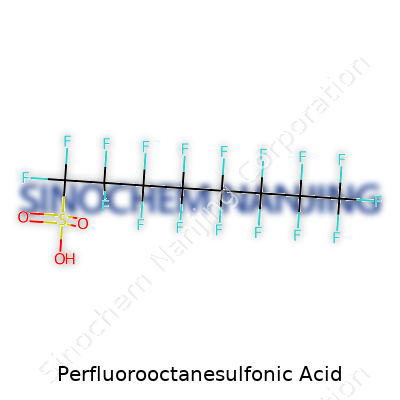
| Names | |
| Preferred IUPAC name | 2,2,3,3,4,4,5,5,6,6,7,7,8,8,8-pentadecafluorooctane-1-sulfonic acid |
| Other names |
PFOS Perfluorooctane sulfonic acid Heptadecafluorooctanesulfonic acid Perfluorooctanesulphonate Octanesulfonic acid, perfluoro- C8F17SO3H |
| Pronunciation | /pɜːrˌflʊəroʊˌɒkˌteɪnˈsʌlfɒnɪk ˈæsɪd/ |
| Identifiers | |
| CAS Number | 1763-23-1 |
| Beilstein Reference | 1718736 |
| ChEBI | CHEBI:35549 |
| ChEMBL | CHEMBL38308 |
| ChemSpider | 55714 |
| DrugBank | DB01592 |
| ECHA InfoCard | 100.016.230 |
| EC Number | 206-397-9 |
| Gmelin Reference | 82189 |
| KEGG | C18587 |
| MeSH | D020123 |
| PubChem CID | 9554 |
| RTECS number | TC8750000 |
| UNII | K1L0X95210 |
| UN number | UN3178 |
| CompTox Dashboard (EPA) | DTXSID7020154 |
| Properties | |
| Chemical formula | C8HF17O3S |
| Molar mass | 500.13 g/mol |
| Appearance | Colorless to light yellow liquid or solid |
| Odor | Odorless |
| Density | 1.80 g/cm³ |
| Solubility in water | Slightly soluble |
| log P | 3.7 |
| Vapor pressure | 3 mmHg (20 °C) |
| Acidity (pKa) | −3.3 |
| Basicity (pKb) | -15.3 |
| Magnetic susceptibility (χ) | −0.72×10⁻⁶ cm³/mol |
| Refractive index (nD) | 1.327 |
| Viscosity | 28.8 cP (25°C) |
| Dipole moment | 4.62 D |
| Thermochemistry | |
| Std molar entropy (S⦵298) | 553.8 J·mol⁻¹·K⁻¹ |
| Std enthalpy of formation (ΔfH⦵298) | -1377.2 kJ/mol |
| Std enthalpy of combustion (ΔcH⦵298) | -5694 kJ/mol |
| Pharmacology | |
| ATC code | V09AX05 |
| Hazards | |
| Main hazards | Highly toxic by inhalation, ingestion, or skin absorption; causes severe skin burns and eye damage; may cause respiratory irritation; environmental hazard, very persistent and bioaccumulative. |
| GHS labelling | GHS05, GHS06, GHS08 |
| Pictograms | GHS05,GHS06,GHS08,GHS09 |
| Signal word | Danger |
| Hazard statements | H360D: May damage the unborn child. H350: May cause cancer. H372: Causes damage to organs through prolonged or repeated exposure. |
| Precautionary statements | P260, P262, P273, P280, P303+P361+P353, P305+P351+P338, P310, P321, P337+P313, P363 |
| NFPA 704 (fire diamond) | 3-0-3-SPECIAL |
| Explosive limits | Not explosive |
| Lethal dose or concentration | LD₅₀ (oral, rat): >2000 mg/kg |
| LD50 (median dose) | 200 mg/kg (oral, rat) |
| NIOSH | GZ1400000 |
| PEL (Permissible) | PEL (Permissible Exposure Limit) for Perfluorooctanesulfonic Acid: Not established |
| REL (Recommended) | 0.01 mg/m3 |
| Related compounds | |
| Related compounds |
Perfluorooctane sulfonamide Perfluorooctanesulfonyl fluoride Perfluorooctanoic acid Perfluorobutanesulfonic acid |



