Oxygen Difluoride: A Closer Look at a Wild Card in Chemistry
The Journey from Discovery to Laboratory Use
Oxygen difluoride gets little attention in the mainstream world, but for chemists, the story feels a bit like handling dynamite in a room full of fireworks. Back in the 1920s, early researchers were gripped by curiosity about what happened when the periodic table’s more excitable members, oxygen and fluorine, collided. The product, OF₂, turned out to be a pale yellow gas with a knack for causing headaches—in every sense. Early experiments struggled with containment, as glassware itself disintegrated and rubber seals turned brittle. OF₂’s corrosiveness spelled out clear boundaries for handling, which shaped how labs approach novel fluorinating agents to this day. The historical trajectory of oxygen difluoride isn’t just about its preparation but about hard lessons learned—mishandling and accidents spurred new safety protocols across chemistry, some of which spilled over to disciplines handling any aggressive reagents.
Diving into What Sets Oxygen Difluoride Apart
Anyone working with oxygen difluoride knows it as more than a name on a label. It’s a small, angular molecule with fierce chemical ambition. It behaves as a powerful oxidizer and comes with an unmistakable, sharp odor—something like ozone but with panic-inducing edge to those who’ve experienced a leak. The melting point sits at -223°C, and it boils around -144°C. Its dense physical state as a gas shuttles easily through seals that resist regular oxygen or nitrogen, attacking organic material and even metals with an efficiency that stuns. Liquefying it means tolerating extreme cold, and storage challenges mean most chemists prefer generating what they need, then scrubbing out the residue rather than keeping stocks at the ready.
Technical Specs and Real-World Handling
No data sheet or catalog blurb can quite capture the reality of working with OF₂. Labs that use it rely on monel or nickel equipment, since everyday metals crumble or pit quickly. The smell quickly signals if containment fails, but that warning rarely comes before damage starts. Standards for labeling, venting, and scrubbing exhaust gases grew out of trial and costly error—responsible labs install redundant safeguards. What I’ve seen over years working with corrosive gases is that the standard operating procedures eventually hardwire themselves into your reflexes. Reading up before use helps, but it’s the reputational risk and the clear consequences that really keep a team vigilant.
Getting from Raw Materials to Usable OF₂
Skilled chemists generate oxygen difluoride by reacting fluorine with dilute sodium hydroxide, usually in specialized reactors that keep every drop contained. This approach allows tighter control, since wet methods—or any attempt to tinker with glassware—have led to accidents big enough to make seasoned chemists sweat. Industrial setups often recycle fluorine, since sourcing it remains expensive and fraught. Other methods exist, but efficiency, safety, and cost usually drive chemists toward direct preparation. The learning curve isn’t gentle: manufacturers need to educate technicians on the volatility and dangers, not just automate processes and hope for the best.
Reactivity and the Many Faces of Modification
Oxygen difluoride doesn’t wait politely for a reaction partner. It attacks most organics, setting off explosive decompositions if materials contain active hydrogen. Metals, except for a few like nickel and monel, age prematurely. Watch OF₂ react with water, and you’ll see hydrofluoric and oxygen gas form; both products can destroy skin, glass, and even trained confidence. What stands out in my own lab work: you learn the quirks of OF₂ indirectly, by reading the scars in old fume hoods or following up stories of “near misses” from colleagues. Everyone walks away with more respect for the balance between exploration and restraint.
Synonyms, Aliases, and Catalog Confusions
A product with such punch naturally comes with a few different names: oxygen fluoride, difluorine oxide, or by its molecular formula OF₂. Catalogues sometimes tuck it among fluorinated gases or rank it beside ozone as a strong oxidizer. I’ve seen students mix up OF₂ with the more notorious fluorine gas—both require similar respect in handling, though each brings its own hazards. In day-to-day practice, everyone simplifies to OF₂, but safety committees keep lists of all potential aliases to prevent paperwork mishaps from turning into chemical ones.
Guardrails: Safety and True Operational Vigilance
In my experience, no safety manual covers the adrenaline rush OF₂ can bring. Regulations draw notes from infamous accidents. Personal protective equipment—full-face shields, positive pressure suits, rigidly maintained airlines—become routine for users. Fume hoods rated for halogens are a base requirement. Scrubbers convert traces of OF₂ back into benign products before exhaust leaves the building. Training sessions, more so than checklists, do the heavy lifting for risk management. I’ve seen cautious teams walk through mock drills before a single gram is made. What’s become apparent: enforcing strict procedural discipline, not just checklists, prevents disaster more reliably than any amount of signage.
Where Chemistry and Industry Cross Paths
Oxygen difluoride stands out in rocket propulsion research, etching of semiconductors, and specialized organic synthesis. Its unique ability to push fluorination reactions under milder conditions than elemental fluorine draws attention from pharmaceutical and agrochemical researchers looking for more selective, less brutal tools. The space sector keeps an eye on OF₂ for its oxidizing potential, especially as new materials push for higher efficiency and lighter payloads. Electronics makers value it for etching, taking advantage of its reactivity with silicon compounds to shape microchips that underpin modern technology. What these different uses have in common: at every stage, engineers and researchers grapple with the balance between performance and safety. Lessons from early electronics labs echo today whenever someone proposes introducing OF₂ to new materials or devices.
Research and the Path Forward
Teams worldwide keep searching for better ways to manage the risk and unlock new applications. Advances in reactor design, remote operation, and in-line analytics have opened possibilities for using OF₂ more safely and efficiently. I’ve sat in on meetings where engineers debate materials compatibility and run pilot studies to optimize yields while limiting environmental fallout. New fluorinating protocols sometimes reach publication, only to stall at industrial scale due to handling nightmares. What persists: curiosity about how to tame OF₂’s volatility for synthetic breakthroughs at lower temperatures or with greater selectivity. From personal observation, collaborations between materials scientists and safety engineers drive most meaningful innovation; breakthroughs arrive when neither side holds too tightly to traditional approaches.
The Toll of Toxicity and Pushing for Safer Chemistry
Oxygen difluoride remains notorious for intense toxicity. Exposure risks range from severe respiratory irritation to long-term organ damage. Even minute leaks can cripple a laboratory or manufacturing plant in minutes. Research teams have charted the toxicology of OF₂, and those studies now inform everything from air monitoring protocols to emergency medicine. There’s no room for complacency. MEthods for limiting exposure, like double-walled transfer lines and constant environmental monitoring, form the foundation of every responsible project. For all its utility, OF₂ must be seen through the lens of collective learning—accidents in the past drive modern chemists to push safer alternatives, or to use OF₂ as a last resort rather than a staple reagent.
Horizon Watch: Future Avenues and Persistent Questions
Oxygen difluoride hardly fades from serious research discussions despite the risks. Synthetic chemists see opportunities in fluorination chemistry that depend on precise, controlled use of OF₂. Electronics manufacturers tinker with new ways to etch silicon structures more cleanly. Green chemistry advocates urge the development of less hazardous alternatives, setting a clear benchmark that future products must meet or beat. The question isn’t just about making OF₂ safer, but whether its unique attributes can be matched by less aggressive chemistry. Universities and industry alike watch advances in containment tech, remote-controlled syntheses, and automated leak detection, all with the promise of expanding OF₂’s reach while reining in its dangers. Out of every cautionary tale, the real lesson sticks—to respect a reactive molecule that delivers on promise, but never on its own terms.
What is Oxygen Difluoride used for?
What Oxygen Difluoride Does
Oxygen difluoride doesn’t make headlines, but this harsh, pale yellow gas changes a lot behind the scenes in science and industry. Its chemical formula, OF2, tells a story of big reactivity, and that drives its serious uses. Here’s the truth: no one walks around carrying this stuff for fun. It shows up where something powerful, and pretty dangerous, is needed.
Big Player in Rocket Science
The aerospace world has chased better propellants since the space race began. Oxygen difluoride steps in here as a strong oxidizer. In rockets, the job is simple—push all fuel energy out as fast as possible. OF2 reacts aggressively with common fuels, delivering that burst. For folks working in launch vehicle testing, storing or mixing OF2 gets hair-raising. Mishandling creates much bigger dangers than a standard fire, and that risk drives heavy training and safety equipment.
Helping Out in Chemical Synthesis
Out in research labs, especially those slicing up challenging molecules, oxygen difluoride is a go-to when nothing else works. Chemists use it for tough fluorination reactions, which means adding fluorine to other things. Some molecules absorb this element and gain new powers—think better pharmaceuticals, sturdy plastics, strong agrochemicals. I remember talking with a professor who warned, “Never underestimate OF2; if it leaks, you leave.” So, every flask hides behind a powerful hood and thick glass.
Specialty Cleaning Gets Extreme
Today’s microelectronics world can’t stand even a stray atom out of place. OF2 enters the scene here, too, used to clean silicon wafers so they’re as pure as possible before chips go in your laptop or phone. One errant speck could run a billion-dollar line off the rails. Companies chase every last defect, and tough weird chemicals like OF2 serve that hunt.
Real Risks and Close Calls
A common theme follows this compound—risk. OF2 reacts with just about anything you throw at it, sometimes explosively. Breathing its fumes attacks the lungs and causes pain before you know what’s hit you. In labs and plants, folks don’t touch it without backup gear and special training. I’ve heard stories of close calls, where a tiny leak triggered alarms and sparked an entire building evacuation.
Exposure stays rare thanks to regular drills and fancy sensors. Last year, a safety manager told me how gas detectors picked up a micro-leak, letting maintenance fix valves with no harm done. That’s no accident—it’s years of lessons written in rules and warnings.
Safer Alternatives and Smart Handling
Safer chemicals hit the market every year, but few match OF2’s raw muscle for some tasks. The search for more manageable fluorinating agents comes from painful experience—accidents cost lives and money. Crew rotations, fresh equipment, and upgraded ventilation help keep people safe. A friend working in semiconductor manufacturing shared how the switch to remote-controlled systems spelled the difference between calm and chaos during a routine leak test. Some companies invest in virtual simulations for training, cutting risks before new hires even step onto the floor.
Oxygen difluoride is a perfect example of chemistry solving difficult problems at a high price—one measured in strict protocols, constant education, and a whole lot of respect every time a tank rolls out.
Is Oxygen Difluoride dangerous or toxic?
Unexpected Dangers Behind a Simple Formula
Oxygen difluoride, OF2, might not sound like a household name, but don’t let that fool you. This pale yellow gas brings plenty of baggage. As someone who’s worked around both laboratories and safety training courses, I’ve seen how easy it can be to underestimate chemicals outside the everyday lexicon. OF2 earns respect the hard way—through dangerous reactions and serious consequences for anyone caught off guard.
At first glance, it may just seem like another industrial substance, something you’d only find in specialty labs. What makes oxygen difluoride really stand out is how aggressively it reacts with water and organic materials. This isn’t a polite fizz or harmless pop. OF2 goes for violent chemical releases that turn water (or even the moisture in your lungs and eyes) into corrosive hydrofluoric acid along with toxic fluorine byproducts. Not much else in the lab will eat through glass this quickly or put someone in the emergency room this fast.
Human Health Isn’t Just a Footnote
People often assume that a chemical’s real danger only crops up at high doses. OF2 breaks that myth. Even a whiff of this stuff in the air—measured in parts per million—can spark coughing, chest pain, and burning eyes before you know what hit you. Our lungs aren’t built for this sort of challenge, and repeated exposure builds up unforgiving damage. Skin contact doesn’t fare much better; burns arrive quickly, often followed by deep tissue injury. No suit or glove blocks pure OF2 forever, and rescue plans rely on sharp training, not just hope.
Real-world experience shows the smallest spill or leak turns a lab into a danger zone. People and animals share that vulnerability, so plant workers and researchers know they’re only as safe as the next valve or ventilation fan. That uneasy feeling encourages diligence and respect, habits built by stories from colleagues who’ve seen tanks vent unexpectedly or watched glassware crumble after careless handling.
Exploring Safer Alternatives and Responsible Use
The chemical industry uses oxygen difluoride for a few highly specific jobs—rocket propellant oxidizer, semiconductor cleaning, advanced chemical synthesis. Jobs that regular oxidants can’t handle usually involve OF2 because of its unmatched reactivity. Some engineers see it as irreplaceable in aerospace or electronics, but the downsides bite hard: every incident report, every scar, every costly cleanup.
Rather than hand-waving these risks, it makes sense for industry and academia to keep searching for alternatives. Engineering controls remain the top priority. In facilities where OF2 stays in use, double-walled reactors, automated shutoff valves, and continuous atmospheric monitoring cut risk down, though never to zero. Educators in chemistry departments need to emphasize hazard recognition and spill response from the start, sharing lessons from real accidents instead of abstract protocols.
Solid Information Builds Trust: E-E-A-T in Action
Trustworthy information saves lives here. Agencies like the National Institute for Occupational Safety and Health (NIOSH) and the U.S. Occupational Safety and Health Administration (OSHA) offer detailed safety guidance, including air exposure limits and emergency procedures. If you want to check toxicity data, verified sources like PubChem or the CDC's chemical database provide open access—no paywall, no guessing games. This transparency matters, especially in an age of confusing rumors and quick online searches.
Oxygen difluoride’s hazards leave no room for guesswork or shortcuts. In practical terms, living through near-misses or seeing the aftermath keeps people vigilant. Attention to detail, leaning on updated science, and admitting limits to anyone’s experience all keep workers and communities safer wherever OF2 lurks.
How should Oxygen Difluoride be stored and handled?
The Real Risks
Oxygen difluoride sounds exotic to most people, yet anyone working around it knows this isn’t something to treat casually. Its impressive reactivity means a single carelessness can invite trouble. Breathe it in, and lungs start to protest—a strong irritant that quickly shows its presence. Let it come into contact with water, and watch as it produces hydrofluoric acid, an agent with a nasty reputation for causing deep chemical burns. Stories of accidents often stem from the tiniest leak or splash, and those experiences aren’t easily erased.
This compound breaks down materials most folks think of as resilient. Rubber, glass, even some metals—few materials last long under its attack. Several years spent in research labs have shown that regular storage containers can’t cope with oxygen difluoride’s demands. Years ago, a coworker tried to improvise with non-specialized tubing. The result: corrosion that crept faster than anticipated, eventually compromising the entire setup. Lives weren't at risk that day, but it highlighted hard truths about shortcuts.
Choosing the Right Containers
Only a handful of materials hold up against this chemical. Industry favors containers built from metals such as nickel or Monel. Stainless steel turns brittle over time, so it should be ruled out. People sometimes assume PTFE or Teflon tape offers enough of a barrier, yet exposure tests reveal degradation and leaks after repeated cycles. If small leaks happen, hydrofluoric acid forms, and in closed spaces, that quickly turns into a deep hazard for skin, lungs, and eyes.
Pressure vessels for oxygen difluoride need mechanical integrity; nothing rusty or patched together gets a pass. Over-pressurization caused by temperature swings can fracture tanks or lead to serious leaks. For this reason, temperature stays tightly controlled on every tank I've seen in responsible operations, and rupture disks serve as a solid backup in emergencies.
The Approach to Handling
Chemical intuition alone doesn’t cut it—training counts for everything. Only people with rigorous safety training should handle this compound. During transfer or sampling, working inside dedicated fume hoods or closed glove boxes isn’t optional. Each transfer involves double-checking configurations, lines free of moisture, and valves ready to close in a split second.
Accidents often trace back to skipped steps, hurried procedures, or missed routine maintenance. Every scientist or technician I’ve worked with who respects these protocols lowers risk for everyone. Engineering controls, such as remote handling and advanced detection alarms for leaks, further tilt the odds in our favor. In the last decade, the difference between facilities with meticulous logs and those without speaks for itself: lower incident rates, more confidence among the crew, and unmistakable savings on cleanup costs and lost time.
PPE and Emergency Planning
Putting on thick gloves, face shields, and non-porous aprons isn’t just box-ticking. Direct exposure doesn’t give many second chances. Hydrofluoric acid, produced on contact with water, moves through skin to the bone, and standard shower stalls or eyewash stations won’t undo all its effects. Calcium gluconate gel sits in easy reach at every proper workstation, backed up by published safety data and regular drills.
Every incident teaches something new, but thorough planning, reliable equipment, and solid training always catch mistakes sooner. Regulators require strict compliance, and anyone flouting these expectations rarely remains in the field long.
Better Practices Yield Better Outcomes
Oxygen difluoride warrants respect. Taking shortcuts or working without preparation leaves too much to chance. The safest workplaces blend reliable engineering with proven safety training, precise equipment checks, and realistic emergency drills. That’s how people get home unscathed, and that’s all that matters in the end.
What are the chemical and physical properties of Oxygen Difluoride?
A Glimpse at the Basics
Anyone spending time in a chemistry lab can spot the troublemakers by their smell or reputation, and oxygen difluoride (OF2) lands near the top of that list. This pale yellow gas, first made back in the 1920s, carries a stinging, faintly chlorine-like odor. You might not run into it outside specialized labs, but its punch packs consequences for those handling it. OF2 holds a simple molecule—just oxygen and two fluorine atoms stitched together—yet this simple build hides some serious strength.
The Chemical Muscle
OF2 acts as a forceful oxidizer. Chemists know it won’t hesitate to react with water, most organic materials, or even glass under the right circumstances. Spill a splash on something flammable and you could kick off a fire or pop of fluorine compounds. It doesn’t play nicely with fats, waxes, or rubber—those get eaten up quickly. Pull up the reaction between oxygen difluoride and water, and you see it makes hydrofluoric acid and oxygen, both of which hit health and lab safety hard.
Some folks in the chemical workforce have used OF2 in rocket fuel research. Its strong oxidizing properties look tempting on paper, though practicality and safety concerns keep it far from common propellants. It also shows up in some industrial etching operations, where its ability to break bonds finds a niche. Still, even companies with long histories in chemical processing prefer to handle this compound with serious oversight.
Physical Traits Bring Out the Risks
Oxygen difluoride turns up as a gas at room temperature. Workers rely on cooled tanks to bottle it as a pale yellow liquid, around -144°C. If not chilled or compressed, it’ll escape any small gap, helped by its much heavier-than-air density. Sensors need tight calibration to track leaks, since the stuff barely hints at its presence and spreads quickly through labs.
One vivid memory from a university lab deals with OF2—just preparing a sample meant doubling up on gloves, face masks, ventilation hoods, and goggles. Accidental exposure can bring on coughing, chest pain, and burns, echoing stories from chemical safety briefings. That sting in the air often tells professionals to stay vigilant, since inhalation or skin contact can trigger lasting health problems.
Health, Environment, and Safer Paths Forward
Safety matters most here. OF2 exposure, even for a minute, can irritate lungs, eyes, and skin. Hydrofluoric acid, the byproduct, digs in deep—unlike other acids, its fluoride ions slip through skin and start wreaking havoc. Hospitals face tough situations treating hydrofluoric acid injuries, which means any lab or facility working with oxygen difluoride must line up emergency plans and calcium gluconate antidotes.
Researchers and industry workers call for better containment—double-sealed pipelines, pressure-rated vessels, and electronic controls with real-time leak alerts. Training stays essential; one careless moment can set off an accident impossible to undo. Some projects swap OF2 for less reactive oxidizers, slowing progress but building in peace of mind.
For anyone interested in chemistry, oxygen difluoride stands as proof that small molecules can shift from scientific tools to hazards in a blink. The people who work with it push for transparency, shared data, and a culture of respect for both the excitement and the edge it brings to the lab.
What precautions are needed when working with Oxygen Difluoride?
A Substance That Doesn’t Forgive Mistakes
Oxygen difluoride isn't your run-of-the-mill lab chemical. It’s dangerously reactive, tossing away the rulebook most people follow with fire and acids. Just a whiff or dab can throw everything into chaos. A drop of moisture in the air and this compound jumps at it, releasing caustic hydrofluoric acid and powerful oxygen radicals. Inhaling its vapors doesn’t just irritate the lungs—it can corrode tissue fast. Years ago, I watched a seasoned chemist peel off latex gloves after a minor splash; his hands burned pink within seconds. That urgency sticks with you.
Personal Protection and Equipment Isn’t Just a Suggestion
People sometimes cut corners on eye shields or aim for comfort over safety. Big mistake here. Working with oxygen difluoride, you glove up—no shortcuts. Thick nitrile layered with neoprene, long-sleeved lab coats, and full-face shields are bare essentials. Rubber boots on the floor and a chemical apron help, especially since droplets bounce. Respirators rated for acidic gases back up the basic set; clean, functioning exhaust fans pull fumes away before they hover near your face.
Real-world labs store this gas in cylinders designed for pressures and chemical resistance. Oxygen difluoride leeches right through some metals, so the cylinder valve seals must be checked each time. Many labs treat it like chlorine trifluoride: use only in a dedicated fume hood, or more often, a ventilated glove box with remote controls. Over my years in chemical engineering, I’ve known two cases where leaks never set off alarms, but leftover residue etched the stainless steel surfaces inside the cabinet.
No Room for Clutter, No Ignoring Procedures
People love to stack glassware and squeeze extra notes onto benchtops. It’s dangerous to work this way with something as reactive as oxygen difluoride. Keep your workspace spare. Never keep paper, solvents, or even pipette tips outside of sealed containers nearby. Everything goes into waste immediately after use, and you scrub the surfaces each day. Any organic matter—grease, oils, or even traces from skin—turns a minor leak into a fire risk.
One common misstep is storing incompatible chemicals together. Oxygen difluoride waits for a chance to react violently. Pay attention to storage lists. Don’t keep it close to organics, ammonia, or any reducing agents. Only trained staff with up-to-date certification should access the gas. I’ve seen lab managers insist on fire drills, but fire isn’t the only danger; corrosion, vapor exposure, and secondary explosions from contaminated equipment cause just as much harm.
Planning for an Emergency—Preparation Before Panic
Every person in the room should know the location of eyewash stations, acid-neutralizing showers, and fresh air exits. Coordination with emergency services speeds up response if something does go wrong. Decontamination kits and neutralizing agents should be checked weekly. Don’t rely on last year’s checklists—rotating staff, changing PPE suppliers, or new cylinders demand new risk assessments every single time.
Turning Precautions Into Routine
Oxygen difluoride makes it impossible to cut corners. Safety training saves lives, so refreshers become habit, not bureaucracy. In my early days, I thought experience would keep me safe, until I saw how fast a slip-up snowballed into critical care for a colleague. Nowadays, I never compromise. No matter how long the list, each step keeps you and everyone else breathing easy at the end of the day.
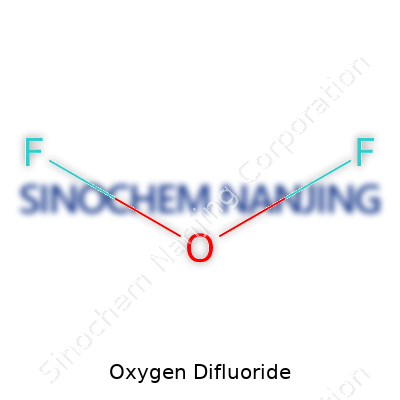
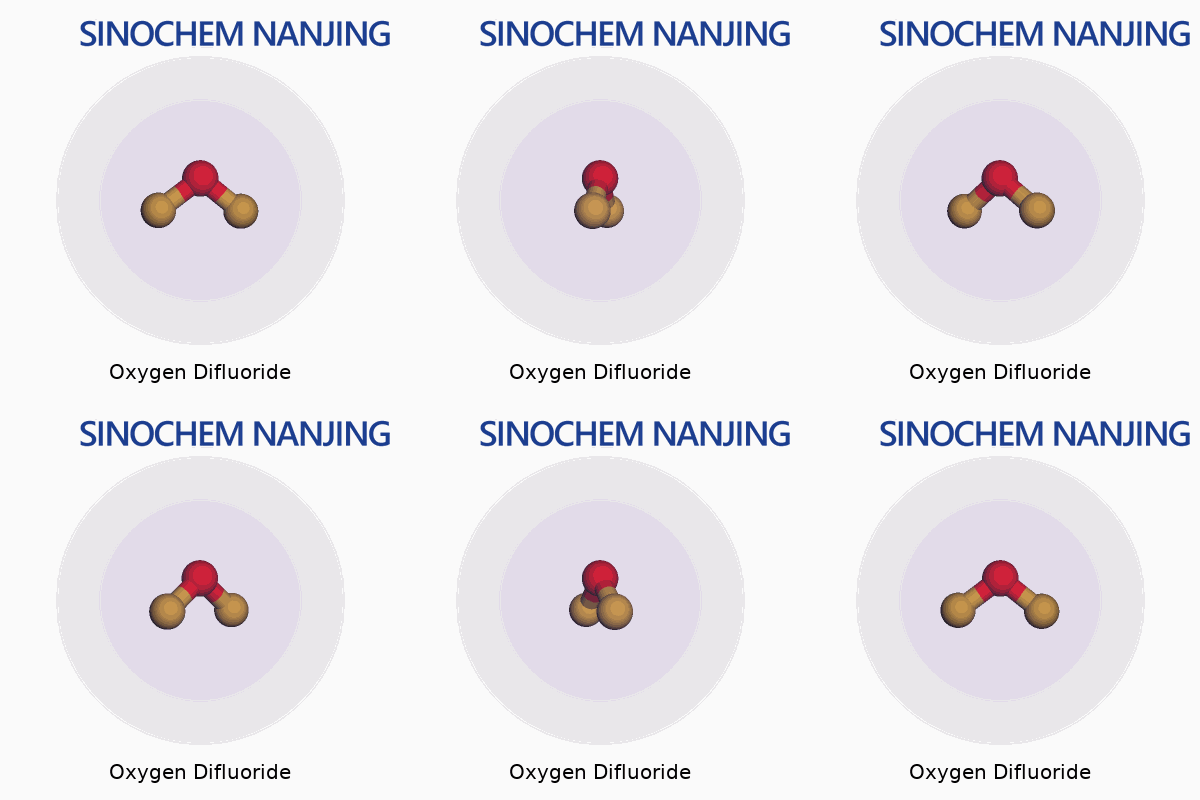
| Names | |
| Preferred IUPAC name | difluorooxidane |
| Other names |
Oxygen fluoride Difluorine monoxide |
| Pronunciation | /ˈɒksɪdʒən daɪˈfluːraɪd/ |
| Identifiers | |
| CAS Number | 7783-41-7 |
| Beilstein Reference | 1631336 |
| ChEBI | CHEBI:29812 |
| ChEMBL | CHEMBL1230537 |
| ChemSpider | 63113 |
| DrugBank | DB09268 |
| ECHA InfoCard | 100.029.196 |
| EC Number | 231-954-8 |
| Gmelin Reference | 8059 |
| KEGG | C18330 |
| MeSH | D010105 |
| PubChem CID | 123259 |
| RTECS number | RQ8225000 |
| UNII | G06GNN4Z0F |
| UN number | 2196 |
| CompTox Dashboard (EPA) | OXPDOFXKFWKJSM-UHFFFAOYSA-N |
| Properties | |
| Chemical formula | OF2 |
| Molar mass | 53.996 g/mol |
| Appearance | Pale yellow gas |
| Odor | pungent |
| Density | 1.88 g/L |
| Solubility in water | Soluble |
| log P | -0.43 |
| Vapor pressure | 1220 mmHg (20°C) |
| Acidity (pKa) | -2.8 |
| Basicity (pKb) | 0.5 |
| Magnetic susceptibility (χ) | +9.6·10⁻⁶ |
| Refractive index (nD) | 1.225 |
| Viscosity | 0.0156 cP |
| Dipole moment | 0.157 D |
| Thermochemistry | |
| Std molar entropy (S⦵298) | 220.0 J·mol⁻¹·K⁻¹ |
| Std enthalpy of formation (ΔfH⦵298) | -137.2 kJ/mol |
| Std enthalpy of combustion (ΔcH⦵298) | −223.0 kJ·mol⁻¹ |
| Pharmacology | |
| ATC code | V03AN01 |
| Hazards | |
| Main hazards | Toxic, corrosive, oxidizer, can cause explosions on contact with organic materials or water |
| GHS labelling | GHS02, GHS05, GHS06 |
| Pictograms | GHS03,GHS05,GHS06 |
| Signal word | Danger |
| Hazard statements | H271, H331, H314 |
| Precautionary statements | P210, P220, P260, P271, P280, P304+P340, P305+P351+P338, P320, P312, P403 |
| NFPA 704 (fire diamond) | 1-4-3-OX |
| Explosive limits | 4.7–91% |
| Lethal dose or concentration | LDLo inhalation-rat 0.0096 ppm/4H |
| LD50 (median dose) | 151 ppm (rat, inhalation, 1 hour) |
| NIOSH | NIOSH: LQ2625000 |
| PEL (Permissible) | 0.2 ppm |
| REL (Recommended) | 0.0002 ppm |
| IDLH (Immediate danger) | 30 ppm |
| Related compounds | |
| Related compounds |
Hydrogen fluoride Fluorine Ozone Dioxygenyl hexafluoroplatinate Oxygen monofluoride |



