Osmium Tetroxide: More Than a Lab Curiosity
Historical Development
Osmium tetroxide carries a history as old as the days when chemists first probed the darker corners of the periodic table. Smithson Tennant, the British scientist, brought osmium and its notorious oxide into the limelight in 1804. Chemists needed grit and patience—they spent days sputtering over black osmium residues, coaxing them to react and give up secrets. Back then, the pathways to pure elements often left researchers with headaches from peculiar odors and toxic fumes. Lab folklore holds traces of those first, accidental interactions: papers yellowed by harsh vapors, notes scrawled with warnings about its volatility, tales passed down about glassware etched by the silvery, toxic mist. In the mid-20th century, growing electron microscopy and organic synthesis steered osmium tetroxide into more focused experiments. Its role grew larger in research circles, becoming a staple for fixation and staining, and eventually spilling out into diverse industries.
Product Overview
Osmium tetroxide, OsO4, presents itself as a pale yellow, crystalline solid, which quickly turns into a volatile gas. Some might dismiss a small vial of this compound as nothing more than an academic curiosity, but it has a way of leaving a mark—a literal one on the tissue it stains. Beyond its notoriety for toxicity, it's one of those rare products you spot on both electron microscopy workbenches and organic chemistry shelves. People approach it with a blend of caution and respect, called for by both its remarkable reactivity and dangers. Sources distribute it in ampoules or tightly sealed containers: open one in a warm room and you notice its pungent, chlorine-like odor. Even minute amounts reveal its presence. Hardly any other chemical casts the same shadow across biological and synthetic labs.
Physical & Chemical Properties
Crystals of osmium tetroxide have a keen way of shimmering under good lighting, but that's as close as anyone should get. Its melting point hovers near 40°C, and it boils at only 130°C. In water, it acts cagey, only slightly soluble and yet forming a yellow solution. This reactivity extends further—it dissolves readily in many organic solvents, which is why it excels at crossing into biological specimens. Inhaling its vapors, or even leaving it exposed on a benchtop, risks corrosion of the nasal passages and eyes. OsO4 displays a knack for oxidizing alkenes to diols, a trick modern organic chemists still rely on. The volatility means it won't sit quietly, invading air and surfaces if given a chance. Its structure, a tetrahedral arrangement around the osmium atom, helps explain why so few chemicals rival its oxidizing power.
Technical Specifications & Labeling
Suppliers know better than to cut corners on osmium tetroxide packaging. They follow strict procedures, using glass or PTFE containers with secondary protection. Labels carry hazard pictograms showing skulls and crossbones, corrosion, and environmental hazards. On technical datasheets, you’ll spot the CAS number 20816-12-0, purity grades (ranging from 98% to 99.99% for analytical use), batch numbers, and warnings in several languages. Staff in shipping and receiving rooms recount memorable days handling these shipments—a slip in procedure can turn routine into nightmare. The safety data sheet calls out both acute dangers and long-term exposure risks, reminding users to plan every step from storage location to disposal method.
Preparation Method
The process begins with crude osmium, often a byproduct from nickel and platinum mining. The route’s gritty: osmium is slowly roasted in air, generating a smoke of osmium tetroxide vapor. Industrial setups ensure airtight reactors and robust exhaust scrubbers. One seasoned technician described its extraction as equal parts chemistry and caution. Mistakes flood workspaces with a smell that sticks to sinuses for days. In carefully controlled systems, vapors condense into yellow crystals, quickly sealed to stop their escape. The yield depends on the roast’s thoroughness, the air’s dryness, and keeping sensitive equipment free from corrosion.
Chemical Reactions & Modifications
Osmium tetroxide doesn’t play favorites when it reacts—it targets unsaturated bonds with enthusiasm. In organic synthesis, it grabs alkenes, converts them into cis-diols in a gentle cleaving move. Even at room temperature, OsO4 shuttles electrons between itself and organic molecules. Biologists rely on its ability to bind lipids, turning cell membranes black under electron microscopes. In some routes, chemists tweak its reactivity by forming adducts with pyridines or amines, fine-tuning selectivity or slashing amounts needed. In catalytic cycles, it keeps moving through oxidation states, showing off a versatility that only a handful of substances match. Experiments with chiral ligands bring OsO4 into asymmetric synthesis, widening its impact well beyond classical textbooks.
Synonyms & Product Names
Scan different catalogs and you’ll spot a handful of names: osmic acid, osmic anhydride, and tetroxosmium. Colleagues sometimes joke about the confusion—one person’s osmic acid is another’s osmium vapor hazard. Sigma-Aldrich, Alfa Aesar, and Merck slip their brand names in, but anyone reading labels knows what’s inside, no matter the language or logo. International shipments require translation and strict adherence to regulatory codes. If you’ve ever had to explain the subtle differences—or lack thereof—between osmic anhydride and osmium tetroxide, you know the pain of miscommunication in global science.
Safety & Operational Standards
Labs carry scars and institutional memory shaped by osmium tetroxide incidents. Veteran lab techs warn about even the smallest spills, shutting down air handling and grabbing escape masks at the first sign of a leak. The material demands strict protocols: chemical fume hoods, nitrile gloves with double-layering, face shields, and airtight waste jars. Strict inventory controls track every milligram, and users sign logs to show accountability. In my experience, you never find anyone treating OsO4 with nonchalance; one hit of the odor, and respect comes quickly. Disposal skips the drain—specialized containers, reduced to insoluble, less toxic forms before any transit. Training refreshers battle complacency, and stories of past close calls keep teams vigilant.
Application Areas
Electron microscopy stands out as the loudest demand driver. OsO4 glues itself to lipid membranes, creating contrast where none existed. Specimens fixed with OsO4 reveal intricate structures invisible to light microscopy. Surgeons and pathologists credit it with key diagnostic advances. In organic chemistry, its oxidation routes turn simple starting materials into building blocks for complex molecules. Besides research, companies probe its uses in fingerprint development, staining protocols, and even chemical vapor deposition for microfabrication. One friend in forensic analysis described OsO4 as “both lifesaver and terror,” noting how pivotal it was in visualizing crucial fingerprints. In the oil and gas sector, traces turn up during catalyst regeneration and refining.
Research & Development
Researchers rarely rest easy around osmium tetroxide, but its profile keeps climbing. Work continues in optimizing catalytic cycles—speeding up reactions or lowering the substantial costs by recycling OsO4 more efficiently. Academic groups chase greener oxidation partners, hoping to ditch hazardous cosolvents and minimize waste. At microscopy conferences, new fixative formulations spring up, all geared toward getting more information out of biological samples without sacrificing user safety. Across fields, investment in recovery and purification technologies ticks upward: companies seek every possible method to limit losses and recycle scarce osmium. Sustainability isn’t a buzzword; it’s a practical challenge for an element as rare and costly as osmium.
Toxicity Research
Osmium tetroxide never lets anyone underestimate its dangers. Toxicological studies, past and present, highlight severe reactions effecting eyes, lungs, and skin. Even a brief encounter can lead to bronchitis, pneumonia, or irreversible vision loss. In my own time in safety training, seasoned chemists drove home respiratory and dermal hazard stories that read more like medical horror than bland warnings. Chronic exposure tracks with impaired lung function; no one shrugs off a near miss. Research efforts chase better neutralizers, from reducing agents like sodium thiosulfate to coatings that block vapor release. Tags and engineered storage vessels now include real-time sensors or color-change indicators—anything to tell users danger’s afoot before symptoms set in.
Future Prospects
Looking ahead, osmium tetroxide’s story remains unfinished. Improvements in containment and safer derivatives inch it closer to new fields, such as nanotechnology and advanced energy storage. Interest grows in catalytic recycling, cutting the effective dose required for both organic synthesis and materials science. Regulatory agencies and industrial standards bodies push for stricter surveillance through the whole supply chain, from mine to waste stream. Academic teams focus on reducing environmental burdens using closed-loop systems. If progress continues, future technicians may use forms of OsO4 that retain function but drastically cut risk—a balance between utility and responsibility. For all this progress, that original caution lingers; few substances command such disciplined respect, blending chemistry’s future with hard lessons from its past.
What are the main uses of Osmium Tetroxide?
An Unassuming Chemical With Real-World Pull
Osmium tetroxide doesn’t show up in most people’s kitchens or garages. Bluntly, very few folks know how key it is in scientific labs. Many scientists, including some I know, call it a heavy hitter in certain kinds of research because of what it does—not because of how much of it gets produced or bought. Despite the small volume used each year, osmium tetroxide sits in a surprising number of vials in biology and chemistry departments. It looks like a clear crystal, but you don’t want to breathe it in or spill it on your hands; the chemical’s toxic bite means people need to treat it with real respect.
This Stands Out in Microscopy Work
People usually hear about osmium tetroxide in the context of electron microscopy. Under a basic microscope, a slice of tissue can look pretty dull. Osmium tetroxide brings contrast that helps cells reveal their structure. If you ask someone who’s run a transmission electron microscope, they’ll likely mention using it as a “fixative.” Instead of seeing a blurry outline, researchers get to admire the crisp, well-defined membranes around cell parts. A picture of a brain cell stained with osmium tetroxide shows details nobody could guess about from a textbook diagram alone.
I remember talking to one graduate student who struggled for weeks to get a clear image of kidney samples—until she switched to osmium tetroxide during tissue prep. Those darkened outlines in her photos made all the difference and helped her spot early signs of kidney disease. Real outcomes, thanks to a molecule that some folks overlook.
Chemists Like It in the Synthesis Game
In organic chemistry, building new compounds gets tricky. Take a carbon-carbon double bond: turning it into a pair of alcohol groups can stump even experienced chemists. Osmium tetroxide steps in as a strong oxidant. During these “dihydroxylation” reactions, it breaks the double bond and tacks on two oxygen atoms—something you can’t pull off cleanly with less reactive chemicals. This isn’t chemistry trivia; drug companies use reactions like these to tweak molecules into better medicines.
This step sits right at the heart of making complex drugs and natural products. Knowing how to wield osmium tetroxide properly matters for both the bench scientist and anyone hoping for new, targeted treatments. The stakes aren’t just academic.
Tracing Fats: A Forensics and Research Tool
Because osmium tetroxide reacts so strongly with fats, forensic labs and neuroscientists rely on it for more than just structure. In brain research, it tags lipids to map where myelin—the insulation around nerves—stays healthy or breaks down with disease. The telling shift in color after staining brain slides often points to where nerves may have gone wrong.
On a similar note, pathologists and crime labs use osmium tetroxide to highlight and preserve fat in tissue samples. In murder or accident investigations, this clue can help figure out how someone died. That’s not just fascinating science, but real information with consequences for families and public health.
Serious Hazards, Clear Boundaries
Osmium tetroxide’s positives sit right next to its biggest risk: dangerous toxicity. Direct exposure can wreck lungs, eyes, and skin. Every lab that handles it needs strong training, proper ventilation, and good storage. Labs now push for safer processes, only using as much as needed and switching to alternatives whenever the science allows. Still, nothing quite matches its precision in key scientific jobs.
So much in life hinges on hidden helpers. Osmium tetroxide’s uses cut behind the scenes, but they touch everything from new medicines to criminal justice. Understanding this chemical keeps real progress moving—and keeps more people safe at the same time.
What safety precautions should be taken when handling Osmium Tetroxide?
A Real Risk No Chemist Can Ignore
Osmium tetroxide sparks strong reactions among those who've spent time in labs. Even the most seasoned researchers step back when this compound comes out. Known for its sharp, choking fumes and the potential for lasting damage to lungs and eyes, it ranks high on the list of substances that demand respect. I've watched classmates treat it like nitroglycerin—every movement calculated, every spill a minor crisis.
Real-world Dangers and What They Teach
Many chemicals require caution, but osmium tetroxide stands out. Just a whiff floating through an unsealed container catches your breath immediately. You’re not imagining things: exposure can cause painful inflammation, clouding of vision, and, in some cases, blindness. The Centers for Disease Control and Prevention (CDC) reports that even low concentrations damage mucous membranes, so the fear’s justified.
Every lab worker should face this hard truth: Routine and overconfidence invite mistakes. Glass vials break. Glove seams split. I’ve known people who caught a fleeting headache, then realized the osmium was sneaking through the air. Forgetting a face shield or skipping the fume hood never pays off.
The Essentials of Lab Safety
The best safety net starts at the planning stage. Prepare a detailed procedure before touching the bottle. Gather everything: spill kits, absorbent wipes, and the right containers. Make sure everyone involved understands the danger. Buddy systems aren’t just for show—two sets of eyes mean fewer missed steps.
Personal protective equipment isn’t negotiable. Nitrile gloves barely cut it; double up or use thicker, chemical-resistant varieties. A lab coat stops splashes from soaking sleeves. Goggles shield the eyes, but a full face shield adds another layer. Real protection means creating barriers at every possible entry point.
Osmium tetroxide evaporates quickly. Even sealed containers can leak. Always handle it inside a well-maintained fume hood with strong airflow. A sash lowered to the right level limits what gets out into the room. I’ve learned to listen for the hood’s alarm—quieter than you’d think but easy to miss in a noisy space.
Emergency procedures shape the difference between a scare and a disaster. Before opening the bottle, confirm that eyewash stations, showers, and spill kits work. I once witnessed an evacuation sparked by a minor osmium spill. Quick action, guided by drills, eased panic and limited exposure, but the lesson stuck long afterward.
Storage and Disposal—No Room for Carelessness
Keep osmium tetroxide in vented, chemical-resistant containers, far from organic solvents or anything combustible. Clear labeling helps, but regular inspections matter more, catching leaks before they spread. My lab always designated a special locked cabinet just for reagents like this—out of reach and out of the way.
Disposal isn’t a DIY project. Neutralization with corn oil or other reducing agents sometimes comes up in casual discussions, but chemical waste professionals remain the only safe route. Regulations require tracking every drop, for good reason. This isn’t about red tape—it’s about keeping people safe.
Culture and Training Build Trust and Safety
Newcomers learn fast by shadowing those with experience. Unwritten rules—like changing gloves immediately, or stopping everything to announce a transfer—offer tight-knit protection. A culture built on accountability means people feel encouraged to speak up or slow down if anything feels off, and that keeps everyone healthier in the long run.
How should Osmium Tetroxide be stored?
Tough Chemical, Real Risks
Anyone who’s been in a chemistry lab knows the dread that comes with handling osmium tetroxide. With something this dangerous, there’s no room for shortcuts. If you’ve ever opened a vial of it, you know the fumes aren’t just unpleasant—they can damage your lungs and eyes in minutes. The stuff’s so toxic that even a broken ampule can lead to a full-blown evacuation. So, where does that leave regular folks or busy researchers? Missteps have brought people to the ER before. We saw it during my grad school years: after a single mishap, someone sat hooked up to an oxygen mask, scared and shaken. Mistakes with this chemical aren’t a remote possibility; they’re an everyday threat.
Understanding Storage Requirements
Osmium tetroxide vaporizes easily, even at room temperature. The fumes attack the eyes, lungs, and skin. Anyone storing it needs to use sealed containers—a glass ampule under double containment, not just a screw-top on the shelf. Leak-proof glass vials inside tightly sealed secondary jars do the trick. Keep it in a chemical fume hood or a padlocked storage cabinet, nowhere near unauthorized hands. Don’t store it next to organic solvents or reactives. In my lab, we used a glove box and made sure the chemical inventory listed its exact location and container type, down to barcode level. That vigilance kept close calls at bay more than once.
Health and Legal Obligations
Legislation around osmium tetroxide tends to be strict for a reason. In the US, OSHA requires employers to assess the work environment and provide safety data sheets, labeling, and training. Spills can land organizations under regulatory review, sometimes with heavy fines. That’s not theoretical; a lab down the hall had to pay, and the clean-up and paperwork dragged on for weeks after just one drop broke containment. This isn’t a chemical you keep in a drawer with the rest of your tools.
Solutions That Work in Real Life
People should store osmium tetroxide in shatter-proof, sealed containers, each in a dedicated poison cabinet. Small ampules help limit risk—less volume, less trouble if an accident hits. Good lighting, clear hazard signs, and rigorous logging keep sloppiness at bay. I’ve seen labs pull OSH-compliant storage fridges into service, with temperature tracking safeguards and national procurement numbers attached to every vial. No one grabs the wrong jar by accident that way.
Every lab using osmium tetroxide ought to run regular safety drills, with eye-wash fountains working and spill kits close at hand. Training matters most. Every single new researcher in my lab went through a mock exposure scenario. I saw nervous faces, but those drills paid off in calm, fast responses later on. Storing this chemical safely means staying one step ahead, keeping panic off the table before a single vial ever opens.
What are the health hazards associated with Osmium Tetroxide exposure?
Understanding What’s at Stake
Osmium tetroxide doesn’t turn up in everyday conversation, but it casts a long shadow in labs and industrial work. After spending many years in science environments, I’ve seen how even seasoned chemists get cautious at the mention of this compound. It's not paranoia; the stories are there. Osmium tetroxide brings very real risks to the table, sometimes catching folks off guard if they let their guard down or don't follow the rules.
Health Risks Are Not Hypothetical
Let’s be clear. Osmium tetroxide is one of those substances that gives safety officers trouble sleeping. Its vapor is highly toxic and the substance itself is volatile, so it doesn’t stay put if there's a spill or a poorly capped vial. Even a casual whiff can trigger nose and throat irritation. In my own lab days, a bottle cracked, and the smell—sharp, acrid—sent people dashing out of the room. No one wanted to stick around to see what would happen next.
Osmium tetroxide can do far worse than just cause coughing. The eyes take a beating. Just a bit in the air can cause tearing, redness, and lasting damage to the cornea. Safety data backs this: exposures as low as 0.002 mg/m³ cause eye injury. Extended exposure risks permanent vision problems or even blindness. I’ve worked with someone recovering from a splash that left his eyes sensitive to light for months.
Touching osmium tetroxide is another sort of risk. It passes through the skin, causing burns and blisters. Systemic poisoning isn’t dramatic—it can sneak up as headaches, dizziness, or nausea. Without quick action or proper medical care, things get worse fast, sometimes affecting the lungs and kidneys. The CDC and NIOSH treat it as a “skin absorption hazard,” so gloves alone won’t cut it. You have to use the right material and avoid even tiny splashes—a lesson I've learned from nervously double-gloving many times.
Lingering Consequences and Chronic Exposure
Acute exposure grabs attention. Chronic, low-level contact often slips past people—until symptoms show up weeks later. There’s evidence that long-term contact may harm the nervous system or respiratory organs. More research could clarify the risks, but case reports hint at permanent lung issues and skin problems after repeated minor incidents. In cold storage rooms and electron microscopy suites, I’ve seen folks with dry, cracked skin on their hands from cleaning up tiny spills too many times.
Why Controls and Training Save Lives
Osmium tetroxide isn’t something to handle carelessly. Using a certified fume hood makes the biggest difference, along with sealed containers, good maintenance, and personal protective equipment that actually fits and works. Ventilation alone can’t solve the problem; one person ignoring protocols endangers everyone in the space. Mandatory training helps, though it never hurts to bring in real-world stories. When new researchers join a lab, I share close calls and honest mistakes—it brings home the point more than just reading a PDF ever could.
Regulations exist for a reason. OSHA’s permissible exposure limit for osmium tetroxide is extremely low—only 0.002 mg/m³ over eight hours. Laboratories and workplaces need to regularly test for leaks and keep written procedures in sight. Even with automation and special containers, human awareness makes the real difference.
Moving Toward Safer Science
Alternatives sometimes get suggested for tasks like staining or microscopy, but few match osmium tetroxide’s unique chemical properties. Until better solutions appear, safety hinges on vigilance, speaking up about near-misses, and creating a culture where people watch out for each other. Every close call is a reminder: the hazards are real, but with respect and attention, labs and industrial sites can keep their teams safe.
Is Osmium Tetroxide available for purchase and what are the shipping restrictions?
Not Your Everyday Compound
Open a lab supply catalog, and you'll find quite the range of chemicals. Osmium tetroxide stands apart from the usual fare. This compound, OsO4, comes with a sharp, spicy odor and a dangerous reputation. It's not just a scientific curiosity—it's highly toxic. Touching, breathing, or even getting too close to the vapors can leave permanent damage. This kind of risk throws a heavy shadow over how it’s sold and shipped.
Tight Controls on Purchase
Osmium tetroxide is available for sale through reputable chemical suppliers, but buying it isn’t as simple as clicking 'add to cart.’ Only licensed labs and professionals can order it. Most suppliers ask for institutional accounts and paperwork proving you have a real use, like medical research, electron microscopy, or specialized staining. You need to show your credentials and explain the research project or industrial need. If you’re working at home or in an unregistered setting, you’re out of luck.
Shipping Bound by Law
Shipping requirements for osmium tetroxide are the strictest I’ve seen outside of radioactive material. The Department of Transportation classifies it as a hazardous material. International shipping tightens things up even more under rules set by the International Air Transport Association and the International Maritime Organization. Shipments must be packed in UN-approved containers, double-sealed, and marked with hazard warnings. Couriers who handle this stuff pass background checks and go through special safety training. Don’t expect overnight delivery—some carriers don’t even allow it on their network.
Why the Red Tape?
Some rules make you roll your eyes. Not here. An open bottle of this stuff can blind or severely injure someone within minutes. The risk doesn’t stop in the lab. A broken vial in transit could harm warehouse workers, delivery drivers, and anyone nearby. Since 2005, osmium tetroxide sits high on lists of chemicals flagged for terrorism risk. It can be misused in weapons, and regulators keep a tight grip on its movement.
Real-World Impact on Science
For labs that need osmium tetroxide, these restrictions mean time and paperwork. I’ve seen research projects held up for weeks waiting for permits—one missing form holds up a whole chain of work. Some schools or clinics avoid using it at all, turning to safer alternatives, even if results aren’t as good. The rules show how safety and progress sometimes push back and forth.
Moving Toward Solutions
Tough regulation protects people, but science can’t grind to a halt. Some groups work on safer methods for fixing and staining tissue, cutting out the risk altogether. Investment in new imaging technology helps too. If labs keep honest records and chemical companies follow the letter of the law, trust can grow on both sides. Clear guidance on paperwork, better staff training, and strong communication with emergency responders reduce mistakes. Regulatory agencies have started working with research institutions directly to speed up approvals in projects with urgent medical significance.
Wrapping Up the Realities
Osmium tetroxide finds a place only in settings with high safety standards. Buying it goes way beyond the checkout line. Red tape slows things down but keeps people safe—inside the lab and out. Working with this chemical puts the spotlight on how science and law shape each other in the real world.
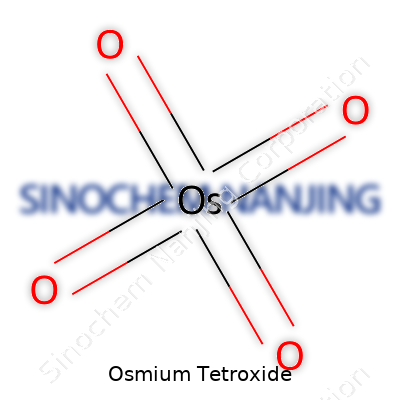
| Names | |
| Preferred IUPAC name | Tetraoxididosmium |
| Other names |
Osmic acid anhydride Osmium(VIII) oxide |
| Pronunciation | /ˌɒz.mi.əm tɛtˈrɒksaɪd/ |
| Identifiers | |
| CAS Number | 20816-12-0 |
| Beilstein Reference | IV 1363 |
| ChEBI | CHEBI:30622 |
| ChEMBL | CHEMBL1898 |
| ChemSpider | 53273 |
| DrugBank | DB01378 |
| ECHA InfoCard | 100.001.002 |
| EC Number | 231-125-0 |
| Gmelin Reference | **Gmelin Reference:** 1158 |
| KEGG | C18698 |
| MeSH | D010099 |
| PubChem CID | 24040 |
| RTECS number | RN1222000 |
| UNII | F3T7QI7GMF |
| UN number | UN2471 |
| Properties | |
| Chemical formula | OsO4 |
| Molar mass | 254.23 g/mol |
| Appearance | Colorless to pale yellow crystals or liquid |
| Odor | chlorine-like |
| Density | 4.9 g/cm³ |
| Solubility in water | Slightly soluble |
| log P | 2.33 |
| Vapor pressure | 0.0023 mmHg (20 °C) |
| Acidity (pKa) | -2.1 |
| Basicity (pKb) | -2.9 |
| Magnetic susceptibility (χ) | +6.4×10⁻⁶ cm³/mol |
| Refractive index (nD) | 1.92 |
| Viscosity | 1.39 cP (20°C) |
| Dipole moment | 0 D |
| Thermochemistry | |
| Std molar entropy (S⦵298) | 265.7 J·mol⁻¹·K⁻¹ |
| Std enthalpy of formation (ΔfH⦵298) | 9.2 kJ·mol⁻¹ |
| Std enthalpy of combustion (ΔcH⦵298) | -748 kJ·mol⁻¹ |
| Pharmacology | |
| ATC code | V03AB38 |
| Hazards | |
| Main hazards | Toxic if inhaled, ingested, or absorbed through skin; causes severe burns and eye damage; may cause blindness; highly volatile and corrosive. |
| GHS labelling | GHS02, GHS05, GHS06, GHS08 |
| Pictograms | GHS06,GHS05,GHS09 |
| Signal word | Danger |
| Hazard statements | H300 + H310 + H330: Fatal if swallowed, in contact with skin or if inhaled. H314: Causes severe skin burns and eye damage. H410: Very toxic to aquatic life with long lasting effects. |
| Precautionary statements | P260, P264, P271, P272, P273, P280, P302+P350, P304+P340, P305+P351+P338, P310, P320, P330, P361+P364, P391, P403+P233, P405, P501 |
| NFPA 704 (fire diamond) | NFPA 704: 4-3-3-OX |
| Flash point | 50 °C (122 °F; 323 K) |
| Autoignition temperature | 130 °C (266 °F; 403 K) |
| Explosive limits | Not explosive |
| Lethal dose or concentration | LD50 oral rat 14 mg/kg |
| LD50 (median dose) | LD50 (oral, rat): 14 mg/kg |
| NIOSH | RN:20816-12-0 |
| PEL (Permissible) | 0.002 ppm |
| REL (Recommended) | 0.002 ppm |
| IDLH (Immediate danger) | 40 mg/m³ |
| Related compounds | |
| Related compounds |
Ruthenium tetroxide Manganese heptoxide Chromium trioxide Osmium dioxide |



