Octylphenol: History, Chemistry, Uses & Concerns
Historical Development
Long before the conversation turned to sustainable chemistry and “green” products, octylphenol made its debut as the workhorse behind many surfactants and resins. Developed out of curiosity and industrial demand, scientists in the early twentieth century found value in alkylphenols because they bridged the gap between oil-loving and water-loving compounds. This rare property opened up doors for practical uses in cleaning, emulsion polymerization, and as plastic additives—fields that shaped industrial growth in the post-war years. My own dive into chemical databases points to a production boom in the 1960s, fueled by expansion in plastics and detergents, and supported by patents filed in both the US and Europe as industry looked for scalable, cheap, and efficient nonionic surfactants.
Product Overview
Octylphenol falls under the class of alkylphenols, with the octyl group connected to a phenolic ring. This small change in structure led to big differences in how the compound behaves compared to simple phenol. Its main commercial form is 4-octylphenol, prized for balance between performance and cost. Its role in creating nonylphenol ethoxylates paved the way for its integration into paints, coatings, latex, textiles, and rubber. Today, some manufacturers supply it with varying degrees of purity, often above 98%, and tailor cuts for users needing enhanced performance in plastic additives, stabilizers, or as raw material in epoxy and phenolic resins.
Physical & Chemical Properties
The first thing to notice when working with solid octylphenol is its waxy, flake-like appearance, white to pale yellow depending on impurities. With a melting range near 55–58°C and boiling point climbing above 300°C, octylphenol maintains decent stability during most processing steps. The phenol ring gives a pungent, sharp odor. Its solubility sits low in water but readily dissolves in most organic solvents, reflecting the molecule’s dual nature—hydrophobic tail and reactive aromatic head. Chemically, octylphenol remains stable under standard storage, resisting breakdown in sealed containers, but becomes prone to oxidation and discoloration over time if exposed to air and sunlight.
Technical Specifications & Labeling
The technical sheet for octylphenol lists purity, melting point, boiling point, and acid index as key control parameters. Regulatory requirements mean stringent labeling, covering hazard pictograms, GHS codes, and transparent sourcing. Major chemical suppliers back up product claims with batch certificates, chain-of-custody reports, and routinely offer both technical- and analytical-grade product. I’ve found that a solid relationship with suppliers makes all the difference, as some applications in resin chemistry need even tighter purity control to avoid side reactions or unexpected discoloration.
Preparation Method
To produce octylphenol industrially, alkylation of phenol using 1-octene or octanol stands at the core. Using acid catalysts—sulfuric or solid acid resins—this Friedel–Crafts alkylation gives mainly para-octylphenol. Control over temperature, pressure, and feedstock ratios influences both yield and selectivity. Residual octene and oligomers require careful separation. Waste minimization comes from recirculating unreacted phenol and capturing volatile byproducts before they reach the atmosphere. In my own experience touring facilities, the real variable comes not from the recipe, but from reactor design, mixing efficiency, and catalyst reusability.
Chemical Reactions & Modifications
Octylphenol acts like other phenols—readily undergoing electrophilic substitution, etherification, and esterification. Introduction of ethylene oxide turns it into octylphenol ethoxylates, a backbone for detergents and emulsifiers. Sometimes, the phenolic OH group joins up with aldehydes under acid catalysis to form novolac or resol-type resins. Under oxidizing conditions, especially at high temperature, it can degrade to smaller aromatic compounds and organic acids. Over the years, demand shifted to greener, less persistent alternatives, yet octylphenol’s structure still makes it stubbornly valuable when specific chemical or physical performance is the only solution.
Synonyms & Product Names
Chemists and suppliers rarely use a single name. Common synonyms fit alongside international registry codes—4-(1,1,3,3-tetramethylbutyl)phenol, para-octylphenol, OP, and CAS 140-66-9. Commercial products appear under trade names, each highlighting purity, viscosity, or tailoring for downstream reactions. The cluster of synonyms presents a real risk for confusion in compliance paperwork, making clear labeling and in-house reference standards critical for buyers and regulatory staff.
Safety & Operational Standards
Handling octylphenol requires proper focus on both worker safety and environmental care. This phenol derivative triggers skin, eye, and respiratory irritation, so gloves, goggles, and good local ventilation form the standard kit. Spills need immediate attention to contain vapors, often using absorbent pads and sealed disposal containers. Longer-term, repeated exposure raises concern about hormone disruption in aquatic systems, pushing many operations to close-loop handling, fume scrubbers, and regular monitoring. Compliance with REACH in Europe and EPA regulations in the US keeps users alert to new safety findings and tighter storage or disposal rules. On the plant floor, clear procedure training and up-to-date hazard communication reduce risk more than any checklist could.
Application Area
Demand for octylphenol hooks directly to its relationship with performance surfactants, especially in textile processing, emulsion polymerization, and adhesives. Its derivatives lubricate plastics, stabilize polymers, and improve dispersion in paints and coatings. Printing ink producers often turn to it for specific flow and drying properties that generic alternatives just can’t deliver. Outside industry, most people never see pure octylphenol, yet nearly everyone interacts with products touched by its chemistry—power cables insulated for weather, water-resistant paints, and even paper coatings. Over time, restrictions on use in detergents shifted a portion of the market to specialty applications only, yet demand in performance-critical polymer sectors remains stubbornly persistent, fueled by lack of drop-in substitutes.
Research & Development
Universities and industrial labs keep a close watch on how octylphenol influences resin performance and biodegradation. Research tracks its migration from plastics into the environment, pushes up alternatives with less environmental persistence, and probes conditions under which its breakdown accelerates. Computational chemists modeled its behavior at the cell membrane, showing why it acts as a weak endocrine disruptor. Engineering teams experiment with new synthetic catalysts to improve selectivity, reduce waste, and move toward continuous production. Grants and journal articles spike around regulatory reviews, as each new restriction or labeling duty sparks waves of innovation to shrink its environmental impact while keeping industrial throughput high.
Toxicity Research
Much of the concern over octylphenol links to its role as a potential endocrine disruptor, studied in aquatic organisms and model mammals. Field surveys and lab tests show bioaccumulation, leading to changes in fish reproductive patterns at disappointingly low concentrations. Toxicology groups document dose-dependent irritation, reproductive toxicity, and, at high levels, organ effects. Decades of research led regulatory bodies in Europe to identify octylphenol as a substance of very high concern, moving to restrict its use outside of strictly controlled industrial applications. Wastewater treatment engineers puzzle over how to reduce trace alkylphenol release while environmental watchdogs continue to flag the molecule as a risk to water safety and food chains.
Future Prospects
Global production of octylphenol faces a crossroads. Legacy applications in surfactants and polymers keep steady demand, though newcomers push for “greener” chemistry backed by extended producer responsibility. Biodegradable surfactants challenge octylphenol’s dominance, yet performance gaps keep some users loyal. Research into enzyme-based breakdown and tailored catalysts for waste remediation slowly chips away at persistent pollution. More countries move to legal or voluntary phase-downs, and responsible buyers demand cleaner supply chains, lower impurity levels, and transparent sourcing. For chemists in the lab, pressure mounts to design ring-closed, less bioactive analogs. From my own experience, real progress comes when manufacturers and buyers work shoulder to shoulder—crafting safe handling guides, investing in alternate chemistries, and making sure shared knowledge keeps innovation one step ahead of new regulation.
What is Octylphenol used for?
What Is Octylphenol?
Octylphenol isn’t a chemical most people talk about at the dinner table, yet it’s tucked inside products we run across every day. It comes from phenol and an eight-carbon alkyl group, resulting in a compound that finds work in industrial and commercial spaces. My first brush with the topic happened while working in a plant that churned out paints and coatings, back when I was still deciding whether lab coats suited me. Back then, few outside chemical circles questioned where additives came from or how they behaved once they washed down factory drains.
Key Uses Across Industries
Octylphenol most often heads into the production of nonionic surfactants. These surfactants, known as octylphenol ethoxylates, show up in detergents, emulsifiers, and wetting agents. These sneaky chemicals lift grease off dirty clothes, blend oil and water in cleaners, and help paints lay smooth. In plastics, octylphenol steps in as an antioxidant, protecting materials from breaking down under sunlight or heat. Rubber manufacturers put it to work too, aiming for longer-lasting tires and hoses.
Sometimes octylphenol takes a backstage role in making adhesives and inks stick, last, or dry quickly. You can’t taste it in that frozen pizza box, but it probably played a part in keeping the label looking crisp or helping glue hold the seams together.
Why Its Role Draws Attention
Once I left factory floors and started digging into how industrial chemistry interacts with health, octylphenol popped up for a different reason. Studies began calling out its ability to mimic hormones. Scientists found it can act like estrogen inside living things. Fish exposed to run-off from factories carrying these chemicals ended up with skewed sex ratios—a warning sign that octylphenol wasn’t harmless.
Research from the European Chemicals Agency and U.S. EPA points to hormone disruption in aquatic life. Evidence keeps piling up that low levels can travel from rivers to food chains. In humans, exposure through contaminated water or food packaging raises flags, though the risk remains debated in scientific circles.
Some regions have moved to reduce or phase out octylphenol. The European Union classified it as a substance of very high concern. Many industrial users shifted to alternatives, but others argue that swapping out chemicals doesn’t always cut overall risks. Every time I see warnings on the global movement of octylphenol, it drives home how important it feels to ask tricky questions early, rather than cleaning up messes later.
Moving Toward Responsible Use
Many solutions start in the design room. Chemists now push for greener molecules—compounds that break down quickly and don’t mimic hormones. Manufacturers can choose robust wastewater controls and tighter leak prevention. Yet stopping at industry action alone won’t cut it. Regulators require clearer standards on what levels are safe, with public tracking of where such chemicals end up.
From my experience, bringing frontline workers and communities into safety planning makes sure warning bells don’t go unheard. Teaching staff to spot risks or substitute safer chemicals gives people more say in their own health. Consumers, too, get a role by asking about the chemicals riding along with everyday products.
Octylphenol might not be a household word, but the decisions around it have consequences far beyond the walls of a factory. Responsible action grows from being open with information and chasing safer options before problems take root.
Is Octylphenol hazardous to health?
Getting to Know Octylphenol
Octylphenol pops up in the conversations of chemists and environmentalists for a reason. It shows up in products like paints, rubber goods, and some detergents. The chemical helps with industrial processes, but most people don’t even know it’s part of the story. The trouble starts when it leaves the factory and finds its way into water, soil, and eventually, our everyday routines.
What Happens Once It’s Out There?
I once worked near an industrial plant. Every quarter, environmental sample collectors would come around, testing creeks downstream for odd substances. We’d hear rumors that certain chemicals lingered longer than any of us would want in our backyard. Octylphenol acts like that: it sticks around, isn’t easy to break down, and seeps into places it shouldn’t be.
Studies back up the concern: octylphenol can mimic estrogen in living bodies. That means at high enough levels, it may throw hormonal systems off balance. The World Health Organization and scientific panels from Europe flag octylphenol as an endocrine disruptor. This risk isn’t just a textbook worry; in animal studies, even small exposures have changed reproductive patterns and development. Imagine growing up with an invisible hand tugging at your body’s signals — that’s how some fish and frogs react downstream from contaminated sites.
Where Exposure Happens
Most folks won’t come across octylphenol by name on an ingredient list, but people can still get exposed. It rides in wastewater, sticks in the food chain, and drifts from contact with treated goods. Farm workers and factory staff face the most direct risks — I met a guy in rubber manufacturing who had to double up on gloves after his skin broke out in rashes, later traced to a chemical additive. It’s not uncommon for those working daily with industrial chemicals to show symptoms sooner than the rest of us.
Health Hazards: What We Know
The toughest part about octylphenol comes from what researchers have already seen in lab settings. Hormones are sensitive messengers in humans and animals. Anything that throws that system off could have big consequences. Early studies link chronic exposure to fertility issues and developmental problems. Infants and children can be especially vulnerable since their bodies adapt and grow at high speeds.
There’s reason to look at cancer risk, too. Scientists still dig for clear proof in people, but disruptors like octylphenol give enough cause for public health authorities to keep a careful watch.
The Path Forward
So, what makes sense? Factories and farms need better controls. Rules pushing industries to swap in safer alternatives help, but watchdogging needs teeth — not just on paper, but in practice. Testing water near industrial zones needs to be frequent, with results posted for communities to see. People living near these places should get fair warning, not after-the-fact disclosures.
On a personal level, pushing for transparency pays off. Asking companies about chemical contents and supporting brands that lean into safer production methods protects not just one household, but whole neighborhoods down the line. Learning about chemicals like octylphenol — and letting local leaders know we care — moves the needle farther than any lone regulation.
What are the safety precautions when handling Octylphenol?
What Makes Octylphenol Risky?
Handling chemicals takes more than labels and rundown instructions. Octylphenol turns up in many industrial products, including resins, surfactants, and rubber materials. It looks like a harmless oily liquid, but skin exposure or inhalation can land someone in trouble pretty fast. Based on years in labs and factories, I’ve seen how a lack of respect for a substance like this can lead to skin irritation, headaches, or long-term issues like hormone disruption. This isn’t alarmism; the facts come from decades of toxicology research showing octylphenol’s impact on human cells and aquatic life.
Personal Protective Gear Isn’t Optional
Sweating under gloves, goggles, and long sleeves may sound uncomfortable, especially on summer shifts. Yet opting out of protection can have immediate consequences—rashes on your hands, burning red eyes, and in some cases, difficulty breathing. Splashing or spills happen faster than anyone likes to admit. Nitrile or neoprene gloves give much better coverage against octylphenol than old latex pairs. Face shields and chemical splash goggles stop accidental spray; I’ve watched people regret skipping those after just one slip with a capped bottle.
Ventilation and Air Quality
Fume hoods or exhaust fans often get ignored until someone coughs up a lungful of fumes. The vapor from octylphenol sits heavy in the air and can trigger a scratchy throat or dizziness within minutes in a stuffy space. At facilities following OSHA and NIOSH guidelines, engineers focus on extraction fans and regular air checks, and it’s there for a reason. Good airflow keeps air clear of lingering contamination and helps everyone stay alert and healthy through long shifts.
Storage and Spill Control
Leaving containers open or stacking them in the open is asking for trouble. From my own experience, accidents knock over open jugs way too often. Octylphenol works best stored in tightly sealed, labeled containers away from heat, sparks, or direct sunlight. A cool, dry area—no shelving above eye level—cuts the risk of toppling. Spills demand speed; absorbents like sand or commercial pads pick up the liquid before it seeps into worktops or drains. Follow-up cleaning with soap and lots of water takes care of most residue, but letting a little bit linger makes the area hazardous in the long run.
Training Pays Off
A quick review of the Safety Data Sheet before a shift goes a long way, but real-world demonstrations teach more than paperwork ever will. I saw one well-trained team contain a spill in under a minute while others needed emergency help after freezing up during an incident. Regular drills, with everyone wearing full PPE and using spill kits, make responses automatic, not panicked.
Environmental Responsibility
Octylphenol doesn’t break down in nature as fast as people expect; it builds up in water and earth, harming fish and wildlife. Untrained dumping or careless washing down sinks poisons local streams and groundwater. I’ve worked with crews who set up proper disposal bins and only use licensed services for chemical waste—peace of mind comes from knowing you’re not the neighbor spoiling someone else’s water or land.
Bottom line: Safety with octylphenol means more than box-checking. Respect for health, teamwork, and the environment turns safe handling into second nature. It protects your skin, lungs, and future, and that’s worth every extra minute spent doing things the right way.
Is Octylphenol environmentally harmful?
The Trouble with Everyday Chemicals
Octylphenol often finds its way into paints, detergents, and even agricultural chemicals, sneaking into products people use nearly every day. This isn’t just a technical detail—it shapes real risks for waterways and wildlife. Regulatory bodies like the European Chemicals Agency mark octylphenol as a substance of very high concern. That’s a heavy term. It signals real consequences that extend beyond the lab and into the neighborhood river or fishing spot.
What Happens Once It Leaves the Factory?
Factories release wastewater containing octylphenol into streams, where it doesn’t just disappear. Instead, this synthetic compound lingers. I’ve read studies showing that octylphenol resists breaking down in nature. It sticks around in sediments and sometimes moves up the food chain. When chemicals act like this, they become part of the water and soil for years, so the true cost shows up far from the places where the product gets made or used.
Endocrine Disruption and Wildlife
Field research in places with octylphenol pollution points to troubling results. Fish exposed to the compound show hormonal changes. Some even develop eggs in their testes—a sign that reproductive systems can go haywire under the influence of what industry calls an “alkylphenol.” In my own experience talking to local anglers, they’ve noticed smaller fish populations and odd deformities in some river areas. This isn’t vague speculation; it’s happening in real streams close to communities. Octylphenol’s ability to mimic estrogen sets off alarms for wildlife health. The science stacks up too—a report in Environmental Science & Technology documents wild fish populations collapsing due to hormone-related impacts from chemicals like octylphenol.
Risks Don’t Stop with Animals
Research has started linking long-term low-dose exposure to health problems in humans as well. For instance, communities living downstream from chemical plants face a bigger share of the burden. No one signs up for that risk. I’ve met people who worry about swimming, fishing, or taking a walk near their local creek. The invisible nature of these pollutants makes them even more frustrating to deal with because you can’t always see or smell them.
Paths Forward: Managing Chemical Footprints
Some countries—like those in the European Union—restrict octylphenol’s use, pushing industries to adopt alternatives. Simple switches to safer chemicals or improved wastewater treatment can cut the risk. Businesses sometimes push back, saying replacements cost more. Still, the other side of the cost shows up later, with cleanup bills or health care for affected kids and families. Public pressure and clear regulations move the conversation forward.
Testing for octylphenol in water and soil offers a first step. I’ve seen communities organize cleanups and river-monitoring programs, often connecting high school kids or local organizations. Public awareness, combined with strong science and fair laws, sets a practical way for people to protect their rivers, food, and family health. Responsibility doesn’t fall just on factories—everyone has a stake in the kind of water, food, and environment children inherit.
Where can I buy Octylphenol?
What’s Really at Stake with Chemicals Like Octylphenol
Plenty of people ask about buying octylphenol, an organic compound commonly used in creating industrial chemicals, cleaning agents, and resins. The question might sound straightforward, but there’s more riding on the answer than a simple transaction. Octylphenol isn’t something you throw in a shopping cart at your local store. It brings with it a bundle of safety concerns, environmental responsibilities, and legal boundaries.
Why Care About Where and How Octylphenol Is Sold
I’ve been around labs and warehouses where safety rules had to be nailed down hard, especially when dealing with chemicals that can cause trouble if handled poorly. Octylphenol has found its way into strong adhesives and high-performance plastics I’ve seen get shipped to factories. But, even in these places, getting hold of the stuff isn’t a walk-up-and-buy affair. Regulatory agencies keep a close eye on its handling for a reason: studies link octylphenol to effects on wildlife hormones, and some evidence ties it to human health risks if misused.
Big chemical suppliers like Sigma-Aldrich, Fisher Scientific, or Alibaba don’t just ship this product to anyone. They ask for business credentials and, often, details about intended use. At my last job, each purchase went through internal reviews, and paperwork flew back and forth before any container arrived.
What to Watch For If You’re Looking Online
Online listings for octylphenol pop up on industrial supplier websites, and sometimes, less reputable marketplaces try to offer it with zero background checks. Anyone thinking about buying off those sites walks a risky line—not just legally, but ethically and practically. Just because something’s on the internet doesn’t mean it’s safe, legal, or real. I’ve seen counterfeit labels and subpar packaging put people and workplaces at risk, especially in places cutting corners on safety.
If you see tantalizing offers without clear regulatory information or supplier background, that’s a massive red flag. Legitimate companies post safety data sheets, purity information, and details that make tracking compliance possible. Anything less is reason to walk away.
The Bigger Picture: Regulation, Safety, and Environmental Impact
Laws around chemicals like octylphenol stack up across the world. In the European Union, substances like this pop up on restriction lists because of their persistence in the environment and harmful effects on aquatic life. US agencies like the EPA monitor its uses, and most responsible suppliers follow strict shipping, labeling, and storage rules. Acquiring it without proper business licenses invites trouble. Fines and criminal charges aren’t off the table for those sidestepping the rules.
I’ve seen how training and proper procedures help stop accidents before they start. Gloves, fume hoods, spill kits—all of it protects people handling hazardous materials. Responsible suppliers don’t just follow the rules to tick boxes; they help clients build safer workplaces and keep chemicals away from unauthorized hands.
Better Solutions for Those Who Need Octylphenol
Some alternatives offer similar utility in manufacturing, but switching means careful research with specialists and regulators to weigh risks and performance. If octylphenol is essential to your work, going through certified suppliers and obeying regulations is non-negotiable. Reach out to industry groups, talk to chemical safety experts, and never rush through any purchase.
Supply chains for chemicals look different from other e-commerce, and for good reason. If you’re involved in science, manufacturing, or maintenance, partner with trusted vendors and keep your paperwork straight. That’s how people stay safe, avoid legal grief, and help the environment too.
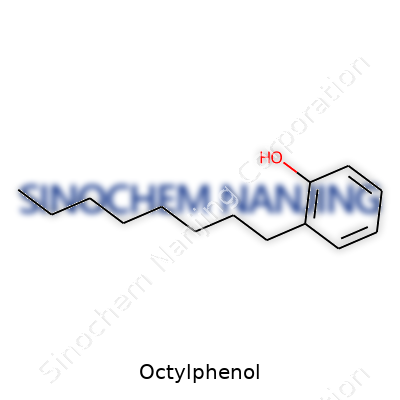
| Names | |
| Preferred IUPAC name | 2-(Octyl)phenol |
| Other names |
4-(1,1,3,3-Tetramethylbutyl)phenol p-Octylphenol 4-n-Octylphenol 4-octylphenol |
| Pronunciation | /ˈɒk.tɪl.fiːˌnɒl/ |
| Identifiers | |
| CAS Number | 140-66-9 |
| Beilstein Reference | 1209247 |
| ChEBI | CHEBI:28689 |
| ChEMBL | CHEMBL33560 |
| ChemSpider | 9826 |
| DrugBank | DB14007 |
| ECHA InfoCard | 100.003.435 |
| EC Number | 202-025-1 |
| Gmelin Reference | 85907 |
| KEGG | C06325 |
| MeSH | D010058 |
| PubChem CID | 5277 |
| RTECS number | RN927E1FXA4 |
| UNII | I4O9A0I0F7 |
| UN number | UN3075 |
| Properties | |
| Chemical formula | C14H22O |
| Molar mass | 206.32 g/mol |
| Appearance | White crystalline solid |
| Odor | phenolic |
| Density | 0.953 g/cm3 |
| Solubility in water | Insoluble |
| log P | 3.9 |
| Vapor pressure | 0.01 mmHg (25 °C) |
| Acidity (pKa) | 10.30 |
| Basicity (pKb) | 6.23 |
| Magnetic susceptibility (χ) | -7.8e-6 cm³/mol |
| Refractive index (nD) | 1.537 |
| Viscosity | 6.2 cP (20 °C) |
| Dipole moment | 4.07 D |
| Thermochemistry | |
| Std molar entropy (S⦵298) | 489.6 J·mol⁻¹·K⁻¹ |
| Std enthalpy of formation (ΔfH⦵298) | –348.7 kJ/mol |
| Std enthalpy of combustion (ΔcH⦵298) | -6902.7 kJ/mol |
| Pharmacology | |
| ATC code | G03CA04 |
| Hazards | |
| Main hazards | Causes skin irritation, serious eye irritation, may cause respiratory irritation, harmful to aquatic life with long lasting effects. |
| GHS labelling | GHS02, GHS07, GHS08, GHS09 |
| Pictograms | GHS07,GHS08,GHS09 |
| Signal word | Danger |
| Hazard statements | H361: Suspected of damaging fertility or the unborn child. H400: Very toxic to aquatic life. H410: Very toxic to aquatic life with long lasting effects. |
| Precautionary statements | P261, P273, P280, P302+P352, P305+P351+P338, P333+P313, P337+P313, P362+P364 |
| NFPA 704 (fire diamond) | 2-2-0-W |
| Flash point | 118°C |
| Autoignition temperature | 450°C |
| Lethal dose or concentration | LD50 (oral, rat): 12,000 mg/kg |
| LD50 (median dose) | LD50 (median dose) for Octylphenol: **1,880 mg/kg (rat, oral)** |
| NIOSH | RN8400000 |
| PEL (Permissible) | PEL for Octylphenol: 5 mg/m³ (inhalable fraction and vapor) (OSHA, TWA) |
| REL (Recommended) | 5 mg/m³ |
| IDLH (Immediate danger) | 100 ppm |
| Related compounds | |
| Related compounds |
Nonylphenol Heptylphenol Dodecylphenol Phenol Bisphenol A |



