Octanoyl Chloride: A Deep Dive into a Versatile Chemical
Historical Development
Octanoyl chloride has roots sitting in the early developments of organic chemistry, particularly as methods for producing acid chlorides started to catch on in the late nineteenth and early twentieth centuries. Industrial interest grew once researchers realized simple carboxylic acids like octanoic acid could be converted into reactive intermediates with thionyl chloride, phosphorus trichloride, or oxalyl chloride. The push for better reagents in pharmaceuticals led to tuning these methods for greater purity and yield. Large manufacturers in Europe and the United States developed scalable routes through the 1950s and 60s, and the chemical found its place as lab workhorse for coupling reactions and modifications of alcohols, amines, and more.
Product Overview
Octanoyl chloride serves as an acylating agent—people in the lab reach for it when trying to tack an octanoyl (capryloyl) group onto another molecule. The liquid fits easily into organic synthesis routines thanks to straightforward handling and solid reactivity. Usually it comes as a clear, pungent liquid, and packaging features glass or specialized plastics due to its tendency to attack regular materials. Most supplies find their way to pharmaceutical labs, agrochemical synthesis, or specialty chemical applications. The familiar capryloyl group plays a part in modifying surface behavior, increasing lipophilicity, or fine-tuning drug candidates.
Physical & Chemical Properties
In the bottle, octanoyl chloride looks much like any other short-chain acyl chloride—a transparent or near-colorless fluid. It boils at about 196°C and melts just below room temperature, tending to solidify if left in a cold storeroom. The substance gives off sharp, irritating fumes that testify to its reactivity with water. In technical terms, it has the formula C8H15ClO and a molecular weight of about 162.66 g/mol. The functional group takes pride of place: one end marked by a chlorine atom ripe for nucleophilic attack, the other the tail end of a standard eight-carbon aliphatic chain. The chemical wants to react—it hydrolyzes with water, saponifies with alcohols, and acylates nucleophiles eagerly, so users keep it capped and dry.
Technical Specifications & Labeling
The best practice with octanoyl chloride starts with checking the label. Producers usually specify a purity above 98%, with residual octanoic acid as the main impurity. The labels flag its status as corrosive and moisture sensitive, and shipping containers often include UN numbers and hazard statements. Many suppliers add batch and lot numbers for traceability. Researchers caring about quality check certificates of analysis to confirm purity, water content, and acid number. Storage recommendations suggest sealed containers in cool, dry rooms with proper secondary containment to ward off accidental leaks or vapors.
Preparation Method
Chemists prepare octanoyl chloride most commonly by reacting octanoic acid with either thionyl chloride or oxalyl chloride. The procedure starts with dry glassware and a slow addition, given the violent release of sulfur dioxide and hydrogen chloride. As the reaction runs, octanoyl chloride forms and rises to the top, making it easy to separate by distillation. Some labs prefer phosphorus trichloride for different byproduct profiles, though each method needs careful disposal of acidic gases. On the bench scale, reactions stay under a fume hood, but larger runs in industry feature closed systems, condensers, and robust scrubbing units for waste gases. The process also needs skilled technicians—reagent handling, temperature control, and cleaning all demand attention.
Chemical Reactions & Modifications
Octanoyl chloride shines as an acyl donor. Reaction with primary or secondary amines yields amides, while alcohols convert to esters in the presence of a base like pyridine. Chemists use it to activate carboxylic acids or prepare complex building blocks. In peptide synthesis, it protects amine groups or introduces new side chains. Water splits it back to the parent octanoic acid along with hydrochloric acid, and similar hydrolysis happens in moist air. Further elaboration allows chemists to tailor new surfactants or functionalize drug molecules. Sometimes researchers tweak the conditions—low temperatures slow the hydrolysis, while catalysts or bases accelerate oxidative transformations.
Synonyms & Product Names
Octanoyl chloride doesn’t always go by the same name. Older literature might refer to it as capryloyl chloride or n-octanoyl chloride, and other labels like octanoic acid chloride or octanoic chloride show up on bottles. Chemical databases list a handful of trade names, though in most industries, the substance is bought and sold using its simplest form. European catalogs stick to “octanoyl chloride,” while some American suppliers advertise “capryloyl chloride.” Chemists keep an eye on CAS numbers and regulatory identifiers—mismatched names can cause confusion or even safety issues when paperwork lags behind naming conventions.
Safety & Operational Standards
Anyone who’s spent time working with octanoyl chloride knows the warning signs—its fumes burn eyes, nose, and throat, and skin contact eats at flesh. Handling needs full PPE: gloves, goggles, lab coats, and sometimes face shields. Ventilation matters, favoring strong fume hoods or glove boxes. Safety data sheets recommend having calcium carbonate or sodium bicarbonate on hand to neutralize drips or spills. Storage rules call for sealed containers away from heat, open flames, or damp air. In Europe, the chemical classifies under Directive 67/548/EEC, requiring hazard labeling. In the US, OSHA rules demand secondary containment and ready access to eyewash stations. Training lab staff keeps accidents to a minimum—a careless pour or poorly cleaned pipette can result in severe chemical burns.
Application Area
The versatility of octanoyl chloride leads to wide-ranging uses. Drug makers often employ it to modify small drug candidates or linkers in prodrugs, creating new esters or amides that improve bioavailability and half-life. Agrochemical labs use it to tweak herbicides or pesticides, aiming for activity enhancement or environmental tailoring. In flavors and fragrances, the octanoyl group imparts certain fruity or waxy notes, so perfume companies sometimes use it in specialty syntheses. Surfactant manufacturers build new surface-active agents by acylating various alcohols, tuning them for cleaning, emulsifying, or wetting properties. Materials science continues to explore its use in polymers or smart coatings, especially in cases needing hydrocarbon flexibility or moisture sensitivity.
Research & Development
Academic and industrial labs push octanoyl chloride uses further every year. Medicinal chemists embrace it for structure-activity relationship studies, working out new ways to tack lipophilic side chains onto complex molecules. Elsewhere, teams tinker with greener production routes, looking at alternative chlorinating agents or recyclable solvent systems to cut down on waste. New analytical methods aim to catch minute contamination by related acid or byproducts, feeding into regulatory demands for impurity profiling. At conferences, you’ll hear talks about custom surfactants, next-gen adhesives, and advanced intermediates built around this molecule. Its backbone finds application in nanotechnology as tail groups for self-assembling films or targeted delivery systems.
Toxicity Research
A strong irritant, octanoyl chloride poses notable health risks—workers recognize the immediate sting of exposure, and chronic handling leads to respiratory or skin sensitization. Animal studies show corrosive effects at the site of contact, but limited systemic toxicity unless administered in large doses. Research points out that the biggest danger arises from rapid hydrolysis in moist air, producing hydrochloric acid both in the environment and on mucous membranes. Regulatory bodies classify octanoyl chloride as hazardous, so any use in consumer-facing products needs complete removal or conversion during manufacturing. Ongoing research looks at breakdown in wastewater treatment, bioaccumulation concerns, and options for safer substituents. Labs test safer derivatives for mutagenicity, reproductive effects, and long-term inhalation exposure, and safety protocols must keep pace with these findings.
Future Prospects
Octanoyl chloride isn’t fading from relevance. Green chemistry pushes call for processes that minimize toxic byproducts, and researchers investigate replacements for aggressive chlorinating agents or develop closed-loop manufacturing to recover and recycle gases. Decision-makers in pharmaceuticals look for scalable, low-waste acylation, favoring safe and compliant operations. Some development teams explore enzymatic alternatives for certain transformations, though few enzymes can yet match the speed and breadth of acylation offered by acid chlorides. Material scientists keep turning to octanoyl chloride as a building block for oddball coatings and self-assembled layers in sensors or electronics, and regulatory frameworks tighten specifications to reduce worker and environmental exposure. Progress may feature continuous flow reactors, leaner purification, and smarter monitoring to make this reliable chemical fit for the next generation of manufacturing.
What is Octanoyl Chloride used for?
Understanding How It’s Used
Octanoyl chloride doesn’t show up in everyday conversations. It’s one of those chemicals you only hear about if you’ve spent some time in a laboratory. I remember the first time I helped with an experiment that needed it—the smell alone made the whole room take notice. Most folks would never suspect that something with such a sharp scent helps make products they rely on.
Fact is, industries count on compounds like octanoyl chloride to pull off chemical transformations that aren’t possible with water and soap. This molecule pops up most in chemical laboratories where it forms the backbone for making bigger, more useful molecules. People might never see it, but it plays a big role in producing things like medicines, flavors, and specialty plastics.
The Pharmaceutical Connection
I’ve seen researchers use this substance when they make certain antibiotics or test new drug recipes. Doctors and patients don’t worry about starting materials—what matters to them is the pill or solution they end up using. Still, a lot of medicines would stall out in development without chemicals like octanoyl chloride making reactions possible. In technical terms, octanoyl chloride is known for being an “acylating agent,” which just means it helps attach a fatty acid chain onto other molecules. This attachment can change how a drug works, how it moves in the body, or how it tastes and smells.
Why the Food and Fragrance Business Cares
Companies that create artificial flavors or long-lasting fragrances also use this chemical. A small tweak to a molecule can make a perfume stick around for hours instead of minutes or give a food product a consistent taste. I’ve never worked directly with flavor chemistry, but talking to folks who do, the message remains the same: having octanoyl chloride in the toolkit expands what’s possible in the lab. Without it, formulating safe, appealing scents and flavors would turn into much more of a guessing game.
Real Risks, Real Safety Practices
It would be misleading not to mention that octanoyl chloride brings serious handling risks. It reacts instantly with water—including the moisture in eyes, nose, or skin—to unleash acid fumes. Early in my chemistry training, I learned quickly to respect chemicals like this. On any given day, you’d see gloves, goggles, and a working fume hood before anyone dared pop a bottle open. Regular folks don’t face these risks, but a spill or accident in a factory could endanger anyone nearby if safety rules were ignored.
Those risks push research chemists and manufacturers to double down on safety. Simple changes—using better seals on bottles, storing products in special cabinets, training workers regularly—matter as much as whatever happens in a reaction flask.
Where Research and Industry Can Do Better
We’ve seen chemists move toward greener, safer ways to make complex molecules in the last decade. Alternative reagents, better-designed protective gear, and more automation in chemical processing offer hope that reliance on dangerous substances like octanoyl chloride could shrink. Regulations and consumer pressure often set this progress in motion, but ingenuity drives it. Safer chemistry doesn’t mean letting go of effective tools; it means improving how we use them or finding smarter replacements. As researchers, we can keep learning from each experiment—both old and new—to keep people and the environment safer as we build useful things.
What are the safety precautions when handling Octanoyl Chloride?
Understanding What You're Working With
Octanoyl chloride doesn’t play nice with skin, lungs, or eyes. This chemical lets off unpleasant fumes and reacts fiercely to water. Anyone who has handled it in a lab knows even a whiff of the vapors burns the nose and eyes. For those who missed basic chemistry, splashing this stuff means genuine risk—not just discomfort but possible burns and lasting damage. Looking at the stats from the CDC and OSHA, chemical burns make up a significant chunk of injuries in research labs, and many trace back to careless handling or lack of personal protection.
Using Real Protection—Not Just “Lab Coats and Hope”
A standard lab coat won’t cut it. Thick gloves made of nitrile or neoprene fit the bill—latex breaks down too fast against strong acids and acid chlorides like octanoyl chloride. I still remember seeing thin gloves dissolve during a demo in school, with the instructor cursing under his breath. Chemical goggles and a face shield should be nearby, especially if you’re pouring or mixing. The vapors attack mucous membranes fast, so a certified fume hood offers the only option for real protection. Folks cutting corners by opening the bottle on a regular bench discover too late how strong the smell and irritation get.
Learning From Incidents—Not Stories From a Safety Manual
Spills never wait until you’re ready. My old lab partner once knocked over a beaker during a rush hour on finals week. The emergency shower and eyewash fountain saved his skin, but the lesson stuck. Work with octanoyl chloride only near spill containment kits and easy access to showers and eyewashes. Leaking bottles and splashing glassware show no mercy. The National Safety Council has real-world stories that echo the same point: always scope out your nearest emergency exits and rinse stations before starting.
Handling Air and Water Like a Pro
Octanoyl chloride’s fumes spread fast and settle on every surface. Proper ventilation—meaning a functioning, clean fume hood—matters. If anyone smells acid or notices their throat burning, work stops immediately. The chemical reacts with water, pumping out hydrogen chloride gas and heat. Small amounts of water turn a minor leak into a room-filling problem. Open containers only after the hood hits full power. Don’t trust windows or regular fans; they don’t grab fumes at the source or keep air clean enough to protect anyone.
Getting Disposal and Storage Right
Throwing octanoyl chloride in a regular bin or sink isn’t just unsafe; it’s illegal in most states. Hazardous waste laws stay strict for a reason—this acid chloride wrecks pipes and pumps out toxic gas. All leftover material and contaminated gear go in clear, labeled containers. Closed, vented plastic bottles—kept dry and chilled—stop the chemical from attacking the air or nearby water supplies. Most problems I’ve seen come from storing in broken cabinets or returning half-used bottles without tight lids. Label every container. Seems obvious, but missing labels or faded ink have caused plenty of mix-ups in busy labs.
Training and Thinking Ahead
No substitute exists for real training. Watching a video or reading labels doesn’t prepare you for a real-life splash. Hand-on safety drills stick much better. If you supervise a lab, quiz newcomers on emergency procedures and let them practice with dummies—run-throughs get everyone’s reflexes sharp. New hires and old hands alike should refresh themselves on the risks at least once each year. Staying ready beats scrambling in an emergency, and keeps incidents off the accident books.
Practical Steps Save Skin—Literally
Octanoyl chloride deserves plenty of caution. Real protection—thick gloves, goggles, working fume hoods, and fast access to emergency rinses—makes the difference between a normal day at work and a trip to the hospital. Keep waste stored separate, review every step before uncapping bottles, and push for practice that feels real. Chemistry owes its progress not to bravado, but to people who respect the risk and look out for one another.
What is the chemical formula of Octanoyl Chloride?
A Straightforward Look at a Powerful Organic Compound
People in chemistry labs recognize octanoyl chloride for what it really is: a reactive compound that does some heavy lifting in synthesis. Its formula is C8H15ClO. This means the molecule contains eight carbons, fifteen hydrogens, one chlorine atom, and one oxygen atom. Working with it teaches you that true power in chemistry often comes from simple building blocks with a twist.
A Closer Look at the Structure
Octanoyl chloride belongs to a group called acyl chlorides. One part carries a straight eight-carbon chain and another part marks it out with a chlorine atom attached to a carbonyl group. People might compare it to octanoic acid, which swaps out that chlorine for a hydroxyl group. This substitution turns a fairly ordinary fatty acid into a sharp-edged chemical tool. If you study organic reactions, you’ll notice acyl chlorides pop up anywhere chemists want those carbon chains to connect smoothly, particularly in pharmaceutical and polymer labs.
Why Octanoyl Chloride Matters in the Real World
Organic chemistry moves quickly, and reagents like octanoyl chloride help keep momentum. In the lab, this compound helps construct molecules one rarely finds in nature. It acts fast, breaking old bonds and forming new ones, which suits anyone building custom chemicals. Plenty of processes to make drugs, flavorings, and even some specialty plastics count on octanoyl chloride as a key ingredient. Skipping the tedious steps usually involved with carboxylic acids, this molecule steps in to make formation of amides and esters much easier.
I’ve seen people treat chlorides with respect—these are not compounds you leave uncapped or ignore if spilled. Chlorides like octanoyl chloride emit pungent fumes and react aggressively with water, releasing hydrogen chloride gas. Working with this chemical really taught me about lab safety, because one forgetful moment can create clouds nobody wants to breathe. Lab ventilation and gloves are not just suggestions here—they're essential.
Environmental and Safety Considerations
Beyond the bench, people must think about how a strong chemical like octanoyl chloride affects more than reactions. Its volatility and corrosiveness pose risks during shipping and disposal. Sectioning off proper waste handling, using neutralizing agents, and not letting it hit the water stream plays a crucial part in responsible lab work. As environmental awareness grows, chemists now hunt for less hazardous alternatives, wherever possible, but for some tasks there’s no perfect substitute. Handling procedures come down to good training and experience, not just a quick glance at the bottle label.
Better Practices, Smarter Chemistry
Octanoyl chloride doesn’t just connect carbon chains; it reminds everyone in the lab about the invisible line between creative discovery and safety. Every bottle represents both opportunity and responsibility. By locking in good habits—like closed-system transfers and clear labeling—labs keep risk low and productivity high. Innovation keeps moving, but old-fashioned care still matters most.
References and Authority
Scientific literature like the "Journal of Organic Chemistry" and resources from the American Chemical Society offer detailed guides about using acyl chlorides. Material safety data from organizations such as PubChem and the National Institute for Occupational Safety and Health confirm best practices and keep everyone updated on handling these chemicals responsibly.
How should Octanoyl Chloride be stored?
Why Extra Care Matters with Octanoyl Chloride
I remember my first interaction with octanoyl chloride in a small university lab—a clear liquid, innocent-looking, but anything but forgiving. If you’ve ever opened a bottle of it outside a fume hood, the sharp sting at the back of your throat can make you respect it almost instantly. Octanoyl chloride deals out a strong reaction with moisture, throwing out hydrochloric acid vapors. Above all, the fumes linger and cling stubbornly to the air. A friend once stored it alongside acetone, thinking they were keeping everything “out of sunlight.” The careless pairing almost set off a chemical incident. These mistakes teach a quick and memorable lesson: some chemicals don’t give second chances.
Environmental Factors that Change Everything
Moisture is the main enemy. Even one careless move—you leave the cap slightly open, or you keep it near a frequently opened fridge—introduces just enough water vapor for it to get aggressive. Hydrolysis starts instantly, then you risk pressure building up in the bottle and corrosive fumes spreading all around storage. Every time I’ve seen people use average glass stoppers or ill-fitting lids, they learn the hard way. Only tightly sealed containers, preferably made from glass, stop the slow, destructive reaction with air or humidity. I’ll always vouch for desiccators or dedicated dry storage cabinets; they keep moisture out much more reliably than a damp basement shelf or ordinary chemical locker.
Temperature Control Isn’t Optional
Some labs skimp on cooling just to save electricity. But even a minor increase in temperature means the vapors will become more active. I’ve seen bottles balloon or crack after a hot afternoon because the cooling had been turned off. Storing octanoyl chloride well below room temperature—think 2–8°C, like a chemical fridge with good circulation—keeps reactions with stray water or other chemicals under control.
Avoiding Dangerous Neighbors
Octanoyl chloride does not get along with strong bases, alcohols, or oxidizers. One time, a cleaning crew unknowingly placed bleach products next to the acid chlorides, thinking separate shelves were enough separation. The guilt and panic after a small leak taught everyone how much worse things could have turned out. Chemical compatibility charts aren’t there for paperwork—they keep accidents out. Never trust general-purpose shelves for reactive chemicals like this one; always confirm what sits next to it and make space between incompatible chemicals.
The Overlooked Importance of Good Labels and Training
New staff sometimes don’t get a full rundown on why particular bottles should only be opened in a fume hood, or why even touching the outside of the bottle with wet gloves is risky. Poor labels fade or get torn, and confusion leads to hastily swapping bottles or mixing up reagents. Mark dates on storage containers and review safety sheets often. Regular reminders keep people from getting complacent and taking shortcuts.
Solutions from Experience
The labs that avoid major incidents put effort into clear labeling, reliable containment, and consistent training. A culture valuing vigilance over convenience saves headaches, budgets, and possibly lives. My experiences showed me: shortcuts with chemicals like octanoyl chloride almost always cost more in the end. A few extra steps—dry storage, real-world chemical compatibility checks, and cooling—work far better than cleaning up after an accident. While the chemical may be common in synthesis work, safe storage keeps its dangers from becoming front-page news.
What is the boiling point of Octanoyl Chloride?
Why Boiling Points Matter in Chemistry Labs
Octanoyl chloride shows up in experiments as a reliable chemical building block, especially in organics and pharmaceuticals. The boiling point of a compound helps decide how you handle storage and transport, and it plays a big role during purification steps. For octanoyl chloride, the boiling point stands around 205°C under normal atmospheric conditions. Having spent long days in university labs, I realized how much that number shapes safety rules. You start to appreciate details when the smell of acyl chlorides lingers in the air and you want proper ventilation.
What the Boiling Point Tells Us
A boiling point of 205°C gives you clues about volatility and safe handling temperatures. Higher boiling means you can often do more with less risk of fast evaporation. On the other hand, octanoyl chloride still gives off hazardous fumes before boiling, so it isn’t wise to underestimate it. In my experience, people make mistakes by treating it as harmless because it doesn’t vaporize instantly. Many overlooked that acyl chlorides react violently with water and produce hydrochloric acid vapors at much lower temperatures than the full-on boil. Hidden dangers like these remind you that numbers alone don’t tell the full story.
Lab Safety and Handling
Labs with high temperatures and reactive chemicals bring risks. The high boiling point allows for distillation to purify octanoyl chloride or separate it from less stable substances, but this requires attention and protective equipment. Lab coats, goggles, and gloves should be the starting point. Any mistake with these reagents can cause more than a ruined experiment. Even people with years of lab work under their belt wear protection, knowing too many accidents begin with overconfidence.
Impact on Industry and Everyday Products
Even if you never heard of octanoyl chloride before chemistry class, the story doesn’t end in the lab. Manufacturers use this compound in food packaging, agrochemicals, dyes, and even pharmaceuticals. The handling rules in industry look stricter than in academic settings. The boiling point informs large-scale production techniques, especially when engineers design distillation towers that run day and night. A single miscalculation can set off a chain reaction, so the boiling point becomes a gatekeeper for process control. Factories set temperature cutoffs well below the point of boiling, aiming to dodge accidental releases of fumes.
Better Solutions for Safer Workplaces
Decades of handling acyl chlorides convinced researchers and regulators to keep things tight. Using fume hoods and sealed systems cuts off exposure. Training goes beyond a one-time safety talk, turning into routines checked and rechecked every shift. Adding sensors for leaks, improving ventilation, and working with small batches also drive down the chance of dangerous situations. These improvements save time and keep people healthy in the long run. In the classroom, discussions about boiling points introduce bigger issues: balancing productivity with safety, innovation with responsibility.
A Commitment to Trustworthy Information
Reliable knowledge helps everyone, from first-year students to seasoned engineers. Chemistry textbooks and scientific databases, like those from NIST or Sigma-Aldrich, back up figures for boiling points, and peer-reviewed journals offer updates as methods improve. The importance of transparency speaks for itself: clear facts help experts and novices work smarter, not harder.
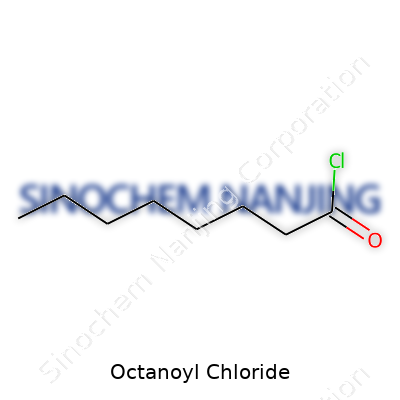
| Names | |
| Preferred IUPAC name | Octanoyl chloride |
| Other names |
Caprylyl chloride Capryloyl chloride Octanoyl chloride n-Octanoyl chloride Octanoic acid chloride |
| Pronunciation | /ɒkˈteɪ.nɔɪl ˈklɔːraɪd/ |
| Identifiers | |
| CAS Number | 111-64-8 |
| Beilstein Reference | 1465063 |
| ChEBI | CHEBI:51338 |
| ChEMBL | CHEMBL12156 |
| ChemSpider | 8587 |
| DrugBank | DB14110 |
| ECHA InfoCard | 100.014.249 |
| EC Number | 204-687-5 |
| Gmelin Reference | 104162 |
| KEGG | C19547 |
| MeSH | D010378 |
| PubChem CID | 8018 |
| RTECS number | RG3675000 |
| UNII | AK4W2E7JHU |
| UN number | UN3261 |
| Properties | |
| Chemical formula | C8H15ClO |
| Molar mass | 162.65 g/mol |
| Appearance | Colorless to pale yellow liquid |
| Odor | Pungent |
| Density | 0.94 g/mL at 25 °C (lit.) |
| Solubility in water | Reacts violently |
| log P | 3.5 |
| Vapor pressure | 3 mmHg (20°C) |
| Acidity (pKa) | 1.5 |
| Basicity (pKb) | pKb: - |
| Magnetic susceptibility (χ) | -7.29e-6 |
| Refractive index (nD) | 1.422 |
| Viscosity | 0.749 cP (20°C) |
| Dipole moment | 2.47 D |
| Thermochemistry | |
| Std molar entropy (S⦵298) | 354.6 J·mol⁻¹·K⁻¹ |
| Std enthalpy of formation (ΔfH⦵298) | -390.6 kJ/mol |
| Std enthalpy of combustion (ΔcH⦵298) | -5027.7 kJ/mol |
| Hazards | |
| GHS labelling | GHS labelling: GHS05, GHS06 |
| Pictograms | GHS05,GHS07 |
| Signal word | Danger |
| Hazard statements | H226, H314, H335 |
| Precautionary statements | Precautionary statements: "P260, P280, P301+P330+P331, P303+P361+P353, P305+P351+P338, P310, P405, P501 |
| NFPA 704 (fire diamond) | 3-2-1-W |
| Flash point | 34 °C |
| Autoignition temperature | 205 °C (401 °F; 478 K) |
| Lethal dose or concentration | LD50 oral rat 600 mg/kg |
| LD50 (median dose) | LD50 (median dose): 190 mg/kg (rat, oral) |
| NIOSH | SY8225000 |
| PEL (Permissible) | PEL (Permissible Exposure Limit) for Octanoyl Chloride: No specific OSHA PEL established |
| REL (Recommended) | REL: 5 mg/m³ |
| IDLH (Immediate danger) | IDLH: 5 ppm |
| Related compounds | |
| Related compounds |
Hexanoyl chloride Nonanoyl chloride Decanoyl chloride Octanoic acid Caprylic acid Acetyl chloride Butyryl chloride |



