Nitrogen Trifluoride: Following the Trail from Laboratory Bench to Critical Industry Gas
Historical Development
Nitrogen trifluoride (NF3) has a storied path out of chemical obscurity that mirrors shifts in technology and care for environmental impact. Once a laboratory curiosity discovered in the early twentieth century, its rise traces back to efforts in the 1960s. Back then, crop scientists and chemists hunting for new oxidizers and cleaning agents eyed compounds like NF3 because the world of high-purity electronics was growing in lockstep with the rising tide of computers and semiconductors. NF3 offered a step up from elemental fluorine — less reactive, easier to store, and less eager to corrode the fanciest hardware. By the time the microelectronics industry grew up in the 1980s, adoption of NF3 soared, since chip fabrication relies on precision cleaning and etching, and safer, more predictable alternatives to fluorine drew a loyal following.
Product Overview
NF3 arrived in industry at the perfect moment for high-performance, low-maintenance cleaning processes. It almost feels tailor-made for the ultra-clean spaces where semiconductor fabs operate. Its relatively modest boiling point means transport and storage do not demand extraordinary measures; it compresses willingly and releases on demand. In industrial scale, it’s manufactured to extreme purity, free from moisture, oxygen, or particulate impurities, since those foul up microchips and erode the lifetime of expensive machinery. This gas straddles the worlds of chemical innovation, electronics, and environmental scrutiny—not every compound can claim so broad a span.
Physical & Chemical Properties
The pale, almost colorless gas produced at room temperature by decomposing NF3 might not draw attention in a sea of industrial chemicals, but its reactivity stands apart. NF3 is stable during transit and storage, avoiding many headaches faced by pure fluorine users who battle corrosion, leaks, and safety issues. It has a molecular weight that makes it heavier than air, and its strong chemical bonds make spontaneous decomposition rare outside of very high temperatures or energy input. It reacts vigorously with strong reducing agents and metals—qualities both valued and feared by process engineers. The gas dissolves only modestly in water and doesn't hydrolyze quickly, so accidental exposure brings less risk of rapid acidic byproducts.
Technical Specifications & Labeling
Commercial drums and cylinders list high-purity standards, since even one errant ppm of oxygen or moisture can bring a billion-dollar fab grinding to a halt. The tight specs come from decades of process tweaking, not marketing. Guidelines call for strict documentation, traceable lot numbers, and supply chain transparency; the semiconductor business cannot afford inconsistencies. Labels must reveal purity, pressure, and safe handling warnings—a result of hard lessons from earlier eras wrapped in the regulatory frameworks of today. The pressure ratings for NF3 containers, set by international and local standards (think ISO and CGA codes), keep shippers and users accountable and safe.
Preparation Method
NF3 springs from direct synthesis methods that chemists have debated for years. Passing nitrogen gas mixed with fluorine over an electric arc or at elevated temperatures ranks among the oldest production methods. Other routes involve ammonium salts reacting with fluorinating agents. Production has always focused on maximizing yield while minimizing side products like tetrafluorohydrazine or traces of elemental fluorine, both of which create a logistical nightmare. Cleaning, purification by distillation, and selective absorption finish the process—every step designed to limit impurities that can harm sensitive electronics down the road.
Chemical Reactions & Modifications
What makes NF3 so valuable in the field is the ease with which it donates fluorine when broken down in plasma or at high temperatures. Industrial chambers crack NF3 molecules, releasing fluorine radicals far from the supply cylinder, which strips away embedded residues from silicon wafers or solar cell substrates without leaving unwanted chemical footprints. These reactions drive both innovation and environmental questions, since liberated NF3 can persist as a greenhouse gas for centuries if not properly trapped and destroyed. Unlike more reckless fluorinating agents, NF3 gives users laser-like control over cleaning and etching reactions, resulting in higher precision and less wasted material.
Synonyms & Product Names
The chemical catalogues identify NF3 under synonyms like trifluoroamine and nitrogen fluoride (III), but few outside specialty industries or university chemistry circles reference it with these names. Most manufacturers, retailers, and users stick to the IUPAC name—anything else invites confusion during high-stakes procurement in global supply chains. The less ambiguity, the smoother the operation inside massive chip foundries and research labs.
Safety & Operational Standards
No professional walks into a cylinder cage of NF3 without running through an inventory of risks. The compound’s reputation for stability compared to pure fluorine does not erase hazards related to accidental release, high-pressure handling, or confined-space asphyxiation. Leaks need rapid detection and ventilation. Training, personal protection, and hard-won respect for the chemical’s reactivity create culture inside fabs and laboratories, largely shaped by lessons after near misses or rare but headline-grabbing accidents. Governments and oversight groups have etched these lessons into standards from OSHA and the EPA to international consortia, where well-documented checklists, emergency drills, and maintenance cycles keep users and bystanders alive.
Application Area
No application so completely absorbs NF3 as the semiconductor and solar cell industries. Its use as a chamber-cleaning agent and plasma etchant built entire business lines for specialty gas suppliers, as fabs needed reliable ways to keep robots, wafers, and deposition chambers running around the clock. Solar photovoltaic engineering leans on NF3 for both initial cell construction and end-of-life recycling, as its ability to break down stubborn residues without wrecking expensive surfaces means higher yields and lower downtime. Other corners of science use the gas for laser technology, specialty chemical syntheses, and medical imaging research, but the vast volumes still go to chips and solar arrays.
Research & Development
The research community keeps an eye on two fronts. On the technical side, labs tinker with new plasma chemistries to boost cleaning efficiency while driving down NF3 consumption—a win for climate and bottom lines alike. New etching recipes trim the energy budget and limit greenhouse output, often reusing or scrubbing released gas instead of venting it. On the environmental side, scientists trace, model, and try to capture atmospheric NF3, since even small leaks contribute to global warming many times more potently than carbon dioxide. Tracking, measurement, and abatement tech has boomed in the shadow of these findings. Every major player in the electronic gas sector funds partnerships with universities to speed solutions from bench to factory.
Toxicity Research
NF3 avoids some of the acute dangers of its close cousins, though chronic exposure or accidents carry serious risks. It can displace oxygen in closed spaces, creating a suffocation hazard that demands attention from anyone operating in tight quarters. High-level leaks, decomposed by fire or plasma, may yield fluoride ions—corrosive and toxic if breathed or contacted. Over the past decades, animal studies and accidental exposure cases have taught safety teams not to ignore the insidious risks. Routine monitoring and medical checkups around cylindrical storage have caught minor problems before they grew dangerous, and environmental health bodies keep updating the rulebook as new research appears.
Future Prospects
NF3 walks into the future holding both promise and a warning. As chipmaking moves to ever-smaller geometries and solar cells power more of the grid, calls for cleaner, safer, and more efficient gases rise. The industry works on recycling and minimizing waste; scientists target new compounds that could match or surpass NF3 in performance but break down harmlessly in the atmosphere. Legislative scrutiny sharpens, especially as more greenhouse gas data pours in. Next-generation fabs and solar gigafactories will keep pushing suppliers to innovate, blending chemical ingenuity with climate consciousness. The story of NF3 paints a sharp picture of how technology, environment, industry, and safety depend as much on chemistry as on wise stewardship and hard-won lessons from decades past.
What are the main uses of Nitrogen Trifluoride?
What Nitrogen Trifluoride Does in Manufacturing
Nitrogen trifluoride (NF3) often gets overlooked in conversation about modern technology, but it plays a big part in the devices we use every day. NF3 usually comes up in factories where people make microchips and flat screens. In my work with electronics and factory process analysis, I’ve seen workers rely on this gas to clean up chemical gunk inside machines that etch tiny circuits onto silicon wafers. Microchip makers use plasma etching tools, and those tools build up waste after each run. NF3 keeps things running smoothly by stripping out residue and making sure chips come out precise and clean.
Behind Every Bright, Crisp Screen
Look at any large TV or computer monitor, and you’ll find a story that ties back to this material. Factories building LCDs or OLED displays must keep their glass super thin and flawless. NF3 helps remove leftover material from glass chambers after each manufacturing cycle. If you’ve ever wondered why modern screens don’t pop up with random specks or stripes, the credit in part belongs to how reliably this compound does its job in keeping factories grime-free.
Why It Matters—Beyond the Factory Floor
Most people outside the industry have never heard of NF3. Even in conversations about climate change, it rarely gets a mention. That’s risky. This chemical hangs in the atmosphere for a long time and traps heat thousands of times more effectively than carbon dioxide. According to the Intergovernmental Panel on Climate Change, NF3 emissions have risen as demand for electronics grows. In countries focused on tech exports, a spike in NF3 comes with the territory. I've toured factories where leak checks and recovery systems are routine, but not every place matches those standards. If gas escapes, its greenhouse effect sticks around for decades, quietly undoing gains made elsewhere.
How Industry Can Cut Down the Risks
People working with NF3 technology have started paying closer attention. Engineering updates, tougher leak detection rules, and better abatement systems now get built into new factories. Some companies have shifted to using alternatives, such as fluorine gas, since it breaks down faster once released. Process engineers also use real-time monitoring to lower releases before they become a problem. Regular training and stricter equipment checks leave less room for oversight.
Where Responsibility Lands
NF3 has brought big gains. My own daily life, like most folks’, depends on microchips and flat screens that arrive spotless and reliable. At the same time, its success brings new responsibilities. Companies and regulators now need to track and reduce emissions, not just talk about productivity. Using NF3 wisely means more than keeping our gadgets sharp—it means making sure our progress in quality doesn’t come at earth’s expense.
Is Nitrogen Trifluoride hazardous to human health?
Why Nitrogen Trifluoride Deserves Attention
Anyone who ever steps foot in a manufacturing space where electronics are made will eventually hear about nitrogen trifluoride (NF3). This chemical pops up in processes like cleaning equipment for flat-panel displays and solar panels, and making microchips for phones and computers. High-tech production loves precision, and NF3 sets the gold standard for getting surfaces clean. But most people outside these industries rarely give it a second thought. After all, how many of us see tanks of exotic gases outside chip-fab plants every day?
The Real Hazards
NF3 doesn’t produce the warning signals our noses catch with something like ammonia—there’s no sharp smell if a leak happens. Workers around the tanks need to rely on sensors and proper safety gear, because you won't spot a problem just by sniffing the air. The gas attacks the lungs. Breathing it triggers cough fits, trouble catching your breath, and lungs can fill with liquid (pulmonary edema). That often skips the early headache or dizziness signs some other gases cause and jumps right to damage in the airways.
Direct skin contact with liquid NF3 also means burns and blisters. Doctors know that frostbite will need quick, careful medicine to avoid nerve damage. Most chemical burns from NF3 don’t heal up the way some household bleach injuries might.
Bigger than Just Human Health
NF3 keeps creeping into air even when the intention is full capture and reuse. Every ton released matters, because scientists found it packs a climate punch far stronger than carbon dioxide—over 17,000 times the warming effect by weight. Even though factories only use a few thousand tons worldwide, leaks and venting matter. The gas lingers for hundreds of years, warming the planet across dozens of generations. Ignoring NF3’s climate strength puts us at bigger risk of more unpredictable weather and rising sea levels.
Lessons Learned on the Factory Floor
During a safety walkthrough at a fab, I watched experienced techs stop before they swapped hoses, double-checking lines and joints. They share stories about how even one small mistake with these cylinders can cause big headaches for everyone in the room. Mechanical engineers build in specialized leak detectors, using infrared or laser tech, so if NF3 sneaks out, sirens catch it fast. The company invests more in these systems after they realize a slow leak once sent workers to the hospital with severe breathing problems.
Large companies like Samsung, Intel, and their suppliers keep the strictest rules around this gas. They train new hires the moment they enter a hazardous area. Regulation from government agencies tries to keep pace, but rules can fall behind as new uses for NF3 appear in green tech efforts. That’s why engineers and safety managers keep re-examining tools and safety data, pushing for safer substitutes or better controls.
Where We Go from Here
Industry leaders press for better capture and recycling systems. Regular equipment checks and ventilation upgrades actually save money long-term. Laws forcing detailed tracking and transparent reporting of leaks bring real benefits. Alternatives are coming, with companies testing less hazardous gases and new cleaning techniques, often with industry-wide cooperation. Protecting people on the job blends with defending the environment—these priorities go hand in hand for a safer tech-powered world.
How should Nitrogen Trifluoride be stored and handled?
Understanding The Substance
Many folks only hear about nitrogen trifluoride (NF3) in relation to industries like electronics, lasers, or as a cleaning agent in manufacturing. The clear gas packs a punch—odorless, colorless, heavier than air, and toxic if inhaled. I remember the first time I read about it in industrial safety literature; I couldn’t shake off the warning stories. This compound doesn’t show mercy with its health effects or how quickly leaks can get dangerous if you let your guard down.
Safe Storage Starts With The Right Cylinder
Steel cylinders rated for high pressure stand as the gold standard for storing NF3. Think secure, thick-walled vessels—nothing thin or questionable. Each tank has to carry clear labeling and current certification stamps. Skipping those basics has put workers in the hospital before, and I’ve seen audits stop operations cold after a single expired inspection date.
The cylinder itself won’t save you without the proper environment. Keep it upright, chained or anchored to prevent tipping. Store it away from direct sunlight, ignition sources, and separate from materials that might react badly, such as powdered metals or oil. Staff working in smaller labs often try storing it anywhere convenient, but every time someone did that, unexpected leaks popped up. Stick to cool, well-ventilated places marked for hazardous gas.
Attention To Details In Handling
Handling NF3 turns into a routine for some, which breeds shortcuts. Bad idea. Even a brief exposure messes with the lungs, sometimes fatally. Full-face respiratory gear and gloves never become negotiable, not once. A friend of mine skipped the gloves once to “just adjust a valve” during maintenance—his skin burned, and he missed weeks of work. Respect the risk.
Use dedicated gas regulators and check them before every cylinder swap. Don’t use adapters or try to cut costs with mismatched fittings. Every manufacturer I’ve worked with said the same: leaks almost always show up when gear doesn’t properly fit.
Detection And Emergency Plans Make The Difference
Gas detectors should sit near any storage or use location. I watched as a poorly maintained sensor failed, causing a near-miss that shook the whole building. Invest in up-to-date, regularly calibrated alarms that cover both low-level chronic leaks and high-concentration blowouts. Regular drills and clear action plans ensure all staff know exactly what to do and where to exit if anything goes wrong.
Emergency showers and eyewash stations can never be too close, and clear, unobstructed access to exits often makes the difference between an incident and a fatality. Medical kit instructions should mention NF3—most off-the-shelf kits do not.
Training—Not Just For New Hires
Ongoing training keeps everyone sharp. The best operators I met refresh procedures every year, review real case incidents, and update friends on what’s changed. I’ve seen new and old staff alike nod along, only to forget a crucial valve sequence without regular reminders.
Document everything—log inspections, note who moves a cylinder, track every regulator swap. This not only covers you in audits, but also helps identify patterns that point to future issues.
Smart Solutions For A Safer Workplace
Automated shutoff valves now ramp up protection during leaks. Digital cloud-based records keep checks current, flagging expired tanks before someone touches them. Investing in better ventilation, and smart sensors, sharply cuts risks. It costs—sometimes a lot—yet every professional on the team knows the price of overlooking NF3 runs far higher.
What are the environmental impacts of Nitrogen Trifluoride?
A Chemical Most People Never Hear About
Nitrogen trifluoride quietly fuels the high-tech boom. You’ll find it behind advances in flat-screen televisions, solar panels, and the microchips running in your laptop or phone. It works as a cleaning and etching agent, used to prep silicon wafers in factories from California to Taiwan. Its job makes it indispensable for the electronics industry. Yet, almost nobody outside of science labs and chip plants spends any time thinking about it. This chemical’s impact on the atmosphere gives reason to stop and pay attention.
Why Environmentalists Worry
Nitrogen trifluoride doesn’t break down easily once it leaves a factory. Some people call it a “forever gas.” It packs a punch in climate terms—about 17,000 times stronger than carbon dioxide over a century. Its rise followed the industry’s move away from perfluorocarbons, another tough greenhouse gas. Companies switched because nitrogen trifluoride seemed safer, with better containment and less direct release. But leaks still happen. Factories don’t capture every molecule, and emissions almost always end up higher than government or industry reports suggest. A 2008 scientific survey out of MIT found that nitrogen trifluoride emissions were four times higher than prior industry estimates, with levels rising each year since its adoption.
Why Numbers Matter
Nitrogen trifluoride itself floats up in tiny amounts compared to the heavy hitters, carbon dioxide and methane. Still, every bit matters. We’re in the middle of the fastest technology expansion the world has ever seen. Demand for chips, panels, and high-end displays keeps climbing. If production keeps scaling up, even a small percentage of nitrogen trifluoride leakage creates a bigger real-world climate problem. Data from the EPA shows that, pound for pound, it traps heat at a scale way out of proportion with its volume. Its atmospheric lifetime stretches to 500 years, so the impact stacks up each decade.
The Human Side
Not a lot of people wake up worrying about semiconductor fabrication gases. I wouldn’t have thought much about it myself until I heard about climate policy fights in big tech’s backyard. Friends working as environmental engineers told me how difficult it gets to monitor these factories. Much of the current reporting is voluntary, and oversight can lag behind innovation. Even in places with stricter controls, waste gas disposal systems fail. The environmental catch-up game feels endless, especially since the biggest companies resist making emissions data public unless required by law.
If Clean Technology Gets Dirty
Solar panels look green, but the process to build them can leave a high carbon footprint if gases like nitrogen trifluoride escape. That feels like running in place—good intentions, but results that undercut progress. Chipmakers have been slow to invest in systems that grab and destroy nitrogen trifluoride before it hits the open air. Some newer abatement systems do better, breaking down almost all of the gas, but those upgrades cost real money and rarely get installed unless rules demand them.
How to Turn Down the Heat
Tighter tracking and mandatory emissions reporting would shine a light on true numbers. Factories work best under real pressure. Government agencies should treat high-global-warming gases like nitrogen trifluoride the same way they handle hydrofluorocarbons—clear limits, proper records, and stiff penalties for leaks. If more firms shared their emissions openly, watchdog groups could help keep the data honest. The chip and solar industries should step up with real investments in abatement. It’s not just a cost; it’s a responsibility. At the same time, better alternatives could get fast-tracked. Chemistry experts suggest looking for gases that don’t last centuries or warm the planet with such force. No one said making clean technology easy, but solutions can start with basics: track what goes out, fix the leaks, and push for safer substitutes.
What safety precautions are necessary when working with Nitrogen Trifluoride?
Understanding the Risks
Nitrogen trifluoride isn’t just another industrial gas sitting around in cylinders. It goes into the production of semiconductors, solar panels, and even plays a role in the chemical processes behind flat-screen tech. The flipside: it’s toxic, corrosive, and if you don’t pay attention, it turns routine work into a health hazard. This isn’t something you want drifting through your workspace or making direct contact with your skin or eyes. Just a sniff can irritate your lungs and make breathing hard. Skin or eye contact brings burns and lasting damage. Its breakdown produces dangerous gases like hydrogen fluoride, a compound nobody wants lingering in the air.
Using the Right Personal Protective Equipment
Standard-issue gloves don’t cut it. For this job, folks rely on chemical-resistant gloves, a face shield instead of just safety glasses, and full-length clothing. Working up close or transferring material calls for a respirator rated for toxic gases. In my early days at the lab, I learned quickly to double-check the face seal on a respirator—once you smell anything strange, it’s too late to admit mistakes.
Ventilation and Storage Matter
Trying to cut corners with fans or cracked windows won’t do. Gas cabinets with forced ventilation systems keep leaks contained and pull away fumes before they reach your nose. My old supervisor used to check airflow by using smoke tubes before unlocking a fresh cylinder. Nitrogen trifluoride cylinders rest in cool, well-ventilated storage away from anything flammable, far from heat sources and sunlight. A small oversight, like leaving a storage valve loose, means the whole workplace could face a nasty clean-up and potential health emergency.
Detection and Monitoring
Leak detection monitors are non-negotiable. Fixed detectors along the lines and at points of use keep everyone in the loop about escaping gas. Portable meters work for those routine inspections and maintenance checks. I recall a maintenance call where a faulty connection on a line went undetected—an alarm stopped things before anyone walked in. That moment underlined the value of tested monitors and regular sensor calibration, even when everyone’s busy.
Training and Emergency Response
Knowledge sticks when you see stories or watch a live drill, not just by clicking through a training slideshow. Real drills with simulated leaks give people the memory to react, not freeze. Emergency showers and eye wash stations shouldn’t sit as decorations; everyone needs to know where they are and how to reach them in a hurry. Written procedures shouldn’t just live on clipboards. I’ve watched group reviews in the breakroom keep the right steps fresh in everyone’s heads. That kind of muscle memory doesn’t form overnight but becomes second nature after consistent, no-nonsense training.
Final Thoughts
Working around nitrogen trifluoride means respecting its hazards every single shift. Complacency leads to injuries, and that affects lives outside the workplace, too. The right gear, proper ventilation, trusted monitoring, and real-world training form a safety net. It’s not just about following rules; it’s looking out for teammates and family by bringing everyone home at the end of the day.
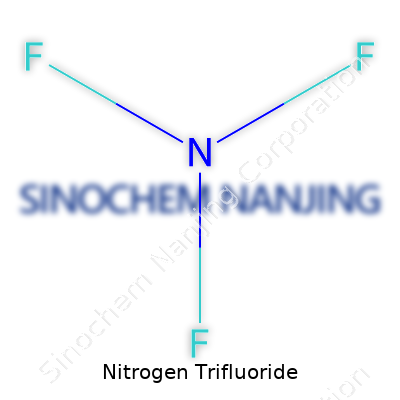
| Names | |
| Preferred IUPAC name | trifluoronitride |
| Other names |
Nitrogen fluoride Trifluoramine |
| Pronunciation | /naɪˈtrəʊdʒən traɪˈfluːəraɪd/ |
| Identifiers | |
| CAS Number | 7783-54-2 |
| Beilstein Reference | 1090070 |
| ChEBI | CHEBI:30186 |
| ChEMBL | CHEMBL1214164 |
| ChemSpider | 113769 |
| DrugBank | DB11599 |
| ECHA InfoCard | 03a99b8b-1312-416b-91b7-c3abc4107359 |
| EC Number | 231-136-1 |
| Gmelin Reference | 1146 |
| KEGG | C18906 |
| MeSH | D009596 |
| PubChem CID | 24545 |
| RTECS number | MN1050000 |
| UNII | 7XO9UN7V6O |
| UN number | UN2451 |
| Properties | |
| Chemical formula | NF3 |
| Molar mass | 71.001 g/mol |
| Appearance | Colorless gas |
| Odor | Colorless, odorless |
| Density | 1.46 g/L |
| Solubility in water | Slightly soluble |
| log P | -0.34 |
| Vapor pressure | 39.41 bar (20°C) |
| Acidity (pKa) | ~-3.7 |
| Basicity (pKb) | 10.23 |
| Magnetic susceptibility (χ) | Diamagnetic (-21.1 × 10⁻⁶ cgs) |
| Refractive index (nD) | 1.000391 |
| Viscosity | Viscosity: 0.0172 cP (at 0°C) |
| Dipole moment | 0.234 D |
| Thermochemistry | |
| Std molar entropy (S⦵298) | 279.0 J·mol⁻¹·K⁻¹ |
| Std enthalpy of formation (ΔfH⦵298) | -133.9 kJ mol⁻¹ |
| Std enthalpy of combustion (ΔcH⦵298) | -945 kJ mol⁻¹ |
| Pharmacology | |
| ATC code | V03AN06 |
| Hazards | |
| Main hazards | Toxic if inhaled, causes severe eye irritation, may cause respiratory irritation, supports combustion, reacts violently with water and organic materials. |
| GHS labelling | GHS02, GHS05, GHS06 |
| Pictograms | GHS04,GHS05,GHS06 |
| Signal word | Danger |
| Hazard statements | H270: May cause or intensify fire; oxidizer. H331: Toxic if inhaled. |
| Precautionary statements | P261, P271, P280, P304+P340, P305+P351+P338, P308+P313, P403 |
| NFPA 704 (fire diamond) | 1-0-0-OX |
| Autoignition temperature | 651°C |
| Lethal dose or concentration | LCLo-human-inhalation 96,000 ppm |
| LD50 (median dose) | > 5,470 mg/m³ (rat, 1 hour) |
| NIOSH | NIOSH: SC7540000 |
| PEL (Permissible) | 10 ppm |
| REL (Recommended) | 10 ppm |
| IDLH (Immediate danger) | 1000 ppm |
| Related compounds | |
| Related compounds |
Ammonia Nitric oxide Nitrogen dioxide Dinitrogen tetroxide Dinitrogen pentoxide Nitrosyl fluoride |



